


Introduction
Interference of light is a phenomenon in which two or more light waves combine to form a new wave pattern consisting of regions of increased or decreased intensity. This occurs due to the superposition of light waves, where the amplitudes of the waves either reinforce or cancel each other.
Interference is one of the most important pieces of evidence that light behaves as a wave rather than purely as a stream of particles. When light waves overlap, their electric and magnetic fields combine, producing patterns of bright and dark fringes.
The study of interference is essential in wave optics and plays an important role in many scientific and technological applications such as:
- Optical instruments
- Laser technology
- Thin film coatings
- Interferometers
- Holography
- Fiber optics
The phenomenon was first clearly demonstrated in the early 19th century through the famous Young’s double-slit experiment, which confirmed the wave nature of light.
Understanding interference helps scientists analyze wave behavior and measure extremely small distances and wavelengths with high precision.
Wave Nature of Light


Light is an electromagnetic wave composed of oscillating electric and magnetic fields. When two or more waves meet, they combine according to the principle of superposition.
Principle of Superposition
The resultant displacement of a wave at any point is equal to the sum of the displacements of the individual waves.
When waves combine, two situations may occur:
- Constructive interference
- Destructive interference
These interactions create the characteristic interference patterns observed in experiments.
Types of Interference
Constructive Interference

Constructive interference occurs when two waves combine in phase, meaning their crests and troughs align.
Result
- The amplitudes add together.
- The resulting wave has greater intensity.
- Bright fringes appear.
Condition for Constructive Interference
[
\Delta x = m\lambda
]
Where:
- (m) = integer (order of interference)
- ( \lambda ) = wavelength
- ( \Delta x ) = path difference
Destructive Interference


Destructive interference occurs when two waves combine out of phase.
Result
- The crest of one wave meets the trough of another.
- The waves cancel each other.
- Dark fringes appear.
Condition for Destructive Interference
[
\Delta x = (m + \frac{1}{2})\lambda
]
This produces regions of minimal or zero intensity.
Young’s Double-Slit Experiment


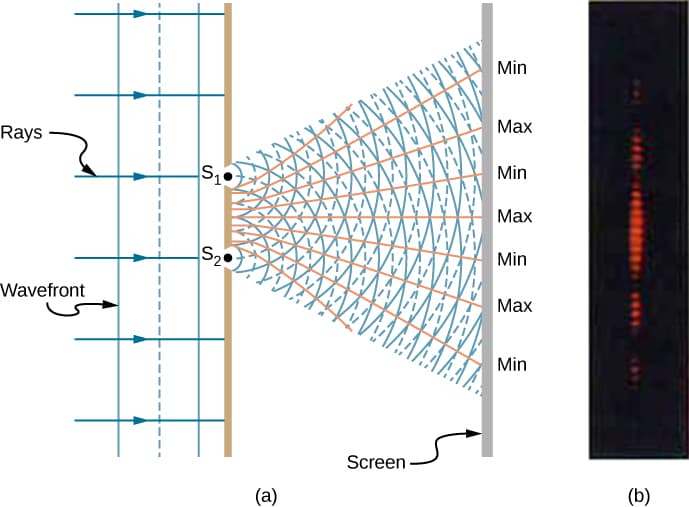
The Young’s double-slit experiment is the most famous demonstration of interference.
Experimental Setup
The experiment consists of:
- A monochromatic light source
- Two closely spaced slits
- A screen to observe the pattern
Observations
When light passes through the slits:
- Each slit acts as a source of waves.
- The waves overlap on the screen.
- A pattern of bright and dark fringes appears.
Significance
The experiment proved that light behaves as a wave.
Fringe Pattern and Fringe Width


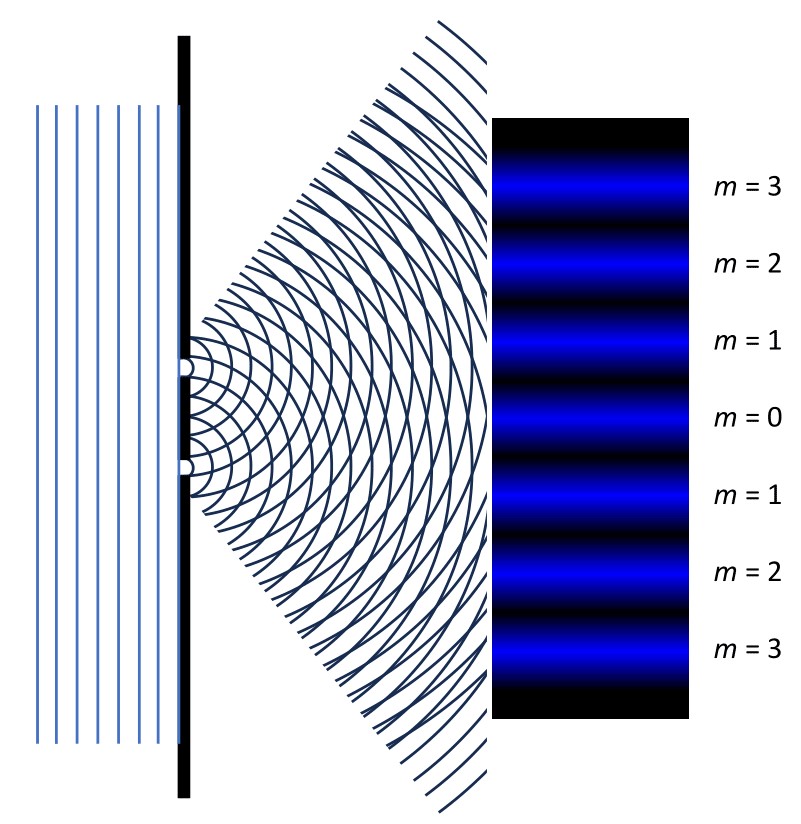

The bright and dark bands formed on the screen are called interference fringes.
Fringe Width Formula
[
\beta = \frac{\lambda D}{d}
]
Where:
- ( \beta ) = fringe width
- ( \lambda ) = wavelength of light
- (D) = distance between slits and screen
- (d) = distance between slits
This formula determines the spacing between adjacent bright fringes.
Conditions for Sustained Interference
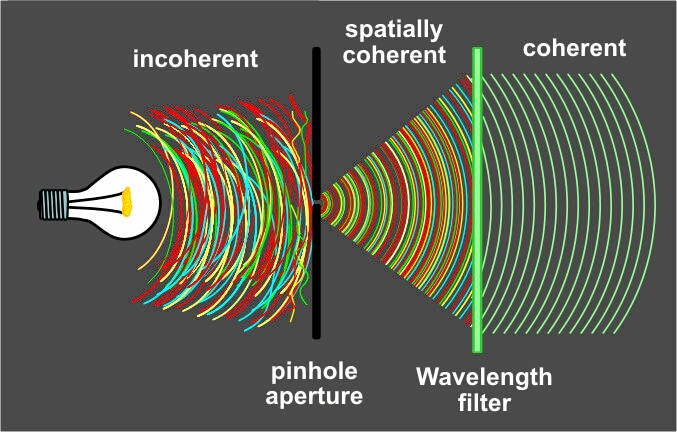


To observe a stable interference pattern, certain conditions must be satisfied.
Coherent Sources
The two light sources must have a constant phase difference.
Same Wavelength
The waves must have identical wavelengths.
Comparable Intensities
The waves should have similar amplitudes to produce visible fringes.
Monochromatic Light
Single wavelength light gives clearer interference patterns.
Lasers are often used because they provide coherent light.
Interference in Thin Films


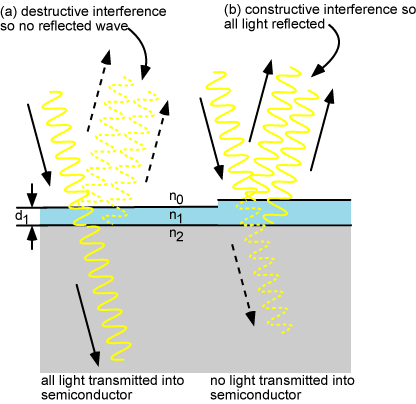
Thin film interference occurs when light reflects from both the top and bottom surfaces of a thin transparent film.
Examples include:
- Soap bubbles
- Oil films on water
- Anti-reflective coatings
The reflected waves interfere with each other, producing colorful patterns.
Thin film interference is widely used in optical coatings.
Interferometers
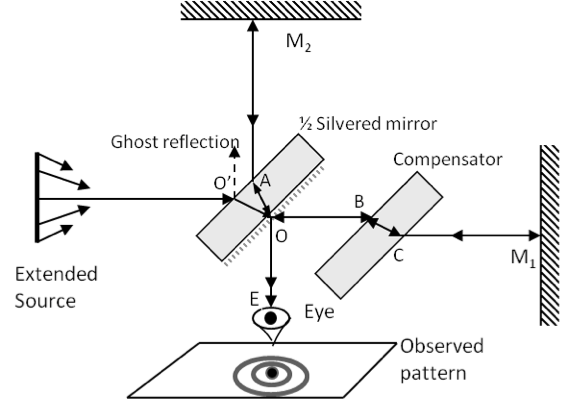
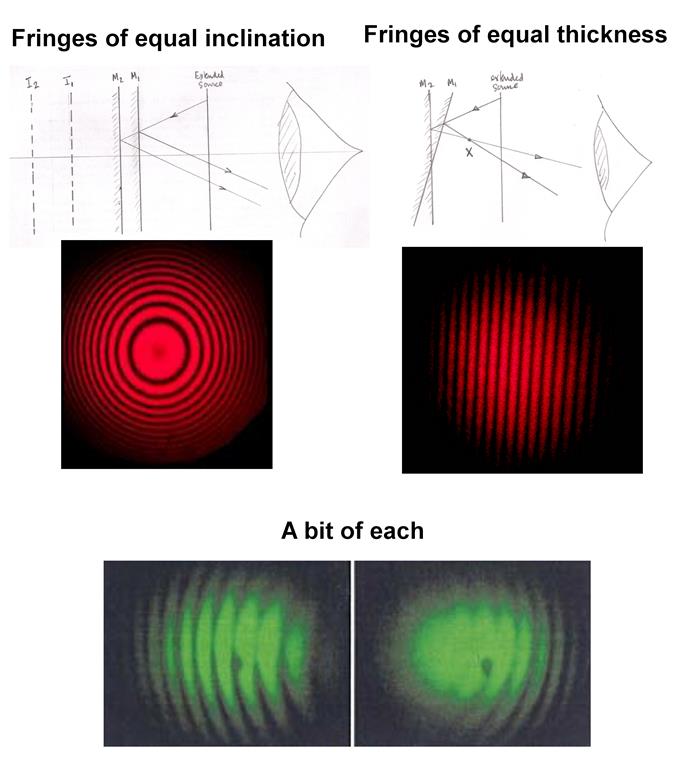
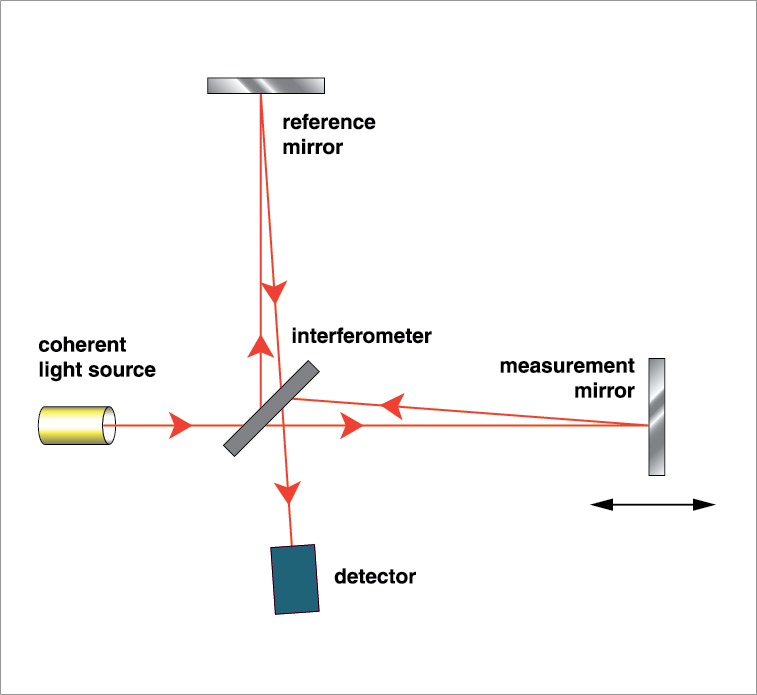
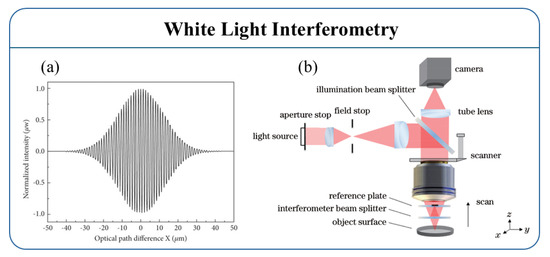
An interferometer is a device that uses interference to measure extremely small distances or changes in wavelength.
Examples include:
- Michelson interferometer
- Fabry–Pérot interferometer
Applications include:
- Measuring wavelength of light
- Detecting gravitational waves
- Precision engineering measurements
Applications of Interference
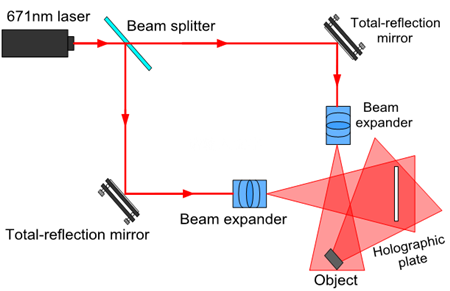


Interference has many important applications in science and technology.
Holography
Interference patterns record three-dimensional images.
Optical Coatings
Thin film coatings reduce reflection in lenses.
Fiber Optic Communication
Interference helps analyze signal transmission.
Precision Measurements
Interferometers measure tiny distances.
Laser Technology
Laser beams rely on coherent interference.
Importance of Interference
Interference plays a crucial role in understanding wave phenomena.
It helps scientists:
- Study the wave nature of light
- Measure wavelengths precisely
- Analyze optical materials
- Develop advanced optical technologies
Interference experiments have been central to the development of modern physics.
Conclusion
Interference of light occurs when two or more coherent light waves combine and produce a pattern of bright and dark fringes due to constructive and destructive interference. This phenomenon provides strong evidence for the wave nature of light.
Young’s double-slit experiment demonstrated interference and became one of the most important experiments in physics. The principles of interference are used in many modern technologies including holography, interferometry, optical coatings, and laser systems.
Understanding interference is essential for studying wave optics and for designing optical instruments that rely on precise control of light waves.