Introduction
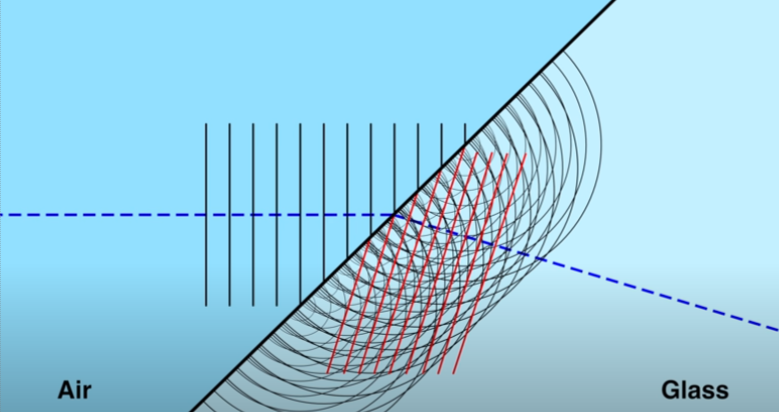
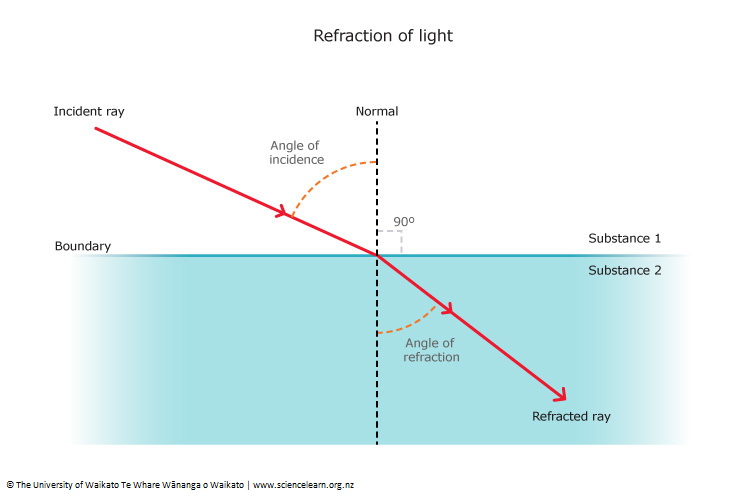
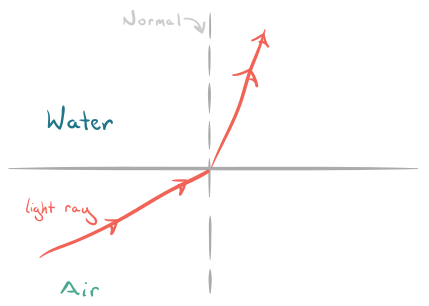
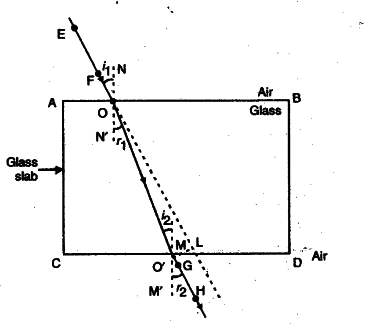
Lenses and mirrors are fundamental optical devices that manipulate light through reflection and refraction. They play a vital role in many optical instruments and everyday technologies. Mirrors reflect light from surfaces, while lenses bend or refract light as it passes through transparent materials.
The study of lenses and mirrors falls under geometrical optics, a branch of physics that examines how light travels in straight lines and interacts with surfaces.
These optical components are essential in devices such as:
- Cameras
- Telescopes
- Microscopes
- Eyeglasses
- Binoculars
- Projectors
By controlling how light rays converge or diverge, lenses and mirrors can form images that are magnified, reduced, upright, or inverted depending on their shape and position.
Understanding lenses and mirrors helps scientists and engineers design optical systems that enhance vision, capture images, and explore the universe.
Basic Concepts of Image Formation

Before studying lenses and mirrors in detail, it is important to understand how images are formed.
Object
The object is the source of light rays entering an optical system.
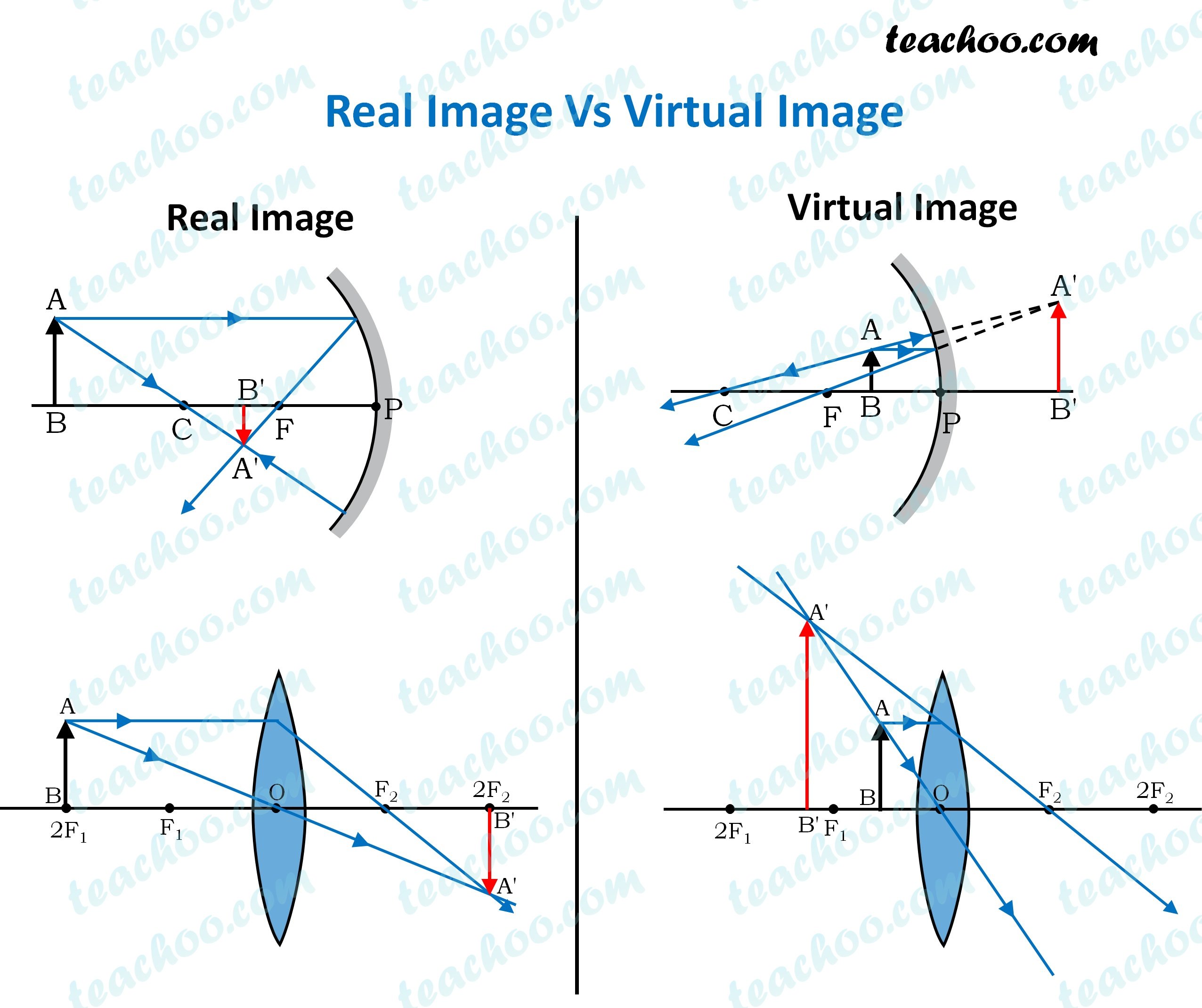
Image
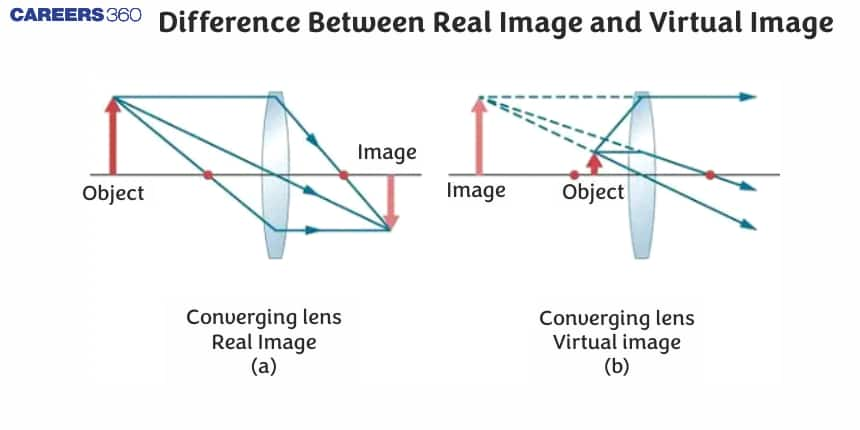
An image is formed when light rays from the object converge or appear to converge after reflection or refraction.
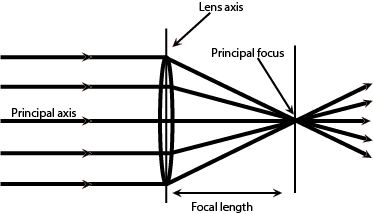
Principal Axis
The principal axis is the imaginary straight line passing through the center of a mirror or lens.
Focus (F)
The focal point is the point where parallel rays converge after reflection or refraction.
Focal Length (f)
The distance between the center of the optical device and the focal point.
Real and Virtual Images
Real images:
- Formed by actual intersection of rays
- Can be projected on a screen
Virtual images:
- Formed by apparent intersection of rays
- Cannot be projected on a screen
Mirrors in Optics


A mirror is a reflective surface that reflects light according to the laws of reflection.
Mirrors are classified into three main types:
- Plane mirrors
- Concave mirrors
- Convex mirrors
Mirrors form images by reflecting light rays from objects.
Plane Mirrors

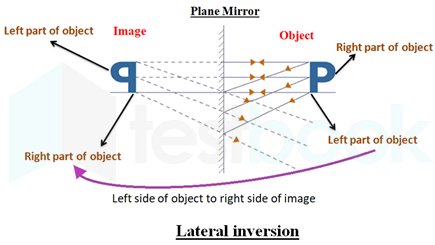
A plane mirror has a flat reflective surface.
Properties of Images Formed
- Image is virtual
- Image is upright
- Image size equals object size
- Image distance equals object distance
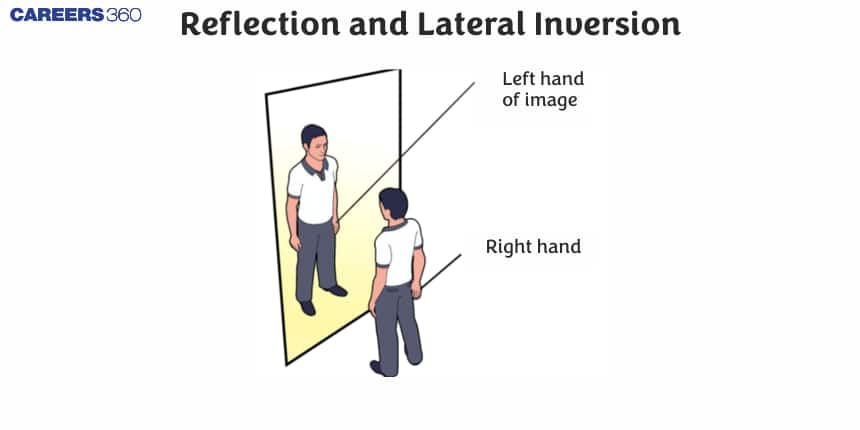
- Image shows lateral inversion
Lateral Inversion
Left and right sides of the object appear reversed in the mirror.
Applications
- Household mirrors
- Dressing mirrors
- Periscopes
- Kaleidoscopes
Plane mirrors are the simplest type of mirrors used in optics.
Spherical Mirrors
Spherical mirrors are curved mirrors whose surfaces form part of a sphere.
Two main types exist:
- Concave mirrors
- Convex mirrors
Concave Mirrors

A concave mirror curves inward like the inside of a sphere.
Characteristics
- Converges parallel light rays to a focal point
- Can produce real or virtual images
Image Formation Cases
Depending on object position, images may be:
- Real and inverted
- Virtual and upright
- Magnified or diminished
Applications
- Shaving mirrors
- Reflecting telescopes
- Solar cookers
- Vehicle headlights
Concave mirrors are widely used because they can focus light.
Convex Mirrors


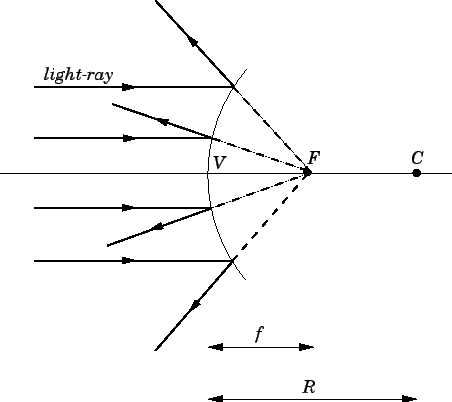
A convex mirror curves outward.
Characteristics
- Diverges parallel light rays
- Always forms virtual images
- Images are upright and smaller
Applications
- Rear-view mirrors in vehicles
- Security mirrors
- Road safety mirrors
Convex mirrors provide a wider field of view.
Mirror Formula and Magnification


The mirror formula relates object distance, image distance, and focal length.
[
\frac{1}{f} = \frac{1}{v} + \frac{1}{u}
]
Where:
- (f) = focal length
- (v) = image distance
- (u) = object distance
Magnification
[
m = \frac{h_i}{h_o} = \frac{v}{u}
]
Where:
- (h_i) = image height
- (h_o) = object height
Magnification indicates the size of the image relative to the object.
Lenses in Optics


A lens is a transparent optical device that refracts light to form images.
Lenses are usually made from glass or plastic and have curved surfaces.
Two main types exist:
- Convex lenses
- Concave lenses
Convex Lenses
A convex lens is thicker at the center than at the edges.
Properties
- Converges parallel rays to a focal point
- Can form real or virtual images
Applications
- Magnifying glasses
- Cameras
- Microscopes
- Projectors
Convex lenses are also used in eyeglasses for correcting hyperopia (farsightedness).
Concave Lenses

A concave lens is thinner at the center and thicker at the edges.
Properties
- Diverges parallel light rays
- Always forms virtual images
Applications
- Eyeglasses for myopia (short-sightedness)
- Door viewers
Concave lenses spread light rays outward.
Lens Formula and Magnification
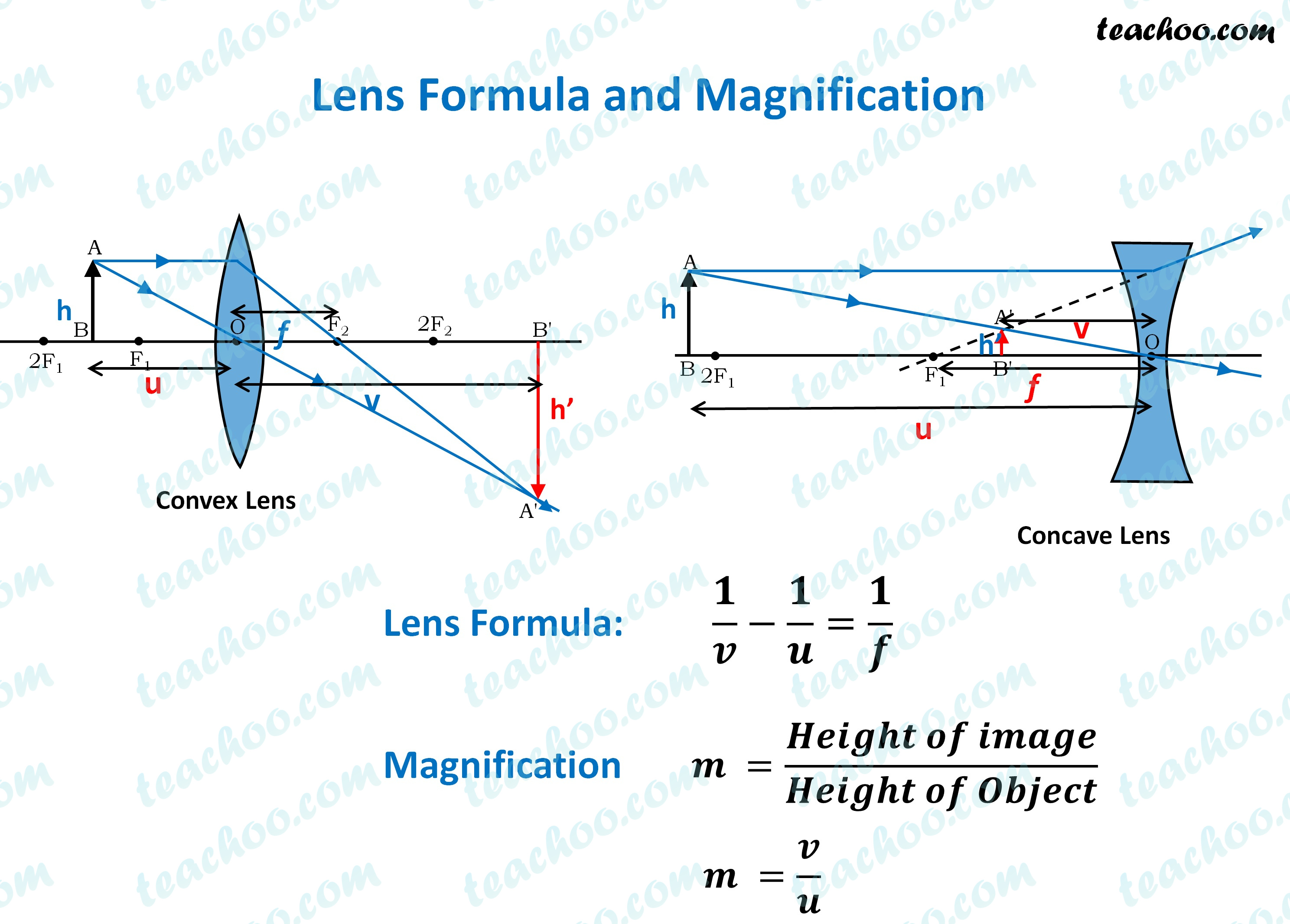


The relationship between object distance, image distance, and focal length for lenses is given by the lens formula.
[
\frac{1}{f} = \frac{1}{v} – \frac{1}{u}
]
Magnification
[
m = \frac{h_i}{h_o} = \frac{v}{u}
]
This formula helps determine image position and size.
Applications of Lenses and Mirrors


Lenses and mirrors are widely used in many optical technologies.
Optical Instruments
- Telescopes use mirrors or lenses to observe distant objects.
- Microscopes magnify tiny objects.
Cameras
Camera lenses focus light to capture images.
Eyeglasses
Correct vision defects using lenses.
Solar Energy
Mirrors concentrate sunlight for heating and electricity generation.
Importance of Lenses and Mirrors
Lenses and mirrors are essential in many fields such as:
- Astronomy
- Medicine
- Photography
- Telecommunications
- Scientific research
They allow scientists to observe microscopic organisms and distant galaxies.
Conclusion
Lenses and mirrors are essential optical devices used to control and manipulate light. Mirrors reflect light to form images, while lenses refract light to focus or spread rays.
Different types of mirrors and lenses produce different types of images depending on their shape and position relative to objects. These optical components are used in numerous technologies including cameras, microscopes, telescopes, and eyeglasses.
Understanding the principles of lenses and mirrors is fundamental to the study of optics and plays a critical role in the development of modern optical instruments.