Tag Archives: geometric transformations

Linear Transformations

Image
Image
Image
Image

1. Introduction to Linear Transformations

A linear transformation is a mathematical function that maps vectors from one vector space to another while preserving the structure of vector addition and scalar multiplication. Linear transformations are fundamental concepts in linear algebra and play an important role in mathematics, physics, computer science, and engineering.

In simple terms, a linear transformation changes vectors in a predictable and structured way. It may stretch, shrink, rotate, reflect, or shear vectors, but it does so while maintaining the linear relationships between them.

Linear transformations help us understand how mathematical systems behave under transformations. They are used to model physical processes, manipulate geometric objects, analyze data, and solve complex mathematical problems.

In mathematics, linear transformations are usually represented using matrices. Matrix multiplication provides a convenient way to compute how vectors change under transformations.

For example, if a transformation T acts on a vector v, we write:

T(v)

or

Av

where A is the transformation matrix.

Linear transformations are essential in many modern technologies, including computer graphics, robotics, machine learning, signal processing, and control systems.


2. Definition of Linear Transformation

A linear transformation is a function between vector spaces that satisfies two important properties:

  1. Additivity (preservation of addition)
  2. Homogeneity (preservation of scalar multiplication)

Mathematically:

T(u + v) = T(u) + T(v)

T(cu) = cT(u)

Where:

  • T is the transformation
  • u and v are vectors
  • c is a scalar

If both conditions are satisfied, the transformation is linear.


3. Vector Spaces and Linear Transformations

Linear transformations operate between vector spaces.

Example:

T : V → W

Where:

V = domain vector space
W = codomain vector space

This means the transformation maps vectors from space V to space W.

Example:

T(x, y) = (2x, 3y)

This transformation scales vectors.


4. Matrix Representation of Linear Transformations

Every linear transformation between finite-dimensional vector spaces can be represented using a matrix.

If vector:

x = (x₁, x₂)

and matrix:

A =

[ a₁₁ a₁₂ ]
[ a₂₁ a₂₂ ]

Then transformation is:

T(x) = Ax

Matrix multiplication produces the transformed vector.

Example:

A =

[2 0]
[0 3]

Vector:

v = (1,2)

Result:

T(v) = (2,6)

This transformation stretches vectors differently along axes.


5. Geometric Interpretation

Linear transformations can change vectors in different ways:

  • Scaling
  • Rotation
  • Reflection
  • Shearing

However, they preserve the origin and straight lines.

Important properties:

  • Lines remain lines
  • Parallel lines remain parallel
  • Origin stays fixed

6. Types of Linear Transformations


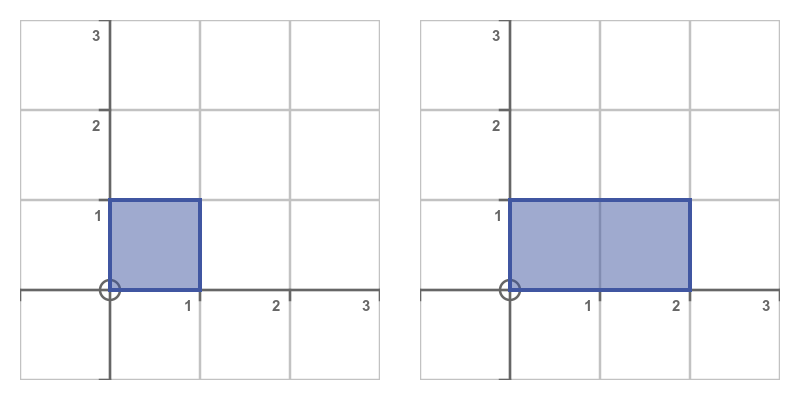
Scaling Transformation

Scaling changes the size of vectors.

Example:

T(x,y) = (2x,3y)

Matrix:

[2 0]
[0 3]

Vectors stretch differently in each direction.


Rotation Transformation

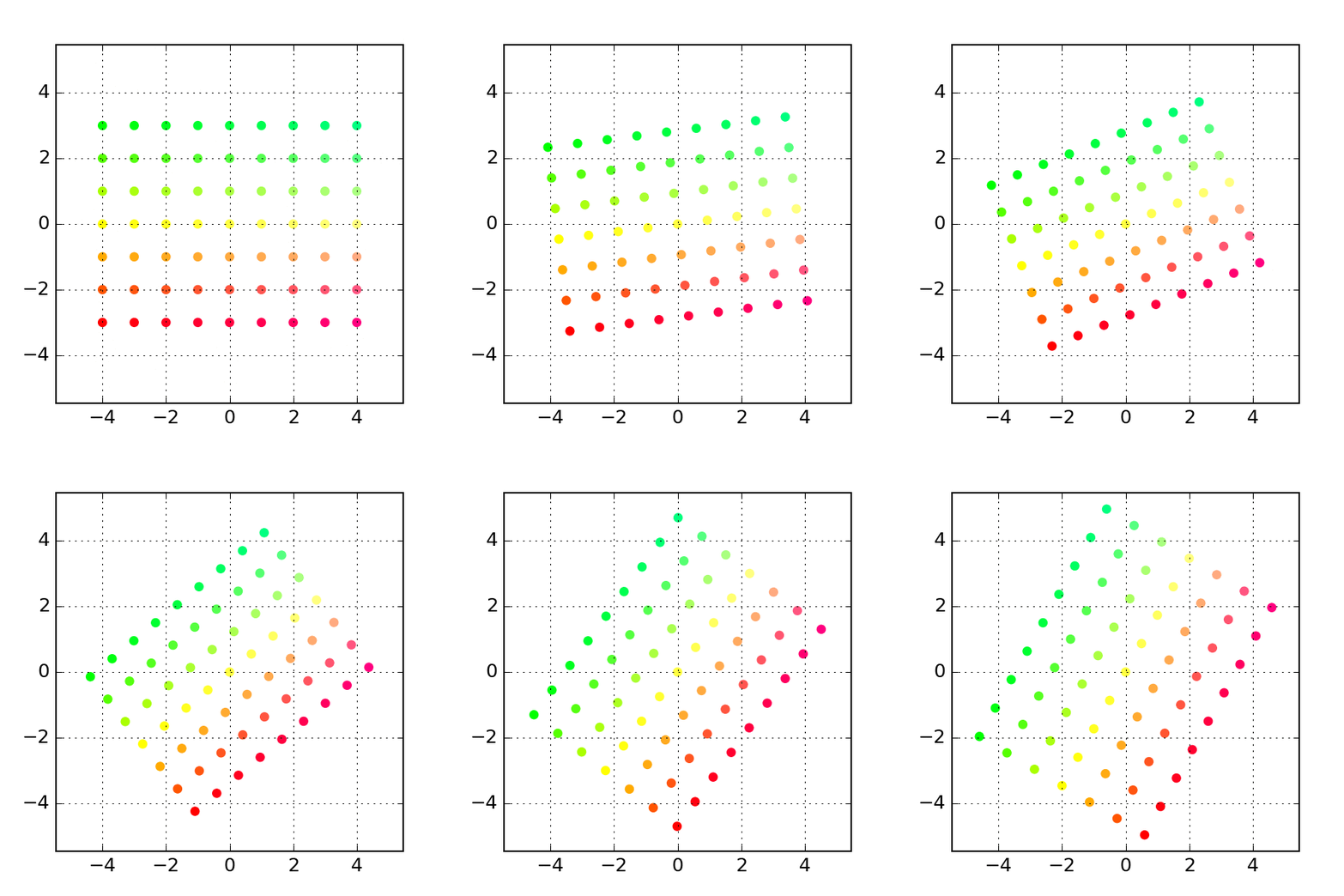
Rotation rotates vectors around the origin.

Matrix:

[ cosθ −sinθ ]
[ sinθ cosθ ]

Example:

Rotation by 90°.


Reflection Transformation

Reflection flips vectors across a line.

Reflection across x-axis:

[1 0]
[0 −1]

Reflection across y-axis:

[-1 0]
[0 1]


Shear Transformation

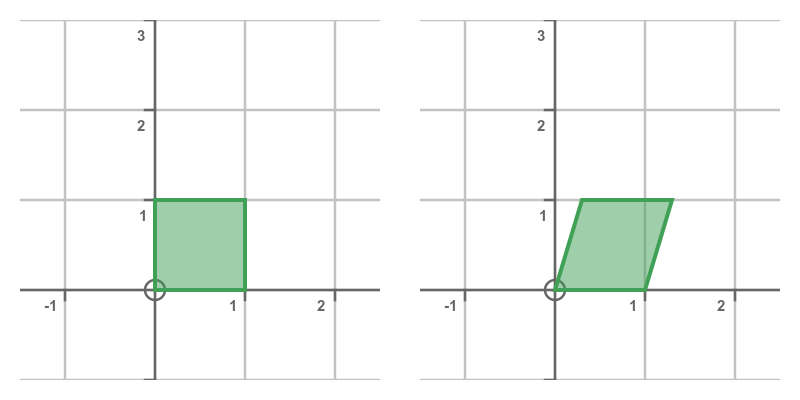
Shear transformation slants shapes.

Matrix:

[1 k]
[0 1]

Used in computer graphics.


7. Identity Transformation

The identity transformation leaves vectors unchanged.

Matrix:

[1 0]
[0 1]

T(v) = v


8. Zero Transformation

The zero transformation maps every vector to zero.

T(v) = 0

Matrix:

[0 0]
[0 0]


9. Composition of Transformations

Two transformations can be combined.

If:

T₁(v) = A v
T₂(v) = B v

Then composition:

T₂(T₁(v)) = BA v

This corresponds to matrix multiplication.


10. Kernel of a Linear Transformation

The kernel of a transformation is the set of vectors mapped to zero.

Kernel:

Ker(T) = {v | T(v) = 0}

It measures how much information is lost during transformation.


11. Image of a Transformation

The image (or range) is the set of all outputs.

Image:

Im(T) = {T(v)}

This represents all possible transformed vectors.


12. Rank and Nullity

Two important concepts are:

Rank = dimension of image
Nullity = dimension of kernel

These are related by:

Rank + Nullity = dimension of vector space

This is called the Rank–Nullity Theorem.


13. Invertible Transformations

A transformation is invertible if there exists another transformation that reverses it.

Example:

If

T(v) = Av

Then inverse:

T⁻¹(v) = A⁻¹v

Condition:

det(A) ≠ 0


14. Eigenvalues and Linear Transformations

Eigenvalues describe how a transformation scales vectors.

Equation:

Av = λv

Where:

λ = eigenvalue
v = eigenvector

Eigenvectors remain in the same direction after transformation.


15. Diagonalization

Some transformations can be simplified using diagonal matrices.

A = PDP⁻¹

Where:

D contains eigenvalues.

This simplifies repeated transformations.


16. Linear Transformations in Geometry

In geometry, linear transformations manipulate shapes.

Examples:

  • Rotating objects
  • Scaling images
  • Reflecting shapes

Used extensively in computer graphics.


17. Linear Transformations in Physics

Physics uses transformations to describe physical systems.

Examples include:

  • rotation of coordinate systems
  • Lorentz transformations in relativity
  • quantum operators

These transformations help describe physical laws.


18. Applications in Computer Graphics

Linear transformations are essential in:

  • 3D modeling
  • video games
  • animation
  • virtual reality

Transformations allow objects to move, rotate, and scale.


19. Applications in Machine Learning

In machine learning, transformations are used to:

  • project data into new spaces
  • reduce dimensions
  • analyze features

Algorithms such as PCA rely on linear transformations.


20. Applications in Signal Processing

Signals can be represented as vectors.

Transformations help analyze signals using:

  • Fourier transforms
  • wavelet transforms

21. Linear Transformations in Robotics

Robots rely on transformations to calculate:

  • arm movements
  • rotations
  • coordinate conversions

Matrices help describe robot motion.


22. Importance of Linear Transformations

Linear transformations are powerful tools for understanding how vector spaces change under mathematical operations.

They allow mathematicians and scientists to model real-world processes efficiently.

They help simplify complex systems, analyze data, and perform geometric manipulations.


Conclusion

Linear transformations are fundamental operations in linear algebra that describe how vectors move or change within vector spaces. By preserving vector addition and scalar multiplication, these transformations maintain the underlying structure of vector spaces while allowing changes such as scaling, rotation, reflection, and shear.

Representing linear transformations using matrices makes calculations efficient and allows them to be applied to complex systems. Linear transformations form the foundation for many important mathematical concepts including eigenvalues, eigenvectors, and matrix diagonalization.

Their applications extend across many fields such as computer graphics, physics, engineering, robotics, machine learning, and signal processing. In modern technology, linear transformations are essential tools for manipulating data, modeling systems, and solving scientific problems.

Understanding linear transformations is therefore crucial for anyone studying advanced mathematics, data science, engineering, or computer science.

Tags

Transformations in Geometry (Reflection, Rotation, Translation)

Image
Image
Image
Image

Introduction to Geometric Transformations

In mathematics, transformations describe how a geometric figure changes its position, orientation, or size in a plane. Transformations are fundamental concepts in geometry because they help us understand how shapes move and how they relate to each other.

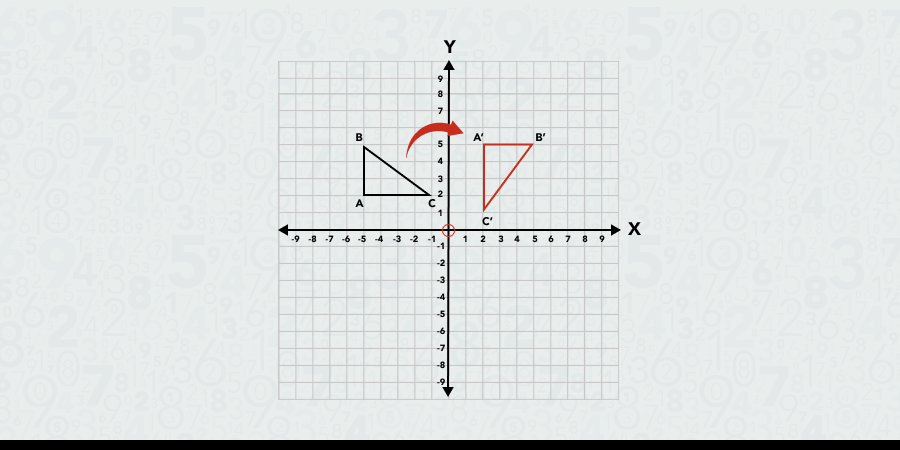
A transformation maps every point of a figure to a new position according to a specific rule. When a transformation occurs, the original figure is called the pre-image, and the resulting figure after transformation is called the image.

Transformations play an important role in many mathematical topics such as coordinate geometry, symmetry, congruence, and similarity. They are also widely used in fields like computer graphics, engineering design, robotics, physics, architecture, and animation.

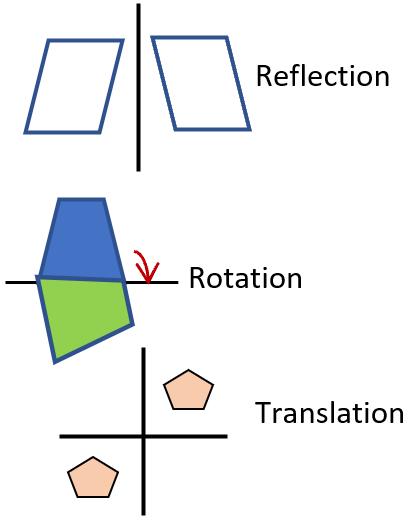
The most common types of geometric transformations are:

  • Translation
  • Reflection
  • Rotation
  • Dilation

However, the three most basic transformations studied in geometry are translation, reflection, and rotation. These transformations preserve the size and shape of figures and are therefore called rigid transformations or isometries.


Definition of Transformation

A transformation is a mathematical operation that moves or changes a geometric figure in a plane according to certain rules.

The transformation assigns each point ((x,y)) of the original figure to a new point ((x’,y’)).

The transformation can change:

  • the position of a shape
  • the orientation of a shape
  • the direction of a shape

But rigid transformations do not change the size or shape of the figure.


Types of Transformations

The three main types of transformations studied in geometry are:

  1. Translation
  2. Reflection
  3. Rotation

Each transformation moves the figure in a different way.


Translation

Definition of Translation

A translation is a transformation that moves every point of a figure the same distance in the same direction.

In translation:

  • The shape does not rotate.
  • The shape does not change size.
  • The orientation remains the same.

Translation is often described as a slide.


Example of Translation

Consider a point:

[
(2,3)
]

If we translate the point 4 units right and 2 units up:

[
(2+4, 3+2)
]

[
(6,5)
]

The new point becomes (6,5).


Translation Rule

Translation can be expressed using coordinate rules.

General rule:

[
(x,y) \rightarrow (x+a, y+b)
]

Where:

  • (a) = horizontal movement
  • (b) = vertical movement

Example:

[
(x,y) \rightarrow (x+3,y-2)
]

Means move:

  • 3 units right
  • 2 units down

Properties of Translation

Important properties include:

  • Distance between points remains the same
  • Angles remain unchanged
  • Shape and size remain unchanged
  • Orientation stays the same

Translation preserves congruence.


Reflection

Definition of Reflection

A reflection is a transformation that flips a figure over a line called the line of reflection.

Reflection produces a mirror image of the original figure.

The line of reflection acts like a mirror.


Example of Reflection

If a point lies on one side of the mirror line, the reflected point appears the same distance on the opposite side.

Example:

Point:

[
(3,4)
]

Reflection across the y-axis:

[
(-3,4)
]


Reflection Rules

Reflection Across X-axis

Rule:

[
(x,y) \rightarrow (x,-y)
]

Example:

[
(2,5) \rightarrow (2,-5)
]


Reflection Across Y-axis

Rule:

[
(x,y) \rightarrow (-x,y)
]

Example:

[
(3,4) \rightarrow (-3,4)
]


Reflection Across Origin

Rule:

[
(x,y) \rightarrow (-x,-y)
]


Reflection Across Line (y=x)

Rule:

[
(x,y) \rightarrow (y,x)
]


Properties of Reflection

Reflection preserves:

  • shape
  • size
  • distance

However, orientation is reversed.

For example, clockwise order becomes counterclockwise.


Rotation

Definition of Rotation

A rotation is a transformation that turns a figure around a fixed point called the center of rotation.

The rotation occurs through a certain angle and in a certain direction.

Rotations can be:

  • clockwise
  • counterclockwise

Center of Rotation

The center of rotation is the fixed point around which the figure rotates.

Often, rotations occur around the origin (0,0).


Common Rotation Angles

Common rotation angles include:

  • 90°
  • 180°
  • 270°

Rotation Rules

90° Counterclockwise Rotation

Rule:

[
(x,y) \rightarrow (-y,x)
]

Example:

[
(3,2) \rightarrow (-2,3)
]


180° Rotation

Rule:

[
(x,y) \rightarrow (-x,-y)
]

Example:

[
(4,5) \rightarrow (-4,-5)
]


270° Counterclockwise Rotation

Rule:

[
(x,y) \rightarrow (y,-x)
]

Example:

[
(2,3) \rightarrow (3,-2)
]


Properties of Rotation

Rotation preserves:

  • shape
  • size
  • distance
  • angle measures

However, the orientation of the figure may change depending on the rotation.


Rigid Transformations

Translation, reflection, and rotation are called rigid transformations.

They preserve:

  • length
  • angle
  • area
  • shape

Because of this property, the original and transformed figures are congruent.


Composition of Transformations

Sometimes multiple transformations are applied in sequence.

This is called a composition of transformations.

Example:

  1. Translate a triangle.
  2. Rotate it 90°.
  3. Reflect it across the y-axis.

The final position depends on the order of transformations.


Transformations in Coordinate Geometry

Transformations are often studied using coordinate geometry.

Each transformation can be described using coordinate rules.

Example:

Triangle with vertices:

[
A(1,2), B(3,2), C(2,4)
]

After translation by (2,1):

[
A'(3,3), B'(5,3), C'(4,5)
]


Symmetry and Transformations

Transformations are closely related to symmetry.

Example:

Reflection symmetry occurs when a shape is mirrored.

Rotation symmetry occurs when a shape looks the same after rotation.

Example shapes with symmetry:

  • square
  • equilateral triangle
  • circle

Transformations in Real Life

Transformations appear in many real-world applications.


Computer Graphics

Computer graphics use transformations to move objects on the screen.

Example:

Video game characters are translated, rotated, and reflected.


Robotics

Robots use transformations to calculate movement paths.


Architecture

Architectural designs often involve symmetrical reflections and rotations.


Physics

Physics uses transformations to describe motion and coordinate systems.


Animation

Animation relies heavily on transformations to move objects smoothly.


Transformations in Art and Design

Artists and designers use geometric transformations to create patterns.

Examples include:

  • tessellations
  • tiling designs
  • decorative patterns

Mathematical Representation of Transformations

Transformations can also be represented using matrices.

Matrix transformations are used in:

  • computer graphics
  • physics simulations
  • 3D modeling

Example:

Rotation matrices represent rotations in coordinate space.


Transformations in Higher Dimensions

Transformations are not limited to two dimensions.

In 3D space, transformations include:

  • rotations around axes
  • reflections across planes
  • translations in space

These transformations are used in:

  • virtual reality
  • robotics
  • mechanical simulations

Importance of Transformations

Transformations are important because they:

  • help analyze geometric relationships
  • explain symmetry
  • support coordinate geometry
  • model motion and movement

They also connect geometry with algebra and linear algebra.


Historical Development

The study of transformations developed alongside geometry.

Ancient mathematicians studied symmetry and reflections.

In modern mathematics, transformation geometry became an important field that focuses on geometric transformations and their properties.


Conclusion

Transformations in geometry describe how shapes move or change position within a coordinate plane. The three primary transformations—translation, reflection, and rotation—are fundamental tools for understanding geometric relationships and symmetry.

Translation slides a figure from one location to another without changing its orientation. Reflection flips a figure across a line, creating a mirror image. Rotation turns a figure around a fixed point by a specified angle.

These transformations preserve the size and shape of figures, making them rigid transformations. They play a crucial role in mathematics and have applications in many fields such as computer graphics, engineering, physics, architecture, and animation.

By studying transformations, mathematicians gain deeper insights into geometric structures and spatial relationships, making transformation geometry an essential part of mathematical education and modern scientific applications.


Tags