


Introduction
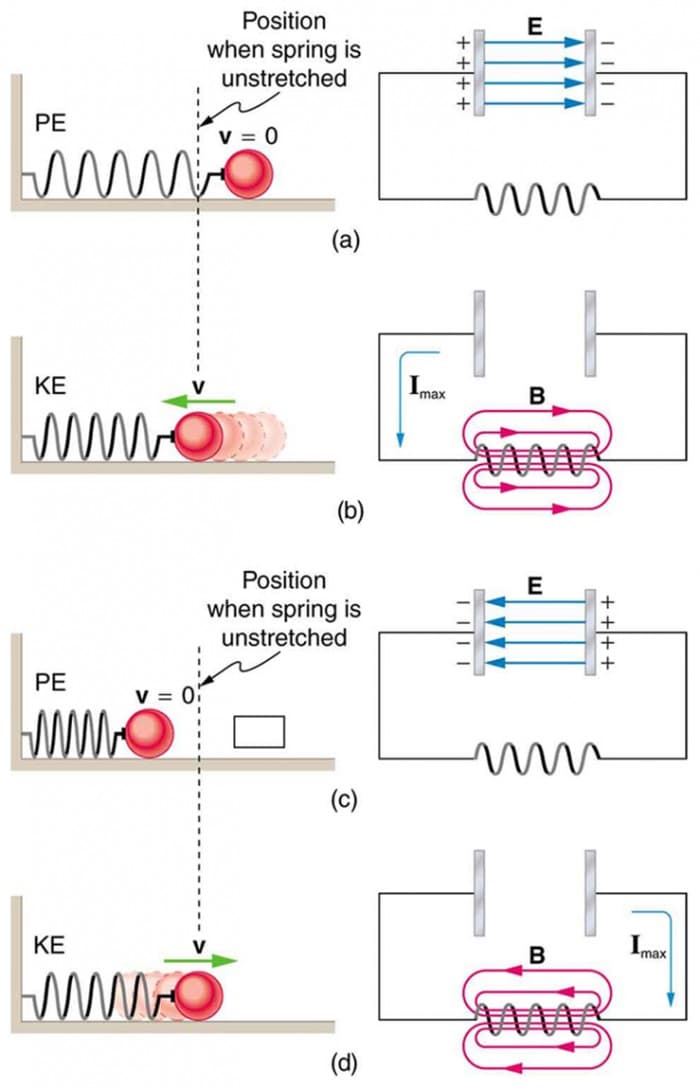
Coupled oscillations occur when two or more oscillating systems are connected in such a way that they influence each other’s motion. In such systems, energy can transfer between the oscillators through the coupling interaction. This leads to complex motion patterns that are different from the motion of individual oscillators.
Coupled oscillations are a fundamental concept in physics because they appear in many natural and engineered systems. Examples include:
- Coupled pendulums
- Coupled mass–spring systems
- Vibrations in molecules and crystals
- Electrical circuits with inductors and capacitors
- Oscillations in mechanical structures
When oscillators are coupled, their motions become interdependent. The resulting motion can often be described in terms of normal modes, where the entire system oscillates with specific frequencies.
Coupled oscillation systems are important in many branches of science, including:
- Classical mechanics
- Quantum mechanics
- Solid-state physics
- Electrical engineering
- Molecular physics
Understanding coupled oscillations allows scientists and engineers to analyze vibrations, waves, and energy transfer in complex systems.
Basic Concept of Oscillations

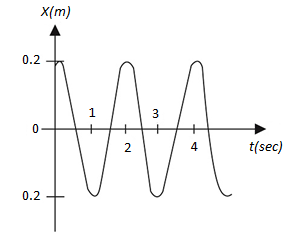


An oscillation is a repetitive motion around an equilibrium position.
A simple example is simple harmonic motion (SHM), where the restoring force is proportional to displacement.
Mathematically:
[
F = -kx
]
Where:
- (F) = restoring force
- (k) = spring constant
- (x) = displacement
The equation of motion for SHM is:
[
m\frac{d^2x}{dt^2} + kx = 0
]
The solution describes periodic motion with angular frequency:
[
\omega = \sqrt{\frac{k}{m}}
]
This type of oscillation forms the basis for understanding coupled systems.
Coupling Between Oscillators
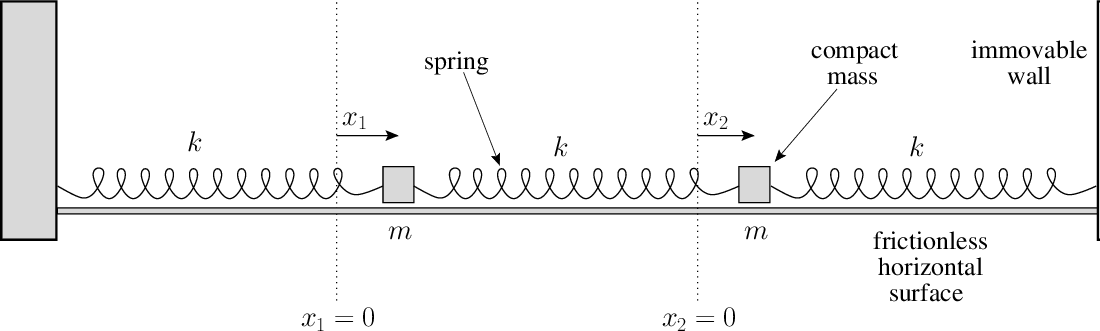


Coupling occurs when oscillators interact through a physical connection.
This connection allows:
- Transfer of energy
- Interaction between motions
- Modification of oscillation frequencies
Examples of coupling include:
- Springs connecting masses
- Mechanical linkages
- Electromagnetic interactions
- Electrical circuits
When oscillators are coupled, the motion of one oscillator affects the others.
Mathematical Description of Coupled Oscillations
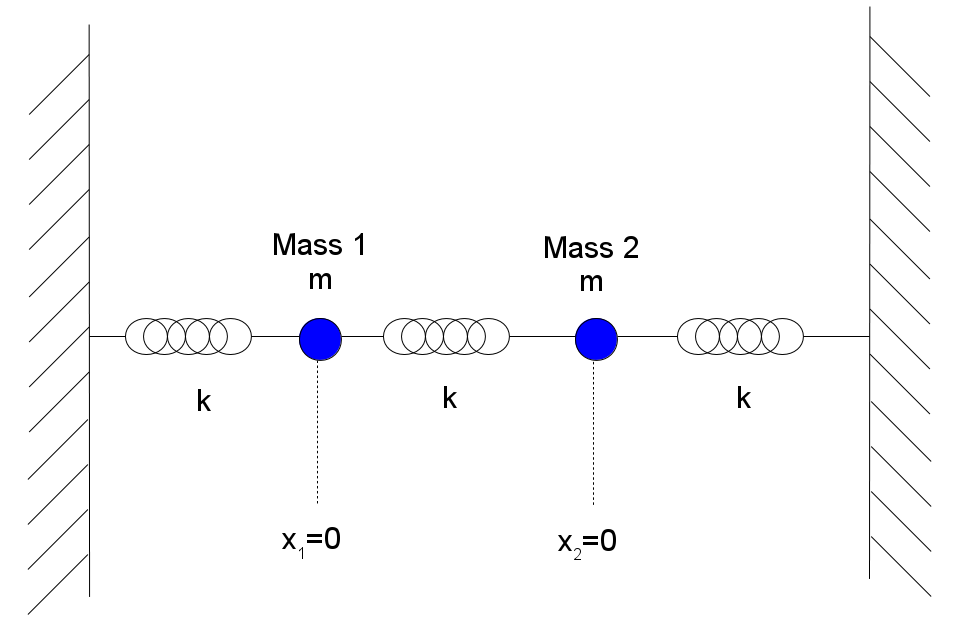


Consider two masses connected by springs.
Let the displacements be (x_1) and (x_2).
The equations of motion are:
[
m\ddot{x}_1 = -kx_1 + k(x_2 – x_1)
]
[
m\ddot{x}_2 = -kx_2 + k(x_1 – x_2)
]
These equations show that the motion of one mass depends on the motion of the other.
Solving these equations gives the characteristic frequencies of the system.
Normal Modes of Oscillation
A normal mode is a pattern of motion in which all parts of the system oscillate with the same frequency.
For two coupled oscillators, there are two normal modes.
Symmetric Mode
Both oscillators move in the same direction.
Antisymmetric Mode
The oscillators move in opposite directions.
Each mode has its own characteristic frequency.
Normal modes simplify the analysis of complex oscillation systems.
Energy Transfer in Coupled Oscillators


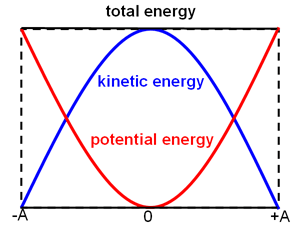
One interesting feature of coupled oscillators is energy exchange.
If one oscillator is initially displaced while the other is at rest:
- Energy gradually transfers between them.
- The amplitude of one oscillator decreases while the other increases.
This produces a phenomenon called beats.
Beats occur when two oscillations with slightly different frequencies interfere.
Example: Coupled Pendulums


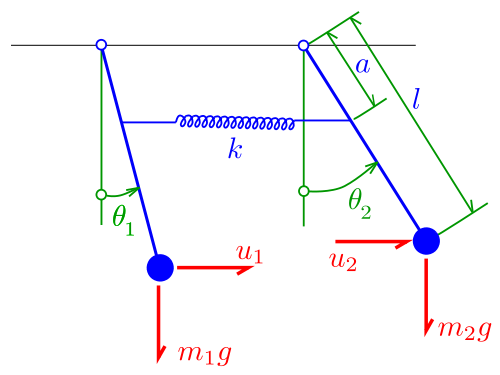
A classic demonstration of coupled oscillations involves two pendulums connected by a spring.
If one pendulum is displaced:
- It begins oscillating.
- Energy transfers to the second pendulum.
- The first pendulum gradually stops while the second begins oscillating.
After some time, the energy returns to the first pendulum.
This periodic energy exchange illustrates coupling effects.
Coupled Electrical Oscillations


Coupled oscillations also occur in electrical systems.
For example, two LC circuits can be connected through inductive or capacitive coupling.
These systems show:
- Energy transfer between circuits
- Resonance effects
- Normal mode frequencies
Coupled electrical oscillators are used in:
- Radio transmitters
- Signal processing
- Wireless communication
Coupled Oscillations in Molecular Physics
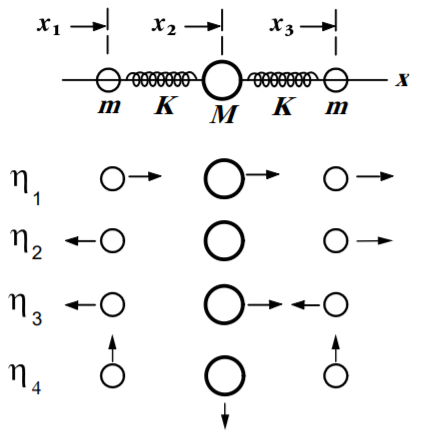


In molecular physics, atoms in molecules behave like coupled oscillators.
Atoms are connected by chemical bonds that act like springs.
This leads to vibrational modes called:
- Molecular vibrations
- Phonons in crystals
These vibrations are important in:
- Infrared spectroscopy
- Thermal properties of solids
- Solid-state physics
Applications of Coupled Oscillations


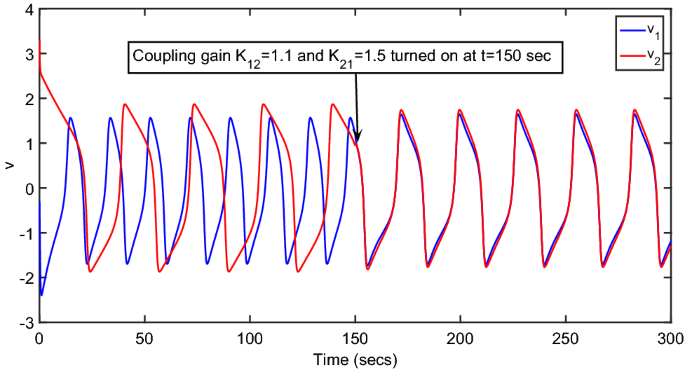
Coupled oscillations appear in many practical systems.
Mechanical Engineering
Used in vibration analysis of structures.
Electrical Engineering
Used in oscillators and communication systems.
Physics Research
Used in studying wave propagation and resonance.
Biological Systems
Coupled oscillations appear in heart rhythms and neural activity.
Understanding coupling helps design stable and efficient systems.
Importance in Physics
Coupled oscillations provide insight into many physical phenomena.
They explain:
- Energy transfer between systems
- Collective motion of particles
- Vibrational modes in molecules and solids
The concept also forms the basis for studying waves and normal mode analysis in complex systems.
Conclusion
Coupled oscillations describe systems where multiple oscillators interact and influence each other’s motion. These interactions lead to complex behavior, including energy transfer and the formation of normal modes.
By analyzing coupled systems using mathematical models and normal mode analysis, physicists can understand the dynamics of complex mechanical, electrical, and molecular systems.
Coupled oscillations play an important role in many fields of physics and engineering, from vibration analysis and signal processing to molecular spectroscopy and solid-state physics.