Tag Archives: mirror formula optics

Lenses and Mirrors

Image
Image
Image
Image

Introduction

Lenses and mirrors are fundamental optical devices that manipulate light through reflection and refraction. They play a vital role in many optical instruments and everyday technologies. Mirrors reflect light from surfaces, while lenses bend or refract light as it passes through transparent materials.

The study of lenses and mirrors falls under geometrical optics, a branch of physics that examines how light travels in straight lines and interacts with surfaces.

These optical components are essential in devices such as:

  • Cameras
  • Telescopes
  • Microscopes
  • Eyeglasses
  • Binoculars
  • Projectors

By controlling how light rays converge or diverge, lenses and mirrors can form images that are magnified, reduced, upright, or inverted depending on their shape and position.

Understanding lenses and mirrors helps scientists and engineers design optical systems that enhance vision, capture images, and explore the universe.


Basic Concepts of Image Formation

Image
Image
Image
Image

Before studying lenses and mirrors in detail, it is important to understand how images are formed.

Object

The object is the source of light rays entering an optical system.

Image

An image is formed when light rays from the object converge or appear to converge after reflection or refraction.

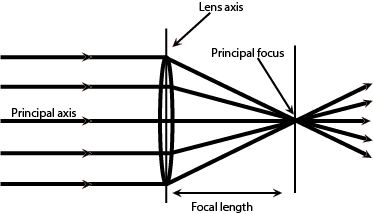
Principal Axis

The principal axis is the imaginary straight line passing through the center of a mirror or lens.

Focus (F)

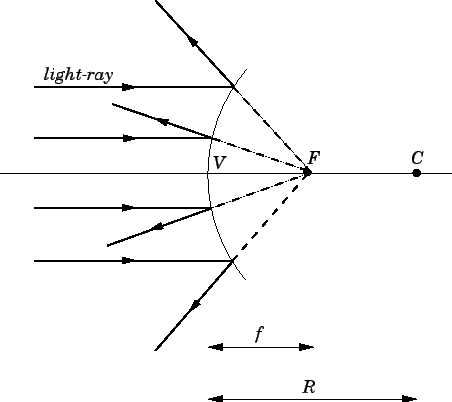
The focal point is the point where parallel rays converge after reflection or refraction.

Focal Length (f)

The distance between the center of the optical device and the focal point.

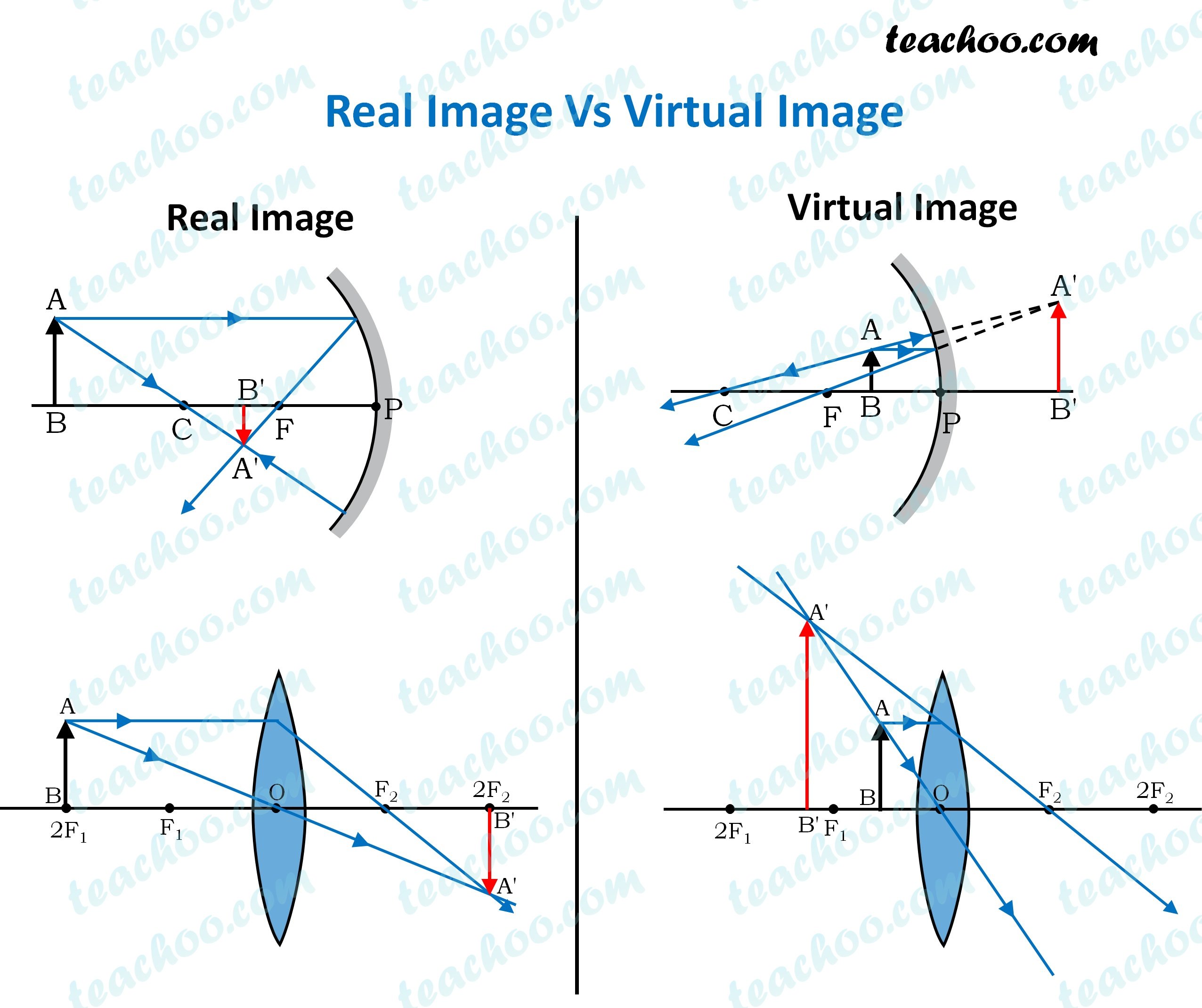
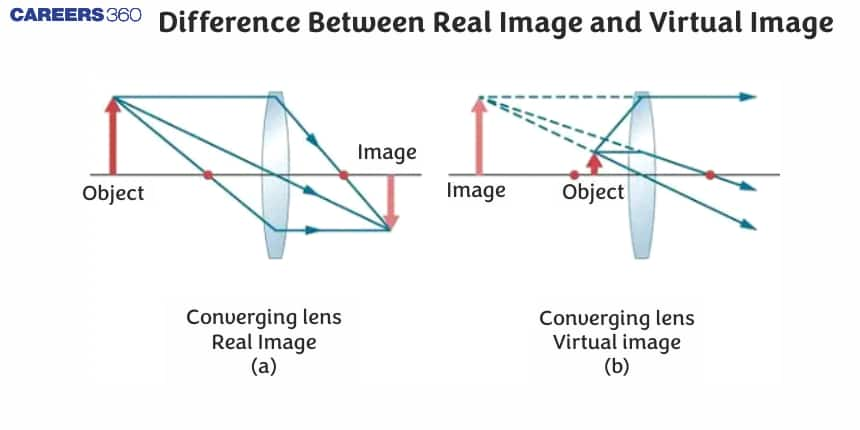
Real and Virtual Images

Real images:

  • Formed by actual intersection of rays
  • Can be projected on a screen

Virtual images:

  • Formed by apparent intersection of rays
  • Cannot be projected on a screen

Mirrors in Optics

Image
Image
Image
Image

A mirror is a reflective surface that reflects light according to the laws of reflection.

Mirrors are classified into three main types:

  • Plane mirrors
  • Concave mirrors
  • Convex mirrors

Mirrors form images by reflecting light rays from objects.


Plane Mirrors

Image
Image
Image
Image

A plane mirror has a flat reflective surface.

Properties of Images Formed

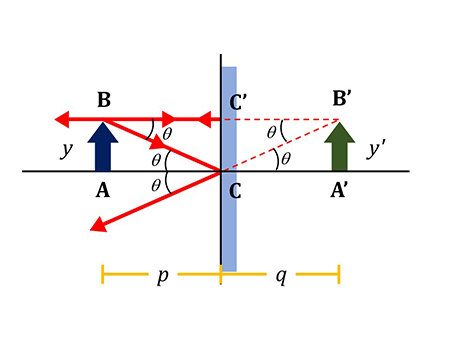
  • Image is virtual
  • Image is upright
  • Image size equals object size
  • Image distance equals object distance
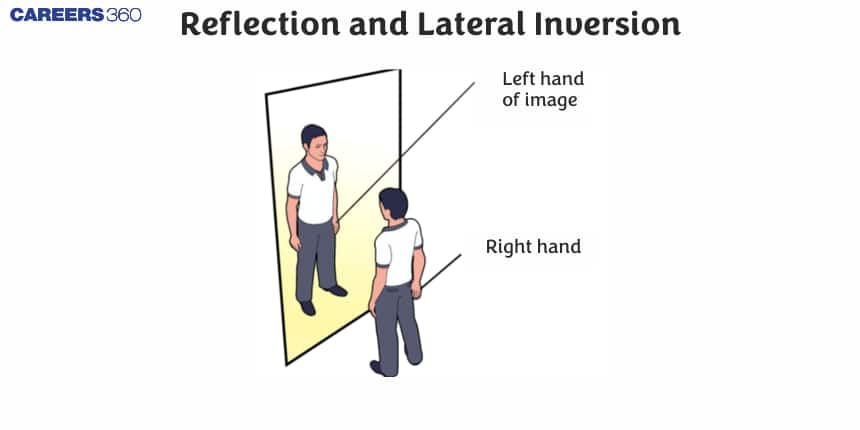
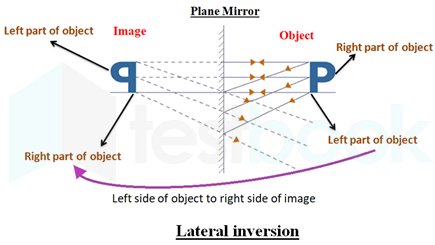
  • Image shows lateral inversion

Lateral Inversion

Left and right sides of the object appear reversed in the mirror.

Applications

  • Household mirrors
  • Dressing mirrors
  • Periscopes
  • Kaleidoscopes

Plane mirrors are the simplest type of mirrors used in optics.


Spherical Mirrors

Spherical mirrors are curved mirrors whose surfaces form part of a sphere.

Two main types exist:

  • Concave mirrors
  • Convex mirrors

Concave Mirrors

Image
Image
Image

A concave mirror curves inward like the inside of a sphere.

Characteristics

  • Converges parallel light rays to a focal point
  • Can produce real or virtual images

Image Formation Cases

Depending on object position, images may be:

  • Real and inverted
  • Virtual and upright
  • Magnified or diminished

Applications

  • Shaving mirrors
  • Reflecting telescopes
  • Solar cookers
  • Vehicle headlights

Concave mirrors are widely used because they can focus light.


Convex Mirrors

Image
Image
Image
Image

A convex mirror curves outward.

Characteristics

  • Diverges parallel light rays
  • Always forms virtual images
  • Images are upright and smaller

Applications

  • Rear-view mirrors in vehicles
  • Security mirrors
  • Road safety mirrors

Convex mirrors provide a wider field of view.


Mirror Formula and Magnification

Image
Image
Image

The mirror formula relates object distance, image distance, and focal length.

[
\frac{1}{f} = \frac{1}{v} + \frac{1}{u}
]

Where:

  • (f) = focal length
  • (v) = image distance
  • (u) = object distance

Magnification

[
m = \frac{h_i}{h_o} = \frac{v}{u}
]

Where:

  • (h_i) = image height
  • (h_o) = object height

Magnification indicates the size of the image relative to the object.


Lenses in Optics

Image
Image
Image
Image

A lens is a transparent optical device that refracts light to form images.

Lenses are usually made from glass or plastic and have curved surfaces.

Two main types exist:

  • Convex lenses
  • Concave lenses

Convex Lenses

Image
Image

A convex lens is thicker at the center than at the edges.

Properties

  • Converges parallel rays to a focal point
  • Can form real or virtual images

Applications

  • Magnifying glasses
  • Cameras
  • Microscopes
  • Projectors

Convex lenses are also used in eyeglasses for correcting hyperopia (farsightedness).


Concave Lenses

Image
Image
Image
Image

A concave lens is thinner at the center and thicker at the edges.

Properties

  • Diverges parallel light rays
  • Always forms virtual images

Applications

  • Eyeglasses for myopia (short-sightedness)
  • Door viewers

Concave lenses spread light rays outward.


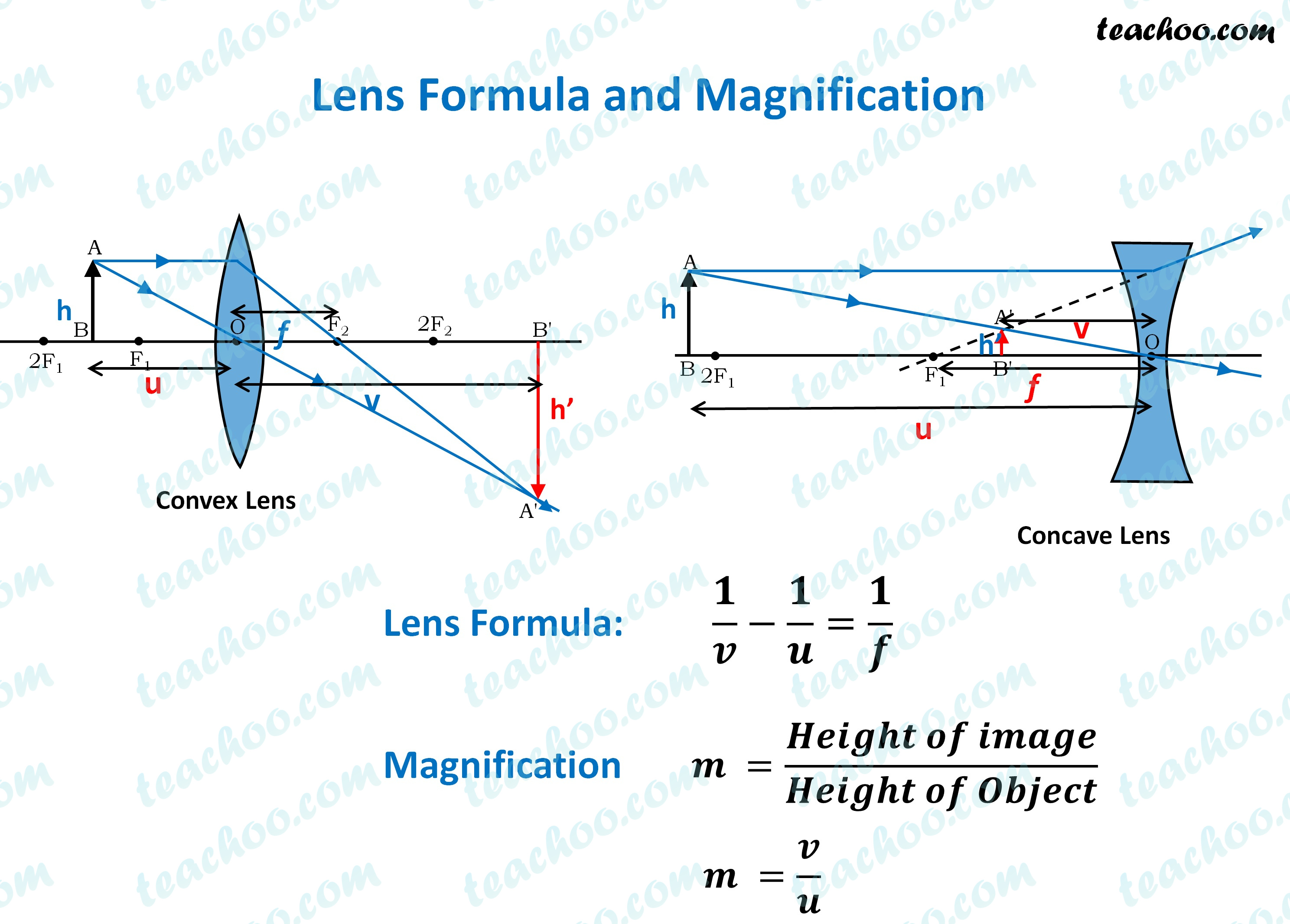
Lens Formula and Magnification
Image
Image
Image
Image

The relationship between object distance, image distance, and focal length for lenses is given by the lens formula.

[
\frac{1}{f} = \frac{1}{v} – \frac{1}{u}
]

Magnification

[
m = \frac{h_i}{h_o} = \frac{v}{u}
]

This formula helps determine image position and size.


Applications of Lenses and Mirrors

Image
Image
Image
Image

Lenses and mirrors are widely used in many optical technologies.

Optical Instruments

  • Telescopes use mirrors or lenses to observe distant objects.
  • Microscopes magnify tiny objects.

Cameras

Camera lenses focus light to capture images.

Eyeglasses

Correct vision defects using lenses.

Solar Energy

Mirrors concentrate sunlight for heating and electricity generation.


Importance of Lenses and Mirrors

Lenses and mirrors are essential in many fields such as:

  • Astronomy
  • Medicine
  • Photography
  • Telecommunications
  • Scientific research

They allow scientists to observe microscopic organisms and distant galaxies.


Conclusion

Lenses and mirrors are essential optical devices used to control and manipulate light. Mirrors reflect light to form images, while lenses refract light to focus or spread rays.

Different types of mirrors and lenses produce different types of images depending on their shape and position relative to objects. These optical components are used in numerous technologies including cameras, microscopes, telescopes, and eyeglasses.

Understanding the principles of lenses and mirrors is fundamental to the study of optics and plays a critical role in the development of modern optical instruments.


Tags

Reflection of Light

Image
Image
Image
Image

Introduction

Reflection of light is one of the most fundamental phenomena in optics. It occurs when a beam of light strikes a surface and bounces back into the same medium instead of passing through it. Reflection allows us to see objects around us because light from sources such as the Sun or lamps reflects off objects and enters our eyes.

The study of reflection has played a significant role in the development of optical science and technology. Many devices and instruments rely on reflection of light, including:

  • Mirrors
  • Telescopes
  • Cameras
  • Optical instruments
  • Solar reflectors

Reflection occurs when electromagnetic waves of light interact with the surface of a material. Depending on the nature of the surface, the reflection can be regular (specular) or irregular (diffuse).

Understanding reflection of light is essential in many fields such as physics, engineering, photography, astronomy, and architecture.


Nature of Light and Reflection

Image
Image
Image
Image

Light behaves as an electromagnetic wave composed of oscillating electric and magnetic fields. When light waves strike a surface, interactions between the electromagnetic wave and the atoms of the material determine whether the light is absorbed, transmitted, or reflected.

When light hits a surface:

  • Some energy may be absorbed
  • Some may be transmitted
  • Some may be reflected

Reflection occurs because atoms in the surface material absorb the incoming light energy and then re-emit it in a specific direction.

This process happens extremely quickly, giving the appearance that the light simply “bounces” off the surface.


Laws of Reflection

Image
Image
Image
Image

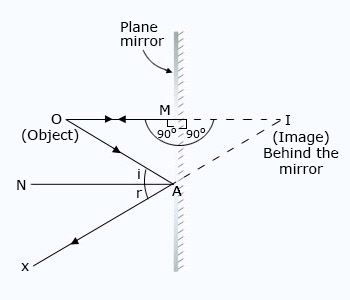
The reflection of light follows two fundamental laws known as the laws of reflection.

First Law of Reflection

The incident ray, the reflected ray, and the normal at the point of incidence lie in the same plane.

Second Law of Reflection

The angle of incidence is equal to the angle of reflection.

[
\theta_i = \theta_r
]

Where:

  • ( \theta_i ) = angle of incidence
  • ( \theta_r ) = angle of reflection

These laws apply to all types of reflecting surfaces.


Types of Reflection

Regular (Specular) Reflection

Image
Image
Image
Image

Regular reflection occurs when light strikes a smooth, polished surface.

Characteristics:

  • Reflected rays remain parallel.
  • Clear images are formed.
  • Occurs in mirrors and polished metals.

Examples include reflection in:

  • Plane mirrors
  • Calm water surfaces
  • Polished metal surfaces

Diffuse Reflection

Image
Image
Image
Image

Diffuse reflection occurs when light strikes a rough surface.

Characteristics:

  • Reflected rays scatter in many directions.
  • No clear image is formed.
  • Most objects in everyday life reflect light diffusely.

Examples include reflection from:

  • Walls
  • Paper
  • Clothing
  • Trees

Diffuse reflection allows objects to be visible from many directions.


Reflection from Plane Mirrors

Image
Image
Image
Image

A plane mirror is a flat reflecting surface.

Characteristics of images formed by plane mirrors:

  • Image is virtual
  • Image is upright
  • Image size equals object size
  • Image distance equals object distance
  • Image is laterally inverted

Lateral Inversion

In lateral inversion:

  • Left appears right
  • Right appears left

This is why writing appears reversed in a mirror.


Reflection from Spherical Mirrors

Concave Mirrors

Image
Image
Image
Image

A concave mirror curves inward like the inside of a sphere.

Properties:

  • Converges parallel rays to a focal point
  • Can produce real or virtual images

Applications:

  • Shaving mirrors
  • Reflecting telescopes
  • Headlights

Convex Mirrors

Image
Image
Image
Image

A convex mirror curves outward.

Properties:

  • Diverges light rays
  • Forms virtual, upright, smaller images
  • Provides a wider field of view

Applications include:

  • Rear-view mirrors
  • Security mirrors
  • Road safety mirrors

Mirror Formula and Magnification

Image
Image
Image
Image

The relationship between object distance, image distance, and focal length is given by the mirror formula.

[
\frac{1}{f} = \frac{1}{v} + \frac{1}{u}
]

Where:

  • (f) = focal length
  • (v) = image distance
  • (u) = object distance

Magnification

[
m = \frac{h_i}{h_o} = \frac{v}{u}
]

Where:

  • (h_i) = image height
  • (h_o) = object height

Magnification indicates how much the image size differs from the object.


Applications of Reflection of Light

Image
Image
Image
Image

Reflection of light is used in many technologies.

Optical Instruments

Telescopes and microscopes use mirrors to focus light.

Periscopes

Used in submarines and observation devices.

Solar Concentrators

Reflectors concentrate sunlight to generate heat and electricity.

Cameras

Mirrors are used in optical viewfinder systems.

Road Safety

Convex mirrors improve visibility at intersections.


Importance of Reflection in Everyday Life

Reflection of light plays an essential role in daily life.

It enables:

  • Vision and perception
  • Optical instruments
  • Communication technologies
  • Lighting and illumination

Without reflection, it would be impossible to see objects around us.


Conclusion

Reflection of light is the process by which light rays bounce off surfaces and return into the same medium. It follows two fundamental laws that describe the relationship between incident and reflected rays.

Reflection occurs in two forms: regular reflection from smooth surfaces and diffuse reflection from rough surfaces. Mirrors use reflection to form images, and different types of mirrors produce different types of images.

The principles of reflection are used in numerous technologies such as telescopes, cameras, mirrors, and solar energy systems. Understanding reflection is essential for studying optics and many applications in science and engineering.


Tags