Tag Archives: Self Awareness

🧠 Emotional Intelligence (EI) — A Comprehensive Detailed Study


🌍 Introduction to Emotional Intelligence

Image
Image
Image
Image

Emotional Intelligence (EI), often referred to as Emotional Quotient (EQ), is the ability to recognize, understand, manage, and influence emotions—both one’s own and those of others. While traditional intelligence (IQ) focuses on cognitive abilities like reasoning and problem-solving, emotional intelligence emphasizes emotional awareness, empathy, and interpersonal skills.

In today’s world, emotional intelligence is considered equally—if not more—important than IQ for achieving personal success, effective leadership, strong relationships, and mental well-being. It plays a crucial role in how individuals handle stress, communicate, make decisions, and navigate social complexities.


🧭 Meaning and Definition of Emotional Intelligence


🔹 Definition

Emotional Intelligence can be defined as:

“The capacity to be aware of, control, and express emotions, and to handle interpersonal relationships judiciously and empathetically.”


🔹 Core Idea

  • Understanding emotions
  • Managing emotional responses
  • Using emotions constructively
  • Building meaningful relationships

🧠 Components of Emotional Intelligence


🌟 1. Self-Awareness

Image
Image
Image
Image

🔹 Meaning

Self-awareness is the ability to recognize and understand your own emotions.

🔹 Key Aspects

  • Emotional awareness
  • Accurate self-assessment
  • Self-confidence

🔹 Importance

  • Foundation of emotional intelligence
  • Helps in decision-making

🌟 2. Self-Regulation

Image
Image
Image
Image

🔹 Meaning

The ability to control or redirect disruptive emotions and impulses.

🔹 Key Aspects

  • Emotional control
  • Adaptability
  • Trustworthiness

🔹 Importance

  • Prevents impulsive behavior
  • Promotes stability

🌟 3. Motivation

Image
Image
Image
Image

🔹 Meaning

The drive to achieve goals with energy and persistence.

🔹 Key Aspects

  • Commitment
  • Initiative
  • Optimism

🔹 Importance

  • Encourages productivity
  • Helps overcome challenges

🌟 4. Empathy

Image
Image
Image
Image

🔹 Meaning

The ability to understand and share the feelings of others.

🔹 Key Aspects

  • Perspective-taking
  • Compassion
  • Sensitivity

🔹 Importance

  • Builds strong relationships
  • Enhances communication

🌟 5. Social Skills

Image
Image
Image
Image

🔹 Meaning

The ability to manage relationships and build networks.

🔹 Key Aspects

  • Communication
  • Conflict resolution
  • Leadership

🔹 Importance

  • Essential for teamwork
  • Improves interpersonal relations

🌿 Nature of Emotional Intelligence


🔹 1. Learnable and Developable

  • EI can be improved through practice

🔹 2. Dynamic

  • Changes with experience and environment

🔹 3. Universal

  • Relevant across cultures and professions

🔹 4. Interpersonal and Intrapersonal

  • Involves both self and others

🧠 Emotional Intelligence vs Intelligence Quotient (IQ)


AspectEmotional Intelligence (EI)Intelligence Quotient (IQ)
FocusEmotionsLogic & reasoning
NatureLearnableLargely fixed
ImportanceRelationships & leadershipAcademic success

🌍 Importance of Emotional Intelligence


🔹 1. Personal Development

  • Enhances self-awareness
  • Improves emotional control

🔹 2. Mental Health

  • Reduces stress and anxiety
  • Promotes well-being

🔹 3. Relationships

  • Builds trust and empathy
  • Improves communication

🔹 4. Academic Success

  • Better focus and motivation

🔹 5. Workplace Success

  • Leadership and teamwork

🌱 Emotional Intelligence in Daily Life


🔹 At Home

  • Understanding family emotions
  • Managing conflicts

🔹 In School

  • Handling peer pressure
  • Improving focus

🔹 In Workplace

  • Leadership
  • Team collaboration

🌍 Emotional Intelligence in Leadership


  • Inspires and motivates others
  • Builds trust
  • Handles conflicts effectively

🌱 Development of Emotional Intelligence


🔹 Methods

1. Self-Reflection

  • Understanding emotions

2. Mindfulness

  • Staying present

3. Feedback

  • Learning from others

4. Practice Empathy

  • Understanding others

5. Emotional Control Techniques

  • Breathing exercises
  • Stress management

⚖️ Challenges to Emotional Intelligence


🔹 Emotional Instability

  • Mood swings

🔹 Lack of Awareness

  • Ignoring emotions

🔹 Stress

  • Overwhelming situations

🔹 Social Barriers

  • Poor communication

🌍 Emotional Intelligence and Human Values


  • Promotes empathy and compassion
  • Encourages ethical behavior
  • Strengthens relationships

🌱 Emotional Intelligence and Decision-Making


  • Reduces impulsive decisions
  • Improves judgment

🌍 Role in Conflict Resolution


  • Understanding perspectives
  • Managing emotions
  • Finding solutions

🌱 Emotional Intelligence in the Digital Age


  • Managing online behavior
  • Avoiding cyber conflicts
  • Digital empathy

🌟 Benefits of High Emotional Intelligence


  • Better relationships
  • Strong leadership
  • Improved mental health
  • Greater success

⚠️ Consequences of Low Emotional Intelligence


  • Poor relationships
  • Stress and anxiety
  • Conflict

🌍 Emotional Intelligence and Success


  • More important than IQ in many cases
  • Key to leadership and teamwork

🌟 Conclusion

Emotional intelligence is a vital skill that influences every aspect of human life—from personal growth to professional success. It enables individuals to understand themselves, connect with others, and navigate complex social situations effectively.

In a world that is increasingly interconnected and emotionally demanding, developing emotional intelligence is essential for achieving balance, harmony, and success. By cultivating self-awareness, empathy, and emotional regulation, individuals can lead more fulfilling and meaningful lives.



🏷️ Tags

🧠 Self-Awareness and Personal Identity — A Comprehensive Detailed Study


🌱 Introduction

Image
Image
Image
Image

Self-awareness and personal identity are foundational concepts in human values, psychology, and personal development. They help individuals understand who they are, what they believe, and how they relate to the world around them. These concepts influence behavior, decision-making, relationships, and overall life satisfaction.

Self-awareness is the ability to recognize one’s thoughts, emotions, strengths, weaknesses, and motivations. Personal identity, on the other hand, is the sense of self that develops over time, shaped by experiences, culture, values, and social interactions.

Together, they form the basis of authentic living, emotional intelligence, and ethical behavior.


🧭 Meaning of Self-Awareness


🔹 Definition

Self-awareness is the conscious knowledge of one’s own character, feelings, motives, and desires.

It involves:

  • Understanding internal states (thoughts, emotions)
  • Recognizing how others perceive you
  • Being mindful of your actions and their consequences

🔹 Types of Self-Awareness

1. Internal Self-Awareness

  • Understanding your own values, passions, and aspirations
  • Knowing your strengths and weaknesses

2. External Self-Awareness

  • Understanding how others view you
  • Awareness of social impact and behavior

🔹 Key Elements of Self-Awareness

  • Self-concept – beliefs about oneself
  • Self-esteem – evaluation of self-worth
  • Self-image – perception of one’s appearance and personality

🌿 Meaning of Personal Identity


🔹 Definition

Personal identity refers to the distinctive characteristics, beliefs, values, and experiences that define an individual.

It answers the question:
👉 “Who am I?”


🔹 Components of Personal Identity

  • Personality traits
  • Beliefs and values
  • Culture and background
  • Roles (student, friend, citizen)
  • Life experiences

🔹 Types of Identity

  • Individual Identity – unique traits
  • Social Identity – group affiliations
  • Cultural Identity – traditions and customs
  • Digital Identity – online presence

🌟 Nature of Self-Awareness


🔹 1. Conscious and Reflective

Image
Image
Image
Image

Self-awareness requires conscious effort:

  • Reflection
  • Introspection
  • Mindfulness

🔹 2. Dynamic and Evolving

Image
Image
Image
Image
  • Changes with experiences
  • Develops over time
  • Influenced by learning

🔹 3. Subjective yet Objective

Image
Image
Image
Image
  • Internal perception (subjective)
  • External feedback (objective)

🔹 4. Foundational to Behavior

Image
Image
Image
Image
  • Influences decisions
  • Shapes actions
  • Affects relationships

🌍 Nature of Personal Identity


🔹 1. Unique and Individual

Image
Image
Image
Image
  • Each person is different
  • No two identities are identical

🔹 2. Socially Constructed

Image
Image
Image
Image
  • Influenced by society
  • Shaped by relationships

🔹 3. Multi-Dimensional

Image
Image
Image
Image
  • Includes multiple roles
  • Combines various aspects of life

🔹 4. Dynamic and Evolving

Image
Image
Image
Image
  • Changes over time
  • Influenced by experiences

🧠 Importance of Self-Awareness


🔹 1. Better Decision-Making

  • Helps align actions with values

🔹 2. Emotional Regulation

  • Improves control over emotions

🔹 3. Improved Relationships

  • Enhances empathy and communication

🔹 4. Personal Growth

  • Identifies strengths and weaknesses

🔹 5. Leadership Development

  • Essential for effective leadership

🌟 Importance of Personal Identity


🔹 1. Sense of Belonging

  • Connects individuals to groups

🔹 2. Self-Confidence

  • Builds self-esteem

🔹 3. Life Direction

  • Provides purpose

🔹 4. Stability and Consistency

  • Maintains continuity in life

🔄 Relationship Between Self-Awareness and Identity

  • Self-awareness helps understand identity
  • Identity influences self-awareness
  • Both are interconnected and interdependent

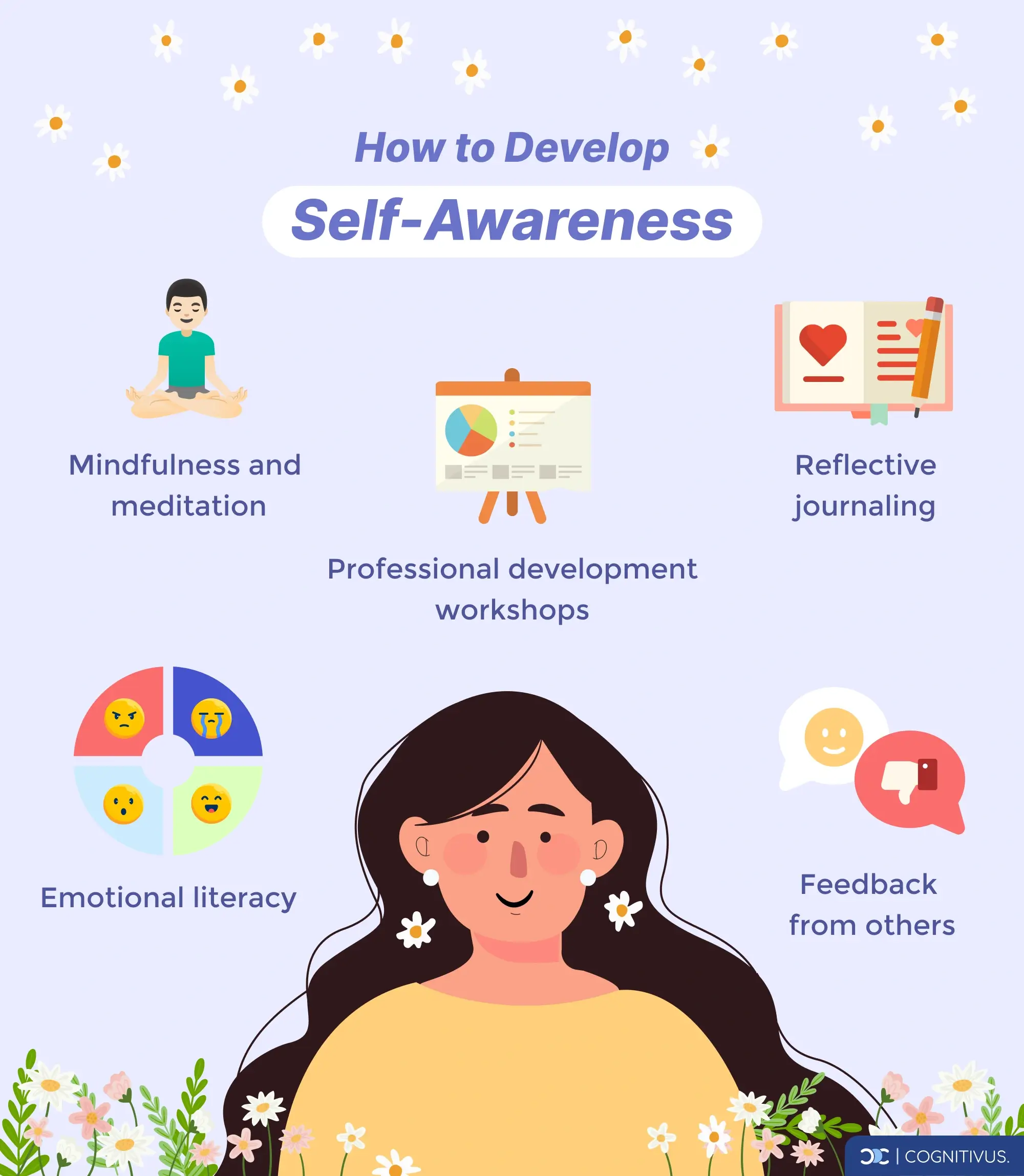
🌱 Development of Self-Awareness


🔹 Methods:

1. Reflection and Journaling

  • Writing thoughts and feelings

2. Mindfulness and Meditation

  • Being present in the moment

3. Feedback from Others

  • Constructive criticism

4. Self-Assessment Tools

  • Personality tests

🌍 Development of Personal Identity


🔹 Influencing Factors:

  • Family
  • Culture
  • Education
  • Experiences
  • Media

⚖️ Challenges in Self-Awareness and Identity


🔹 Internal Conflicts

  • Confusion about goals

🔹 Social Pressure

  • Conformity vs individuality

🔹 Identity Crisis

  • Common during adolescence

🔹 Digital Influence

  • Online vs real identity

🌐 Role in Modern Society


🔹 Digital Age Impact

  • Social media shapes identity

🔹 Globalization

  • Exposure to diverse cultures

🔹 Career and Personal Growth

  • Identity linked to profession

🌱 Self-Awareness and Emotional Intelligence

  • Self-awareness is a key component
  • Enhances empathy and social skills

🌍 Ethical Implications

  • Promotes responsible behavior
  • Encourages authenticity
  • Supports moral decision-making

🧩 Practical Applications


🔹 Education

  • Helps students understand themselves

🔹 Workplace

  • Improves teamwork and leadership

🔹 Relationships

  • Enhances communication

🌟 Conclusion

Self-awareness and personal identity are essential for understanding oneself and navigating life effectively. They influence behavior, relationships, and decision-making, forming the foundation of personal growth and social interaction.

In a rapidly changing world, developing self-awareness and a strong personal identity helps individuals remain grounded, make ethical choices, and lead meaningful lives. By cultivating these qualities, people can achieve greater clarity, confidence, and purpose.