

Introduction
Particle detectors are scientific instruments used to detect, measure, and analyze subatomic particles such as electrons, protons, neutrons, photons, muons, and other elementary particles. These detectors are essential tools in experimental physics, particularly in nuclear physics, particle physics, and astrophysics.
Subatomic particles are extremely small and cannot be observed directly. Instead, scientists rely on detectors that measure the effects these particles produce when they interact with matter. These interactions may produce ionization, light emission, electrical signals, or visible tracks that reveal the presence and properties of the particles.
Particle detectors have played a central role in many major discoveries in physics, including the identification of new particles and the confirmation of theoretical predictions. Large research facilities such as CERN use sophisticated particle detectors to study high-energy particle collisions.
Beyond fundamental physics, particle detectors are also used in medical imaging, environmental monitoring, radiation protection, and industrial applications.
Basic Principles of Particle Detection
When a particle passes through matter, it interacts with atoms and molecules in the material. These interactions create measurable signals that detectors can record.
Common interaction mechanisms include:
- Ionization of atoms
- Excitation of molecules
- Production of light (scintillation)
- Electrical charge generation
- Creation of particle tracks
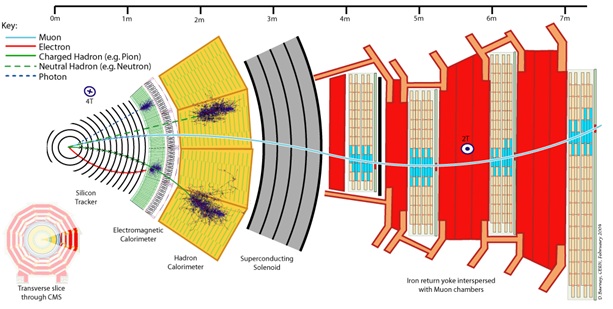
Charged particles are easier to detect because they interact strongly with matter by ionizing atoms along their path. Neutral particles such as neutrons or photons are detected indirectly through secondary interactions.
Particle detectors convert these physical effects into electrical signals that can be measured and analyzed.
Important Quantities Measured by Detectors
Particle detectors measure several physical properties of particles.
Energy
Determining particle energy helps identify the particle type and interaction process.
Momentum
Momentum measurements provide information about particle motion.
Charge
Some detectors determine whether a particle is positively or negatively charged.
Velocity
Velocity measurements help identify particles and study relativistic effects.
Direction of Motion
Tracking detectors reveal the path followed by particles.
Classification of Particle Detectors
Particle detectors can be classified according to the physical principle used to detect radiation.
Major categories include:
- Ionization detectors
- Scintillation detectors
- Semiconductor detectors
- Track detectors
- Cherenkov detectors
- Calorimeters
Each detector type is optimized for specific particle detection tasks.
Ionization Detectors


Ionization detectors measure the electrical charges produced when particles ionize atoms in a gas.
A typical ionization detector consists of a chamber filled with gas between two electrodes.
When radiation enters the chamber:
- Gas molecules are ionized.
- Electrons and positive ions are produced.
- An electric field collects these charges.
The resulting current or voltage signal indicates the presence of radiation.
Ionization Chamber
An ionization chamber measures radiation intensity by collecting ionized charges.
These detectors are widely used in radiation dosimetry.
Proportional Counter
In proportional counters, the electrical signal is proportional to the energy deposited by the particle.
This allows measurement of particle energy.
Geiger–Müller Counter
The Geiger–Müller counter produces large pulses for each detected particle.
It is widely used in radiation monitoring and safety applications.
Scintillation Detectors
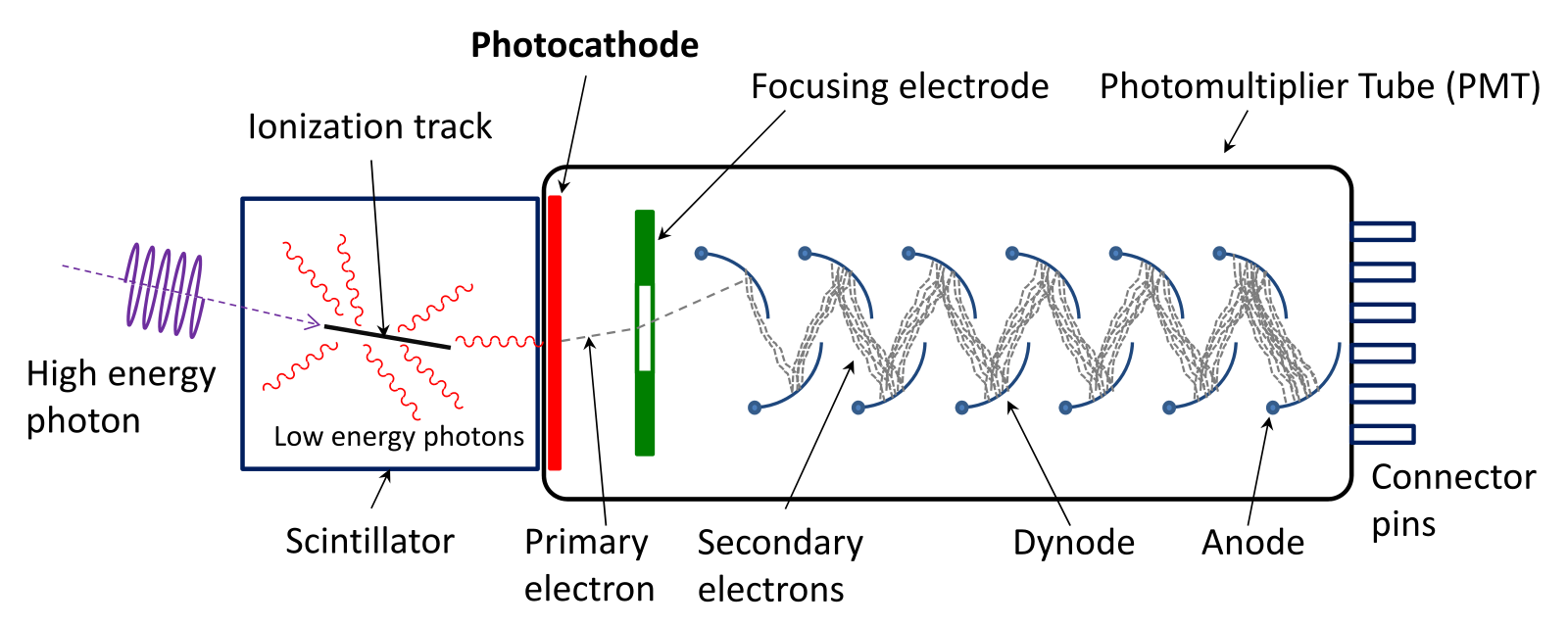


Scintillation detectors detect radiation through flashes of light called scintillations.
When a charged particle enters a scintillator material:
- Atoms become excited.
- Light photons are emitted.
- A photodetector converts the light into an electrical signal.
Common scintillator materials include:
- Sodium iodide crystals
- Plastic scintillators
- Liquid scintillators
Scintillation detectors are widely used for detecting gamma rays and high-energy particles.
Semiconductor Detectors


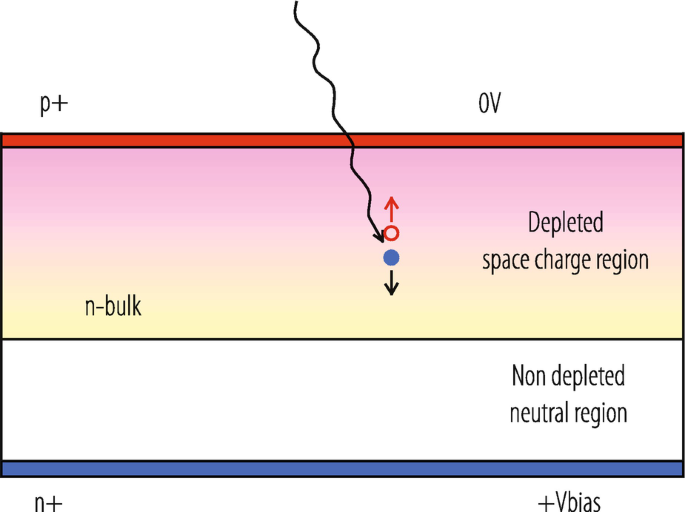
Semiconductor detectors use materials such as silicon or germanium to detect radiation.
When a particle enters the semiconductor crystal:
- It creates electron–hole pairs.
- An electric field collects these charges.
- The resulting signal is proportional to the particle’s energy.
Semiconductor detectors provide excellent energy resolution.
They are widely used in gamma-ray spectroscopy and particle physics experiments.
Track Detectors

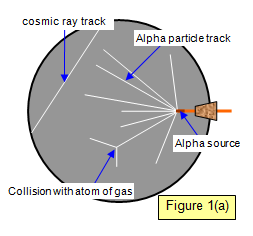
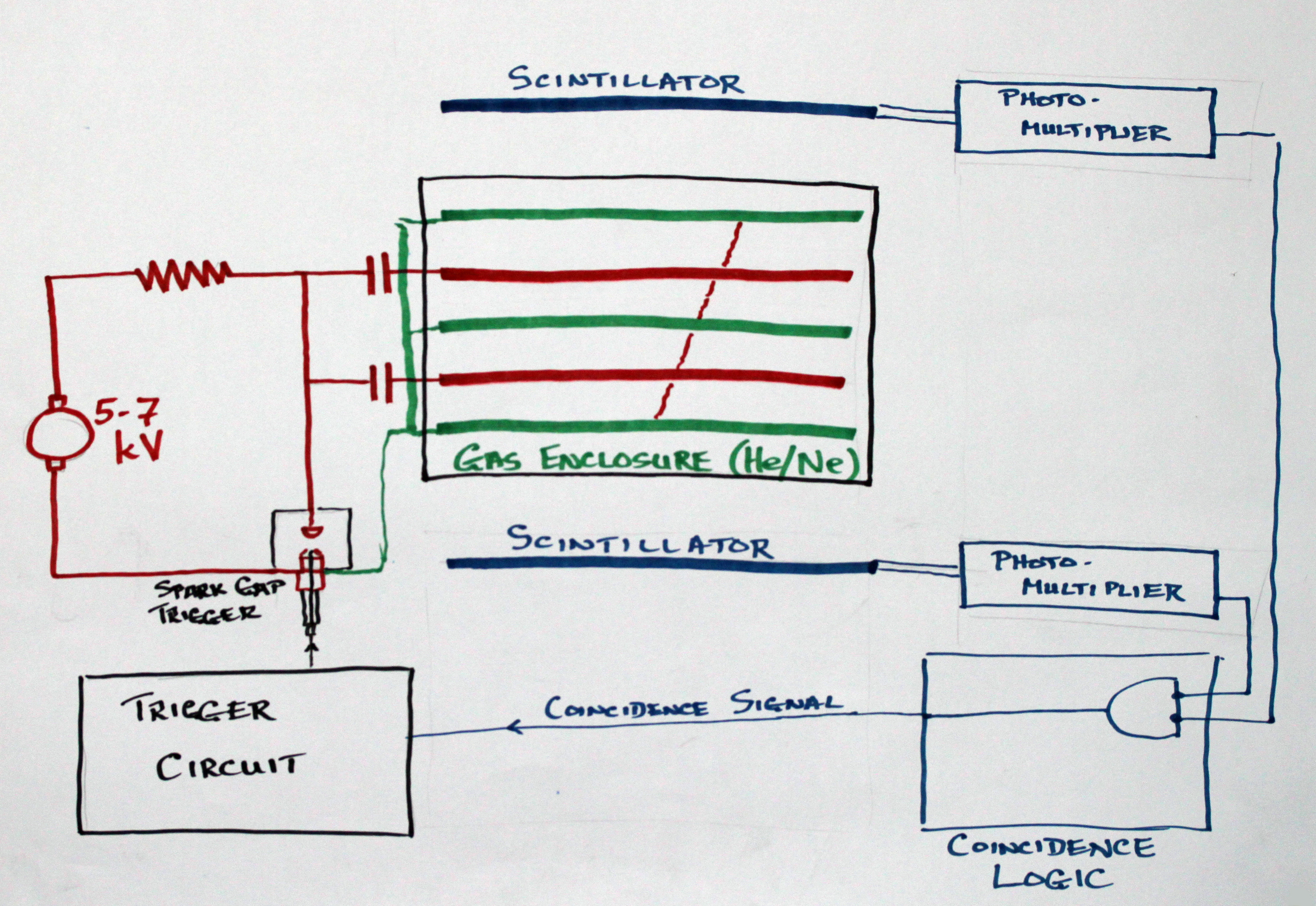
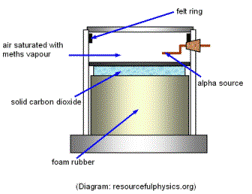
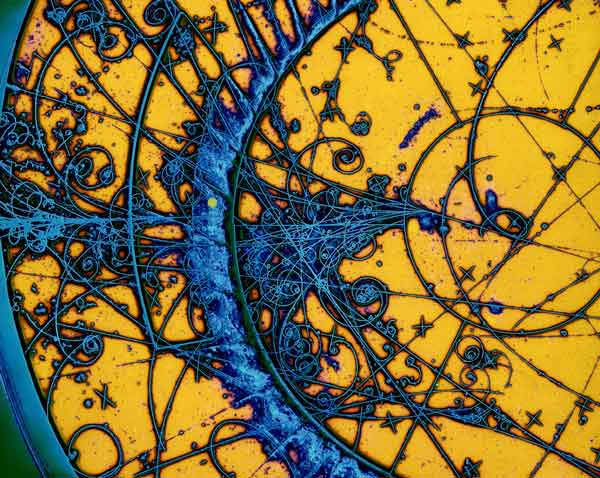
Track detectors allow scientists to observe the paths of charged particles.
These detectors reveal particle trajectories in a medium.
Cloud Chamber
A cloud chamber contains supersaturated vapor.
Charged particles ionize the vapor, forming visible condensation trails.
Bubble Chamber
Bubble chambers contain superheated liquid.
Particles passing through create bubble trails that reveal their paths.
Spark Chamber
Spark chambers produce sparks along the path of ionized particles.
These detectors were widely used in early particle physics experiments.
Cherenkov Detectors


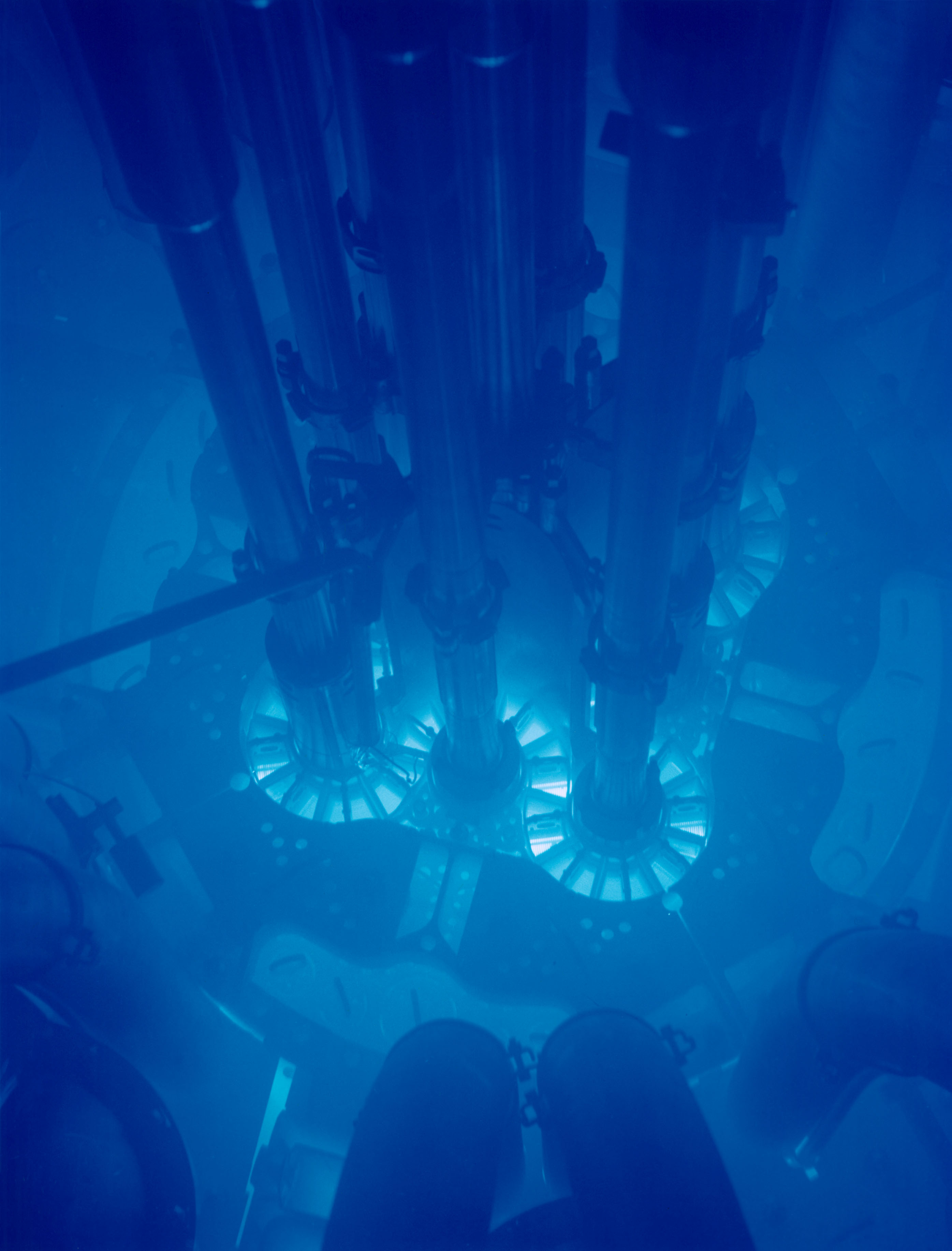

Cherenkov detectors detect particles moving faster than the speed of light in a medium.
When this occurs, a cone of blue light called Cherenkov radiation is produced.
This phenomenon is similar to a sonic boom produced by supersonic aircraft.
Cherenkov detectors measure the angle and intensity of emitted light to determine particle velocity.
Calorimeters
Calorimeters measure particle energy by absorbing the particle completely.
When particles enter a calorimeter, they produce cascades of secondary particles called particle showers.
The energy deposited by these showers is measured.
Two main types exist:
Electromagnetic Calorimeters
Detect electrons and photons.
Hadronic Calorimeters
Detect particles such as protons and neutrons.
Calorimeters are important components of modern particle detectors.
Large Particle Detector Systems

Modern high-energy physics experiments use complex detectors consisting of multiple subsystems.
These systems may include:
- Tracking detectors
- Calorimeters
- Muon detectors
- Magnetic field systems
These components work together to reconstruct particle interactions in detail.
Large detectors used at CERN can weigh thousands of tons and contain millions of detection channels.
Particle Detection in Astrophysics
Particle detectors are also used in astrophysics to study cosmic radiation.
Examples include:
- Cosmic ray detectors
- Neutrino detectors
- Gamma-ray telescopes
These instruments detect high-energy particles originating from space.
Applications of Particle Detectors
Particle detectors have many practical applications.
Medical Imaging
Particle detectors are used in imaging technologies such as:
- Positron emission tomography
- Gamma cameras
These techniques help diagnose diseases.
Radiation Safety
Geiger counters and other detectors monitor radiation levels in laboratories and nuclear facilities.
Environmental Monitoring
Particle detectors detect radioactive contamination in the environment.
Industrial Applications
Radiation detectors are used to measure thickness and density in manufacturing processes.
Advances in Detector Technology
Modern particle detectors use advanced technologies such as:
- Silicon pixel detectors
- Time projection chambers
- Liquid argon detectors
- Digital data acquisition systems
These technologies allow extremely precise measurements of particle interactions.
Challenges in Particle Detection
Particle detection involves several challenges.
High Event Rates
Large experiments produce millions of events per second.
Small Signal Sizes
Signals generated by particles are extremely small.
Data Processing
Large volumes of data must be processed and analyzed.
Scientists develop advanced electronics and computing methods to overcome these challenges.
Future Developments
Future particle detectors aim to achieve higher precision and sensitivity.
New technologies are being developed for:
- Dark matter detection
- Neutrino experiments
- Next-generation particle accelerators
These detectors may help answer fundamental questions about the structure of matter and the universe.
Conclusion
Particle detectors are essential tools in modern physics that allow scientists to observe and analyze subatomic particles. By measuring the effects of particle interactions with matter, these instruments provide valuable information about particle properties such as energy, momentum, charge, and trajectory.
Various types of detectors—including ionization detectors, scintillation detectors, semiconductor detectors, track detectors, Cherenkov detectors, and calorimeters—serve different roles in experimental physics. These detectors have enabled major discoveries in particle physics and continue to advance our understanding of fundamental particles and forces.
Beyond fundamental research, particle detectors also play important roles in medicine, industry, environmental monitoring, and security. As detector technology continues to evolve, it will remain a key component of scientific exploration and technological innovation.