Tag Archives: superposition principle

Beats in Sound Waves

Image
Image
Image
Image

1. Introduction to Beats

The phenomenon of beats is one of the most interesting effects observed in sound waves and wave interference. Beats occur when two sound waves of slightly different frequencies travel through the same medium and interfere with each other. The result of this interference is a periodic variation in the loudness or intensity of the sound.

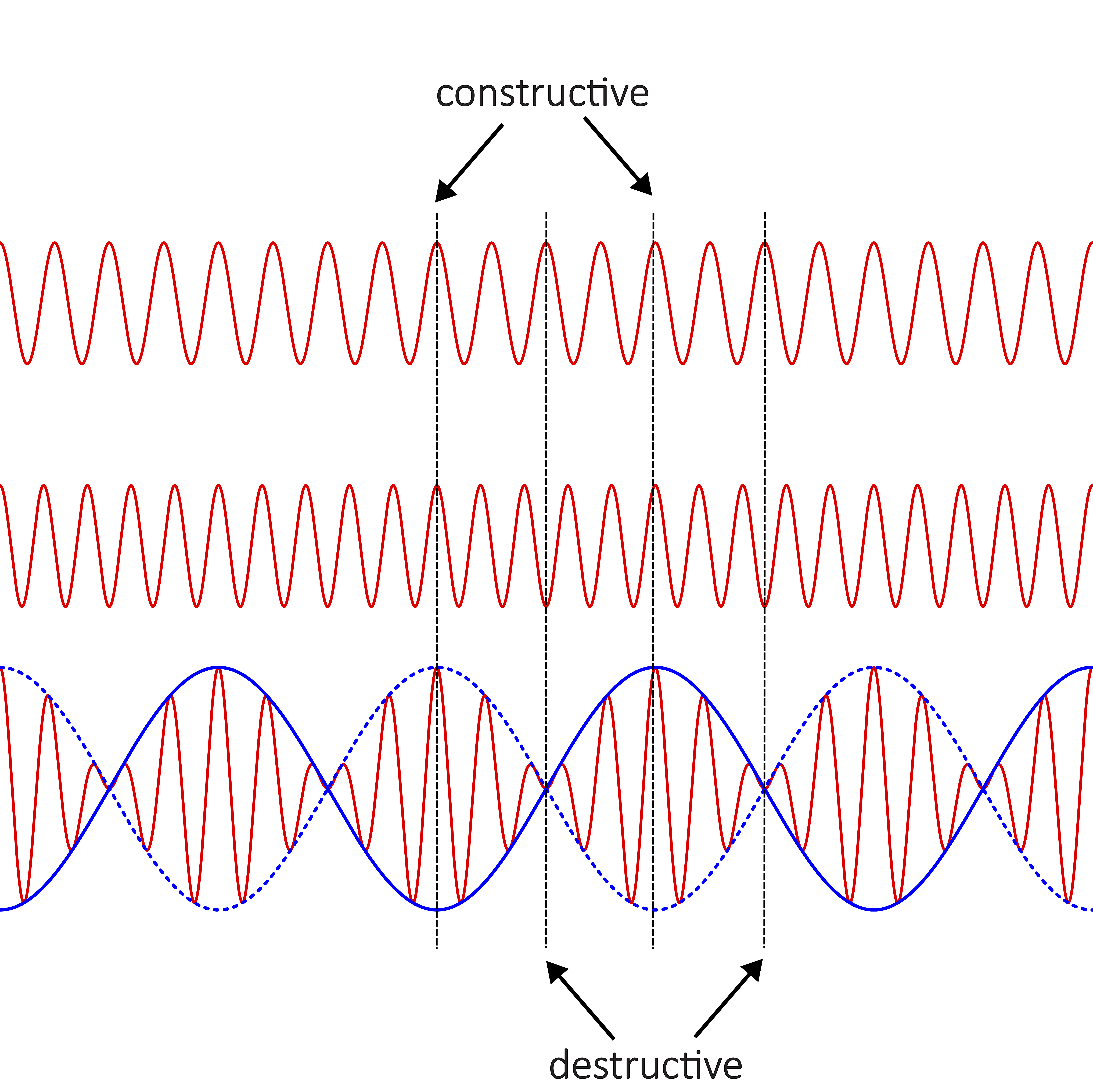
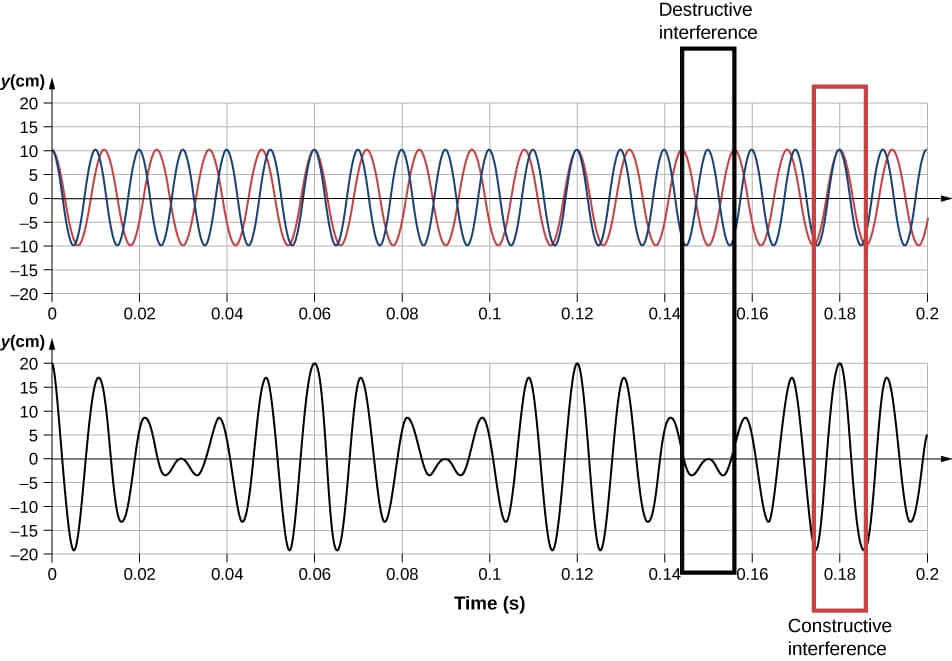
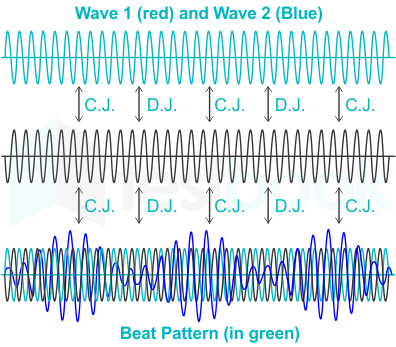
When these two waves overlap, they alternately reinforce and cancel each other due to constructive and destructive interference. This produces a rhythmic pattern of loud and soft sounds that can be heard by the human ear. The periodic rise and fall in sound intensity is known as beats.

Beats are commonly experienced in music, especially when tuning musical instruments. For example, when two musical instruments are slightly out of tune, the sound they produce creates a pulsating effect due to beats. Musicians often listen carefully to these beats to adjust the tuning of their instruments.

The study of beats is important in acoustics, music theory, and physics because it provides insight into wave interference, sound frequency analysis, and harmonic vibrations.


2. Definition of Beats

Beats can be defined as:

Beats are periodic variations in the intensity or loudness of sound produced when two sound waves of slightly different frequencies interfere with each other.

In this phenomenon:

  • The waves alternately reinforce and cancel each other.
  • This produces alternating loud and soft sounds.
  • The loudness variation occurs at a frequency called the beat frequency.

The human ear perceives beats when the difference between the frequencies of the two waves is small.


3. Formation of Beats

Image
Image
Image
Image

Beats occur due to the principle of superposition of waves.

Consider two sound waves traveling in the same direction.

Wave 1:

y₁ = A sin(2πf₁t)

Wave 2:

y₂ = A sin(2πf₂t)

Where:

A = amplitude
f₁ = frequency of first wave
f₂ = frequency of second wave

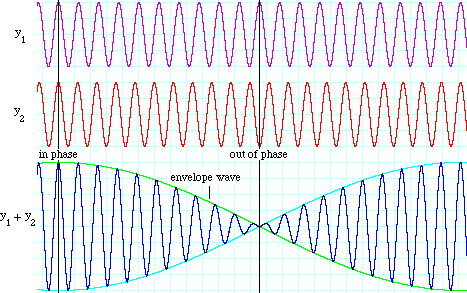
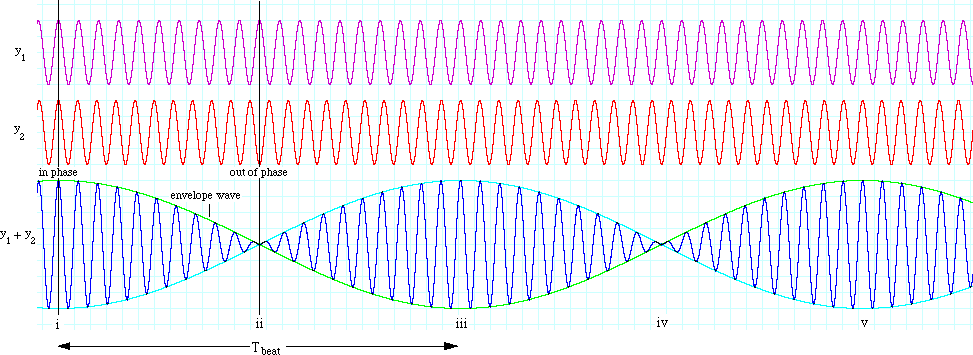
When these waves combine, they produce a resultant wave whose amplitude varies periodically.

This variation in amplitude produces the characteristic pulsating sound known as beats.

Constructive Interference

When the waves are in phase:

  • Amplitudes add together
  • Sound becomes louder

Destructive Interference

When the waves are out of phase:

  • Amplitudes cancel each other
  • Sound becomes weaker or silent

These alternating conditions create the beat effect.


4. Beat Frequency

The number of beats heard per second is called the beat frequency.

Beat frequency formula:

f_beat = | f₁ − f₂ |

Where:

f₁ = frequency of first sound wave
f₂ = frequency of second sound wave

The beat frequency equals the absolute difference between the two frequencies.

Example

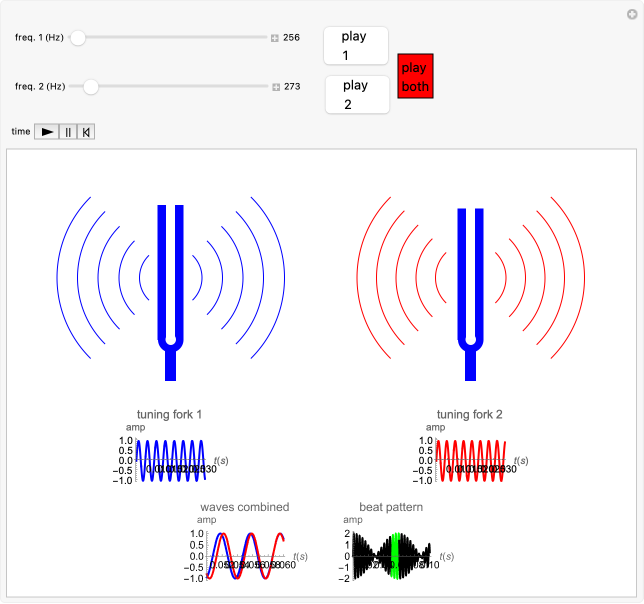
If two tuning forks produce frequencies:

f₁ = 256 Hz
f₂ = 260 Hz

Then:

f_beat = |260 − 256|

f_beat = 4 Hz

This means four beats are heard every second.


5. Mathematical Explanation of Beats

The resultant displacement of two waves can be derived mathematically.

Consider two waves:

y₁ = A sin(2πf₁t)

y₂ = A sin(2πf₂t)

Using trigonometric identities:

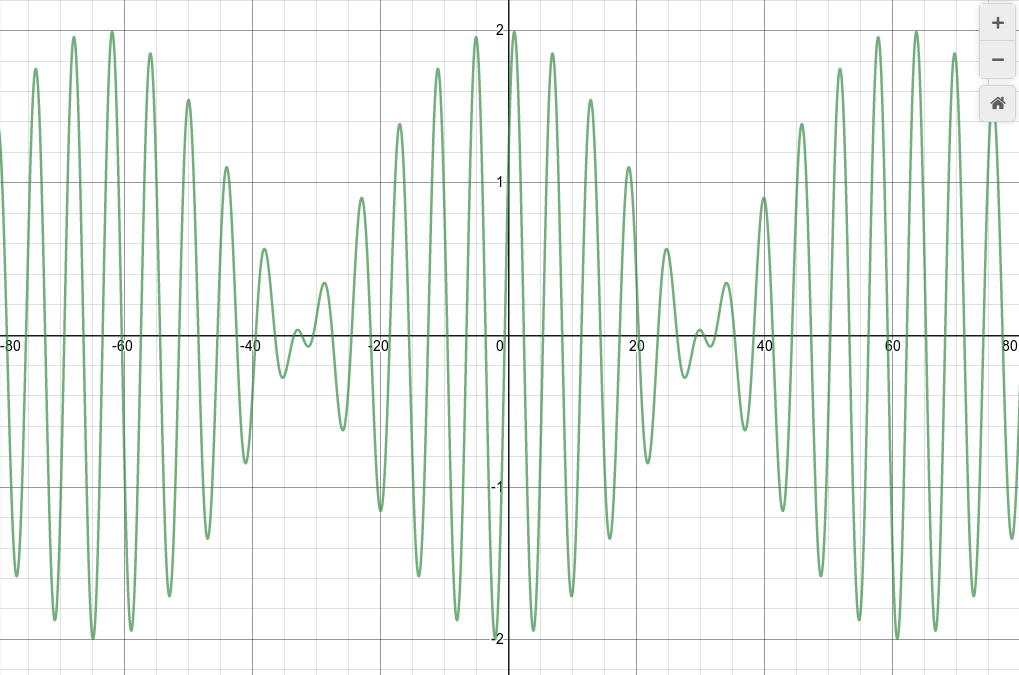
y = 2A cos[π(f₁ − f₂)t] sin[π(f₁ + f₂)t]

This equation shows that the amplitude varies with time according to the cosine term.

This varying amplitude produces the envelope of the wave, which corresponds to the beats heard.


6. Beat Envelope
Image
Image
Image
Image

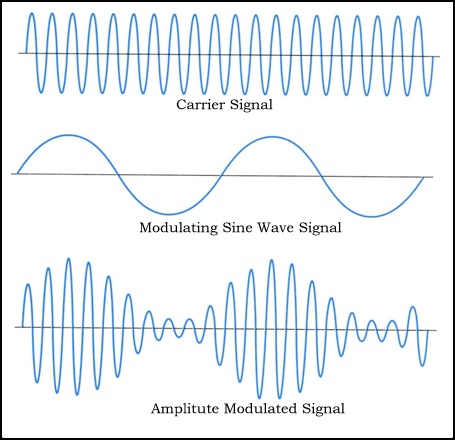
The beat phenomenon produces a wave whose amplitude changes periodically.

The outer curve of this changing amplitude is called the beat envelope.

Characteristics of the beat envelope:

  • It represents the variation in sound intensity.
  • Peaks correspond to loud sounds.
  • Valleys correspond to soft sounds.

This pattern is similar to amplitude modulation used in radio communication.


7. Conditions for Beats

Certain conditions must be satisfied for beats to occur.

Small Frequency Difference

The frequencies of the two waves must differ slightly.

If the difference is too large, separate tones are heard instead of beats.

Same Amplitude

The waves should have similar amplitudes for clear beat formation.

Same Medium

The waves must travel through the same medium.

Similar Direction

The waves should propagate in approximately the same direction.


8. Beats in Musical Instruments

Image
Image
Image
Image

Beats are widely used in music for tuning instruments.

Instrument Tuning

When two instruments produce slightly different frequencies, beats are heard.

Musicians adjust the tuning until the beats disappear.

When beats stop:

  • The frequencies become equal
  • The instruments are properly tuned

Example

Two tuning forks may produce frequencies close to each other.

If beats are heard, the frequencies differ.

By adjusting one fork until beats vanish, the correct frequency is achieved.


9. Applications of Beats

The phenomenon of beats has many practical applications.

Musical Tuning

Musicians rely on beats to tune instruments accurately.

Determining Unknown Frequency

Beats help determine the frequency of a sound source.

By comparing it with a known frequency, the unknown frequency can be calculated.

Acoustics Research

Beats help analyze sound wave properties and interference patterns.

Signal Processing

Beat patterns are used in certain electronic signal processing techniques.


10. Beats in Electronics and Communication

The concept of beats also appears in electronics and radio technology.

Heterodyning

Heterodyning is a process where two frequencies mix to produce a beat frequency.

This technique is used in:

  • Radio receivers
  • Radar systems
  • Signal modulation

The resulting beat frequency can be easier to detect and analyze.


11. Difference Between Beats and Interference

Although beats result from interference, they are not exactly the same phenomenon.

Interference refers to the general superposition of waves.

Beats are a specific type of interference where the frequencies differ slightly and produce a rhythmic variation in amplitude.

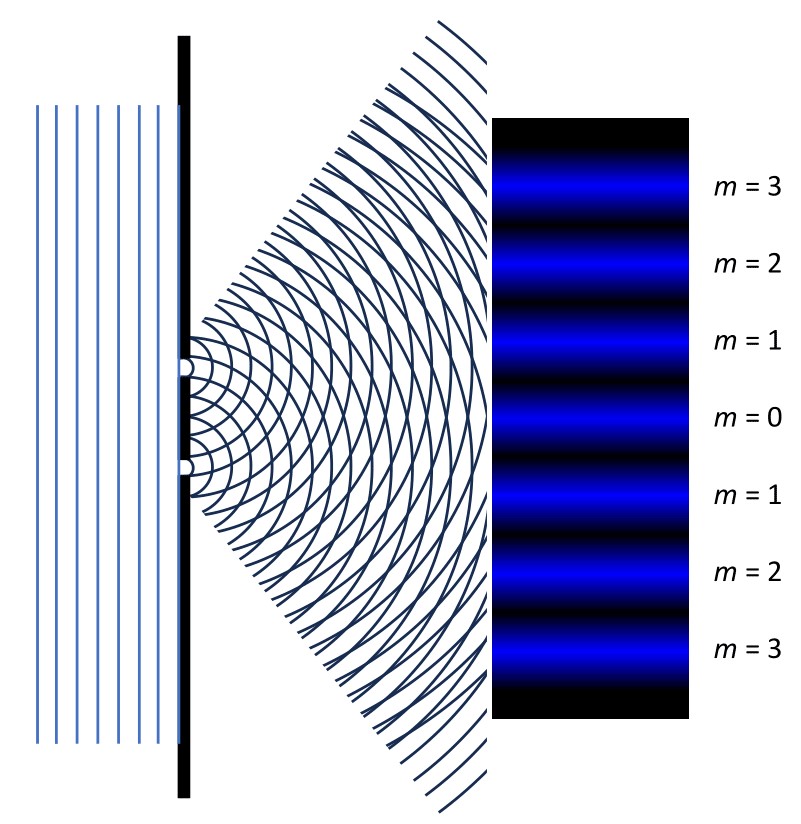
In interference patterns such as double-slit experiments, the pattern is spatial.

In beats, the variation occurs with time.


12. Human Perception of Beats

The human ear can detect beats only when the frequency difference is small.

If the difference is less than about 10 Hz, beats are clearly heard.

If the difference becomes larger:

  • Beats become too rapid
  • The ear perceives two separate tones instead.

This limitation depends on the sensitivity of human hearing.


13. Beats in Nature

Beats can occur naturally when multiple sound sources interact.

Examples include:

  • Musical instruments playing together
  • Vibrations of nearby machinery
  • Sound waves produced by wind instruments

In large spaces like concert halls, multiple reflections can also create beat-like patterns.


14. Importance of Beats in Physics

Beats provide important insights into wave behavior.

They demonstrate:

  • Wave interference
  • Superposition principle
  • Sound frequency analysis
  • Amplitude modulation

Beats also help physicists measure frequencies with high precision.

Because of this, beats are an important concept in acoustics and wave physics.


15. Experimental Demonstration of Beats

Beats can be easily demonstrated using simple experiments.

Tuning Fork Experiment

  1. Strike two tuning forks with slightly different frequencies.
  2. Hold them close together.
  3. A periodic increase and decrease in sound intensity is heard.

Signal Generator Experiment

Two signal generators can produce sound waves with close frequencies.

When played together through speakers, beats are observed.


Conclusion

Beats are a fascinating phenomenon that arises when two sound waves of slightly different frequencies interfere with each other. This interference produces a periodic variation in sound intensity, resulting in alternating loud and soft sounds that can be heard as beats.

The number of beats per second is determined by the difference between the frequencies of the two waves. This property allows beats to be used for measuring frequencies and tuning musical instruments.

The phenomenon of beats illustrates the principle of superposition and demonstrates how waves interact with one another. Beats are important not only in acoustics and music but also in electronics, communication technology, and signal processing.

Understanding beats provides valuable insight into the behavior of waves and the nature of sound. It also highlights how wave interference can produce complex patterns and effects that play an important role in both science and everyday life.


Tags:

Interference of Waves

Image
Image
Image
Image

1. Introduction to Interference of Waves

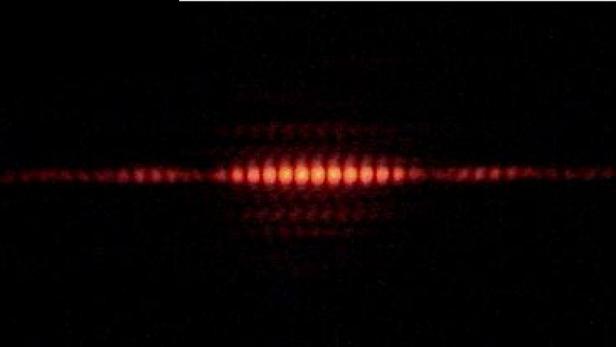
Interference of waves is one of the most fascinating phenomena in physics. It occurs when two or more waves overlap in space and combine to produce a new wave pattern. This process results in regions where waves reinforce each other and regions where they cancel each other out. The resulting pattern is called an interference pattern.

Wave interference demonstrates the fundamental principle known as the superposition principle, which states that when multiple waves occupy the same region of space, the resultant displacement at any point is equal to the algebraic sum of the displacements caused by each individual wave.

Interference is observed in many different types of waves including sound waves, water waves, light waves, radio waves, and even matter waves in quantum mechanics. It plays a crucial role in many scientific and technological applications such as optics, acoustics, signal processing, and communication systems.

One of the most famous demonstrations of wave interference is the double-slit experiment, which showed that light behaves like a wave by producing alternating bright and dark fringes on a screen.

Understanding interference helps scientists analyze wave behavior, determine wavelengths, design optical devices, and develop technologies like holography, interferometers, and noise-canceling headphones.


2. Principle of Superposition

The principle of superposition is the foundation of wave interference.

Principle of Superposition:

When two or more waves overlap in a medium, the resultant displacement at any point is equal to the sum of the displacements produced by each wave individually.

Mathematically:

y = y₁ + y₂

Where:

y = resultant displacement
y₁ = displacement due to first wave
y₂ = displacement due to second wave

This means that waves do not permanently alter each other when they meet. They simply combine temporarily and then continue traveling as if they had never interacted.

This property distinguishes waves from particles.


3. Conditions for Interference

For interference to occur clearly and produce a stable pattern, certain conditions must be satisfied.

Coherent Sources

The waves must originate from coherent sources.

Coherent sources have:

  • Same frequency
  • Constant phase difference

Without coherence, the interference pattern becomes unstable and disappears.

Same Wavelength

The interfering waves must have the same wavelength.

Comparable Amplitudes

If one wave has much larger amplitude than the other, the interference pattern becomes less noticeable.

Overlapping Waves

The waves must meet at the same point in space.

When these conditions are satisfied, a stable interference pattern can be observed.


4. Types of Interference

Image
Image
Image
Image

There are two main types of interference.

Constructive Interference

Constructive interference occurs when two waves combine in such a way that their displacements reinforce each other.

This happens when:

  • Crest meets crest
  • Trough meets trough

In this case, the resultant wave has larger amplitude.

Condition for constructive interference:

Path difference = nλ

Where:

n = 0,1,2,3…

λ = wavelength

Constructive interference produces bright fringes in light waves or louder sounds in sound waves.


Destructive Interference

Destructive interference occurs when waves combine in such a way that their displacements cancel each other.

This happens when:

  • Crest meets trough

In this case, the resultant amplitude decreases or becomes zero.

Condition for destructive interference:

Path difference = (2n + 1) λ / 2

Destructive interference produces dark fringes in light interference patterns.


5. Interference in Water Waves

Image
Image
Image
Image

Water waves provide a simple way to observe interference.

When two wave sources generate waves in water, the waves spread outward and overlap.

This creates a pattern consisting of:

  • Regions of large waves
  • Regions of small or zero waves

These regions form lines called:

Antinodal lines – constructive interference
Nodal lines – destructive interference

Ripple tanks are commonly used in laboratories to demonstrate water wave interference.


6. Interference of Sound Waves

Sound waves also exhibit interference.

When two sound waves overlap, they combine according to the superposition principle.

This can produce areas of:

  • Loud sound (constructive interference)
  • Quiet sound (destructive interference)

Example: Noise-Canceling Headphones

Noise-canceling headphones use destructive interference.

They generate sound waves that are opposite in phase to incoming noise.

When the two waves combine, they cancel each other.

This reduces unwanted noise.

Example: Beats

When two sound waves of slightly different frequencies interfere, they produce beats.

The sound intensity alternates between loud and soft.

Beat frequency:

fbeat = |f₁ − f₂|


7. Interference of Light Waves

Image
Image
Image
Image

Light interference is one of the most important phenomena in optics.

Because light behaves as a wave, it can produce interference patterns when two coherent light sources overlap.

Young’s Double-Slit Experiment

In this famous experiment:

  1. Light passes through two narrow slits.
  2. Each slit acts as a coherent source.
  3. The waves overlap on a screen.
  4. Alternating bright and dark fringes appear.

Bright fringes occur due to constructive interference.

Dark fringes occur due to destructive interference.

This experiment provided strong evidence for the wave nature of light.


8. Mathematical Description of Interference

Consider two waves with equal amplitude.

Wave equations:

y₁ = A sin(ωt)

y₂ = A sin(ωt + φ)

Resultant wave:

y = 2A cos(φ/2) sin(ωt + φ/2)

Where:

φ = phase difference

Resultant amplitude:

A_resultant = 2A cos(φ/2)

Special cases:

φ = 0 → maximum amplitude (constructive interference)

φ = π → zero amplitude (destructive interference)

This mathematical treatment helps predict interference patterns.


9. Path Difference and Phase Difference

Two waves may reach a point with different distances traveled.

This difference is called path difference.

Path difference determines whether interference is constructive or destructive.

Constructive Interference

Path difference = nλ

Destructive Interference

Path difference = (2n + 1) λ / 2

Phase difference is related to path difference by:

Phase difference = 2π × (path difference / λ)

Understanding this relationship helps analyze wave interactions.


10. Standing Waves

Standing waves are formed by interference of two waves traveling in opposite directions.

This produces a pattern with fixed points called nodes and antinodes.

Nodes: points of zero displacement
Antinodes: points of maximum displacement

Standing waves occur in:

  • Guitar strings
  • Organ pipes
  • Microwave cavities

Standing waves are important in musical instruments and resonant systems.


11. Applications of Wave Interference

Interference has many practical applications in science and technology.

Optical Interferometers

Interferometers measure extremely small distances using light interference.

Examples:

Michelson interferometer
Fabry–Perot interferometer


Holography

Holography uses interference patterns to record three-dimensional images.


Noise Control

Destructive interference is used in noise reduction technologies.


Astronomy

Interference techniques help astronomers measure star distances and detect exoplanets.


Thin Film Technology

Interference of light in thin films produces colorful patterns seen in soap bubbles and oil films.


12. Interference in Nature

Interference appears in many natural phenomena.

Examples include:

  • Colors of soap bubbles
  • Patterns in butterfly wings
  • Ocean wave patterns
  • Sound interference in large halls

These natural examples demonstrate how wave interactions shape our environment.


13. Importance of Interference in Physics

Interference is extremely important because it provides evidence of the wave nature of phenomena.

It helps scientists understand:

  • Wave propagation
  • Optical phenomena
  • Quantum mechanics
  • Signal processing
  • Acoustic engineering

In quantum mechanics, even particles such as electrons can produce interference patterns, demonstrating their wave-like behavior.


Conclusion

Interference of waves is a fundamental phenomenon that occurs when two or more waves overlap and combine. The principle of superposition explains how wave displacements add together to produce constructive and destructive interference patterns.

Constructive interference occurs when waves reinforce each other, producing larger amplitudes, while destructive interference occurs when waves cancel each other out. These interactions create complex patterns that can be observed in water waves, sound waves, and light waves.

Wave interference has important applications in many scientific fields including optics, acoustics, astronomy, and engineering. Technologies such as interferometers, holography, noise-canceling devices, and optical coatings rely on interference principles.

The study of interference has also played a crucial role in demonstrating the wave nature of light and matter, making it one of the most significant concepts in modern physics. Understanding interference helps scientists explore wave behavior and develop technologies that harness wave interactions for practical use.


Tags: