Tag Archives: synthesis reaction

Types of Chemical Reactions

Image
Image
Image

1. Introduction to Chemical Reactions

Chemical reactions are processes in which substances called reactants undergo chemical changes to form new substances known as products. During a chemical reaction, atoms are rearranged to create different molecular structures, resulting in substances with new properties.

Chemical reactions are fundamental to chemistry because they explain how matter transforms from one form to another. Every reaction involves the breaking of existing chemical bonds and the formation of new bonds between atoms.

Chemical reactions occur everywhere in nature and daily life. Examples include:

  • Rusting of iron
  • Burning of fuels
  • Digestion of food
  • Photosynthesis in plants
  • Respiration in living organisms

Scientists classify chemical reactions into different types based on the patterns of reactant and product formation. Understanding these classifications helps chemists predict how substances react and allows them to design reactions for industrial and scientific applications.

The most common types of chemical reactions include:

  • Synthesis reactions
  • Decomposition reactions
  • Single displacement reactions
  • Double displacement reactions
  • Combustion reactions

Additional classifications include acid–base reactions, redox reactions, and precipitation reactions.


2. Synthesis (Combination) Reactions

Image
Image
Image
Image

A synthesis reaction, also known as a combination reaction, occurs when two or more substances combine to form a single product.

General form:

A + B → AB

In this reaction type, multiple reactants join together to produce one compound.

Example:

2H₂ + O₂ → 2H₂O

In this reaction, hydrogen and oxygen combine to form water.

Another example:

2Na + Cl₂ → 2NaCl

Here, sodium reacts with chlorine to produce sodium chloride.

Synthesis reactions are common in nature and industrial processes. They are often used to produce compounds from simpler substances.

Characteristics of synthesis reactions include:

  • Formation of a single product
  • Combination of elements or compounds
  • Often exothermic reactions

These reactions are important in chemical manufacturing and materials production.


3. Decomposition Reactions
Image
Image
Image
Image

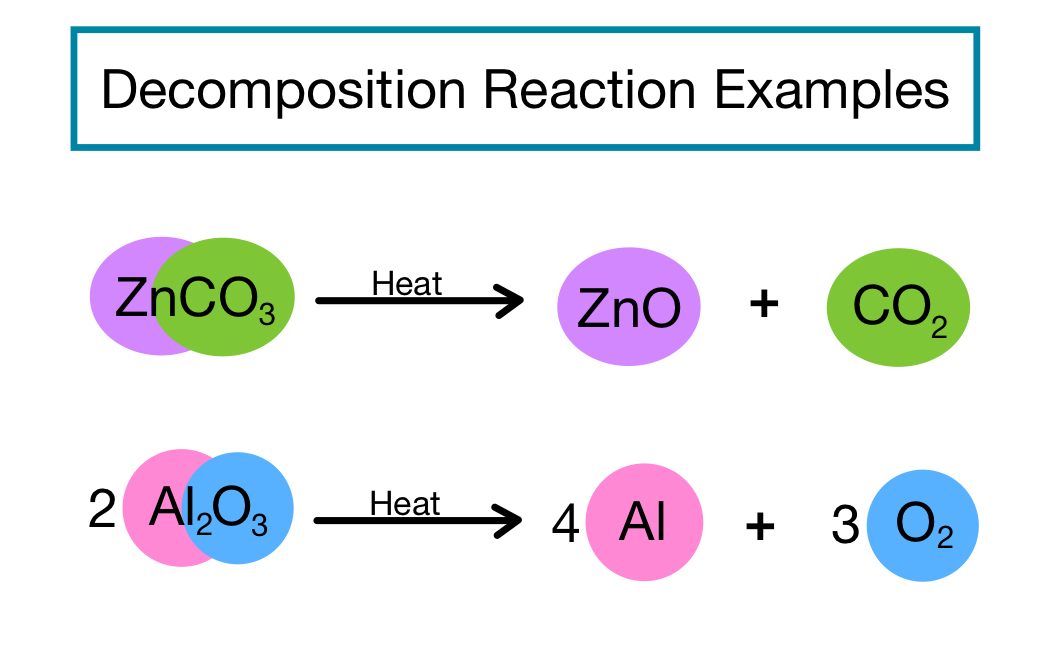
A decomposition reaction occurs when a single compound breaks down into two or more simpler substances.

General form:

AB → A + B

In these reactions, chemical bonds are broken, resulting in simpler products.

Example:

2H₂O₂ → 2H₂O + O₂

Hydrogen peroxide decomposes into water and oxygen.

Another example:

CaCO₃ → CaO + CO₂

Calcium carbonate decomposes into calcium oxide and carbon dioxide.

Decomposition reactions often require energy input, such as heat, light, or electricity.

Types of decomposition reactions include:

  • Thermal decomposition
  • Electrolytic decomposition
  • Photodecomposition

These reactions play important roles in industrial processes and energy production.


4. Single Displacement Reactions

Image
Image
Image
Image

A single displacement reaction, also called a single replacement reaction, occurs when one element replaces another element in a compound.

General form:

A + BC → AC + B

In this reaction, a more reactive element displaces a less reactive element from a compound.

Example:

Zn + CuSO₄ → ZnSO₄ + Cu

Zinc replaces copper in copper sulfate.

Another example:

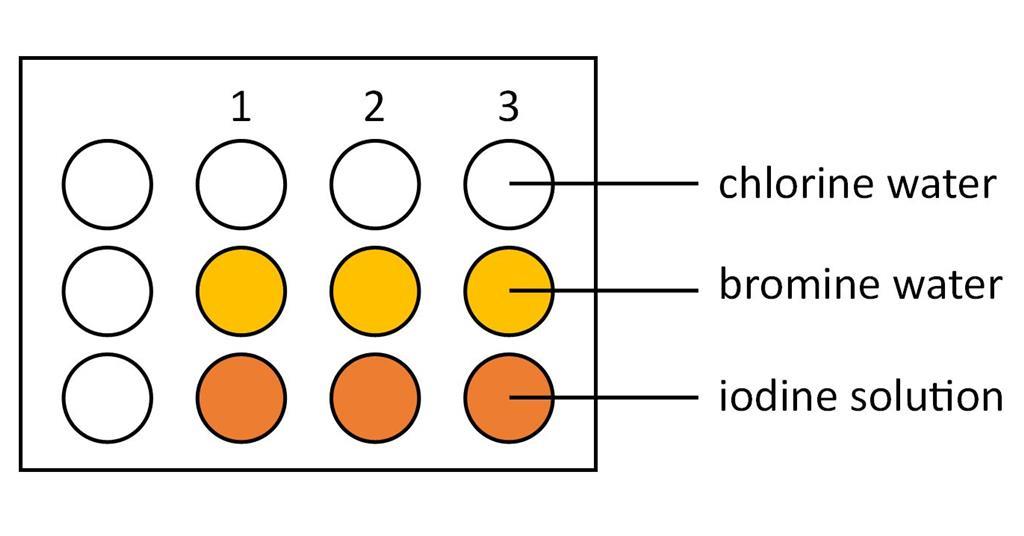
Cl₂ + 2NaBr → 2NaCl + Br₂

Chlorine displaces bromine from sodium bromide.

Single displacement reactions are governed by reactivity series, which ranks elements according to their ability to displace other elements.

These reactions are widely used in metallurgy and chemical synthesis.


5. Double Displacement Reactions

Image
Image
Image
Image

A double displacement reaction, also known as a double replacement reaction, occurs when two compounds exchange ions to form two new compounds.

General form:

AB + CD → AD + CB

These reactions typically occur in aqueous solutions.

Example:

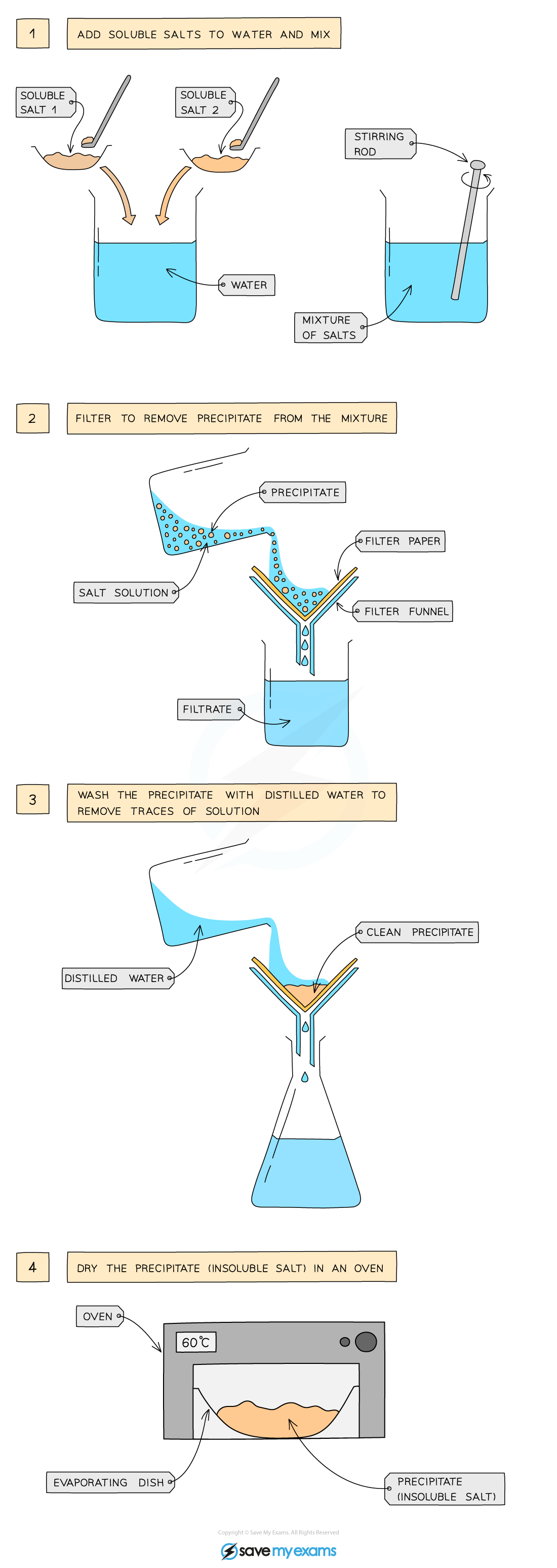
AgNO₃ + NaCl → AgCl + NaNO₃

In this reaction, silver ions combine with chloride ions to form silver chloride.

Another example:

HCl + NaOH → NaCl + H₂O

This is an acid–base neutralization reaction.

Double displacement reactions often produce:

  • Precipitates
  • Water
  • Gases

These reactions are commonly observed in laboratory experiments and industrial processes.


6. Combustion Reactions

Image
Image
Image

A combustion reaction occurs when a substance reacts rapidly with oxygen to release energy in the form of heat and light.

Combustion reactions often involve hydrocarbons.

Example:

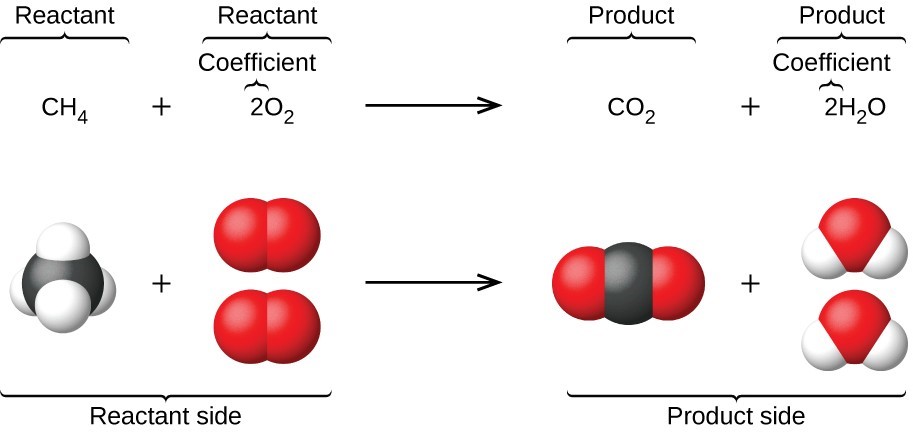
CH₄ + 2O₂ → CO₂ + 2H₂O

Methane reacts with oxygen to produce carbon dioxide and water.

Characteristics of combustion reactions include:

  • Rapid oxidation
  • Release of heat and light
  • Formation of carbon dioxide and water

Combustion reactions are essential in:

  • Energy production
  • Internal combustion engines
  • Industrial heating processes

These reactions power many modern technologies.


7. Acid–Base Reactions

Image
Image
Image
Image

Acid–base reactions involve the transfer of protons between substances.

In these reactions:

  • Acids donate hydrogen ions (H⁺).
  • Bases accept hydrogen ions.

Example:

HCl + NaOH → NaCl + H₂O

Hydrochloric acid reacts with sodium hydroxide to produce sodium chloride and water.

These reactions are called neutralization reactions.

Acid–base reactions play important roles in:

  • Biological systems
  • Environmental chemistry
  • Industrial processes
  • Pharmaceutical chemistry

8. Redox (Oxidation–Reduction) Reactions

Image
Image
Image
Image

Redox reactions involve the transfer of electrons between substances.

Oxidation refers to the loss of electrons, while reduction refers to the gain of electrons.

Example:

Zn + Cu²⁺ → Zn²⁺ + Cu

Zinc loses electrons (oxidation), while copper ions gain electrons (reduction).

Redox reactions occur in many processes such as:

  • Corrosion
  • Photosynthesis
  • Cellular respiration
  • Electrochemical batteries

These reactions are fundamental to energy transfer in chemistry.


9. Precipitation Reactions

Image
Image
Image
Image

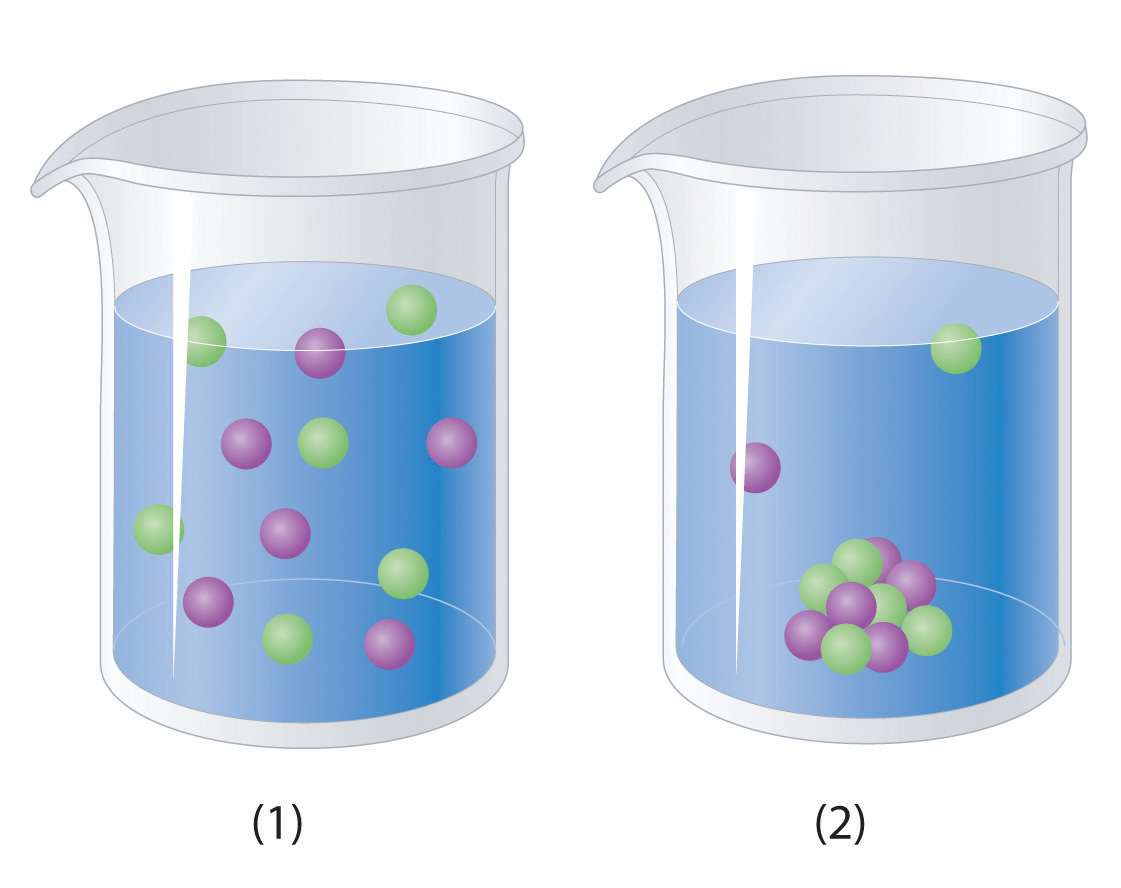
A precipitation reaction occurs when two aqueous solutions react to form an insoluble solid called a precipitate.

Example:

AgNO₃ + NaCl → AgCl + NaNO₃

Silver chloride forms as a white solid precipitate.

Precipitation reactions are used in:

  • Chemical analysis
  • Water purification
  • Industrial chemical processes

They are commonly used to identify specific ions in solutions.


10. Energy Changes in Chemical Reactions

Image
Image
Image
Image

Chemical reactions can also be classified based on energy changes.

Exothermic Reactions

Release energy as heat or light.

Example:

Combustion reactions.

Endothermic Reactions

Absorb energy from surroundings.

Example:

Photosynthesis.

Energy changes influence reaction rates and feasibility.


11. Importance of Chemical Reactions

Chemical reactions are essential for understanding the transformation of matter.

They explain:

  • Biological processes
  • Industrial manufacturing
  • Environmental chemistry
  • Energy production
  • Material synthesis

By studying reaction types, chemists can predict how substances behave under different conditions.


12. Conclusion

Chemical reactions describe the transformation of substances through the rearrangement of atoms and the breaking and formation of chemical bonds. Classifying reactions into types such as synthesis, decomposition, displacement, combustion, and redox reactions helps chemists understand and predict chemical behavior.

These reactions occur constantly in nature, from biological processes inside living organisms to large-scale industrial chemical production. Understanding the types of chemical reactions allows scientists to control chemical processes, develop new materials, produce energy, and improve technologies.

Chemical reactions form the foundation of chemistry and play a central role in shaping the physical world and advancing scientific knowledge.

Tags

Chemical Equations

Image
Image
Image
Image

1. Introduction to Chemical Equations

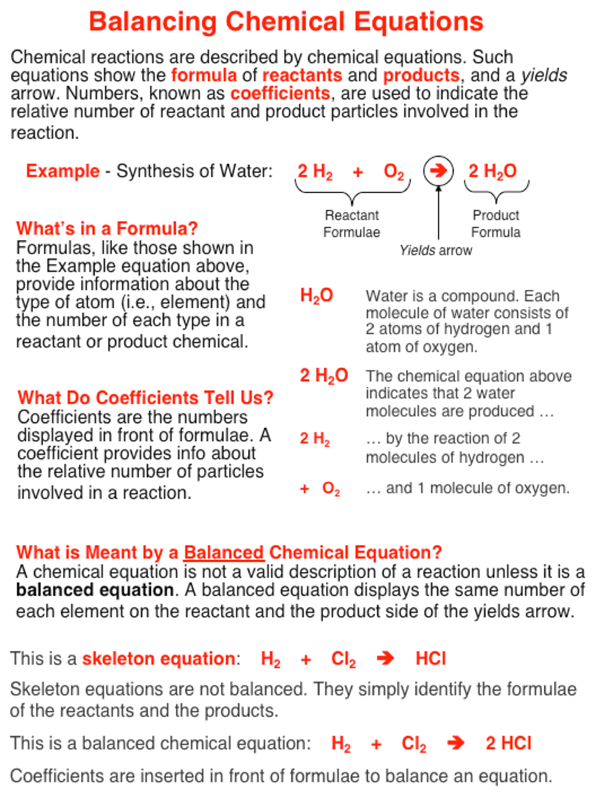
Chemical equations are symbolic representations of chemical reactions. They show how substances known as reactants transform into new substances called products during a chemical reaction. Chemical equations provide a concise way to describe chemical changes, allowing scientists to understand what substances participate in a reaction and what products are formed.

A chemical equation uses chemical formulas, symbols, and coefficients to represent chemical reactions. Each equation communicates important information about the reaction, including the identity of substances involved, the proportions in which they react, and the physical states of the substances.

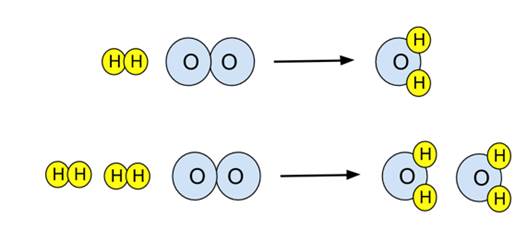
For example, the reaction between hydrogen and oxygen to form water can be represented as:

2H₂ + O₂ → 2H₂O

In this equation:

  • Hydrogen and oxygen are reactants.
  • Water is the product.
  • The arrow indicates the direction of the reaction.

Chemical equations play a vital role in chemistry because they provide the basis for quantitative analysis of chemical reactions. By examining a chemical equation, chemists can determine the amounts of reactants required and the quantities of products formed.

Chemical equations are essential for studying many areas of chemistry, including:

  • Stoichiometry
  • Reaction mechanisms
  • Chemical kinetics
  • Thermodynamics
  • Industrial chemical processes

Understanding chemical equations allows scientists to predict reaction outcomes and design chemical processes efficiently.


2. Components of Chemical Equations

Image
Image
Image
Image

A chemical equation consists of several key components that together represent a chemical reaction.

Reactants

Reactants are the starting substances that undergo chemical change during a reaction. They appear on the left side of the equation.

Example:

H₂ + O₂

These substances interact with each other to produce new substances.

Products

Products are the substances formed as a result of the chemical reaction. They appear on the right side of the equation.

Example:

H₂O

Products may have properties that differ significantly from those of the reactants.

Arrow Symbol

The arrow symbol (→) represents the direction of the reaction. It indicates that reactants are transformed into products.

Plus Sign

The plus sign (+) separates multiple reactants or products in a chemical equation.

Example:

Na + Cl₂ → NaCl

The plus sign indicates that two substances are involved in the reaction.


3. Balanced Chemical Equations

Image
Image
Image
Image

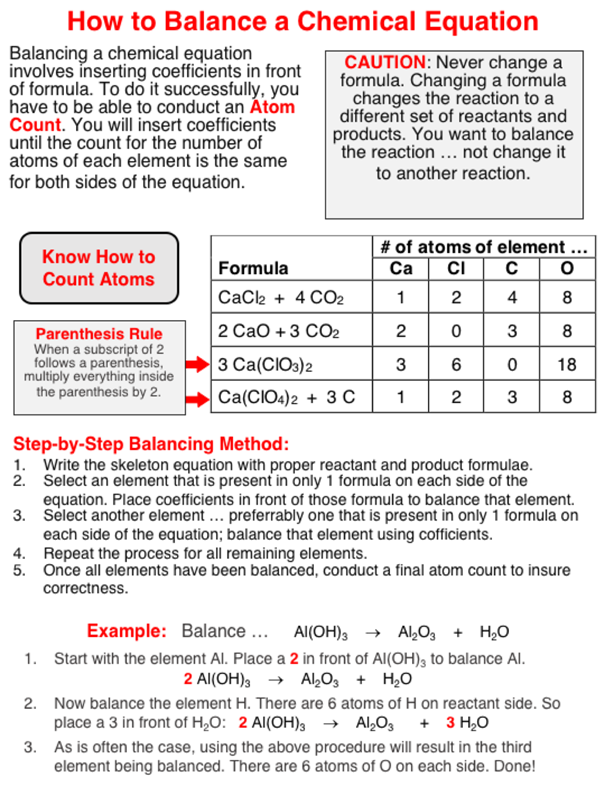
A balanced chemical equation has the same number of atoms of each element on both sides of the equation.

This requirement follows the law of conservation of mass, which states that matter cannot be created or destroyed during a chemical reaction.

For example:

Unbalanced equation:

H₂ + O₂ → H₂O

Balanced equation:

2H₂ + O₂ → 2H₂O

In the balanced equation:

Hydrogen atoms:

Left side = 4
Right side = 4

Oxygen atoms:

Left side = 2
Right side = 2

Balancing chemical equations is essential because it ensures that the equation accurately represents the conservation of atoms during a reaction.


4. Steps for Balancing Chemical Equations

Image
Image
Image
Image

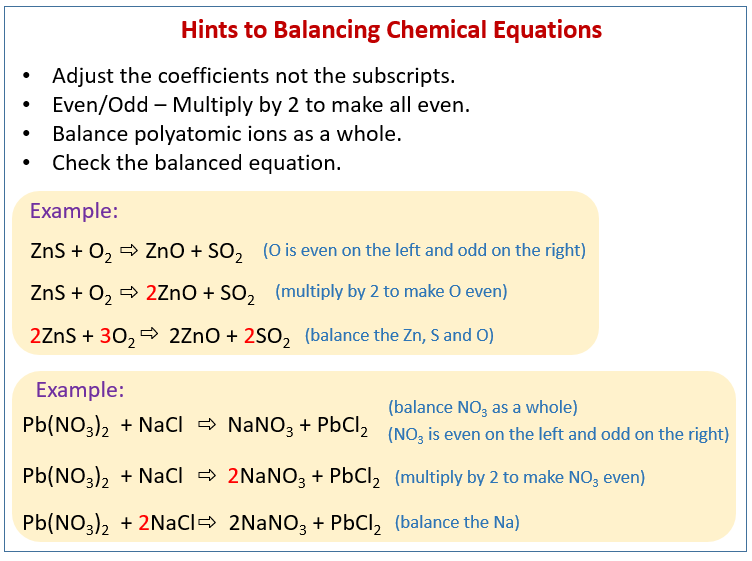
Balancing chemical equations involves adjusting coefficients so that the number of atoms of each element is equal on both sides of the equation.

Step 1: Write the skeletal equation.

Example:

Fe + O₂ → Fe₂O₃

Step 2: Count the atoms on each side.

Iron atoms:
Left = 1
Right = 2

Oxygen atoms:
Left = 2
Right = 3

Step 3: Adjust coefficients.

Balanced equation:

4Fe + 3O₂ → 2Fe₂O₃

Step 4: Verify atom balance.

Iron atoms:

Left = 4
Right = 4

Oxygen atoms:

Left = 6
Right = 6

This balanced equation now obeys the law of conservation of mass.


5. Types of Chemical Equations

Image
Image
Image
Image

Chemical equations represent different types of chemical reactions.


Synthesis Reactions

Two or more substances combine to form a single product.

Example:

2H₂ + O₂ → 2H₂O


Decomposition Reactions

A single compound breaks down into simpler substances.

Example:

2H₂O₂ → 2H₂O + O₂


Single Displacement Reactions

One element replaces another element in a compound.

Example:

Zn + CuSO₄ → ZnSO₄ + Cu


Double Displacement Reactions

Two compounds exchange ions to form new compounds.

Example:

AgNO₃ + NaCl → AgCl + NaNO₃


Combustion Reactions

A substance reacts with oxygen to produce energy, carbon dioxide, and water.

Example:

CH₄ + 2O₂ → CO₂ + 2H₂O


6. Physical States in Chemical Equations

Image
Image
Image
Image

Chemical equations often include symbols indicating the physical states of substances.

Common symbols include:

(s) → solid
(l) → liquid
(g) → gas
(aq) → aqueous solution

Example:

NaCl (aq) + AgNO₃ (aq) → AgCl (s) + NaNO₃ (aq)

These symbols provide additional information about the reaction environment.


7. Energy Changes in Chemical Equations

Image
Image
Image
Image

Chemical reactions involve energy changes.


Exothermic Reactions

Exothermic reactions release energy, usually in the form of heat.

Example:

Combustion reactions.


Endothermic Reactions

Endothermic reactions absorb energy from their surroundings.

Example:

Photosynthesis.

Energy changes may be included in chemical equations to indicate whether heat is released or absorbed.


8. Molecular and Ionic Equations

Image
Image
Image
Image

Chemical reactions in solutions can be represented using different forms of equations.


Molecular Equations

Show compounds as complete formulas.

Example:

AgNO₃ + NaCl → AgCl + NaNO₃


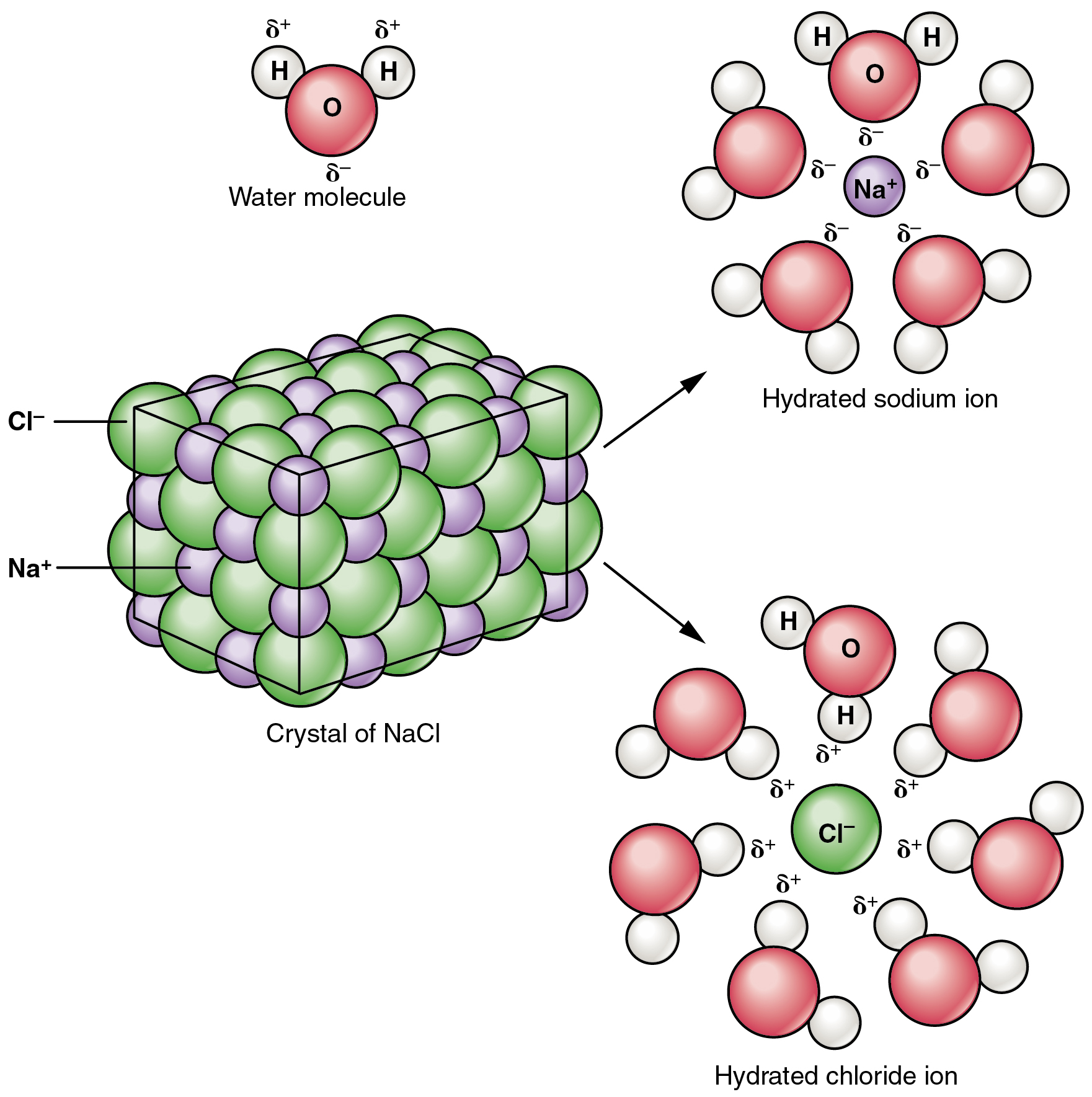
Ionic Equations

Show dissolved substances as ions.

Example:

Ag⁺ + NO₃⁻ + Na⁺ + Cl⁻ → AgCl + Na⁺ + NO₃⁻


Net Ionic Equations

Show only the ions involved in the reaction.

Example:

Ag⁺ + Cl⁻ → AgCl

These equations help simplify reactions occurring in aqueous solutions.


9. Importance of Chemical Equations

Chemical equations are fundamental tools in chemistry.

They help scientists:

  • Understand chemical reactions
  • Predict reaction outcomes
  • Perform stoichiometric calculations
  • Analyze reaction mechanisms
  • Design industrial chemical processes

Chemical equations are also essential for communicating chemical information clearly.


10. Applications in Science and Industry

Chemical equations are widely used in many fields.

Industrial Chemistry

Chemical equations help design processes for manufacturing chemicals, fuels, and materials.

Environmental Science

They describe reactions involved in atmospheric chemistry and pollution.

Biochemistry

Biological processes such as respiration and photosynthesis are represented by chemical equations.

Medicine

Drug synthesis and metabolic pathways are explained using chemical reactions.


11. Limitations of Chemical Equations

Although chemical equations provide valuable information, they do not show all details of a reaction.

For example, they do not indicate:

  • Reaction rates
  • Intermediate steps
  • Molecular orientations
  • Reaction mechanisms

More advanced techniques such as kinetic studies and spectroscopy are required to study these aspects.


12. Conclusion

Chemical equations are symbolic representations that describe chemical reactions. They show the transformation of reactants into products and obey the law of conservation of mass.

By balancing chemical equations, chemists ensure that the number of atoms of each element remains constant during a reaction. Chemical equations also reveal important information about reaction types, physical states of substances, and energy changes.

Understanding chemical equations is essential for studying stoichiometry, predicting reaction outcomes, and designing chemical processes. From laboratory experiments to large-scale industrial production, chemical equations provide a universal language for describing chemical transformations.

Mastering chemical equations allows scientists to analyze and control chemical reactions with precision, making them a cornerstone of modern chemistry.


Tags