Tag Archives: thermodynamics physics

Specific Heat Capacity

Image
Image
Image
Image

1. Introduction to Specific Heat Capacity

Specific heat capacity is an important concept in thermodynamics and heat transfer that describes how much heat energy is required to change the temperature of a substance. Different materials respond differently when heat is supplied to them. Some substances heat up quickly with a small amount of heat, while others require a large amount of heat to increase their temperature.

Specific heat capacity helps explain these differences. It measures the amount of heat energy required to raise the temperature of a unit mass of a substance by one degree Celsius (or one Kelvin). This property is essential for understanding how materials absorb, store, and release heat energy.

The concept of specific heat capacity plays an important role in many fields including physics, chemistry, engineering, meteorology, and environmental science. It helps scientists understand climate behavior, energy transfer in oceans and atmosphere, heating and cooling processes, and the design of heating systems.

For example, water has a very high specific heat capacity compared to most substances. This means water can absorb large amounts of heat without a large change in temperature. Because of this property, oceans and lakes help regulate Earth’s climate by storing heat energy and releasing it slowly.

Specific heat capacity also influences industrial processes, cooking, refrigeration, and many technological systems where temperature control is important.


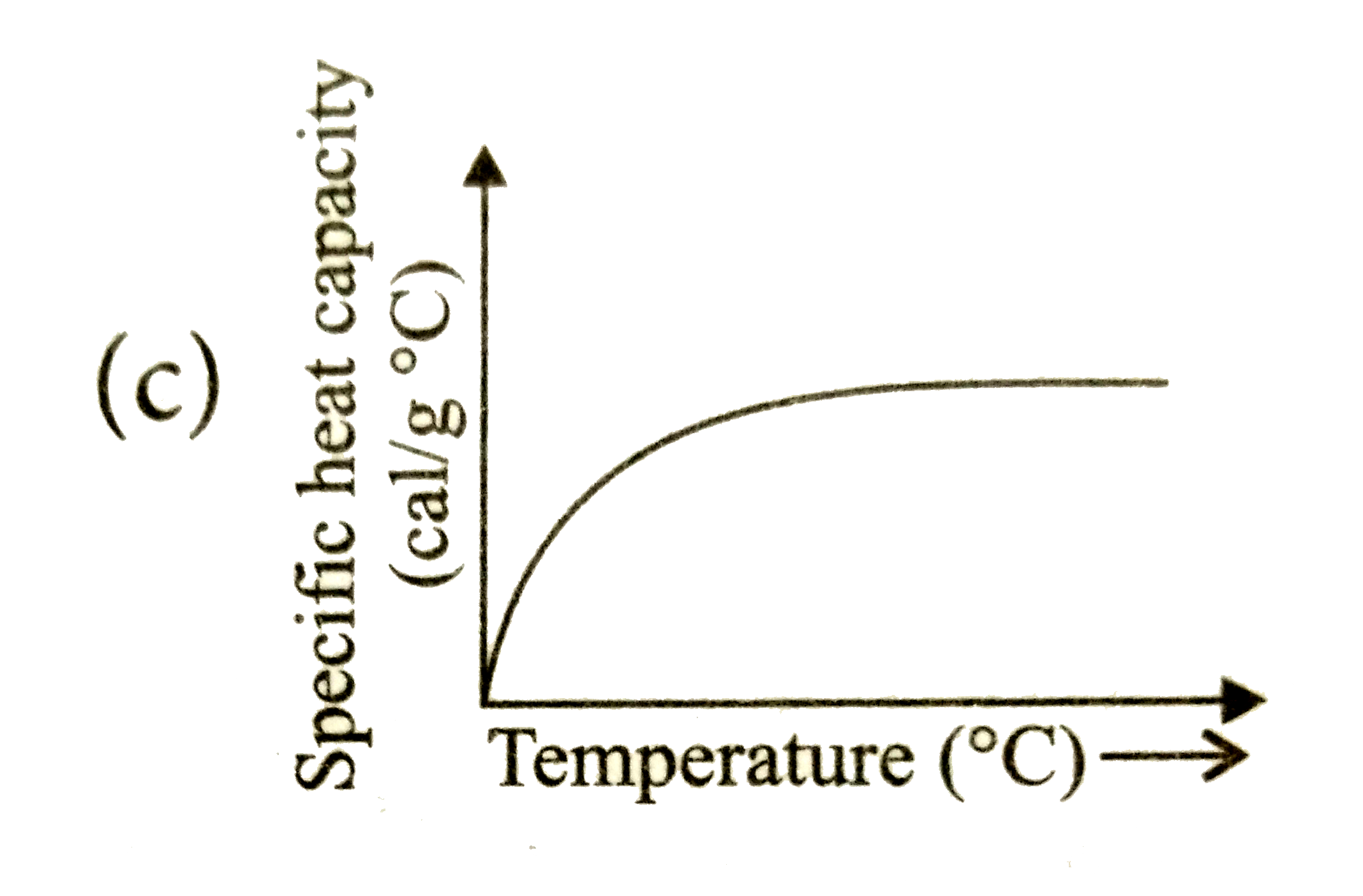
2. Definition of Specific Heat Capacity

Specific heat capacity can be defined as:

The amount of heat energy required to raise the temperature of one unit mass of a substance by one degree Celsius or one Kelvin.

Mathematically, it can be expressed as:

Q = mcΔT

Where:

Q = heat energy supplied
m = mass of the substance
c = specific heat capacity
ΔT = change in temperature

The formula shows that the amount of heat required to change temperature depends on three factors:

  • Mass of the substance
  • Specific heat capacity of the substance
  • Temperature change

The higher the specific heat capacity, the more heat energy is needed to increase the temperature.


3. Units of Specific Heat Capacity

The SI unit of specific heat capacity is:

Joule per kilogram per Kelvin (J/kg·K)

This unit indicates the number of joules of heat required to raise the temperature of one kilogram of a substance by one Kelvin.

Other units sometimes used include:

  • cal/g°C (calories per gram per degree Celsius)
  • kJ/kg·K (kilojoules per kilogram per Kelvin)

In older systems, specific heat capacity was measured in calories. One calorie is the heat required to raise the temperature of 1 gram of water by 1°C.

Conversion relationship:

1 calorie = 4.186 joules


4. Physical Meaning of Specific Heat Capacity

Specific heat capacity reflects how much heat energy a substance can store.

If a substance has:

High specific heat capacity → requires more heat to increase temperature.

Low specific heat capacity → requires less heat to increase temperature.

For example:

Water has a high specific heat capacity. It takes a lot of heat to warm water.

Metals like copper and aluminum have lower specific heat capacities. They heat up more quickly.

This difference explains why metal utensils become hot quickly while water takes longer to heat.


5. Molecular Explanation of Specific Heat Capacity

Image
Image
Image
Image

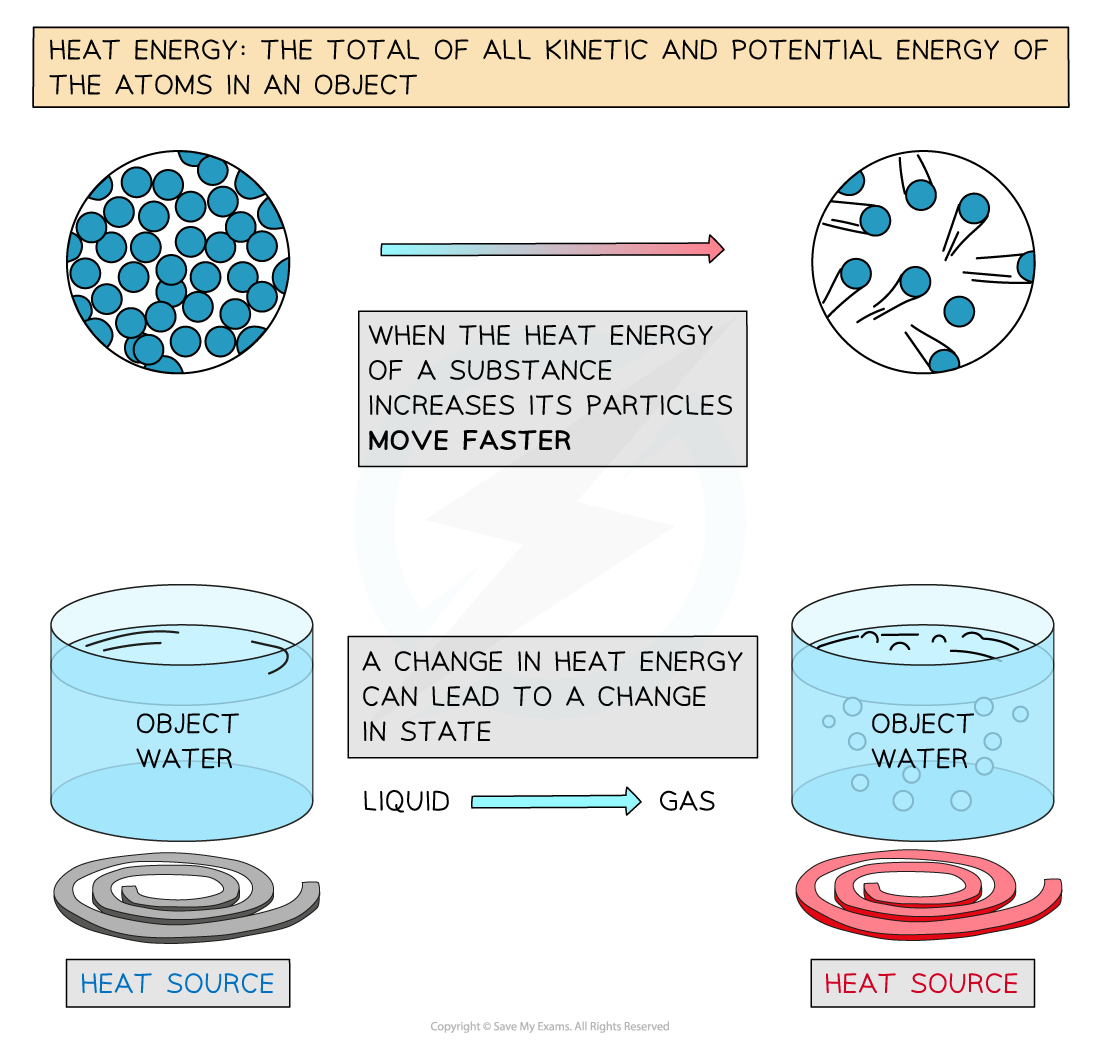
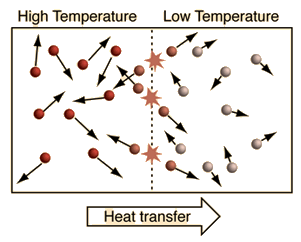
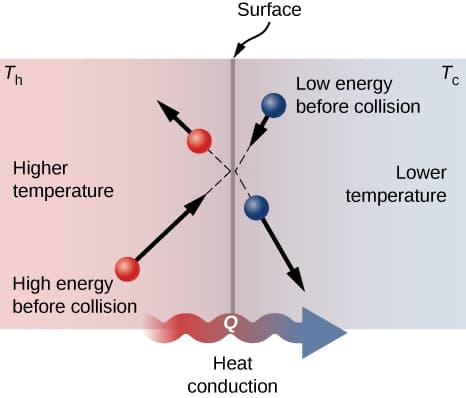
The behavior of specific heat capacity can be explained using the kinetic theory of matter.

When heat energy is supplied to a substance:

  1. The molecules absorb energy.
  2. Their kinetic energy increases.
  3. The molecules move faster or vibrate more strongly.
  4. The temperature rises.

However, not all heat energy directly increases temperature.

Some energy may go into:

  • Rotational motion of molecules
  • Vibrational motion of molecules
  • Intermolecular forces

Because different substances have different molecular structures, they absorb and distribute heat differently. This results in different specific heat capacities.

Substances with complex molecular structures usually have higher specific heat capacities because energy can be distributed among many molecular motions.


6. Specific Heat Capacity of Common Substances

Different materials have different specific heat capacities.

Some approximate values include:

Water: about 4186 J/kg·K
Aluminum: about 900 J/kg·K
Copper: about 385 J/kg·K
Iron: about 450 J/kg·K
Air: about 1000 J/kg·K

Water’s specific heat capacity is much higher than most materials. This property makes water extremely important for temperature regulation in nature and engineering.


7. Calorimetry and Measurement of Specific Heat Capacity

Image
Image
Image
Image

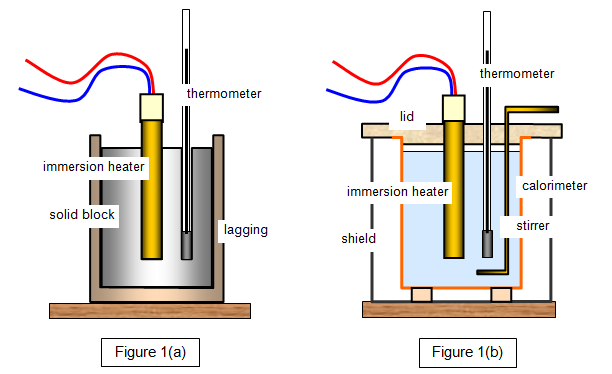
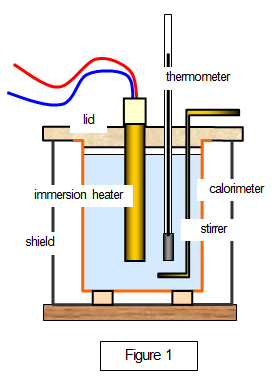
Specific heat capacity can be measured experimentally using a device called a calorimeter.

Calorimetry is the science of measuring heat transfer.

In a typical experiment:

  1. A known mass of a substance is heated.
  2. It is placed in water inside a calorimeter.
  3. Temperature changes are recorded.
  4. Heat transfer is calculated using formulas.

The heat lost by the hot substance equals the heat gained by the cooler substance.

Using this principle, the specific heat capacity of unknown materials can be determined.


8. Heat Capacity vs Specific Heat Capacity

Although related, heat capacity and specific heat capacity are different concepts.

Heat capacity refers to the total heat required to change the temperature of an entire object by one degree.

Specific heat capacity refers to the heat required per unit mass.

Mathematically:

Heat Capacity = mc

Where:

m = mass
c = specific heat capacity

Thus, heat capacity depends on both the material and its mass.


9. Importance of Specific Heat Capacity in Nature

Specific heat capacity plays a major role in many natural processes.

Climate Regulation

Oceans absorb large amounts of heat because water has a high specific heat capacity.

This helps regulate global temperatures.

Weather Patterns

Large bodies of water warm and cool more slowly than land.

This difference influences weather and climate systems.

Survival of Aquatic Life

Water temperature changes slowly, allowing aquatic organisms to survive even during temperature fluctuations.


10. Applications of Specific Heat Capacity

Specific heat capacity is important in many technological and industrial applications.

Cooking

Water’s high specific heat capacity helps cook food evenly.

Cooling Systems

Car engines use water or coolant with high specific heat capacity to absorb heat.

Thermal Energy Storage

Certain materials store heat energy efficiently due to high specific heat capacity.

Building Design

Materials with appropriate heat capacities help regulate indoor temperatures.

Climate Engineering

Understanding specific heat capacity helps predict climate change effects.


11. Specific Heat Capacity and Phase Changes

Specific heat capacity is related to phase changes of matter.

When substances change phase (such as melting or boiling), heat energy may not change temperature immediately.

Instead, energy is used to overcome intermolecular forces.

This heat is called latent heat.

Although specific heat capacity describes temperature changes, latent heat describes energy required for phase transitions.


12. Factors Affecting Specific Heat Capacity

Several factors influence the specific heat capacity of a substance.

These include:

  • Molecular structure
  • Phase of matter
  • Temperature
  • Pressure

For example, solids, liquids, and gases of the same substance may have different specific heat capacities.

Complex molecules usually have higher heat capacities because they can store energy in multiple ways.


13. Specific Heat Capacity in Engineering

Engineers must consider specific heat capacity when designing machines and systems.

Examples include:

  • Heat exchangers
  • Power plants
  • Air conditioning systems
  • Refrigeration systems
  • Industrial heating processes

Choosing materials with appropriate heat capacities ensures efficient heat transfer and temperature control.


14. Specific Heat Capacity in Environmental Science

Specific heat capacity is important in environmental studies.

It influences:

  • Ocean temperature changes
  • Atmospheric heat balance
  • Climate systems
  • Global warming patterns

Because water stores large amounts of heat, oceans act as thermal reservoirs that stabilize Earth’s climate.


15. Importance of Specific Heat Capacity

Specific heat capacity is one of the most important properties of matter in thermodynamics.

It helps scientists and engineers understand how materials absorb and store energy.

This concept is essential for:

  • Energy management
  • Climate science
  • Industrial heating processes
  • Environmental engineering
  • Biological temperature regulation

Without knowledge of specific heat capacity, it would be difficult to control temperature in many technological systems.


Conclusion

Specific heat capacity is a fundamental concept in thermodynamics that describes the amount of heat required to raise the temperature of a substance. It varies from one material to another depending on molecular structure and physical properties.

Substances with high specific heat capacity, such as water, can absorb large amounts of heat with only small temperature changes. This property plays a crucial role in regulating Earth’s climate and supporting life.

Specific heat capacity is widely used in scientific research, industrial processes, engineering design, and environmental studies. It helps explain how heat energy is stored, transferred, and utilized in different systems.

Understanding specific heat capacity allows scientists and engineers to design efficient thermal systems, predict environmental changes, and manage energy resources effectively.


Tags:

Thermal Expansion

Image
Image
Image
Image

1. Introduction to Thermal Expansion

Thermal expansion is an important physical phenomenon that occurs when materials change their size, shape, or volume due to changes in temperature. When a substance is heated, its particles gain energy and move more vigorously. As a result, the distance between the particles increases, causing the material to expand. Conversely, when a substance is cooled, the particles lose energy, move less vigorously, and come closer together, causing the material to contract.

Thermal expansion occurs in all states of matter—solids, liquids, and gases—but the degree of expansion varies depending on the material and its physical properties. In solids, expansion is generally small because the particles are tightly packed. In liquids, expansion is more noticeable, while gases show the largest expansion because their particles are far apart and move freely.

Understanding thermal expansion is essential in many areas of science and engineering. It explains why bridges have expansion joints, why railway tracks have small gaps between rails, why thermometers work, and why certain materials are used in temperature-sensitive devices.

Thermal expansion is also closely related to thermodynamics, which studies the relationship between heat, temperature, and energy. When heat is supplied to a material, part of the energy increases the kinetic energy of particles, leading to expansion.

Because of its widespread impact in engineering structures, industrial processes, and natural phenomena, thermal expansion is an important topic in physics.


2. Basic Concept of Thermal Expansion

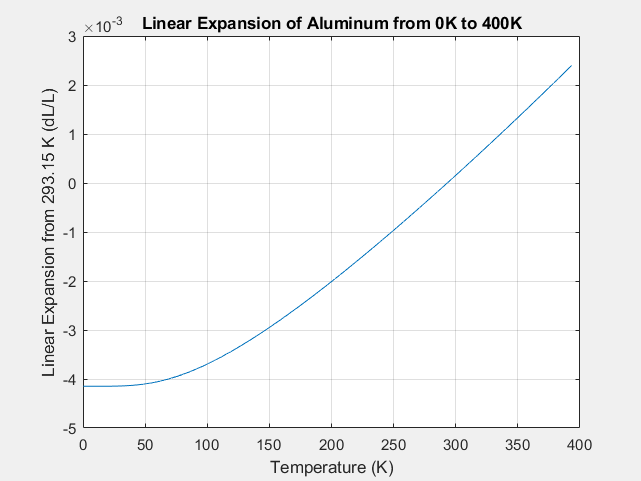
Thermal expansion occurs because atoms and molecules in a material vibrate more strongly when heated. These vibrations cause the average distance between particles to increase.

In most materials, heating leads to expansion and cooling leads to contraction.

This phenomenon occurs because of the following process:

  1. When temperature increases, particles gain kinetic energy.
  2. Increased kinetic energy causes particles to vibrate faster.
  3. Vibrations push particles slightly farther apart.
  4. The overall size of the material increases.

Although individual particles move only slightly, the combined effect across millions of particles produces noticeable expansion in the material.

Thermal expansion is usually proportional to the change in temperature. Larger temperature changes typically produce larger expansion.


3. Types of Thermal Expansion

Thermal expansion can occur in different dimensions depending on the nature of the material and the situation. There are three main types of thermal expansion.

Linear Expansion

Linear expansion refers to the change in length of a material due to temperature change.

It occurs in objects such as rods, wires, and beams.

Formula:

ΔL = αL₀ΔT

Where:

ΔL = change in length
L₀ = original length
α = coefficient of linear expansion
ΔT = temperature change

This equation shows that expansion depends on the material, initial length, and temperature change.


Area Expansion

Area expansion occurs when a two-dimensional surface expands due to temperature increase.

Examples include metal plates and sheets.

Formula:

ΔA = βA₀ΔT

Where:

ΔA = change in area
A₀ = original area
β = coefficient of area expansion
ΔT = temperature change

Area expansion is approximately twice the linear expansion for isotropic materials.


Volume Expansion

Volume expansion occurs when the entire volume of a material increases due to heating.

This type of expansion occurs in solids, liquids, and gases.

Formula:

ΔV = γV₀ΔT

Where:

ΔV = change in volume
V₀ = original volume
γ = coefficient of volume expansion
ΔT = temperature change

Volume expansion is approximately three times the linear expansion for many materials.


4. Coefficient of Thermal Expansion

Image
Image
Image
Image

The coefficient of thermal expansion describes how much a material expands when temperature changes.

Different materials expand at different rates.

There are three coefficients:

  • Coefficient of linear expansion
  • Coefficient of area expansion
  • Coefficient of volume expansion

Coefficient of Linear Expansion

Defined as the fractional increase in length per degree temperature increase.

Unit:

per degree Celsius (°C⁻¹)

Metals such as aluminum and copper have relatively large expansion coefficients, while materials such as glass and ceramics expand less.


5. Thermal Expansion in Solids

Solids expand when heated because their particles vibrate with greater amplitude.

However, the expansion in solids is relatively small because particles are tightly bound.

Examples include:

  • Metal rods expanding when heated
  • Bridge structures expanding in hot weather
  • Electrical wires sagging during summer

To prevent structural damage, engineers design structures with expansion allowances.


6. Thermal Expansion in Liquids

Image
Image
Image
Image

Liquids expand more than solids when heated.

This happens because molecules in liquids are less tightly bound.

Examples include:

  • Mercury expanding in thermometers
  • Gasoline expanding in fuel tanks
  • Water expanding when heated

Because of thermal expansion, fuel tanks are not completely filled to allow room for expansion.


7. Anomalous Expansion of Water

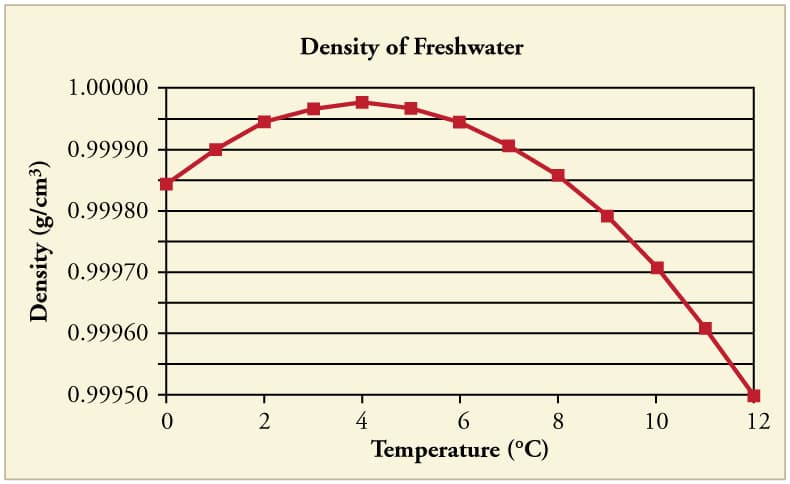
Water exhibits unusual expansion behavior between 0°C and 4°C.

Normally substances contract when cooled.

However, water expands when cooled below 4°C.

At 4°C water has maximum density.

Below this temperature, water molecules form a more open structure, causing expansion.

This phenomenon is called anomalous expansion of water.

It is very important for aquatic life.

Because ice floats on water, lakes freeze from the top while water below remains liquid, allowing fish and other organisms to survive.


8. Thermal Expansion in Gases

Gases expand significantly when heated.

Because gas molecules are far apart and move freely, temperature changes strongly affect their volume.

According to Charles’s Law:

Volume is directly proportional to temperature at constant pressure.

V ∝ T

This means that heating a gas causes it to expand, while cooling causes it to contract.

Gas expansion is important in many applications including engines, balloons, and atmospheric science.


9. Applications of Thermal Expansion

Image
Image
Image
Image

Thermal expansion has many practical applications in engineering and technology.

Thermometers

Thermometers operate based on expansion of liquids such as mercury or alcohol when temperature changes.

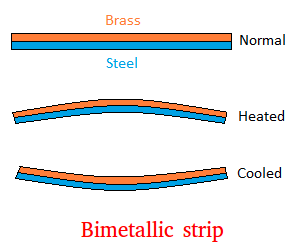
Bimetallic Strips

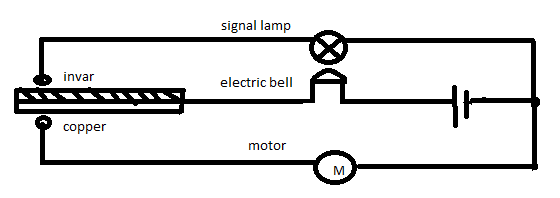
Bimetallic strips consist of two metals with different expansion rates.

When heated, the strip bends and can activate switches in thermostats.

Bridge Expansion Joints

Bridges include expansion joints that allow structures to expand and contract with temperature changes.

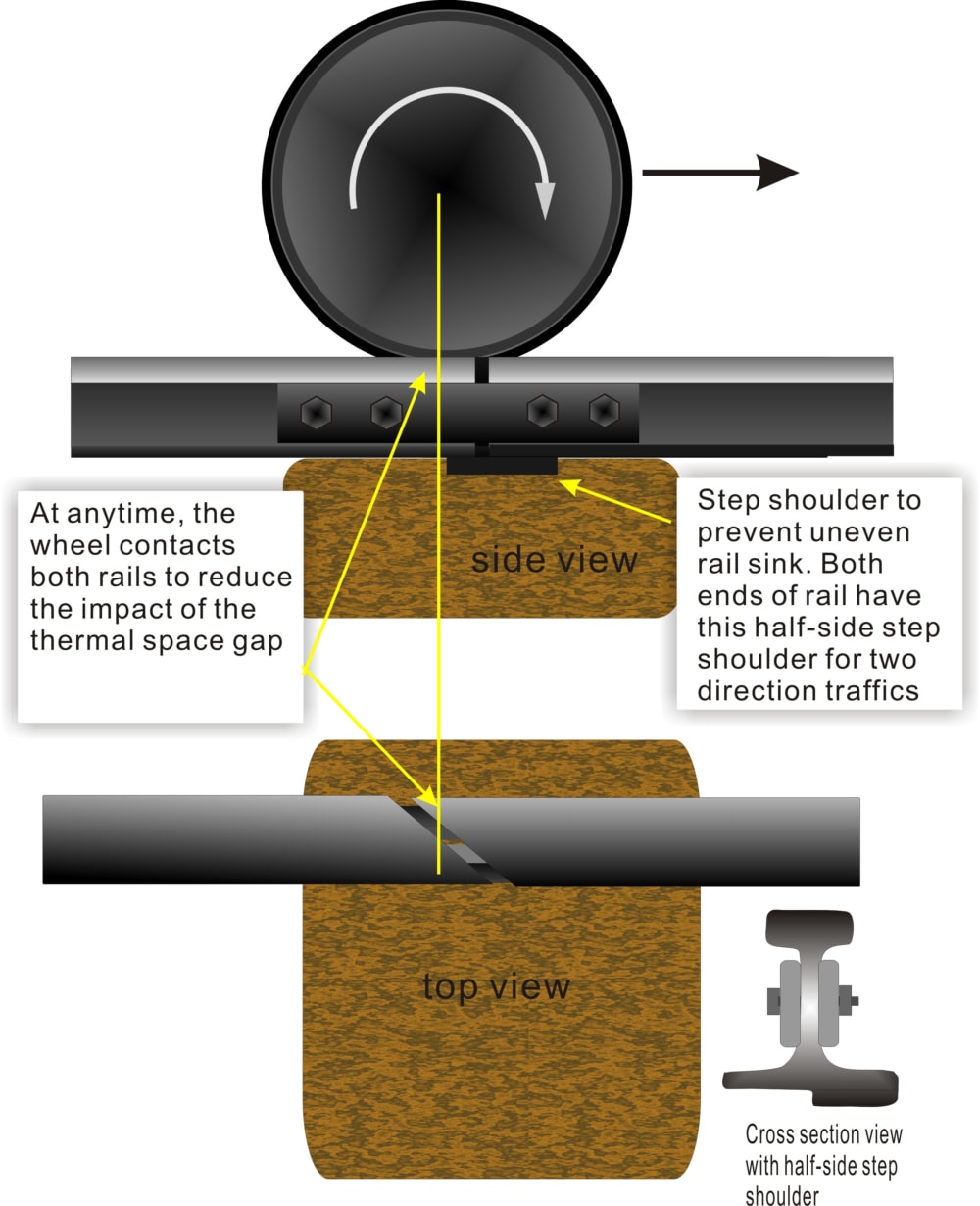
Railway Tracks

Small gaps are left between railway tracks to allow expansion during hot weather.

Overhead Power Lines

Electrical wires are installed with slack to allow expansion and contraction.


10. Thermal Stress

When expansion is restricted, thermal stress develops.

If a material is prevented from expanding or contracting freely, internal forces arise.

These forces can cause deformation or structural damage.

Examples include:

  • Cracks in buildings due to temperature changes
  • Buckling of railway tracks in hot weather
  • Damage to pipelines exposed to heat

Engineers must consider thermal stress when designing structures.


11. Thermal Expansion in Nature

Thermal expansion also occurs in natural environments.

Examples include:

  • Rocks expanding during hot daytime temperatures
  • Cracking of rocks due to repeated heating and cooling
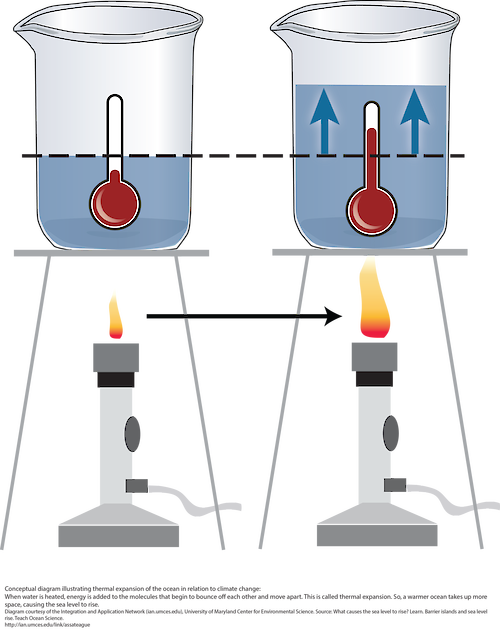
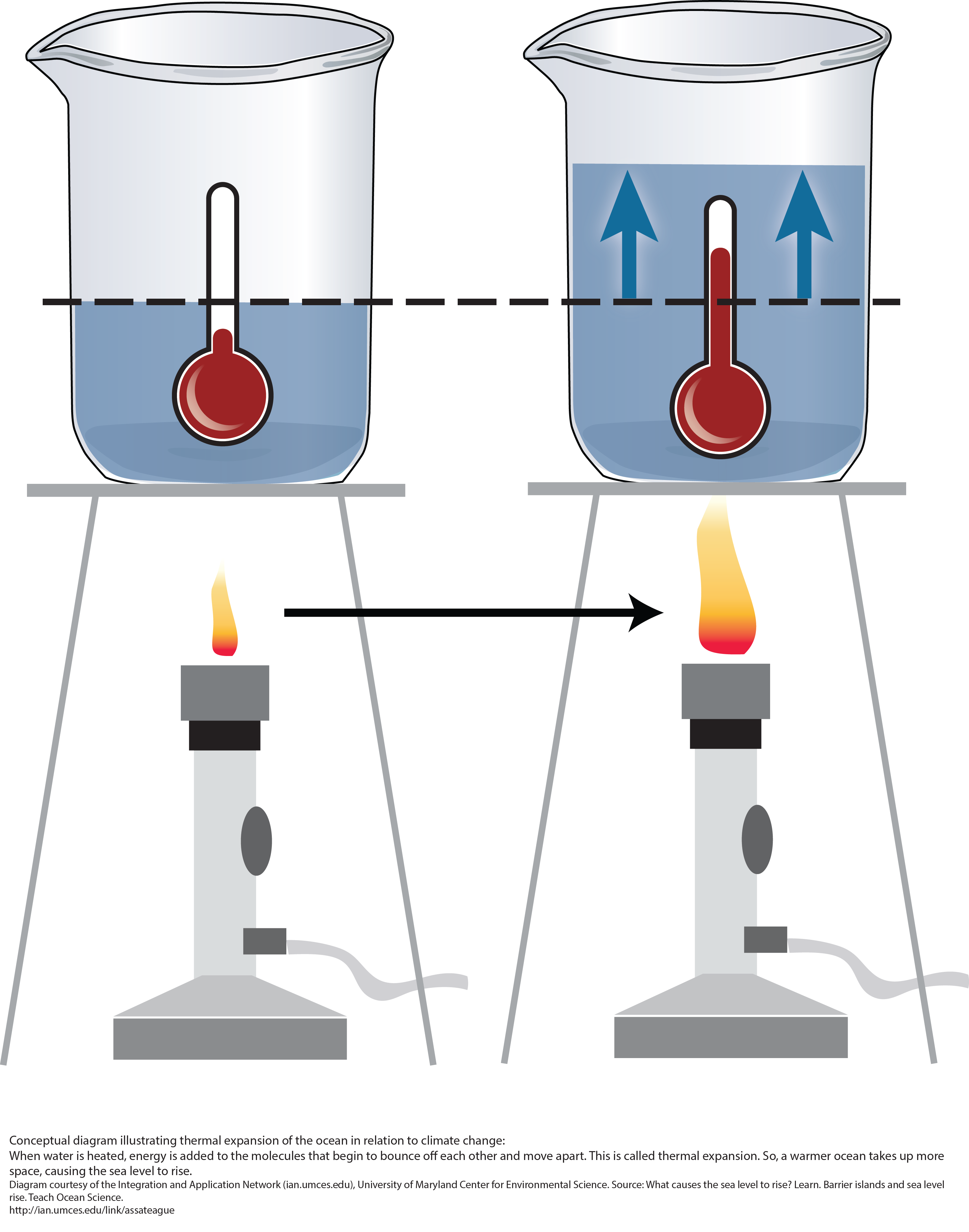
  • Expansion of ocean water contributing to sea level rise
  • Atmospheric expansion influencing weather patterns

These natural processes shape landscapes and influence climate systems.


12. Importance of Thermal Expansion

Thermal expansion is important for many reasons.

It helps explain how materials behave under temperature changes.

It influences engineering design, industrial processes, and natural phenomena.

Without understanding thermal expansion, structures could fail due to temperature variations.

Thermal expansion also plays a role in scientific instruments, climate studies, and mechanical systems.


Conclusion

Thermal expansion is the increase in size or volume of a material when its temperature rises. This phenomenon occurs because heating increases the kinetic energy of particles, causing them to move farther apart. Thermal expansion occurs in solids, liquids, and gases, although the magnitude varies depending on the material.

There are three main types of expansion: linear expansion, area expansion, and volume expansion. These are described using expansion coefficients that measure how much a material expands for each degree of temperature change.

Thermal expansion has numerous practical applications including thermometers, thermostats, bridge construction, railway track design, and industrial machinery. Engineers must consider thermal expansion to prevent structural damage and ensure safety.

In nature, thermal expansion influences geological processes, atmospheric circulation, and ocean dynamics. It also explains the unique behavior of water between 0°C and 4°C, which plays an essential role in sustaining aquatic ecosystems.

Understanding thermal expansion helps scientists and engineers design reliable systems and better understand how materials behave under changing temperature conditions.


Tags: