


Introduction
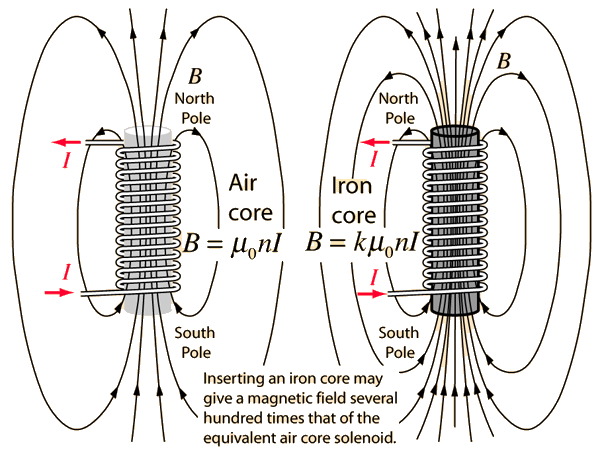
An electromagnet is a type of magnet in which the magnetic field is produced by an electric current. Unlike permanent magnets, electromagnets generate magnetism only when an electric current flows through them. When the current stops, the magnetic field disappears.
Electromagnets are extremely important in modern science and technology because they allow magnetic fields to be controlled, switched on and off, and adjusted in strength. This makes them more versatile than permanent magnets.
Electromagnets are widely used in various devices and systems, including:
- Electric motors
- Generators
- Transformers
- Magnetic cranes
- Relays and switches
- Loudspeakers and headphones
- MRI scanners
- Magnetic levitation systems
The principle behind electromagnets comes from the relationship between electric current and magnetic fields, discovered in the early 19th century. When an electric current flows through a conductor, it produces a magnetic field around the conductor. If the wire is wound into a coil, the magnetic field becomes stronger and more concentrated.
Electromagnets are a key component of electromagnetism, the field of physics that studies the interaction between electricity and magnetism.
Historical Development of Electromagnets


The development of electromagnets began with several important scientific discoveries.
Hans Christian Ørsted
In 1820, Ørsted discovered that a compass needle deflected when placed near a current-carrying wire. This demonstrated that electric current produces a magnetic field.
André-Marie Ampère
Ampère studied the relationship between electric currents and magnetic forces and formulated mathematical laws describing magnetic interactions.
William Sturgeon
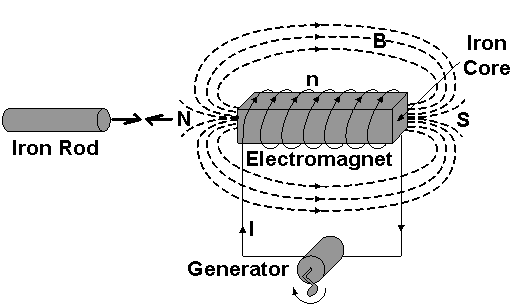
In 1825, William Sturgeon built the first practical electromagnet by wrapping insulated wire around an iron core. When current passed through the coil, the iron became magnetized.
Joseph Henry
Joseph Henry improved the electromagnet by increasing the number of wire turns and using insulated wire, creating stronger magnetic fields.
These developments led to the creation of modern electrical technologies such as motors and generators.
Principle of Electromagnetism


The working principle of an electromagnet is based on the fact that electric current produces a magnetic field.
When current flows through a conductor, magnetic field lines form around the wire.
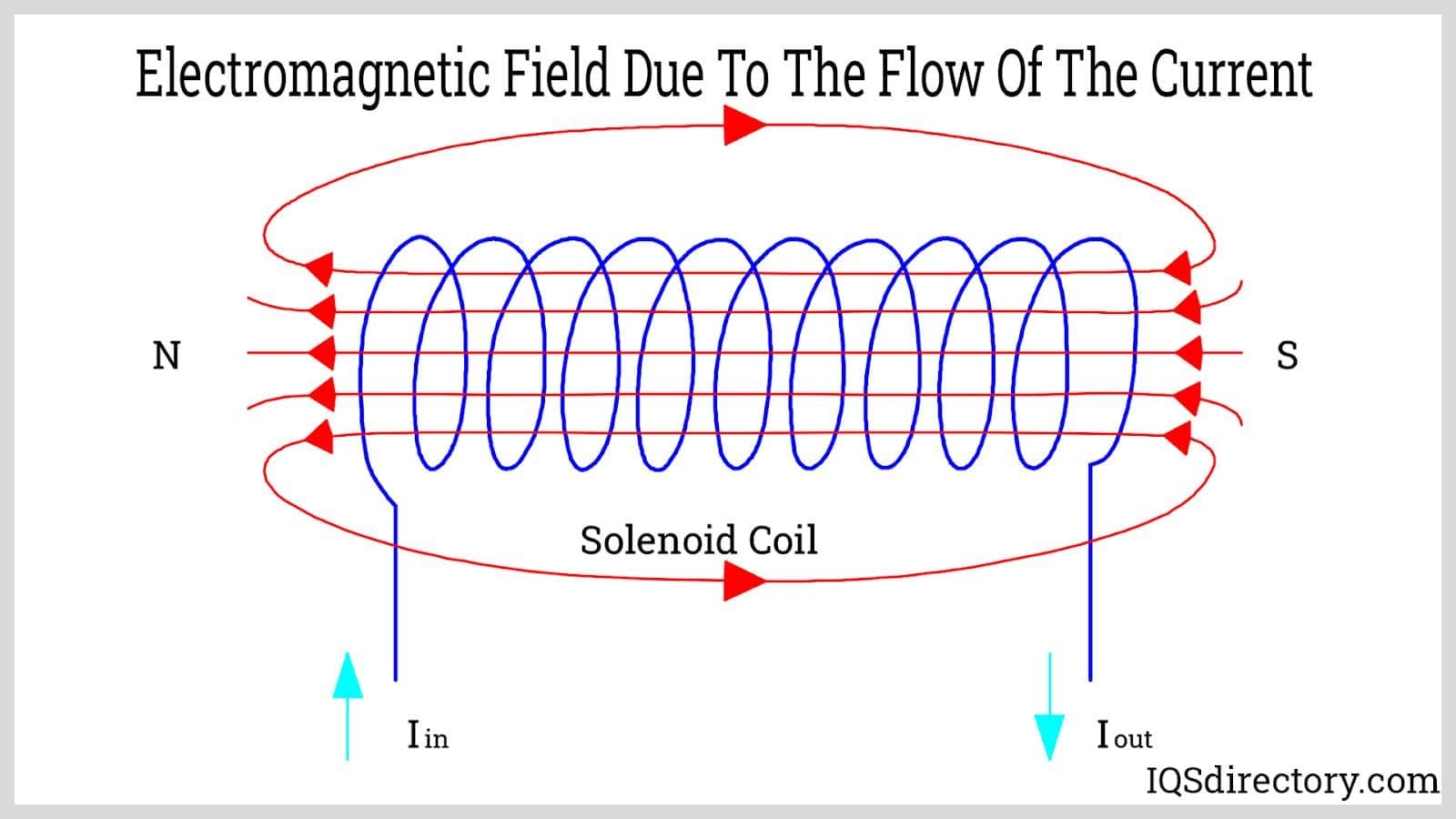
If the wire is shaped into a coil or solenoid, the magnetic field becomes stronger and concentrated.
Right-Hand Rule
The direction of the magnetic field around a current-carrying wire is determined using the right-hand rule:
- Point the thumb of your right hand in the direction of current.
- The curled fingers indicate the direction of magnetic field lines.
This rule helps determine the polarity of electromagnets.
Construction of an Electromagnet


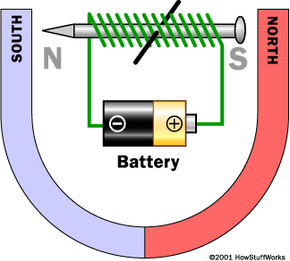
An electromagnet typically consists of three main components.
Coil of Wire
A long insulated wire is wound into a coil called a solenoid.
The coil concentrates the magnetic field.
Iron Core
A soft iron core is placed inside the coil.
Iron becomes strongly magnetized when placed in a magnetic field.
This greatly increases the strength of the electromagnet.
Power Source
A battery or power supply provides electric current to the coil.
When current flows, the electromagnet becomes active.
When the current stops, the magnetic field disappears.
Magnetic Field of a Solenoid


A solenoid is a tightly wound coil of wire that produces a strong magnetic field when current flows through it.
The magnetic field inside a solenoid is:
- Strong
- Uniform
- Parallel to the axis of the coil
Magnetic Field Strength
[
B = \mu_0 n I
]
Where:
- (B) = magnetic field strength
- (\mu_0) = permeability of free space
- (n) = number of turns per unit length
- (I) = electric current
Increasing the number of turns or current increases the magnetic field strength.
Factors Affecting Strength of Electromagnets

The strength of an electromagnet depends on several factors.
Number of Turns in the Coil
More turns increase the magnetic field strength.
Electric Current
Higher current produces stronger magnetic fields.
Core Material
Soft iron cores greatly enhance magnetic strength.
Length of the Coil
Shorter coils produce stronger magnetic fields.
Shape of the Core
Different core shapes influence magnetic field distribution.
Types of Electromagnets



Electromagnets are classified based on their design and application.
DC Electromagnets
Operate using direct current.
Examples:
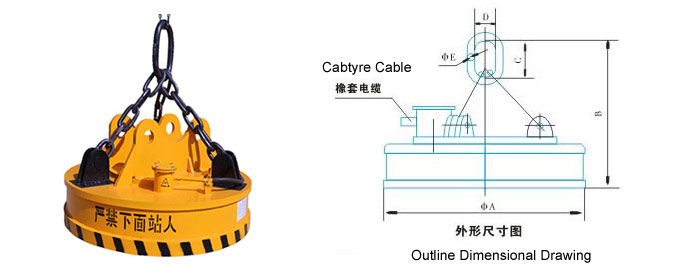
- Magnetic cranes
- Electric relays
AC Electromagnets
Operate using alternating current.
Examples:
- Transformers
- Electric motors
Superconducting Electromagnets
Use superconducting coils to produce extremely strong magnetic fields.
Examples:
- MRI scanners
- Particle accelerators
Applications of Electromagnets



Electromagnets are used in many technologies.
Electric Motors
Electromagnets interact with magnetic fields to produce motion.
Electric Generators
Changing magnetic fields produce electric current.
Magnetic Cranes
Used to lift heavy iron and steel objects.
Relays and Switches
Electromagnets operate automatic switches in electrical circuits.
Loudspeakers
Electromagnets convert electrical signals into sound.
MRI Machines
Powerful electromagnets produce magnetic fields for medical imaging.
Advantages of Electromagnets
Electromagnets have several advantages over permanent magnets.
- Magnetic field can be turned on or off
- Magnetic strength can be adjusted
- Stronger fields can be produced
- Magnetic polarity can be reversed
These advantages make electromagnets highly versatile.
Limitations of Electromagnets
Despite their advantages, electromagnets have some limitations.
- Require electrical power
- Generate heat due to current flow
- Efficiency depends on power supply
- Can lose magnetism if power fails
These factors must be considered in engineering design.
Electromagnets in Modern Technology
Electromagnets are essential in many advanced technologies.
Examples include:
- Magnetic levitation trains
- Particle accelerators
- Medical imaging equipment
- Magnetic data storage
- Industrial automation systems
Their ability to produce controllable magnetic fields makes them indispensable in modern engineering.
Conclusion
Electromagnets are magnets whose magnetic fields are produced by electric currents. They operate based on the principle that a current-carrying conductor generates a magnetic field. By wrapping a wire coil around a magnetic core such as iron, strong and controllable magnetic fields can be produced.
Electromagnets are widely used in many applications including motors, generators, cranes, relays, and medical devices. Their ability to control magnetic strength and polarity makes them far more versatile than permanent magnets.
The study of electromagnets forms an important part of electromagnetism and electrical engineering, and it continues to play a critical role in modern technology and scientific research.