


Introduction to Trigonometric Equations
Trigonometric equations are mathematical equations that involve trigonometric functions such as sine, cosine, tangent, cotangent, secant, and cosecant. These equations are widely used in mathematics, physics, engineering, astronomy, and many other scientific fields. They are essential for analyzing periodic phenomena, modeling wave motion, solving geometric problems, and studying oscillatory systems.
A trigonometric equation contains one or more trigonometric functions of a variable angle. The goal is to determine the value of the angle that satisfies the equation.
For example:
sin x = 1/2
cos x = √3/2
tan x = 1
Each of these equations has multiple solutions because trigonometric functions are periodic. The periodic nature of these functions means that their values repeat at regular intervals.
Understanding trigonometric equations requires knowledge of trigonometric identities, the unit circle, inverse trigonometric functions, and properties of periodic functions.
Trigonometric equations can be solved algebraically, graphically, or using identities and transformations.
Basic Trigonometric Functions


Before solving trigonometric equations, it is important to understand the six trigonometric functions.
Sine Function
sin θ = opposite / hypotenuse
Cosine Function
cos θ = adjacent / hypotenuse
Tangent Function
tan θ = opposite / adjacent
Reciprocal Functions
csc θ = 1 / sin θ
sec θ = 1 / cos θ
cot θ = 1 / tan θ
These functions are defined using the geometry of right triangles and the unit circle.
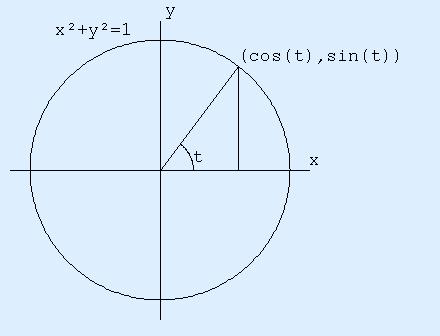
In the unit circle:
sin θ represents the y-coordinate
cos θ represents the x-coordinate
tan θ represents y/x
Understanding these relationships helps in solving trigonometric equations.
Periodicity of Trigonometric Functions


One of the most important properties of trigonometric functions is periodicity.
A periodic function repeats its values after a fixed interval called the period.
Period of Sine and Cosine
The period of sine and cosine functions is:
360° or 2π radians
This means:
sin(x + 360°) = sin x
cos(x + 360°) = cos x
Period of Tangent
The tangent function has a smaller period:
180° or π radians
tan(x + 180°) = tan x
Because of periodicity, trigonometric equations usually have infinitely many solutions.
For example:
sin x = 0
Solutions include:
0°, 180°, 360°, 540°, and so on.
General solution:
x = nπ
where n is an integer.
Types of Trigonometric Equations
Trigonometric equations can appear in many different forms.
Common types include:
- Basic trigonometric equations
- Linear trigonometric equations
- Quadratic trigonometric equations
- Multiple-angle equations
- Equations involving identities
- Equations with inverse trigonometric functions
Each type requires different solving strategies.
Solving Basic Trigonometric Equations


Basic trigonometric equations involve a single trigonometric function.
Example:
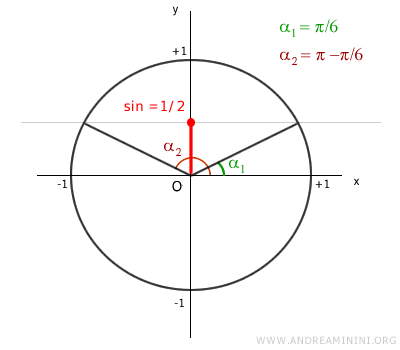
sin x = 1/2
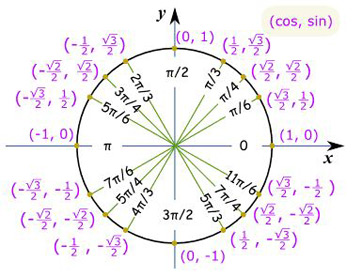
Using the unit circle:
sin 30° = 1/2
sin 150° = 1/2
Therefore:
x = 30° or 150°
General solution:
x = 30° + 360°n
x = 150° + 360°n
where n is an integer.
Another example:
cos x = 0
From the unit circle:
cos 90° = 0
cos 270° = 0
General solution:
x = 90° + 180°n
Solving Trigonometric Equations Using Identities
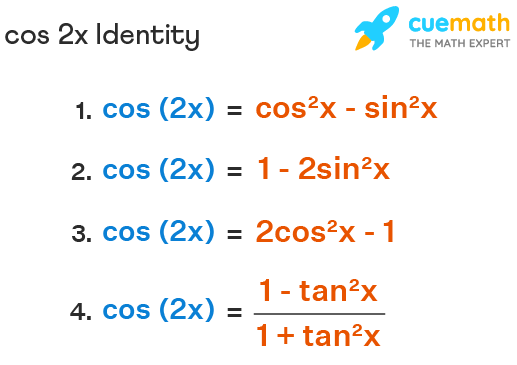

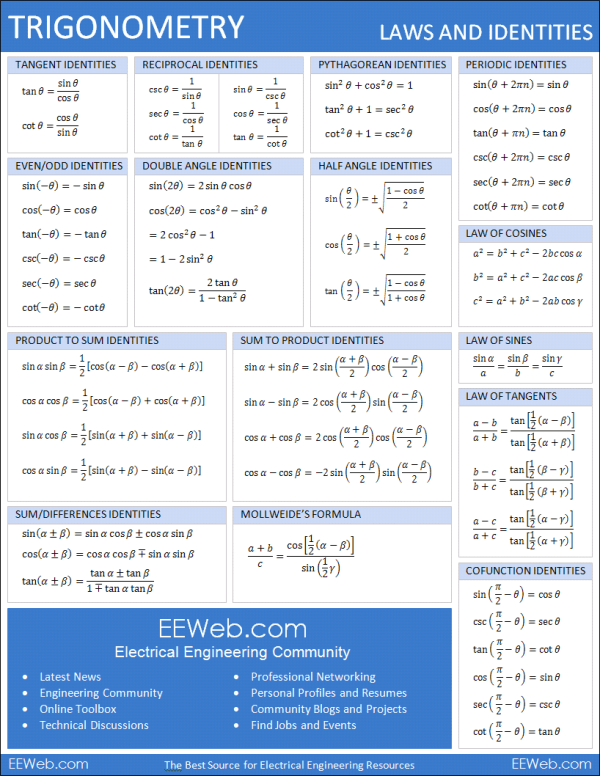
Many trigonometric equations require the use of identities.
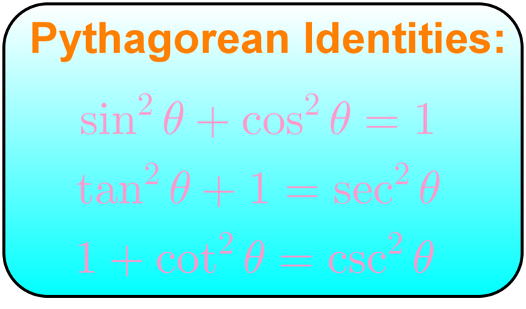
Important identities include:
sin²x + cos²x = 1
1 + tan²x = sec²x
1 + cot²x = csc²x
Example:
sin²x + cos²x = 1
This identity is always true.
Example equation:
sin²x = 1 − cos²x
This identity can simplify equations.
Example:
2sin²x − 1 = 0
Add 1:
2sin²x = 1
Divide by 2:
sin²x = 1/2
Take square root:
sin x = ± √2/2
Solutions:
x = 45°, 135°, 225°, 315°
Quadratic Trigonometric Equations


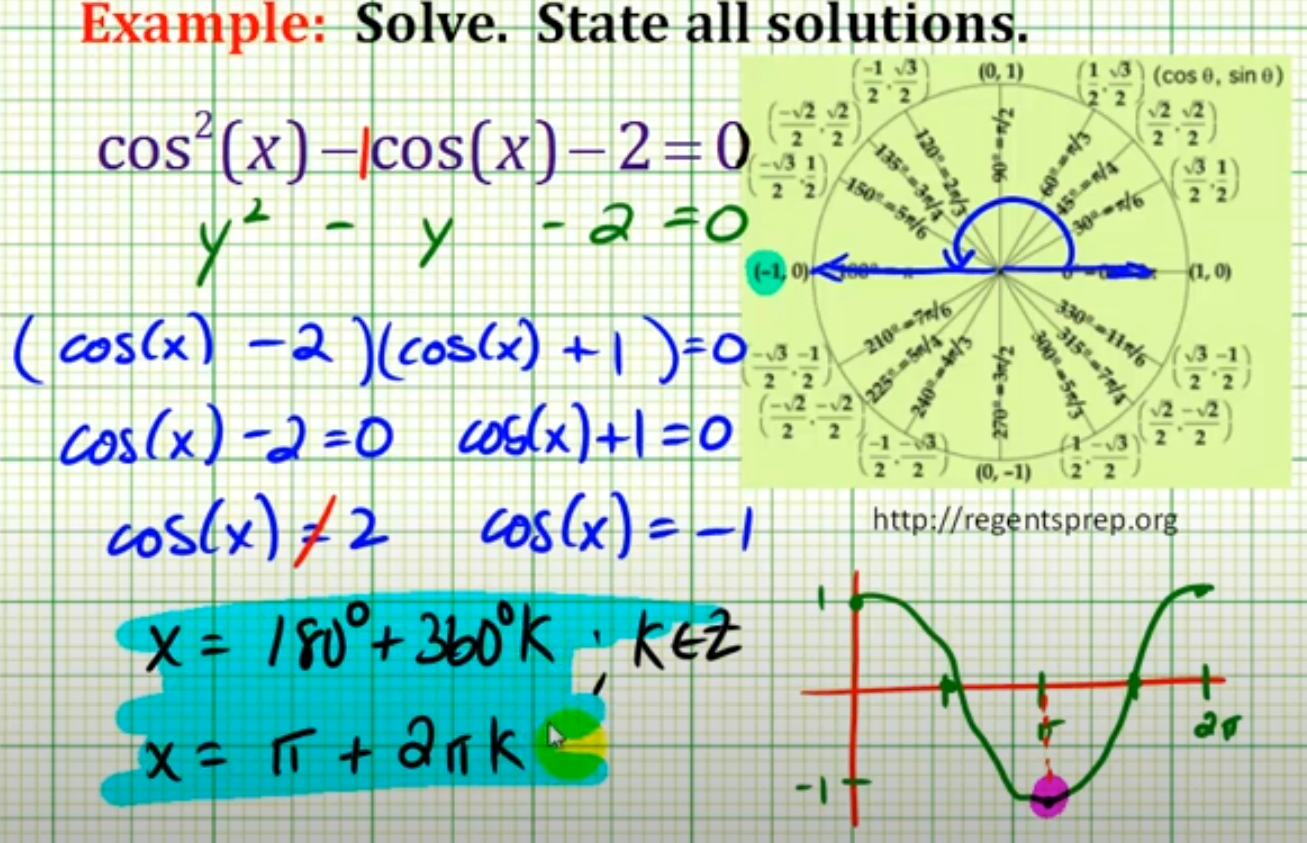
Some trigonometric equations behave like quadratic equations.
Example:
2sin²x − 3sin x + 1 = 0
Let:
sin x = y
Then equation becomes:
2y² − 3y + 1 = 0
Factor:
(2y − 1)(y − 1) = 0
Solutions:
y = 1/2
y = 1
Therefore:
sin x = 1/2
sin x = 1
Using the unit circle:
sin x = 1/2 → x = 30°, 150°
sin x = 1 → x = 90°
Thus solutions include:
30°, 90°, 150°
Trigonometric Equations with Multiple Angles
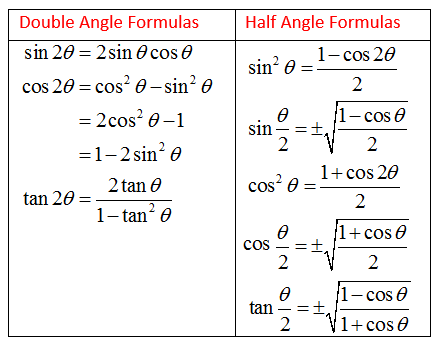
Some equations involve multiple angles such as 2x or 3x.
Example:
sin(2x) = √3/2
From the unit circle:
2x = 60° or 120°
Divide by 2:
x = 30° or 60°
General solution:
x = 30° + 180°n
x = 60° + 180°n
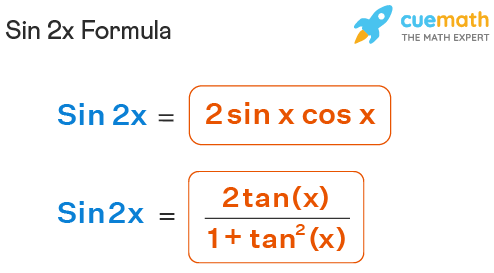
These equations often require double-angle or triple-angle identities.
Example identity:
sin(2x) = 2sin x cos x
Graphical Method for Solving Trigonometric Equations


Trigonometric equations can also be solved graphically.
Example:
sin x = cos x
Rewrite:
tan x = 1
From unit circle:
x = 45°, 225°
Graphically, the solutions correspond to the intersection points of the graphs of sin x and cos x.
Graphing methods are especially useful when equations are complicated.
Inverse Trigonometric Functions in Equations

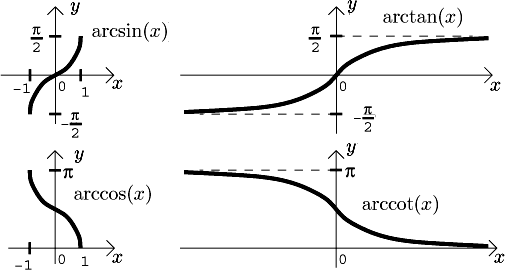

Inverse trigonometric functions help solve equations where the angle is unknown.
Example:
sin x = 0.8
Use inverse sine:
x = sin⁻¹(0.8)
x ≈ 53.13°
Because sine is positive in the first and second quadrants:
x = 53.13°
x = 180° − 53.13° = 126.87°
General solution:
x = 53.13° + 360°n
x = 126.87° + 360°n
Applications of Trigonometric Equations
Trigonometric equations are widely used in real-world applications.
Physics
They are used to analyze:
- wave motion
- harmonic oscillations
- light waves
- sound waves
Engineering
Engineers use trigonometric equations for:
- signal processing
- electrical circuits
- mechanical vibrations
- structural analysis
Astronomy
Astronomers use trigonometry to determine:
- distances between stars
- orbital motion of planets
- angles between celestial objects
Navigation
Trigonometry helps in:
- aircraft navigation
- GPS positioning
- ship navigation
Computer Graphics
3D modeling and animation depend heavily on trigonometric equations for rotations and transformations.
Importance of Trigonometric Equations in Mathematics
Trigonometric equations are fundamental to advanced mathematics.
They are essential in:
- calculus
- differential equations
- Fourier analysis
- complex numbers
- signal processing
They help model periodic patterns found in nature and technology.
Understanding how to solve trigonometric equations strengthens algebraic reasoning and mathematical problem-solving skills.
Conclusion
Trigonometric equations are equations that involve trigonometric functions and require determining the angles that satisfy the equation. Because trigonometric functions are periodic, these equations often have infinitely many solutions.
Solving trigonometric equations requires knowledge of trigonometric identities, unit circle values, algebraic techniques, and inverse trigonometric functions. Different types of equations require different strategies, such as factoring, identity substitution, graphical analysis, or inverse functions.
These equations play a crucial role in mathematics, physics, engineering, astronomy, and computer science. Mastering trigonometric equations provides a strong foundation for advanced mathematical studies and real-world applications involving periodic behavior.