

Introduction to Differential Equations
Differential equations are mathematical equations that involve functions and their derivatives. They are used to describe relationships between changing quantities and are fundamental tools for modeling dynamic systems in science, engineering, economics, and many other fields.
In simple terms, a differential equation expresses how a quantity changes with respect to another variable. For example, the growth of a population depends on the current population size, the motion of a particle depends on its velocity and acceleration, and the temperature of an object changes based on the difference between its temperature and the surrounding environment.
Because differential equations describe change and motion, they are widely used to model real-world phenomena such as:
- motion of objects
- heat transfer
- population growth
- electrical circuits
- chemical reactions
- fluid flow
- economic growth
The development of differential equations began in the seventeenth century with the work of mathematicians such as Isaac Newton and Gottfried Wilhelm Leibniz, who created calculus to analyze rates of change.
Today, differential equations are essential for solving complex problems in modern science and technology. They allow scientists and engineers to create mathematical models that describe how systems evolve over time.
Basic Concepts of Differential Equations
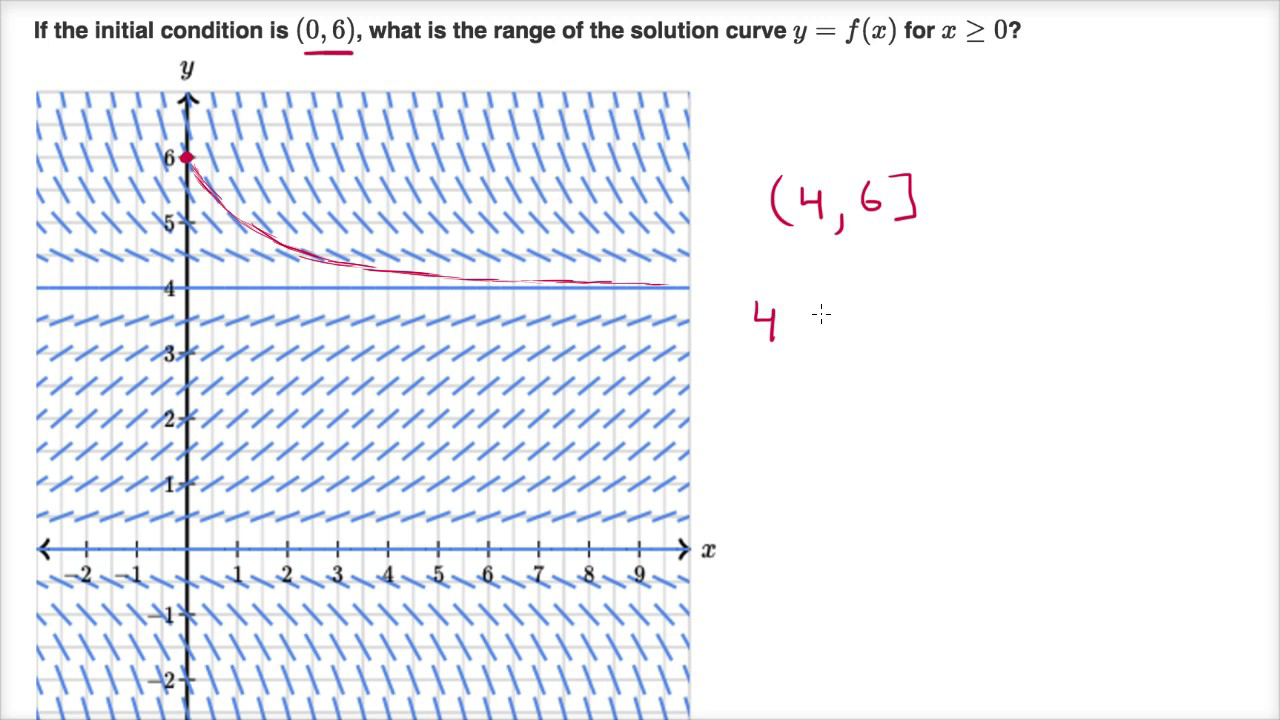


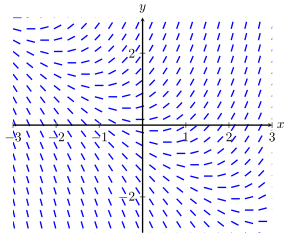
A differential equation contains derivatives of a function with respect to one or more variables.
Example:
dy/dx = x
This equation describes how the function y changes with respect to x.
The solution of this equation is:
y = x²/2 + C
where C is a constant.
Order of a Differential Equation
The order of a differential equation is determined by the highest derivative present.
Examples:
First-order equation:
dy/dx = 3x
Second-order equation:
d²y/dx² + y = 0
Higher-order equations involve third or higher derivatives.
Types of Differential Equations
- Ordinary Differential Equations (ODEs)
- Partial Differential Equations (PDEs)
Ordinary differential equations involve derivatives with respect to a single variable, while partial differential equations involve derivatives with respect to multiple variables.
Differential Equations in Population Growth


One of the most common applications of differential equations is modeling population growth.
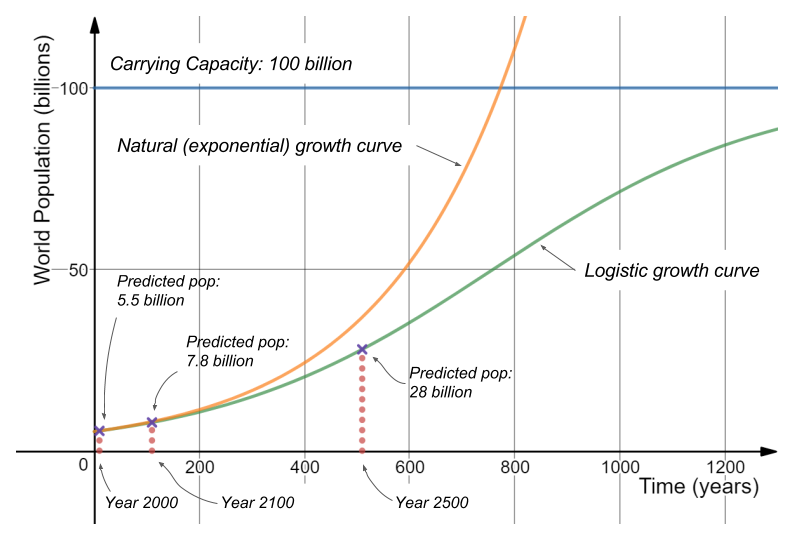
The simplest model assumes that population growth rate is proportional to the current population.
Mathematically:
dP/dt = kP
Where:
P = population
k = growth constant
t = time
The solution is:
P(t) = P₀ e^(kt)
This is known as the exponential growth model.
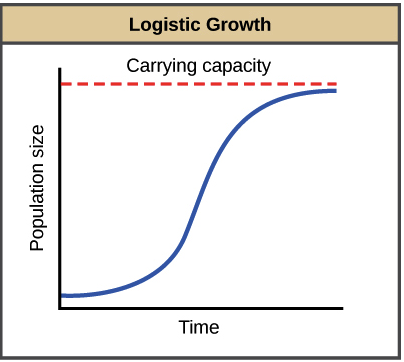
However, real populations cannot grow indefinitely. A more realistic model is the logistic growth equation:
dP/dt = kP(1 − P/K)
Where:
K is the carrying capacity of the environment.
This model describes how populations grow rapidly at first and then slow down as resources become limited.
Applications in Physics


Differential equations play a central role in physics.
Newton’s Second Law of Motion
Newton’s second law states:
F = ma
Since acceleration is the second derivative of position:
F = m(d²x/dt²)
This forms a second-order differential equation describing motion.
Simple Harmonic Motion
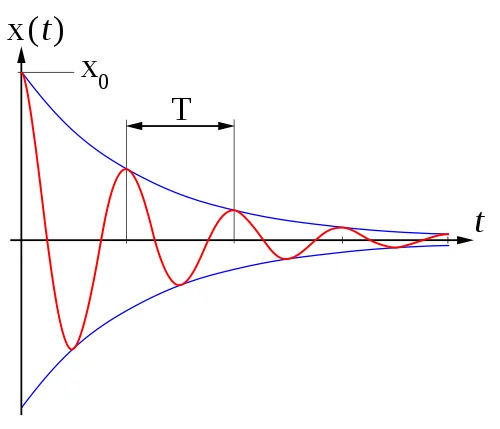
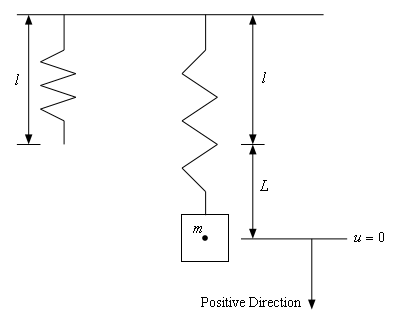
Oscillating systems such as springs follow the equation:
d²x/dt² + ω²x = 0
The solutions describe sinusoidal motion.
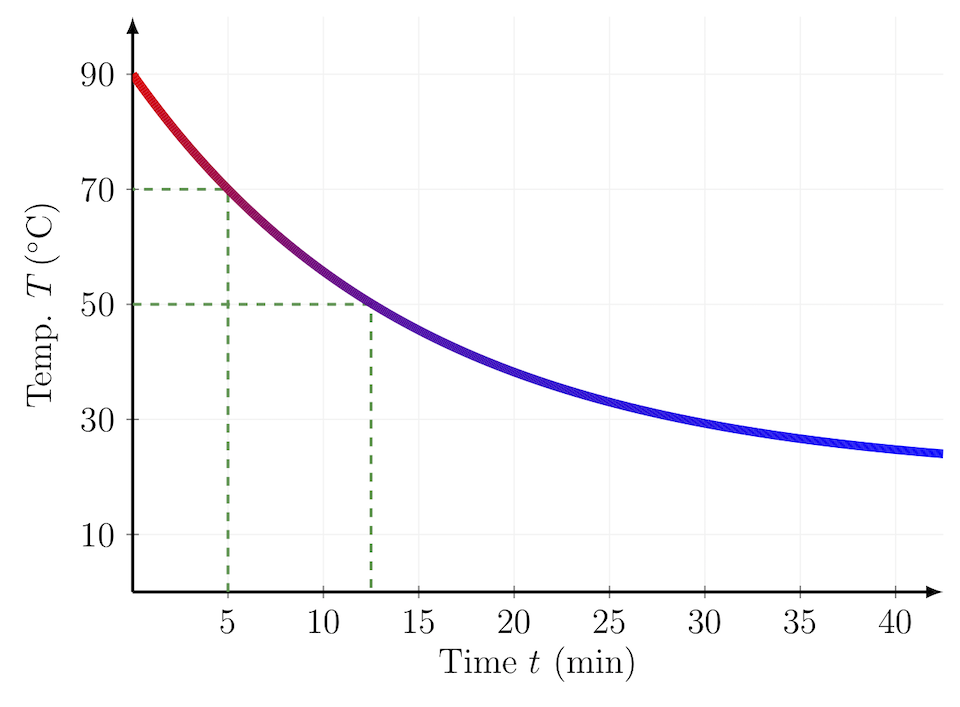
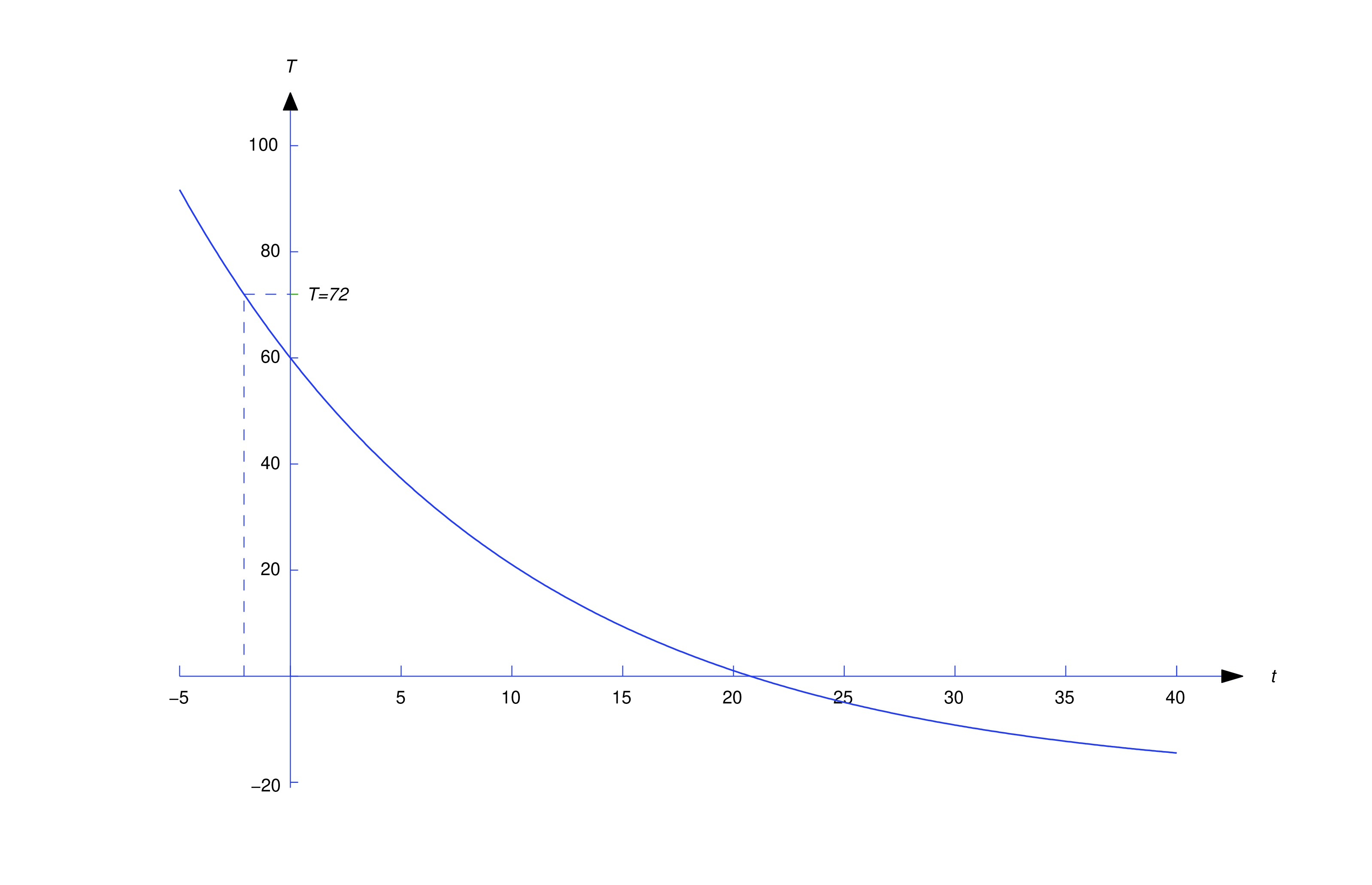
Newton’s Law of Cooling
The rate at which an object cools is proportional to the difference between its temperature and the surrounding temperature.
dT/dt = −k(T − Tₐ)
This model is used in engineering and environmental science.
Radioactive Decay
Radioactive substances decay according to:
dN/dt = −kN
Solution:
N(t) = N₀ e^(−kt)
This equation describes the exponential decay of radioactive materials.
Applications in Engineering



Engineers use differential equations to model systems and predict behavior.
Electrical Circuits
The current and voltage in electrical circuits are described by differential equations.
Example: RC Circuit
dQ/dt + (1/RC)Q = V/R
Where:
Q = charge
R = resistance
C = capacitance
Mechanical Vibrations
Mechanical systems such as bridges, buildings, and vehicles experience vibrations described by differential equations.
Control Systems
Differential equations help design automatic control systems used in robotics, aircraft, and industrial machines.
Applications in Biology



Differential equations are widely used in biological sciences.
Spread of Diseases
Epidemiological models use differential equations to describe disease transmission.
Example:
SIR model divides population into:
- Susceptible
- Infected
- Recovered
Predator-Prey Models
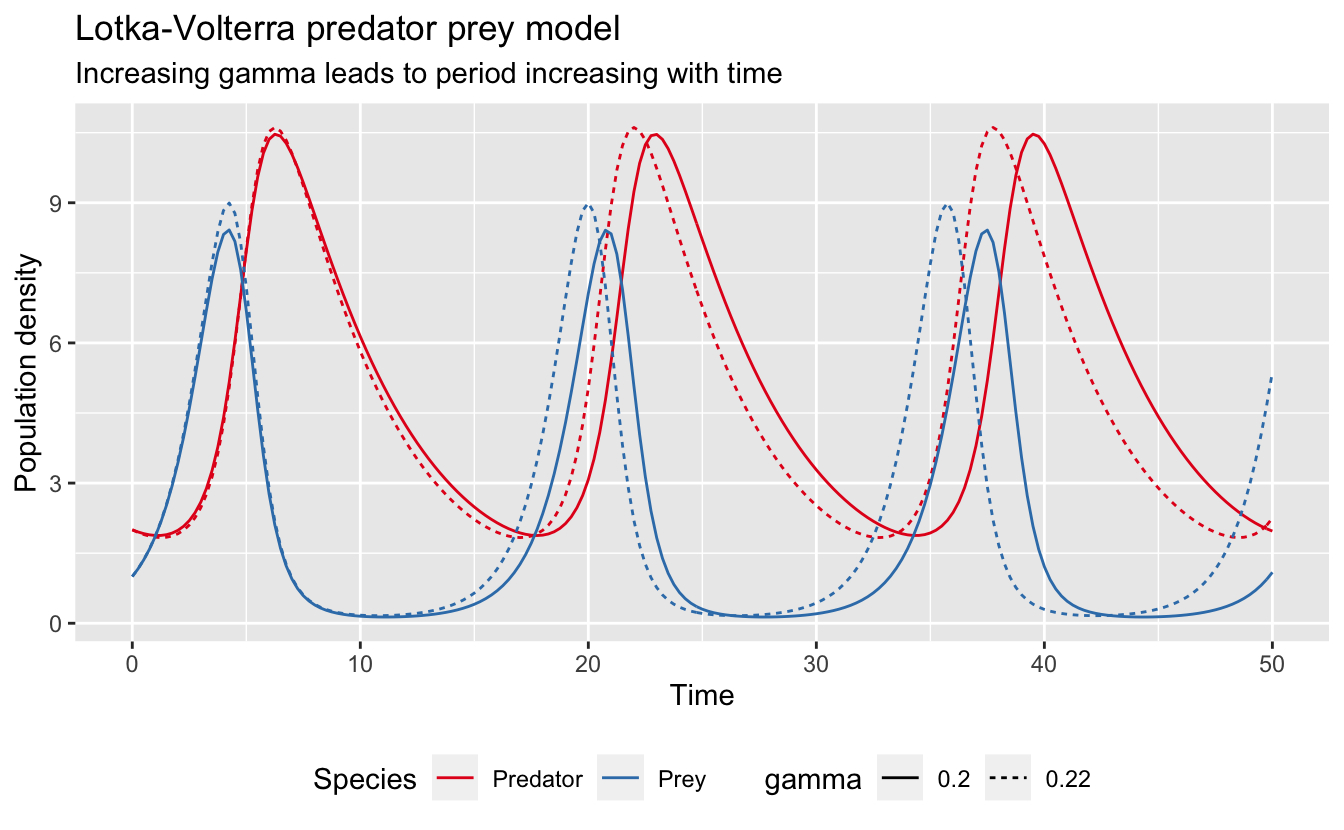
The Lotka–Volterra equations describe interactions between predators and prey.
These equations help ecologists understand population cycles.
Pharmacology
Differential equations model how drugs enter and leave the body.
This helps determine proper dosage and treatment schedules.
Applications in Economics

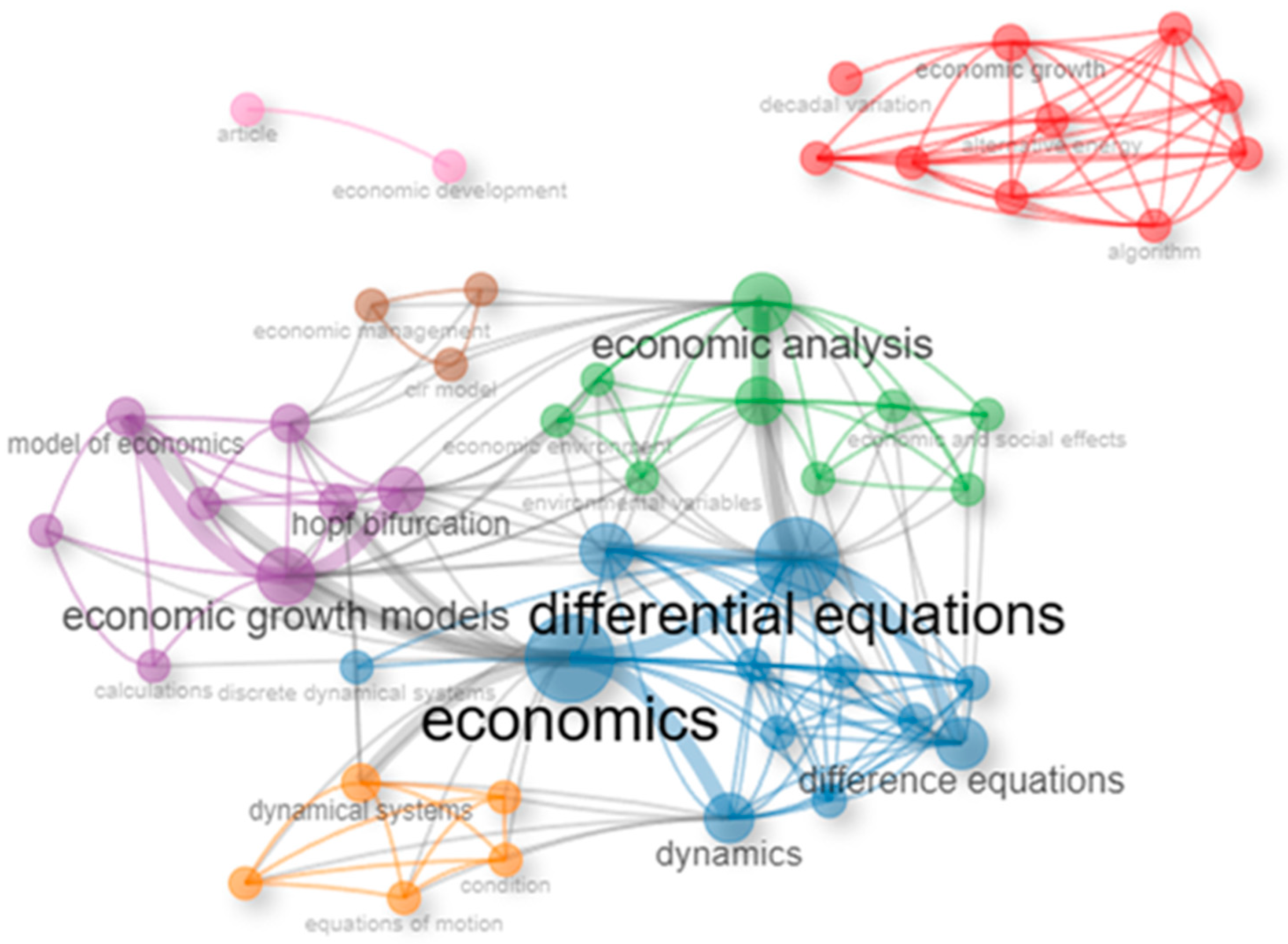


Economists use differential equations to analyze economic dynamics.
Economic Growth Models
Differential equations describe how capital and production change over time.
Investment Models
Investment growth can be modeled using differential equations.
Market Dynamics
Supply and demand changes over time can be analyzed using differential equations.
These models help economists predict long-term economic trends.
Applications in Fluid Dynamics
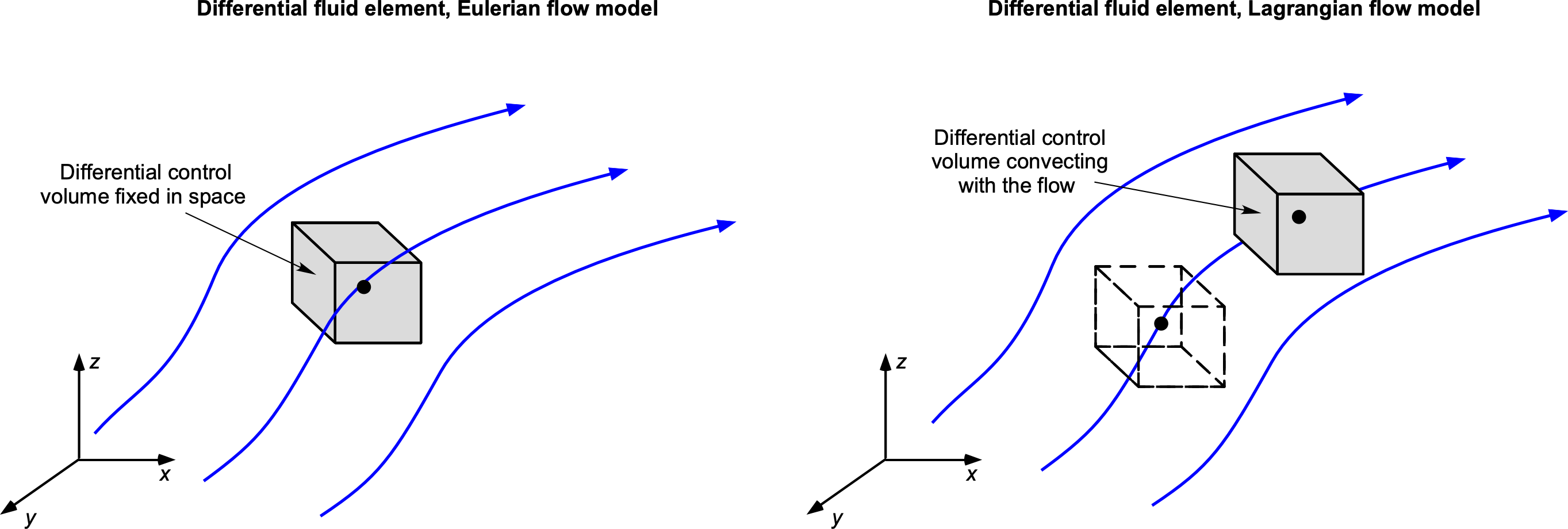


Fluid dynamics uses differential equations to study the motion of liquids and gases.
The most important equations include the Navier–Stokes equations, which describe fluid flow.
Applications include:
- aerodynamics
- weather prediction
- ocean currents
- blood circulation
These equations are essential in aerospace engineering and meteorology.
Applications in Chemical Reactions


Chemical reactions often follow rates described by differential equations.
Example:
First-order reaction:
dC/dt = −kC
Where:
C = concentration
k = reaction constant
Solutions describe how reactant concentration changes over time.
These models are used in chemical engineering and industrial processes.
Importance of Differential Equations
Differential equations are essential because they describe how systems evolve over time.
They allow scientists and engineers to:
- model natural processes
- predict system behavior
- optimize designs
- simulate complex systems
Without differential equations, modern science and engineering would not be possible.
They form the mathematical foundation for many technological advancements.
Conclusion
Differential equations are powerful mathematical tools used to describe relationships between changing quantities. They play a crucial role in modeling real-world phenomena in physics, engineering, biology, economics, chemistry, and many other disciplines.
Applications of differential equations include modeling population growth, analyzing motion of objects, studying heat transfer, designing electrical circuits, predicting disease spread, and understanding fluid dynamics.
Because they describe how systems evolve over time, differential equations are essential for understanding the natural world and developing new technologies.
Mastering differential equations enables mathematicians, scientists, and engineers to analyze complex systems and solve problems involving dynamic change.