

Introduction to Differentiation
Differentiation is one of the central concepts in calculus and mathematical analysis. It is used to study how a function changes with respect to its input. In simple terms, differentiation measures the rate at which a quantity changes. The result of differentiation is called the derivative of a function.
Differentiation allows mathematicians and scientists to determine slopes of curves, rates of change, and optimal values in various problems. It has numerous applications in physics, engineering, economics, biology, computer science, and many other fields.
For example, when a car moves along a road, its position changes over time. Differentiation can be used to determine the velocity of the car by measuring how quickly its position changes. Similarly, differentiation can determine acceleration, growth rates, and trends in data.
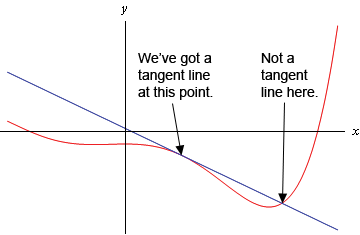
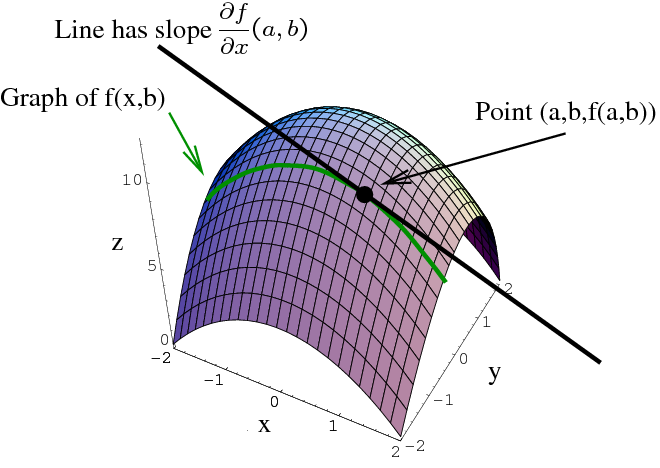
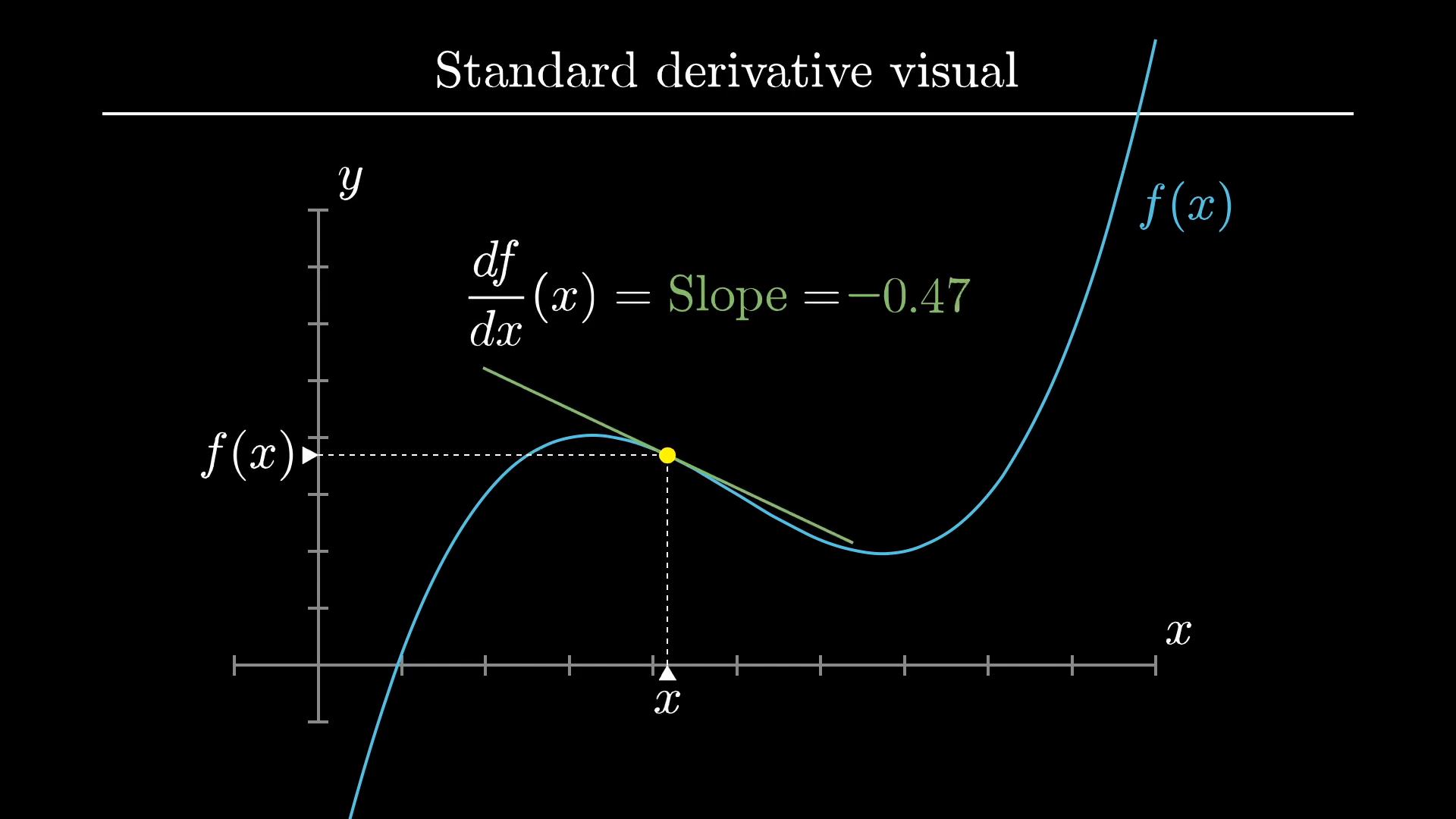
The derivative of a function represents the slope of the tangent line to the curve at a given point. It provides information about how steep the curve is and whether the function is increasing or decreasing at that point.
Mathematically, if a function is represented by f(x), its derivative is often written as:
f′(x) or dy/dx
This derivative describes how the value of the function changes as x changes.
Differentiation forms the basis of many advanced topics in calculus such as optimization, curve sketching, differential equations, and mathematical modeling.
Concept of Rate of Change

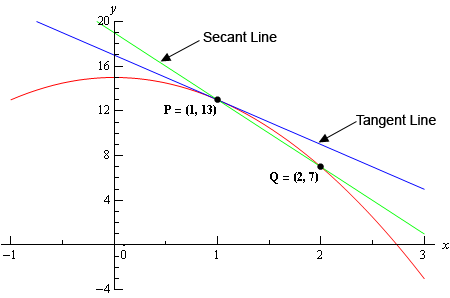
The idea of differentiation comes from the concept of rate of change.
Rate of change describes how one quantity varies with respect to another. For example:
- Speed describes how distance changes with time.
- Population growth describes how population changes over time.
- Temperature variation describes how temperature changes during the day.
There are two types of rate of change.
Average Rate of Change
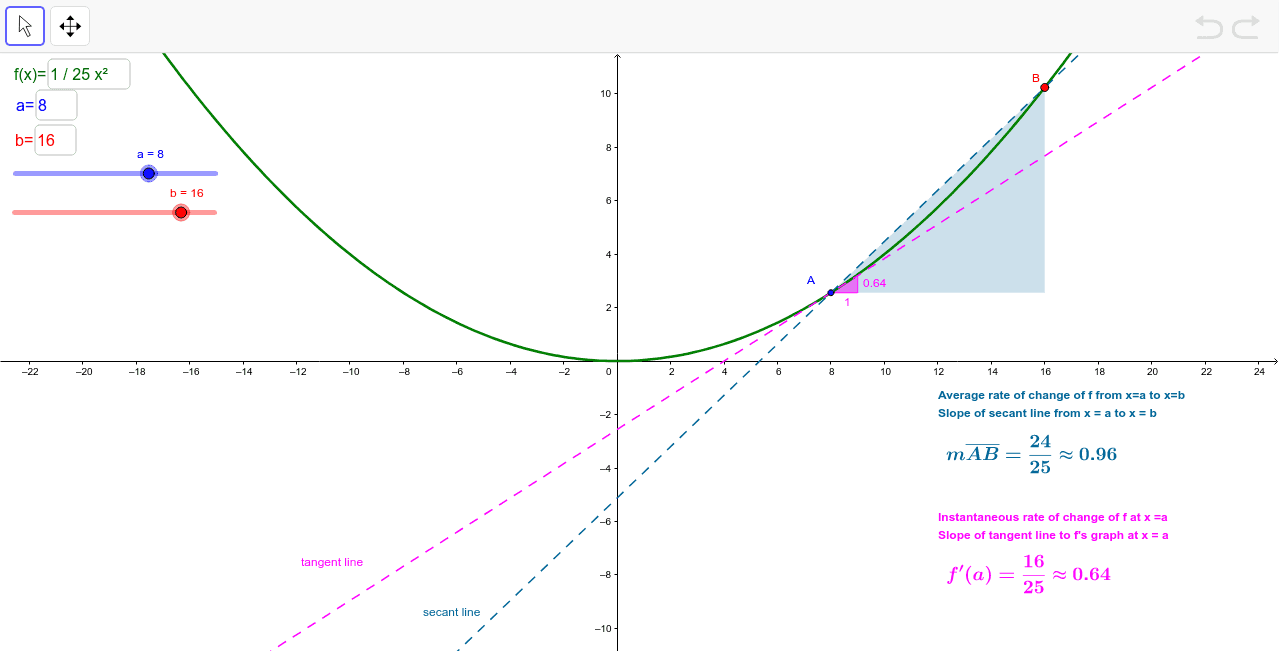
The average rate of change measures how a function changes over an interval.
Average rate of change formula:
(f(b) − f(a)) / (b − a)
This represents the slope of the line connecting two points on the curve.
Instantaneous Rate of Change
The instantaneous rate of change measures how the function changes at a specific point.
This is found using derivatives and represents the slope of the tangent line.
Differentiation focuses on the instantaneous rate of change.
Definition of Derivative
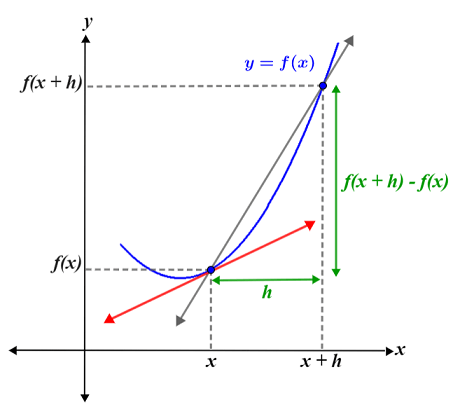

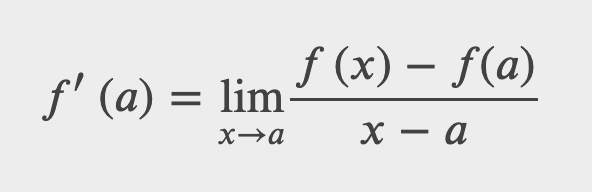
The derivative of a function is defined using limits.
Mathematically:
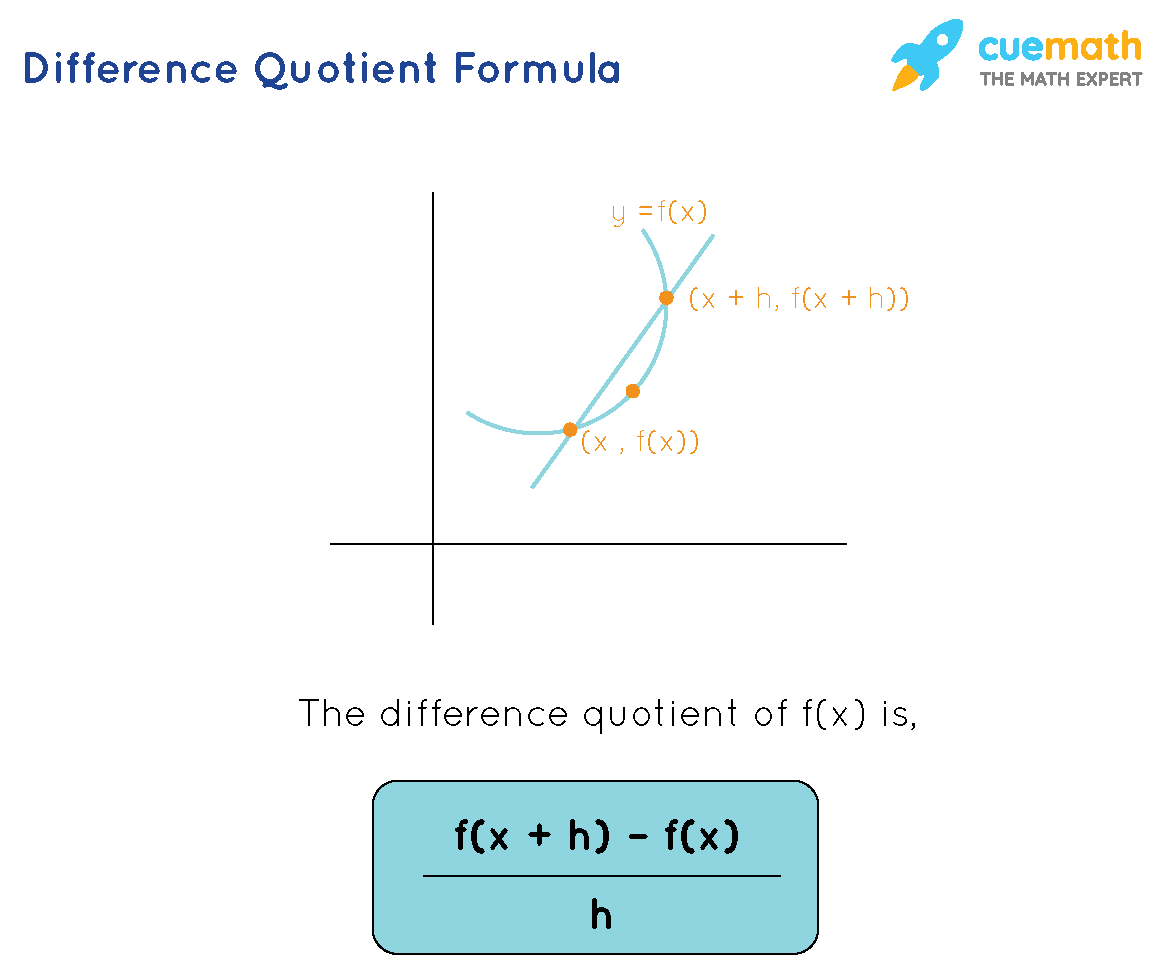
f′(x) = lim (h → 0) [f(x + h) − f(x)] / h
This expression is called the difference quotient.
It measures the slope of the secant line between two points on the curve. As the distance between the points approaches zero, the secant line becomes the tangent line.
Thus, the derivative represents the slope of the tangent line at a specific point.
Example:
Let:
f(x) = x²
Then:
f′(x) = 2x
This means the slope of the curve at any point x is 2x.
Geometric Interpretation of Differentiation


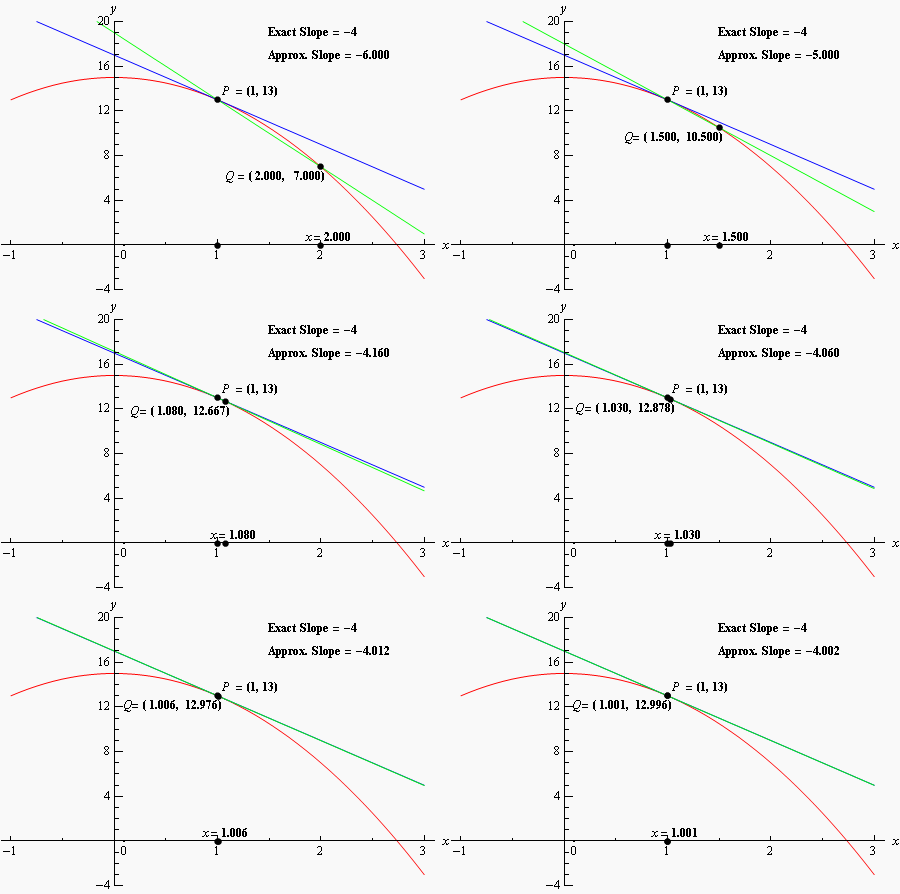

Geometrically, differentiation represents the slope of the tangent line to a curve at a given point.
A tangent line touches the curve at exactly one point and represents the direction of the curve at that point.
If the slope is positive, the function is increasing.
If the slope is negative, the function is decreasing.
If the slope is zero, the function may have a maximum or minimum point.
This interpretation helps in understanding the shape and behavior of graphs.
Basic Rules of Differentiation

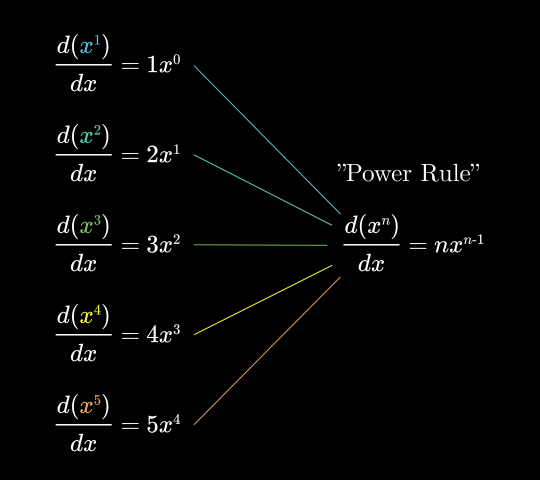
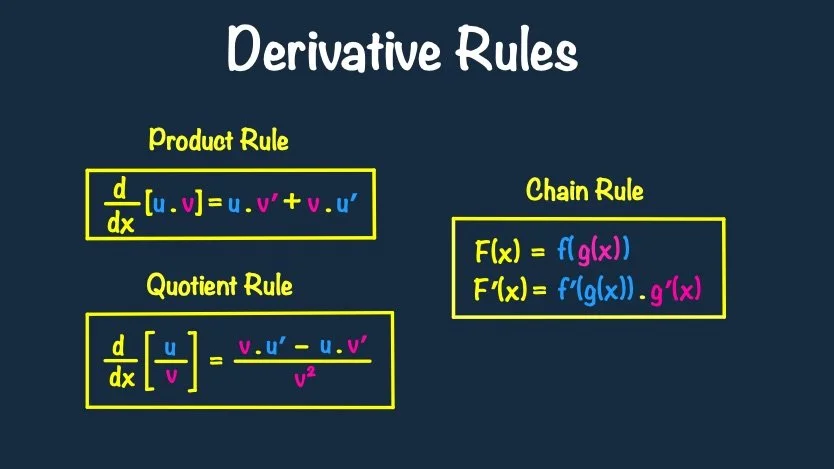
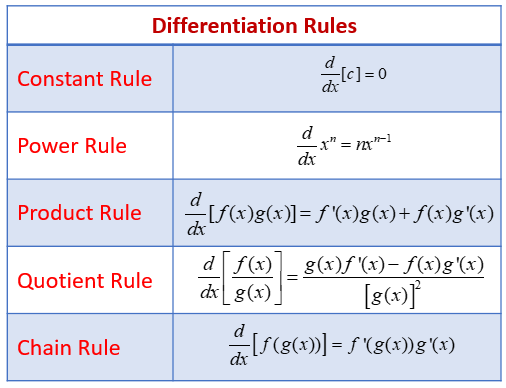
Several rules simplify the process of differentiation.
Constant Rule
The derivative of a constant is zero.
d/dx (c) = 0
Power Rule
d/dx (xⁿ) = nxⁿ⁻¹
Example:
d/dx (x³) = 3x²
Sum Rule
d/dx (f + g) = f′ + g′
Difference Rule
d/dx (f − g) = f′ − g′
Product Rule
d/dx (fg) = f′g + fg′
Quotient Rule
d/dx (f/g) = (f′g − fg′)/g²
These rules help differentiate complex expressions efficiently.
Chain Rule

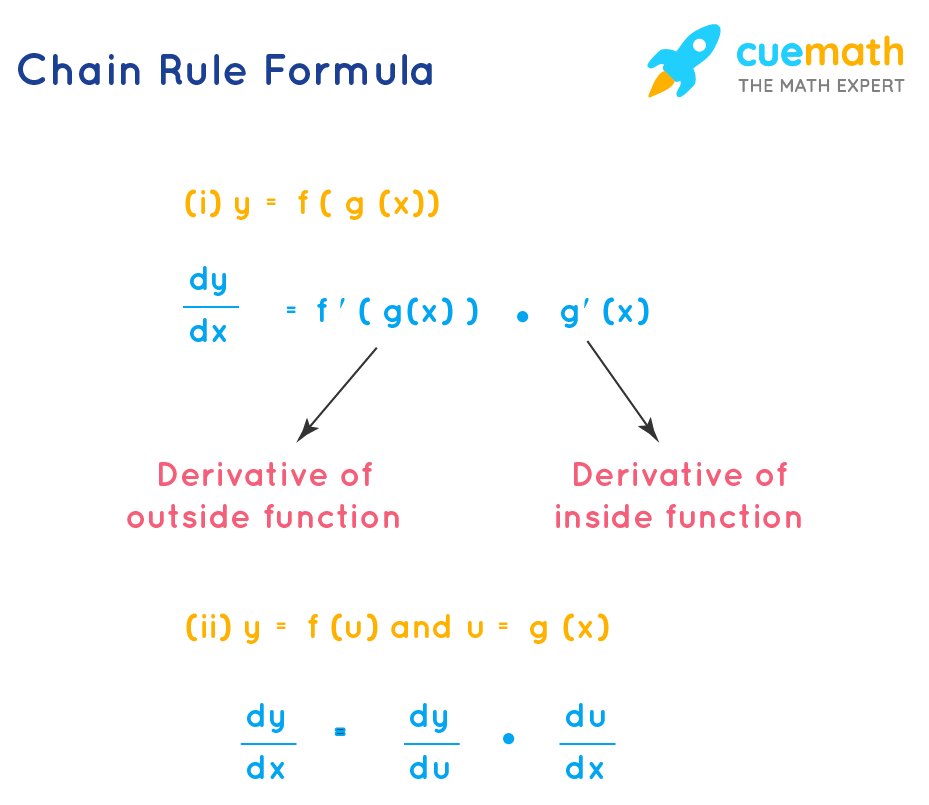
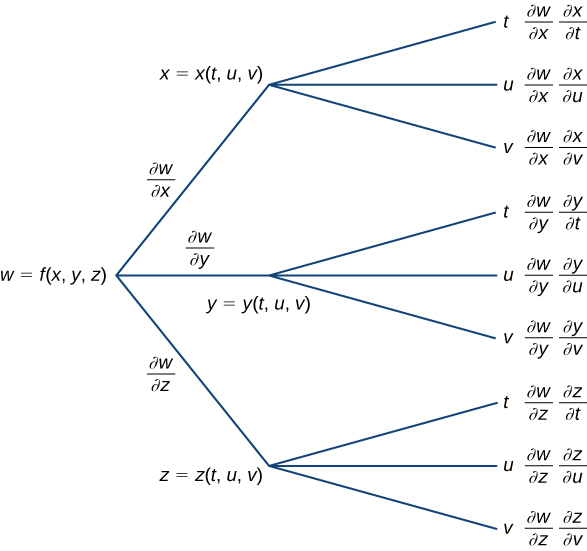

The chain rule is used to differentiate composite functions.
If:
y = f(g(x))
Then:
dy/dx = f′(g(x)) × g′(x)
Example:
If
y = (x² + 1)³
Then:
dy/dx = 3(x² + 1)² × 2x
Chain rule is essential for differentiating functions involving nested expressions.
Derivatives of Common Functions
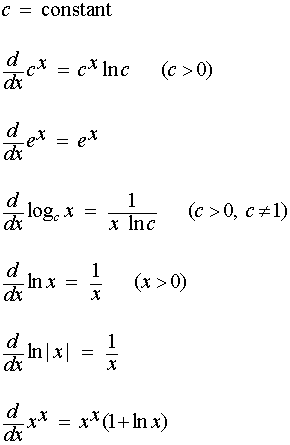

Important derivatives include:
Derivative of sine:
d/dx (sin x) = cos x
Derivative of cosine:
d/dx (cos x) = −sin x
Derivative of tangent:
d/dx (tan x) = sec²x
Derivative of exponential:
d/dx (eˣ) = eˣ
Derivative of logarithm:
d/dx (ln x) = 1/x
These derivatives are widely used in calculus.
Higher-Order Derivatives
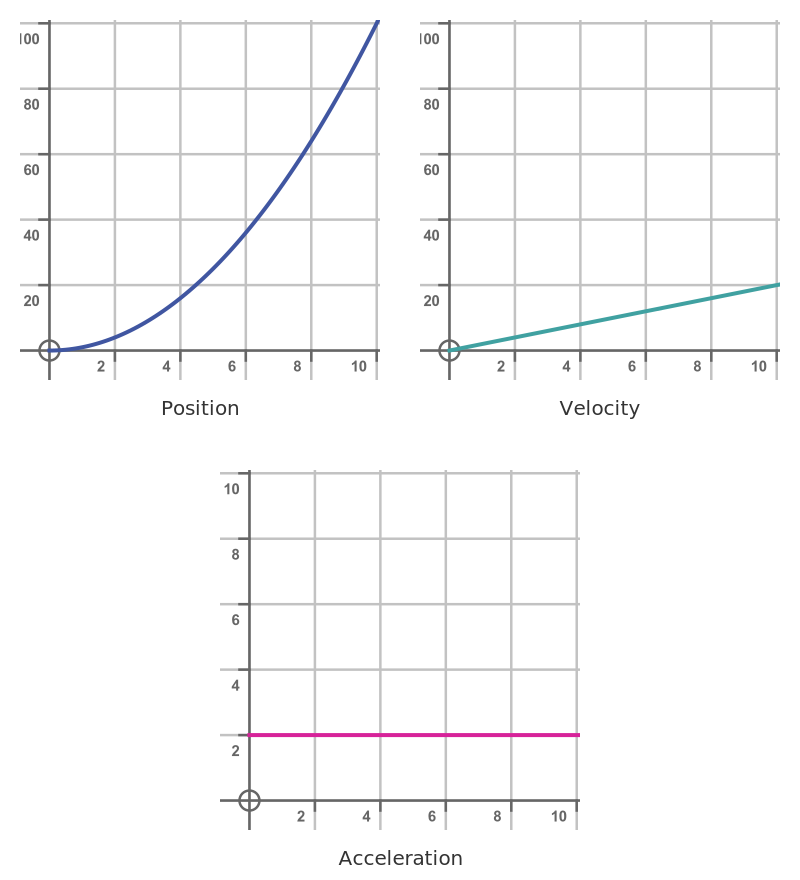
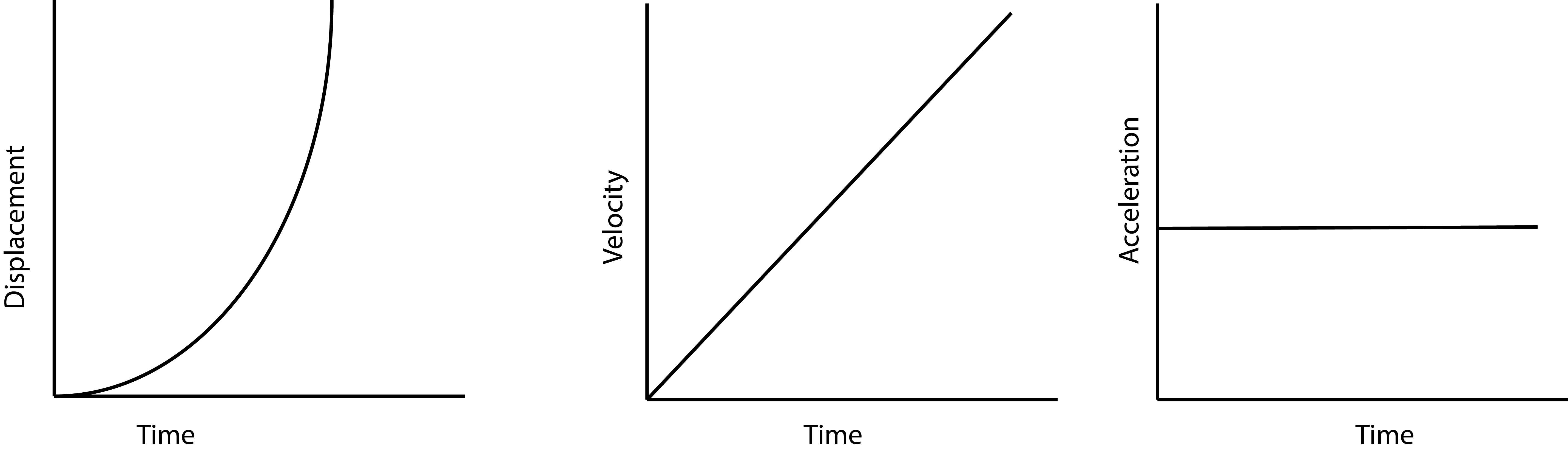
The derivative of a derivative is called a higher-order derivative.
Second derivative:
f″(x)
Third derivative:
f‴(x)
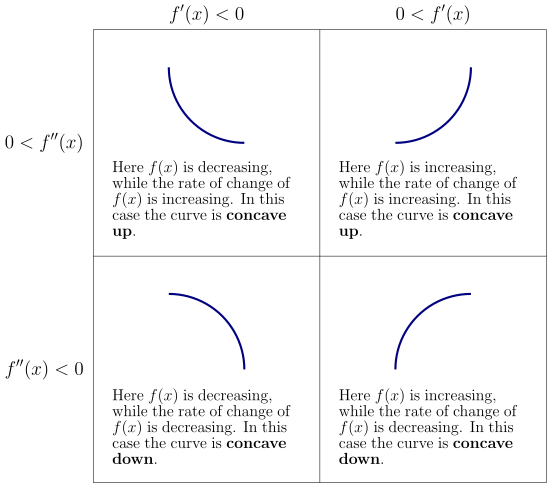
The second derivative describes acceleration or concavity of the graph.
If f″(x) > 0, the curve is concave upward.
If f″(x) < 0, the curve is concave downward.
Higher-order derivatives are important in physics and engineering.
Applications of Differentiation


Differentiation has many practical applications.
Physics
Used to calculate velocity and acceleration.
Engineering
Used to design machines and analyze systems.
Economics
Used to determine marginal cost and profit.
Biology
Used to study population growth rates.
Computer Science
Used in machine learning algorithms and optimization.
Maxima and Minima
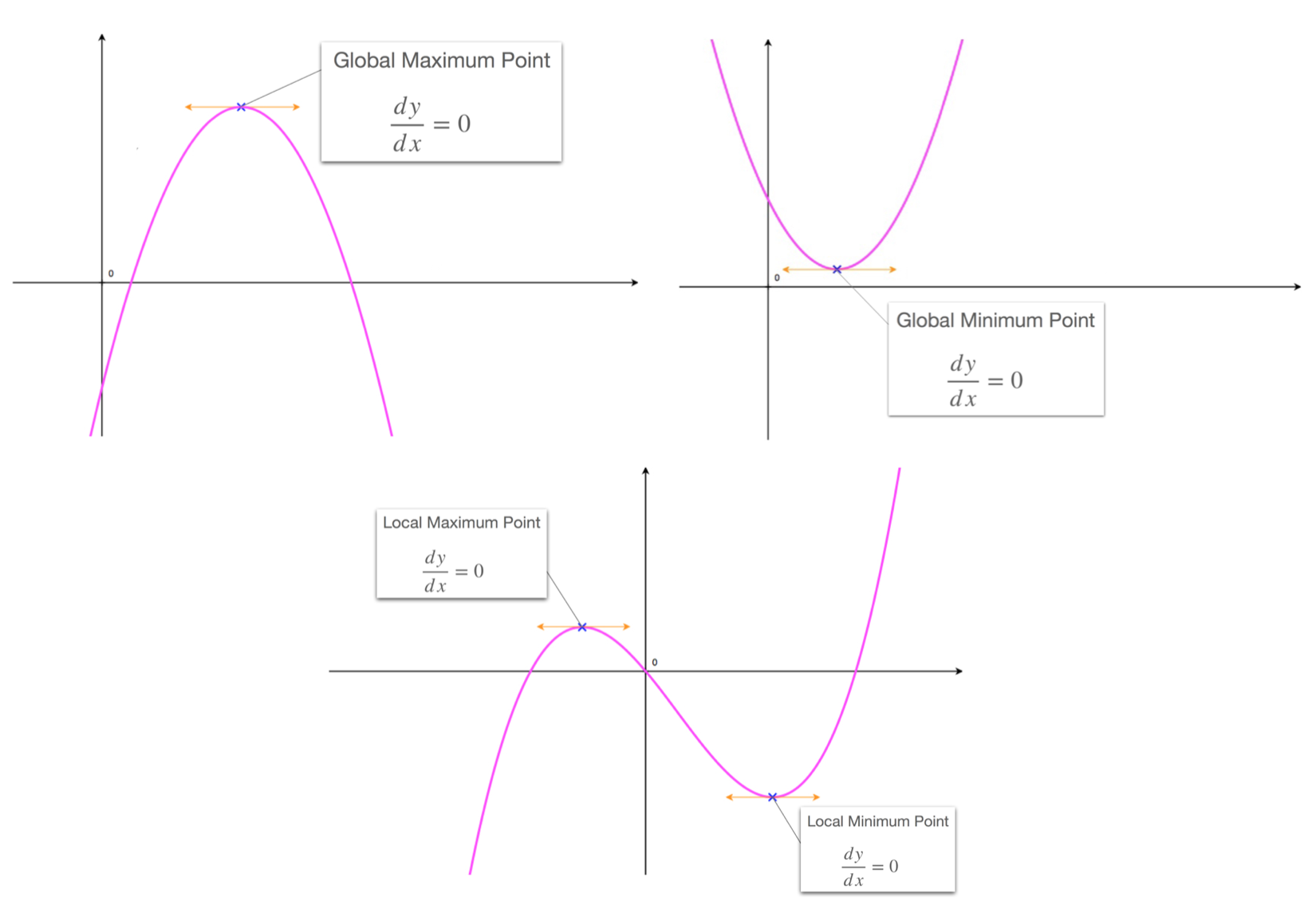


Differentiation helps determine maximum and minimum values of functions.
Steps:
- Find derivative.
- Set derivative equal to zero.
- Solve for critical points.
These points represent maxima, minima, or saddle points.
Optimization problems rely heavily on derivatives.
Importance of Differentiation
Differentiation is essential for understanding change and motion in mathematics and science.
It helps analyze curves, optimize systems, and model real-world phenomena. Without differentiation, modern physics, engineering, and economics would not be possible.
Differentiation also forms the basis for differential equations, which describe many natural processes.
Conclusion
Differentiation is a fundamental concept in calculus that measures the rate of change of a function. It provides a powerful mathematical tool for analyzing curves, determining slopes, and solving optimization problems.
The derivative represents the slope of the tangent line and describes how a function changes at a particular point. Differentiation is closely connected to limits and continuity and plays a crucial role in many areas of mathematics and science.
Understanding differentiation allows students and researchers to model real-world processes, analyze data, and solve complex problems involving change. Because of its wide range of applications, differentiation remains one of the most important tools in mathematics and applied sciences.