

Introduction
Particle detectors are scientific instruments used to detect, measure, and analyze subatomic particles such as electrons, protons, neutrons, photons, and other elementary particles. These detectors play a crucial role in experimental nuclear physics, particle physics, astrophysics, and radiation measurement.
Subatomic particles are extremely small and cannot be observed directly with the naked eye. Instead, scientists rely on particle detectors to observe the interactions of these particles with matter. When particles pass through or collide with detector materials, they produce measurable effects such as ionization, scintillation, electrical signals, or visible tracks. These effects are analyzed to determine the properties of the particles.
Particle detectors have been essential in many groundbreaking discoveries in physics, including the identification of new particles and the study of fundamental interactions. Large experimental facilities such as the CERN use advanced particle detectors to investigate high-energy particle collisions.
Particle detectors are also widely used in medical imaging, radiation monitoring, space exploration, and industrial applications.
Basic Principle of Particle Detection
When charged or neutral particles interact with matter, they produce observable physical effects. Particle detectors operate by measuring these effects.
Common interactions used for detection include:
- Ionization of atoms
- Excitation of molecules
- Scattering of particles
- Production of light flashes
- Electrical signal generation
For example, when a charged particle travels through a gas or solid detector material, it can ionize atoms by knocking out electrons. The resulting charged particles can be collected and measured using electronic circuits.
The measurement of these signals allows scientists to determine various particle properties such as:
- Energy
- Momentum
- Charge
- Mass
- Direction of motion
Classification of Particle Detectors
Particle detectors can be classified based on their operating principles.
Major types include:
- Ionization detectors
- Scintillation detectors
- Semiconductor detectors
- Track detectors
- Cherenkov detectors
- Calorimeters
Each type is designed to detect specific kinds of particles or interactions.
Ionization Detectors


Ionization detectors measure the electric charge produced when radiation ionizes gas atoms inside a detector.
These detectors contain gas enclosed between two electrodes. When radiation enters the chamber, it ionizes the gas molecules, producing electrons and positive ions.
An electric field between the electrodes collects these charges and produces an electrical signal.
Types of Ionization Detectors
Ionization Chamber
Measures radiation intensity by collecting ionized charges.
Proportional Counter
Provides information about particle energy because the output signal is proportional to the ionization produced.
Geiger–Müller Counter
One of the most widely used radiation detectors.
The Geiger counter produces large electrical pulses for each detected particle and is commonly used for radiation monitoring.
Scintillation Detectors
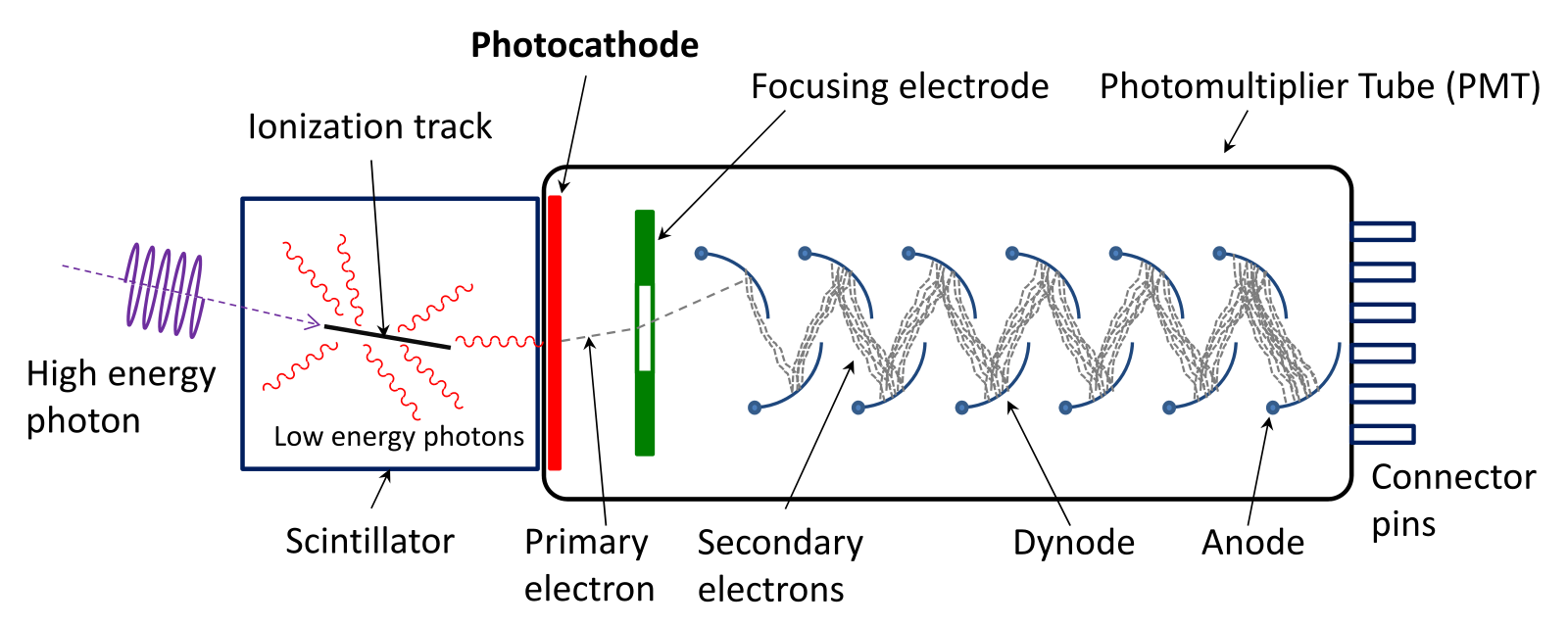


Scintillation detectors detect radiation by measuring flashes of light produced when particles interact with certain materials called scintillators.
When radiation enters the scintillating material:
- Atoms become excited.
- The excited atoms emit photons (light).
- A photodetector converts the light into an electrical signal.
Scintillation detectors are widely used for detecting gamma rays and other high-energy particles.
Common scintillator materials include:
- Sodium iodide
- Plastic scintillators
- Liquid scintillators
Semiconductor Detectors


Semiconductor detectors use solid-state materials such as silicon or germanium to detect radiation.
When radiation interacts with the semiconductor crystal, it creates electron–hole pairs.
These charges are collected by an electric field, producing an electrical signal proportional to the particle’s energy.
Advantages of semiconductor detectors include:
- High energy resolution
- Compact size
- Precise measurement capability
Germanium detectors are widely used in gamma-ray spectroscopy.
Track Detectors


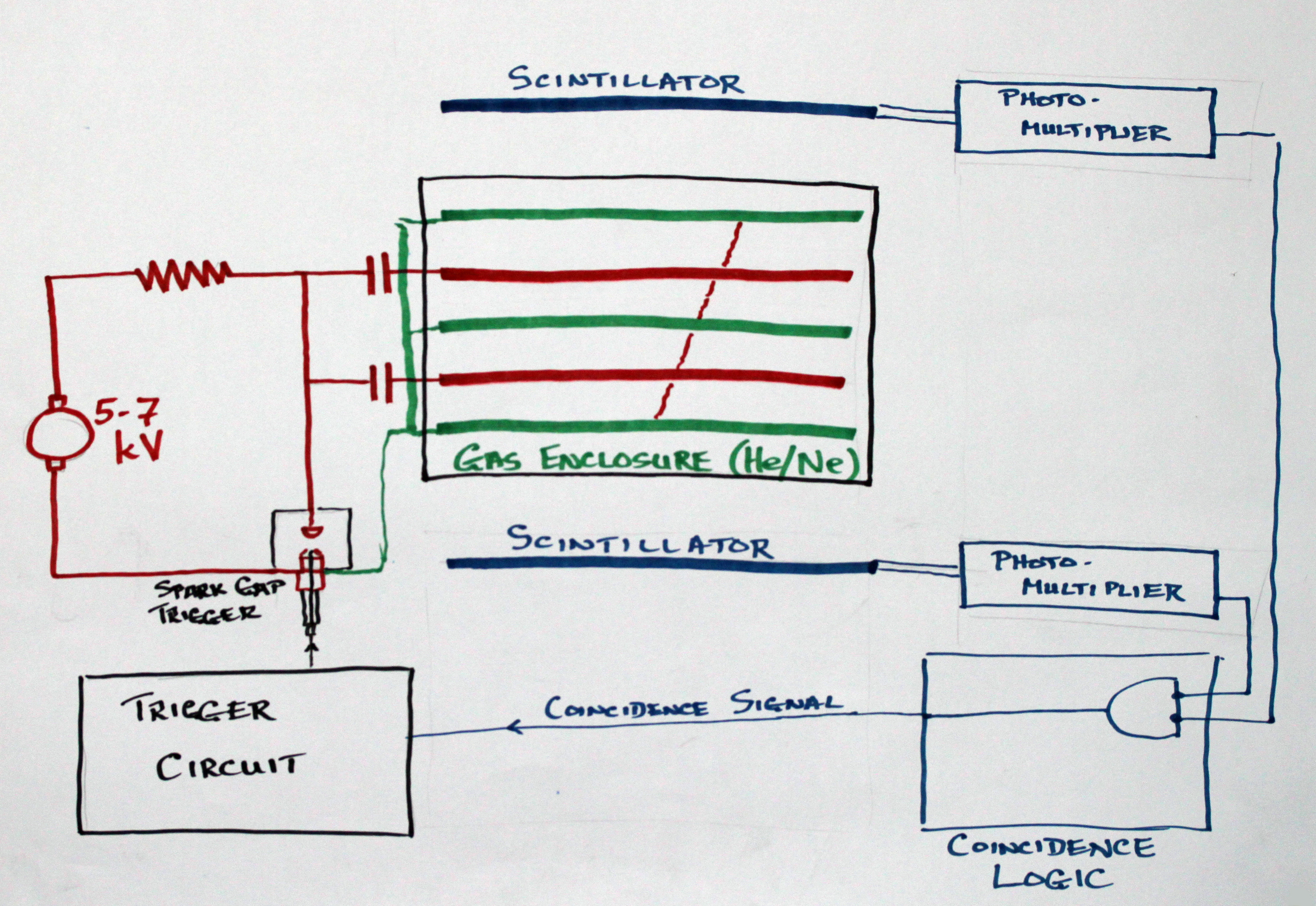
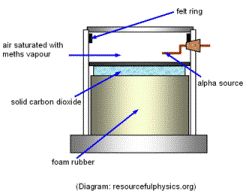
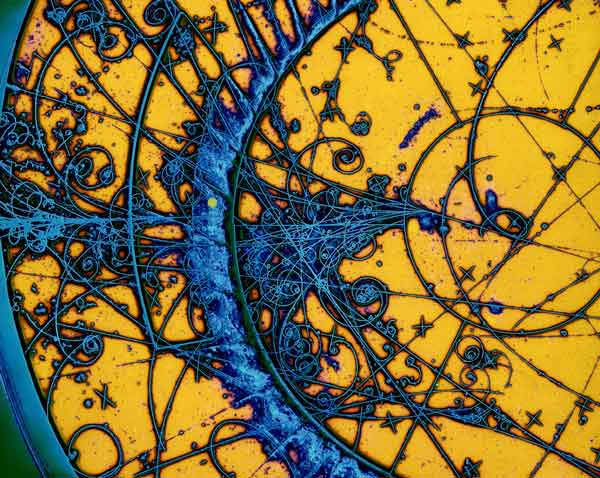
Track detectors allow scientists to visually observe the paths of particles as they move through a medium.
Examples include:
Cloud Chamber
A chamber filled with supersaturated vapor.
Charged particles create visible condensation trails.
Bubble Chamber
A liquid-filled chamber where charged particles produce bubble tracks.
Spark Chamber
Uses electrical sparks to reveal particle paths.
Track detectors were widely used in early particle physics experiments to study particle interactions.
Cherenkov Detectors


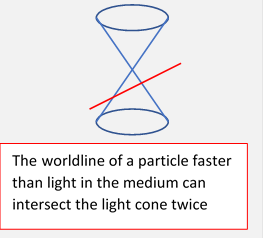
Cherenkov detectors detect particles moving faster than the speed of light in a medium.
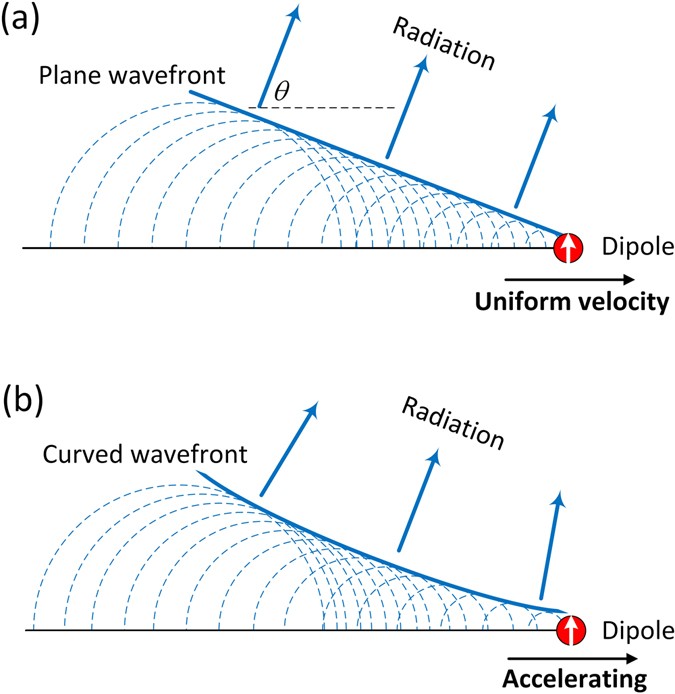
When a charged particle travels through a medium faster than light travels in that medium, it produces a faint blue glow known as Cherenkov radiation.
This radiation forms a cone-shaped wavefront.
Cherenkov detectors measure this light to determine particle speed and identity.
Calorimeters
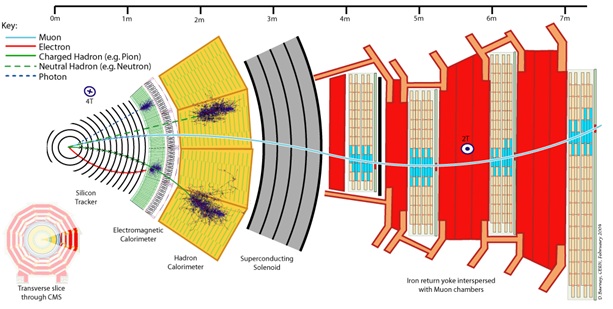
Calorimeters measure the energy of particles by absorbing them completely.
When a particle enters the calorimeter, it produces a cascade of secondary particles called a particle shower.
The total energy deposited in the detector is measured.
Two main types of calorimeters include:
Electromagnetic Calorimeters
Detect electrons and photons.
Hadronic Calorimeters
Detect protons, neutrons, and other hadrons.
Calorimeters are important components of large particle physics experiments.
Particle Detectors in High-Energy Physics

Modern particle physics experiments use complex detector systems composed of multiple layers of detectors.
For example, detectors used in experiments at the CERN include:
- Tracking detectors
- Calorimeters
- Muon detectors
These systems work together to reconstruct particle collisions and identify newly produced particles.
Important Particle Detector Experiments
Large particle detectors are used in experiments such as those conducted at the Large Hadron Collider.
These experiments study high-energy collisions to understand fundamental particles and forces.
Detectors record millions of collision events per second and analyze the resulting particle tracks and energy deposits.
Applications of Particle Detectors
Particle detectors have many practical applications.
Medical Imaging
Detectors are used in techniques such as PET scans and CT scans.
Radiation Monitoring
Geiger counters monitor environmental radiation.
Astrophysics
Detectors study cosmic rays and high-energy particles from space.
Security
Radiation detectors identify radioactive materials.
Industrial Applications
Radiation detectors measure thickness and density of materials.
Cosmic Ray Detection
Particle detectors are used to detect cosmic rays, high-energy particles that originate from outer space.
Cosmic ray detectors help scientists understand astrophysical phenomena such as supernova explosions and black holes.
Modern Advances in Particle Detection
Modern particle detectors use advanced electronics, computer systems, and data analysis techniques.
Recent developments include:
- Silicon pixel detectors
- Liquid argon detectors
- Time projection chambers
These technologies allow extremely precise measurements of particle properties.
Challenges in Particle Detection
Detecting subatomic particles presents several challenges.
These include:
- Extremely small particle sizes
- Very short lifetimes
- High event rates in experiments
To overcome these challenges, scientists design detectors with high sensitivity, fast response times, and sophisticated data processing systems.
Future Developments
Future particle detectors aim to achieve higher sensitivity and resolution.
New technologies are being developed for experiments in particle physics, neutrino detection, and dark matter searches.
These detectors may help scientists answer fundamental questions about the structure of the universe.
Conclusion
Particle detectors are essential tools in modern physics that allow scientists to observe and measure subatomic particles. Because these particles cannot be seen directly, detectors rely on interactions between particles and matter to produce measurable signals.
Various types of detectors, including ionization chambers, scintillation detectors, semiconductor detectors, track detectors, Cherenkov detectors, and calorimeters, are used for different purposes. These instruments have played a crucial role in the discovery of new particles and the development of particle physics.
Particle detectors are also widely used in medicine, industry, environmental monitoring, and astrophysics. Advances in detector technology continue to improve our ability to study the fundamental particles and forces that make up the universe.