


Introduction
A magnetic field is a region of space surrounding a magnet, electric current, or moving electric charge in which magnetic forces can be observed. Magnetic fields play a crucial role in physics because they explain how magnets interact with other magnets, electric currents, and charged particles.
Magnetic fields are fundamental to electromagnetism, one of the four fundamental forces of nature. Along with electric fields, magnetic fields form the basis of electromagnetic theory, which explains many natural phenomena such as light, radio waves, and electricity.
Magnetic fields are produced by:
- Permanent magnets
- Moving electric charges
- Electric currents
- Changing electric fields
Magnetic fields are essential in many technologies including:
- Electric motors
- Generators
- Transformers
- Magnetic storage devices
- MRI scanners
- Particle accelerators
The SI unit of magnetic field strength is the tesla (T).
Magnetic fields influence the motion of charged particles and are responsible for many important physical effects such as electromagnetic induction and the operation of electrical machines.
Historical Development of Magnetism
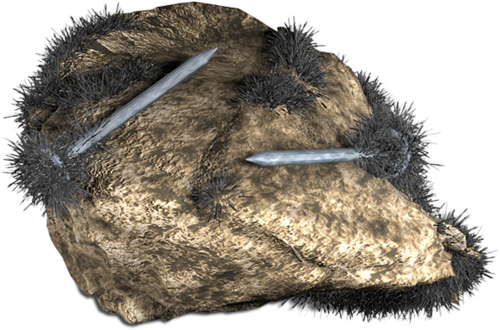
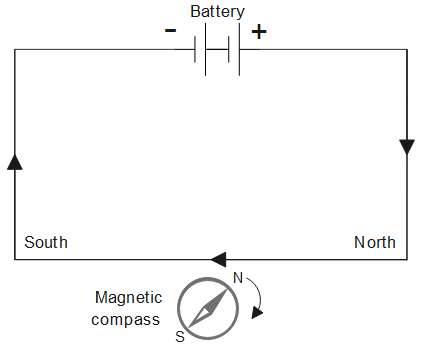


Magnetism has been known since ancient times when people discovered natural magnets called lodestones, which could attract iron objects.
The scientific study of magnetism advanced significantly in the 19th century with contributions from several scientists.
Hans Christian Ørsted
In 1820, Ørsted discovered that an electric current flowing through a wire produces a magnetic field around the wire.
André-Marie Ampère
Ampère studied the relationship between electric currents and magnetic forces and developed mathematical laws describing magnetic interactions.
Michael Faraday
Faraday discovered electromagnetic induction and introduced the concept of magnetic field lines.
James Clerk Maxwell
Maxwell unified electricity and magnetism into a single theory known as electromagnetism through Maxwell’s equations.
These discoveries laid the foundation for modern electrical engineering and electromagnetic technology.
Definition of Magnetic Field


A magnetic field is defined as the region around a magnet or current-carrying conductor in which a magnetic force can be detected.
The magnetic field at a point is described by the vector quantity magnetic flux density (B).
Unit of Magnetic Field
The SI unit is tesla (T).
Another commonly used unit is the gauss (G).
[
1 , Tesla = 10^4 , Gauss
]
Magnetic fields are vector quantities, meaning they have both magnitude and direction.
Magnetic Field Lines


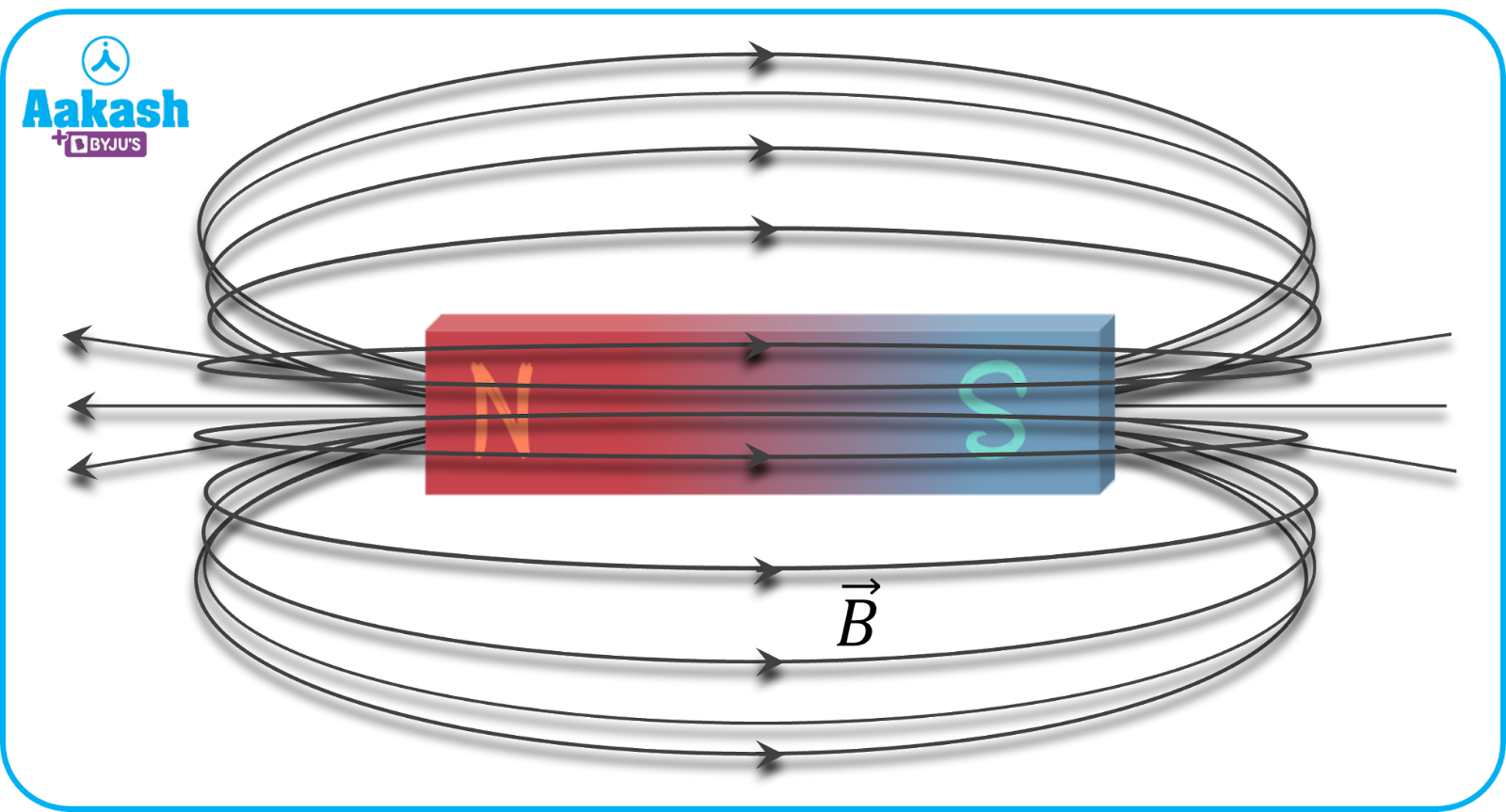
Magnetic fields are represented using magnetic field lines.
These imaginary lines help visualize the direction and strength of magnetic fields.
Properties of Magnetic Field Lines
- They emerge from the north pole of a magnet.
- They enter the south pole.
- Inside the magnet, they travel from south to north.
- They form closed loops.
- The density of field lines indicates field strength.
- Field lines never intersect.
Magnetic field lines provide an intuitive way to understand magnetic interactions.
Magnetic Field Around a Current-Carrying Conductor


When electric current flows through a conductor, it produces a magnetic field around the wire.
This phenomenon was discovered by Ørsted.
Direction of Magnetic Field
The direction of the magnetic field is determined using the right-hand thumb rule.
Rule:
- Point the thumb in the direction of current.
- The curled fingers indicate the direction of magnetic field lines.
Magnetic Field Strength Around Wire
[
B = \frac{\mu_0 I}{2\pi r}
]
Where:
- (B) = magnetic field strength
- (I) = current
- (r) = distance from the wire
- (\mu_0) = permeability of free space
Magnetic Field of a Circular Current Loop


A current flowing through a circular loop produces a magnetic field similar to that of a bar magnet.
Magnetic Field at the Center of a Loop
[
B = \frac{\mu_0 I}{2R}
]
Where:
- (R) = radius of the loop
Increasing current increases the magnetic field strength.
Magnetic Field of a Solenoid


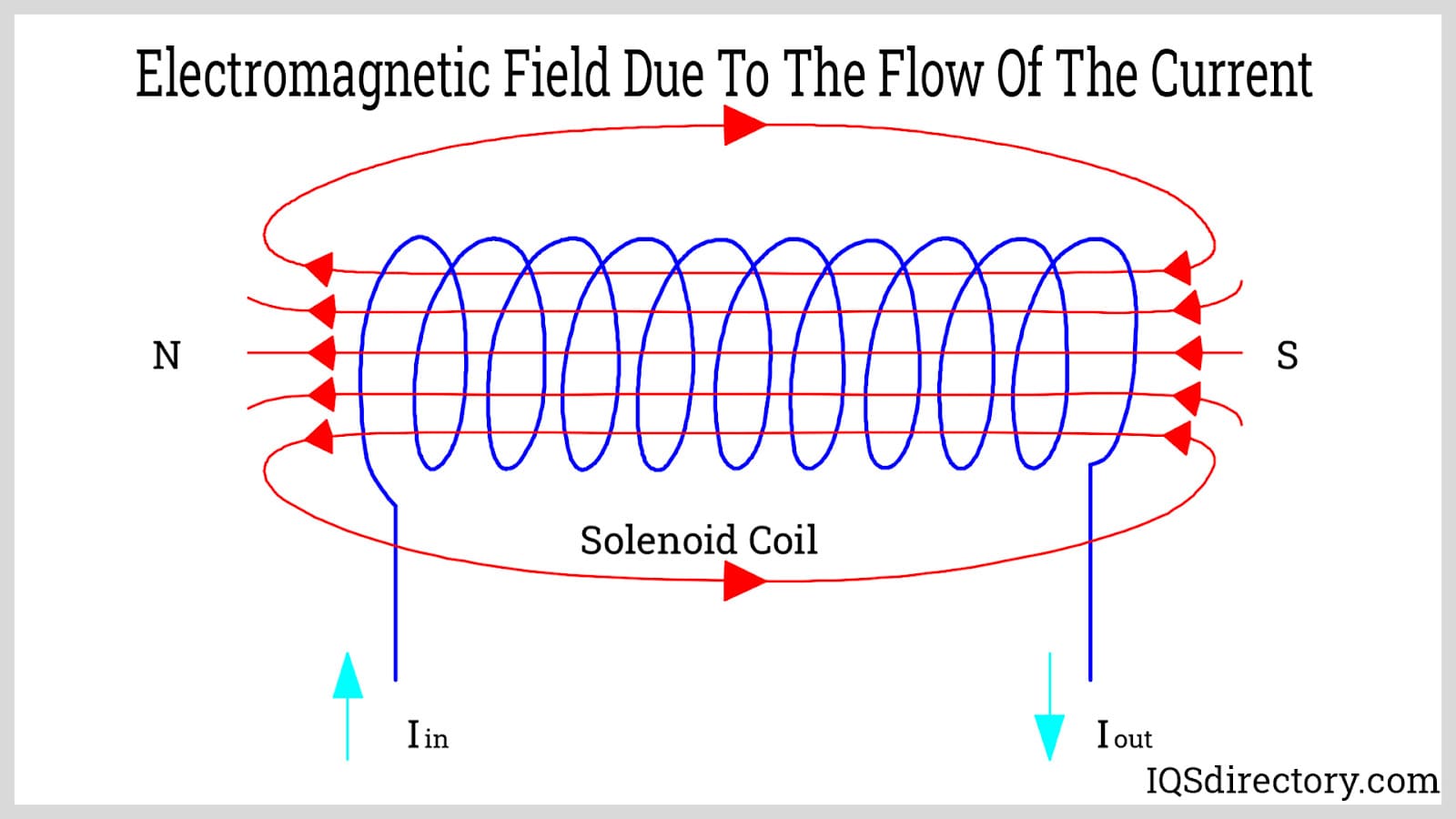
A solenoid is a long coil of wire that produces a strong magnetic field when current flows through it.
The magnetic field inside a solenoid is nearly uniform and parallel.
Magnetic Field in Solenoid
[
B = \mu_0 n I
]
Where:
- (n) = number of turns per unit length
- (I) = current
Solenoids act like electromagnets and are widely used in electrical devices.
Magnetic Force on Moving Charges

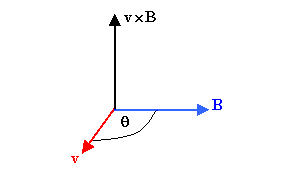

A moving charge experiences a force in a magnetic field.
Lorentz Force Equation
[
F = qvB \sin \theta
]
Where:
- (F) = magnetic force
- (q) = charge
- (v) = velocity
- (B) = magnetic field
- (\theta) = angle between velocity and field
This force causes charged particles to move in circular or helical paths.
Magnetic Flux
Magnetic flux measures the total magnetic field passing through a surface.
Formula
[
\Phi = BA \cos\theta
]
Where:
- (B) = magnetic field
- (A) = area
- (\theta) = angle between field and surface
Unit:
Weber (Wb)
Magnetic flux is important in electromagnetic induction.
Earth’s Magnetic Field


The Earth behaves like a giant magnet with north and south magnetic poles.
This magnetic field is produced by electric currents in Earth’s molten outer core.
The Earth’s magnetic field protects the planet from harmful solar radiation and guides compasses used for navigation.
Applications of Magnetic Fields


Magnetic fields are used in many technologies.
Electric Motors
Magnetic fields interact with electric currents to produce mechanical motion.
Electric Generators
Changing magnetic fields produce electric current.
Transformers
Magnetic fields transfer electrical energy between circuits.
MRI Machines
Magnetic fields are used in medical imaging.
Magnetic Levitation Trains
Strong magnetic fields allow trains to float above tracks.
Importance of Magnetic Fields in Physics
Magnetic fields play a crucial role in understanding many physical phenomena.
They are essential in:
- Electromagnetic waves
- Particle accelerators
- Astrophysics
- Plasma physics
- Electrical engineering
Magnetic fields also influence cosmic phenomena such as solar flares and planetary magnetospheres.
Conclusion
Magnetic fields are regions of space where magnetic forces act on magnets, electric currents, and moving charged particles. They arise from moving electric charges and are closely related to electric fields through the theory of electromagnetism.
Magnetic fields are represented by field lines and measured using the unit tesla. They play a vital role in many natural processes and technological applications, including motors, generators, medical imaging devices, and communication systems.
Understanding magnetic fields is essential for studying electromagnetism and for developing technologies that power modern society.