
Arithmetic in Mathematics — A Detailed Overview
1. Introduction to Arithmetic
Arithmetic is the oldest and most fundamental branch of mathematics. It deals with numbers and the basic operations performed on them. These operations include addition, subtraction, multiplication, and division, which form the foundation of almost all mathematical calculations.
The word arithmetic originates from the Greek word arithmos, meaning number. Historically, arithmetic developed from the human need to count objects, measure quantities, and perform trade and commerce.
Arithmetic is introduced at the earliest stages of education because it provides the basic numerical skills needed for everyday life and advanced mathematical studies such as algebra, calculus, statistics, and number theory.
Examples of everyday arithmetic include:
- Calculating the total price while shopping
- Dividing a bill among friends
- Measuring ingredients in cooking
- Managing personal finances
- Computing distances and time
Thus, arithmetic is essential not only in mathematics but also in science, engineering, economics, and daily decision-making.
2. History of Arithmetic
Arithmetic has a long history that spans thousands of years. Ancient civilizations developed numerical systems and methods to perform calculations.
Ancient Civilizations
Babylonians (around 2000 BCE)
- Used a base-60 number system.
- Developed early multiplication tables.
- Used arithmetic for astronomy and trade.
Egyptians
- Used arithmetic for construction, taxation, and land measurement.
- Created methods for multiplication using repeated doubling.
Indians
- Developed the decimal number system (base-10).
- Introduced the concept of zero, which revolutionized arithmetic.
- Indian mathematicians like Aryabhata and Brahmagupta made significant contributions.
Greeks
- Studied arithmetic as part of philosophy and number theory.
- Mathematicians like Euclid wrote about properties of numbers.
Medieval Period
During the medieval period, arithmetic spread through the Islamic world and Europe. Scholars translated and expanded mathematical works.
The Persian mathematician Al-Khwarizmi wrote important books on arithmetic and algebra, which influenced European mathematics.
Modern Period
With the development of symbolic notation and printing, arithmetic education spread widely. Today arithmetic is taught worldwide as the foundation of mathematics.
3. Number Systems
Arithmetic is based on numbers, which represent quantities. Over time, several types of numbers have been defined.
3.1 Natural Numbers
Natural numbers are the numbers used for counting objects.
Examples:
1, 2, 3, 4, 5, 6, …
Properties:
- They start from 1.
- They extend infinitely.
- They are positive integers.
Example:
If there are 7 apples, the number 7 is a natural number.
3.2 Whole Numbers
Whole numbers include natural numbers and zero.
Examples:
0, 1, 2, 3, 4, 5, …
Properties:
- Zero represents no quantity.
- Whole numbers are non-negative integers.
Example:
If you have no books, the number of books is 0.
3.3 Integers
Integers include positive numbers, negative numbers, and zero.
Examples:
…, −3, −2, −1, 0, 1, 2, 3, …
Properties:
- Used to represent gains and losses.
- Used in temperature measurements and financial transactions.
Example:
- Temperature −5°C means five degrees below zero.
3.4 Rational Numbers
Rational numbers are numbers that can be expressed as a fraction of two integers.
Form:
p / q
Where:
- p = numerator
- q = denominator (q ≠ 0)
Examples:
1/2
3/4
5/6
Decimals like 0.5, 0.25 are also rational numbers.
3.5 Irrational Numbers
Irrational numbers cannot be written as fractions.
Examples:
√2
π
√5
They have non-terminating and non-repeating decimal expansions.
Example:
π ≈ 3.141592653…
3.6 Real Numbers
Real numbers include all rational and irrational numbers.
They represent all points on the number line.
Examples:
−3, −1.5, 0, 2, √2, π
4. Basic Arithmetic Operations
Arithmetic consists of four fundamental operations.
4.1 Addition
Addition is the process of combining two or more numbers to find their total.
Symbol:
Example:
5 + 3 = 8
Here:
- 5 and 3 are addends
- 8 is the sum
Properties of Addition
1. Commutative Property
a + b = b + a
Example:
4 + 6 = 6 + 4 = 10
2. Associative Property
(a + b) + c = a + (b + c)
Example:
(2 + 3) + 4 = 2 + (3 + 4)
3. Identity Property
a + 0 = a
Example:
9 + 0 = 9
4.2 Subtraction
Subtraction is the process of finding the difference between two numbers.
Symbol:
−
Example:
9 − 4 = 5
Here:
- 9 = minuend
- 4 = subtrahend
- 5 = difference
Subtraction is not commutative.
Example:
7 − 3 ≠ 3 − 7
4.3 Multiplication
Multiplication is repeated addition.
Symbol:
×
Example:
4 × 3 = 12
This means:
4 + 4 + 4 = 12
Properties of Multiplication
1. Commutative Property
a × b = b × a
Example:
3 × 5 = 5 × 3
2. Associative Property
(a × b) × c = a × (b × c)
Example:
(2 × 3) × 4 = 2 × (3 × 4)
3. Identity Property
a × 1 = a
Example:
7 × 1 = 7
4. Zero Property
a × 0 = 0
Example:
8 × 0 = 0
4.4 Division
Division is the process of splitting a number into equal parts.
Symbol:
÷ or /
Example:
12 ÷ 3 = 4
Meaning:
12 items divided into 3 equal groups gives 4 items per group.
Components:
- Dividend
- Divisor
- Quotient
Example:
20 ÷ 5 = 4
20 = dividend
5 = divisor
4 = quotient
5. Fractions
A fraction represents a part of a whole.
Form:
a / b
Example:
3/4
Meaning 3 parts out of 4 equal parts.
Types of Fractions
1. Proper Fractions
Numerator < Denominator
Example:
3/5
2. Improper Fractions
Numerator ≥ Denominator
Example:
7/4
3. Mixed Fractions
Combination of whole number and fraction
Example:
2 1/3
6. Decimals
Decimals represent numbers in base-10 fractional form.
Examples:
0.5
0.75
2.35
Example:
1/2 = 0.5
Types of Decimals
Terminating decimals
Example:
0.25
Non-terminating repeating decimals
Example:
0.333…
7. Ratios and Proportions
Ratio
A ratio compares two quantities.
Example:
3:5
Meaning:
3 parts to 5 parts.
Example:
If there are 3 boys and 5 girls, the ratio is 3:5.
Proportion
A proportion states that two ratios are equal.
Example:
2/3 = 4/6
8. Percentages
Percentage means per hundred.
Symbol:
%
Example:
25% = 25/100
Applications:
- Discounts
- Interest rates
- Statistics
- Exam scores
Example:
If a student scores 80%, it means 80 out of 100 marks.
9. Powers and Roots
Exponents
An exponent represents repeated multiplication.
Example:
3² = 3 × 3 = 9
3³ = 3 × 3 × 3 = 27
Square Roots
Square root of a number is a value that when multiplied by itself gives the number.
Example:
√16 = 4
Because:
4 × 4 = 16
10. Order of Operations
Arithmetic operations follow a specific order known as BODMAS.
BODMAS stands for:
B – Brackets
O – Orders (powers, roots)
D – Division
M – Multiplication
A – Addition
S – Subtraction
Example:
8 + 4 × 2
Step 1: Multiply
4 × 2 = 8
Step 2: Add
8 + 8 = 16
11. Arithmetic Progression
An Arithmetic Progression (AP) is a sequence of numbers where the difference between consecutive terms is constant.
Example:
2, 4, 6, 8, 10
Common difference:
2
Formula for nth term:
aₙ = a + (n − 1)d
Where:
a = first term
d = common difference
n = term number
12. Applications of Arithmetic
Arithmetic is used in many real-world activities.
1. Finance
- Calculating interest
- Budgeting
- Banking
2. Business
- Profit and loss
- Cost calculations
- Tax calculations
3. Engineering
- Measurement
- Structural calculations
4. Science
- Data analysis
- Measurement conversions
5. Daily Life
- Cooking measurements
- Shopping bills
- Travel time calculations
13. Mental Arithmetic
Mental arithmetic refers to performing calculations without using paper or calculators.
Examples:
25 × 4 = 100
50 + 30 = 80
Mental arithmetic improves:
- Memory
- Concentration
- Problem-solving ability
14. Importance of Arithmetic in Education
Arithmetic forms the foundation for higher mathematics.
Subjects built on arithmetic include:
- Algebra
- Geometry
- Trigonometry
- Calculus
- Statistics
Without understanding arithmetic, it becomes difficult to study advanced mathematics.
Arithmetic also develops:
- Logical thinking
- Analytical skills
- Problem-solving abilities
15. Arithmetic in Modern Technology
Arithmetic is essential in modern computing.
Applications include:
Computers
Processors perform billions of arithmetic operations per second.
Cryptography
Arithmetic is used in encryption algorithms.
Artificial Intelligence
Machine learning models rely on arithmetic calculations.
Data Science
Statistical analysis uses arithmetic operations extensively.
16. Challenges in Learning Arithmetic
Students often face difficulties with:
- Understanding fractions
- Long division
- Word problems
- Decimal calculations
These challenges can be overcome by:
- Practice
- Visual learning methods
- Real-life examples
- Interactive teaching tools
17. Strategies for Learning Arithmetic
Effective methods include:
- Practicing basic operations regularly
- Memorizing multiplication tables
- Using visual aids
- Solving word problems
- Applying arithmetic in daily life
18. Conclusion
Arithmetic is the cornerstone of mathematics and plays a crucial role in both academic learning and everyday life. It introduces the fundamental concepts of numbers and operations that support all higher mathematical studies.
From ancient civilizations to modern digital technologies, arithmetic has remained an essential tool for solving problems and understanding the world. Whether calculating expenses, measuring distances, or analyzing scientific data, arithmetic provides the numerical framework needed to perform these tasks efficiently.
By mastering arithmetic, individuals develop important cognitive skills such as logical reasoning, analytical thinking, and quantitative problem-solving. These skills are invaluable not only in mathematics but also in many professional fields including science, engineering, economics, and technology.
Therefore, arithmetic is not merely a school subject but a universal language of numbers that supports human progress and innovation.
Here are some important visuals related to Arithmetic in mathematics that help illustrate its main concepts like numbers, operations, fractions, and number lines.
1. Basic Arithmetic Operations


The four fundamental arithmetic operations form the foundation of all mathematics:
- Addition (+) – Combining numbers to get a total
Example: 7 + 3 = 10 - Subtraction (−) – Finding the difference between numbers
Example: 10 − 4 = 6 - Multiplication (×) – Repeated addition
Example: 4 × 5 = 20 - Division (÷) – Splitting into equal parts
Example: 20 ÷ 4 = 5
These operations are used in almost every mathematical calculation.
2. Number Line Representation


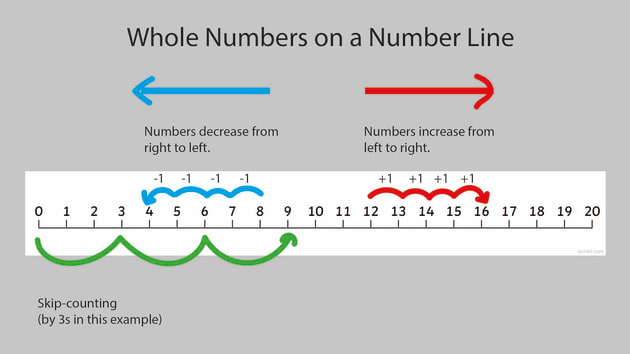

A number line is a straight line used to visually represent numbers.
Features:
- Numbers increase as we move to the right
- Numbers decrease as we move to the left
- Zero (0) is the center point
- Right side → positive numbers
- Left side → negative numbers
Number lines help students understand:
- Addition and subtraction
- Integers
- Distance between numbers
Example:
3 + 2 means moving two steps to the right from 3.
3. Fractions and Parts of a Whole


Fractions represent parts of a whole object.
Example:
3/4 means:
- 3 parts selected
- out of 4 equal parts
Components of a fraction:
- Numerator – top number (number of parts taken)
- Denominator – bottom number (total equal parts)
Example:
5/8 → five parts out of eight.
Fractions are widely used in:
- cooking measurements
- financial calculations
- engineering measurements
4. Decimal Number System


Decimals are another way to represent fractions using the base-10 system.
Example:
1/2 = 0.5
In a decimal place value chart:
| Place | Value |
|---|---|
| Tens | 10 |
| Ones | 1 |
| Tenths | 0.1 |
| Hundredths | 0.01 |
Example:
45.67 means:
- 4 tens
- 5 ones
- 6 tenths
- 7 hundredths
Decimals are commonly used in:
- money calculations
- measurements
- scientific data.
5. Arithmetic Progression Pattern
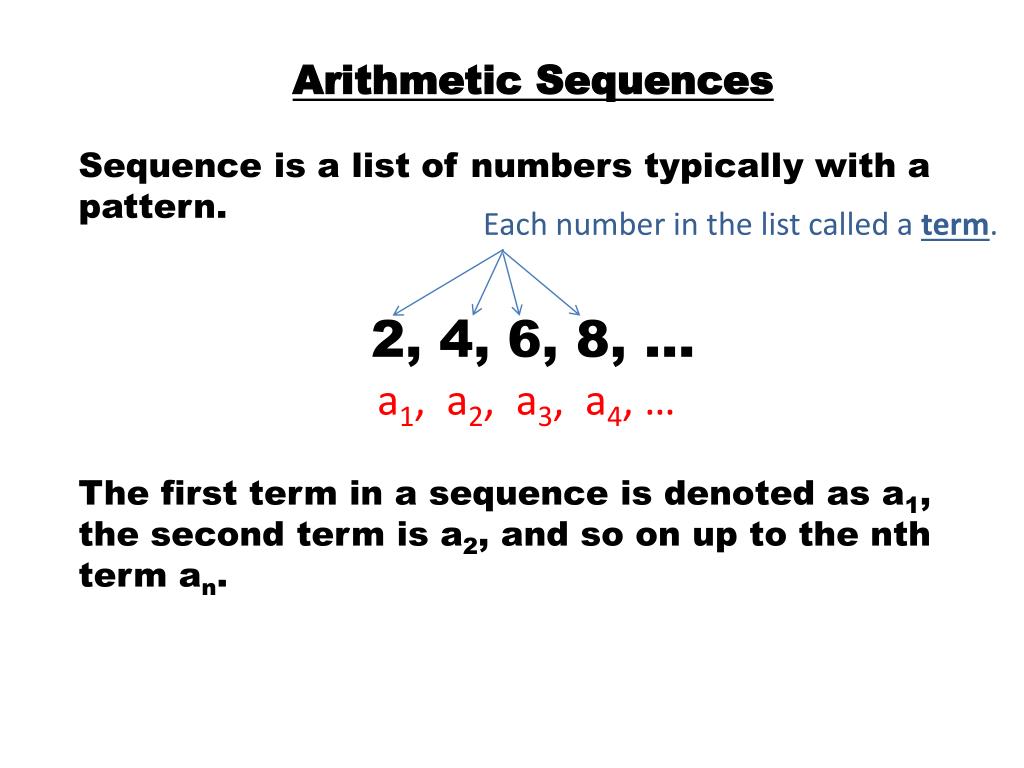
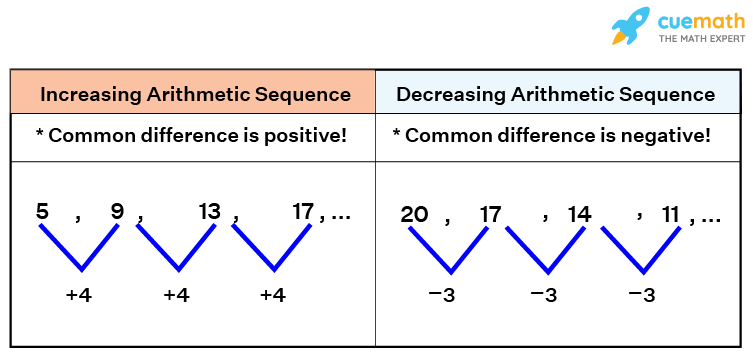

An Arithmetic Progression (AP) is a sequence where the difference between consecutive numbers is constant.
Example:
2, 4, 6, 8, 10
Common difference = 2
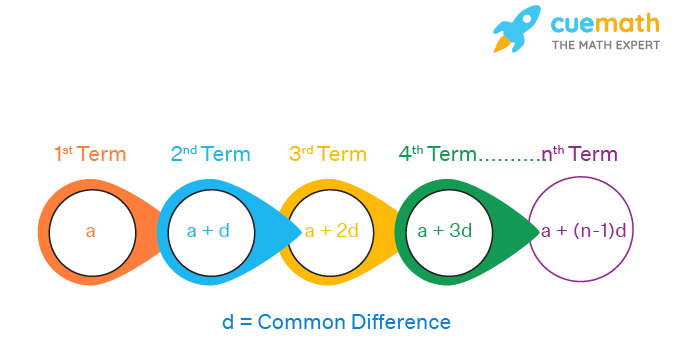
Formula:
[
a_n = a + (n-1)d
]
Where:
- a = first term
- d = common difference
- n = term number
Arithmetic progressions appear in:
- finance calculations
- computer algorithms
- scientific modeling.