


Introduction to Heights and Distances
Heights and distances is an important topic in trigonometry that deals with determining the height of objects and the distance between objects using trigonometric ratios. This concept is widely applied in fields such as surveying, navigation, engineering, architecture, astronomy, and physics. It allows us to measure quantities that cannot be measured directly by using mathematical relationships involving angles and triangles.
In everyday life, we often need to determine the height of tall objects such as buildings, towers, mountains, trees, and bridges. Similarly, we may need to calculate distances across rivers, valleys, or other obstacles where direct measurement is not possible. Trigonometry provides powerful tools to solve such problems using angles of elevation, angles of depression, and trigonometric ratios.
The fundamental idea behind heights and distances is the formation of a right triangle between the observer, the object being observed, and the horizontal ground. By measuring certain angles and distances, trigonometric ratios such as sine, cosine, and tangent can be used to determine unknown values.
Understanding heights and distances is essential for solving many practical problems in mathematics and science. It combines geometric reasoning with trigonometric formulas to provide accurate measurements in real-world situations.
Basic Concepts Used in Heights and Distances


Before studying heights and distances, it is necessary to understand some basic trigonometric concepts.
Right Triangle
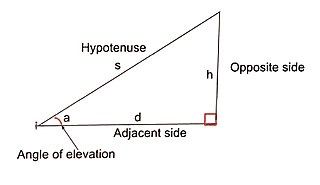
A right triangle is a triangle that contains one angle equal to 90°. The sides of a right triangle are called:
- Hypotenuse
- Opposite side
- Adjacent side
Hypotenuse
The hypotenuse is the longest side of the triangle and lies opposite the right angle.
Opposite Side
The opposite side is the side opposite the angle under consideration.
Adjacent Side
The adjacent side is the side next to the angle but not the hypotenuse.
Trigonometric Ratios
Three important trigonometric ratios are used in heights and distances problems.
Sine
sin θ = opposite / hypotenuse
Cosine
cos θ = adjacent / hypotenuse
Tangent
tan θ = opposite / adjacent
Among these ratios, tangent is the most commonly used in heights and distances problems because it directly relates height and horizontal distance.
Angle of Elevation


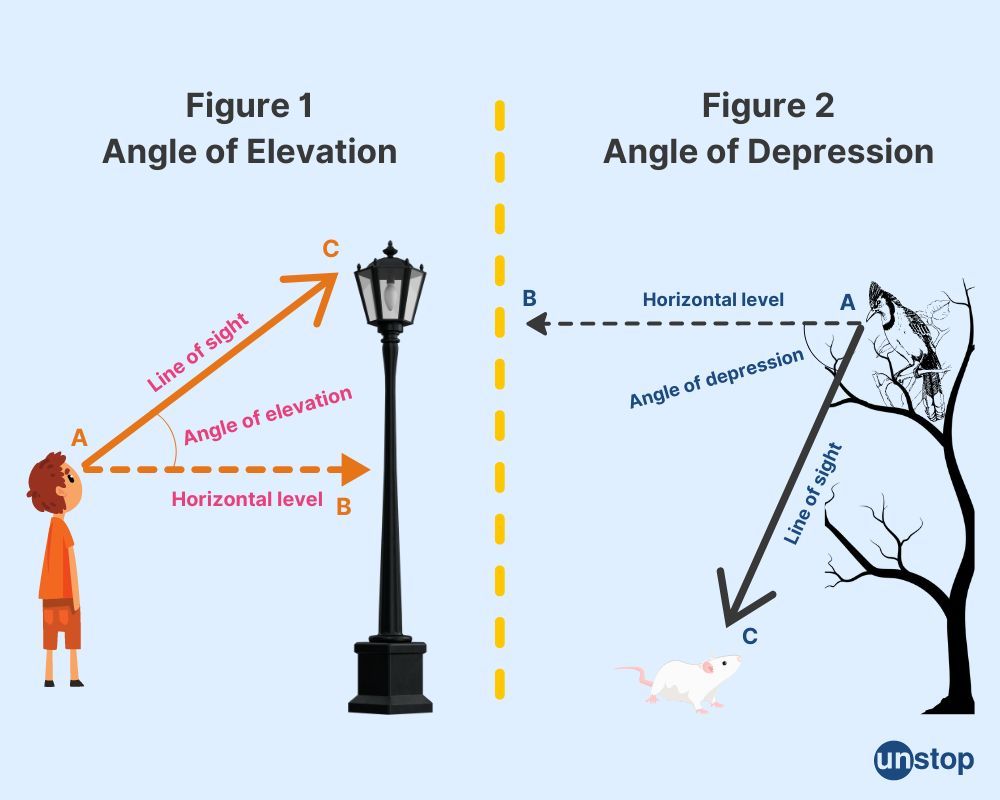
The angle of elevation is the angle between the horizontal line and the line of sight when an observer looks upward at an object.
When a person standing on the ground looks up at the top of a building, tower, or mountain, the angle formed between the horizontal line and the line of sight is called the angle of elevation.
Example of Angle of Elevation
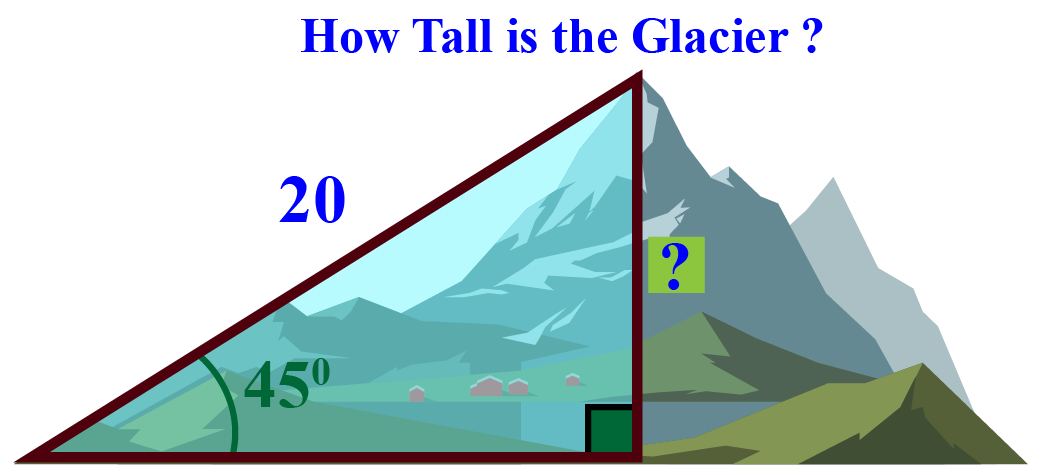
Suppose a person stands 20 meters away from a tower and observes the top of the tower at an angle of elevation of 45°.
Using trigonometry:
tan θ = height / distance
tan 45° = height / 20
Since tan 45° = 1
height = 20 meters
Thus, the height of the tower is 20 meters.
Real-Life Situations
Angle of elevation is used in situations such as:
- Measuring the height of buildings
- Determining the height of trees
- Calculating the height of mountains
- Surveying land
It allows measurements to be taken without physically climbing or measuring the object.
Angle of Depression

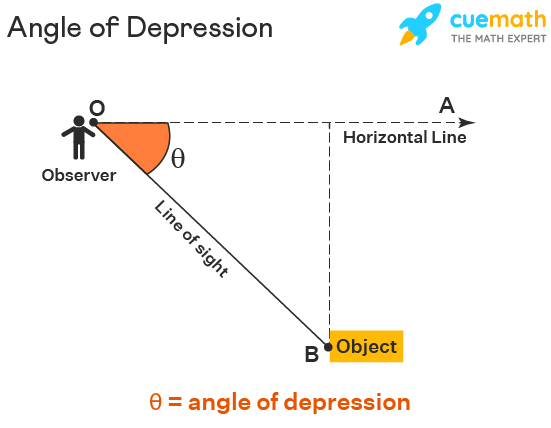
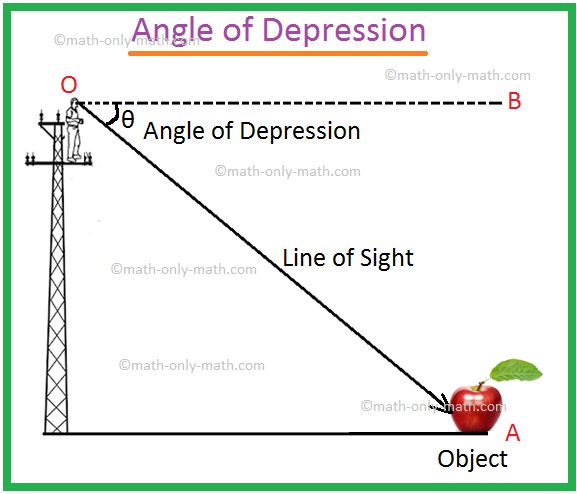
The angle of depression is the angle between the horizontal line and the line of sight when an observer looks downward at an object.
For example, if a person standing on top of a building looks down at a car on the ground, the angle between the horizontal line and the line of sight is called the angle of depression.
An important concept is that the angle of depression is equal to the angle of elevation because they are alternate interior angles formed by parallel lines.
Example of Angle of Depression
Suppose a lighthouse is 40 meters high. The angle of depression of a boat from the top of the lighthouse is 30°.
Using trigonometry:
tan 30° = height / distance
1/√3 = 40 / distance
distance = 40√3 meters
Thus, the boat is approximately 69.28 meters away from the lighthouse.
Horizontal Distance
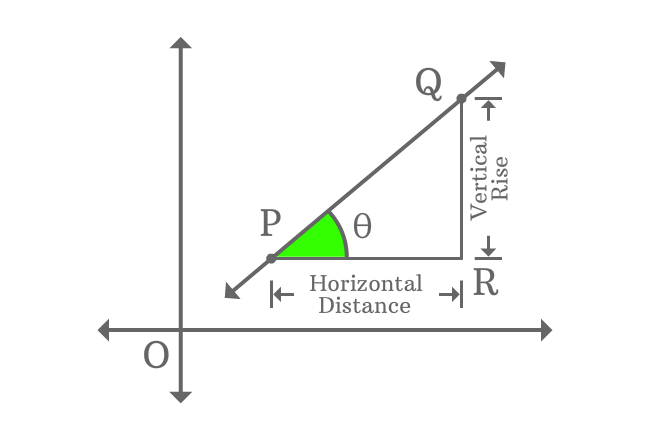

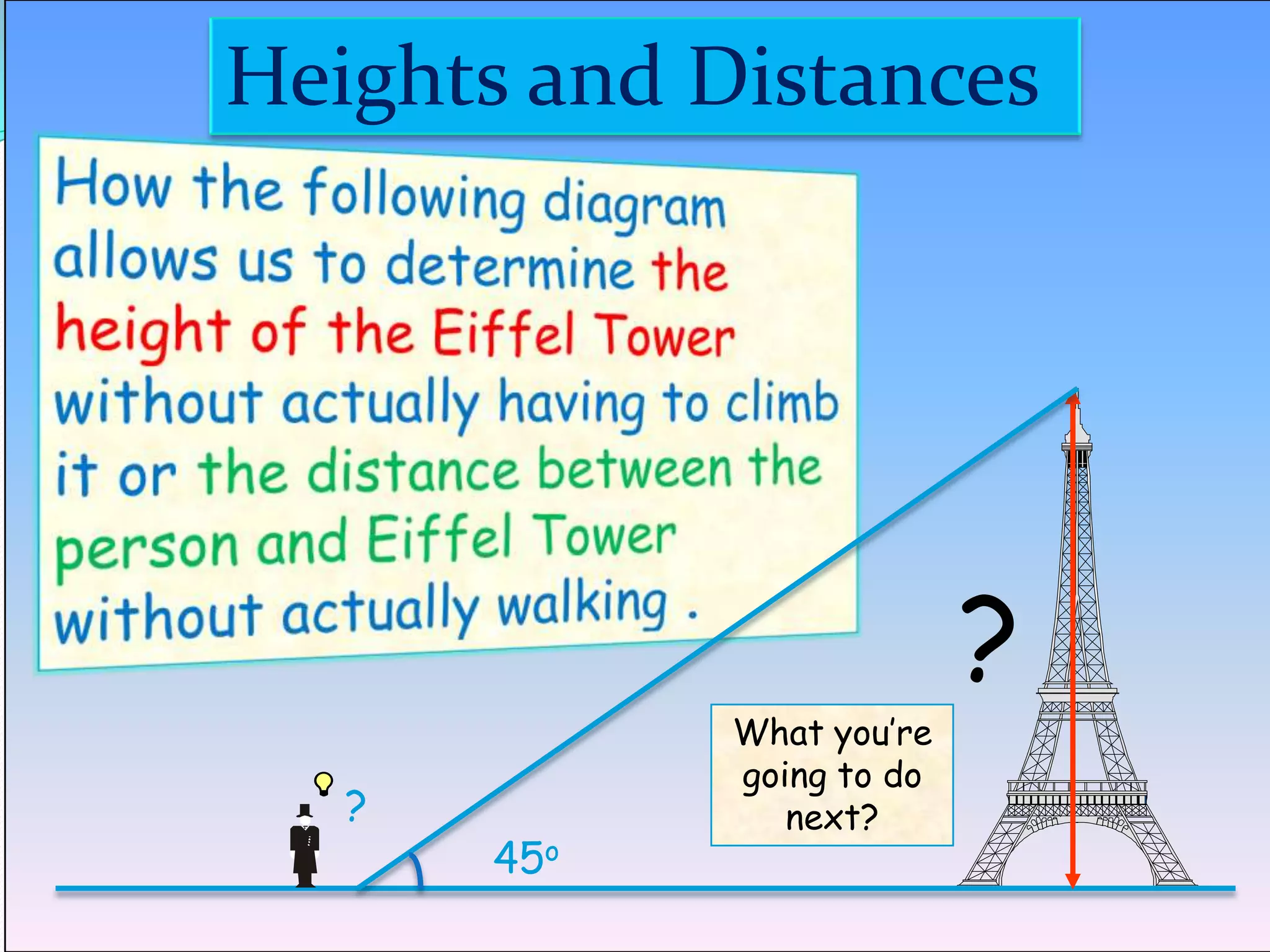
Horizontal distance refers to the distance between the observer and the base of the object along the ground.
This distance is usually measured directly using measuring tools or estimated using surveying techniques.
Once the horizontal distance and the angle of elevation are known, the height of the object can be calculated using trigonometric ratios.
Example
Distance from tower = 30 meters
Angle of elevation = 60°
Using tangent:
tan 60° = height / 30
√3 = height / 30
height = 30√3
height ≈ 51.96 meters
Thus, the height of the tower is approximately 52 meters.
Applications of Heights and Distances


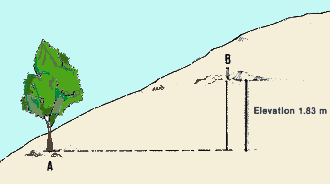

Heights and distances have numerous practical applications.
Surveying
Surveyors use trigonometry to measure land areas and elevations. Instruments such as the theodolite help measure angles accurately.
Architecture
Architects use trigonometric calculations to determine building heights and slopes.
Navigation
Pilots and sailors use trigonometry to determine positions and distances.
Astronomy
Astronomers measure distances between celestial objects using trigonometric methods.
Engineering
Engineers use these calculations when designing bridges, towers, and other structures.
Solving Heights and Distances Problems
Many problems involve forming a right triangle and applying trigonometric ratios.
Step-by-Step Method
- Draw a diagram representing the situation.
- Identify the angle of elevation or depression.
- Label the sides of the triangle.
- Choose the appropriate trigonometric ratio.
- Substitute values and solve.
Example Problem
A tree stands on level ground. A person stands 15 meters away from the base of the tree. The angle of elevation of the top of the tree is 30°.
Find the height of the tree.
Using tangent:
tan 30° = height / 15
1/√3 = height / 15
height = 15 / √3
height ≈ 8.66 meters
Thus, the height of the tree is approximately 8.66 meters.
Multiple Observation Problems
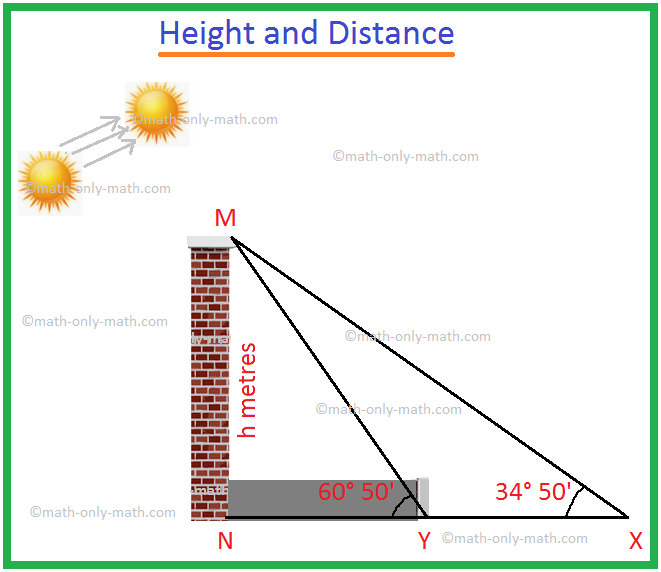


Sometimes heights are determined using two observation points.
Example
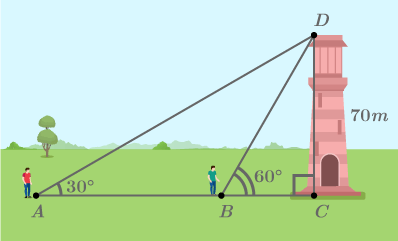
A tower is observed from two points on the same line with the base of the tower. The angles of elevation are 30° and 60°.
Let:
Distance from first point = x
Distance from second point = x + d
Using tangent formulas, equations can be formed to determine the height of the tower.
This method is commonly used in surveying and engineering measurements.
Real-Life Examples of Heights and Distances
Heights and distances problems appear in many everyday situations.
Measuring Building Height
Surveyors measure building heights without climbing them by using angles of elevation.
Determining Mountain Height
Mountains are measured using trigonometric calculations based on observation angles.
Aircraft Navigation
Pilots use trigonometry to determine altitude and distance.
Bridge Construction
Engineers calculate angles and distances to design stable structures.
Satellite Communication
Satellite positioning uses trigonometric calculations to determine distance from Earth.
Importance of Heights and Distances in Mathematics
Heights and distances play a significant role in mathematics education because they demonstrate how theoretical concepts can solve real-world problems.
This topic helps students develop:
- spatial reasoning
- problem-solving skills
- understanding of trigonometric relationships
It also serves as a bridge between pure mathematics and applied mathematics.
Students learn how mathematical models can represent real-life situations and provide accurate solutions.
Advantages of Using Trigonometry for Measurements
Trigonometry provides several advantages for measuring heights and distances.
- Allows measurement of inaccessible objects
- Provides high accuracy
- Requires minimal equipment
- Can be applied to large-scale measurements
Because of these advantages, trigonometry remains an essential tool in science and engineering.
Conclusion
Heights and distances is an important application of trigonometry that allows us to calculate heights and distances of objects that cannot be measured directly. By using angles of elevation, angles of depression, and trigonometric ratios, unknown values can be determined accurately.
The concepts involved include right triangles, trigonometric ratios, horizontal distances, and angle measurements. These ideas are applied in surveying, architecture, navigation, engineering, and astronomy.
Understanding heights and distances helps students see the practical use of mathematics in everyday life. It demonstrates how trigonometry provides solutions to real-world measurement problems and highlights the power of mathematical reasoning.