


Introduction to Inverse Trigonometric Functions
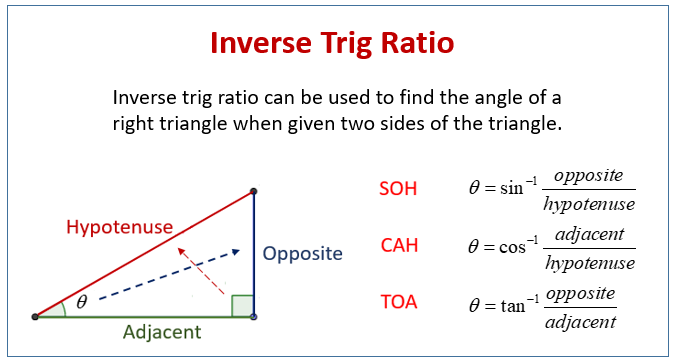
Inverse trigonometric functions are mathematical functions that reverse the operations of the basic trigonometric functions. While trigonometric functions such as sine, cosine, and tangent take an angle as input and produce a ratio as output, inverse trigonometric functions perform the opposite process: they take a ratio as input and return the corresponding angle.
For example, consider the equation:
sin θ = 0.5
The inverse sine function helps determine the value of θ that satisfies this equation. In this case:
θ = sin⁻¹(0.5)
Thus, inverse trigonometric functions are used to determine angles when the trigonometric ratio is known.
Inverse trigonometric functions are commonly written using the notation:
- sin⁻¹(x) or arcsin(x)
- cos⁻¹(x) or arccos(x)
- tan⁻¹(x) or arctan(x)
It is important to note that sin⁻¹(x) does not mean 1/sin(x). Instead, it represents the inverse function of sine.
Inverse trigonometric functions play an essential role in mathematics, physics, engineering, computer science, navigation, and many scientific disciplines. They are especially important in calculus, trigonometric equations, coordinate geometry, and analytic geometry.
Basic Concept of Inverse Functions

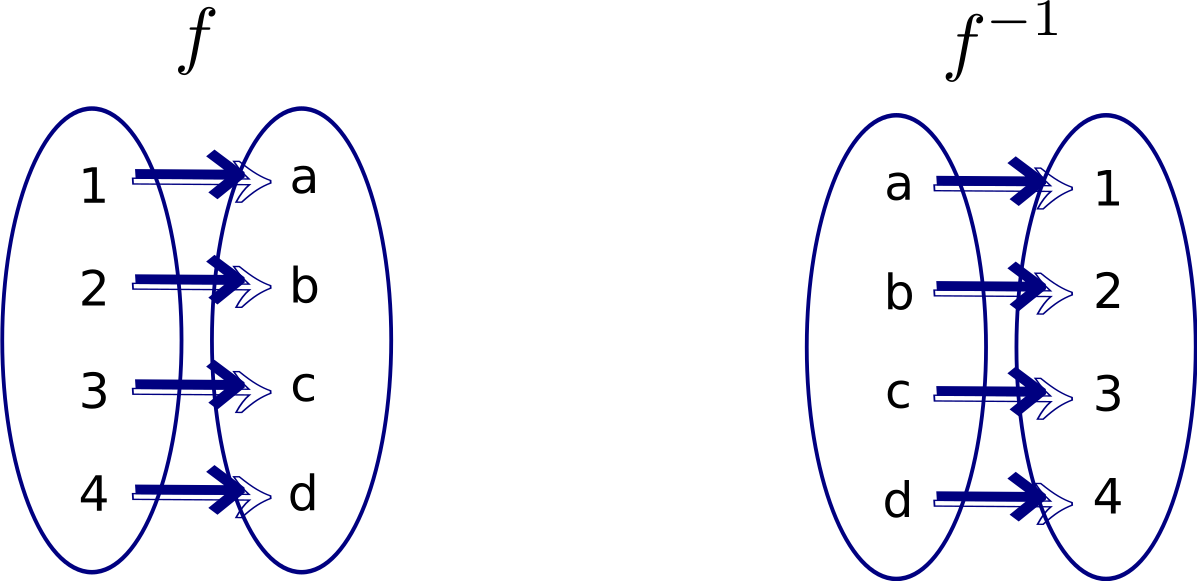

Before understanding inverse trigonometric functions, it is necessary to understand the concept of inverse functions.
A function f(x) and its inverse f⁻¹(x) reverse each other’s operations.
If:
y = f(x)
Then:
x = f⁻¹(y)
For example:
If:
y = sin x
Then:
x = sin⁻¹ y
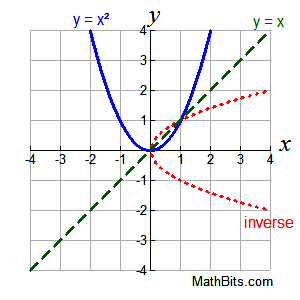
Graphically, the graph of a function and its inverse are reflections of each other across the line:
y = x
However, trigonometric functions are periodic and not one-to-one across their entire domain. Therefore, to define inverse trigonometric functions, we restrict the domain of trigonometric functions so that each output corresponds to exactly one input.
This restricted interval ensures that inverse trigonometric functions behave like proper functions.
Types of Inverse Trigonometric Functions
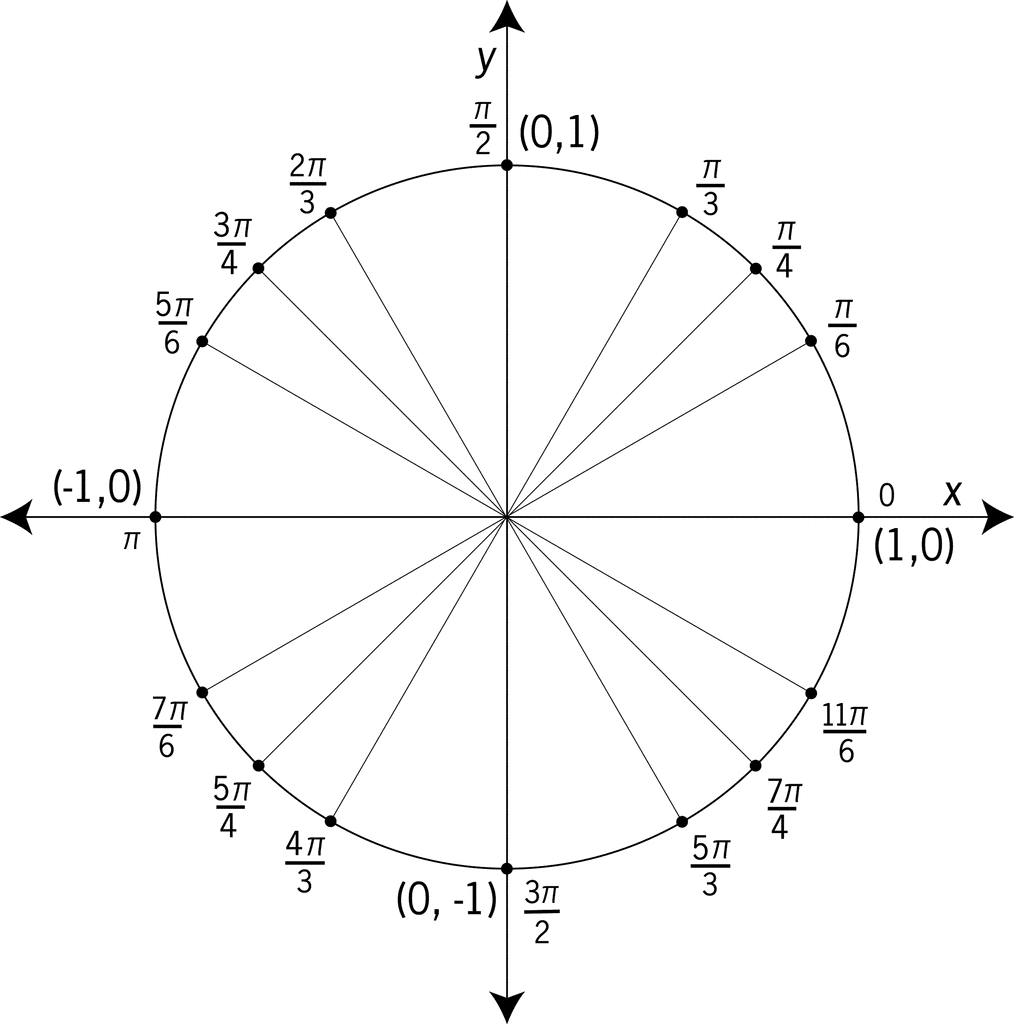
There are six inverse trigonometric functions corresponding to the six trigonometric functions:
- arcsin(x) or sin⁻¹(x)
- arccos(x) or cos⁻¹(x)
- arctan(x) or tan⁻¹(x)
- arccot(x) or cot⁻¹(x)
- arcsec(x) or sec⁻¹(x)
- arccsc(x) or csc⁻¹(x)
Each inverse function returns the angle whose trigonometric ratio equals the given number.
These functions are essential in solving trigonometric equations and modeling real-world phenomena involving angles.
Inverse Sine Function (arcsin)
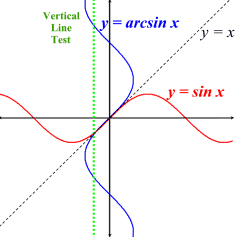
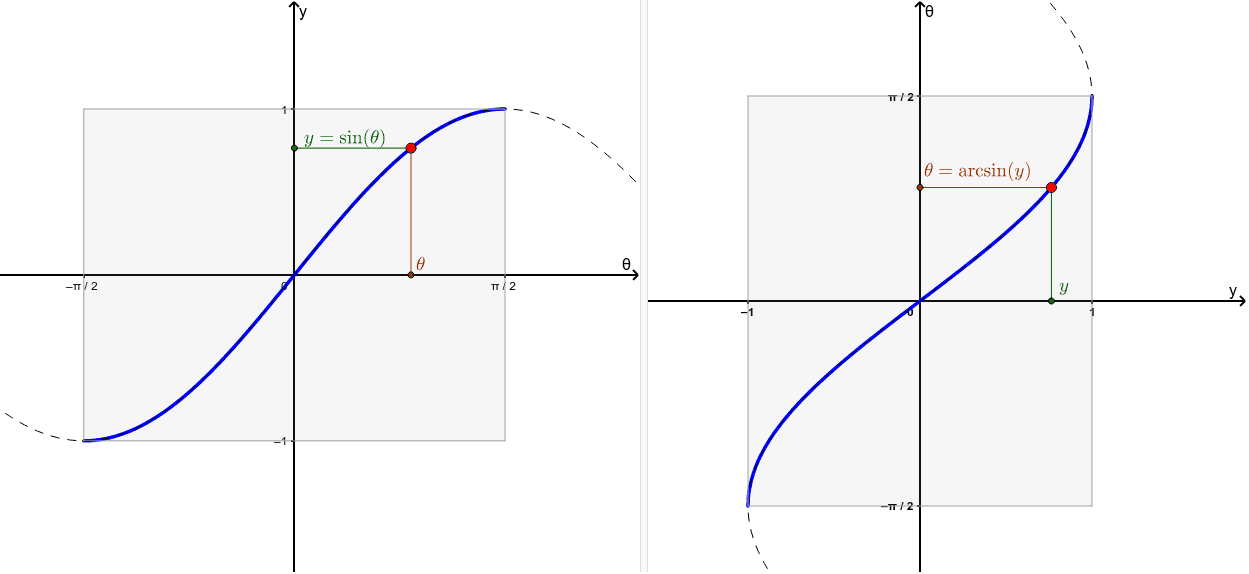
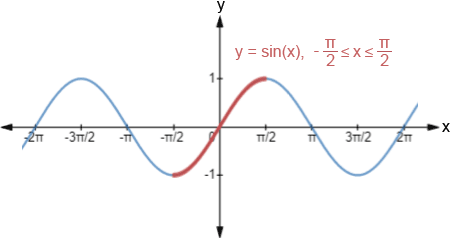
The inverse sine function determines the angle whose sine value is given.
Definition:
θ = sin⁻¹(x)
means
sin θ = x
Domain and Range
Domain:
-1 ≤ x ≤ 1
Range:
−π/2 ≤ θ ≤ π/2
or
−90° ≤ θ ≤ 90°
Example
sin⁻¹(1/2)
The angle whose sine is 1/2 is:
30°
Thus:
sin⁻¹(1/2) = 30°
Graph Characteristics
The arcsin graph:
- passes through (0,0)
- increases continuously
- ranges from −π/2 to π/2
The arcsin function is widely used in geometry and calculus.
Inverse Cosine Function (arccos)

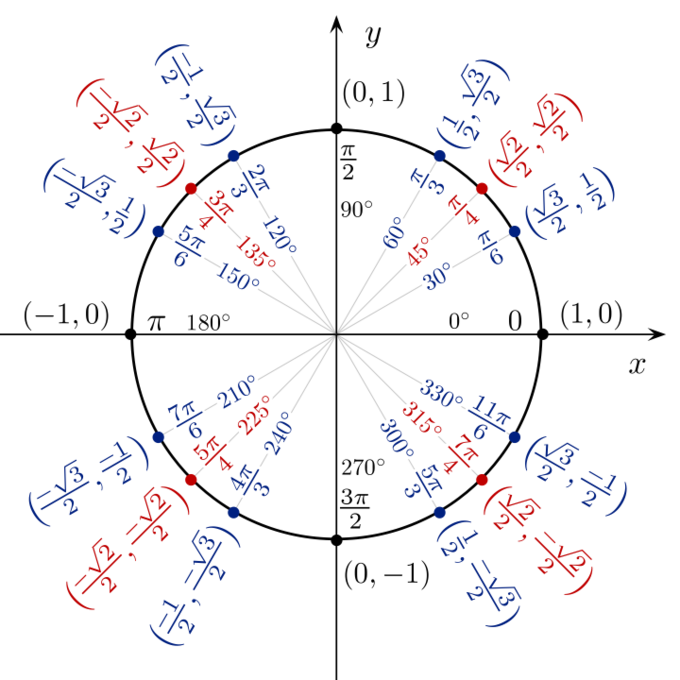
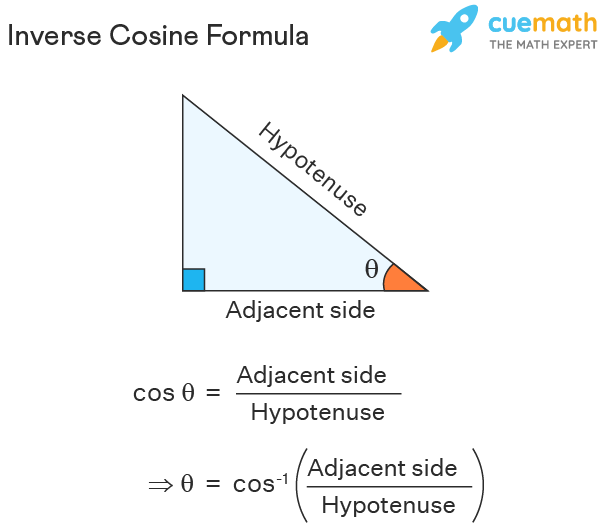
The inverse cosine function finds the angle whose cosine value equals a given number.
Definition:
θ = cos⁻¹(x)
means:
cos θ = x
Domain
-1 ≤ x ≤ 1
Range
0 ≤ θ ≤ π
or
0° ≤ θ ≤ 180°
Example
cos⁻¹(1/2)
The angle whose cosine equals 1/2 is:
60°
Thus:
cos⁻¹(1/2) = 60°
The arccos function is decreasing and is often used in geometry and vector calculations.
Inverse Tangent Function (arctan)

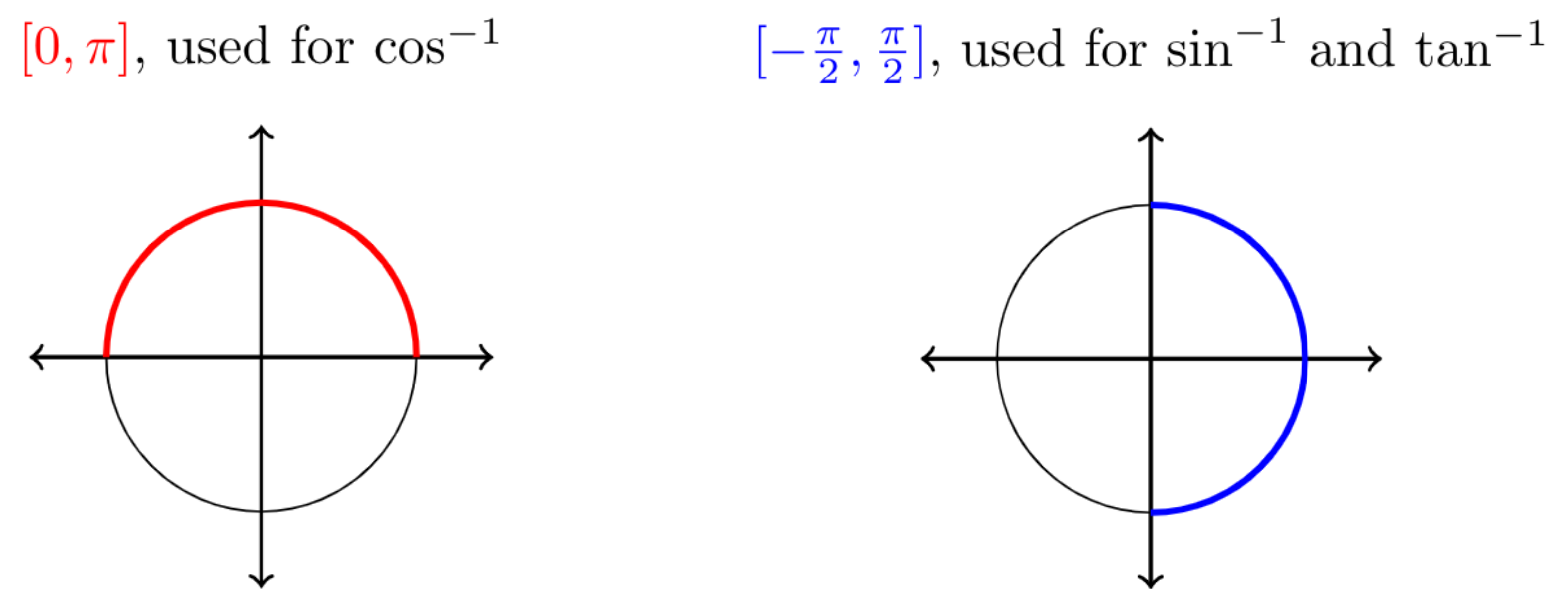
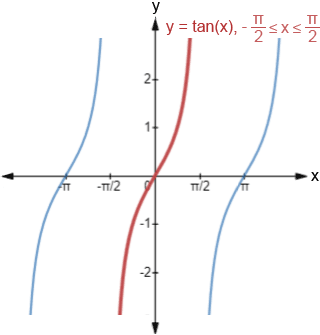
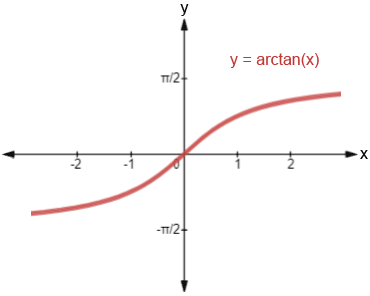
The inverse tangent function determines the angle whose tangent equals a given number.
Definition:
θ = tan⁻¹(x)
means:
tan θ = x
Domain
All real numbers
Range
−π/2 < θ < π/2
Example
tan⁻¹(1)
Since:
tan 45° = 1
Therefore:
tan⁻¹(1) = 45°
The arctan function is widely used in physics and engineering to calculate angles from slopes.
Other Inverse Trigonometric Functions


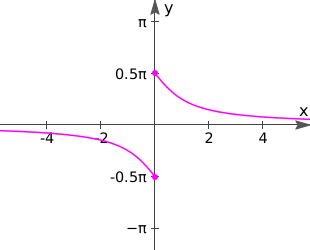
Besides arcsin, arccos, and arctan, there are three additional inverse trigonometric functions.
Inverse Cotangent
θ = cot⁻¹(x)
Range:
0 < θ < π
Inverse Secant
θ = sec⁻¹(x)
Domain:
|x| ≥ 1
Inverse Cosecant
θ = csc⁻¹(x)
Domain:
|x| ≥ 1
These functions are less frequently used but still important in advanced mathematics and calculus.
Properties of Inverse Trigonometric Functions
Inverse trigonometric functions satisfy several important properties.
Composition Property
sin(sin⁻¹ x) = x
cos(cos⁻¹ x) = x
tan(tan⁻¹ x) = x
Example
sin(sin⁻¹(0.6)) = 0.6
Angle Relationships
sin⁻¹ x + cos⁻¹ x = π/2
tan⁻¹ x + cot⁻¹ x = π/2
These identities are useful for simplifying expressions.
Derivatives of Inverse Trigonometric Functions
Inverse trigonometric functions play a major role in calculus.
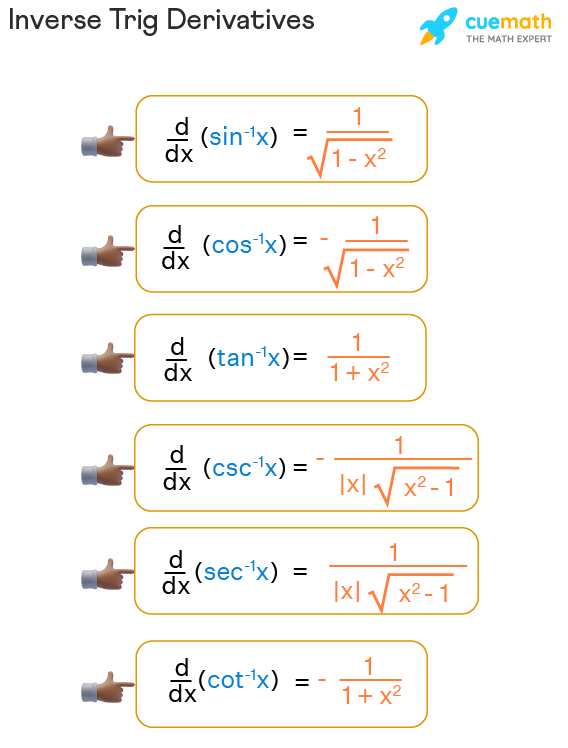
Important derivatives include:
d/dx (sin⁻¹ x) = 1 / √(1 − x²)
d/dx (cos⁻¹ x) = −1 / √(1 − x²)
d/dx (tan⁻¹ x) = 1 / (1 + x²)
These formulas are essential in integration and differential calculus.
Applications of Inverse Trigonometric Functions
Inverse trigonometric functions are widely used in many scientific and engineering fields.
Geometry
They help determine unknown angles when side lengths are known.
Physics
They are used in:
- projectile motion
- wave analysis
- optics
Engineering
Engineers use inverse trigonometric functions in:
- robotics
- structural design
- signal processing
Navigation
They help determine direction and location in GPS systems.
Computer Graphics
Inverse trigonometric functions are used to compute rotations and angles in 3D modeling.
Importance in Mathematics
Inverse trigonometric functions are essential in advanced mathematics topics such as:
- calculus
- differential equations
- complex analysis
- Fourier analysis
They allow mathematicians to solve equations involving trigonometric ratios and analyze periodic behavior.
Conclusion
Inverse trigonometric functions are mathematical functions that determine angles from trigonometric ratios. They reverse the operations of sine, cosine, tangent, and other trigonometric functions.
The most commonly used inverse trigonometric functions are arcsin, arccos, and arctan. These functions have specific domains and ranges to ensure they remain one-to-one functions.
Inverse trigonometric functions are essential tools in solving trigonometric equations, studying calculus, analyzing wave motion, and modeling geometric relationships. Their applications extend across many scientific and engineering disciplines.
A strong understanding of inverse trigonometric functions provides a solid foundation for advanced mathematics and helps solve complex problems involving angles and periodic phenomena.