Category Archives: Chemistry

Nuclear Chemistry

Image
Image
Image
Image

1. Introduction to Nuclear Chemistry

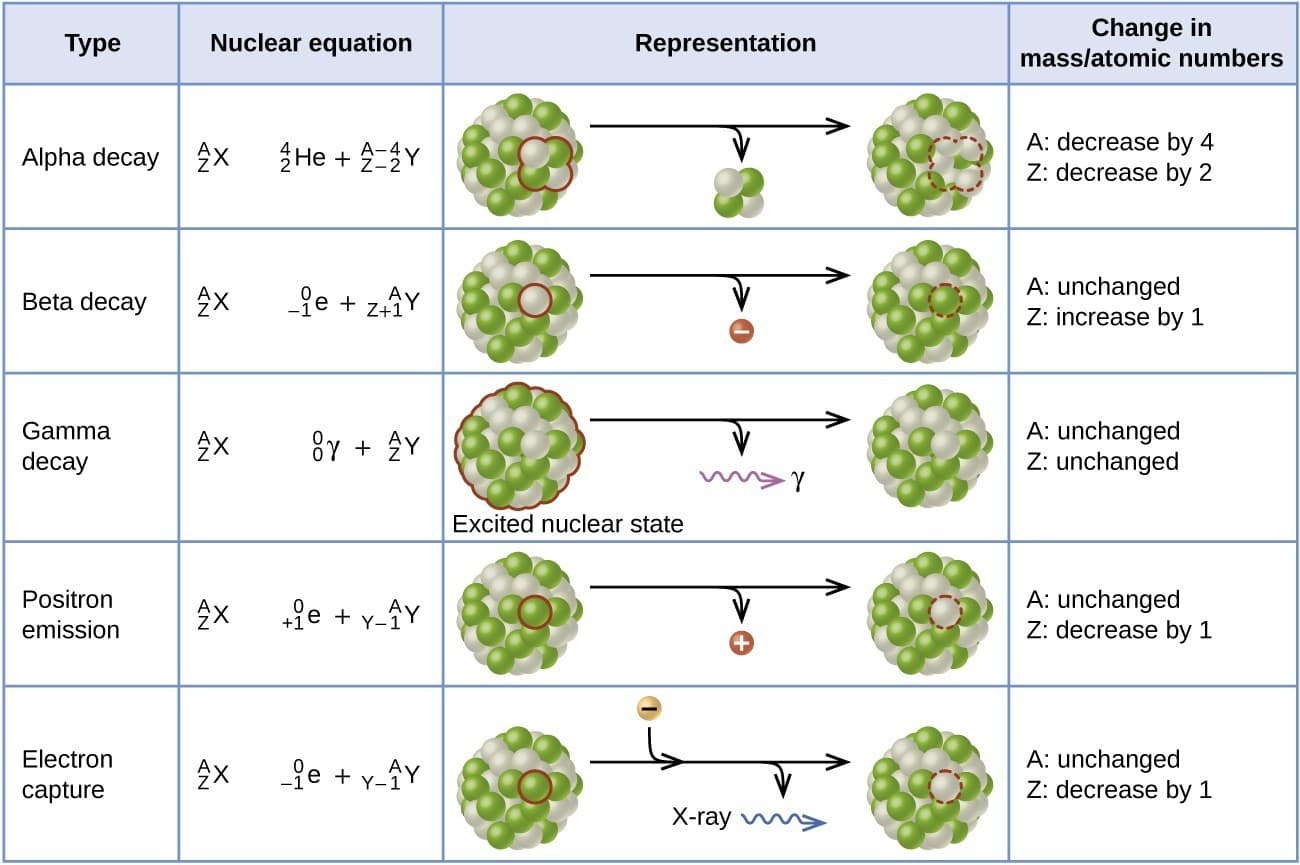
Nuclear chemistry is the branch of chemistry that studies changes occurring in the atomic nucleus, including processes such as radioactive decay, nuclear reactions, nuclear fission, and nuclear fusion. Unlike ordinary chemical reactions, which involve the rearrangement of electrons in atoms or molecules, nuclear reactions involve changes in the nucleus of atoms, resulting in the formation of different elements or isotopes.

The nucleus of an atom contains protons and neutrons, collectively called nucleons. Nuclear chemistry focuses on the behavior, stability, and transformation of these nucleons.

Nuclear processes release enormous amounts of energy because the forces holding nucleons together are extremely strong. These energies are millions of times greater than those involved in typical chemical reactions.

Nuclear chemistry plays a vital role in many scientific and technological fields, including:

  • Nuclear power generation
  • Medical imaging and cancer treatment
  • Archaeological dating techniques
  • Environmental monitoring
  • Space exploration
  • Industrial applications

Understanding nuclear chemistry allows scientists to harness nuclear energy safely and apply nuclear techniques in medicine, agriculture, and scientific research.


2. Structure of the Atomic Nucleus

The atomic nucleus is the central part of an atom and contains most of its mass.

The nucleus consists of:

  • Protons (positively charged particles)
  • Neutrons (neutral particles)

Electrons move around the nucleus in orbitals, but they are not involved directly in nuclear reactions.

Nuclear Forces

Protons in the nucleus repel each other because they carry positive charges. However, they remain bound together due to the strong nuclear force, which is a powerful attractive force acting between nucleons at very short distances.

The stability of the nucleus depends on the balance between:

  • Nuclear attraction
  • Electrostatic repulsion

3. Isotopes

Image
Image
Image
Image

Isotopes are atoms of the same element that have the same number of protons but different numbers of neutrons.

Example:

Hydrogen has three isotopes:

  • Protium (¹H)
  • Deuterium (²H)
  • Tritium (³H)

All isotopes have identical chemical properties because they have the same number of electrons. However, their nuclear properties may differ significantly.

Some isotopes are stable, while others are radioactive.


4. Radioactivity

Radioactivity is the spontaneous emission of radiation from unstable atomic nuclei.

Radioactive decay occurs when an unstable nucleus transforms into a more stable nucleus by emitting particles or energy.

Radioactive substances emit three main types of radiation:

  • Alpha radiation
  • Beta radiation
  • Gamma radiation

5. Types of Radioactive Radiation

Image
Image
Image
Image

Alpha Radiation (α)

Alpha particles consist of two protons and two neutrons.

Characteristics:

  • Low penetration power
  • High ionization power
  • Can be stopped by paper

Example decay:

²³⁸U → ²³⁴Th + α


Beta Radiation (β)

Beta particles are high-speed electrons emitted from the nucleus.

Characteristics:

  • Moderate penetration power
  • Higher penetration than alpha particles

Example:

¹⁴C → ¹⁴N + β⁻


Gamma Radiation (γ)

Gamma rays are high-energy electromagnetic radiation.

Characteristics:

  • Very high penetration power
  • No mass and no charge

Gamma radiation usually accompanies alpha or beta decay.


6. Radioactive Decay Law

Radioactive decay follows first-order kinetics.

The rate of decay depends on the number of radioactive atoms present.

The decay equation is:

[
N = N_0 e^{- \lambda t}
]

Where:

  • N = number of atoms remaining
  • N₀ = initial number of atoms
  • λ = decay constant
  • t = time

7. Half-Life of Radioactive Elements

Half-life is the time required for half of the radioactive nuclei to decay.

Example:

Carbon-14 has a half-life of about 5730 years.

After one half-life:

50% of the original material remains.

After two half-lives:

25% remains.

Half-life is constant for each radioactive isotope.


8. Nuclear Stability
Image
Image
Image

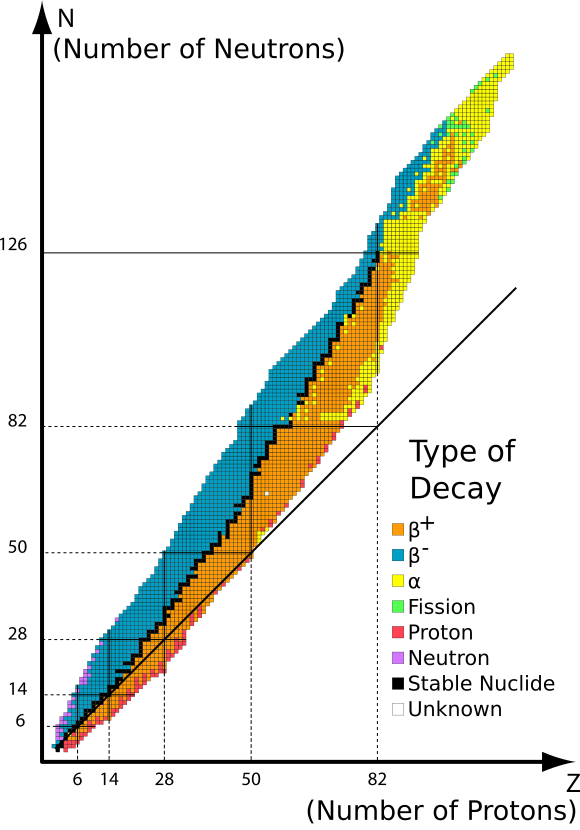
The stability of a nucleus depends on the neutron-to-proton ratio (N/Z ratio).

Light elements:

Stable when N ≈ Z.

Heavy elements:

Require more neutrons than protons for stability.

The band of stability is a region where stable isotopes exist.

Nuclei outside this band tend to undergo radioactive decay.


9. Nuclear Reactions

Nuclear reactions involve changes in the nucleus and result in the formation of new elements.

Example:

¹⁴N + α → ¹⁷O + p

Types of nuclear reactions include:

  • Nuclear fission
  • Nuclear fusion
  • Artificial transmutation

10. Nuclear Fission

Image
Image
Image
Image

Nuclear fission is the process in which a heavy atomic nucleus splits into smaller nuclei, releasing a large amount of energy.

Example:

²³⁵U + n → ¹⁴¹Ba + ⁹²Kr + 3n + energy

Fission produces:

  • Energy
  • Neutrons
  • Radioactive products

The emitted neutrons can trigger further reactions, leading to a chain reaction.


11. Nuclear Fusion

Image
Image
Image
Image

Nuclear fusion is the process in which light nuclei combine to form a heavier nucleus, releasing energy.

Example:

²H + ³H → ⁴He + n + energy

Fusion occurs in the Sun and stars, where extremely high temperatures allow nuclei to overcome electrostatic repulsion.

Fusion releases enormous energy and is considered a promising future energy source.


12. Nuclear Reactors

Nuclear reactors are devices used to control nuclear fission reactions.

Components of a reactor include:

  • Fuel rods (uranium or plutonium)
  • Moderator (slows neutrons)
  • Control rods (absorb neutrons)
  • Coolant (removes heat)

Reactors produce heat that is used to generate electricity.


13. Nuclear Energy

Nuclear energy is generated through fission or fusion reactions.

Advantages include:

  • High energy output
  • Low greenhouse gas emissions
  • Reliable energy supply

However, challenges include:

  • Radioactive waste management
  • Nuclear accidents
  • High construction costs

14. Applications of Nuclear Chemistry

Nuclear chemistry has many practical applications.

Medicine

  • Cancer treatment (radiotherapy)
  • Medical imaging (PET scans)
  • Diagnostic tracers

Agriculture

  • Crop improvement
  • Pest control
  • Food irradiation

Industry

  • Thickness measurement
  • Leak detection
  • Sterilization processes

Archaeology

Radioactive dating techniques determine the age of ancient artifacts.

Example:

Carbon-14 dating.


15. Environmental and Safety Considerations

Radioactive materials must be handled carefully.

Radiation protection measures include:

  • Shielding
  • Monitoring exposure
  • Safe storage of nuclear waste

Proper management ensures minimal environmental impact.


16. Importance of Nuclear Chemistry

Nuclear chemistry has revolutionized science and technology.

It helps scientists:

  • Understand atomic structure
  • Develop energy technologies
  • Diagnose and treat diseases
  • Study Earth’s history
  • Explore space

Conclusion

Nuclear chemistry studies processes involving changes in the atomic nucleus, including radioactive decay, nuclear reactions, fission, and fusion. These processes release enormous energy and have numerous scientific and technological applications. Nuclear chemistry plays a critical role in energy production, medicine, environmental science, and industrial applications. By understanding nuclear processes and managing them safely, scientists can harness nuclear energy and technologies to benefit society while minimizing risks to humans and the environment.


Tags

Electrochemistry

Image
Image
Image
Image

1. Introduction to Electrochemistry

Electrochemistry is a branch of chemistry that studies the relationship between chemical reactions and electrical energy. It focuses on processes in which chemical energy is converted into electrical energy and vice versa through redox (oxidation–reduction) reactions.

Electrochemical reactions involve the transfer of electrons between chemical species. These reactions are fundamental to many natural and technological processes such as batteries, fuel cells, electrolysis, corrosion, and electroplating.

Electrochemistry plays a vital role in modern science and technology. It has applications in:

  • Energy storage systems
  • Metal extraction and refining
  • Industrial chemical production
  • Corrosion prevention
  • Environmental protection
  • Biomedical devices

The field bridges chemistry, physics, materials science, and engineering, making it essential for the development of renewable energy technologies and advanced materials.


2. Fundamental Concepts in Electrochemistry

To understand electrochemistry, several key concepts must be understood.

1. Redox Reactions

Electrochemical reactions involve oxidation and reduction processes.

Oxidation → loss of electrons
Reduction → gain of electrons

Because electrons move between species, electrical energy can be generated or consumed.


2. Electrodes

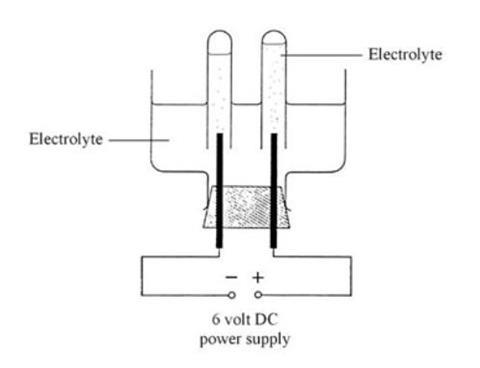
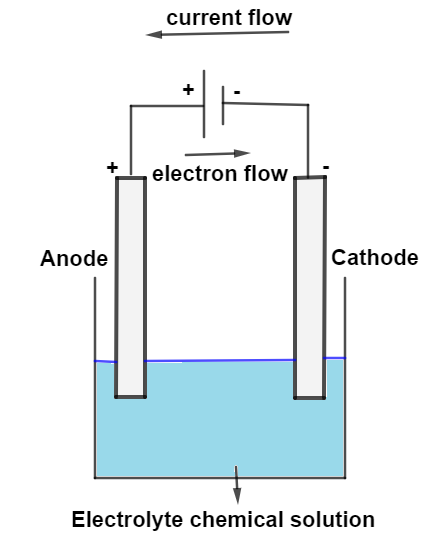
Electrodes are conductive materials through which electrons enter or leave a system.

Two types of electrodes exist:

  • Anode – oxidation occurs
  • Cathode – reduction occurs

3. Electrolytes

Electrolytes are substances that conduct electricity when dissolved in water or molten form.

Examples include:

  • Sodium chloride
  • Sulfuric acid
  • Potassium nitrate

Electrolytes allow the movement of ions, which is necessary for electrochemical reactions.


3. Electrochemical Cells

Image
Image
Image
Image

Electrochemical cells are devices that convert chemical energy into electrical energy or electrical energy into chemical energy.

They consist of:

  • Two electrodes
  • Electrolyte solution
  • External circuit
  • Salt bridge or membrane

Electrochemical cells are classified into two main types:

  1. Galvanic (voltaic) cells
  2. Electrolytic cells

4. Galvanic Cells (Voltaic Cells)

Galvanic cells generate electricity from spontaneous redox reactions.

Example: Daniell cell

Zn + Cu²⁺ → Zn²⁺ + Cu

In this cell:

Zinc electrode → anode
Copper electrode → cathode

At the anode:

Zn → Zn²⁺ + 2e⁻

At the cathode:

Cu²⁺ + 2e⁻ → Cu

Electrons flow through the external circuit from zinc to copper.

The salt bridge maintains electrical neutrality by allowing ions to move between solutions.


5. Electrolytic Cells

Image
Image
Image
Image

Electrolytic cells use electrical energy to drive non-spontaneous chemical reactions.

Unlike galvanic cells, these cells require an external power source.

Example: Electrolysis of water.

2H₂O → 2H₂ + O₂

In electrolysis:

  • Anode → oxidation
  • Cathode → reduction

Electric current forces the reaction to occur.


6. Differences Between Galvanic and Electrolytic Cells

FeatureGalvanic CellElectrolytic Cell
Reaction typeSpontaneousNon-spontaneous
Energy conversionChemical → electricalElectrical → chemical
External power sourceNot requiredRequired
Electron flowProduced by reactionDriven by power supply

7. Electrode Potentials

Electrode potential measures the tendency of an electrode to gain or lose electrons.

It is measured relative to the standard hydrogen electrode (SHE).

Standard electrode potentials are measured under standard conditions:

  • 1 M concentration
  • 1 atm pressure
  • 25°C temperature

Example standard potentials:

Zn²⁺/Zn = −0.76 V
Cu²⁺/Cu = +0.34 V


8. Standard Hydrogen Electrode

Image
Image
Image
Image

The standard hydrogen electrode (SHE) is used as a reference electrode.

Characteristics:

  • Platinum electrode
  • Hydrogen gas bubbled at 1 atm
  • Hydrogen ion concentration = 1 M

The potential of SHE is defined as 0 volts.

All other electrode potentials are measured relative to it.


9. Cell Potential (EMF)

The electromotive force (EMF) of an electrochemical cell is the voltage produced by the cell.

Cell potential is calculated as:

E°cell = E°cathode − E°anode

Positive E°cell indicates spontaneous reaction.

Negative E°cell indicates non-spontaneous reaction.


10. Nernst Equation

The Nernst equation relates electrode potential to concentration.

[
E = E^\circ – \frac{0.059}{n} \log Q
]

Where:

  • E = electrode potential
  • E° = standard potential
  • n = number of electrons
  • Q = reaction quotient

This equation helps calculate cell potential under non-standard conditions.


11. Electrolysis

Image
Image
Image
Image

Electrolysis is the process of using electrical energy to drive chemical reactions.

Examples include:

  • Electrolysis of water
  • Electrolysis of molten salts
  • Metal extraction

Example:

Molten NaCl electrolysis produces sodium metal and chlorine gas.


12. Faraday’s Laws of Electrolysis

Michael Faraday established two laws describing electrolysis.

First Law

The amount of substance deposited is proportional to the electric charge passed.

Second Law

Different substances deposited by the same charge are proportional to their equivalent weights.

These laws are important in electroplating and metal refining.


13. Electroplating

Image
Image
Image
Image

Electroplating is the process of depositing a metal layer onto another material using electrolysis.

Example:

Silver plating on jewelry.

Benefits include:

  • Corrosion resistance
  • Improved appearance
  • Increased durability

14. Batteries and Fuel Cells

Electrochemistry is essential for energy storage.

Batteries

Batteries convert chemical energy into electrical energy.

Examples:

  • Lithium-ion batteries
  • Lead-acid batteries
  • Alkaline batteries

Fuel Cells

Fuel cells generate electricity through chemical reactions.

Example:

Hydrogen fuel cell.

These devices are important for renewable energy technologies.


15. Corrosion and Electrochemistry

Image
Image
Image
Image

Corrosion is an electrochemical process in which metals deteriorate due to reactions with the environment.

Example:

Rusting of iron.

Methods to prevent corrosion include:

  • Protective coatings
  • Galvanization
  • Cathodic protection

16. Industrial Applications of Electrochemistry

Electrochemistry is used in many industrial processes.

Examples include:

  • Aluminum extraction
  • Chlor-alkali process
  • Electroplating
  • Metal purification
  • Hydrogen production

17. Environmental Applications

Electrochemistry is used to address environmental issues.

Examples include:

  • Water purification
  • Waste treatment
  • Energy storage for renewable sources
  • Fuel cell technology

18. Importance of Electrochemistry

Electrochemistry is important for understanding:

  • Energy conversion
  • Corrosion processes
  • Electrochemical sensors
  • Renewable energy systems

The field is essential for developing sustainable technologies.


Conclusion

Electrochemistry is a vital branch of chemistry that studies the relationship between chemical reactions and electrical energy. Through electrochemical cells, chemical energy can be converted into electricity, and electrical energy can drive chemical reactions. Concepts such as electrode potentials, electrolysis, and Faraday’s laws form the foundation of electrochemical science. Applications of electrochemistry are widespread, including batteries, fuel cells, corrosion prevention, electroplating, and industrial chemical processes. As the demand for renewable energy and sustainable technologies increases, electrochemistry continues to play an increasingly important role in scientific and technological advancements.


Tags

Redox Reactions (Oxidation–Reduction Reactions)

Image
Image
Image
Image

1. Introduction to Redox Reactions

Redox reactions, short for reduction–oxidation reactions, are among the most fundamental types of chemical reactions in chemistry. They involve the transfer of electrons between chemical species, leading to changes in oxidation states. These reactions are essential in many natural processes, biological systems, and industrial applications.

The term redox combines two processes:

  • Oxidation – loss of electrons
  • Reduction – gain of electrons

Because electrons are transferred from one substance to another, oxidation and reduction always occur simultaneously. This is why they are considered a pair of reactions.

Redox reactions are involved in numerous everyday and industrial processes, such as:

  • Rusting of iron
  • Combustion of fuels
  • Photosynthesis
  • Cellular respiration
  • Battery operation
  • Corrosion prevention
  • Metallurgical processes

Understanding redox reactions is essential in fields like electrochemistry, environmental chemistry, biochemistry, and industrial chemistry.


2. Historical Development of Redox Concepts

Historically, oxidation and reduction were defined differently from modern definitions.

Originally:

  • Oxidation referred to reactions involving oxygen.
  • Reduction referred to the removal of oxygen.

Example:

2Mg + O₂ → 2MgO

Magnesium is oxidized because it combines with oxygen.

Later, the concept expanded to include hydrogen transfer.

Oxidation: loss of hydrogen
Reduction: gain of hydrogen.

Modern chemistry defines oxidation and reduction based on electron transfer.


3. Modern Definition of Oxidation and Reduction

According to the modern definition:

Oxidation is the loss of electrons.

Reduction is the gain of electrons.

Example reaction:

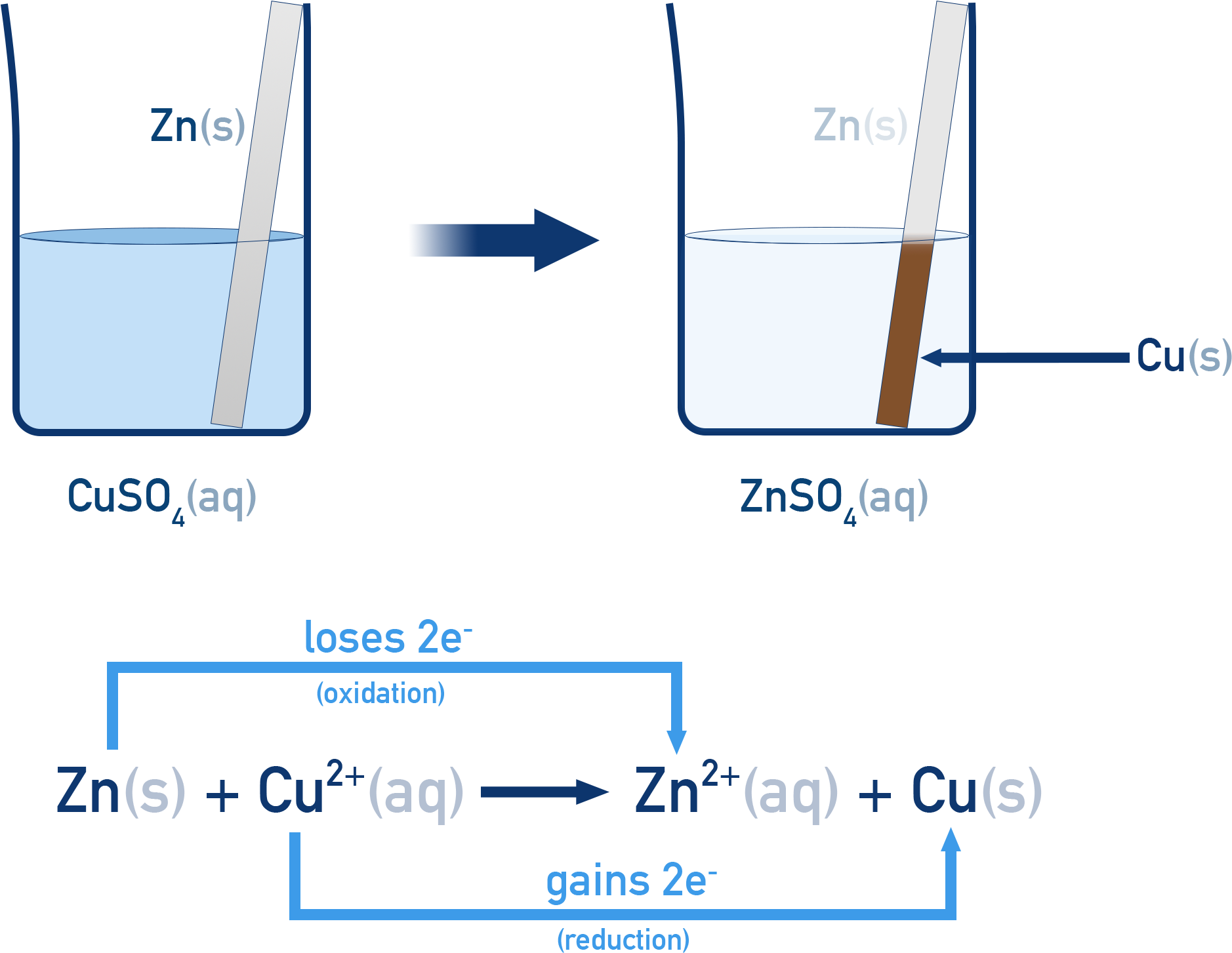
Zn + Cu²⁺ → Zn²⁺ + Cu

In this reaction:

Zn → Zn²⁺ + 2e⁻ (oxidation)
Cu²⁺ + 2e⁻ → Cu (reduction)

Thus:

  • Zinc is oxidized
  • Copper ions are reduced

4. Oxidizing and Reducing Agents

In redox reactions, certain substances cause oxidation or reduction.

Oxidizing Agent

An oxidizing agent is a substance that accepts electrons and causes another substance to be oxidized.

Example:

Cu²⁺ acts as oxidizing agent.

Reducing Agent

A reducing agent is a substance that donates electrons and causes another substance to be reduced.

Example:

Zn acts as reducing agent.


5. Oxidation Number Concept

Image
Image
Image
Image

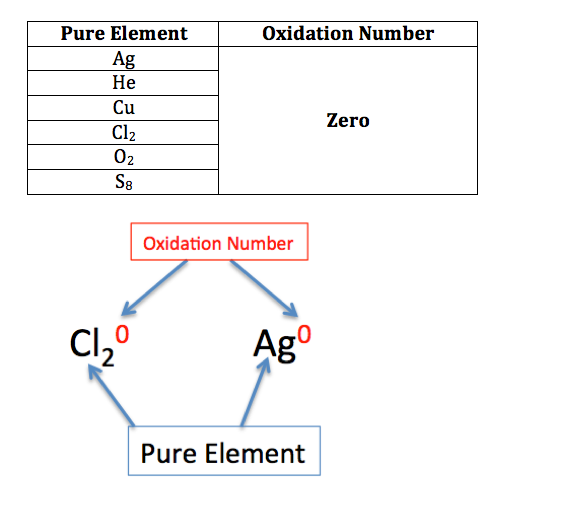
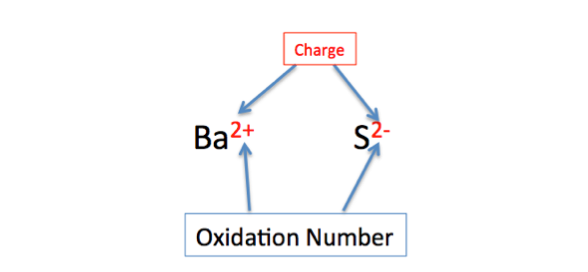
The oxidation number (oxidation state) represents the apparent charge of an atom in a compound.

It helps identify oxidation and reduction processes.

Rules for Assigning Oxidation Numbers

  1. Elements in free state → oxidation number = 0
  2. Alkali metals → +1
  3. Alkaline earth metals → +2
  4. Oxygen usually → −2
  5. Hydrogen → +1 (with nonmetals)
  6. Sum of oxidation numbers equals overall charge.

Example:

H₂O

H = +1
O = −2


6. Identifying Redox Reactions

Redox reactions can be identified by observing changes in oxidation states.

Example:

Fe²⁺ → Fe³⁺

Increase in oxidation number → oxidation.

Example:

Cl₂ → 2Cl⁻

Decrease in oxidation number → reduction.


7. Types of Redox Reactions

Redox reactions can be classified into several categories.

1. Combination Reactions

Image
Image
Image
Image

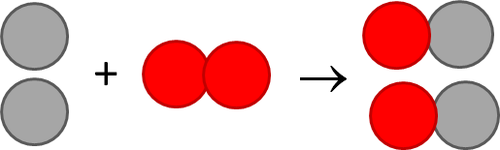
Two or more substances combine to form one product.
Example:

2Mg + O₂ → 2MgO

Magnesium is oxidized.


2. Decomposition Reactions

A compound breaks down into simpler substances.

Example:

2HgO → 2Hg + O₂

Mercury oxide decomposes into mercury and oxygen.


3. Displacement Reactions

Image
Image
Image
Image

One element replaces another in a compound.

Example:

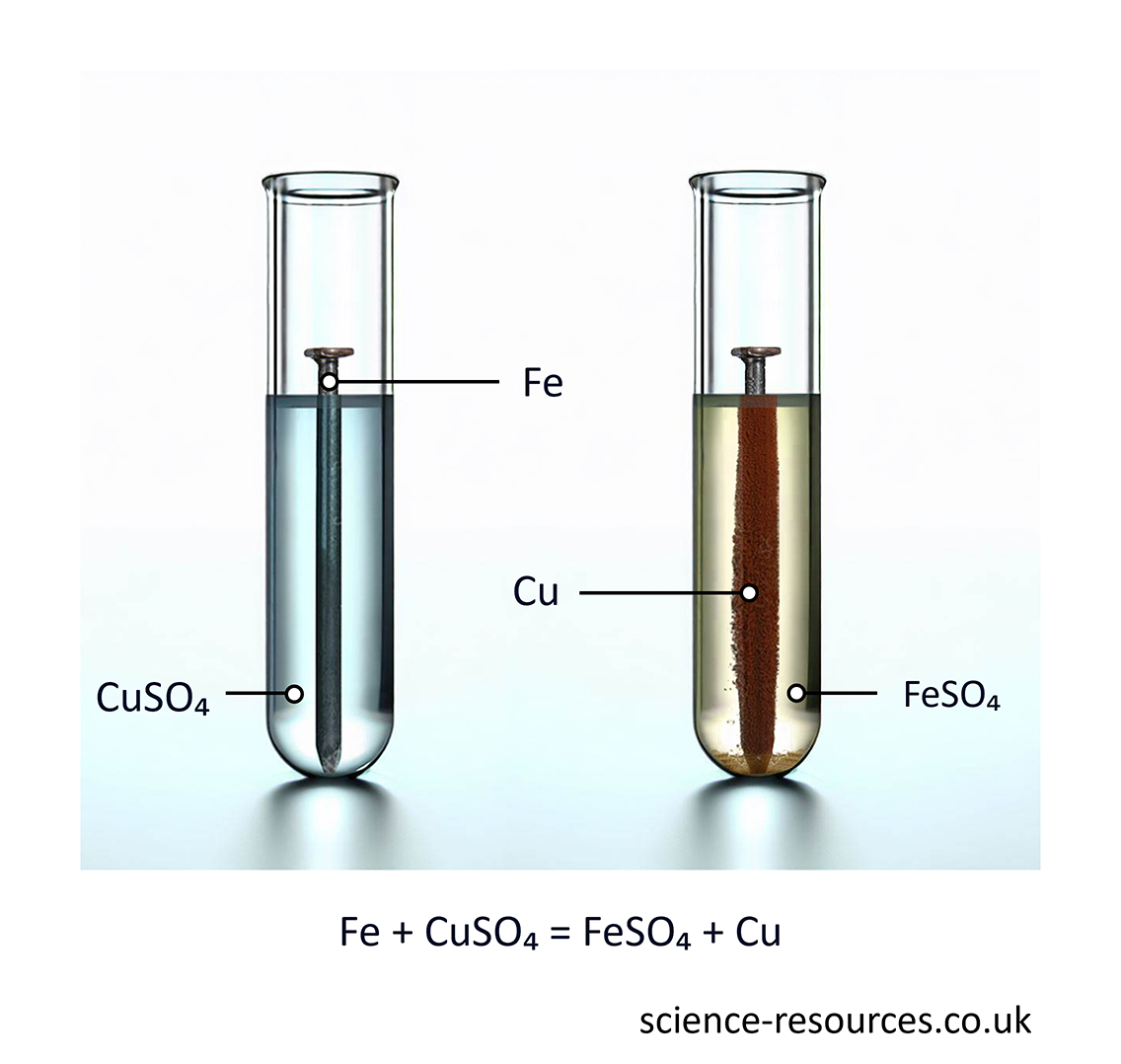
Zn + CuSO₄ → ZnSO₄ + Cu


4. Disproportionation Reactions

In disproportionation reactions, the same element undergoes both oxidation and reduction.

Example:

2H₂O₂ → 2H₂O + O₂

Hydrogen peroxide acts as both oxidizing and reducing agent.


8. Balancing Redox Reactions

Balancing redox reactions involves ensuring that both mass and charge are conserved.

Two methods are commonly used:

  1. Oxidation number method
  2. Half-reaction method

9. Half-Reaction Method

The half-reaction method separates oxidation and reduction reactions.

Example:

Zn → Zn²⁺ + 2e⁻
Cu²⁺ + 2e⁻ → Cu

Electrons lost must equal electrons gained.


10. Redox Reactions in Electrochemistry

Image
Image
Image
Image

Electrochemical cells use redox reactions to produce electricity.

Example:

Zn–Cu galvanic cell.

Oxidation occurs at anode.

Reduction occurs at cathode.

Electrons flow through external circuit.


11. Redox Reactions in Biological Systems

Redox reactions are essential for life.

Examples include:

Cellular Respiration

Glucose is oxidized to produce energy.

Photosynthesis

Carbon dioxide is reduced to form glucose.

Electron Transport Chain

Electrons are transferred through proteins to produce ATP.


12. Redox Reactions in Industrial Processes

Redox reactions are widely used in industry.

Examples include:

  • Metal extraction from ores
  • Chemical manufacturing
  • Petroleum refining
  • Corrosion control

Example:

Iron extraction in blast furnace.

Fe₂O₃ + 3CO → 2Fe + 3CO₂


13. Corrosion and Rusting

Image
Image
Image

Corrosion is a destructive redox reaction involving metals.

Rusting occurs when iron reacts with oxygen and water.

Reaction:

4Fe + 3O₂ + 6H₂O → 4Fe(OH)₃

This eventually forms rust.


14. Redox Titrations

Redox titrations are analytical techniques used to determine concentrations.

Examples:

  • Permanganate titration
  • Dichromate titration
  • Iodometric titration

These methods rely on oxidation–reduction reactions.


15. Environmental Importance of Redox Reactions

Redox reactions occur in many environmental processes.

Examples include:

  • Oxygen cycling in ecosystems
  • Nitrogen cycle reactions
  • Decomposition of organic matter
  • Atmospheric chemical reactions

Understanding redox chemistry helps scientists address pollution and environmental changes.


16. Applications of Redox Reactions

Redox reactions are used in many practical applications.

Batteries

Energy storage and electricity generation.

Fuel Cells

Clean energy technology.

Metallurgy

Extraction and purification of metals.

Water Treatment

Oxidizing agents remove pollutants.

Medicine

Redox reactions occur in metabolic pathways.


17. Importance of Redox Chemistry

Redox reactions are essential for understanding:

  • Energy transformations
  • Chemical reactions
  • Biological metabolism
  • Industrial chemical processes

They form the basis of electrochemistry and energy technologies.


Conclusion

Redox reactions are fundamental chemical processes involving the transfer of electrons between substances. These reactions involve oxidation, where electrons are lost, and reduction, where electrons are gained. Understanding redox chemistry helps scientists analyze chemical reactions, design electrochemical devices, study biological processes, and develop industrial technologies. From rusting of metals to energy generation in batteries and cellular respiration in living organisms, redox reactions play a vital role in both natural and technological systems.


Tags

Acid–Base Titrations

Image
Image
Image
Image

1. Introduction to Acid–Base Titrations

Acid–base titration is one of the most widely used analytical techniques in chemistry for determining the concentration of an unknown acid or base solution. It is a type of volumetric analysis, where the volume of a solution with known concentration is used to determine the concentration of another solution.

In an acid–base titration, an acid reacts with a base in a neutralization reaction to produce salt and water. By carefully measuring the volume of the titrant added until the reaction reaches completion, chemists can calculate the concentration of the unknown solution.

The technique is essential in:

  • Analytical chemistry
  • Pharmaceutical industries
  • Food chemistry
  • Environmental monitoring
  • Water quality testing
  • Chemical manufacturing

Acid–base titrations are widely taught in chemistry laboratories because they demonstrate important principles of acid–base reactions, stoichiometry, and solution chemistry.


2. Principle of Acid–Base Titration

The principle of acid–base titration is based on the neutralization reaction between an acid and a base.

General reaction:

Acid + Base → Salt + Water

Example:

HCl + NaOH → NaCl + H₂O

During titration:

  • One solution of known concentration (titrant) is slowly added to another solution of unknown concentration.
  • The reaction continues until the equivalence point, where the amount of acid equals the amount of base.

At this point:

moles of acid = moles of base (according to stoichiometry)

Indicators are often used to detect when the reaction reaches completion.


3. Components of a Titration Experiment

Image
Image
Image
Image

A typical acid–base titration experiment requires several laboratory instruments.

1. Burette

A burette is a long graduated glass tube used to deliver precise volumes of liquid.

It contains the titrant (solution of known concentration).


2. Pipette

A pipette is used to measure a fixed volume of the analyte solution (unknown concentration).


3. Conical Flask

The analyte solution is placed in a conical flask where the titration reaction occurs.


4. Indicator

An indicator is added to detect the endpoint of the titration.


5. Stand and Clamp

Used to hold the burette securely during titration.


4. Terminology Used in Titration

Several important terms are commonly used in acid–base titration.

Titrant

The solution of known concentration placed in the burette.


Analyte

The solution of unknown concentration being analyzed.


Equivalence Point

The point at which the number of moles of acid equals the number of moles of base.


Endpoint

The point at which the indicator changes color.

Ideally, endpoint should be very close to the equivalence point.


Standard Solution

A solution whose concentration is accurately known.


5. Types of Acid–Base Titrations

Acid–base titrations are classified based on the strength of the acid and base involved.

Four main types exist:

  1. Strong acid – strong base
  2. Weak acid – strong base
  3. Strong acid – weak base
  4. Weak acid – weak base

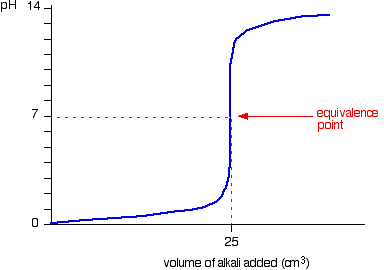
6. Strong Acid–Strong Base Titration

Image
Image
Image
Image

Example:

HCl + NaOH → NaCl + H₂O

Characteristics:

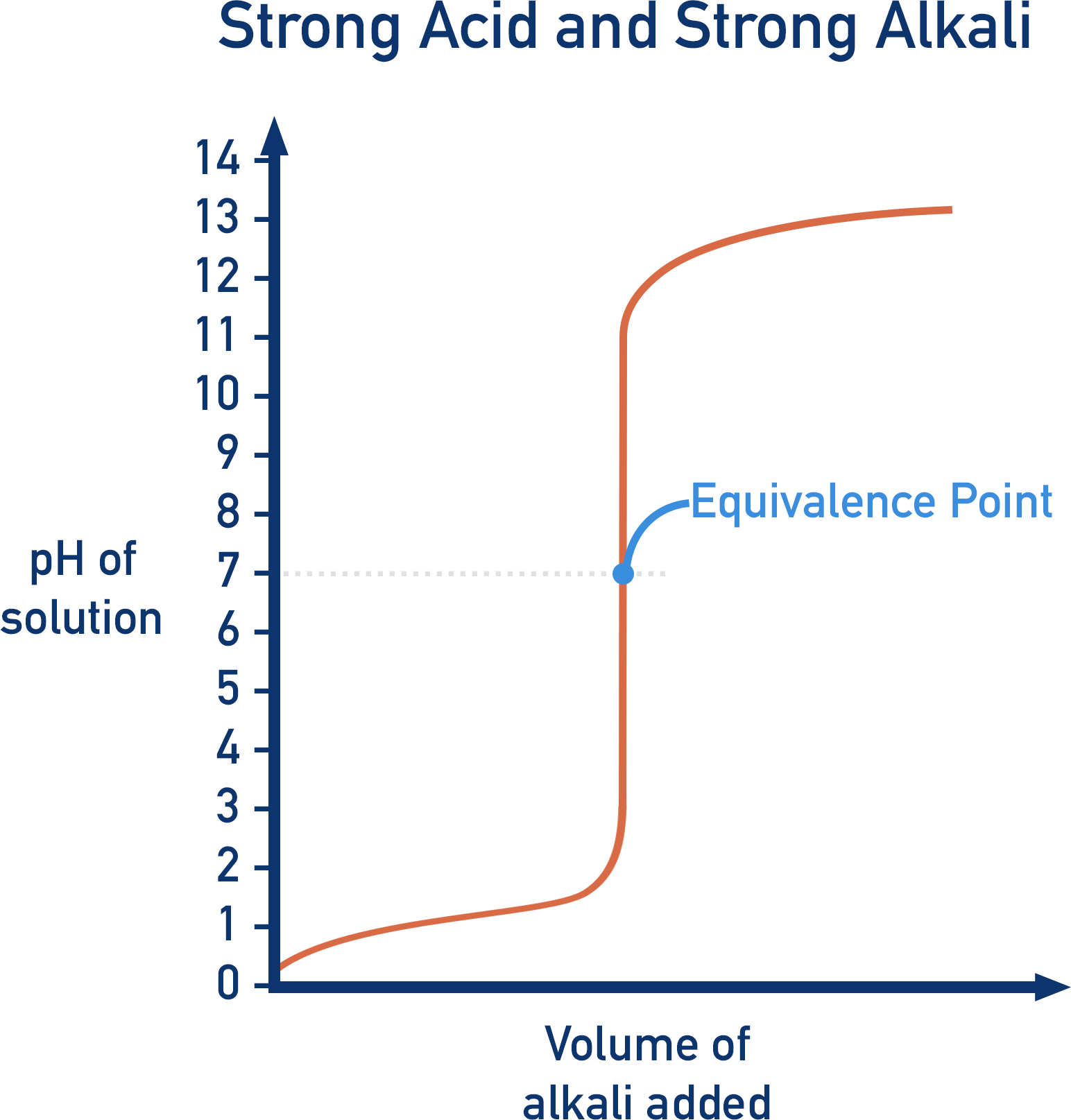
  • Sharp pH change near equivalence point
  • Equivalence point occurs at pH 7
  • Suitable indicators include phenolphthalein and methyl orange.

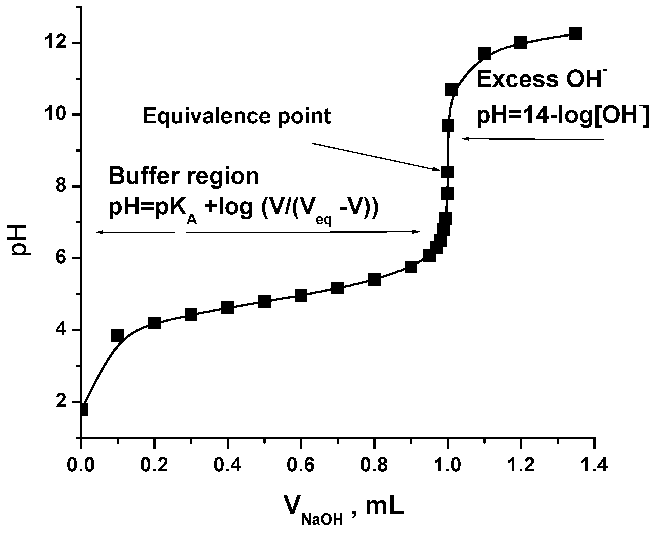
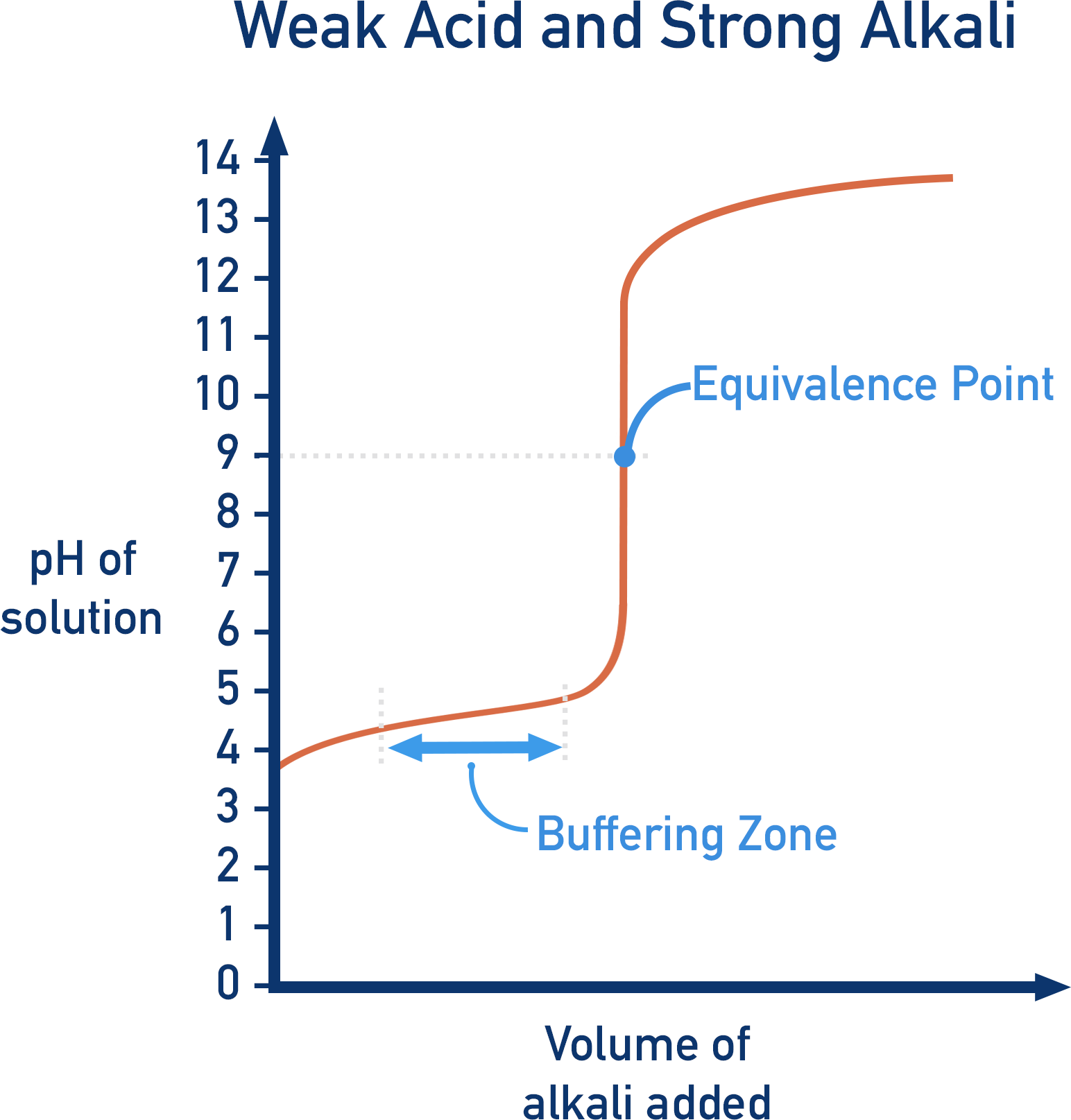
7. Weak Acid–Strong Base Titration

Image
Image
Image
Image

Example:

CH₃COOH + NaOH → CH₃COONa + H₂O

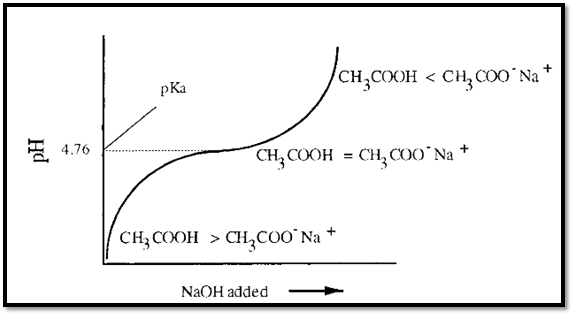
Characteristics:

  • Initial pH is higher than strong acid
  • Buffer region present
  • Equivalence point occurs above pH 7

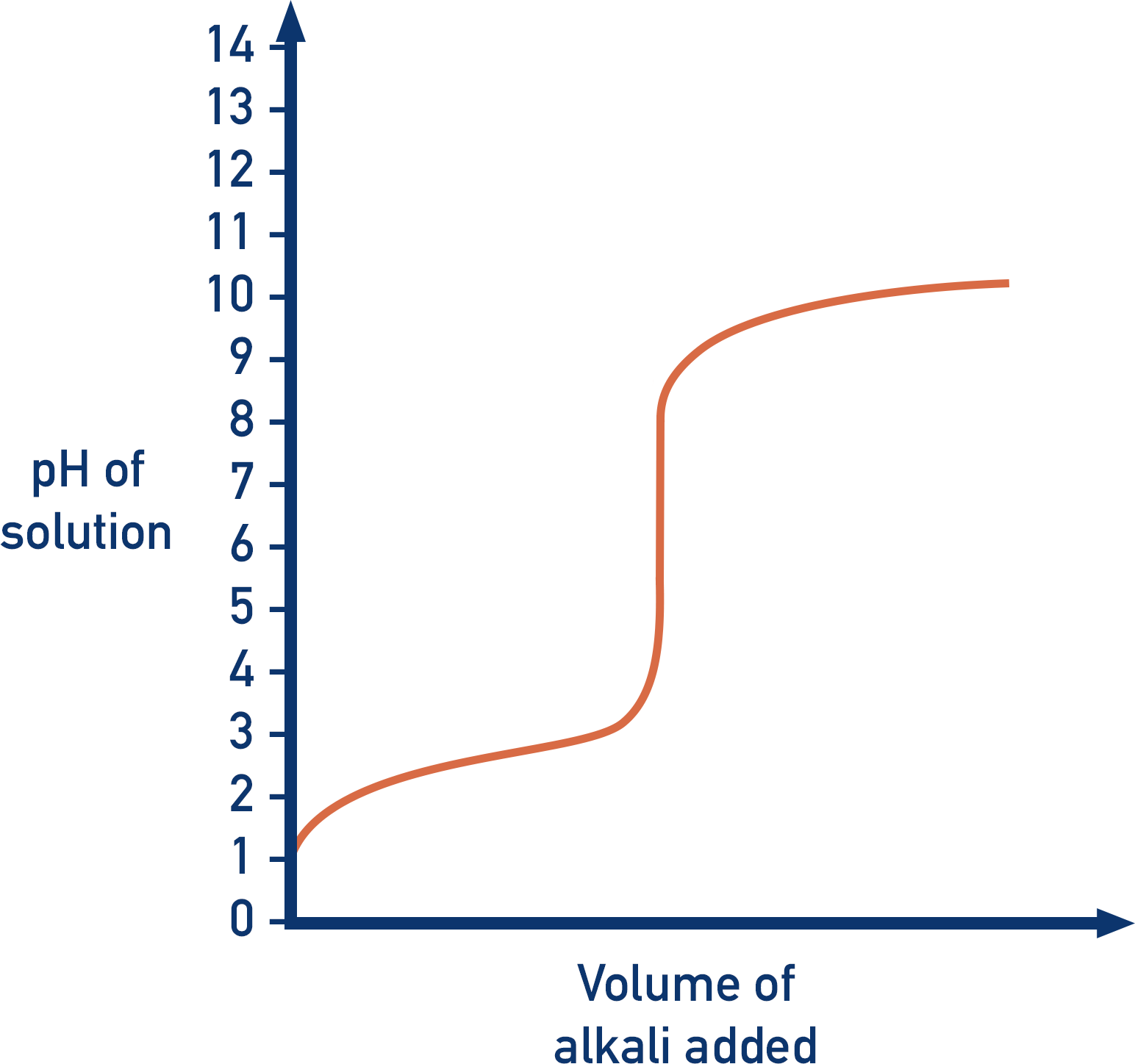
8. Strong Acid–Weak Base Titration

Example:

HCl + NH₃ → NH₄Cl

Characteristics:

  • Equivalence point below pH 7
  • pH change less steep

Indicators such as methyl orange are commonly used.


9. Weak Acid–Weak Base Titration

These titrations are more complex.

Characteristics:

  • No sharp pH change
  • Difficult to determine endpoint
  • Indicators often ineffective

Potentiometric methods are sometimes used instead.


10. Titration Curves

Image
Image
Image
Image

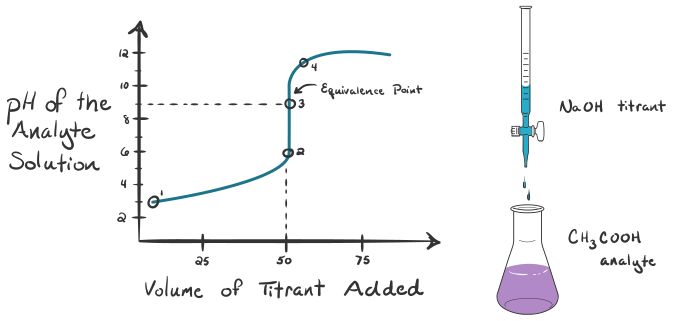
A titration curve is a graph showing pH versus volume of titrant added.

The curve illustrates several important regions:

  • Initial pH
  • Buffer region
  • Equivalence point
  • Endpoint

Titration curves help determine the strength and properties of acids and bases.


11. Indicators Used in Titrations

Indicators are substances that change color at specific pH ranges.

Common indicators include:

Phenolphthalein

Colorless in acid
Pink in base

pH range: 8.2–10


Methyl Orange

Red in acid
Yellow in base

pH range: 3.1–4.4


Bromothymol Blue

Yellow in acid
Blue in base

pH range: 6.0–7.6


12. Selection of Indicators

Choosing the correct indicator is important.
The indicator must change color near the equivalence point.

Example:

Strong acid–strong base titration → phenolphthalein or methyl orange.


13. Calculations in Acid–Base Titrations

The main calculation is based on stoichiometry.

For a reaction:

aA + bB → products

The formula:

[
M_a V_a = M_b V_b
]

Where:

  • M = molarity
  • V = volume

This equation is used to calculate unknown concentration.


14. Applications of Acid–Base Titrations

Acid–base titration has many applications.

Pharmaceutical Industry

Determining drug purity.


Food Industry

Measuring acidity in foods.

Example:

Acidity of vinegar.


Environmental Monitoring

Testing water acidity.


Agriculture

Soil acidity analysis.


Chemical Manufacturing

Quality control in production processes.


15. Advantages of Acid–Base Titrations

  • High accuracy
  • Simple experimental setup
  • Cost-effective
  • Applicable to many chemical systems

16. Limitations of Acid–Base Titrations

Some limitations include:

  • Indicator error
  • Human observation error
  • Weak acid–weak base titrations are difficult

Despite these limitations, titration remains one of the most reliable analytical techniques.


17. Importance of Acid–Base Titrations

Acid–base titration is an essential technique in analytical chemistry.

It allows scientists to:

  • Determine unknown concentrations
  • Study acid–base reactions
  • Analyze chemical purity
  • Monitor industrial processes

The method continues to be widely used in research laboratories and industrial applications.


Conclusion

Acid–base titrations are a fundamental analytical method used to determine the concentration of acids and bases through neutralization reactions. By carefully measuring the volume of titrant required to reach the equivalence point, chemists can calculate the concentration of unknown solutions with high accuracy. Different types of titrations exist depending on the strengths of acids and bases involved, and titration curves help illustrate changes in pH during the reaction. Indicators play a crucial role in detecting the endpoint of titration. Acid–base titrations are widely applied in industries, environmental monitoring, pharmaceutical analysis, and scientific research, making them an essential tool in chemistry.


Tags

pH and Buffer Solutions

Image
Image
Image
Image

1. Introduction to pH and Buffer Solutions

The concepts of pH and buffer solutions are central to acid–base chemistry and play a crucial role in chemistry, biology, medicine, environmental science, and industrial processes. The pH scale provides a quantitative measure of how acidic or basic a solution is, while buffers are systems that help maintain a relatively constant pH when small amounts of acids or bases are added.

Chemical reactions occurring in aqueous solutions often involve hydrogen ions (H⁺) or hydroxide ions (OH⁻). The concentration of these ions determines the acidity or alkalinity of a solution. Maintaining stable pH levels is essential for many natural and industrial processes.

For example:

  • The human blood maintains a pH around 7.35–7.45
  • Ocean water has a pH around 8.1
  • Many enzymes function only within narrow pH ranges

Buffer systems help resist changes in pH and maintain chemical stability.

Understanding pH and buffer solutions is essential in:

  • Biological systems
  • Medical diagnostics
  • Pharmaceutical production
  • Environmental monitoring
  • Industrial chemistry
  • Agricultural science

2. Definition of pH

The pH scale is used to measure the acidity or basicity of a solution.

pH is defined as the negative logarithm of the hydrogen ion concentration.

[
pH = -\log[H^+]
]

Where:

  • [H⁺] = concentration of hydrogen ions

The pH scale ranges from 0 to 14.

Classification of solutions:

  • pH < 7 → acidic
  • pH = 7 → neutral
  • pH > 7 → basic (alkaline)

Pure water has a pH of 7, meaning it is neutral.


3. Relationship Between pH and Hydrogen Ion Concentration

Because pH is logarithmic, each unit change represents a tenfold change in hydrogen ion concentration.

Example:

pH = 1 → very strong acid
pH = 2 → ten times weaker than pH 1
pH = 3 → one hundred times weaker than pH 1

Similarly:

pH = 10 is ten times more basic than pH 9.


4. Ionization of Water

Water slightly dissociates into hydrogen ions and hydroxide ions.

[
H_2O \rightleftharpoons H^+ + OH^-
]

At 25°C:

[
[H^+] = [OH^-] = 1 \times 10^{-7}
]

The ionic product of water is:

[
K_w = [H^+][OH^-] = 1 \times 10^{-14}
]

This constant plays a key role in acid–base chemistry.


5. pOH and Relationship with pH

The concentration of hydroxide ions is measured using pOH.

[
pOH = -\log[OH^-]
]

Relationship between pH and pOH:

[
pH + pOH = 14
]

This equation applies at 25°C.

Example:

If pH = 4

pOH = 10


6. Measurement of pH

Image
Image
Image
Image

pH can be measured using several methods.

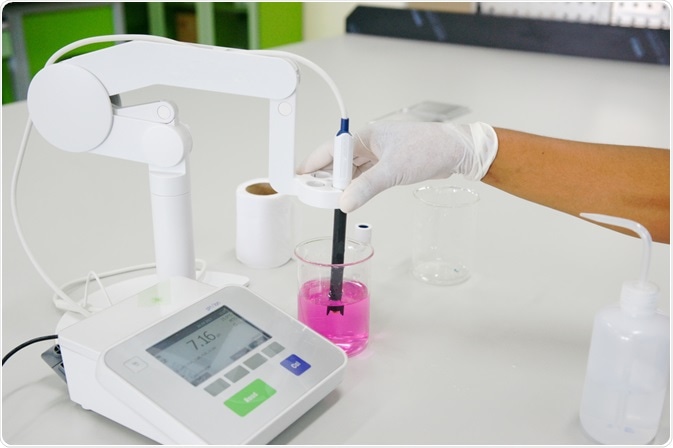
1. pH Meter

A pH meter measures hydrogen ion activity electronically.

It provides highly accurate results.


2. Indicators

Indicators change color depending on pH.

Examples:

  • Litmus
  • Phenolphthalein
  • Methyl orange

3. Universal Indicator

A mixture of several indicators that shows a full pH range.


4. pH Paper

Special paper impregnated with indicator chemicals.


7. Importance of pH

pH plays a vital role in many chemical and biological processes.

Examples include:

  • Enzyme activity
  • Soil fertility
  • Water quality
  • Blood chemistry
  • Industrial chemical reactions

Small pH changes can significantly affect chemical reactions and biological systems.


8. Buffer Solutions

Image
Image
Image
Image

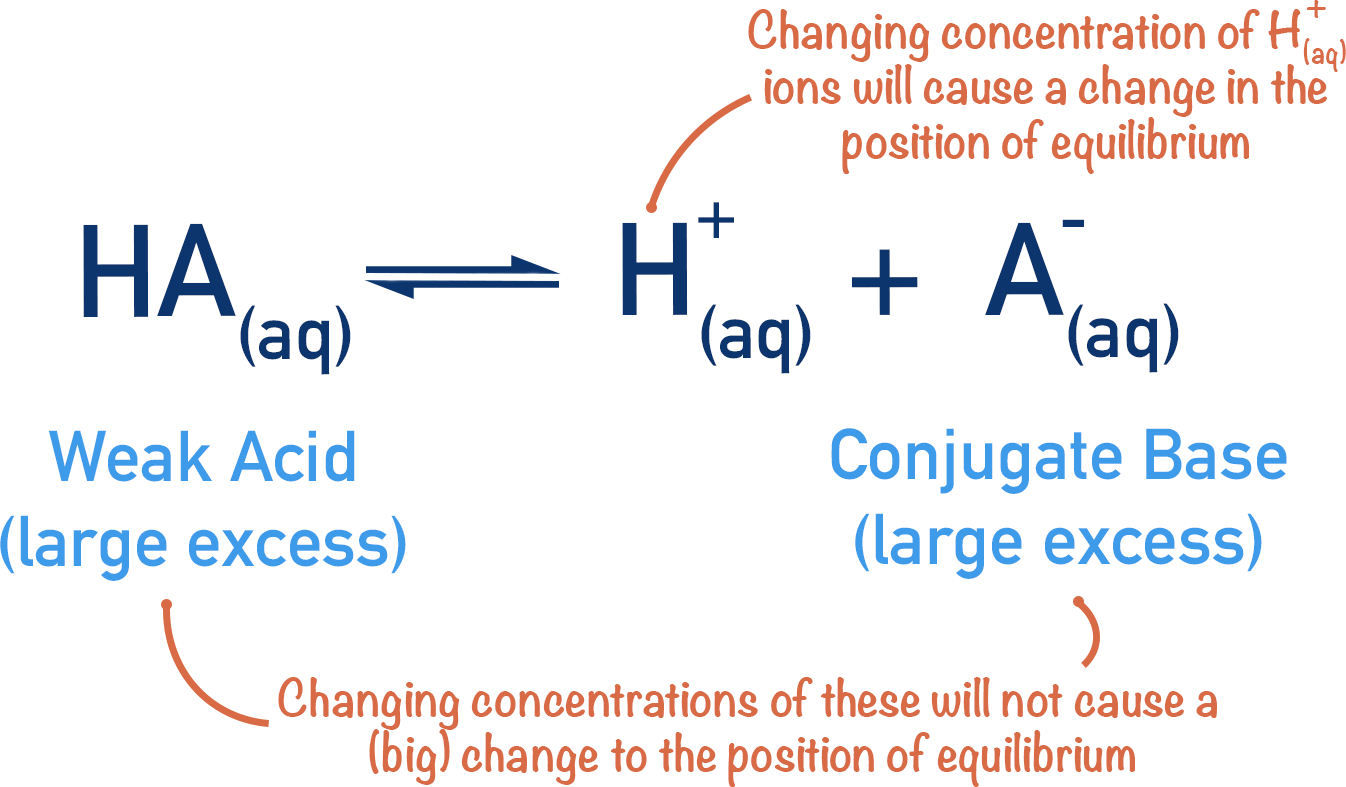
A buffer solution is a solution that resists changes in pH when small amounts of acid or base are added.

Buffers consist of:

  • A weak acid and its conjugate base
    or
  • A weak base and its conjugate acid

Buffers maintain pH stability in many chemical and biological systems.


9. Types of Buffer Solutions

Acidic Buffer

Acidic buffers contain:

  • Weak acid
  • Salt of the acid

Example:

Acetic acid + sodium acetate.

This buffer maintains pH below 7.


Basic Buffer

Basic buffers contain:

  • Weak base
  • Salt of the base

Example:

Ammonia + ammonium chloride.

This buffer maintains pH above 7.


10. Mechanism of Buffer Action

Buffers resist pH change through reactions involving weak acids and their conjugate bases.

Example acidic buffer:

CH₃COOH ⇌ H⁺ + CH₃COO⁻

When acid is added:

CH₃COO⁻ + H⁺ → CH₃COOH

When base is added:

CH₃COOH + OH⁻ → CH₃COO⁻ + H₂O

Thus the buffer neutralizes added acid or base.


11. Henderson–Hasselbalch Equation

The Henderson–Hasselbalch equation relates buffer pH to acid and conjugate base concentrations.

[
pH = pK_a + \log \frac{[A^-]}{[HA]}
]

Where:

  • pKa = acid dissociation constant
  • [A⁻] = conjugate base concentration
  • [HA] = acid concentration

This equation is widely used in buffer calculations.


12. Buffer Capacity

Buffer capacity refers to the ability of a buffer to resist pH change.

Factors affecting buffer capacity include:

  • Concentration of buffer components
  • Ratio of acid to conjugate base
  • Strength of weak acid/base

Buffers work best when:

pH ≈ pKa


13. Biological Buffers

Image
Image
Image
Image

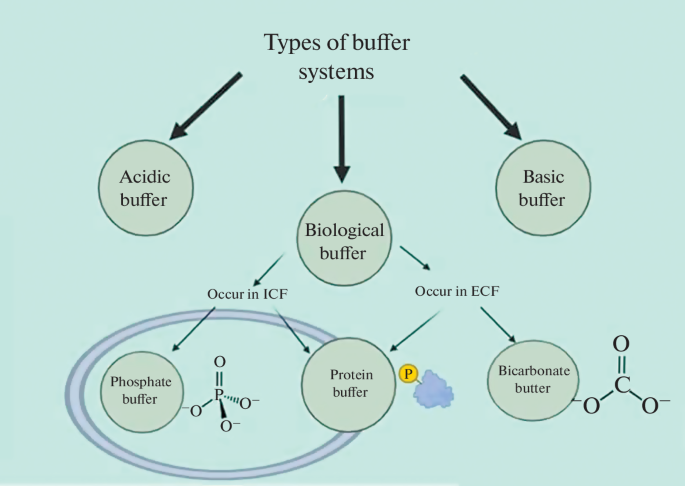
Buffer systems are essential in biological systems.

The human body contains several important buffers.


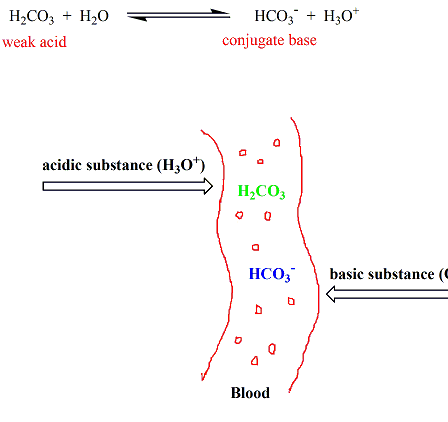
Bicarbonate Buffer System

This is the primary buffer in blood.

CO₂ + H₂O ⇌ H₂CO₃ ⇌ H⁺ + HCO₃⁻

This system maintains blood pH around 7.4.


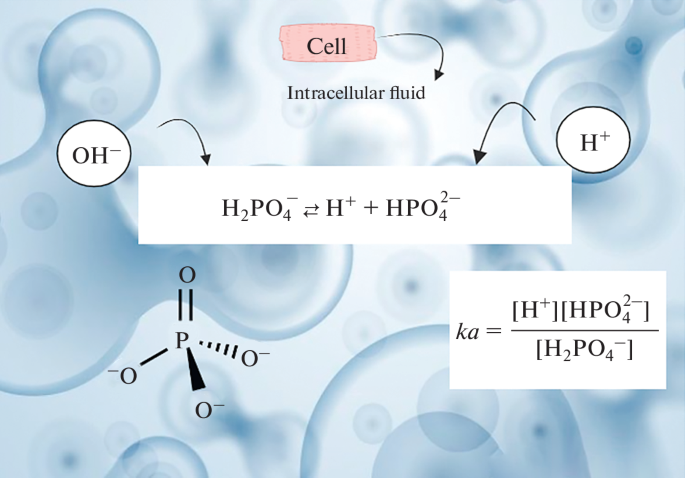
Phosphate Buffer System

Important inside cells.

H₂PO₄⁻ ⇌ H⁺ + HPO₄²⁻


Protein Buffer System

Proteins can accept or donate protons.

Hemoglobin acts as a buffer in blood.


14. Industrial Applications of Buffers

Buffers are used in many industries.

Examples include:

  • Pharmaceutical manufacturing
  • Food processing
  • Chemical synthesis
  • Dye production
  • Cosmetic manufacturing

Buffers help maintain stable chemical conditions during reactions.


15. Environmental Importance of pH

pH affects many environmental processes.

Examples include:

  • Ocean acidity
  • Soil fertility
  • Water quality
  • Acid rain formation

Monitoring pH helps scientists evaluate environmental health.


16. pH in Agriculture

Soil pH determines nutrient availability for plants.

Most crops grow best in slightly acidic soil.

Soil pH affects:

  • Fertilizer effectiveness
  • Microbial activity
  • Plant growth

Farmers often adjust soil pH using lime or sulfur.


17. pH in Medicine

pH plays a crucial role in medicine.

Examples include:

  • Blood pH regulation
  • Drug stability
  • Enzyme activity
  • Digestive processes

Abnormal pH levels in blood can cause serious health problems.


18. Importance of Buffers in Chemistry

Buffers are essential for maintaining stable chemical environments.

They allow reactions to occur under controlled pH conditions.

Buffers are critical in:

  • Biochemistry
  • Analytical chemistry
  • Pharmaceutical research
  • Industrial chemistry

Conclusion

The concepts of pH and buffer solutions are fundamental to acid–base chemistry and play a crucial role in maintaining chemical balance in many systems. The pH scale provides a quantitative measure of acidity and alkalinity, while buffer solutions help stabilize pH against changes caused by added acids or bases. From biological systems such as blood buffering to industrial chemical processes and environmental monitoring, pH control is essential for maintaining stability and ensuring proper chemical functioning. Understanding these concepts allows scientists to analyze chemical reactions, design stable solutions, and maintain equilibrium in natural and artificial systems.


Tags

Chemical Acids and Bases

Image
Image
Image
Image

1. Introduction to Acids and Bases

Acids and bases are fundamental concepts in chemistry and play a crucial role in chemical reactions, biological systems, industrial processes, and environmental chemistry. The study of acids and bases is known as acid–base chemistry, which forms a core part of physical chemistry and analytical chemistry.

Acids and bases were recognized long before modern chemistry developed. Early chemists classified substances based on their observable properties such as taste, reactivity, and effects on indicators. For example:

  • Acids typically have a sour taste
  • Bases usually have a bitter taste and slippery feel

However, modern chemistry defines acids and bases in terms of their behavior in chemical reactions and their ability to donate or accept protons or electrons.

Acid–base reactions are extremely common and are involved in many processes including:

  • Digestion in the human body
  • Industrial chemical production
  • Soil chemistry and agriculture
  • Water treatment
  • Pharmaceutical synthesis
  • Environmental processes such as acid rain

Understanding acids and bases helps scientists predict chemical behavior, control reactions, and maintain balance in biological and environmental systems.


2. Historical Development of Acid–Base Concepts

The understanding of acids and bases evolved over time. Several scientists proposed theories explaining their behavior.

The most important acid–base theories include:

  1. Arrhenius theory
  2. Brønsted–Lowry theory
  3. Lewis theory

Each theory expanded the concept of acids and bases.


3. Arrhenius Theory of Acids and Bases

The Arrhenius theory was proposed by the Swedish chemist Svante Arrhenius in 1884.

According to Arrhenius:

Acids are substances that produce hydrogen ions (H⁺) in aqueous solution.

Examples of Arrhenius acids:

  • Hydrochloric acid (HCl)
  • Sulfuric acid (H₂SO₄)
  • Nitric acid (HNO₃)

Example reaction:

HCl → H⁺ + Cl⁻

Bases are substances that produce hydroxide ions (OH⁻) in aqueous solution.

Examples:

  • Sodium hydroxide (NaOH)
  • Potassium hydroxide (KOH)
  • Calcium hydroxide (Ca(OH)₂)

Example:

NaOH → Na⁺ + OH⁻


Limitations of Arrhenius Theory

Although useful, Arrhenius theory has several limitations:

  • It applies only to aqueous solutions.
  • It cannot explain reactions occurring without water.
  • It does not include substances like ammonia as bases.

Because of these limitations, more general theories were developed.


4. Brønsted–Lowry Theory

Image
Image
Image
Image

The Brønsted–Lowry theory was proposed in 1923 by Johannes Brønsted and Thomas Lowry.

According to this theory:

An acid is a proton donor.

A base is a proton acceptor.

Example reaction:

HCl + H₂O → H₃O⁺ + Cl⁻

Here:

  • HCl donates a proton → acid
  • H₂O accepts a proton → base

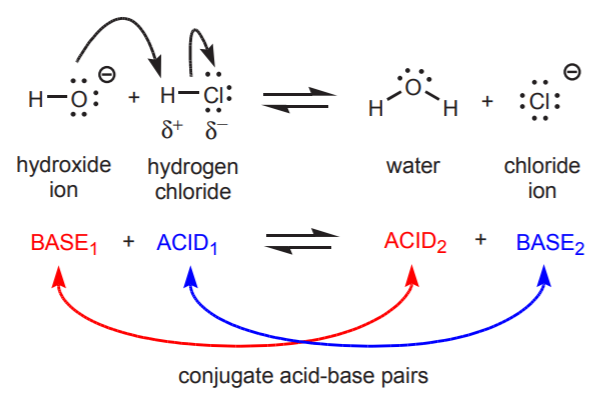
Conjugate Acid–Base Pairs

In Brønsted–Lowry reactions, acids and bases exist as conjugate pairs.

Example:

NH₃ + H₂O ⇌ NH₄⁺ + OH⁻

Pairs:

NH₃ / NH₄⁺
H₂O / OH⁻

Each acid has a conjugate base, and each base has a conjugate acid.


5. Lewis Theory of Acids and Bases

Image
Image
Image
Image

The Lewis theory was proposed by Gilbert N. Lewis.

According to Lewis:

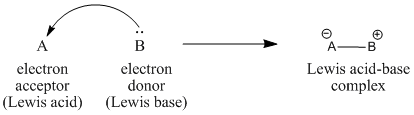
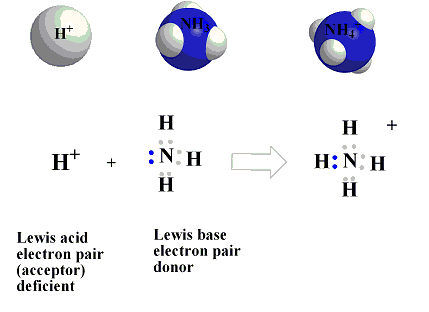
A Lewis acid is an electron pair acceptor.

A Lewis base is an electron pair donor.

Example reaction:

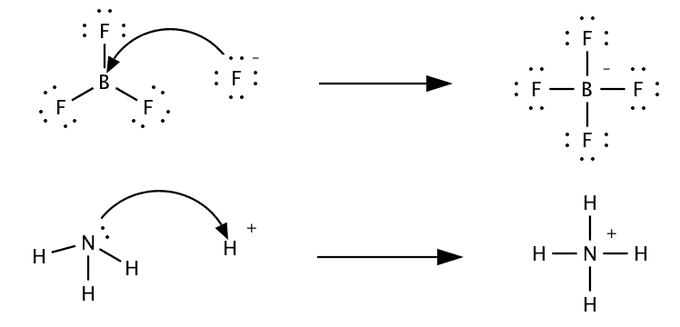
BF₃ + NH₃ → F₃B–NH₃

Here:

  • BF₃ accepts electron pair → Lewis acid
  • NH₃ donates electron pair → Lewis base

Importance of Lewis Theory

Lewis theory explains reactions that cannot be described by proton transfer, such as:

  • Metal complex formation
  • Catalytic reactions
  • Organic reactions

6. Properties of Acids

Acids exhibit several characteristic properties.

1. Sour Taste

Examples include citric acid in lemons and acetic acid in vinegar.

2. Turn Blue Litmus Red

Acids change the color of litmus indicator.

3. React with Metals

Acids react with metals to produce hydrogen gas.

Example:

Zn + 2HCl → ZnCl₂ + H₂

4. Conduct Electricity

Acids form ions in solution and conduct electricity.

5. React with Bases

Acids react with bases to form salt and water.


7. Properties of Bases

Bases also have distinctive properties.

1. Bitter Taste

2. Slippery Texture

Soap and detergents feel slippery.

3. Turn Red Litmus Blue

4. Conduct Electricity in Solution

5. Neutralize Acids

Bases react with acids to produce salt and water.


8. Acid–Base Neutralization

Image
Image
Image
Image

Neutralization is a reaction between an acid and a base.

General reaction:

Acid + Base → Salt + Water

Example:

HCl + NaOH → NaCl + H₂O

Neutralization reactions are widely used in:

  • Medicine
  • Agriculture
  • Water treatment
  • Industrial chemistry

9. Strength of Acids and Bases

Acids and bases are classified as strong or weak based on their ionization in water.


Strong Acids

Strong acids ionize completely in water.

Examples:

  • HCl
  • HNO₃
  • H₂SO₄

Weak Acids

Weak acids ionize partially.

Examples:

  • Acetic acid
  • Carbonic acid
  • Formic acid

Strong Bases

Examples:

  • NaOH
  • KOH
  • Ca(OH)₂

Weak Bases

Examples:

  • Ammonia
  • Amines

10. pH Scale

Image
Image
Image
Image

The pH scale measures acidity or basicity.

Range:

0 – 14

pH < 7 → acidic
pH = 7 → neutral
pH > 7 → basic

Examples:

  • Lemon juice pH ≈ 2
  • Pure water pH = 7
  • Soap pH ≈ 9

11. Acid–Base Indicators

Indicators are substances that change color depending on pH.

Common indicators include:

  • Litmus
  • Phenolphthalein
  • Methyl orange
  • Universal indicator

Indicators help detect acidity or alkalinity in chemical reactions.


12. Buffer Solutions

Buffers resist changes in pH when acids or bases are added.

They consist of:

  • Weak acid + conjugate base
    or
  • Weak base + conjugate acid

Example:

Acetic acid + sodium acetate.

Buffers maintain pH stability in biological systems.


13. Acid–Base Titration

Titration is an analytical technique used to determine the concentration of acids or bases.

Equipment used:

  • Burette
  • Pipette
  • Indicator

During titration, acid and base react until the equivalence point is reached.


14. Acid–Base Reactions in Biology

Acid–base balance is crucial in biological systems.

Examples include:

  • Blood pH regulation
  • Enzyme activity
  • Cellular metabolism

The human body maintains blood pH around 7.4 using buffer systems.


15. Environmental Importance

Acid–base chemistry influences many environmental processes.

Examples include:

  • Acid rain formation
  • Ocean acidity
  • Soil chemistry
  • Water purification

Understanding acid–base reactions helps scientists address environmental challenges.


16. Industrial Applications

Acids and bases are widely used in industry.

Examples:

  • Sulfuric acid production
  • Fertilizer manufacturing
  • Petroleum refining
  • Pharmaceutical synthesis
  • Food processing

17. Importance of Acid–Base Chemistry

Acid–base chemistry is essential for understanding:

  • Chemical reactions
  • Biological processes
  • Environmental systems
  • Industrial chemistry

It provides a framework for studying chemical behavior and predicting reaction outcomes.


Conclusion

Acids and bases are fundamental chemical substances that play a vital role in chemistry and everyday life. Their behavior has been explained through several theories including Arrhenius, Brønsted–Lowry, and Lewis theories. Acid–base reactions such as neutralization, titration, and buffer systems are essential in laboratory analysis, industrial processes, and biological systems. The pH scale provides a quantitative measure of acidity and basicity, allowing scientists to monitor and control chemical environments. Understanding acids and bases is therefore crucial for advancing chemistry, medicine, environmental science, and technology.


Tags

Le Chatelier’s Principle in Chemical Equilibrium

Image
Image
Image
Image

1. Introduction to Le Chatelier’s Principle

Le Chatelier’s Principle is one of the most important concepts in chemical equilibrium. It explains how a chemical system at equilibrium responds to changes in external conditions such as concentration, temperature, and pressure.

The principle was proposed by the French chemist Henri Louis Le Chatelier in 1884. It provides a qualitative method for predicting how a system will react when equilibrium is disturbed.

In simple terms, Le Chatelier’s Principle states:

When a system at equilibrium is subjected to a change in concentration, temperature, pressure, or volume, the system adjusts itself in a way that counteracts the imposed change and establishes a new equilibrium.

This principle helps chemists and engineers understand and control chemical reactions in laboratory experiments and industrial processes.

For example, in the synthesis of ammonia:

N₂ + 3H₂ ⇌ 2NH₃

Changes in pressure or temperature shift the equilibrium position. Understanding these shifts allows industries to optimize ammonia production.

Le Chatelier’s Principle is widely applied in:

  • Industrial chemical manufacturing
  • Environmental chemistry
  • Biological systems
  • Atmospheric chemistry
  • Pharmaceutical processes

2. Concept of Chemical Equilibrium

Before understanding Le Chatelier’s Principle, it is essential to understand chemical equilibrium.

Chemical equilibrium occurs when:

  • Forward reaction rate = Reverse reaction rate
  • Concentrations of reactants and products remain constant

Consider the reaction:

A + B ⇌ C + D

At equilibrium:

Rate of forward reaction = Rate of reverse reaction

Although concentrations remain constant, reactions continue at the molecular level. Therefore equilibrium is dynamic, not static.

When a disturbance occurs, the equilibrium position shifts until a new equilibrium state is reached.


3. Statement of Le Chatelier’s Principle

The formal statement of Le Chatelier’s Principle is:

If a system at equilibrium is disturbed by a change in concentration, temperature, pressure, or volume, the system will shift in a direction that reduces the effect of the disturbance and re-establishes equilibrium.

In other words:

The system tries to oppose the change.

This response helps maintain stability in chemical systems.


4. Disturbances That Affect Equilibrium

The equilibrium position can be disturbed by several factors:

  1. Change in concentration
  2. Change in pressure
  3. Change in temperature
  4. Change in volume
  5. Addition of inert gas
  6. Presence of catalyst

Each of these factors affects equilibrium differently.


5. Effect of Concentration Change

Image
Image
Image
Image

Changing the concentration of reactants or products shifts equilibrium.

Increasing Reactant Concentration

If reactant concentration increases, equilibrium shifts toward products.

Example:

N₂ + 3H₂ ⇌ 2NH₃

Adding more hydrogen increases ammonia production.


Increasing Product Concentration

If product concentration increases, equilibrium shifts toward reactants.

This consumes excess product.


Removing Reactants

Removing reactants shifts equilibrium toward reactants.


Removing Products

Removing products shifts equilibrium toward products.

This is often used in industrial chemistry to increase yield.


6. Effect of Pressure Change

Image
Image
Image
Image

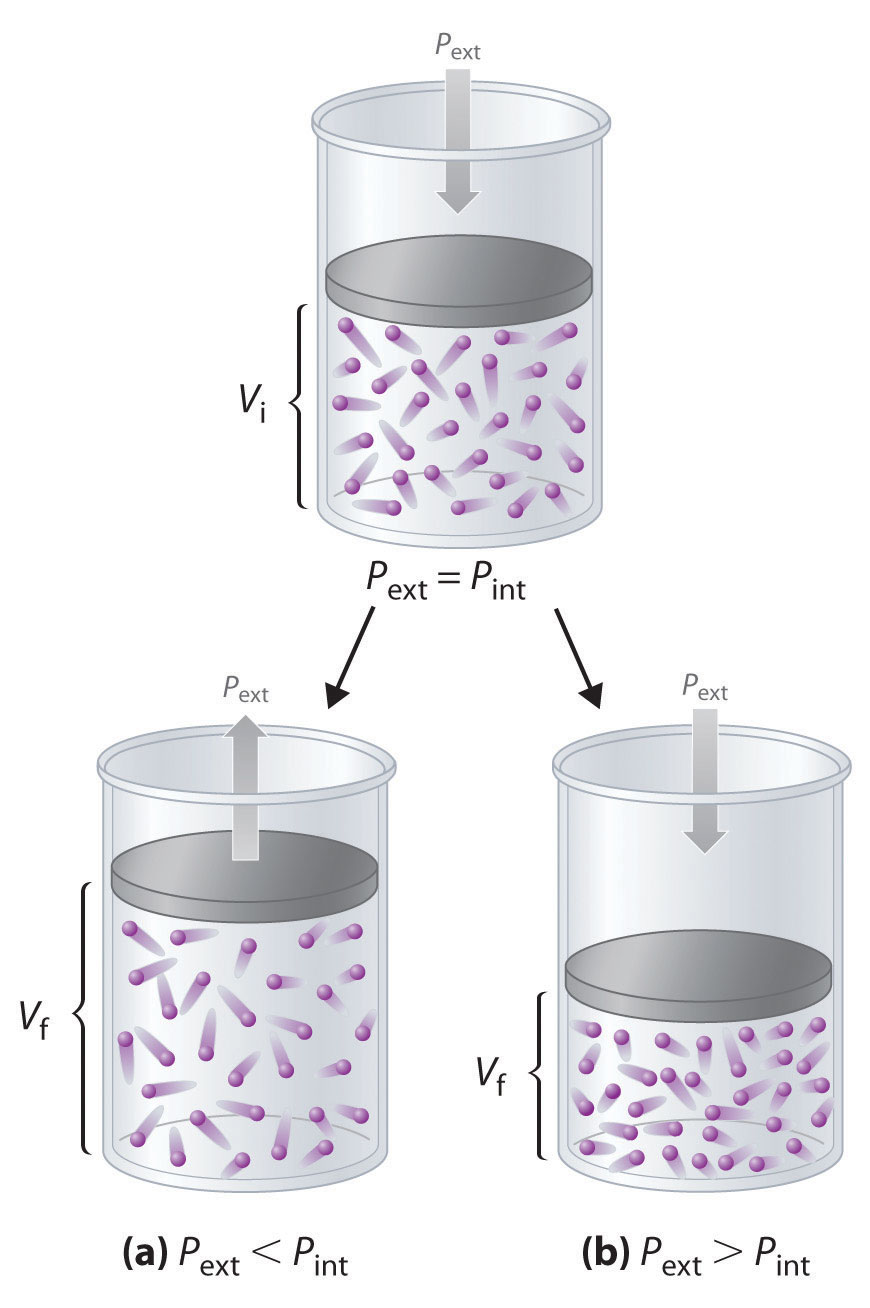
Pressure changes affect equilibrium in gaseous reactions.

Increasing pressure favors the side with fewer moles of gas.

Decreasing pressure favors the side with more moles of gas.

Example:

N₂ + 3H₂ ⇌ 2NH₃

Gas moles:

Left side = 4 moles
Right side = 2 moles

Increasing pressure shifts equilibrium toward ammonia formation.


7. Effect of Volume Change

Volume changes are closely related to pressure.

Decreasing volume increases pressure.

Increasing volume decreases pressure.

Therefore:

Reducing volume favors the side with fewer gas molecules.

Increasing volume favors the side with more gas molecules.


8. Effect of Temperature

Image
Image
Image
Image

Temperature changes affect equilibrium differently from other factors.

Temperature changes alter the equilibrium constant.


Exothermic Reactions

Heat acts as a product.

Example:

N₂ + 3H₂ ⇌ 2NH₃ + Heat

Increasing temperature shifts equilibrium toward reactants.

Decreasing temperature shifts equilibrium toward products.


Endothermic Reactions

Heat acts as a reactant.

Increasing temperature shifts equilibrium toward products.

Decreasing temperature shifts equilibrium toward reactants.


9. Effect of Catalysts

Catalysts do not change equilibrium position.

However, catalysts speed up both forward and reverse reactions.

Therefore:

  • Equilibrium is reached faster
  • Equilibrium composition remains unchanged

Catalysts lower activation energy but do not affect equilibrium constant.


10. Effect of Inert Gas

Adding inert gas does not affect equilibrium if volume remains constant.

However, if pressure changes due to added gas, equilibrium may shift depending on gas mole changes.


11. Graphical Representation of Equilibrium Shift

Image
Image
Image

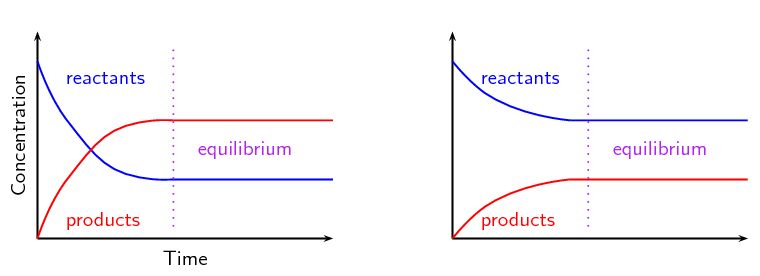
Graphs help visualize equilibrium changes.

Typical graphs show:

  • Concentration vs time
  • Reaction rate vs time

When equilibrium is disturbed:

  1. Concentrations change
  2. Reaction rates become unequal
  3. System adjusts
  4. New equilibrium is established

12. Industrial Applications of Le Chatelier’s Principle

Image
Image
Image
Image

Le Chatelier’s Principle is extremely important in industrial chemistry.

Industries manipulate conditions to maximize product yield.


Haber Process

Reaction:

N₂ + 3H₂ ⇌ 2NH₃

Conditions used:

High pressure
Moderate temperature
Iron catalyst

High pressure favors ammonia production.


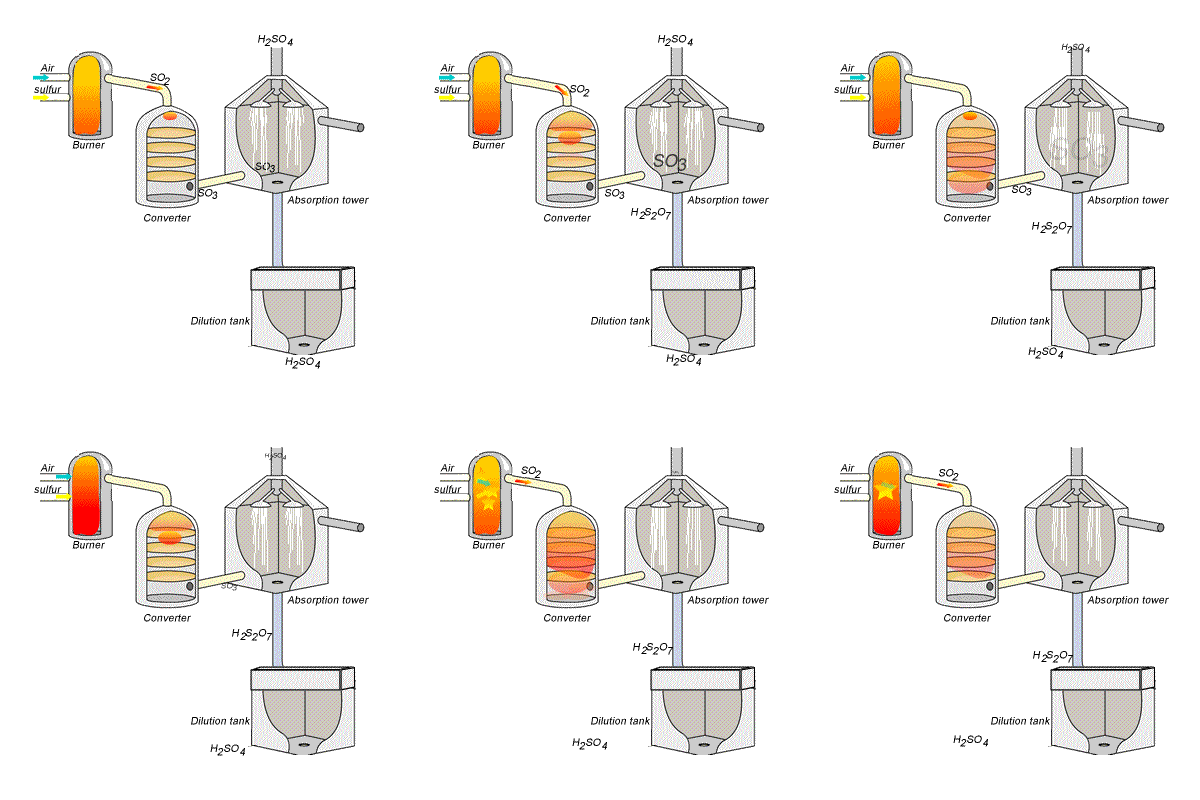
Contact Process

Reaction:

2SO₂ + O₂ ⇌ 2SO₃

Used to produce sulfuric acid.

Moderate temperature and catalysts optimize equilibrium yield.


Methanol Production

CO + 2H₂ ⇌ CH₃OH

High pressure and catalysts improve production.


13. Biological Applications

Le Chatelier’s Principle also applies to biological systems.

Example:

Oxygen binding with hemoglobin.

Hb + O₂ ⇌ HbO₂

When oxygen concentration increases, more oxyhemoglobin forms.

In tissues where oxygen concentration decreases, oxygen is released.

This equilibrium maintains oxygen supply in the body.


14. Environmental Applications

Le Chatelier’s Principle helps explain environmental chemical processes.

Examples include:

  • Carbon dioxide equilibrium in oceans
  • Atmospheric ozone formation
  • Acid rain formation

Understanding equilibrium shifts helps scientists predict environmental changes.


15. Mathematical Relation with Equilibrium Constant

Le Chatelier’s Principle explains qualitative shifts, while equilibrium constants provide quantitative information.

The relationship between equilibrium and thermodynamics is:

ΔG = −RT lnK

Where:

ΔG = Gibbs free energy change
R = gas constant
T = temperature
K = equilibrium constant

If ΔG = 0, the system is at equilibrium.


16. Importance of Le Chatelier’s Principle

Le Chatelier’s Principle helps chemists:

  • Predict reaction behavior
  • Control chemical reactions
  • Optimize industrial processes
  • Understand biological systems
  • Study environmental chemistry

Without this principle, designing efficient chemical processes would be extremely difficult.


17. Limitations of Le Chatelier’s Principle

Although useful, the principle has limitations.

It provides qualitative predictions, not quantitative results.

Complex reactions may require detailed mathematical analysis.

Despite these limitations, it remains a fundamental tool in chemistry.


Conclusion

Le Chatelier’s Principle is a cornerstone of chemical equilibrium theory. It explains how equilibrium systems respond to external disturbances such as changes in concentration, pressure, temperature, and volume. By shifting the equilibrium position to counteract these disturbances, chemical systems maintain dynamic balance. This principle is widely applied in industrial chemical production, biological processes, environmental chemistry, and laboratory experiments. Understanding Le Chatelier’s Principle allows chemists to control reaction conditions, improve product yields, and gain deeper insight into chemical systems.


Tags

Chemical Equilibrium

Image
Image
Image
Image

1. Introduction to Chemical Equilibrium

Chemical equilibrium is a fundamental concept in chemistry that describes the state of a reversible chemical reaction where the forward and reverse reaction rates become equal. At this stage, the concentrations of reactants and products remain constant over time, even though the reactions continue to occur.

Many chemical reactions are reversible, meaning that the products formed can react again to produce the original reactants. Such reactions are represented by a double arrow (⇌) in chemical equations.

Example:

N₂ + 3H₂ ⇌ 2NH₃

In this reaction:

  • Nitrogen and hydrogen combine to form ammonia (forward reaction)
  • Ammonia can decompose back into nitrogen and hydrogen (reverse reaction)

Initially, only the forward reaction occurs. As products accumulate, the reverse reaction begins. Eventually, both reactions occur at equal rates, resulting in chemical equilibrium.

Chemical equilibrium is extremely important in:

  • Industrial chemical processes
  • Biological systems
  • Environmental chemistry
  • Pharmaceutical reactions
  • Atmospheric chemistry

Understanding equilibrium allows scientists to predict reaction behavior and control chemical processes effectively.


2. Characteristics of Chemical Equilibrium

Chemical equilibrium has several key characteristics.

1. Dynamic Nature

Chemical equilibrium is dynamic, not static. This means reactions continue in both directions even though concentrations remain constant.

Reactant molecules continuously convert to products, and product molecules convert back into reactants.


2. Constant Concentrations

At equilibrium, the concentrations of reactants and products remain constant with time.

However, they are not necessarily equal.


3. Occurs in Closed Systems

Chemical equilibrium is achieved only in a closed system, where no substances enter or leave the reaction mixture.


4. Equal Reaction Rates

The rate of the forward reaction equals the rate of the reverse reaction.


5. Macroscopic Properties Remain Constant

Properties such as pressure, color, and concentration remain constant at equilibrium.


3. Types of Chemical Equilibrium

Chemical equilibrium is classified into two main types.

1. Homogeneous Equilibrium

Image
Image
Image
Image

Homogeneous equilibrium occurs when all reactants and products exist in the same phase.

Examples:

Gas-phase reactions

N₂ + 3H₂ ⇌ 2NH₃

Liquid-phase reactions

CH₃COOH + C₂H₅OH ⇌ CH₃COOC₂H₅ + H₂O


2. Heterogeneous Equilibrium

Image
Image
Image
Image

Heterogeneous equilibrium occurs when reactants and products exist in different phases.

Example:

CaCO₃ (s) ⇌ CaO (s) + CO₂ (g)

Here:

  • CaCO₃ and CaO are solids
  • CO₂ is gas

4. Law of Mass Action

The law of mass action was proposed by Guldberg and Waage.

It states:

The rate of a chemical reaction is proportional to the product of the active masses (concentrations) of reactants.

For a reaction:

aA + bB ⇌ cC + dD

Rate of forward reaction:

Ratef = kf[A]ᵃ[B]ᵇ

Rate of reverse reaction:

Rater = kr[C]ᶜ[D]ᵈ

At equilibrium:

Ratef = Rater

This leads to the equilibrium constant.


5. Equilibrium Constant

The equilibrium constant (K) is a numerical value that describes the ratio of product concentrations to reactant concentrations at equilibrium.

For a reaction:

aA + bB ⇌ cC + dD

Equilibrium constant expression:

[
K = \frac{[C]^c[D]^d}{[A]^a[B]^b}
]

Where:

  • [A], [B], [C], [D] are equilibrium concentrations
  • a, b, c, d are stoichiometric coefficients

Interpretation of Equilibrium Constant

If:

K > 1 → Products favored

K < 1 → Reactants favored

K = 1 → Comparable amounts


6. Types of Equilibrium Constants

1. Concentration Equilibrium Constant (Kc)

Kc is expressed using molar concentrations.

[
K_c = \frac{[Products]}{[Reactants]}
]


2. Pressure Equilibrium Constant (Kp)

For gaseous reactions, equilibrium can be expressed using partial pressures.

[
K_p = \frac{(P_C)^c (P_D)^d}{(P_A)^a (P_B)^b}
]


Relationship between Kp and Kc

[
K_p = K_c (RT)^{\Delta n}
]

Where:

Δn = difference in moles of gas.


7. Reaction Quotient (Q)

Reaction quotient is similar to equilibrium constant but applies to non-equilibrium conditions.

[
Q = \frac{[Products]}{[Reactants]}
]

Comparison:

Q < K → Reaction moves forward

Q > K → Reaction moves backward

Q = K → System at equilibrium


8. Le Chatelier’s Principle

Image
Image
Image
Image

Le Chatelier’s principle states:

If a system at equilibrium is disturbed, it adjusts itself to counteract the disturbance and restore equilibrium.

Disturbances include:

  • Change in concentration
  • Change in temperature
  • Change in pressure

Effect of Concentration

Adding reactant shifts equilibrium toward products.

Adding product shifts equilibrium toward reactants.


Effect of Pressure

Increasing pressure favors the side with fewer gas molecules.

Example:

N₂ + 3H₂ ⇌ 2NH₃

Increasing pressure favors ammonia formation.


Effect of Temperature

Temperature affects equilibrium depending on reaction type.

Exothermic reaction:

Heat acts as product.

Increasing temperature shifts equilibrium toward reactants.

Endothermic reaction:

Heat acts as reactant.

Increasing temperature shifts equilibrium toward products.


9. Catalysts and Equilibrium

Catalysts do not change the position of equilibrium.

However, they speed up the attainment of equilibrium by accelerating both forward and reverse reactions equally.


10. Equilibrium in Industrial Processes

Image
Image
Image
Image

Chemical equilibrium is critical in industrial chemistry.

Haber Process

N₂ + 3H₂ ⇌ 2NH₃

Conditions:

High pressure
Moderate temperature
Iron catalyst


Contact Process

2SO₂ + O₂ ⇌ 2SO₃

Used to manufacture sulfuric acid.


Methanol Synthesis

CO + 2H₂ ⇌ CH₃OH

Important industrial reaction.


11. Equilibrium in Biological Systems

Chemical equilibrium plays a crucial role in biological processes.

Examples include:

  • Oxygen binding to hemoglobin
  • Enzyme reactions
  • Acid-base balance in blood

Biological equilibrium helps maintain homeostasis in living organisms.


12. Dynamic Nature of Equilibrium

At the molecular level, reactions continue constantly.

Example:

In a closed container with nitrogen dioxide and dinitrogen tetroxide:

2NO₂ ⇌ N₂O₄

Molecules continuously interconvert.

However, concentrations remain constant.


13. Thermodynamics and Equilibrium

Chemical equilibrium is closely related to thermodynamics.

The Gibbs free energy relationship:

ΔG = −RT lnK

Where:

  • ΔG = Gibbs free energy change
  • R = gas constant
  • T = temperature
  • K = equilibrium constant

If:

ΔG < 0 → reaction spontaneous

ΔG = 0 → equilibrium

ΔG > 0 → reaction nonspontaneous


14. Factors Affecting Equilibrium

Several factors influence equilibrium conditions.

These include:

  • Temperature
  • Pressure
  • Concentration
  • Catalysts

However, only temperature changes the value of equilibrium constant.


15. Applications of Chemical Equilibrium

Chemical equilibrium has numerous practical applications.

Industrial Chemistry

Used to optimize chemical production.


Environmental Chemistry

Helps understand atmospheric reactions.


Biochemistry

Controls metabolic reactions.


Pharmaceutical Chemistry

Important in drug synthesis and stability.


16. Importance of Chemical Equilibrium

Chemical equilibrium helps scientists:

  • Predict reaction direction
  • Optimize industrial conditions
  • Understand biological processes
  • Control chemical reactions
  • Improve chemical yields

Understanding equilibrium is essential for designing efficient chemical processes and maintaining biological systems.


Conclusion

Chemical equilibrium is a key concept in chemistry that describes the dynamic balance between forward and reverse reactions. At equilibrium, reaction rates become equal, and concentrations remain constant. The equilibrium constant provides a quantitative measure of this balance, while Le Chatelier’s principle explains how systems respond to disturbances. Chemical equilibrium plays an essential role in industrial processes, environmental chemistry, and biological systems. By understanding equilibrium principles, chemists can control reactions, optimize yields, and develop efficient chemical technologies.


Tags

Catalysis

Image
Image
Image
Image

1. Introduction to Catalysis

Catalysis is one of the most important concepts in chemistry, particularly in chemical kinetics and industrial chemistry. It refers to the process of increasing the rate of a chemical reaction by adding a substance known as a catalyst. The catalyst participates in the reaction but is not consumed permanently and can be used repeatedly.

Many chemical reactions occur extremely slowly under normal conditions. Without catalysis, several industrial processes would be impractically slow or require extremely high temperatures and pressures. Catalysts allow these reactions to proceed faster and often under milder conditions.

Catalysis plays a vital role in many areas, including:

  • Industrial chemical manufacturing
  • Petroleum refining
  • Environmental protection
  • Pharmaceutical synthesis
  • Biological systems
  • Energy production

More than 90% of industrial chemical processes involve catalysts. Catalysis is therefore considered one of the foundations of modern chemical technology.


2. Definition of Catalysis

Catalysis is defined as:

The process in which a substance called a catalyst increases the rate of a chemical reaction without undergoing permanent chemical change.

The substance that accelerates the reaction is called a catalyst.

Example:

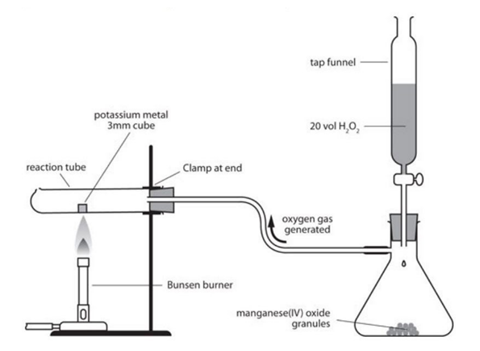
Hydrogen peroxide decomposes slowly:

2H₂O₂ → 2H₂O + O₂

When manganese dioxide (MnO₂) is added, the reaction becomes much faster. MnO₂ acts as a catalyst.


3. Characteristics of Catalysts

Catalysts possess several important properties.

1. Increase Reaction Rate

Catalysts speed up chemical reactions by providing an alternative reaction pathway with lower activation energy.

2. Not Consumed in Reaction

A catalyst remains chemically unchanged after the reaction.

3. Small Amount Required

Only a small quantity of catalyst is needed to significantly increase reaction rate.

4. High Specificity

Many catalysts are highly selective and promote only specific reactions.

5. Reusable

Catalysts can be used repeatedly in chemical processes.

6. Do Not Affect Reaction Equilibrium

Catalysts increase both forward and reverse reaction rates equally.


4. Energy Profile of Catalyzed Reactions

Image
Image
Image
Image

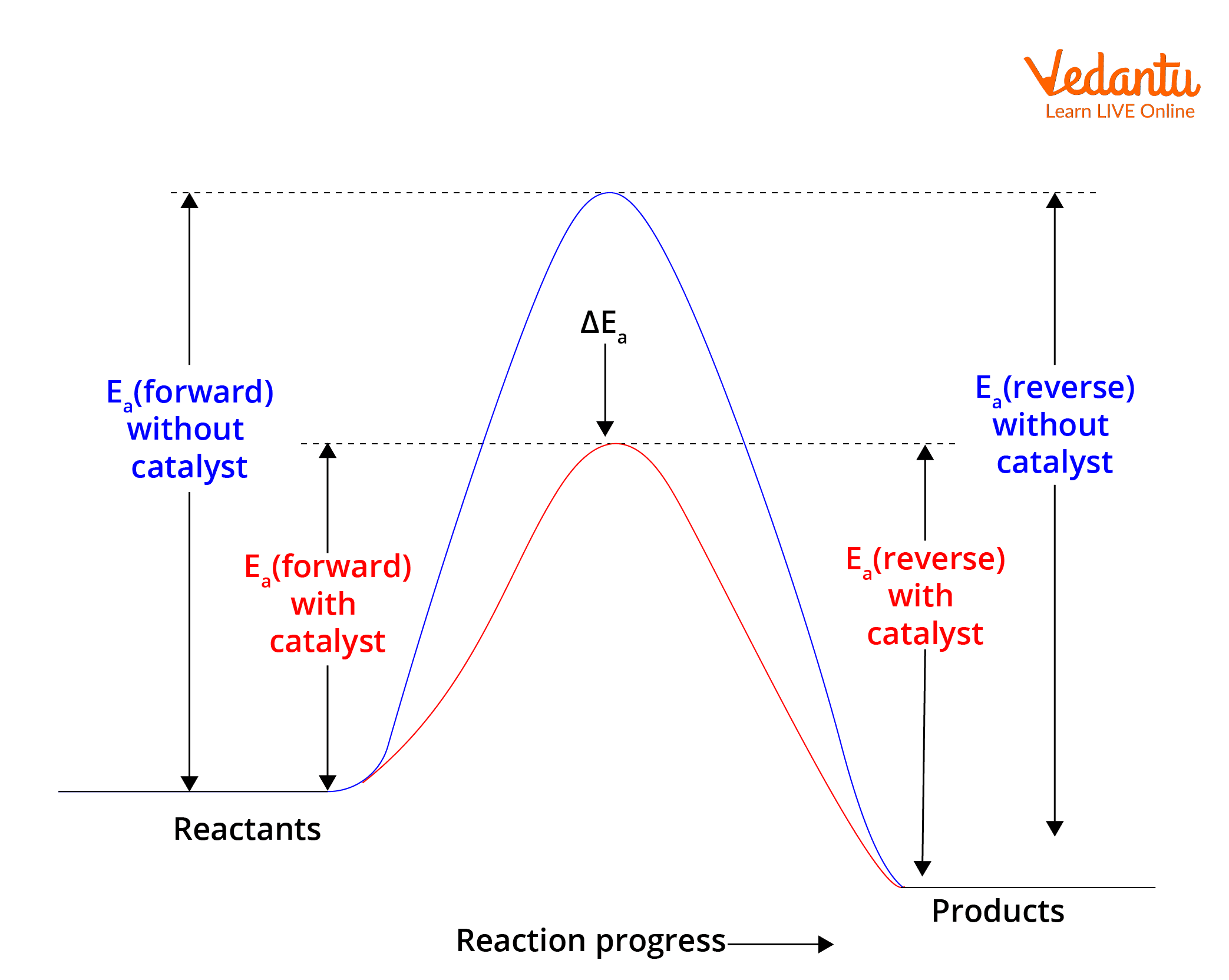
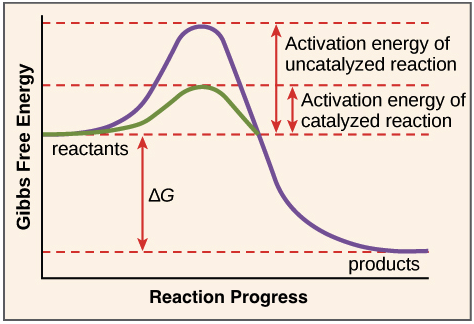
Chemical reactions require energy to initiate. This energy is called activation energy.

Activation energy represents the minimum energy required for reactant molecules to reach the transition state.

Without catalyst:

  • Activation energy is high
  • Reaction occurs slowly

With catalyst:

  • Activation energy decreases
  • Reaction becomes faster

The catalyst creates an alternative reaction pathway with lower energy requirements.

However, catalysts do not change:

  • Energy of reactants
  • Energy of products
  • Overall enthalpy change of the reaction

5. Types of Catalysis

Catalysis is broadly classified into several categories depending on the phase of catalyst and reactants.

Major types include:

  1. Homogeneous catalysis
  2. Heterogeneous catalysis
  3. Enzyme catalysis
  4. Autocatalysis
  5. Positive catalysis
  6. Negative catalysis

6. Homogeneous Catalysis

Image
Image
Image
Image

Homogeneous catalysis occurs when catalyst and reactants are present in the same phase, usually in solution.

Because all substances are in the same phase, reactions occur uniformly throughout the mixture.

Example

Acid catalysis of ester hydrolysis:

Ester + H₂O → Acid + Alcohol

Hydrogen ions act as catalysts.

Advantages

  • High selectivity
  • Uniform mixing
  • Easy control of reaction conditions

Disadvantages

  • Difficult catalyst separation
  • Catalyst recovery may be expensive

7. Heterogeneous Catalysis

Image
Image
Image
Image

In heterogeneous catalysis, the catalyst and reactants exist in different phases.

Most industrial catalysts are heterogeneous.

Example:

Hydrogenation of vegetable oils using nickel catalyst.

Here:

  • Reactants = liquid or gas
  • Catalyst = solid metal

Steps in Heterogeneous Catalysis

  1. Adsorption of reactants onto catalyst surface
  2. Reaction occurs on surface
  3. Products desorb from catalyst

Advantages

  • Easy catalyst separation
  • Catalyst can be reused
  • Suitable for industrial processes

Examples

  • Haber process (iron catalyst)
  • Contact process (vanadium pentoxide)
  • Catalytic converters

8. Enzyme Catalysis

Image
Image
Image
Image

Enzymes are biological catalysts found in living organisms.

They are typically proteins that accelerate biochemical reactions.

Example:

Digestive enzymes break down food molecules.

Key Features of Enzyme Catalysis

  1. Extremely high efficiency
  2. Highly specific
  3. Work under mild conditions
  4. Regulated by biological systems

Enzyme Mechanism

  1. Substrate binds to enzyme active site
  2. Enzyme-substrate complex forms
  3. Chemical reaction occurs
  4. Products released

Models of Enzyme Action

Lock and Key Model

The enzyme active site perfectly matches the substrate.

Induced Fit Model

The enzyme changes shape when substrate binds.


9. Autocatalysis

Autocatalysis occurs when one of the reaction products acts as a catalyst for the reaction itself.

As the reaction proceeds, the rate increases because more catalyst is produced.

Example:

Certain oxidation reactions.

Characteristics:

  • Slow initial rate
  • Rapid increase in rate later

10. Positive and Negative Catalysis

Positive Catalysis

Catalysts that increase reaction rate.

Example:

Platinum in hydrogenation.

Negative Catalysis

Substances that decrease reaction rate are called inhibitors.

Example:

Preservatives that slow food spoilage.


11. Catalytic Mechanisms

Catalytic reactions occur through multi-step mechanisms.

These involve:

  • Intermediate formation
  • Transition states
  • Surface interactions

Catalysts may:

  • Break bonds
  • Form temporary complexes
  • Stabilize transition states

12. Catalytic Poisoning

Catalytic poisoning occurs when a substance deactivates a catalyst.

Poison molecules bind strongly to catalyst surface and block active sites.

Example:

Lead poisoning platinum catalysts in car exhaust systems.


13. Promoters in Catalysis

Promoters are substances that enhance catalytic activity.

They do not act as catalysts themselves but improve catalyst efficiency.

Example:

Potassium oxide in Haber process catalysts.


14. Industrial Catalysis

Image
Image
Image
Image

Catalysis is essential for large-scale chemical manufacturing.

Major industrial catalytic processes include:

Haber Process

Production of ammonia:

N₂ + 3H₂ → 2NH₃

Catalyst: Iron


Contact Process

Production of sulfuric acid.

Catalyst: Vanadium pentoxide.


Catalytic Cracking

Used in petroleum refining to break large hydrocarbons.

Catalyst: Zeolites.


Hydrogenation

Used in food industry.

Catalyst: Nickel.


15. Environmental Catalysis

Catalysts are widely used to reduce pollution.

Catalytic Converters

Installed in automobiles.

They convert toxic gases into less harmful substances.

Reactions include:

  • CO → CO₂
  • NOₓ → N₂
  • Hydrocarbons → CO₂ + H₂O

Catalysts used:

  • Platinum
  • Palladium
  • Rhodium

16. Nanocatalysis

Modern research focuses on nanocatalysts.

Nanoparticles have:

  • Large surface area
  • High catalytic activity
  • Improved efficiency

Applications include:

  • Fuel cells
  • Green chemistry
  • Renewable energy

17. Catalysis in Green Chemistry

Green chemistry aims to minimize environmental impact.

Catalysts help by:

  • Reducing energy consumption
  • Minimizing waste
  • Improving efficiency

Examples:

Biocatalysis and photocatalysis.


18. Photocatalysis

Photocatalysis involves catalysts activated by light.

Example:

Titanium dioxide used in:

  • Water purification
  • Air purification
  • Self-cleaning surfaces

19. Electrocatalysis

Electrocatalysts accelerate electrochemical reactions.

Used in:

  • Batteries
  • Fuel cells
  • Hydrogen production

Example:

Platinum catalysts in hydrogen fuel cells.


20. Importance of Catalysis

Catalysis has enormous scientific and industrial importance.

Benefits include:

  • Faster chemical reactions
  • Lower energy requirements
  • Reduced industrial costs
  • Improved product selectivity
  • Environmental protection

Catalysts are critical for sustainable chemistry and energy technologies.


Conclusion

Catalysis is a cornerstone of modern chemistry and chemical engineering. By lowering activation energy and providing alternative reaction pathways, catalysts dramatically accelerate chemical reactions without being consumed. Catalysis occurs in many forms, including homogeneous, heterogeneous, enzyme, and photocatalysis. These processes are essential in industrial manufacturing, environmental protection, biochemical systems, and energy technologies. As scientific research advances, new catalytic materials such as nanocatalysts and electrocatalysts are being developed to create more efficient and sustainable chemical processes for the future.


Tags

Reaction Rate and Rate Laws

Image
Image
Image
Image

1. Introduction

Reaction rate and rate laws are fundamental concepts in chemical kinetics, the branch of chemistry that studies the speed of chemical reactions and the factors affecting them. Understanding how quickly reactions occur and how reactant concentrations influence reaction speed is essential in chemistry, industry, medicine, environmental science, and biological systems.

In everyday life, chemical reactions occur constantly. Some reactions take place almost instantly, such as explosions or acid–base neutralization, while others occur slowly, such as rusting of iron or decomposition of organic materials. Chemical kinetics helps scientists understand why these differences exist.

Two major concepts form the foundation of kinetic studies:

  1. Reaction Rate – how fast a reaction occurs
  2. Rate Laws – mathematical relationships between reaction rate and reactant concentrations

Reaction rates help determine the speed of product formation or reactant consumption, while rate laws describe how reaction rates depend on concentration and reaction conditions.

These concepts allow chemists to design efficient chemical processes, control industrial reactions, optimize pharmaceutical production, and understand biochemical pathways.


2. Reaction Rate

Definition

The reaction rate is defined as the change in concentration of reactants or products per unit time during a chemical reaction.

In simple terms, it tells us how fast a chemical reaction occurs.

For example, consider the reaction:

A → B

As the reaction proceeds:

  • Concentration of A decreases
  • Concentration of B increases

The rate can therefore be expressed either as the disappearance of reactant or appearance of product.


Mathematical Expression of Reaction Rate

For a reaction:

A → B

Rate can be written as:

[
Rate = -\frac{d[A]}{dt} = \frac{d[B]}{dt}
]

The negative sign is used because reactant concentration decreases with time.


Units of Reaction Rate

Reaction rate depends on concentration change per time, so common units are:

  • mol L⁻¹ s⁻¹
  • M s⁻¹
  • mol dm⁻³ s⁻¹

Where:

  • mol = amount of substance
  • L = litre
  • s = seconds

Example:

If concentration of a reactant decreases from 1.0 mol/L to 0.8 mol/L in 10 seconds:

Rate = (1.0 − 0.8) / 10
Rate = 0.02 mol L⁻¹ s⁻¹


3. Average Rate and Instantaneous Rate

Average Rate

Average rate measures how much concentration changes over a finite time interval.

[
Average\ Rate = \frac{\Delta [Reactant]}{\Delta t}
]

Example:

If concentration changes from 0.8 mol/L to 0.5 mol/L in 5 seconds:

Average Rate = (0.8 − 0.5) / 5
Average Rate = 0.06 mol L⁻¹ s⁻¹

Average rates are useful for general measurements.


Instantaneous Rate

The instantaneous rate measures the reaction rate at a specific moment in time.

It is determined using calculus:

[
Instantaneous\ Rate = \frac{d[A]}{dt}
]

Graphically, it corresponds to the slope of the tangent line on a concentration vs time curve.


4. Rate of Reaction for General Chemical Equations

Consider a reaction:

aA + bB → cC + dD

The rate can be expressed using stoichiometric coefficients.

[
Rate = -\frac{1}{a}\frac{d[A]}{dt}
]

[
Rate = -\frac{1}{b}\frac{d[B]}{dt}
]

[
Rate = \frac{1}{c}\frac{d[C]}{dt}
]

[
Rate = \frac{1}{d}\frac{d[D]}{dt}
]

This ensures the rate is consistent regardless of which species is measured.


5. Methods for Measuring Reaction Rate

Image
Image
Image
Image

Reaction rates are determined experimentally using various methods.

1. Gas Volume Measurement

If a reaction produces gas, the rate can be measured by monitoring gas volume.

Example:

Zn + HCl → H₂ gas

Hydrogen gas volume increases with time.


2. Pressure Measurement

For gas reactions, pressure changes indicate reaction progress.

Example:

Decomposition reactions.


3. Color Change

Many reactions involve color changes.

Colorimeters measure concentration changes.

Example:

Iodine clock reaction.


4. Precipitation Measurement

Some reactions produce precipitates.

Rate can be measured by observing turbidity.


5. Spectrophotometry

Light absorption measurements track concentration changes.

This technique is widely used in biochemistry.


6. Factors Affecting Reaction Rate

Image
Image
Image
Image

Several factors influence reaction rates.


1. Concentration

Higher concentration increases collision frequency between molecules.

Therefore, reaction rate increases.

Example:

More acid leads to faster reaction with metal.


2. Temperature

Higher temperature increases molecular kinetic energy.

This increases both:

  • Collision frequency
  • Collision energy

As a result, reactions occur faster.


3. Surface Area

In heterogeneous reactions, larger surface area increases reaction rate.

Example:

Powdered solids react faster than solid blocks.


4. Catalysts

Catalysts increase reaction rate by lowering activation energy.

They provide an alternative reaction pathway.

Example:

Enzymes in biological systems.


5. Pressure

For gaseous reactions, increasing pressure increases reactant concentration.

This increases reaction rate.


6. Nature of Reactants

Ionic reactions in solution occur faster than covalent reactions.

Bond strength also affects reaction rate.


7. Rate Laws

The rate law describes how the rate of a reaction depends on the concentration of reactants.

For a general reaction:

aA + bB → Products

The rate law is:

[
Rate = k[A]^m[B]^n
]

Where:

  • k = rate constant
  • [A], [B] = concentrations
  • m, n = reaction orders

Important Points

  • Rate law is determined experimentally
  • Reaction order may not equal stoichiometric coefficients
  • Rate constant depends on temperature

8. Reaction Order

Reaction order indicates the power of concentration terms in the rate law.

Total order:

[
Order = m + n
]


Types of Reaction Orders

Zero Order

Rate independent of concentration.

Rate = k


First Order

Rate proportional to concentration.

Rate = k[A]


Second Order

Rate proportional to square of concentration.

Rate = k[A]²


Fractional Order

Order may be fractional due to complex mechanisms.

Example:

Rate = k[A]½


9. Integrated Rate Laws

Integrated rate laws describe concentration changes with time.


Zero Order Reaction

[A] = [A]_0 – kt

Characteristics:

  • Straight-line graph of concentration vs time
  • Rate constant independent of concentration

Half-life:

[
t_{1/2} = \frac{[A]_0}{2k}
]

Examples:

Photochemical reactions.


First Order Reaction

\ln[A] = \ln[A]_0 – kt

Half-life:

[
t_{1/2} = \frac{0.693}{k}
]

Characteristics:

  • Exponential decay
  • Half-life independent of initial concentration

Examples:

Radioactive decay.


Second Order Reaction

\frac{1}{[A]} = \frac{1}{[A]_0} + kt

Half-life:

[
t_{1/2} = \frac{1}{k[A]_0}
]

Characteristics:

  • Linear graph of (1/[A]) vs time.

10. Rate Constant

The rate constant (k) is a proportionality constant in the rate law.

Rate = k[A]ⁿ

Characteristics:

  • Depends on temperature
  • Independent of concentration
  • Indicates reaction speed

Large k → faster reaction.


11. Determination of Rate Law

Rate laws are determined experimentally.

Common methods include:

Method of Initial Rates

Initial reaction rates are measured at different reactant concentrations.

Example table:

Experiment[A]Rate
10.10.01
20.20.02

Doubling concentration doubles rate → first order.


Integrated Rate Law Method

Reaction order determined by plotting:

  • [A] vs time
  • ln[A] vs time
  • 1/[A] vs time

The linear plot indicates reaction order.


12. Molecularity of Reactions

Molecularity refers to the number of molecules involved in an elementary step.

Types:

  • Unimolecular
  • Bimolecular
  • Termolecular

Example:

NO₂ + CO → NO + CO₂

Two molecules → bimolecular reaction.


13. Reaction Mechanisms

A reaction mechanism describes the stepwise process of a chemical reaction.

Example:

Step 1: A + B → Intermediate
Step 2: Intermediate → Product

The slowest step is called the rate-determining step.

Rate law depends on this step.


14. Steady State Approximation

This method assumes the concentration of intermediate species remains constant.

Used to simplify complex rate equations.


15. Catalysis and Rate Laws

Catalysts alter reaction rate but do not appear in the overall reaction.

Catalysts change:

  • Reaction mechanism
  • Activation energy
  • Rate law expression

Examples:

  • Enzyme catalysis
  • Metal catalysts

16. Applications of Reaction Rate and Rate Laws

Reaction rates and rate laws are essential in many fields.

Industrial Chemistry

Used in:

  • Fertilizer production
  • Polymer manufacturing
  • Petroleum refining

Environmental Chemistry

Helps understand:

  • Atmospheric reactions
  • Ozone depletion
  • Pollution degradation

Biochemistry

Enzyme kinetics describes metabolic reactions.


Medicine

Drug stability and metabolism depend on reaction kinetics.


Food Chemistry

Reaction rates influence:

  • Spoilage
  • Preservation
  • Cooking processes

17. Importance of Studying Reaction Rate

Studying reaction rates helps scientists:

  • Control industrial reactions
  • Design catalysts
  • Understand reaction mechanisms
  • Predict chemical behavior
  • Improve energy efficiency

Conclusion

Reaction rate and rate laws form the backbone of chemical kinetics. Reaction rate describes how quickly chemical transformations occur, while rate laws mathematically explain how reaction speed depends on reactant concentrations. Through experimental analysis and theoretical models, chemists gain deep insight into molecular processes governing reactions. These principles are essential in scientific research, industrial chemistry, environmental protection, and biological systems, making them fundamental topics in modern chemistry.


Tags