

Introduction to Continuity
Continuity is one of the most important concepts in calculus and mathematical analysis. It describes how a function behaves without sudden breaks, jumps, or gaps. In simple terms, a function is continuous if its graph can be drawn without lifting the pencil from the paper.
The concept of continuity is closely related to limits and is fundamental for understanding many advanced topics in calculus such as derivatives, integrals, and differential equations. Continuity ensures that small changes in the input of a function produce small changes in the output, which makes mathematical models predictable and stable.
In real-world situations, many physical phenomena are continuous. For example, temperature changes gradually over time, the position of a moving object changes smoothly, and the flow of water in a river does not suddenly jump from one location to another. Mathematics uses the concept of continuity to represent these smooth transitions.
Understanding continuity helps mathematicians analyze functions, identify points of discontinuity, and determine whether a function behaves smoothly over a given interval.
Intuitive Understanding of Continuity

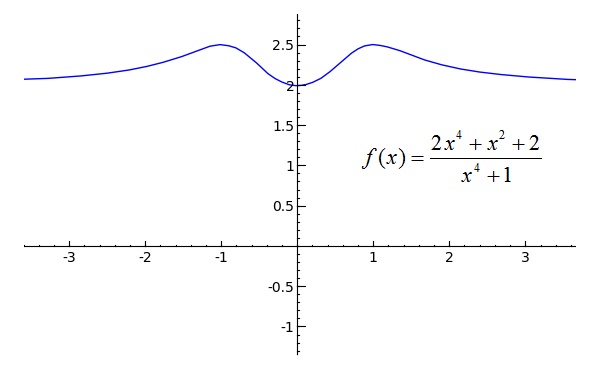
The intuitive idea of continuity is simple: a function is continuous if its graph has no interruptions.
Imagine drawing a curve on a sheet of paper. If you can draw the entire graph without lifting your pen, the function is continuous. If you must lift the pen because the graph has a break or gap, then the function is discontinuous at that point.
There are several situations where discontinuities occur:
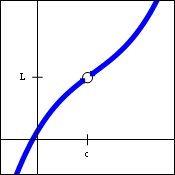
- A hole in the graph
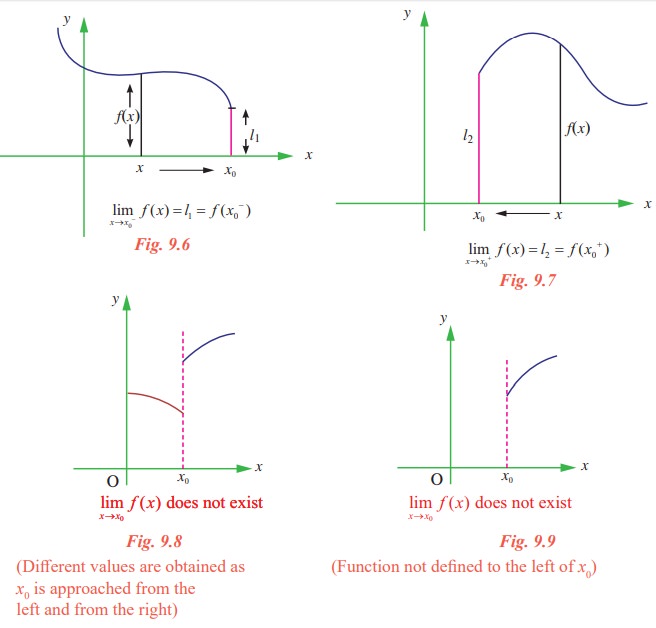
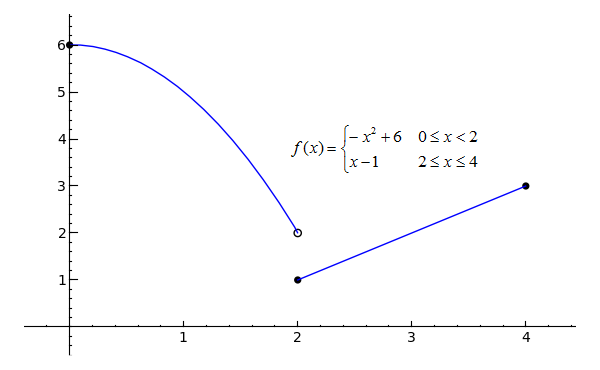
- A jump between two values
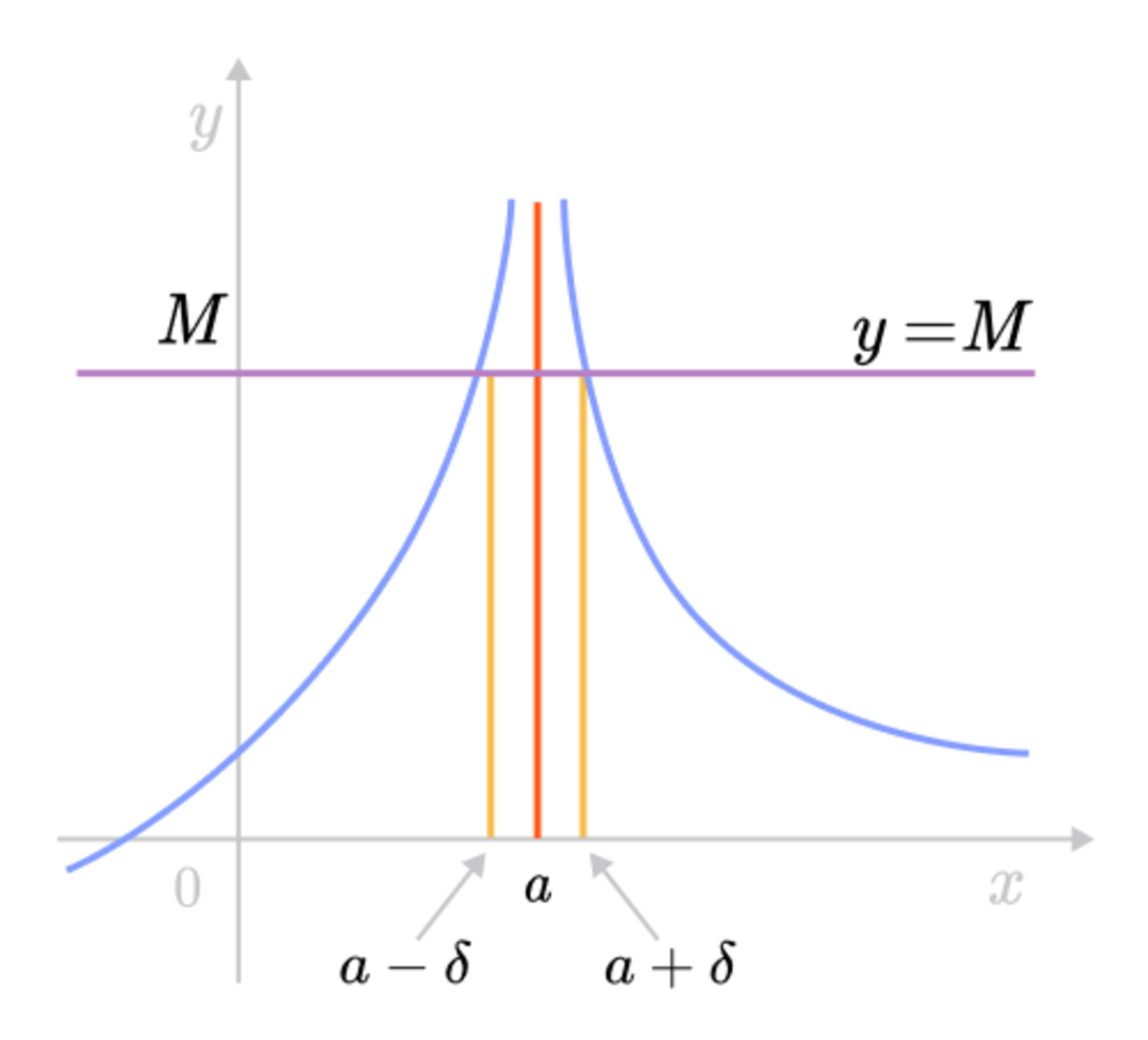
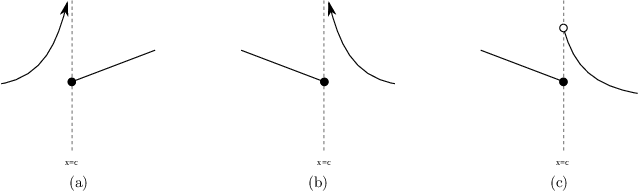
- An infinite break
These interruptions prevent the function from being continuous at certain points.
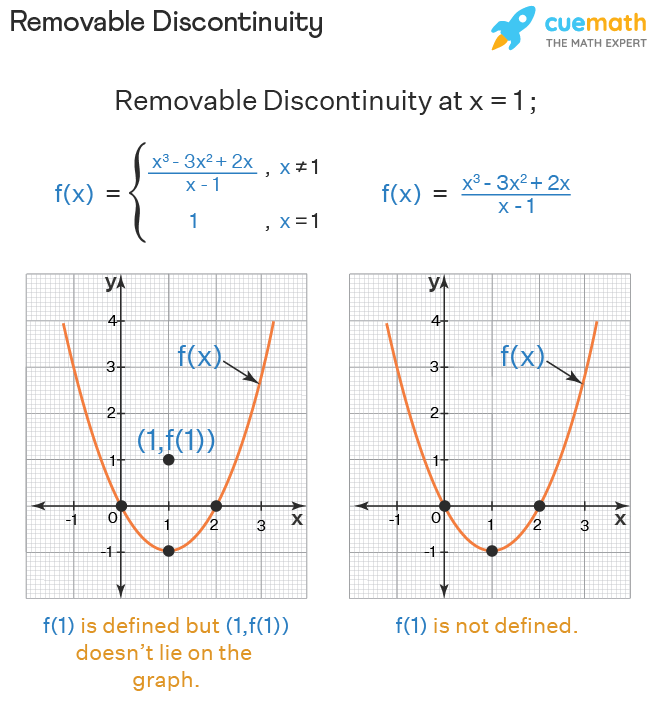
For example, consider the function:
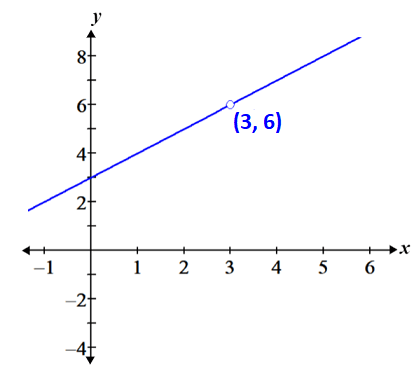
f(x) = (x² − 1)/(x − 1)
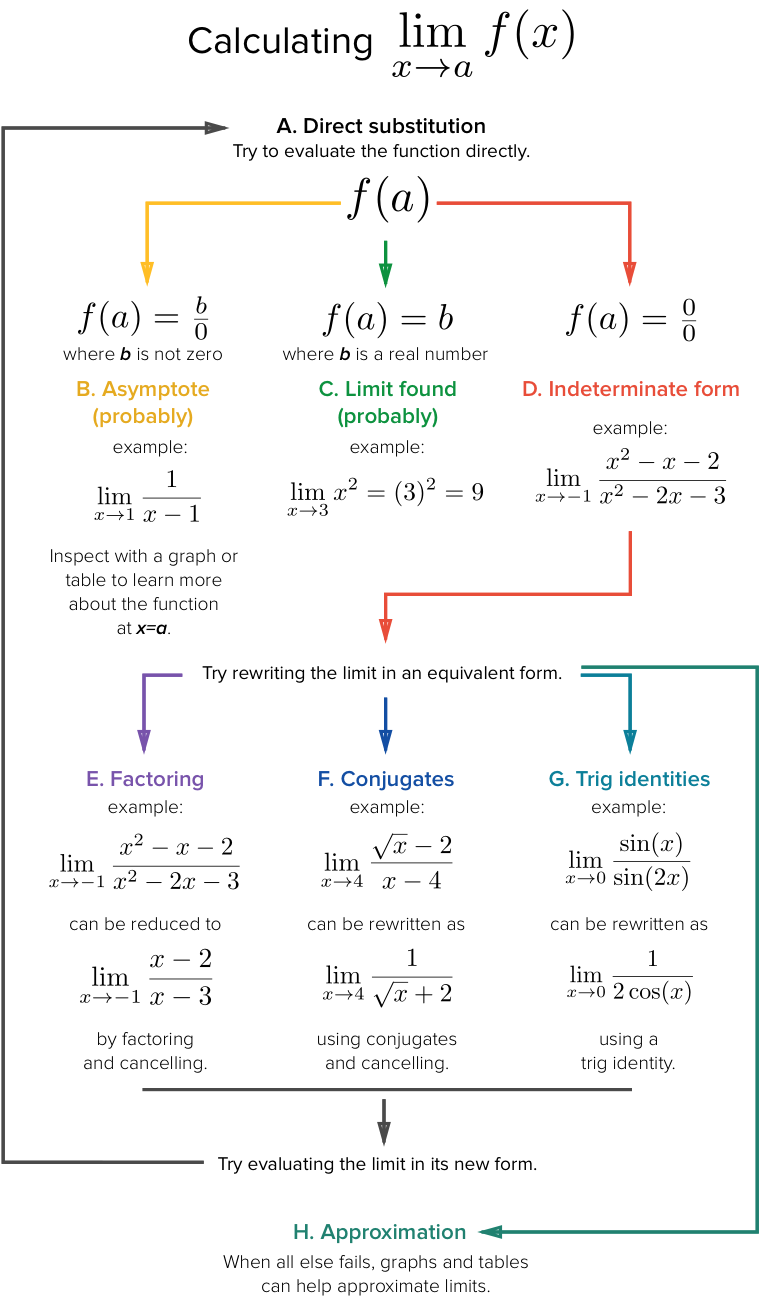
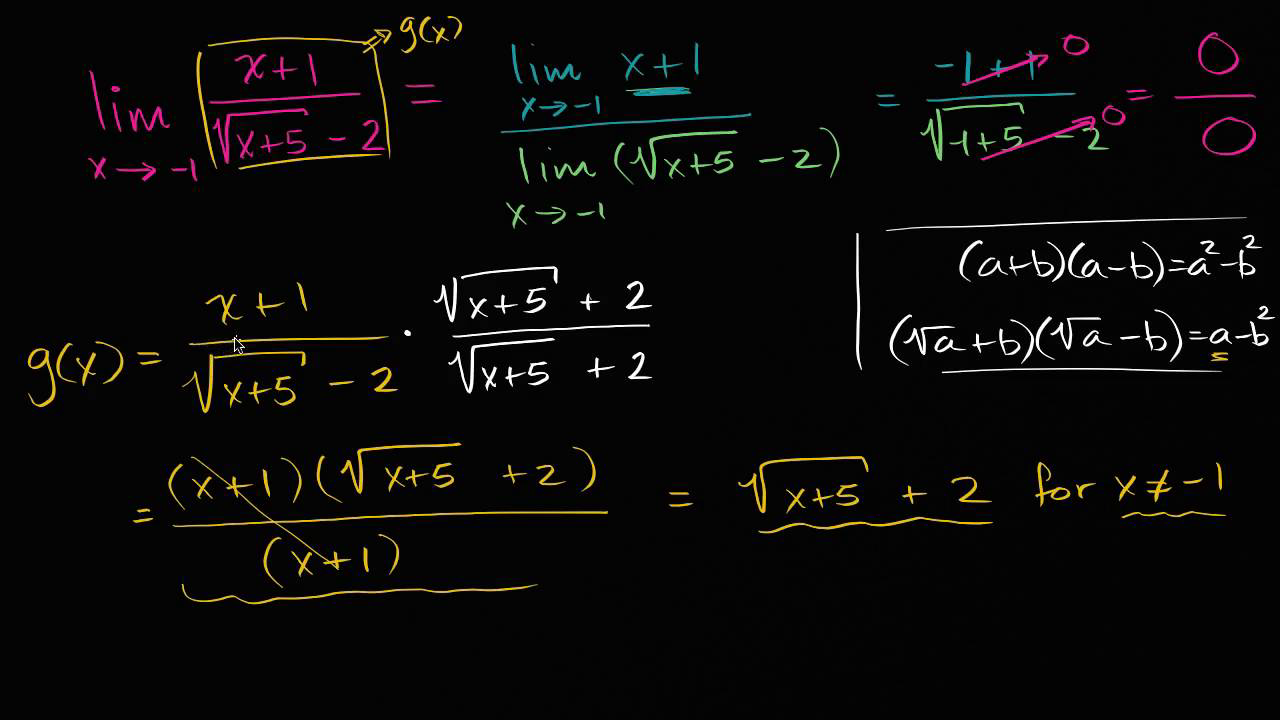
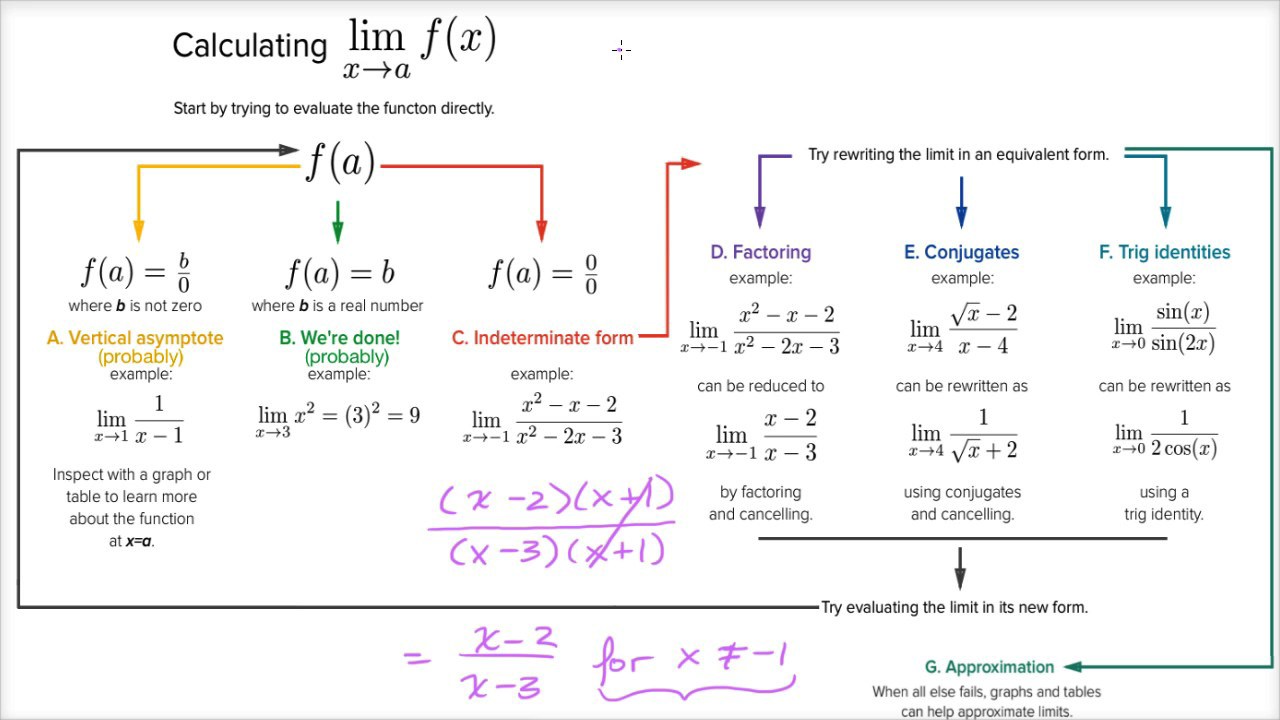
If we substitute x = 1 directly, the expression becomes undefined. However, if we simplify the expression:
(x² − 1)/(x − 1) = x + 1
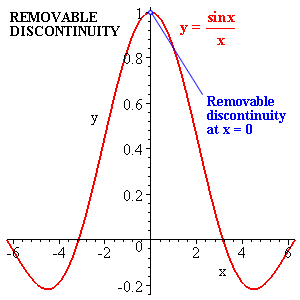
The simplified function behaves normally except at x = 1, where there is a hole in the graph. This type of discontinuity is called a removable discontinuity.
Formal Definition of Continuity

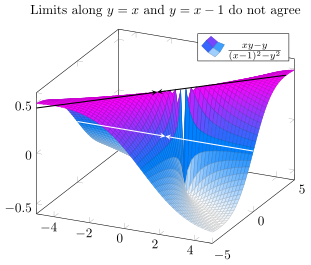
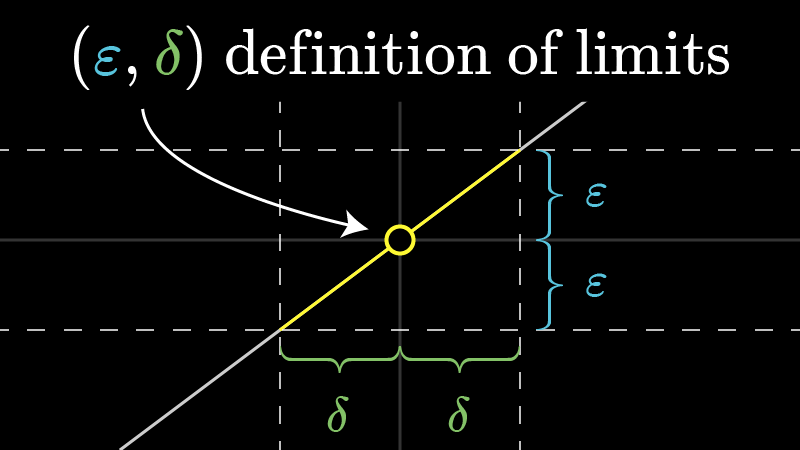
In calculus, continuity is defined using limits.
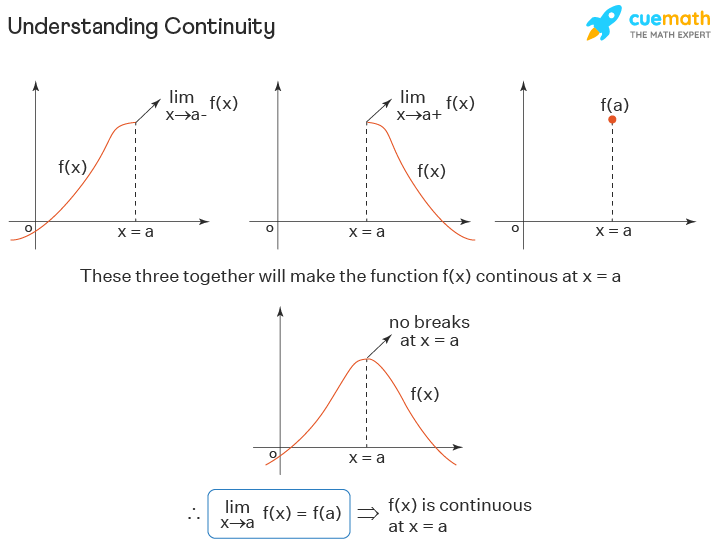
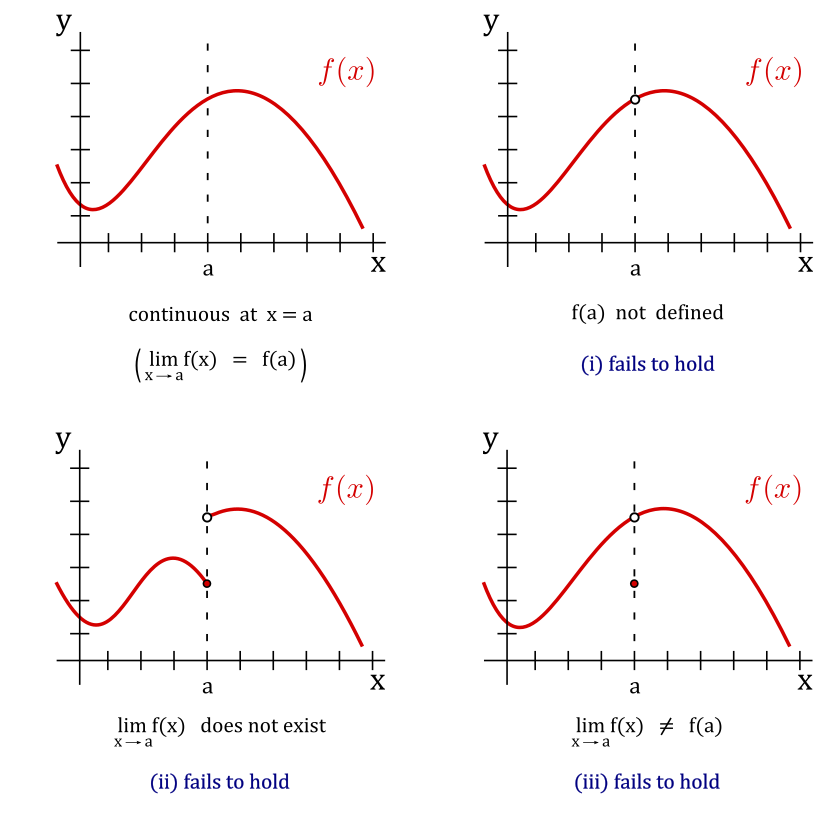
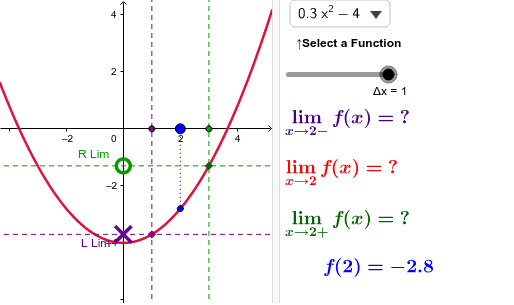
A function f(x) is continuous at a point x = a if the following three conditions are satisfied:
- The function f(a) is defined.
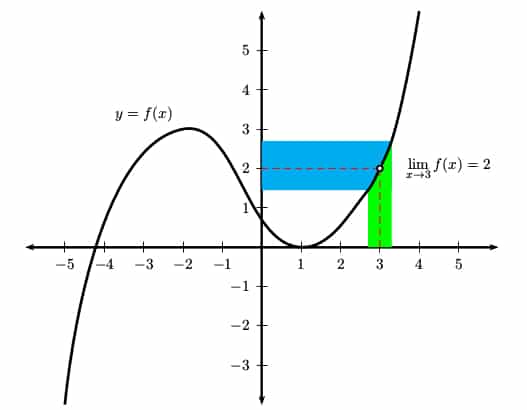
- The limit of the function as x approaches a exists.
- The limit of the function equals the value of the function.
Mathematically:
lim (x → a) f(x) = f(a)
If these conditions hold true, the function is continuous at the point x = a.
If any of these conditions fail, the function is discontinuous at that point.
This definition ensures that the function behaves smoothly at the point under consideration.
Types of Discontinuities

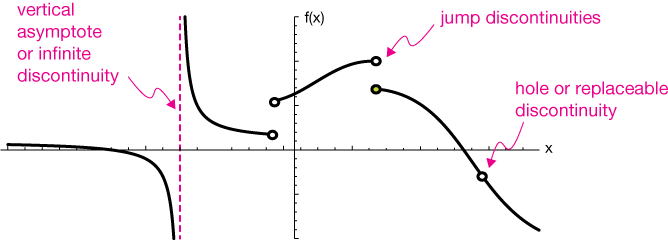
A function may fail to be continuous in several ways. These are called discontinuities.
Removable Discontinuity
A removable discontinuity occurs when the function has a hole in the graph but can be made continuous by redefining the function at that point.
Example:
f(x) = (x² − 1)/(x − 1)
The function has a hole at x = 1, which can be removed by defining f(1) = 2.
Jump Discontinuity
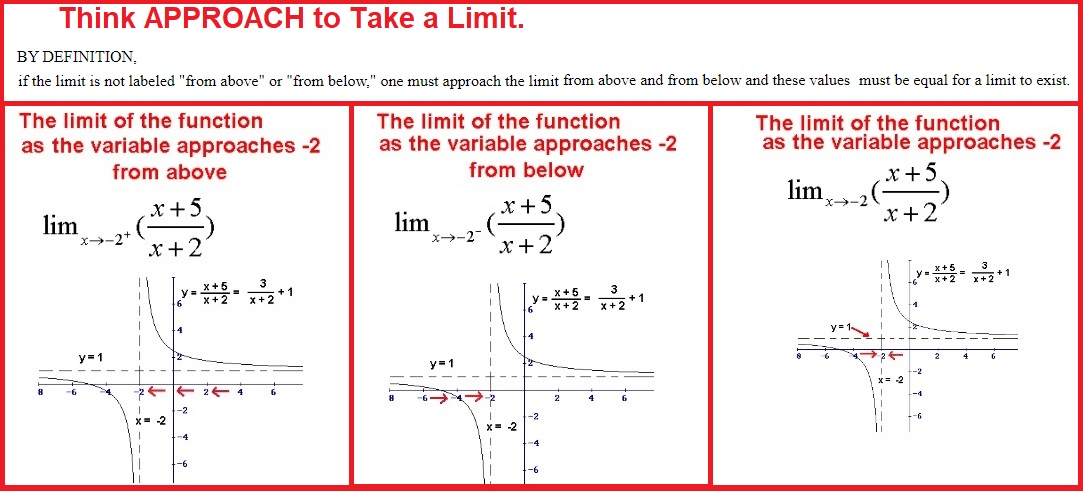
A jump discontinuity occurs when the left-hand limit and right-hand limit are different.
Example:
lim (x → a⁻) f(x) ≠ lim (x → a⁺) f(x)
This results in a sudden jump in the graph.
Infinite Discontinuity
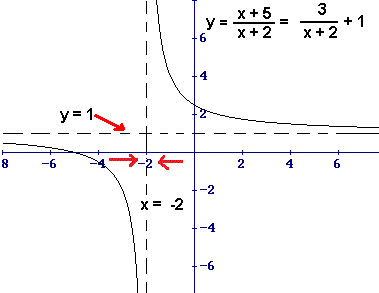
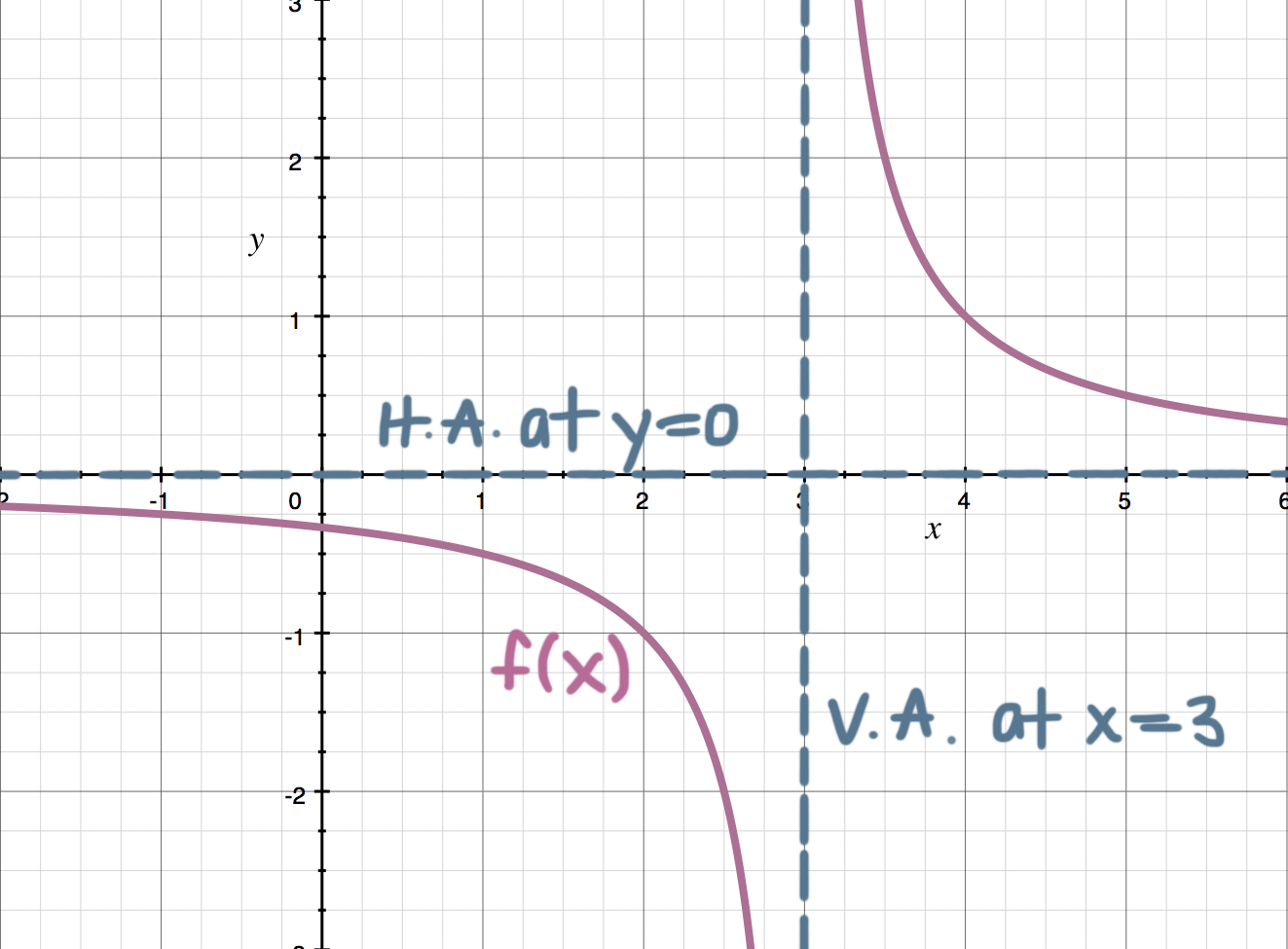
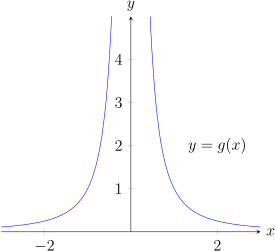
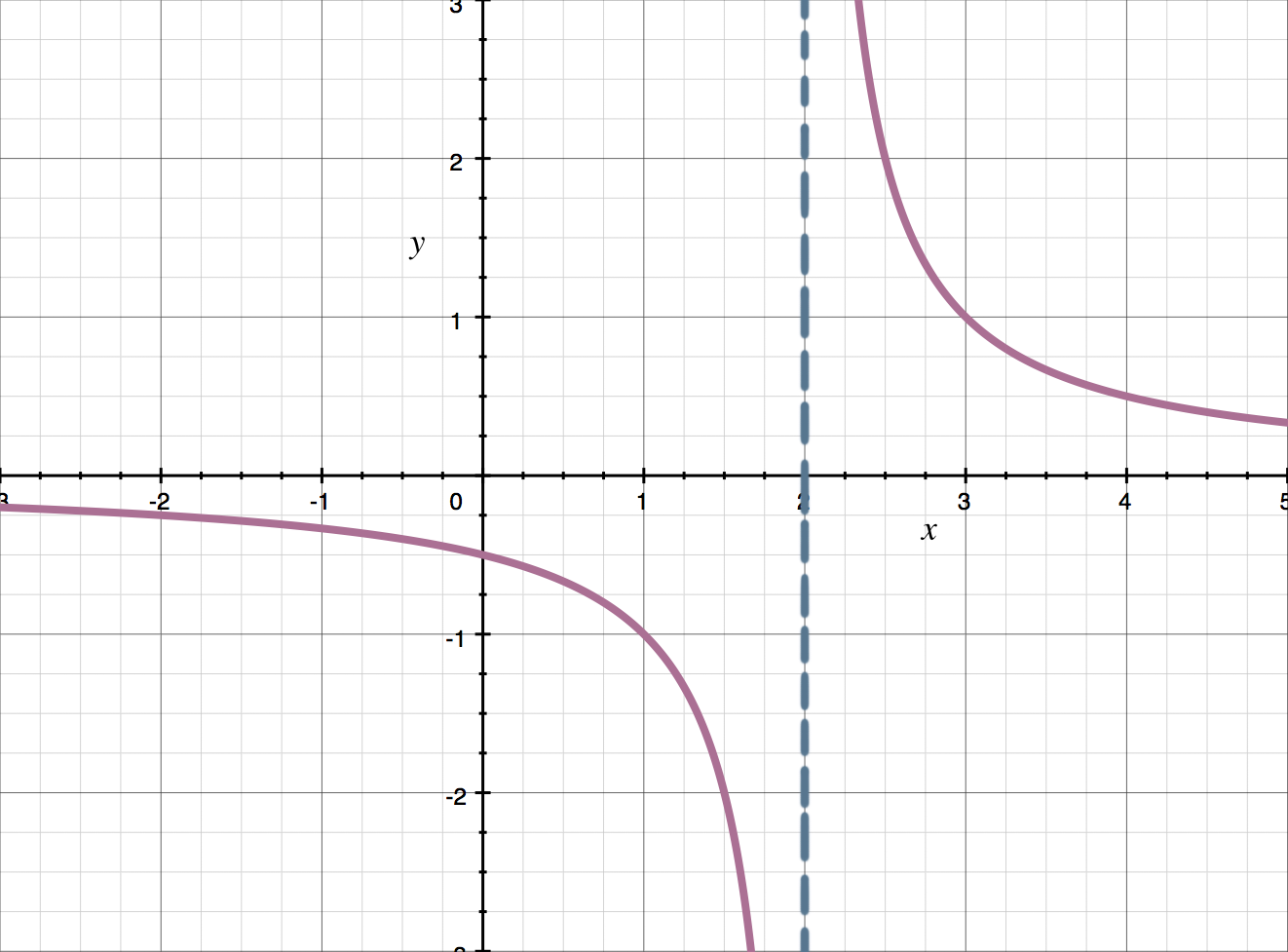
An infinite discontinuity occurs when the function approaches infinity near a certain point.
Example:
f(x) = 1/x
At x = 0, the function approaches infinity.
This creates a vertical asymptote in the graph.
Continuity on an Interval


A function is continuous on an interval if it is continuous at every point within that interval.
Continuity on an Open Interval
A function is continuous on (a, b) if it is continuous at every point between a and b.
Continuity on a Closed Interval
A function is continuous on [a, b] if:
- It is continuous on (a, b)
- The right-hand limit exists at a
- The left-hand limit exists at b
Many functions such as polynomials and trigonometric functions are continuous over their entire domains.
Continuous Functions
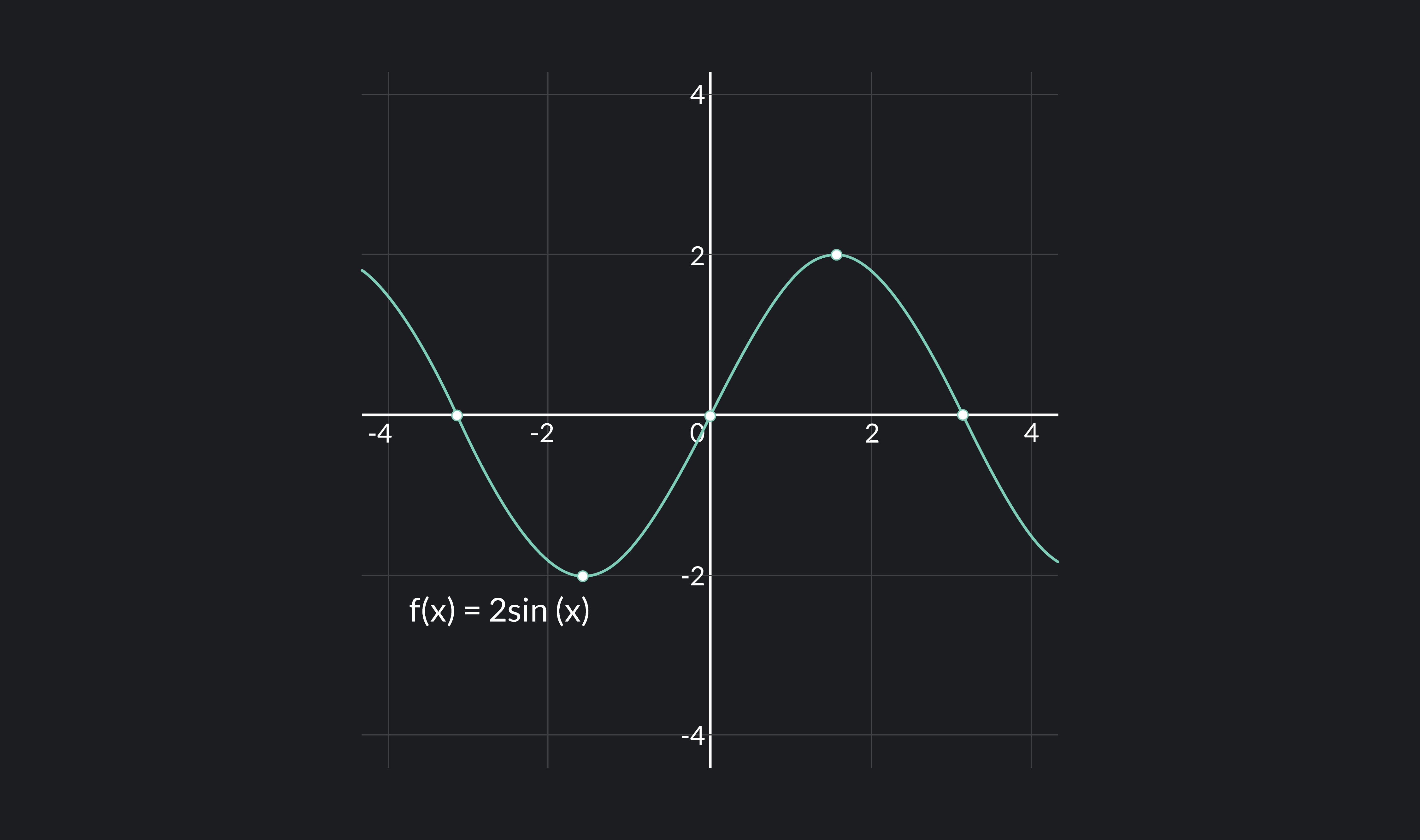


Several types of functions are naturally continuous.
Polynomial Functions
All polynomial functions are continuous for all real numbers.
Example:
f(x) = x³ + 2x + 1
Rational Functions
Rational functions are continuous wherever the denominator is not zero.
Trigonometric Functions
Functions such as sine and cosine are continuous everywhere.
Exponential Functions
Exponential functions are continuous across their entire domain.
Logarithmic Functions
Logarithmic functions are continuous for positive values of x.
Understanding which functions are continuous helps simplify many mathematical problems.
Properties of Continuous Functions
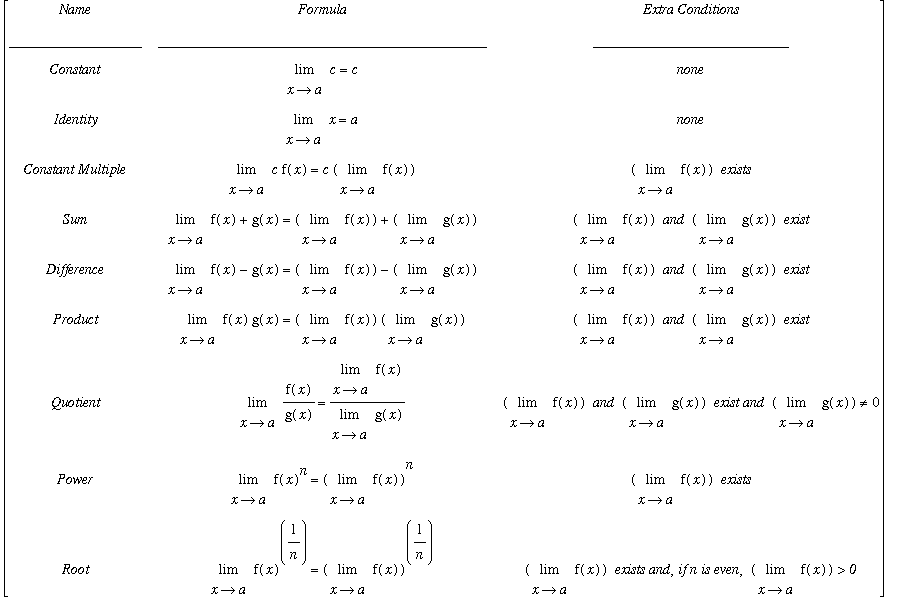
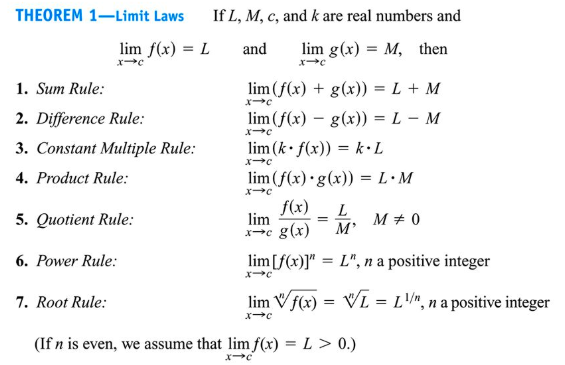
Continuous functions have several important properties.
Sum of Continuous Functions
If two functions are continuous, their sum is also continuous.
Product of Continuous Functions
The product of two continuous functions is continuous.
Quotient of Continuous Functions
The quotient of two continuous functions is continuous provided the denominator is not zero.
Composition of Continuous Functions
If f(x) and g(x) are continuous, then f(g(x)) is also continuous.
These properties help mathematicians analyze complex functions.
Intermediate Value Theorem
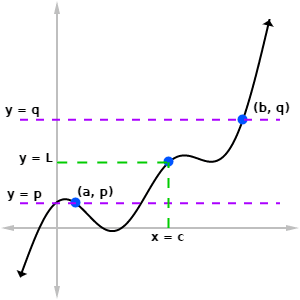

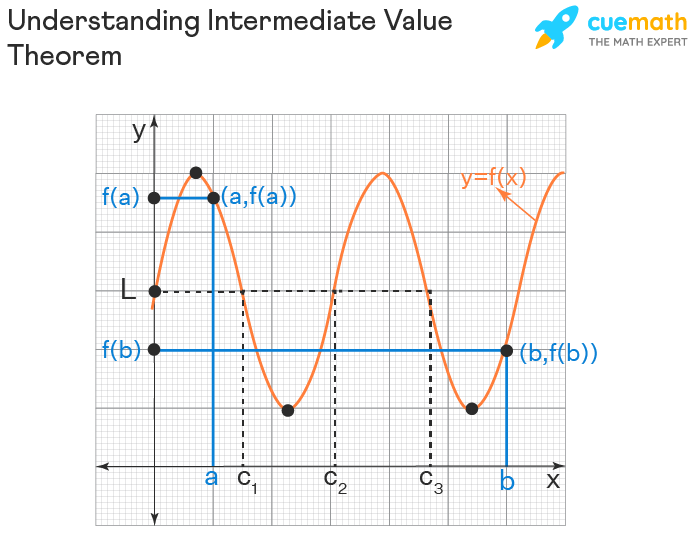
One of the most important results related to continuity is the Intermediate Value Theorem (IVT).
The theorem states:
If a function is continuous on a closed interval [a, b] and takes values f(a) and f(b), then the function must take every value between f(a) and f(b).
In simple terms, a continuous function cannot skip values.
Example:
If a continuous function has values:
f(1) = 2
f(4) = 10
Then the function must take every value between 2 and 10 somewhere between x = 1 and x = 4.
This theorem is widely used to prove the existence of solutions to equations.
Applications of Continuity
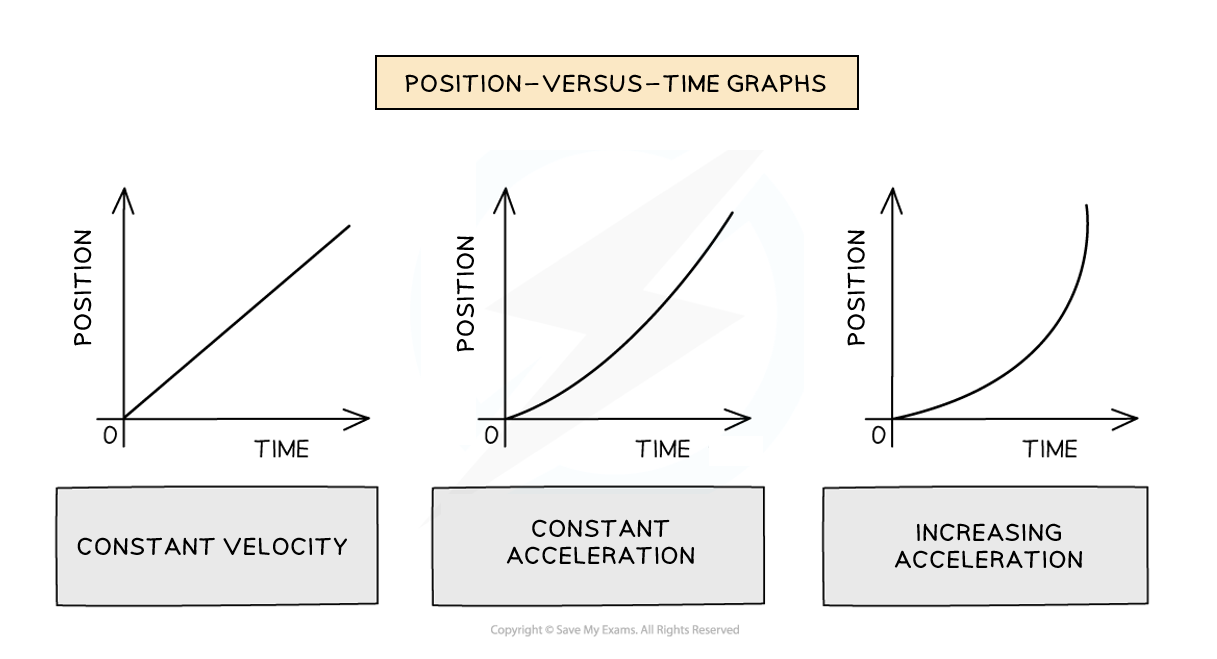

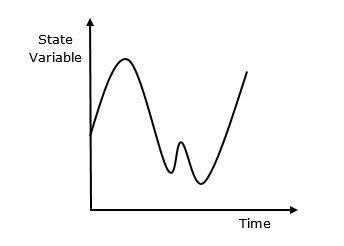

Continuity has many practical applications in science and engineering.
Physics
Continuity helps describe motion, velocity, and acceleration of objects.
Engineering
Engineers use continuous functions to model systems and signals.
Economics
Continuous models help describe economic growth and market trends.
Computer Science
Continuity is used in optimization algorithms and machine learning models.
Environmental Science
Continuous functions help model temperature changes and climate behavior.
Importance of Continuity in Calculus
Continuity plays a crucial role in calculus because many operations depend on it.
For example:
- Derivatives require continuity.
- Integrals depend on continuous functions.
- Many mathematical theorems assume continuity.
A function that is not continuous may behave unpredictably, making mathematical analysis difficult.
Thus, continuity provides a foundation for analyzing smooth and predictable behavior in functions.
Continuity and Differentiability
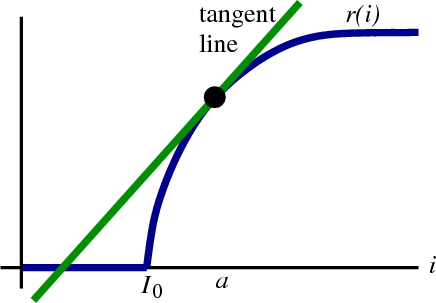
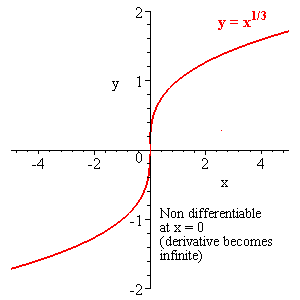
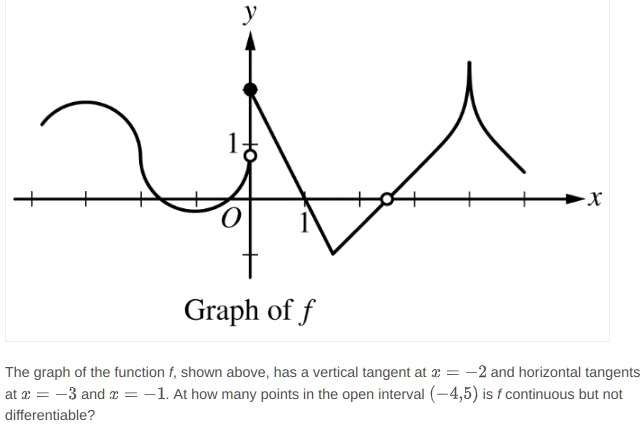
Differentiability and continuity are closely related.
If a function is differentiable at a point, it must also be continuous at that point.
However, the reverse is not always true.
A function may be continuous but not differentiable.
Example:
f(x) = |x|
The graph of this function is continuous at x = 0 but has a sharp corner, so it is not differentiable there.
This relationship highlights the importance of continuity in calculus.
Conclusion
Continuity is a fundamental concept in mathematics that describes functions that change smoothly without breaks, gaps, or jumps. It is closely related to limits and forms the basis for many topics in calculus, including derivatives and integrals.
A function is continuous at a point if the limit of the function exists and equals the value of the function at that point. When continuity fails, discontinuities such as holes, jumps, or infinite breaks may occur.
Understanding continuity helps mathematicians and scientists analyze functions, model real-world phenomena, and solve complex mathematical problems. Because many natural processes change smoothly over time, continuity plays a vital role in physics, engineering, economics, and other scientific fields.
Mastering the concept of continuity provides a strong foundation for advanced mathematical studies and helps students develop deeper insights into the behavior of functions.