


Introduction
Ohm’s Law is one of the fundamental principles of electrical physics and electronics. It describes the relationship between voltage (V), current (I), and resistance (R) in an electrical circuit. This law helps us understand how electric current flows through conductors and how different components affect the flow of electricity.
The law was discovered by the German physicist Georg Simon Ohm in 1827. Through experiments, he found that the current passing through a conductor is directly proportional to the voltage applied across it, provided that temperature and other physical conditions remain constant.
Ohm’s Law forms the basis of electrical circuit analysis and is widely used in designing and understanding electrical and electronic systems. Engineers and physicists rely on this law to calculate current, voltage, resistance, and power in circuits.
Ohm’s Law plays a crucial role in:
- Electrical engineering
- Electronics
- Power systems
- Communication technology
- Household electrical appliances
Understanding Ohm’s Law is essential for studying electric circuits and electrical energy systems.
Historical Background

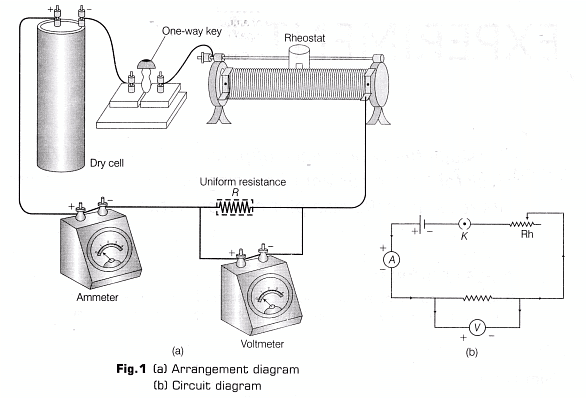


Georg Simon Ohm conducted experiments to study how electric current behaves in different materials.
Using simple circuits consisting of batteries, wires, and resistors, he observed how current changed when voltage was increased or decreased.
Ohm discovered that:
- Increasing voltage increases current.
- Increasing resistance reduces current.
His work was initially controversial, but later experiments confirmed his findings. Today, Ohm’s Law is considered one of the most important laws in electricity.
The unit of electrical resistance, the ohm (Ω), was named in his honor.
Statement of Ohm’s Law


Ohm’s Law states that:
The electric current flowing through a conductor is directly proportional to the voltage across it, provided the temperature and physical conditions remain constant.
Mathematical Expression
[
V = IR
]
Where:
- (V) = Voltage (potential difference)
- (I) = Electric current
- (R) = Electrical resistance
This equation can also be rearranged as:
[
I = \frac{V}{R}
]
[
R = \frac{V}{I}
]
Electrical Quantities in Ohm’s Law

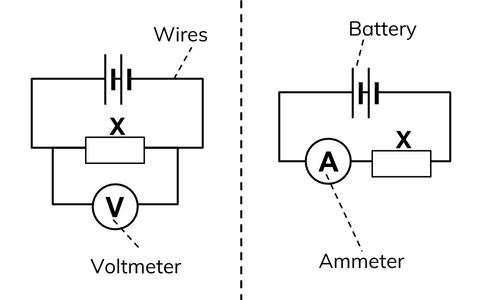
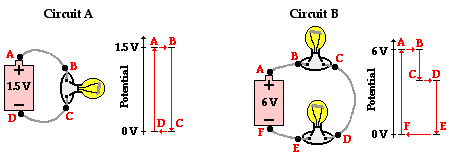
Ohm’s Law involves three fundamental electrical quantities.
Voltage (V)
Voltage is the potential difference between two points in a circuit.
It represents the energy provided to move electric charges.
Unit:
Volt (V)
Sources of voltage include:
- Batteries
- Generators
- Solar cells
Current (I)
Current is the flow of electric charge through a conductor.
Unit:
Ampere (A)
Electric current flows when a potential difference exists across a conductor.
Resistance (R)
Resistance is the opposition offered by a material to the flow of electric current.
Unit:
Ohm (Ω)
Factors affecting resistance include:
- Length of the conductor
- Cross-sectional area
- Material
- Temperature
Graphical Representation of Ohm’s Law
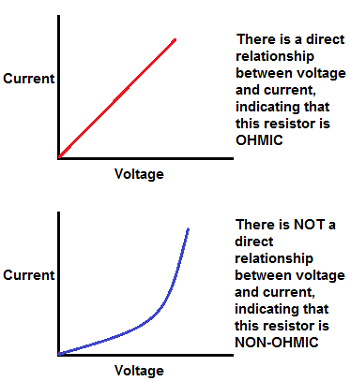
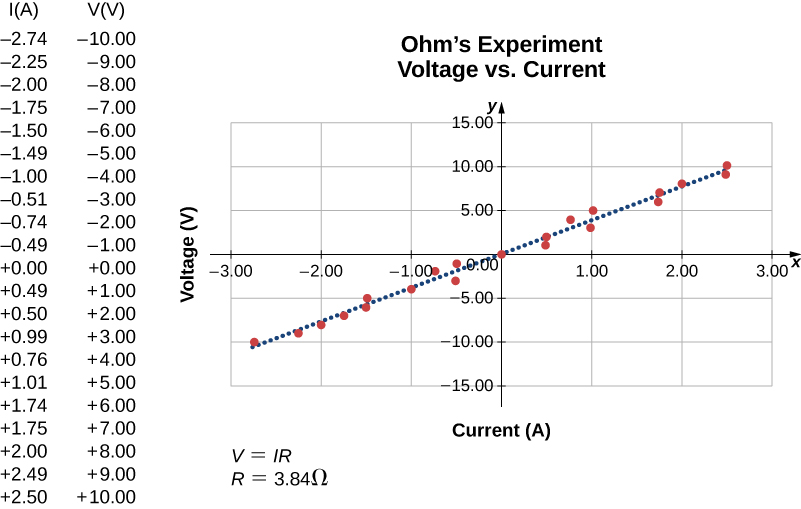
Ohm’s Law can be represented graphically.
If voltage is plotted against current, the result is a straight line passing through the origin.
Characteristics:
- The slope of the line represents resistance.
- A linear graph indicates an ohmic conductor.
Nonlinear graphs indicate non-ohmic materials.
Ohmic and Non-Ohmic Materials

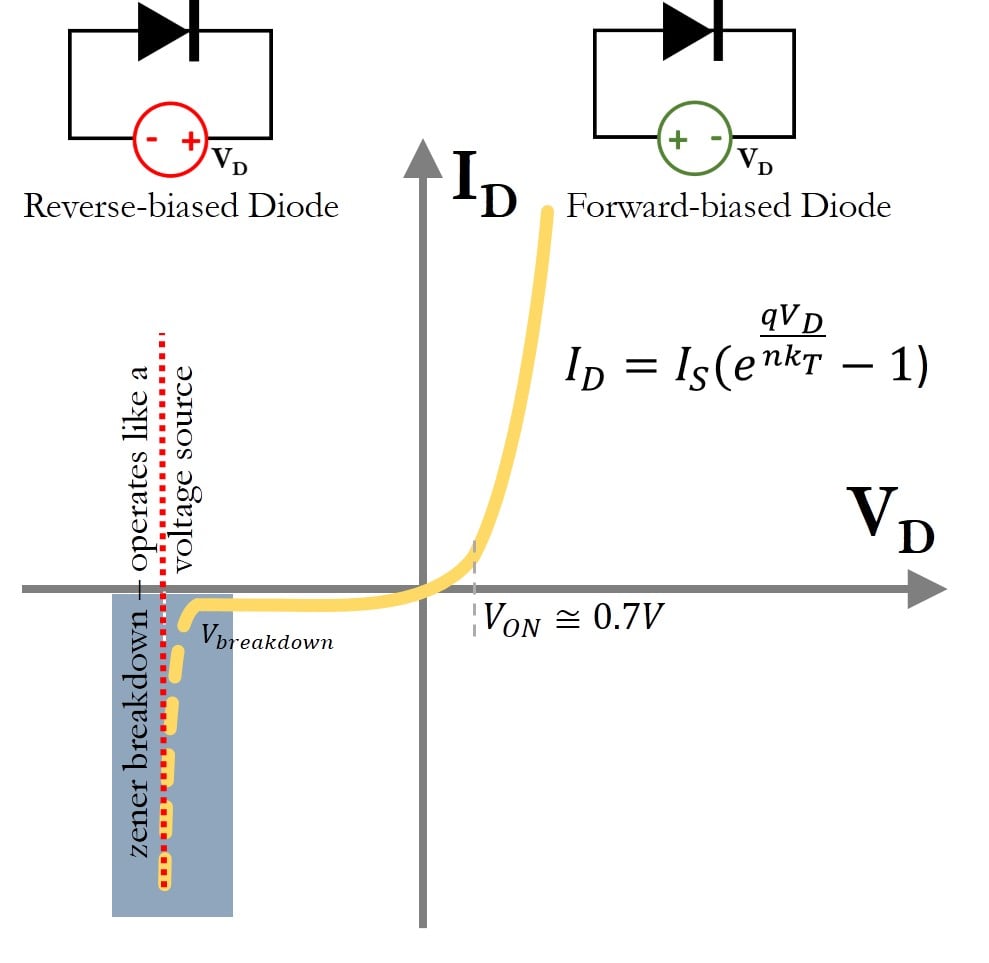


Materials can be classified based on whether they obey Ohm’s Law.
Ohmic Materials
These materials follow Ohm’s Law exactly.
Examples:
- Copper
- Aluminum
- Metallic conductors
The voltage-current graph is linear.
Non-Ohmic Materials
These materials do not obey Ohm’s Law.
Examples:
- Diodes
- Transistors
- Filament lamps
Their voltage-current relationship is nonlinear.
Microscopic Explanation of Ohm’s Law


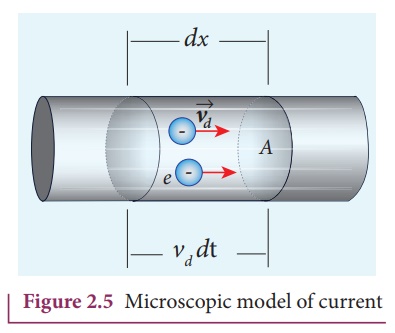

On a microscopic level, Ohm’s Law can be explained using electron motion in conductors.
In metals:
- Free electrons move randomly.
- When an electric field is applied, electrons gain a small drift velocity.
However, electrons frequently collide with atoms in the metal lattice, causing resistance.
These collisions limit electron motion and create resistance, leading to the relationship described by Ohm’s Law.
Resistance of a Conductor


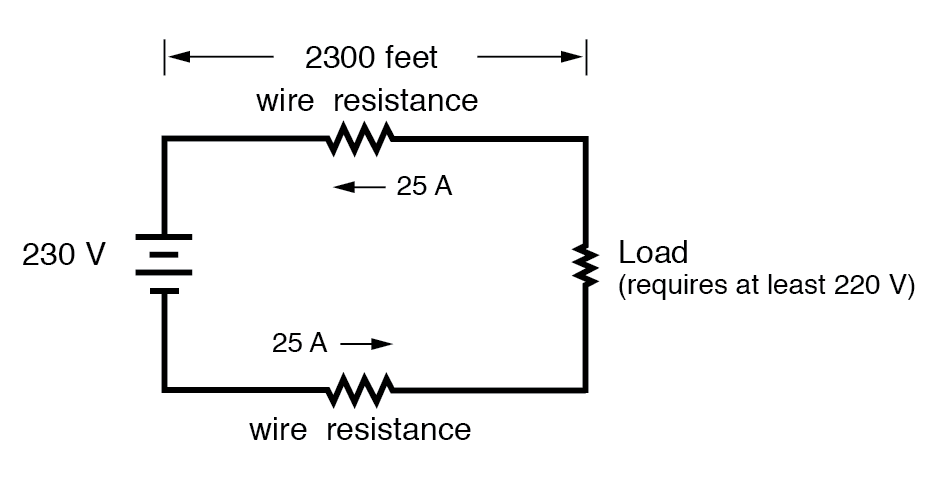
Resistance depends on the physical properties of the conductor.
Resistance Formula
[
R = \rho \frac{L}{A}
]
Where:
- (R) = resistance
- (\rho) = resistivity of material
- (L) = length of conductor
- (A) = cross-sectional area
Resistivity
Resistivity is a property that depends on the material.
Materials with low resistivity are good conductors.
Temperature Dependence of Resistance
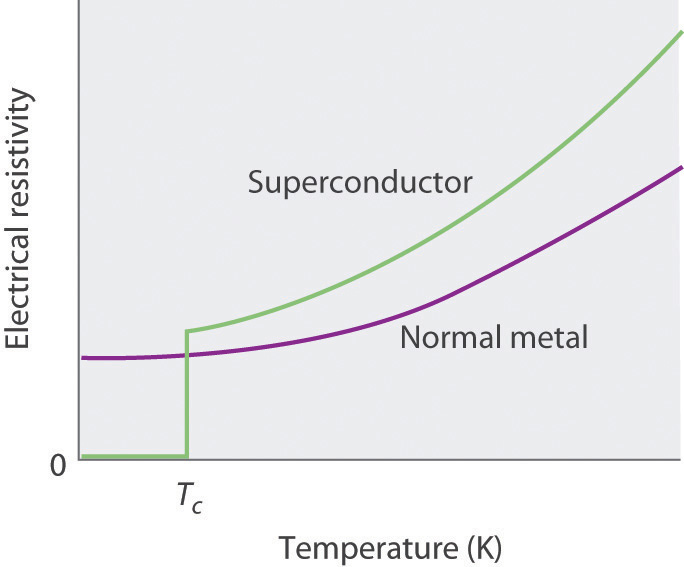
Resistance changes with temperature.
For Metals
Resistance increases with temperature.
Reason:
- Increased atomic vibrations
- More electron collisions
For Semiconductors
Resistance decreases with temperature.
Superconductivity
At very low temperatures, some materials show zero resistance, known as superconductivity.
Electrical Power and Ohm’s Law


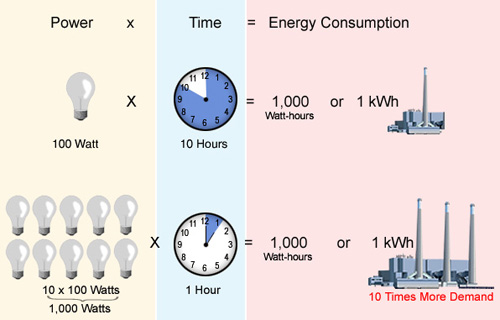
Ohm’s Law helps determine electrical power.
Power Formula
[
P = VI
]
Using Ohm’s Law:
[
P = I^2R
]
[
P = \frac{V^2}{R}
]
Where:
- (P) = power
- (V) = voltage
- (I) = current
- (R) = resistance
Power is measured in watts (W).
Applications of Ohm’s Law


Ohm’s Law has many practical applications.
Electrical Circuit Design
Engineers use Ohm’s Law to design circuits and determine component values.
Household Electricity
Ohm’s Law helps determine current drawn by appliances.
Electronic Devices
Used in computers, smartphones, and other electronic equipment.
Electrical Measurements
Devices like multimeters measure voltage, current, and resistance using Ohm’s Law principles.
Limitations of Ohm’s Law
Ohm’s Law is not universally applicable.
It does not apply when:
- Temperature changes significantly
- Materials exhibit nonlinear behavior
- High electric fields alter conductivity
Examples of non-ohmic devices:
- Diodes
- Transistors
- Gas discharge tubes
Importance of Ohm’s Law
Ohm’s Law is fundamental in electrical science.
It helps us:
- Understand electric circuits
- Calculate electrical parameters
- Design electronic systems
- Analyze power consumption
It is one of the first laws taught in electrical engineering and physics.
Conclusion
Ohm’s Law describes the relationship between voltage, current, and resistance in electrical circuits. It states that current flowing through a conductor is directly proportional to the voltage applied across it and inversely proportional to the resistance of the conductor.
This simple yet powerful relationship allows scientists and engineers to analyze and design electrical circuits efficiently. Ohm’s Law explains how electricity behaves in conductors and helps predict how changes in voltage or resistance affect current.
From household electrical appliances to advanced electronic systems, Ohm’s Law plays a crucial role in modern technology and remains one of the most important principles in the study of electricity.