Introduction to Area and Perimeter
Area and perimeter are two fundamental concepts in geometry that help us measure shapes and understand spatial relationships. These concepts are widely used in mathematics as well as in everyday life, including construction, architecture, engineering, agriculture, and design.
The perimeter of a shape refers to the total length of the boundary surrounding that shape. It is essentially the distance around a closed figure.
The area, on the other hand, refers to the amount of space enclosed within the boundary of a shape.
Understanding the difference between area and perimeter is essential in geometry because they measure different aspects of a figure. While perimeter measures the length around a figure, area measures the surface covered by that figure.
For example, consider a rectangular garden. If you want to build a fence around the garden, you need to know the perimeter. If you want to plant grass in the garden, you need to know the area.
Both area and perimeter are important tools that allow us to measure, compare, and analyze geometric figures.
Definition of Perimeter
The perimeter of a two-dimensional shape is the total distance around its outer boundary.
It is calculated by adding the lengths of all the sides of the shape.
For example, if a polygon has sides:
[
a, b, c, d
]
Then the perimeter is:
[
P = a + b + c + d
]
Perimeter is usually measured in units of length such as:
- meters
- centimeters
- kilometers
- inches
- feet
Definition of Area
The area of a shape is the measure of the surface enclosed within the boundaries of that shape.
Area represents how much space the shape covers.
Area is measured in square units such as:
- square meters (m²)
- square centimeters (cm²)
- square kilometers (km²)
- square inches (in²)
Area calculations depend on the type of geometric shape.
Difference Between Area and Perimeter
Although both concepts relate to shapes, they measure different properties.
Perimeter measures the boundary length, while area measures the surface inside the boundary.
For example:
A rectangle with sides 4 m and 6 m.
Perimeter:
[
P = 2(4 + 6) = 20m
]
Area:
[
A = 4 \times 6 = 24m^2
]
Thus, perimeter and area measure different aspects of the same shape.
Perimeter of Basic Shapes
Different shapes have different perimeter formulas.
Perimeter of a Square
A square has four equal sides.
Formula:
[
P = 4s
]
Where:
(s) = length of one side.
Example:
Side = 5 cm
[
P = 4 \times 5 = 20cm
]
Perimeter of a Rectangle
A rectangle has two pairs of equal sides.
Formula:
[
P = 2(l + w)
]
Where:
- (l) = length
- (w) = width
Example:
Length = 8 cm
Width = 4 cm
[
P = 2(8 + 4) = 24cm
]
Perimeter of a Triangle
Perimeter equals the sum of all three sides.
Formula:
[
P = a + b + c
]
Example:
Sides = 3, 4, 5
[
P = 12
]
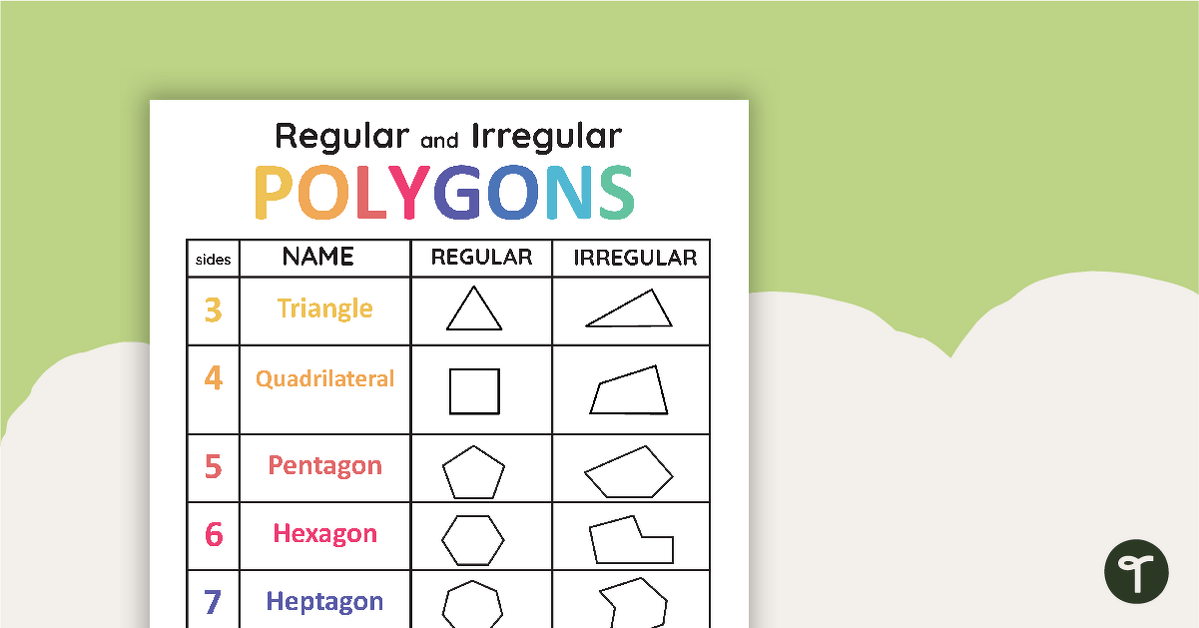
Perimeter of a Regular Polygon
For a regular polygon:
[
P = ns
]
Where:
- (n) = number of sides
- (s) = length of one side
Example:
Pentagon with side length 6.
[
P = 5 \times 6 = 30
]
Circumference of a Circle
The perimeter of a circle is called circumference.
Formula:
[
C = 2\pi r
]
Or
[
C = \pi d
]
Where:
- (r) = radius
- (d) = diameter
Example:
Radius = 7
[
C = 2 \pi \times 7 = 14\pi
]
Area of Basic Shapes
Area formulas vary depending on the shape.
Area of a Square
Formula:
[
A = s^2
]
Example:
Side = 6
[
A = 36
]
Area of a Rectangle
Formula:
[
A = l \times w
]
Example:
Length = 10
Width = 5
[
A = 50
]
Area of a Triangle
Formula:
[
A = \frac{1}{2}bh
]
Where:
- (b) = base
- (h) = height
Example:
Base = 8
Height = 5
[
A = 20
]
Area of a Parallelogram
Formula:
[
A = bh
]
Where:
- (b) = base
- (h) = perpendicular height
Area of a Trapezium
Formula:
[
A = \frac{1}{2}(a+b)h
]
Where:
- (a) and (b) are parallel sides
- (h) = height
Area of a Circle
Formula:
[
A = \pi r^2
]
Example:
Radius = 4
[
A = 16\pi
]
Area of a Rhombus
Formula:
[
A = \frac{1}{2}d_1d_2
]
Where:
- (d_1) and (d_2) are diagonals.
Units of Area and Perimeter
Perimeter uses linear units.
Examples:
- meters
- centimeters
- miles
Area uses square units.
Examples:
- m²
- cm²
- km²
Square units represent two-dimensional measurement.
Applications of Area and Perimeter
Area and perimeter are used in many real-life situations.
Construction
Builders use area and perimeter to calculate:
- flooring
- walls
- fencing
Agriculture
Farmers measure land area for planting crops.
Perimeter helps build fences.
Architecture
Architects calculate areas of rooms and perimeters of structures.
Interior Design
Area calculations help determine:
- carpet size
- paint requirements
Landscaping
Garden designers calculate:
- lawn area
- pathway boundaries
Sports Fields
Area determines field size for sports like football and cricket.
Map Reading
Area helps measure regions on maps.
Perimeter determines boundaries.
Coordinate Geometry and Area
Area can also be calculated using coordinates.
Example:
For rectangle with vertices:
[
(0,0), (4,0), (4,3), (0,3)
]
Area:
[
4 \times 3 = 12
]
Coordinate geometry allows calculation of areas for irregular shapes.
Composite Figures
Complex shapes can be divided into simpler shapes.
Example:
A shape may consist of:
- rectangle
- triangle
- semicircle
Area is calculated by adding the areas of each part.
Scaling and Area
When a figure is enlarged:
Perimeter increases proportionally.
Area increases by the square of the scale factor.
Example:
If sides double:
Perimeter doubles.
Area becomes four times larger.
Historical Development
Ancient civilizations developed formulas for area and perimeter.
Egyptians used geometry to measure farmland along the Nile.
Greek mathematicians formalized geometric formulas.
Archimedes studied circles and developed early methods for calculating area.
Today these concepts remain essential in mathematics and science.
Area and Perimeter in Advanced Mathematics
In advanced mathematics, area concepts extend into:
- surface area
- integral calculus
- vector geometry
- topology
Perimeter concepts extend into curve length and arc length.
These advanced topics help analyze complex shapes and surfaces.
Importance in Mathematics
Area and perimeter are essential because they:
- measure shapes
- describe spatial relationships
- solve real-world problems
- support geometry and calculus
These concepts form the basis for many mathematical applications.
Conclusion
Area and perimeter are two of the most fundamental concepts in geometry. Perimeter measures the total distance around a shape, while area measures the amount of space enclosed within that shape. Together, these measurements help us understand the size and boundaries of geometric figures.
Different shapes require different formulas to calculate their area and perimeter, including squares, rectangles, triangles, circles, and polygons. These formulas allow mathematicians and engineers to measure and analyze shapes accurately.
Beyond theoretical mathematics, area and perimeter are widely used in real-world applications such as construction, architecture, agriculture, interior design, and engineering. By mastering these concepts, students gain important tools for solving practical problems involving space and measurement.
Understanding area and perimeter also prepares learners for more advanced topics such as coordinate geometry, trigonometry, and calculus, making them essential components of mathematical education.