


Introduction
The electric field is a fundamental concept in physics that describes the influence that an electric charge exerts on other charges in the space around it. When a charged particle is placed in a region of space, it creates a field that affects other charged particles nearby. This field determines the force experienced by other charges placed within it.
The concept of the electric field helps explain how electric forces act without direct contact between objects. Instead of imagining charges pulling or pushing each other across empty space, physicists describe the interaction through an electric field that exists in the region surrounding the charge.
Electric fields play a crucial role in many areas of physics and engineering, including:
- Electrostatics
- Electromagnetism
- Electronics
- Plasma physics
- Particle accelerators
- Communication technologies
Electric fields are responsible for many everyday phenomena such as static electricity, lightning, electric circuits, and the operation of electronic devices.
The study of electric fields forms a key part of electromagnetic theory, which also includes magnetic fields and electromagnetic waves.
Historical Development of Electric Field Concept
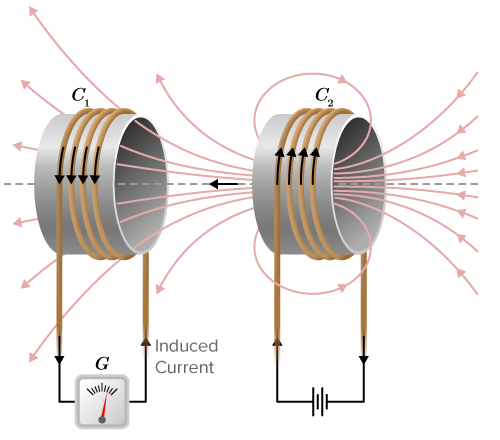


Before the electric field concept was introduced, scientists believed that electric forces acted directly between charges across empty space.
The idea of electric fields was introduced in the 19th century by the British scientist Michael Faraday.
Faraday proposed that:
- Electric charges produce invisible lines of influence around them.
- These lines represent the electric field.
He demonstrated this concept using experiments with iron filings, which align themselves along field lines when placed near magnets or charged objects.
Later, physicist James Clerk Maxwell mathematically described electric and magnetic fields, forming the foundation of classical electromagnetism.
The concept of electric fields revolutionized physics because it allowed scientists to understand how forces are transmitted through space.
Definition of Electric Field


An electric field is defined as the force experienced per unit positive charge placed in a region of space.
Mathematical Definition
[
E = \frac{F}{q}
]
Where:
- (E) = electric field strength
- (F) = electric force acting on the charge
- (q) = test charge
Unit of Electric Field
The SI unit of electric field is:
[
N/C \quad (Newton , per , Coulomb)
]
Another commonly used unit is:
[
V/m \quad (Volt , per , meter)
]
Both units are equivalent.
Electric Field Due to a Point Charge


A point charge produces an electric field in the surrounding space.
Using Coulomb’s Law, the electric field produced by a charge (Q) at distance (r) is:
[
E = k \frac{Q}{r^2}
]
Where:
- (E) = electric field strength
- (k) = Coulomb constant
- (Q) = source charge
- (r) = distance from the charge
Direction of Electric Field
- For a positive charge, the electric field points outward.
- For a negative charge, the electric field points inward.
This means that a positive test charge would move away from a positive charge and toward a negative charge.
Electric Field Lines
Electric field lines are imaginary lines used to visualize electric fields.
Properties of Electric Field Lines
- They start on positive charges and end on negative charges.
- The density of lines represents field strength.
- Field lines never intersect.
- Field lines indicate the direction of force on a positive test charge.
Electric field lines provide a convenient way to represent complex electric fields.
Electric Field of Multiple Charges
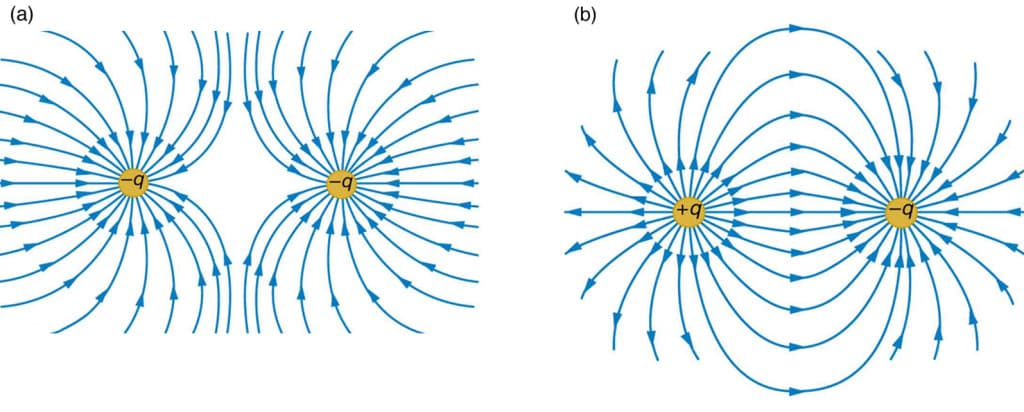


When several charges are present, the total electric field is determined using the principle of superposition.
Principle of Superposition
The total electric field at any point is the vector sum of electric fields produced by each charge.
[
E_{total} = E_1 + E_2 + E_3 + …
]
This principle allows physicists to calculate electric fields for complex charge distributions.
Uniform Electric Field


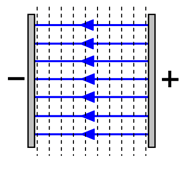
A uniform electric field is one in which the magnitude and direction of the field remain constant throughout the region.
Example
The electric field between two parallel charged plates in a capacitor is nearly uniform.
Characteristics:
- Field lines are parallel
- Field strength is constant
- Direction remains the same
Uniform fields are widely used in physics experiments and electronic devices.
Electric Dipole and Electric Field

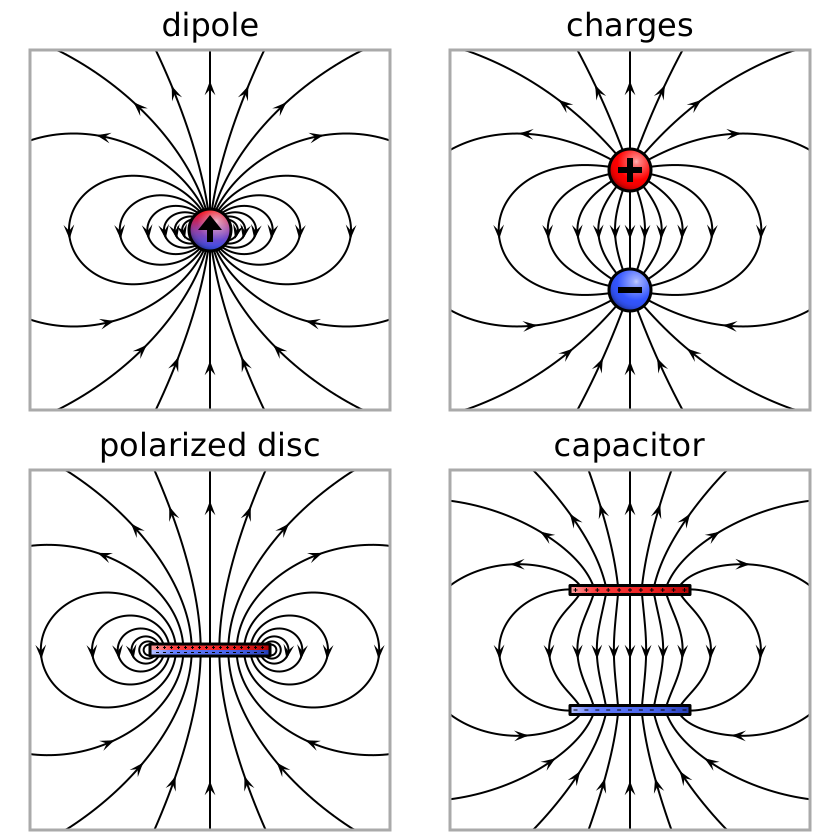

An electric dipole consists of two equal and opposite charges separated by a small distance.
Dipole Moment
[
p = q \times d
]
Where:
- (p) = dipole moment
- (q) = charge
- (d) = separation distance
Dipoles produce complex electric field patterns that are important in molecular physics.
Electric Flux


Electric flux measures the number of electric field lines passing through a surface.
Formula
[
\Phi = EA \cos\theta
]
Where:
- (E) = electric field strength
- (A) = surface area
- (\theta) = angle between field and surface normal
Electric flux is important for understanding Gauss’s Law.
Gauss’s Law

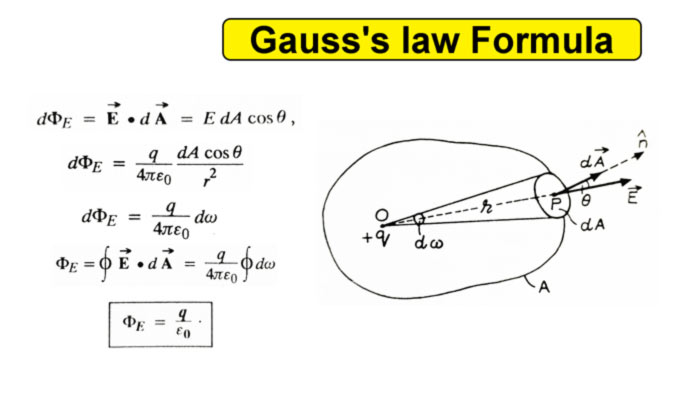
Gauss’s Law relates electric flux to the charge enclosed by a surface.
Mathematical Form
[
\Phi = \frac{Q}{\varepsilon_0}
]
Where:
- (Q) = enclosed charge
- (\varepsilon_0) = permittivity of free space
Gauss’s Law is especially useful for calculating electric fields in symmetrical systems.
Electric Potential and Electric Field

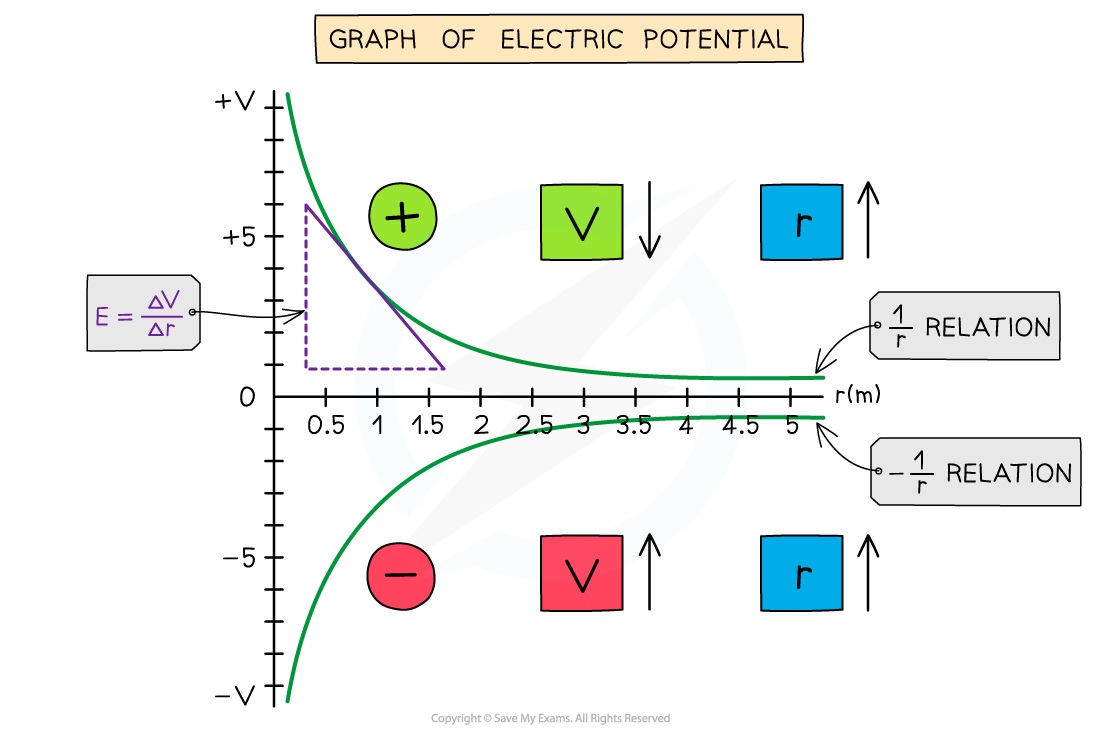
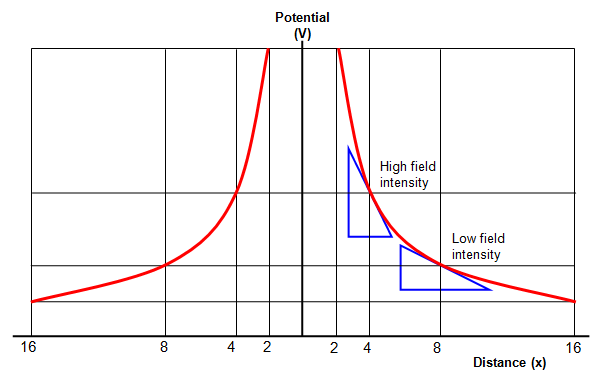
Electric potential and electric field are closely related.
The electric field is the rate of change of electric potential.
[
E = -\frac{dV}{dx}
]
Electric field lines are always perpendicular to equipotential surfaces.
Applications of Electric Fields


Electric fields have many practical applications.
Capacitors
Electric fields store energy in capacitors used in electronic circuits.
Particle Accelerators
Electric fields accelerate charged particles in physics experiments.
Cathode Ray Tubes
Electric fields control electron beams in older television displays.
Electrostatic Precipitators
Electric fields remove pollutants from industrial emissions.
Medical Equipment
Electric fields are used in technologies like electron microscopes and radiation therapy.
Importance of Electric Fields in Modern Physics
Electric fields are essential for understanding many scientific and technological phenomena.
They are central to:
- Maxwell’s equations
- Electromagnetic waves
- Radio communication
- Electrical power systems
- Semiconductor devices
Electric fields also play an important role in atomic interactions, chemical bonding, and plasma physics.
Conclusion
The electric field is a fundamental concept that explains how electric charges influence each other through space. Instead of describing forces acting directly between charges, physicists use electric fields to represent the region around a charge where other charges experience forces.
Electric fields are produced by charged particles and can be visualized using field lines. Their strength and direction depend on the magnitude of the source charge and the distance from it.
From simple electrostatic interactions to advanced technologies such as particle accelerators and communication systems, electric fields play a crucial role in both theoretical physics and practical applications. Understanding electric fields provides the foundation for studying electromagnetism and many modern technologies.