
🌍 Visual Overview: Rule of Law in Action


📘 1. Introduction to Rule of Law
The Rule of Law is one of the most fundamental principles of modern democratic governance. It signifies that law is supreme and governs everyone equally, including rulers, government officials, and ordinary citizens.
The concept ensures that no individual or institution is above the law, and that all actions of the state must be conducted according to established legal principles. It acts as a safeguard against arbitrary use of power and is essential for maintaining justice, equality, and liberty in society.
In essence, the Rule of Law replaces the idea of “rule by men” with “rule by law.”
🧠 2. Meaning and Definitions of Rule of Law
📌 Basic Meaning
Rule of Law means that all individuals and institutions are subject to and accountable under the law, which is fairly applied and enforced.
🧾 Classical Definitions
- A.V. Dicey:
Rule of Law implies the absolute supremacy of law over arbitrary power. - Aristotle:
“Law should govern, and those in power should be servants of the law.” - Lon L. Fuller:
Law must be general, public, clear, stable, and applied consistently.
🔑 Core Ideas
- Supremacy of law
- Equality before law
- Accountability
- Fair and impartial justice
⚖️ 3. Elements of Rule of Law (Dicey’s Principles)
👤 Contribution of A.V. Dicey

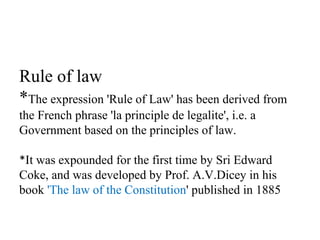


Dicey identified three essential principles:
🟢 3.1 Supremacy of Law
📌 Meaning
No person can be punished except for a breach of law established in a legal manner.
🔍 Key Points
- No arbitrary power
- Government actions must follow law
- Legal procedures must be followed
🔵 3.2 Equality Before Law
📌 Meaning
All individuals are equal in the eyes of the law.
🔍 Key Points
- No special privileges
- Same laws apply to everyone
- Equal legal protection
🟣 3.3 Predominance of Legal Spirit
📌 Meaning
Rights are protected by ordinary courts, not arbitrary authorities.
🔍 Key Points
- Independent judiciary
- Judicial remedies
- Protection of individual rights
🧩 4. Features of Rule of Law
🟢 1. Legal Supremacy
- Law is above all
🔵 2. Equality
- Equal treatment
🟣 3. Accountability
- Government answerable
🔴 4. Transparency
- Open governance
🟡 5. Fair Procedures
- Due process
⚫ 6. Independent Judiciary
- Ensures justice
🏛️ 5. Rule of Law vs Rule by Law
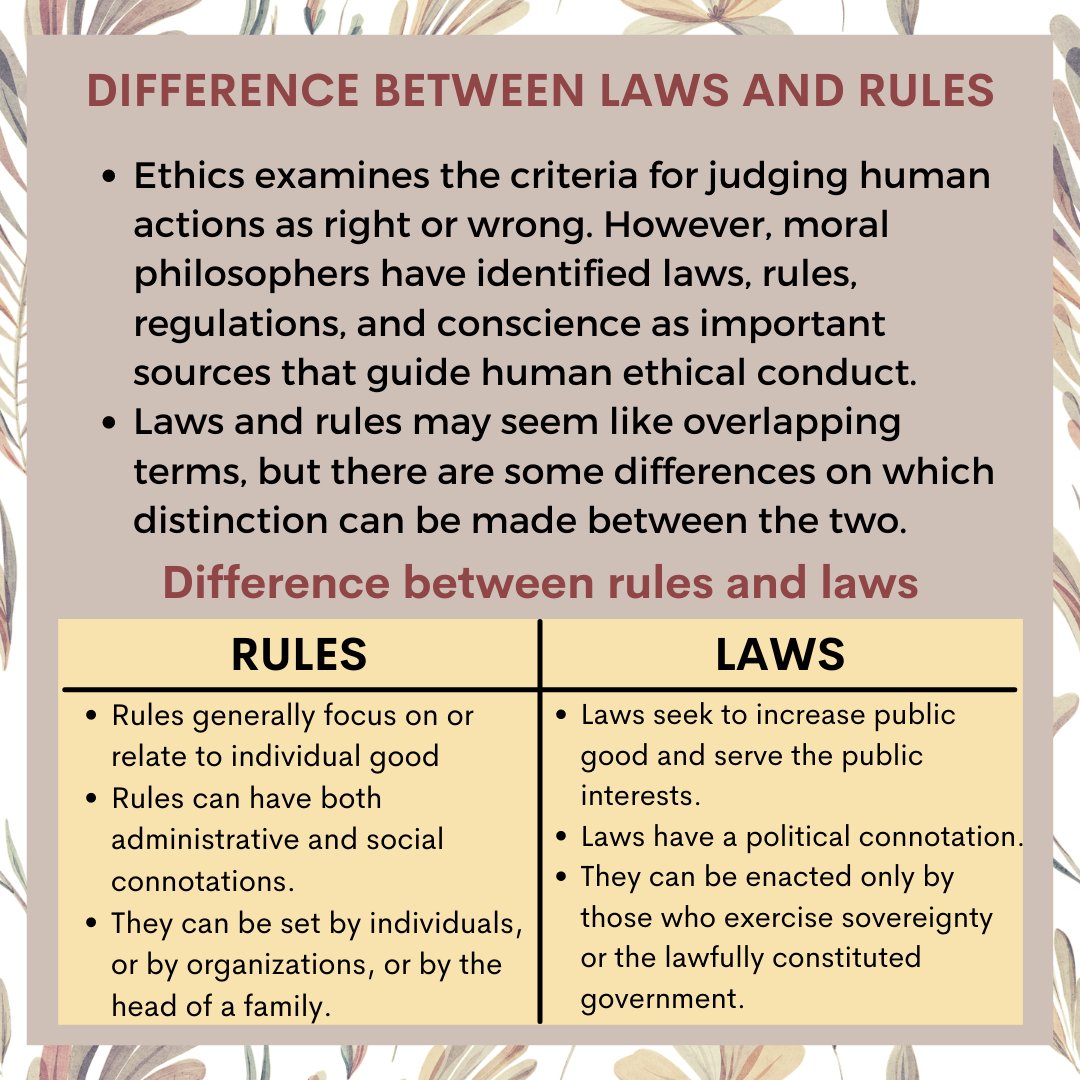


| Aspect | Rule of Law | Rule by Law |
|---|---|---|
| Nature | Fair and just | Tool of control |
| Purpose | Protect rights | Enforce authority |
| System | Democratic | Authoritarian |
🔗 6. Rule of Law and Democracy
- Ensures free and fair elections
- Protects fundamental rights
- Limits government power
- Promotes accountability
🌍 7. Rule of Law in Different Systems
🟢 In Democracies
- Strong legal frameworks
- Independent courts
🔴 In Authoritarian States
- Weak rule of law
- Arbitrary decisions
⚖️ 8. Importance of Rule of Law
🟢 1. Protects Rights
- Safeguards freedom
🔵 2. Ensures Equality
- No discrimination
🟣 3. Maintains Order
- Prevents chaos
🔴 4. Promotes Justice
- Fair decisions
🟡 5. Encourages Development
- Stable environment
🌐 9. Rule of Law in Modern Context
📱 Digital Governance
- Cyber laws
- Data protection
🌍 Global Governance
- International law
🧑🤝🧑 Human Rights
- Protection mechanisms
⚠️ 10. Challenges to Rule of Law
🔴 1. Corruption
- Weakens institutions
🔵 2. Political Interference
- Undermines judiciary
🟣 3. Lack of Awareness
- Citizens unaware of rights
🟡 4. Delayed Justice
- Slow legal processes
⚫ 5. Inequality
- Unequal access to justice
🧠 11. Rule of Law in India (Example)
- Constitution is supreme
- Independent judiciary
- Fundamental rights
- Judicial review
⚖️ 12. Rule of Law and Human Rights
- Protects individual dignity
- Prevents abuse of power
- Ensures fairness
🔄 13. Evolution of Rule of Law
🏺 Ancient Period
- Philosophical ideas (Aristotle)
🏰 Medieval Period
- Limited application
👑 Modern Period
- Development of legal systems
🌐 Contemporary Period
- Global recognition
🧠 14. Role of Judiciary
- Interprets law
- Protects constitution
- Ensures justice
🧾 15. Conclusion
The Rule of Law is the foundation of a just and democratic society. It ensures that power is exercised within limits, rights are protected, and justice is delivered fairly.
Without the Rule of Law, society would descend into arbitrariness and inequality. Therefore, strengthening legal institutions, promoting awareness, and ensuring accountability are essential for sustaining this principle.