Author Archives: admin

Probability in Mathematics – Detailed Guide

Image
Image
Image
Image

Introduction to Probability

Probability is a fundamental branch of mathematics that deals with uncertainty and randomness. It helps us measure the likelihood that a particular event will occur. In everyday life, we constantly deal with uncertain situations, whether predicting weather, playing games, investing money, or analyzing data. Probability provides the mathematical framework to quantify such uncertainties.

The concept of probability allows mathematicians, statisticians, scientists, and engineers to make predictions about events whose outcomes cannot be determined with absolute certainty. Instead of saying something will definitely happen or will never happen, probability assigns a value between 0 and 1 to describe the likelihood of an event.

  • Probability = 0 → The event will never occur
  • Probability = 1 → The event will definitely occur
  • Probability between 0 and 1 → The event may occur with varying likelihood

For example, when flipping a fair coin, the probability of getting heads is 0.5, meaning there is a 50% chance that heads will appear.

Probability plays a crucial role in many fields such as:

  • Statistics
  • Artificial Intelligence
  • Machine Learning
  • Economics
  • Engineering
  • Data Science
  • Finance
  • Insurance
  • Medicine
  • Computer Science

Understanding probability allows individuals and organizations to make informed decisions when dealing with uncertain outcomes.


Basic Concepts of Probability

To understand probability properly, several fundamental concepts must be introduced.

Experiment

An experiment is any process that produces a result or outcome.

Examples include:

  • Tossing a coin
  • Rolling a dice
  • Drawing a card from a deck
  • Selecting a student randomly from a class

Each experiment produces an outcome that cannot be predicted with certainty before performing it.


Outcome

An outcome is the result of a single trial of an experiment.

Examples:

When rolling a six-sided die, the possible outcomes are:

1
2
3
4
5
6

Each of these numbers is considered an outcome.


Sample Space

The sample space represents the set of all possible outcomes of an experiment.

It is usually represented by the symbol S.

Example:

Rolling a die

S = {1, 2, 3, 4, 5, 6}

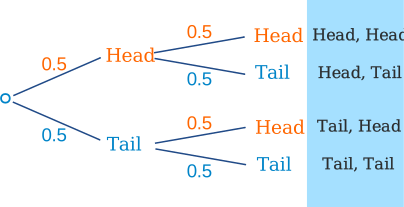
Coin toss

S = {Heads, Tails}

If two coins are tossed, the sample space becomes:

S = {HH, HT, TH, TT}


Event

An event is a subset of the sample space.

An event occurs when the outcome of an experiment belongs to a particular subset of outcomes.

Example:

Rolling a die

Event A = getting an even number

A = {2, 4, 6}

Event B = getting a number greater than 3

B = {4, 5, 6}


Classical Definition of Probability

The classical definition of probability states that if an experiment has n equally likely outcomes, and an event A has m favorable outcomes, then the probability of event A occurring is:

P(A) = m / n

Where:

  • P(A) = Probability of event A
  • m = Number of favorable outcomes
  • n = Total number of possible outcomes

Example 1

Rolling a die

What is the probability of getting a 3?

Total outcomes = 6
Favorable outcomes = 1

P(3) = 1/6


Example 2

Probability of getting an even number

Favorable outcomes = {2, 4, 6}

Total outcomes = 6

P(Even) = 3/6 = 1/2


Types of Events in Probability

Simple Event

A simple event contains only one outcome.

Example:

Rolling a die and getting the number 5.


Compound Event

A compound event contains more than one outcome.

Example:

Getting an even number when rolling a die

{2,4,6}


Impossible Event

An impossible event cannot occur.

Probability = 0

Example:

Rolling a 7 with a six-sided die.


Certain Event

A certain event is guaranteed to occur.

Probability = 1

Example:

Rolling a number less than 7 on a six-sided die.


Complementary Events

Two events are complementary if one occurs when the other does not.

If event A occurs with probability P(A), then its complement A’ has probability:

P(A’) = 1 − P(A)

Example:

If probability of rain is 0.3

Probability of no rain = 1 − 0.3 = 0.7


Addition Rule of Probability

The addition rule helps calculate the probability that at least one of two events occurs.

For two events A and B:

P(A ∪ B) = P(A) + P(B) − P(A ∩ B)

Where:

  • P(A ∪ B) = Probability of A or B occurring
  • P(A ∩ B) = Probability of both A and B occurring

Example

Drawing a card from a deck.

Event A = drawing a king
Event B = drawing a heart

P(King) = 4/52
P(Heart) = 13/52
P(King of hearts) = 1/52

Using formula:

P(A ∪ B)

= 4/52 + 13/52 − 1/52
= 16/52

= 4/13


Multiplication Rule of Probability

The multiplication rule calculates the probability of two events happening together.

For independent events:

P(A ∩ B) = P(A) × P(B)


Example

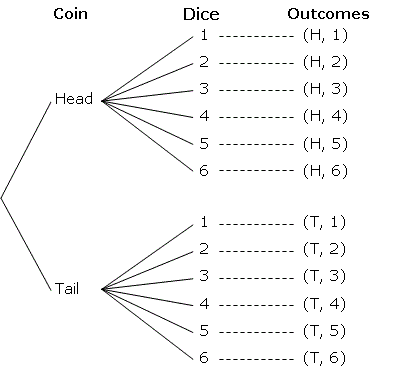
Flip a coin and roll a die.

Probability of heads = 1/2
Probability of rolling a 3 = 1/6

P(Heads and 3)

= 1/2 × 1/6

= 1/12


Independent and Dependent Events

Independent Events

Two events are independent if the occurrence of one does not affect the probability of the other.

Examples:

  • Tossing two coins
  • Rolling a die and tossing a coin

Example:

P(Heads and Tails)

= 1/2 × 1/2

= 1/4


Dependent Events

Two events are dependent if the outcome of one affects the probability of the other.

Example:

Drawing two cards from a deck without replacement.

Probability of first card being a king

= 4/52

After drawing one king:

Probability of second king

= 3/51

So

P(King and King)

= (4/52) × (3/51)


Conditional Probability

Conditional probability measures the probability of an event occurring given that another event has already occurred.

Formula:

P(A|B) = P(A ∩ B) / P(B)

Where:

P(A|B) = Probability of A given B.


Example

A card is drawn from a deck.

Event A = card is a king
Event B = card is a face card

Face cards = 12

Kings = 4

P(A|B)

= 4/12

= 1/3


Random Variables

A random variable assigns numerical values to outcomes of a random experiment.

Two types exist:

  1. Discrete random variables
  2. Continuous random variables

Discrete Random Variables

Discrete variables take countable values.

Examples:

  • Number of heads in coin toss
  • Number of students in class
  • Number of defective products

Example:

Number of heads when tossing two coins

Values = 0, 1, 2


Continuous Random Variables

Continuous variables take values within a continuous range.

Examples:

  • Height
  • Weight
  • Temperature
  • Time

They can take infinite values within an interval.


Probability Distribution

A probability distribution describes how probabilities are assigned to values of a random variable.

Example:

Distribution for number of heads when tossing two coins:

HeadsProbability
01/4
11/2
21/4

Important Probability Distributions

Binomial Distribution

The binomial distribution describes the number of successes in repeated independent trials.

Conditions:

  • Fixed number of trials
  • Only two outcomes (success or failure)
  • Probability remains constant

Formula:

P(X = k) = nCk p^k (1-p)^(n-k)

Example:

Flipping a coin 5 times.


Normal Distribution

Image
Image
Image
Image

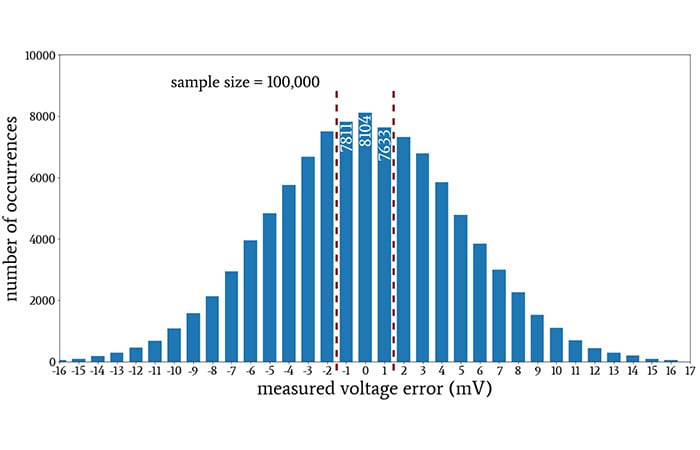
The normal distribution, also called the Gaussian distribution, is one of the most important probability distributions in statistics.

It forms a bell-shaped curve.

Characteristics:

  • Mean = Median = Mode
  • Symmetrical distribution
  • Defined by mean and standard deviation

Many natural phenomena follow normal distribution:

  • Human heights
  • IQ scores
  • Measurement errors
  • Exam scores

Law of Large Numbers

The law of large numbers states that as the number of trials increases, the experimental probability approaches the theoretical probability.

Example:

If a coin is flipped many times, the proportion of heads approaches 0.5.


Bayes’ Theorem

Bayes’ theorem describes how probabilities change when new information becomes available.

Formula:

P(A|B) = (P(B|A) × P(A)) / P(B)

Applications:

  • Medical diagnosis
  • Machine learning
  • Spam filtering
  • Risk assessment

Example:

Updating probability of disease after test results.


Applications of Probability

Probability is widely used across various domains.


Gambling and Games

Probability determines fairness and outcomes in games such as:

  • Poker
  • Roulette
  • Dice games
  • Lottery

Game strategies often rely on probability calculations.


Weather Forecasting

Meteorologists use probability models to estimate chances of rain, storms, or other weather events.

Example:

70% chance of rain means rain is expected in 70% of similar weather conditions.


Insurance Industry

Insurance companies rely heavily on probability.

They calculate:

  • Risk of accidents
  • Life expectancy
  • Probability of illness

Premiums are based on probability analysis.


Artificial Intelligence

AI and machine learning use probability in:

  • Predictive models
  • Bayesian networks
  • Decision-making algorithms

Probability helps machines deal with uncertain information.


Finance and Investments

Investors use probability models to evaluate:

  • Risk
  • Market trends
  • Portfolio performance

Probability helps estimate expected returns and potential losses.


Medicine

Doctors use probability in:

  • Disease diagnosis
  • Clinical trials
  • Treatment success rates

Medical tests often involve conditional probabilities.


Probability in Data Science

Probability is a core component of data science.

Applications include:

  • Predictive modeling
  • Hypothesis testing
  • Statistical inference
  • Machine learning algorithms

Algorithms such as Naive Bayes directly rely on probability theory.


Probability in Computer Science

Probability helps solve problems such as:

  • Randomized algorithms
  • Cryptography
  • Network reliability
  • AI search algorithms

Example:

Monte Carlo simulations use probability to approximate solutions.


Misinterpretations of Probability

People often misunderstand probability.

Common mistakes include:

Gambler’s Fallacy

Belief that past outcomes affect future independent events.

Example:

Thinking that a coin must land heads after several tails.

In reality, each flip is independent.


Misunderstanding Risk

Low probability events may still occur.

Example:

Winning lottery is extremely unlikely but still possible.


Importance of Probability Education

Studying probability improves:

  • Decision making
  • Risk management
  • Critical thinking
  • Statistical literacy

It helps individuals understand uncertainty in real-world situations.


Future of Probability

Probability continues to play a major role in modern technology.

Important areas include:

  • Artificial Intelligence
  • Big Data Analytics
  • Quantum Computing
  • Financial Engineering
  • Climate Modeling

As technology advances, probability theory will become even more important for analyzing complex systems and uncertain environments.


Conclusion

Probability is a powerful mathematical concept that helps quantify uncertainty and analyze random events. From simple experiments like tossing a coin to complex machine learning algorithms, probability forms the backbone of decision-making under uncertainty.

It provides tools to measure likelihood, analyze risks, and make predictions about future events. The study of probability includes concepts such as sample space, events, conditional probability, distributions, and statistical inference.

Its applications extend across numerous fields including science, engineering, finance, medicine, artificial intelligence, and everyday life.

By understanding probability, individuals gain the ability to interpret data, make informed decisions, and navigate uncertainty with mathematical confidence.


Statistics in Mathematics – Detailed Explanation with Examples

Statistics in Mathematics – Detailed Explanation with Examples

1. Introduction to Statistics

Image
Image
Image
Image

Statistics is a branch of mathematics that deals with the collection, organization, analysis, interpretation, and presentation of data. It helps researchers and decision-makers understand patterns, relationships, and trends within data. Statistics is essential in many fields such as science, economics, business, medicine, engineering, and social sciences.

In simple terms, statistics helps answer questions like:

  • What does the data show?
  • What patterns exist in the data?
  • What conclusions can be drawn from the data?

Statistics is used to transform raw data into meaningful information. Governments, companies, scientists, and educators use statistics to make informed decisions.

For example:

  • Governments analyze population data.
  • Businesses study customer behavior.
  • Doctors analyze medical data.
  • Scientists test research hypotheses.

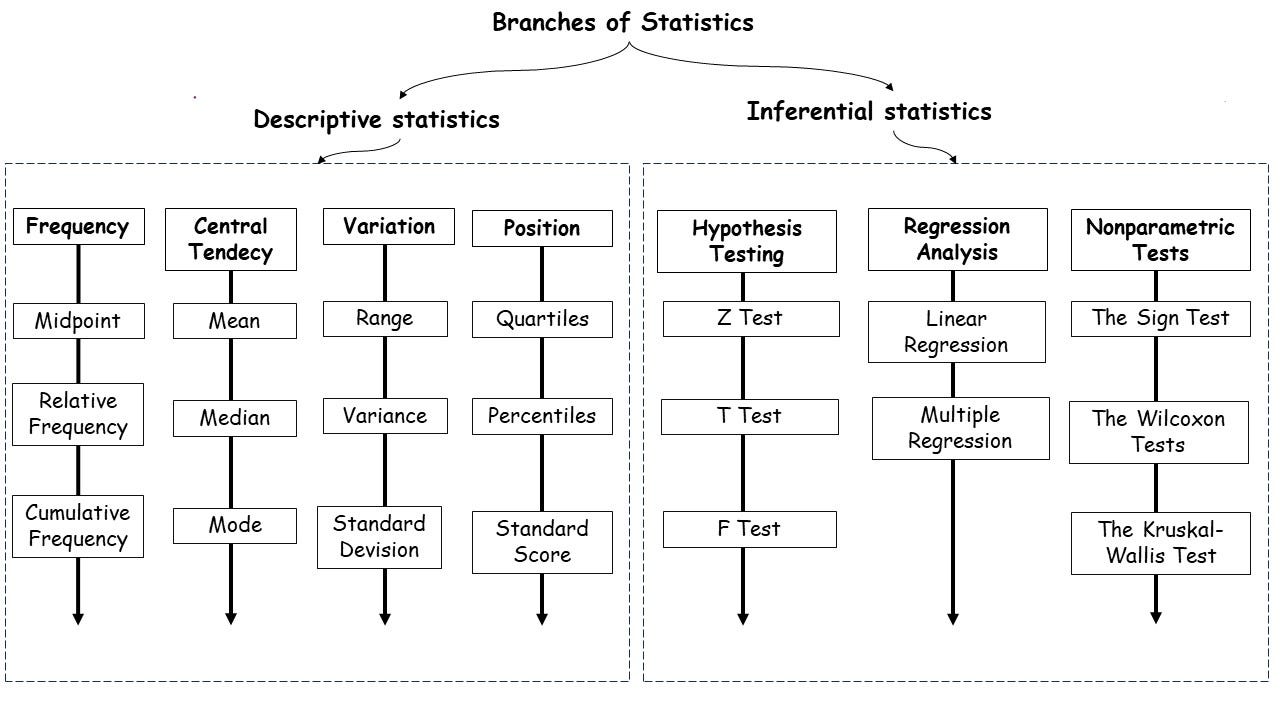
Statistics is often divided into two main branches:

  1. Descriptive Statistics
  2. Inferential Statistics

Both branches play important roles in analyzing and interpreting data.


2. Types of Statistics

Image
Image
Image
Image

Statistics can be broadly classified into two categories.

Descriptive Statistics

Descriptive statistics deals with summarizing and organizing data so it can be easily understood.

It includes methods such as:

  • Tables
  • Graphs
  • Averages
  • Percentages

Descriptive statistics does not make predictions. Instead, it simply describes the data that has been collected.

Example:

A teacher calculates the average marks of students in a class.

This gives a summary of the class performance.

Inferential Statistics

Inferential statistics involves drawing conclusions or making predictions about a population based on sample data.

It uses probability and statistical methods to estimate values and test hypotheses.

Example:

A survey of 100 people is used to estimate the opinions of an entire city.

Inferential statistics allows researchers to make conclusions even when it is not possible to study the entire population.


3. Basic Statistical Terms

Image
Image
Image
Image

Understanding statistics requires knowledge of several important terms.

Population

A population refers to the entire group of individuals or objects that a researcher wants to study.

Example:

All students in a school.

Sample

A sample is a smaller subset taken from the population.

Example:

50 students selected from the school.

Studying samples is easier and less expensive than studying entire populations.

Data

Data refers to the information collected for analysis.

Data can be numbers, measurements, observations, or responses.

Example:

  • Heights of students
  • Exam scores
  • Survey responses

Variables

A variable is a characteristic that can change or vary.

Examples include:

  • Age
  • Height
  • Weight
  • Income

Variables are generally classified into two types:

Qualitative Variables

These describe categories.

Examples:

  • Gender
  • Color
  • Nationality

Quantitative Variables

These represent numerical values.

Examples:

  • Height
  • Temperature
  • Salary

4. Data Collection Methods

Image
Image
Image
Image

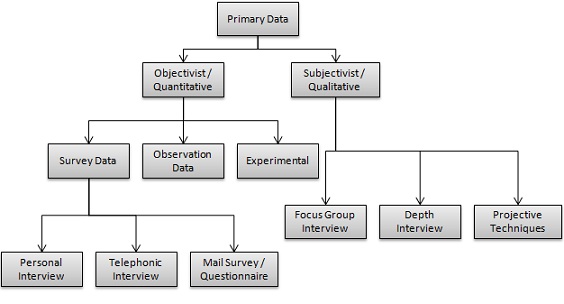
Data collection is the first step in statistical analysis.

Common methods include:

Surveys

Surveys collect information by asking questions.

Example:

Customer satisfaction surveys.

Experiments

Experiments involve controlled testing.

Example:

Testing a new medicine on patients.

Observation

Data is collected by watching events or behaviors.

Example:

Studying animal behavior.

Sampling Methods

Sampling methods determine how samples are selected.

Common sampling methods include:

  • Random sampling
  • Systematic sampling
  • Stratified sampling
  • Cluster sampling

Proper sampling ensures that results accurately represent the population.


5. Organizing Data

After collecting data, it must be organized so that it can be analyzed effectively.

Methods of organizing data include:

Frequency Tables

A frequency table shows how often each value occurs.

Example:

MarksFrequency
40–503
50–605
60–7010

Cumulative Frequency

This shows the total frequency up to a certain value.

Data Grouping

Large datasets are often grouped into classes or intervals.

Grouping simplifies data analysis.


6. Graphical Representation of Data

Image
Image
Image
Image

Graphs and charts help visualize data.

Bar Graph

Used to compare different categories.

Example:

Comparing sales of products.

Pie Chart

Shows proportions or percentages.

Example:

Distribution of household expenses.

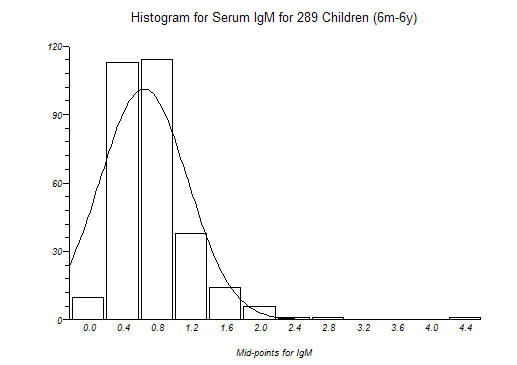
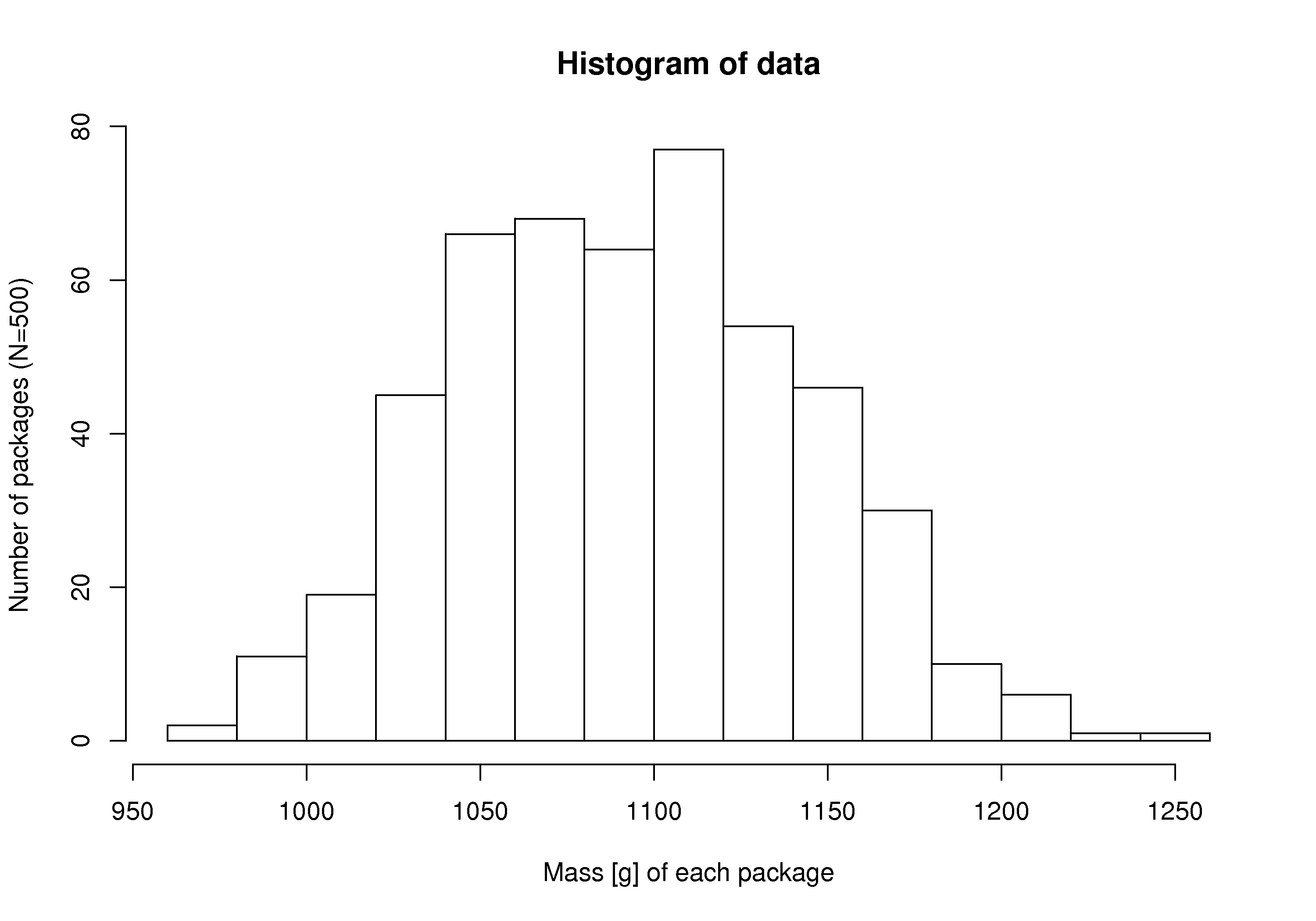
Histogram

Represents frequency distribution of continuous data.

Line Graph

Shows trends over time.

Example:

Population growth.

Graphical representations make complex data easier to understand.


7. Measures of Central Tendency

Image
Image
Image

Measures of central tendency describe the center or typical value of a dataset.

The three main measures are:

Mean (Average)

The mean is calculated by adding all values and dividing by the number of values.

Example:

Data: 5, 7, 8

[
Mean=\frac{5+7+8}{3}=6.67
]

Median

The median is the middle value when data is arranged in order.

Example:

Data: 2, 4, 6, 8, 10

Median = 6

Mode

The mode is the most frequently occurring value.

Example:

Data: 3, 5, 5, 7

Mode = 5

These measures summarize large datasets using a single representative value.


8. Measures of Dispersion

Image
Image
Image

Measures of dispersion describe how spread out data values are.

Range

Range is the difference between the largest and smallest values.

Example:

Data: 5, 10, 15

Range = 15 − 5 = 10

Variance

Variance measures how far values are from the mean.

Standard Deviation

Standard deviation is the square root of variance.

It measures the average distance from the mean.

Small standard deviation indicates that data points are close to the mean.

Large standard deviation indicates more variation.


9. Probability and Statistics

Image
Image
Image

Probability plays an important role in statistics.

Probability measures the likelihood of an event occurring.

The probability of an event is:

[
P(E)=\frac{\text{Number of favorable outcomes}}{\text{Total outcomes}}
]

Example:

Probability of getting heads when flipping a coin:

[
P=\frac{1}{2}
]

Probability helps statisticians make predictions and analyze uncertainty.


10. Probability Distributions

Image
Image
Image
Image

A probability distribution describes how probabilities are distributed across possible outcomes.

Normal Distribution

Also called the bell curve.

Characteristics:

  • Symmetrical shape
  • Mean = Median = Mode

Many natural phenomena follow normal distribution.

Binomial Distribution

Used when there are only two possible outcomes.

Example:

Success or failure.

Poisson Distribution

Used for counting events occurring within a fixed interval.

Example:

Number of phone calls received per hour.


11. Hypothesis Testing

Hypothesis testing is used to determine whether a claim about a population is true.

Steps in hypothesis testing:

  1. State the hypothesis
  2. Collect data
  3. Analyze data
  4. Draw conclusions

There are two hypotheses:

Null Hypothesis

Assumes no effect or difference.
Alternative Hypothesis

Suggests there is an effect or difference.

Statistical tests help determine whether to accept or reject the hypothesis.


12. Applications of Statistics

Image
Image
Image
Image

Statistics has numerous real-world applications.

Business

Companies use statistics to analyze sales, customer behavior, and market trends.

Medicine

Doctors use statistics to test medicines and analyze medical data.

Economics

Economists analyze inflation, unemployment, and economic growth using statistical data.

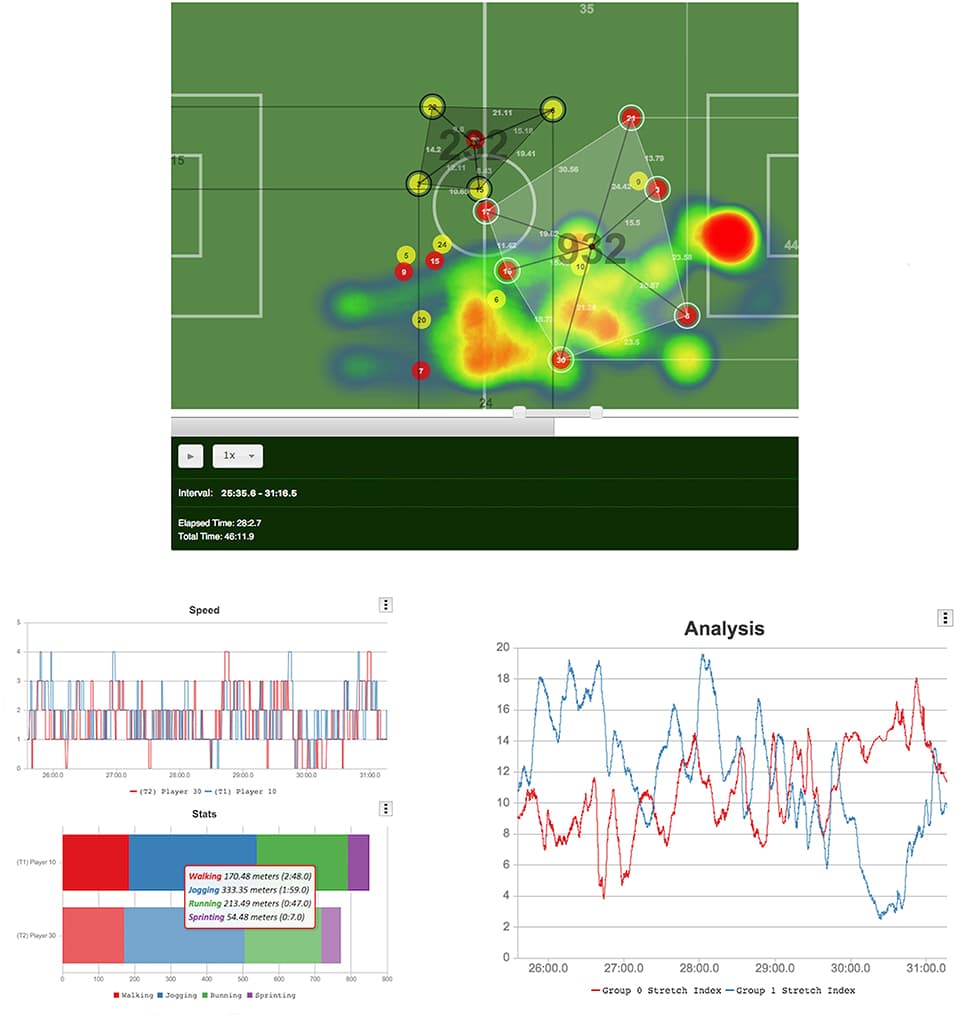
Sports

Statistics evaluate player performance and team strategies.

Government

Governments analyze population, employment, and education statistics.

Statistics helps organizations make informed decisions based on data.


13. Importance of Statistics

Statistics is important because it allows us to:

  • Understand large datasets
  • Identify trends and patterns
  • Make predictions
  • Support decision-making
  • Conduct scientific research

In today’s data-driven world, statistics plays a crucial role in solving real-world problems.


14. Conclusion

Statistics is a powerful branch of mathematics that focuses on collecting, organizing, analyzing, and interpreting data. It provides tools for understanding complex information and making informed decisions. Through methods such as descriptive statistics, probability, and inferential analysis, statistics helps researchers uncover patterns and relationships within data.

From scientific research to business planning and public policy, statistics is widely used to analyze information and guide decision-making. As data continues to grow in importance in modern society, the role of statistics becomes increasingly significant in shaping knowledge and innovation.


Calculus in Mathematics – Detailed Explanation with Examples

Calculus in Mathematics – Detailed Explanation with Examples

1. Introduction to Calculus

Image
Image
Image
Image

Calculus is one of the most important branches of mathematics that studies change and motion. It focuses on how quantities vary continuously and how we can measure these changes precisely. Calculus is widely used in fields such as physics, engineering, economics, computer science, astronomy, and biology.

The term calculus comes from a Latin word meaning “small stone,” referring to the stones once used for counting and calculations.

Calculus primarily deals with two major concepts:

  1. Differential Calculus – the study of rates of change and slopes of curves.
  2. Integral Calculus – the study of accumulation of quantities and the area under curves.

These two branches are closely related through the Fundamental Theorem of Calculus, which shows how differentiation and integration are inverse processes.

Calculus allows us to answer questions such as:

  • How fast is an object moving at a particular moment?
  • How can we calculate the area under an irregular curve?
  • How do populations grow over time?
  • How can engineers optimize designs?

Before calculus was developed, mathematics mainly dealt with static quantities. Calculus introduced the ability to analyze dynamic systems where values change continuously.


2. Historical Development of Calculus

Image
Image
Image
Image

The development of calculus was a gradual process that involved contributions from many mathematicians.

Early Foundations

Ancient mathematicians studied problems related to area, volume, and motion long before calculus formally existed.

Greek mathematician Archimedes used a technique called the method of exhaustion to calculate areas and volumes of shapes. This method involved approximating a shape using smaller and smaller pieces, which resembles modern integral calculus.

Development in the 17th Century

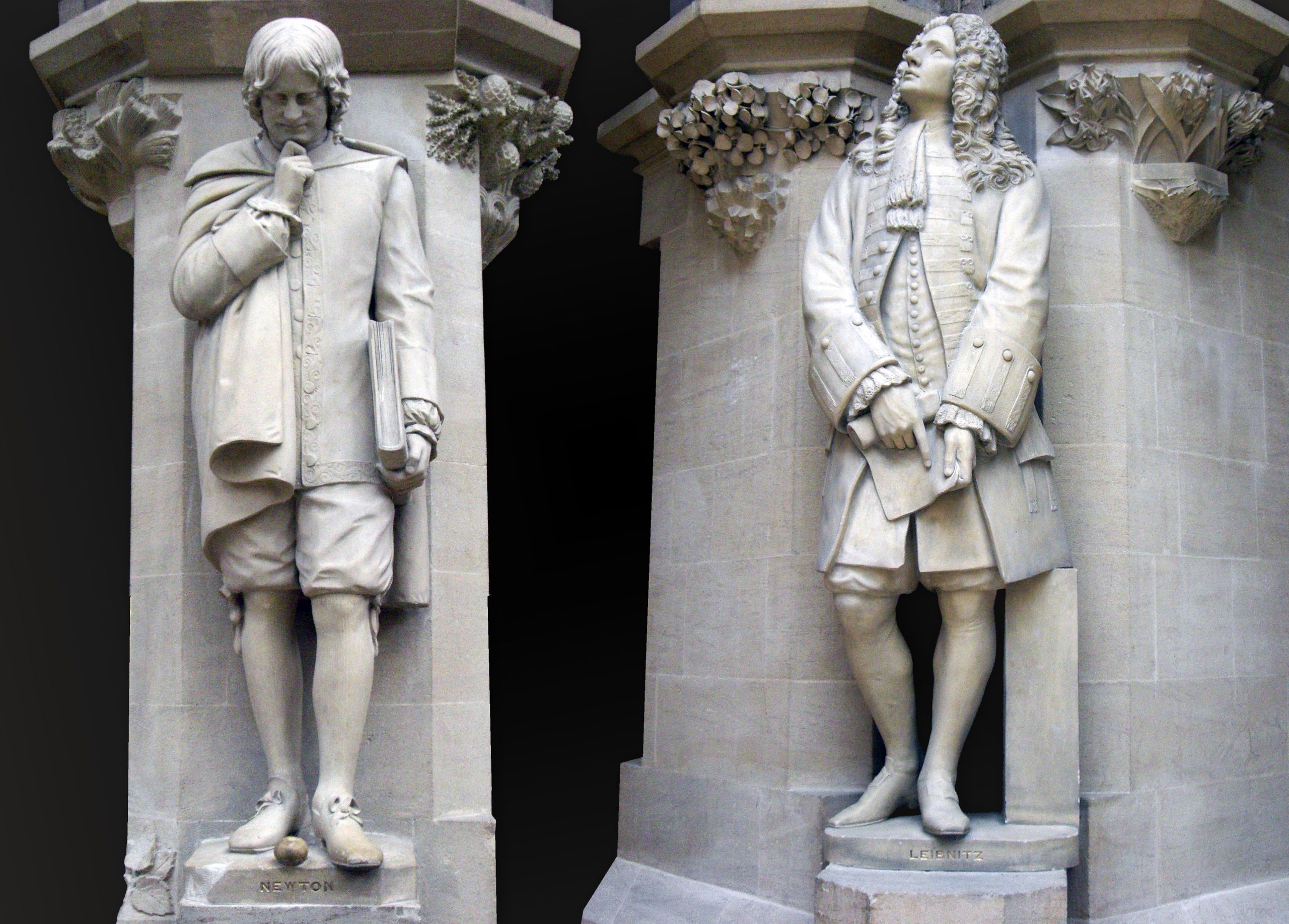
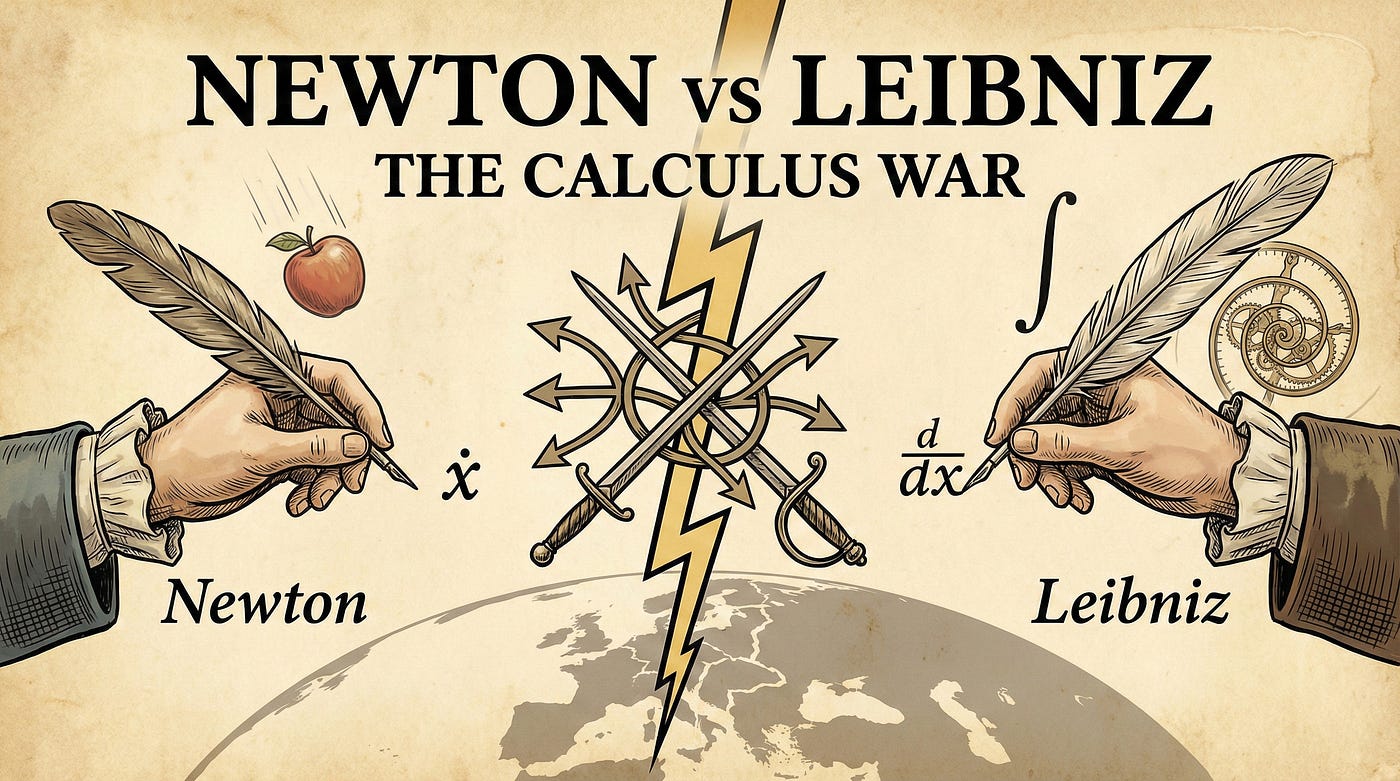
Calculus was independently developed in the late 17th century by two mathematicians:

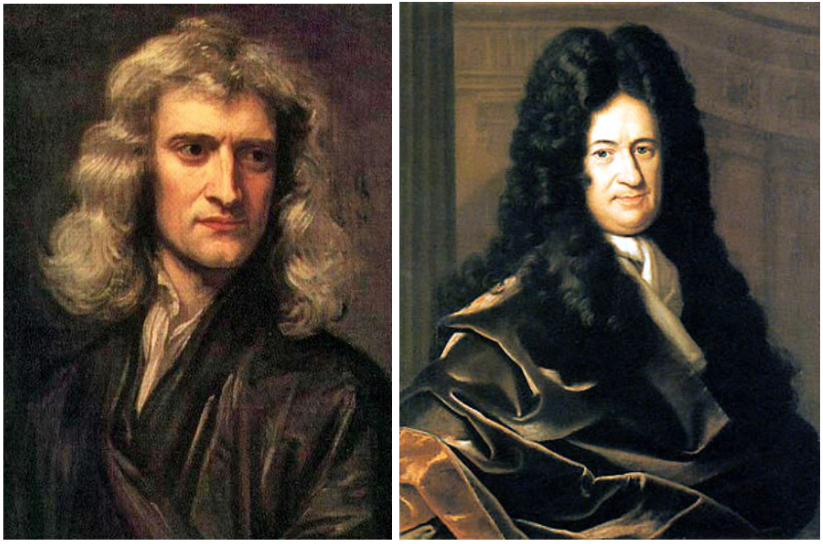
  • Isaac Newton
  • Gottfried Wilhelm Leibniz

Newton developed calculus to study motion and physics, especially for understanding planetary movement and gravitational forces.

Leibniz developed a systematic mathematical notation that is still widely used today. His symbols for derivatives and integrals made calculus easier to apply and understand.

Although both mathematicians developed calculus independently, their work together formed the foundation of modern calculus.

Growth of Calculus

After Newton and Leibniz, many mathematicians expanded calculus, including:

  • Euler
  • Lagrange
  • Cauchy
  • Gauss

These mathematicians improved mathematical rigor and developed new techniques for solving complex problems.

Today calculus is a core subject in advanced mathematics and science.

3. Limits – The Foundation of Calculus

Image
Image
Image
Image

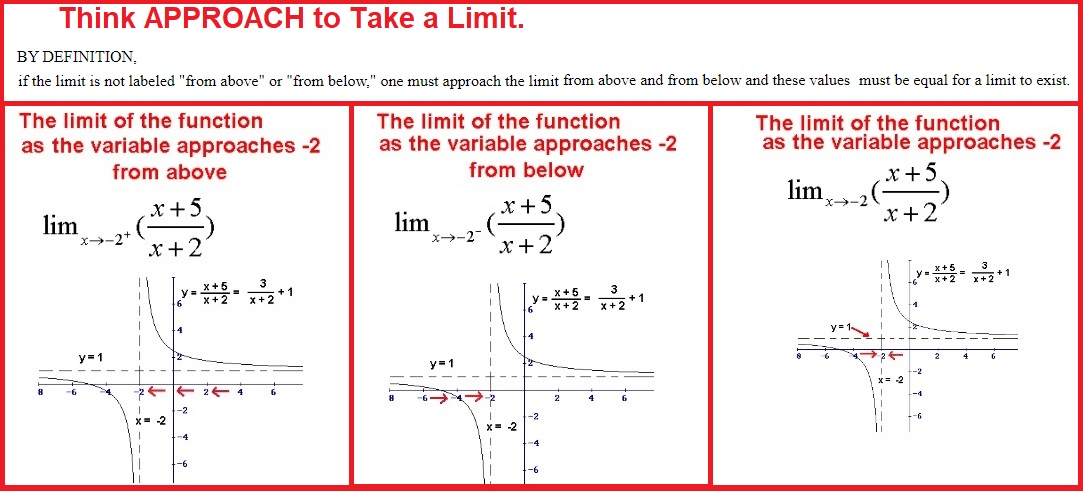
The concept of limits is fundamental to calculus.

A limit describes the value that a function approaches as the input approaches a certain number.

For example:

[
\lim_{x \to a} f(x)
]

This means the value that the function f(x) approaches as x approaches a.

Limits allow mathematicians to analyze behavior near a point even if the function is not defined exactly at that point.

Example of a Limit

Consider the function:

[
f(x)=\frac{x^2-1}{x-1}
]

If we substitute x = 1, we get:

[
\frac{1-1}{0}
]

which is undefined.

However, if we simplify:

[
f(x)=x+1
]

Then as x approaches 1, the value approaches 2.

So the limit is:

[
\lim_{x \to 1} \frac{x^2-1}{x-1} = 2
]

Limits help define both derivatives and integrals, making them essential in calculus.


4. Differential Calculus

Image
Image
Image
Image

Differential calculus studies how functions change. It focuses on the rate of change of a quantity.
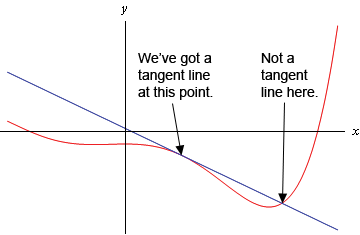
The central concept in differential calculus is the derivative.

Derivative

The derivative measures how fast a function changes with respect to its variable.

Mathematically:

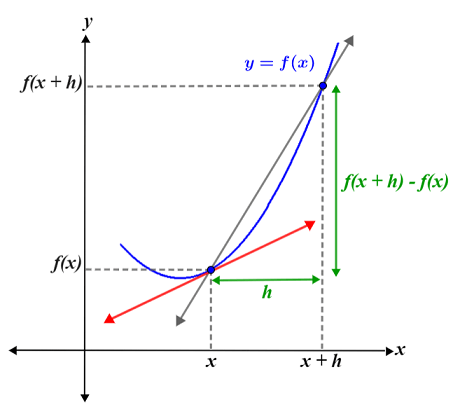
[
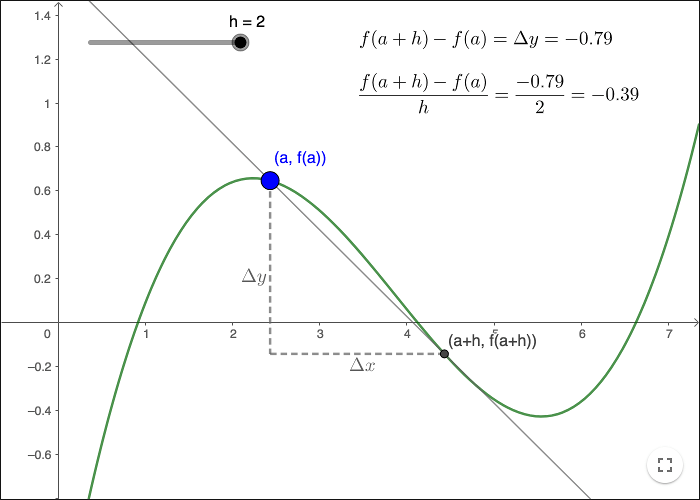
f'(x) = \lim_{h \to 0} \frac{f(x+h)-f(x)}{h}
]

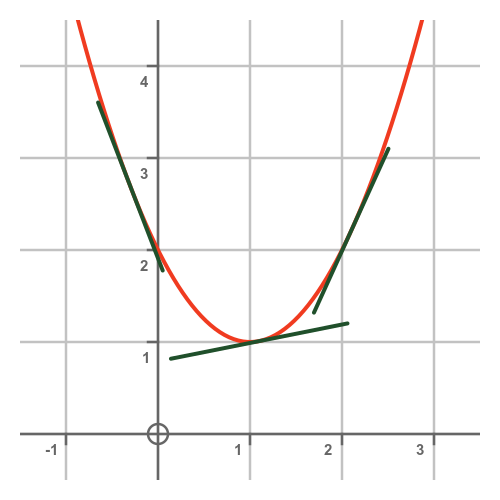
This expression represents the slope of the tangent line to a curve at a specific point.

Geometric Meaning

The derivative represents the slope of a curve at a point.

If a function represents position, its derivative represents velocity.

Example

Given:

[
f(x)=x^2
]

Derivative:

[
f'(x)=2x
]

This means the rate of change of the function increases as x increases.


5. Rules of Differentiation

Differentiation has several rules that simplify calculations.

Power Rule

[
\frac{d}{dx}(x^n)=nx^{n-1}
]

Example:

[
\frac{d}{dx}(x^4)=4x^3
]

Sum Rule

[
\frac{d}{dx}(f(x)+g(x))=f'(x)+g'(x)
]

Product Rule

[
\frac{d}{dx}(uv)=u’v+uv’
]

Quotient Rule

[
\frac{d}{dx}\left(\frac{u}{v}\right)=\frac{u’v-uv’}{v^2}
]

Chain Rule

Used for composite functions.

[
\frac{d}{dx}f(g(x))=f'(g(x))g'(x)
]

These rules allow derivatives of complex functions to be calculated efficiently.


6. Applications of Derivatives

Image
Image
Image
Image

Derivatives have many practical applications.

1. Finding Slopes

Derivatives determine the slope of curves at any point.

2. Velocity and Acceleration

If:

[
s(t)
]

represents position, then:

Velocity:

[
v(t)=\frac{ds}{dt}
]

Acceleration:

[
a(t)=\frac{d^2s}{dt^2}
]

3. Optimization

Derivatives help find maximum and minimum values of functions.

Examples include:

  • Maximizing profit
  • Minimizing cost
  • Designing efficient structures

4. Curve Sketching

Derivatives help analyze:

  • Increasing or decreasing intervals
  • Turning points
  • Concavity

7. Integral Calculus

Image
Image
Image

Integral calculus deals with accumulation and total quantities.

Integration is the reverse process of differentiation.

Indefinite Integral

[
\int f(x)dx
]

This represents the family of functions whose derivative is f(x).

Example:

[
\int 2x,dx=x^2+C
]

where C is a constant.

Definite Integral

[
\int_a^b f(x)dx
]

This calculates the area under the curve between a and b.

Example:

[
\int_0^2 x,dx
]

Solution:

[
\frac{x^2}{2}\Big|_0^2
]

[
=2
]


8. Methods of Integration

Substitution Method

Used when an integral contains a composite function.

Example:

[
\int 2x(x^2+1)^3 dx
]

Let:

[
u=x^2+1
]

Integration by Parts

Formula:

[
\int u,dv=uv-\int v,du
]

Partial Fractions

Used for rational functions.

Trigonometric Integrals

Used when integrals involve sine, cosine, or tangent functions.


9. Fundamental Theorem of Calculus

Image
Image
Image

The Fundamental Theorem of Calculus connects differentiation and integration.

It states that:

If:

[
F(x)=\int_a^x f(t)dt
]

then:

[
F'(x)=f(x)
]

This means:

Differentiation and integration cancel each other.

This theorem makes it possible to evaluate definite integrals using antiderivatives.


10. Applications of Integrals

Image
Image
Image
Image

Integrals have many real-world applications.

1. Area Under Curves

Integrals calculate areas of irregular shapes.

2. Volumes

Used to determine volumes of complex solids.

3. Work in Physics

Work done by a variable force:

[
W=\int F(x)dx
]

4. Probability

Total probability is calculated using integrals of probability density functions.

5. Engineering and Science

Integrals are used in:

  • Fluid mechanics
  • Signal processing
  • Heat transfer
  • Population growth models

11. Multivariable Calculus

In advanced mathematics, calculus extends to functions with multiple variables.

Example:

[
f(x,y)
]

Key concepts include:

  • Partial derivatives
  • Gradient
  • Double integrals
  • Triple integrals

These concepts are used in physics, machine learning, and engineering.


12. Importance of Calculus

Calculus is essential because it allows us to analyze continuous change.

It is used in many fields:

  • Physics (motion and forces)
  • Engineering (design and analysis)
  • Economics (optimization and growth)
  • Biology (population models)
  • Computer graphics (animation and simulation)

Without calculus, many modern technologies would not exist.


13. Conclusion

Calculus is one of the most powerful tools in mathematics. It provides methods to analyze change, motion, accumulation, and optimization. Through the concepts of limits, derivatives, and integrals, calculus helps solve problems that cannot be addressed by basic algebra or geometry.

From predicting planetary motion to designing modern engineering systems, calculus plays a crucial role in understanding the world around us. Its applications continue to expand as science and technology evolve, making it one of the most important subjects in mathematics and applied sciences.


Trigonometry in Mathematics – Detailed Explanation

Trigonometry

1. Introduction to Trigonometry

Image
Image
Image
Image

Trigonometry is a branch of mathematics that studies the relationships between the angles and sides of triangles, especially right-angled triangles.

The word trigonometry comes from the Greek words:

  • “trigonon” – meaning triangle
  • “metron” – meaning measure

Thus, trigonometry literally means “measurement of triangles.”

Trigonometry helps us determine unknown sides and angles of triangles using special ratios called trigonometric functions. These functions are fundamental in mathematics, physics, engineering, astronomy, architecture, navigation, and many other scientific fields.

The basic trigonometric functions are:

  1. Sine (sin)
  2. Cosine (cos)
  3. Tangent (tan)
  4. Cosecant (csc)
  5. Secant (sec)
  6. Cotangent (cot)

Trigonometry is essential for studying waves, oscillations, circular motion, and distances that cannot be measured directly.


2. History of Trigonometry

Image
Image
Image
Image

Trigonometry developed gradually over thousands of years through the work of mathematicians from different civilizations.

Ancient Civilizations

Early concepts related to trigonometry existed in:

  • Egypt
  • Babylon
  • China
  • India

Egyptians used geometric ratios to calculate pyramid slopes.

Greek Contributions

The Greek astronomer Hipparchus (190–120 BCE) is often called the father of trigonometry. He created the first known trigonometric tables based on chord lengths in circles.

Later, Ptolemy expanded these ideas and created more accurate mathematical tables.

Indian Contributions

Indian mathematicians such as Aryabhata developed early forms of sine and cosine functions, which later influenced Arabic and European mathematics.

Islamic Scholars

Islamic mathematicians expanded trigonometry by introducing:

  • Secant
  • Cosecant
  • Tangent tables

European Development

During the 16th and 17th centuries, mathematicians formalized trigonometry and developed the modern notation sin, cos, tan.

Today, trigonometry is a fundamental part of modern mathematics and science.


3. Right-Angled Triangle Basics

Image
Image
Image

A right-angled triangle contains one 90° angle.

The three sides of a right triangle are:

  1. Hypotenuse
    • Longest side
    • Opposite the right angle
  2. Opposite side
    • Opposite the given angle
  3. Adjacent side
    • Next to the given angle

These sides form the basis of trigonometric ratios.


4. Trigonometric Ratios

The six trigonometric ratios are defined as:

1. Sine (sin)

[
sin(\theta) = \frac{Opposite}{Hypotenuse}
]

2. Cosine (cos)

[
cos(\theta) = \frac{Adjacent}{Hypotenuse}
]

3. Tangent (tan)

[
tan(\theta) = \frac{Opposite}{Adjacent}
]

These ratios relate the sides of a triangle to an angle.

The other three functions are reciprocals:

  1. Cosecant

[
csc(\theta)=\frac{1}{sin(\theta)}
]

  1. Secant

[
sec(\theta)=\frac{1}{cos(\theta)}
]

  1. Cotangent

[
cot(\theta)=\frac{1}{tan(\theta)}
]


5. Unit Circle in Trigonometry

Image
Image
Image

The unit circle is a circle with radius = 1 centered at the origin.

It is used to extend trigonometric functions beyond right triangles.

Key concepts:

  • Coordinates on the circle represent cosine and sine values
  • Any point on the circle is written as:

[
(x,y)=(cos\theta,sin\theta)
]

Important angles include:

Anglesincos
01
30°1/2√3/2
45°√2/2√2/2
60°√3/21/2
90°10

6. Important Trigonometric Identities

Trigonometric identities are equations that are always true.

1. Pythagorean Identity

[
sin^2\theta + cos^2\theta = 1
]

2. Tangent Identity

[
1 + tan^2\theta = sec^2\theta
]

3. Cotangent Identity

[
1 + cot^2\theta = csc^2\theta
]

Reciprocal Identities

[
sin\theta = \frac{1}{csc\theta}
]

[
cos\theta = \frac{1}{sec\theta}
]

[
tan\theta = \frac{1}{cot\theta}
]

These identities help simplify trigonometric equations and solve complex problems.


7. Laws of Trigonometry

Law of Sines

[
\frac{a}{sinA} = \frac{b}{sinB} = \frac{c}{sinC}
]

Used when:

  • Two angles and one side are known.

Law of Cosines

[
c^2 = a^2 + b^2 – 2ab cosC
]

Used when:

  • Two sides and included angle are known.

These laws help solve any triangle, not just right triangles.


8. Trigonometry Graphs

Image
Image
Image

Trigonometric functions produce periodic graphs.

Sine Graph

  • Smooth wave
  • Period = 360° or (2\pi)

Cosine Graph

  • Similar to sine
  • Starts at maximum value

Tangent Graph

  • Repeating pattern
  • Vertical asymptotes

These graphs are used in studying waves, oscillations, and signal processing.


9. Example Problems

Example 1: Find sin θ

If:

Opposite = 4
Hypotenuse = 5

[
sin\theta = \frac{4}{5}
]


Example 2: Find the Height of a Tower

A ladder makes an angle 30° with the ground and reaches a wall.

Length of ladder = 10 m

Using sine:

[
sin30° = \frac{height}{10}
]

[
\frac{1}{2} = \frac{height}{10}
]

Height = 5 m


Example 3: Using Tangent

If:

Angle = 45°
Adjacent = 6

[
tan45° = \frac{Opposite}{6}
]

[
1 = \frac{Opposite}{6}
]

Opposite = 6


10. Applications of Trigonometry

Image
Image
Image
Image

Trigonometry has many real-life applications.

1. Architecture

Used to design:

  • Bridges
  • Buildings
  • Towers

2. Astronomy

Used to calculate distances between stars and planets.

3. Navigation

Used in:

  • Ships
  • Airplanes
  • GPS systems

4. Physics

Used to analyze:

  • Waves
  • Sound
  • Light

5. Engineering

Engineers use trigonometry to design:

  • Machines
  • Roads
  • Electronics

6. Geography and Surveying

Used to calculate heights and distances without measuring directly.


11. Importance of Trigonometry

Trigonometry is important because it helps:

  • Solve real-world measurement problems
  • Understand circular motion
  • Study waves and oscillations
  • Analyze periodic phenomena
  • Develop advanced mathematics such as calculus

Many modern technologies rely on trigonometric principles.


12. Conclusion

Trigonometry is a fundamental branch of mathematics that deals with the relationships between angles and sides of triangles. From ancient civilizations to modern science, it has played an essential role in solving problems involving distance, height, and angles.

By understanding trigonometric ratios, identities, graphs, and laws, students and researchers can solve complex mathematical and real-world problems.

Today, trigonometry is widely used in engineering, astronomy, architecture, navigation, and physics, making it one of the most practical areas of mathematics.


Arithmetic in Mathematics — A Detailed Overview

Arithmetic in Mathematics — A Detailed Overview

1. Introduction to Arithmetic

Arithmetic is the oldest and most fundamental branch of mathematics. It deals with numbers and the basic operations performed on them. These operations include addition, subtraction, multiplication, and division, which form the foundation of almost all mathematical calculations.

The word arithmetic originates from the Greek word arithmos, meaning number. Historically, arithmetic developed from the human need to count objects, measure quantities, and perform trade and commerce.

Arithmetic is introduced at the earliest stages of education because it provides the basic numerical skills needed for everyday life and advanced mathematical studies such as algebra, calculus, statistics, and number theory.

Examples of everyday arithmetic include:

  • Calculating the total price while shopping
  • Dividing a bill among friends
  • Measuring ingredients in cooking
  • Managing personal finances
  • Computing distances and time

Thus, arithmetic is essential not only in mathematics but also in science, engineering, economics, and daily decision-making.


2. History of Arithmetic

Arithmetic has a long history that spans thousands of years. Ancient civilizations developed numerical systems and methods to perform calculations.

Ancient Civilizations

Babylonians (around 2000 BCE)

  • Used a base-60 number system.
  • Developed early multiplication tables.
  • Used arithmetic for astronomy and trade.

Egyptians

  • Used arithmetic for construction, taxation, and land measurement.
  • Created methods for multiplication using repeated doubling.

Indians

  • Developed the decimal number system (base-10).
  • Introduced the concept of zero, which revolutionized arithmetic.
  • Indian mathematicians like Aryabhata and Brahmagupta made significant contributions.

Greeks

  • Studied arithmetic as part of philosophy and number theory.
  • Mathematicians like Euclid wrote about properties of numbers.

Medieval Period

During the medieval period, arithmetic spread through the Islamic world and Europe. Scholars translated and expanded mathematical works.

The Persian mathematician Al-Khwarizmi wrote important books on arithmetic and algebra, which influenced European mathematics.

Modern Period

With the development of symbolic notation and printing, arithmetic education spread widely. Today arithmetic is taught worldwide as the foundation of mathematics.


3. Number Systems

Arithmetic is based on numbers, which represent quantities. Over time, several types of numbers have been defined.

3.1 Natural Numbers

Natural numbers are the numbers used for counting objects.

Examples:

1, 2, 3, 4, 5, 6, …

Properties:

  • They start from 1.
  • They extend infinitely.
  • They are positive integers.

Example:

If there are 7 apples, the number 7 is a natural number.


3.2 Whole Numbers

Whole numbers include natural numbers and zero.

Examples:

0, 1, 2, 3, 4, 5, …

Properties:

  • Zero represents no quantity.
  • Whole numbers are non-negative integers.

Example:

If you have no books, the number of books is 0.


3.3 Integers

Integers include positive numbers, negative numbers, and zero.

Examples:

…, −3, −2, −1, 0, 1, 2, 3, …

Properties:

  • Used to represent gains and losses.
  • Used in temperature measurements and financial transactions.

Example:

  • Temperature −5°C means five degrees below zero.

3.4 Rational Numbers

Rational numbers are numbers that can be expressed as a fraction of two integers.

Form:

p / q

Where:

  • p = numerator
  • q = denominator (q ≠ 0)

Examples:

1/2
3/4
5/6

Decimals like 0.5, 0.25 are also rational numbers.


3.5 Irrational Numbers

Irrational numbers cannot be written as fractions.

Examples:

√2
π
√5

They have non-terminating and non-repeating decimal expansions.

Example:

π ≈ 3.141592653…


3.6 Real Numbers

Real numbers include all rational and irrational numbers.

They represent all points on the number line.

Examples:

−3, −1.5, 0, 2, √2, π


4. Basic Arithmetic Operations

Arithmetic consists of four fundamental operations.


4.1 Addition

Addition is the process of combining two or more numbers to find their total.

Symbol:

Example:

5 + 3 = 8

Here:

  • 5 and 3 are addends
  • 8 is the sum

Properties of Addition

1. Commutative Property

a + b = b + a

Example:

4 + 6 = 6 + 4 = 10

2. Associative Property

(a + b) + c = a + (b + c)

Example:

(2 + 3) + 4 = 2 + (3 + 4)

3. Identity Property

a + 0 = a

Example:

9 + 0 = 9


4.2 Subtraction

Subtraction is the process of finding the difference between two numbers.

Symbol:

Example:

9 − 4 = 5

Here:

  • 9 = minuend
  • 4 = subtrahend
  • 5 = difference

Subtraction is not commutative.

Example:

7 − 3 ≠ 3 − 7


4.3 Multiplication

Multiplication is repeated addition.

Symbol:

×

Example:

4 × 3 = 12

This means:

4 + 4 + 4 = 12

Properties of Multiplication

1. Commutative Property

a × b = b × a

Example:

3 × 5 = 5 × 3

2. Associative Property

(a × b) × c = a × (b × c)

Example:

(2 × 3) × 4 = 2 × (3 × 4)

3. Identity Property

a × 1 = a

Example:

7 × 1 = 7

4. Zero Property

a × 0 = 0

Example:

8 × 0 = 0


4.4 Division

Division is the process of splitting a number into equal parts.

Symbol:

÷ or /

Example:

12 ÷ 3 = 4

Meaning:

12 items divided into 3 equal groups gives 4 items per group.

Components:

  • Dividend
  • Divisor
  • Quotient

Example:

20 ÷ 5 = 4

20 = dividend
5 = divisor
4 = quotient


5. Fractions

A fraction represents a part of a whole.

Form:

a / b

Example:

3/4

Meaning 3 parts out of 4 equal parts.

Types of Fractions

1. Proper Fractions

Numerator < Denominator

Example:

3/5

2. Improper Fractions

Numerator ≥ Denominator

Example:

7/4

3. Mixed Fractions

Combination of whole number and fraction

Example:

2 1/3


6. Decimals

Decimals represent numbers in base-10 fractional form.

Examples:

0.5
0.75
2.35

Example:

1/2 = 0.5

Types of Decimals

Terminating decimals

Example:

0.25

Non-terminating repeating decimals

Example:

0.333…


7. Ratios and Proportions

Ratio

A ratio compares two quantities.

Example:

3:5

Meaning:

3 parts to 5 parts.

Example:

If there are 3 boys and 5 girls, the ratio is 3:5.


Proportion

A proportion states that two ratios are equal.

Example:

2/3 = 4/6


8. Percentages

Percentage means per hundred.

Symbol:

%

Example:

25% = 25/100

Applications:

  • Discounts
  • Interest rates
  • Statistics
  • Exam scores

Example:

If a student scores 80%, it means 80 out of 100 marks.


9. Powers and Roots

Exponents

An exponent represents repeated multiplication.

Example:

3² = 3 × 3 = 9

3³ = 3 × 3 × 3 = 27


Square Roots

Square root of a number is a value that when multiplied by itself gives the number.

Example:

√16 = 4

Because:

4 × 4 = 16


10. Order of Operations

Arithmetic operations follow a specific order known as BODMAS.

BODMAS stands for:

B – Brackets
O – Orders (powers, roots)
D – Division
M – Multiplication
A – Addition
S – Subtraction

Example:

8 + 4 × 2

Step 1: Multiply
4 × 2 = 8

Step 2: Add
8 + 8 = 16


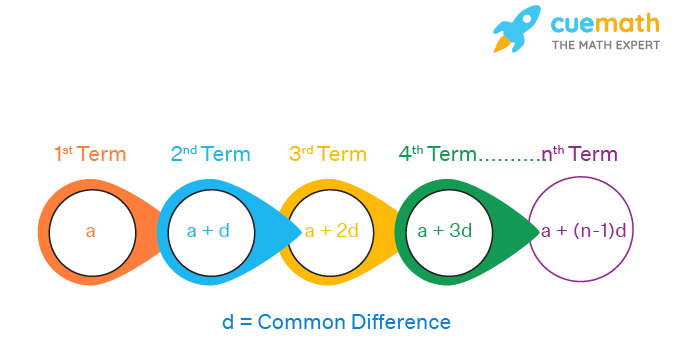
11. Arithmetic Progression

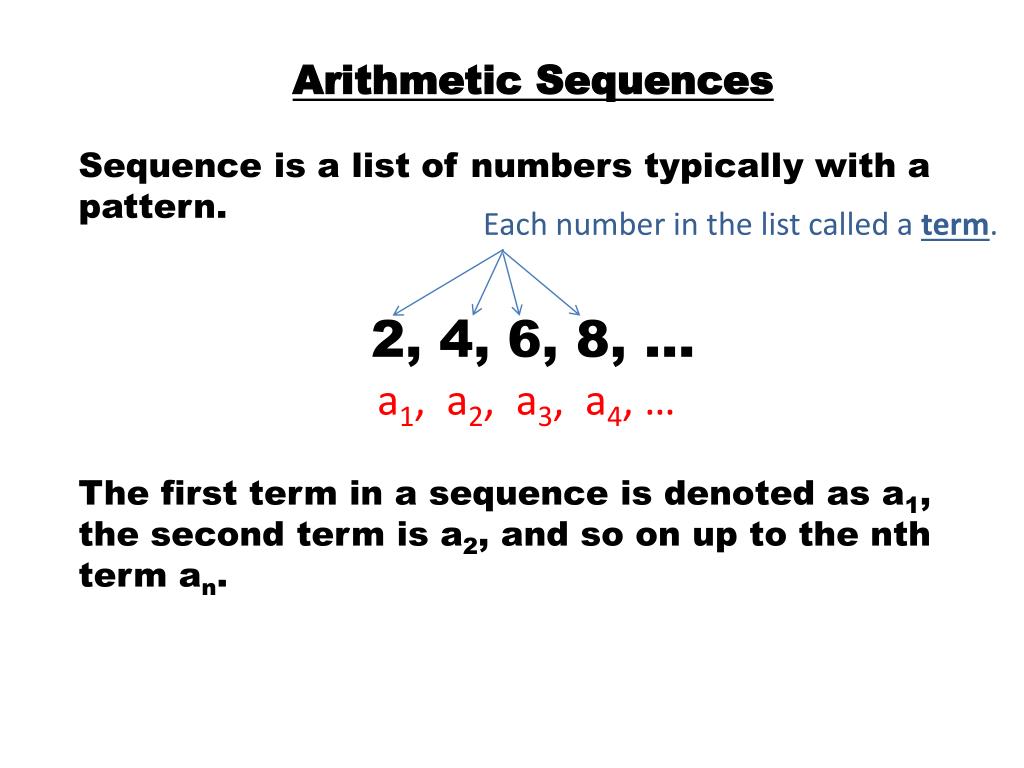
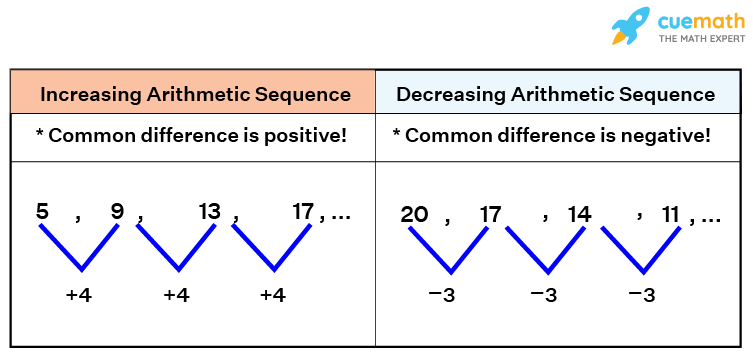
An Arithmetic Progression (AP) is a sequence of numbers where the difference between consecutive terms is constant.

Example:

2, 4, 6, 8, 10

Common difference:

2

Formula for nth term:

aₙ = a + (n − 1)d

Where:

a = first term
d = common difference
n = term number


12. Applications of Arithmetic

Arithmetic is used in many real-world activities.

1. Finance

  • Calculating interest
  • Budgeting
  • Banking

2. Business

  • Profit and loss
  • Cost calculations
  • Tax calculations

3. Engineering

  • Measurement
  • Structural calculations

4. Science

  • Data analysis
  • Measurement conversions

5. Daily Life

  • Cooking measurements
  • Shopping bills
  • Travel time calculations

13. Mental Arithmetic

Mental arithmetic refers to performing calculations without using paper or calculators.

Examples:

25 × 4 = 100

50 + 30 = 80

Mental arithmetic improves:

  • Memory
  • Concentration
  • Problem-solving ability

14. Importance of Arithmetic in Education

Arithmetic forms the foundation for higher mathematics.

Subjects built on arithmetic include:

  • Algebra
  • Geometry
  • Trigonometry
  • Calculus
  • Statistics

Without understanding arithmetic, it becomes difficult to study advanced mathematics.

Arithmetic also develops:

  • Logical thinking
  • Analytical skills
  • Problem-solving abilities

15. Arithmetic in Modern Technology

Arithmetic is essential in modern computing.

Applications include:

Computers

Processors perform billions of arithmetic operations per second.

Cryptography

Arithmetic is used in encryption algorithms.

Artificial Intelligence

Machine learning models rely on arithmetic calculations.

Data Science

Statistical analysis uses arithmetic operations extensively.


16. Challenges in Learning Arithmetic

Students often face difficulties with:

  • Understanding fractions
  • Long division
  • Word problems
  • Decimal calculations

These challenges can be overcome by:

  • Practice
  • Visual learning methods
  • Real-life examples
  • Interactive teaching tools

17. Strategies for Learning Arithmetic

Effective methods include:

  1. Practicing basic operations regularly
  2. Memorizing multiplication tables
  3. Using visual aids
  4. Solving word problems
  5. Applying arithmetic in daily life

18. Conclusion

Arithmetic is the cornerstone of mathematics and plays a crucial role in both academic learning and everyday life. It introduces the fundamental concepts of numbers and operations that support all higher mathematical studies.

From ancient civilizations to modern digital technologies, arithmetic has remained an essential tool for solving problems and understanding the world. Whether calculating expenses, measuring distances, or analyzing scientific data, arithmetic provides the numerical framework needed to perform these tasks efficiently.

By mastering arithmetic, individuals develop important cognitive skills such as logical reasoning, analytical thinking, and quantitative problem-solving. These skills are invaluable not only in mathematics but also in many professional fields including science, engineering, economics, and technology.

Therefore, arithmetic is not merely a school subject but a universal language of numbers that supports human progress and innovation.

Here are some important visuals related to Arithmetic in mathematics that help illustrate its main concepts like numbers, operations, fractions, and number lines.


1. Basic Arithmetic Operations

Image
Image
Image
Image

The four fundamental arithmetic operations form the foundation of all mathematics:

  • Addition (+) – Combining numbers to get a total
    Example: 7 + 3 = 10
  • Subtraction (−) – Finding the difference between numbers
    Example: 10 − 4 = 6
  • Multiplication (×) – Repeated addition
    Example: 4 × 5 = 20
  • Division (÷) – Splitting into equal parts
    Example: 20 ÷ 4 = 5

These operations are used in almost every mathematical calculation.


2. Number Line Representation

Image
Image
Image
Image

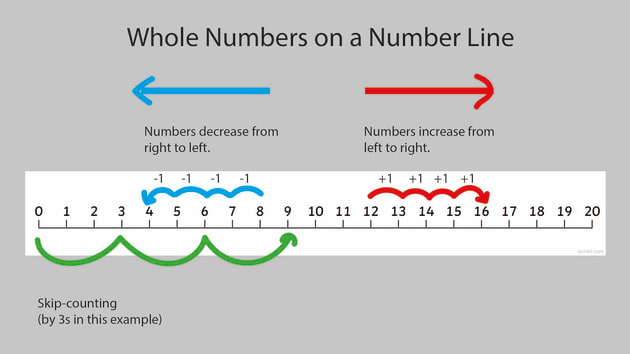
A number line is a straight line used to visually represent numbers.

Features:

  • Numbers increase as we move to the right
  • Numbers decrease as we move to the left
  • Zero (0) is the center point
  • Right side → positive numbers
  • Left side → negative numbers

Number lines help students understand:

  • Addition and subtraction
  • Integers
  • Distance between numbers

Example:

3 + 2 means moving two steps to the right from 3.


3. Fractions and Parts of a Whole

Image
Image
Image
Image

Fractions represent parts of a whole object.

Example:

3/4 means:

  • 3 parts selected
  • out of 4 equal parts

Components of a fraction:

  • Numerator – top number (number of parts taken)
  • Denominator – bottom number (total equal parts)

Example:

5/8 → five parts out of eight.

Fractions are widely used in:

  • cooking measurements
  • financial calculations
  • engineering measurements

4. Decimal Number System

Image
Image
Image

Decimals are another way to represent fractions using the base-10 system.

Example:

1/2 = 0.5

In a decimal place value chart:

PlaceValue
Tens10
Ones1
Tenths0.1
Hundredths0.01

Example:

45.67 means:

  • 4 tens
  • 5 ones
  • 6 tenths
  • 7 hundredths

Decimals are commonly used in:

  • money calculations
  • measurements
  • scientific data.

5. Arithmetic Progression Pattern

Image
Image
Image
Image

An Arithmetic Progression (AP) is a sequence where the difference between consecutive numbers is constant.

Example:

2, 4, 6, 8, 10

Common difference = 2

Formula:

[
a_n = a + (n-1)d
]

Where:

  • a = first term
  • d = common difference
  • n = term number

Arithmetic progressions appear in:

  • finance calculations
  • computer algorithms
  • scientific modeling.

Algebra in Mathematics: A Comprehensive Guide

Introduction to Algebra

Algebra is one of the central branches of mathematics that deals with symbols and the rules for manipulating those symbols. Unlike arithmetic, which focuses on specific numerical values, algebra introduces variables—letters that represent numbers—to express general relationships and patterns. Through algebra, mathematicians can formulate equations, model real-world problems, and explore abstract structures.

The word “algebra” originates from the Arabic term al-jabr, from the title of a 9th-century book written by the Persian mathematician Muhammad ibn Musa al-Khwarizmi. His work laid the foundation for systematic equation solving and influenced mathematical development in Europe and beyond.

Algebra is not merely about solving for “x”; it is a powerful language that describes patterns, relationships, structures, and transformations. It serves as the gateway to higher mathematics such as calculus, linear algebra, abstract algebra, number theory, and mathematical modeling.


Historical Development of Algebra

Algebra evolved gradually across civilizations.

Ancient Civilizations

  • Babylonians solved quadratic-type problems using geometric reasoning.
  • Egyptians used algebraic thinking in solving practical problems involving trade and land measurement.
  • Greeks, especially Diophantus of Alexandria, introduced symbolic representations and solved indeterminate equations.

Indian Contributions

Indian mathematicians like Brahmagupta made significant contributions to quadratic equations and introduced rules involving zero and negative numbers.

Islamic Golden Age

The most significant breakthrough came with Muhammad ibn Musa al-Khwarizmi, whose systematic methods for solving linear and quadratic equations formalized algebra as a discipline.

European Renaissance

Mathematicians such as Gerolamo Cardano and François Viète advanced symbolic algebra and solved cubic and quartic equations.

Modern Era

The 19th century saw the development of abstract algebra, led by mathematicians like Évariste Galois, who connected algebra to group theory.


Basic Concepts of Algebra

1. Variables

Variables are symbols, usually letters like x, y, or z, that represent unknown or changing values.

Example:
x + 5 = 10

Here, x is a variable.


2. Constants

Constants are fixed numerical values.

Example:
In 3x + 7, the numbers 3 and 7 are constants.


3. Expressions

An algebraic expression is a combination of variables, numbers, and operations.

Examples:

  • 2x + 3
  • 4a² − 5a + 6

Expressions do not contain equality signs.


4. Equations

An equation states that two expressions are equal.

Example:
2x + 3 = 7

Solving an equation means finding the value of the variable that makes the equation true.


5. Inequalities

Inequalities compare expressions using symbols such as:

  • (greater than)
  • < (less than)
  • ≥ (greater than or equal to)
  • ≤ (less than or equal to)

Example:
x + 2 > 5


Algebraic Operations

Algebra involves operations similar to arithmetic but applied to variables.

Addition and Subtraction

Like terms (terms with the same variables and exponents) can be combined.

Example:
3x + 2x = 5x


Multiplication

Multiplication distributes over addition:

a(b + c) = ab + ac

Example:
2(x + 3) = 2x + 6


Division

Division can simplify expressions:

6x ÷ 3 = 2x


Laws of Exponents

Algebra uses exponent rules:

  • a^m × a^n = a^(m+n)
  • (a^m)^n = a^(mn)
  • a^0 = 1
  • a^−n = 1 / a^n

These rules simplify complex expressions.


Linear Equations

A linear equation has degree 1.

Example:
2x + 5 = 11

Solution:
2x = 6
x = 3

Linear equations can have:

  • One solution
  • No solution
  • Infinitely many solutions

Systems of Linear Equations

A system contains two or more equations.

Example:
x + y = 5
x − y = 1

Methods of solving:

  • Substitution
  • Elimination
  • Graphing

Quadratic Equations

A quadratic equation has degree 2.

Standard form:
ax² + bx + c = 0

Methods of solving:

  1. Factoring
  2. Completing the square
  3. Quadratic formula:

x = (-b ± √(b² − 4ac)) / 2a

The expression b² − 4ac is called the discriminant.


Polynomials

A polynomial is an expression consisting of variables and coefficients.

Examples:

  • 3x² + 2x + 1
  • 5a³ − 4a + 7

Degree of a polynomial: highest exponent.

Operations with polynomials:

  • Addition
  • Subtraction
  • Multiplication
  • Division (long division or synthetic division)

Factoring

Factoring breaks expressions into products.

Examples:
x² − 9 = (x − 3)(x + 3)

Factoring techniques:

  • Common factors
  • Difference of squares
  • Trinomials
  • Grouping

Rational Expressions

Rational expressions are fractions containing polynomials.

Example:
(x + 1)/(x − 2)

They follow fraction rules:

  • Multiply numerators and denominators
  • Find common denominators for addition

Restrictions apply where denominator ≠ 0.


Radical Expressions

Radicals involve roots.

Example:
√(x²) = x (with restrictions)

Simplifying radicals involves factoring perfect squares.


Functions in Algebra

A function relates one input to one output.

Notation:
f(x) = 2x + 3

If x = 4:
f(4) = 11

Types of functions:

  • Linear
  • Quadratic
  • Polynomial
  • Rational
  • Exponential

Graphing in Algebra

Graphing shows relationships visually.

A linear equation:
y = 2x + 1

Has slope (2) and y-intercept (1).

Graphing helps:

  • Visualize solutions
  • Analyze trends
  • Understand functions

Exponential and Logarithmic Functions

Exponential function:
y = a^x

Logarithmic function:
log_a(x)

They are inverses.

Applications:

  • Population growth
  • Radioactive decay
  • Finance (compound interest)

Matrices and Determinants

Matrices organize numbers in rows and columns.

Example:
[ 1 2 ]
[ 3 4 ]

Used in:

  • Solving systems
  • Transformations
  • Computer graphics

Abstract Algebra

Abstract algebra studies algebraic structures:

  • Groups
  • Rings
  • Fields

Group theory studies symmetry and transformations.


Algebraic Identities

Common identities:

(a + b)² = a² + 2ab + b²
(a − b)² = a² − 2ab + b²
a² − b² = (a − b)(a + b)


Word Problems

Algebra translates real-world problems into equations.

Example:
If a number increased by 5 equals 12, find the number.

Let x = number
x + 5 = 12
x = 7


Applications of Algebra

Algebra is used in:

  1. Engineering
  2. Physics
  3. Computer Science
  4. Economics
  5. Cryptography
  6. Data Science
  7. Architecture

Importance of Algebra

  • Develops logical reasoning.
  • Enhances problem-solving.
  • Builds foundation for calculus.
  • Essential for scientific research.
  • Critical in technology development.

Common Mistakes in Algebra

  • Misapplying exponent rules
  • Sign errors
  • Incorrect distribution
  • Ignoring restrictions in rational expressions

Algebra in Modern Education

Algebra is taught progressively:

  • Pre-algebra
  • Elementary algebra
  • Intermediate algebra
  • Advanced algebra

It prepares students for STEM fields.


Relationship Between Algebra and Other Fields

  • Algebra + Geometry = Coordinate Geometry
  • Algebra + Calculus = Advanced mathematical modeling
  • Algebra + Statistics = Data analysis

Conclusion

Algebra is a powerful and essential branch of mathematics that extends arithmetic into the realm of generalization and abstraction. It introduces variables to represent unknowns and relationships, enabling the formulation of equations and mathematical models.

From solving simple linear equations to exploring abstract algebraic structures, algebra forms the backbone of advanced mathematics and scientific research. It is indispensable in engineering, physics, economics, computing, and many other disciplines.

The development of algebra through centuries—from ancient Babylonian methods to modern abstract theory—demonstrates its evolving and dynamic nature. Mastering algebra equips individuals with analytical skills, logical reasoning, and the ability to model and solve real-world problems.

Algebra is not just about symbols and equations; it is a language that describes patterns, relationships, and structures across the universe.


Tags

Algebra, Mathematics, Variables, Equations, Linear Equations, Quadratic Equations, Polynomials, Factoring, Functions, Inequalities, Exponents, Logarithms, Matrices, Abstract Algebra, Group Theory, Rational Expressions, Radical Expressions, Mathematical Modeling, STEM Education, Mathematical Structures

Arithmetic in Mathematics: A Comprehensive Guide

Introduction to Arithmetic

Arithmetic is one of the oldest and most fundamental branches of mathematics. It deals with numbers and the basic operations performed on them. From counting objects in ancient civilizations to performing complex financial calculations in modern economies, arithmetic forms the foundation upon which all higher mathematics is built. Every mathematical discipline—whether algebra, geometry, calculus, statistics, or number theory—relies on arithmetic principles.

The word “arithmetic” originates from the Greek word arithmos, meaning “number.” Historically, arithmetic developed alongside trade, astronomy, architecture, and engineering. Ancient civilizations such as the Egyptians, Babylonians, Greeks, Indians, and Chinese made significant contributions to arithmetic systems and methods. Today, arithmetic is introduced at an early age because it is essential not only for academic study but also for daily life activities like budgeting, measuring, shopping, and planning.

Arithmetic primarily focuses on understanding numbers, their properties, relationships, and operations. These operations include addition, subtraction, multiplication, and division. Over time, arithmetic has expanded to include fractions, decimals, percentages, ratios, proportions, exponents, roots, and more.


Types of Numbers in Arithmetic

Arithmetic works with different types of numbers. Understanding these categories is essential for mastering arithmetic.

1. Natural Numbers

Natural numbers are counting numbers:
1, 2, 3, 4, 5, and so on.
They are used for counting objects.

2. Whole Numbers

Whole numbers include all natural numbers and zero:
0, 1, 2, 3, 4, …

3. Integers

Integers include positive numbers, negative numbers, and zero:
…, -3, -2, -1, 0, 1, 2, 3, …

4. Rational Numbers

Rational numbers can be expressed as a fraction of two integers, where the denominator is not zero.
Examples: 1/2, -3/4, 5, 0.75

5. Real Numbers

Real numbers include rational and irrational numbers (like √2 and π). While arithmetic mainly focuses on rational numbers, real numbers extend arithmetic concepts further.


Fundamental Operations of Arithmetic

Arithmetic is built around four basic operations.

1. Addition

Addition combines two or more numbers to produce a sum.
Example: 5 + 3 = 8

Properties of Addition:

  • Commutative Property: a + b = b + a
  • Associative Property: (a + b) + c = a + (b + c)
  • Identity Property: a + 0 = a

Addition is used in counting totals, calculating expenses, and combining quantities.


2. Subtraction

Subtraction finds the difference between numbers.
Example: 9 − 4 = 5

Subtraction is not commutative:
5 − 3 ≠ 3 − 5

Subtraction is used to determine remaining quantities, differences in values, and financial balances.


3. Multiplication

Multiplication represents repeated addition.
Example: 4 × 3 = 12 (4 + 4 + 4)

Properties of Multiplication:

  • Commutative Property: a × b = b × a
  • Associative Property: (a × b) × c = a × (b × c)
  • Identity Property: a × 1 = a
  • Zero Property: a × 0 = 0

Multiplication is essential in scaling, area calculations, and financial growth.


4. Division

Division is the process of distributing a number into equal parts.
Example: 12 ÷ 3 = 4

Division is the inverse of multiplication.
Division by zero is undefined.


Order of Operations

When solving expressions with multiple operations, arithmetic follows the order of operations:

PEMDAS:

  • Parentheses
  • Exponents
  • Multiplication and Division (left to right)
  • Addition and Subtraction (left to right)

Example:
5 + 3 × 2 = 5 + 6 = 11


Fractions

Fractions represent parts of a whole.

Example: 3/4

Components:

  • Numerator (top number)
  • Denominator (bottom number)

Types of Fractions:

  • Proper fractions (3/5)
  • Improper fractions (7/4)
  • Mixed numbers (1 3/4)

Operations with fractions require common denominators for addition and subtraction.


Decimals

Decimals represent fractions in base-10 form.

Example:
1/2 = 0.5
3/4 = 0.75

Decimals are widely used in measurements, finance, and scientific calculations.


Percentages

A percentage represents a number out of 100.

Example:
50% = 50/100 = 0.5

Used in:

  • Discounts
  • Interest rates
  • Statistics
  • Grades

Ratios and Proportions

A ratio compares two quantities.
Example: 2:3

A proportion states that two ratios are equal.
Example:
2/3 = 4/6

Ratios and proportions are important in scaling recipes, maps, and models.


Exponents and Powers

An exponent indicates repeated multiplication.

Example:
2³ = 2 × 2 × 2 = 8

Laws of Exponents:

  • a^m × a^n = a^(m+n)
  • (a^m)^n = a^(mn)
  • a^0 = 1

Roots

Roots are the inverse of exponents.

Square root:
√16 = 4

Cube root:
∛27 = 3

Roots are used in geometry and scientific calculations.


Factors and Multiples

A factor divides a number evenly.
Example: Factors of 12 → 1, 2, 3, 4, 6, 12

A multiple is the product of a number and an integer.
Multiples of 5 → 5, 10, 15, 20…


Prime Numbers

A prime number has exactly two factors: 1 and itself.
Examples: 2, 3, 5, 7, 11

Composite numbers have more than two factors.

Prime factorization expresses a number as a product of prime numbers.

Example:
24 = 2 × 2 × 2 × 3


Greatest Common Divisor (GCD)

The largest number that divides two numbers.

Example:
GCD(12, 18) = 6


Least Common Multiple (LCM)

The smallest multiple common to two numbers.

Example:
LCM(4, 6) = 12


Arithmetic Sequences

An arithmetic sequence has a constant difference between terms.

Example:
2, 5, 8, 11…

Formula:
aₙ = a₁ + (n − 1)d


Applications of Arithmetic

Arithmetic is applied in:

  1. Finance (banking, interest, budgeting)
  2. Business (profit, loss, taxation)
  3. Science (measurements)
  4. Engineering (calculations)
  5. Education (foundational math)
  6. Daily life (shopping, cooking)

Mental Arithmetic

Mental arithmetic improves cognitive ability and speed.

Techniques include:

  • Breaking numbers into parts
  • Using rounding
  • Memorizing multiplication tables

History of Arithmetic

  • Ancient Egyptians used hieroglyphic numerals.
  • Babylonians developed base-60 systems.
  • Indians introduced the decimal system and zero.
  • Arabs transmitted the Hindu-Arabic numeral system to Europe.
  • Medieval scholars expanded arithmetic methods.

Arithmetic in Modern Education

Arithmetic is taught in stages:

  • Basic counting
  • Operations
  • Fractions and decimals
  • Word problems
  • Applied arithmetic

It builds logical reasoning and problem-solving skills.


Importance of Arithmetic

Arithmetic:

  • Forms the base of mathematics.
  • Develops logical thinking.
  • Enhances financial literacy.
  • Is essential for scientific understanding.
  • Is necessary for technological development.

Common Arithmetic Errors

  1. Ignoring order of operations.
  2. Misplacing decimal points.
  3. Division by zero.
  4. Calculation mistakes in multi-step problems.

Conclusion

Arithmetic is the cornerstone of mathematics. It is both ancient and modern, simple yet powerful. From basic counting to advanced scientific computation, arithmetic principles guide numerical reasoning. Mastery of arithmetic enables success in academics, business, science, and everyday life. It is not merely about numbers—it is about logical thinking, structured reasoning, and precise calculation.

Arithmetic continues to evolve with technology, but its core principles remain unchanged. Whether using a calculator or performing mental calculations, the foundation always lies in arithmetic.


Tags

Arithmetic, Mathematics, Basic Mathematics, Number System, Addition, Subtraction, Multiplication, Division, Fractions, Decimals, Percentages, Ratios, Proportions, Exponents, Roots, Prime Numbers, Factors, Multiples, GCD, LCM, Arithmetic Sequence, Mental Math, Mathematical Operations, Elementary Math, Numerical Calculations