🌍 Visual Overview: Judiciary and Justice System


📘 1. Introduction to the Judiciary
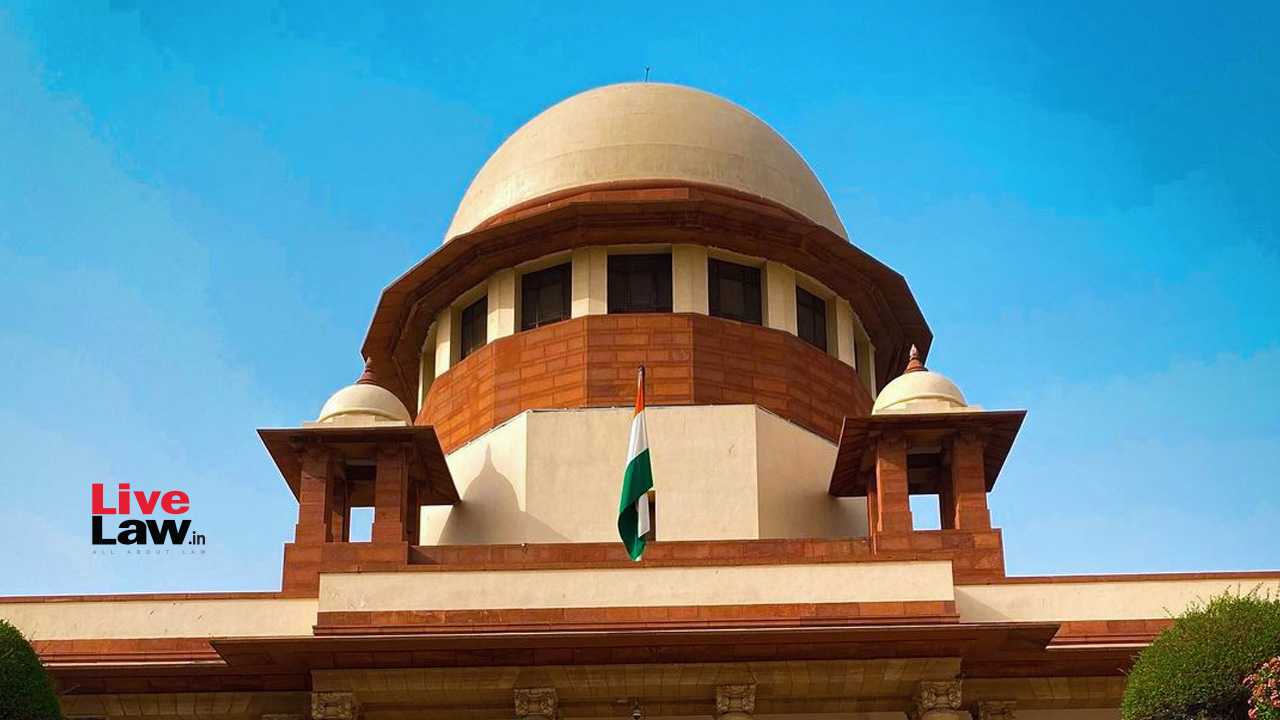
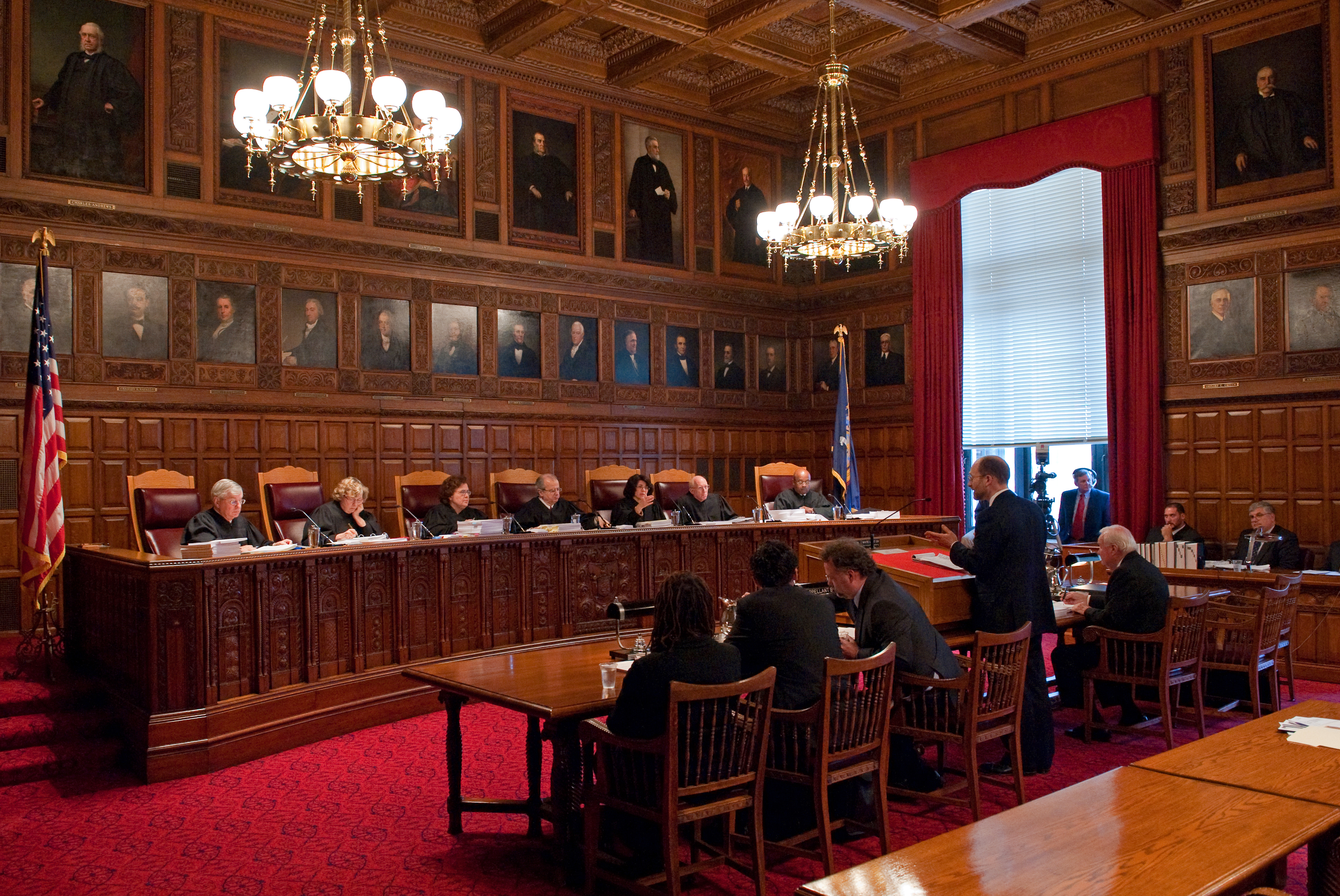
The Judiciary is one of the three essential organs of government, alongside the legislature and executive. It is responsible for interpreting laws, resolving disputes, and ensuring justice. In democratic systems, the judiciary acts as the guardian of the constitution and protector of individual rights.
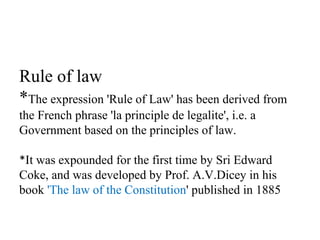
A strong and independent judiciary is crucial for maintaining the rule of law, upholding constitutional values, and preventing misuse of power by other branches of government.
🧠 2. Meaning and Definition of Judiciary
📌 Basic Meaning
The judiciary is the branch of government that interprets laws, adjudicates disputes, and ensures justice in society.
🧾 Definitions
- Montesquieu:
Judiciary interprets laws and ensures justice. - John Marshall:
“It is emphatically the province and duty of the judicial department to say what the law is.”
🔑 Key Features
- Independent institution
- Impartial decision-making
- Guardian of constitution
- Protector of rights
🧱 3. Structure of Judiciary
Most countries have a hierarchical judicial system:
🟢 3.1 Supreme Court
- Highest court
- Final authority
🔵 3.2 High Courts
- State-level courts
🟣 3.3 Subordinate Courts
- District and lower courts
🌍 Visual Representation


⚖️ 4. Independence of Judiciary
📌 Meaning
Judicial independence means that the judiciary is free from interference by the executive and legislature.
🧠 Importance
- Ensures fair justice
- Protects rights
- Maintains rule of law
🧩 Features of Judicial Independence
🟢 1. Security of Tenure
- Judges cannot be easily removed
🔵 2. Fixed Salaries
- Financial security
🟣 3. Separation from Executive
- Independent functioning
🔴 4. Impartial Appointment Process
🟡 5. Judicial Immunity
- Protection from external pressure
🌍 Visual Representation


⚠️ 5. Challenges to Judicial Independence
🔴 Political Pressure
🔵 Corruption
🟣 Delay in justice
🟡 Lack of transparency
⚖️ 6. Judicial Review
📌 Meaning
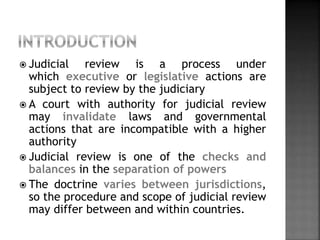
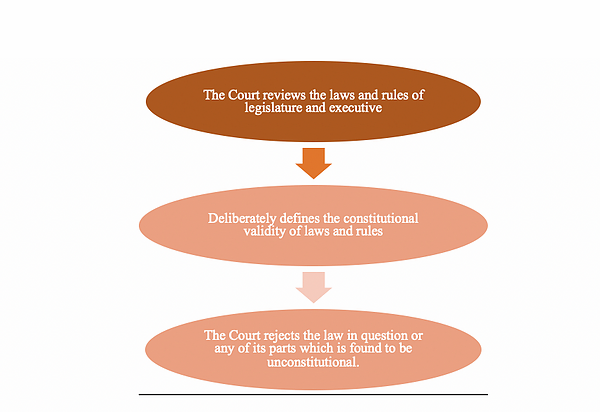
Judicial review is the power of courts to examine the constitutionality of laws and government actions.
🧠 Origin
- Developed in the United States
- John Marshall played a key role
🧩 Features
- Courts can invalidate laws
- Protect constitution
- Check government power
🌍 Visual Representation


🧩 7. Types of Judicial Review
🟢 1. Constitutional Review
- Examines laws
🔵 2. Administrative Review
- Reviews executive actions
⚖️ 8. Importance of Judicial Review
🟢 Protects Constitution
🔵 Safeguards Rights
🟣 Maintains Balance of Power
🔴 Prevents Abuse of Authority
🔗 9. Judiciary and Other Organs
⚖️ Judiciary vs Legislature
- Interprets laws
⚖️ Judiciary vs Executive
- Checks actions
🌍 10. Judiciary in Different Systems
🟢 USA
- Strong judicial review
🔵 UK
- Limited judicial review
🟣 India
- Balanced approach
⚠️ 11. Judicial Activism and Restraint
🟢 Judicial Activism
- Active role in policy
🔵 Judicial Restraint
- Limited intervention
🧠 12. Importance of Judiciary
- Ensures justice
- Protects rights
- Maintains order
- Upholds constitution
🌐 13. Judiciary in Modern Context
📱 Digital Courts
- Online hearings
🌍 Global Influence
- International law
⚠️ 14. Challenges Faced by Judiciary
🔴 Case Backlog
🔵 Accessibility issues
🟣 Corruption
🟡 Lack of infrastructure
🧠 15. Reforms and Improvements
- Fast-track courts
- Transparency
- Judicial accountability
- Legal awareness
🧠 16. Conclusion
The judiciary is the guardian of justice and the constitution, ensuring that laws are applied fairly and rights are protected. Judicial independence and judicial review are essential for maintaining democracy, preventing abuse of power, and ensuring accountability.
A strong judiciary is vital for a fair, just, and democratic society.