


📘 1. Introduction to TCP/IP
TCP/IP (Transmission Control Protocol / Internet Protocol) is the fundamental communication protocol suite that enables devices to connect and communicate over the internet and other networks.
It is the backbone of:
- The Internet 🌍
- Local networks (LANs)
- Wide Area Networks (WANs)
🔹 Definition
TCP/IP is a set of communication protocols used to:
- Transmit data between devices
- Ensure reliable delivery
- Route data across networks
🔹 Why TCP/IP is Important
- Enables global communication
- Supports web browsing, email, streaming
- Provides standardized networking
🧠 2. History of TCP/IP
🔹 Development
- Developed in the 1970s
- Funded by the U.S. Department of Defense (ARPANET project)
🔹 Key Milestones
- 1983 → TCP/IP adopted as ARPANET standard
- Became foundation of modern internet
🏗️ 3. TCP/IP Model Layers


🔹 Four Layers of TCP/IP Model
1. Application Layer
- Interface for user applications
- Protocols:
- HTTP
- FTP
- SMTP
- DNS
2. Transport Layer
- End-to-end communication
- Protocols:
- TCP
- UDP
3. Internet Layer
- Logical addressing and routing
- Protocol:
- IP
4. Network Access Layer
- Physical transmission
- Includes Ethernet, Wi-Fi
🔄 4. Data Encapsulation Process

🔹 Steps
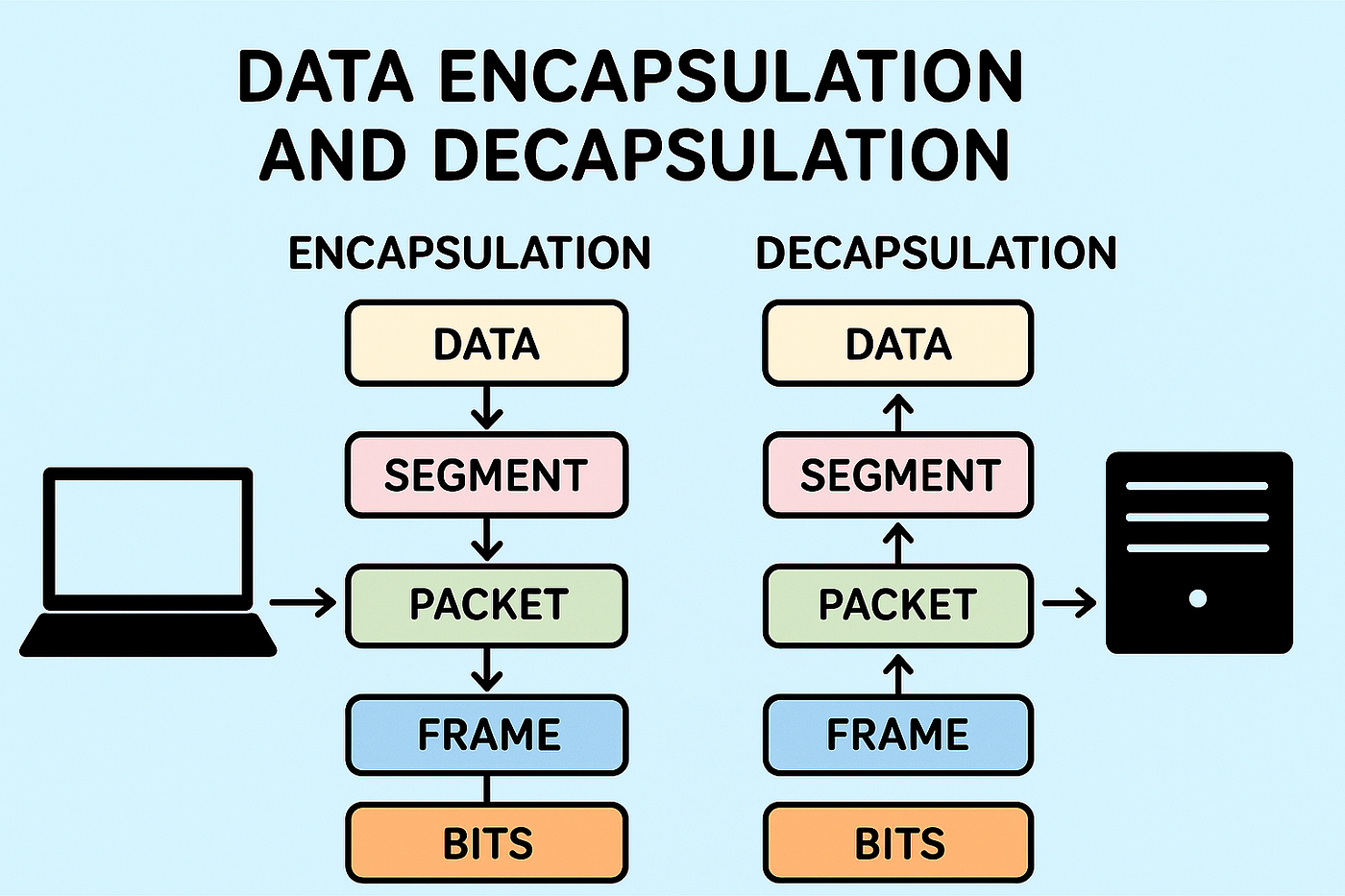
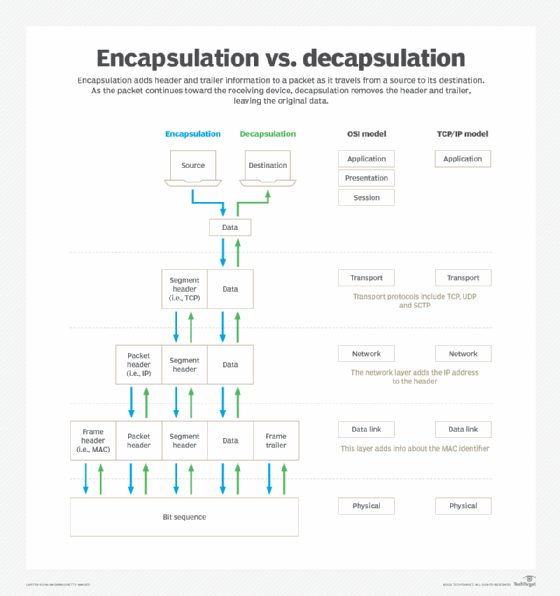
- Application layer creates data
- Transport layer adds header → Segment
- Internet layer adds IP header → Packet
- Network layer adds frame
🔑 5. Internet Protocol (IP)
🔹 Role of IP
- Provides addressing
- Routes packets
🔹 IP Address
Unique identifier for devices.
Types:
- IPv4 → 32-bit
- IPv6 → 128-bit
🔹 Example IPv4
192.168.1.1
🔄 6. Transmission Control Protocol (TCP)
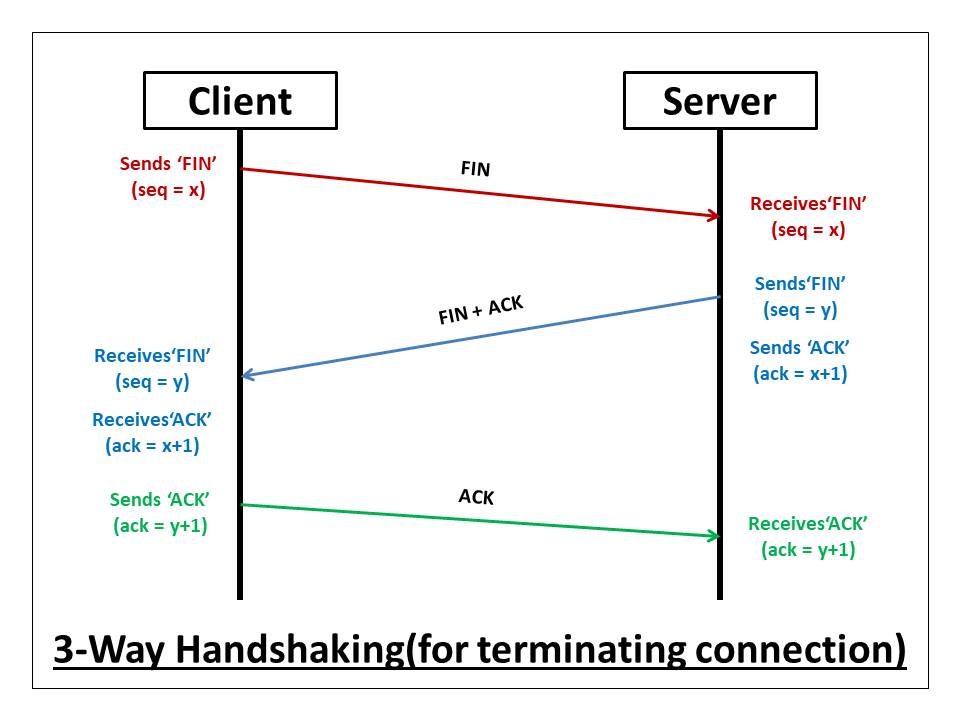


🔹 Features of TCP
- Connection-oriented
- Reliable
- Ordered delivery
- Error checking
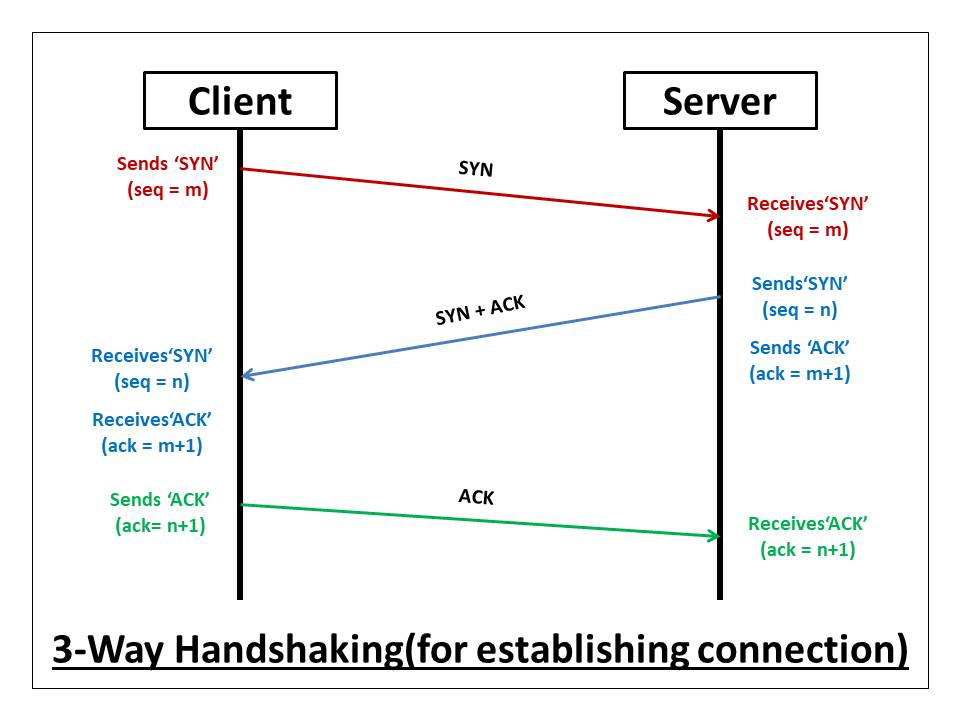
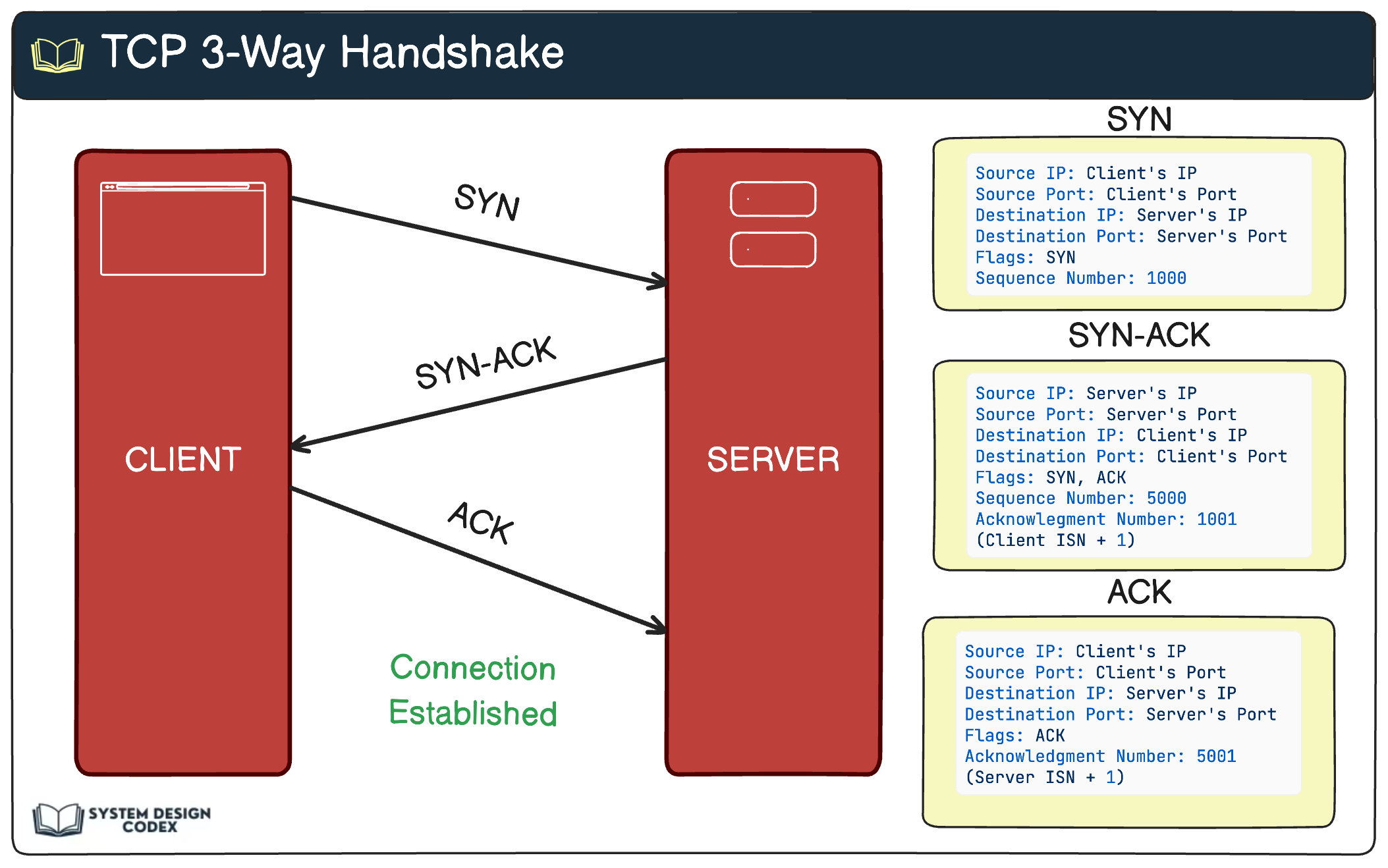
🔹 Three-Way Handshake
- SYN
- SYN-ACK
- ACK
🔹 Flow Control
- Sliding window mechanism
🔹 Congestion Control
- Avoids network overload
⚡ 7. User Datagram Protocol (UDP)
🔹 Features
- Connectionless
- Faster
- No guarantee of delivery
🔹 Use Cases
- Video streaming
- Online gaming
- DNS
🧠 8. TCP vs UDP
| Feature | TCP | UDP |
|---|---|---|
| Reliability | High | Low |
| Speed | Slower | Faster |
| Connection | Yes | No |
🔐 9. Ports and Sockets
🔹 Port Numbers
- Identify applications
Examples:
- HTTP → 80
- HTTPS → 443
🔹 Socket
Combination of:
- IP address
- Port number
🌐 10. DNS (Domain Name System)
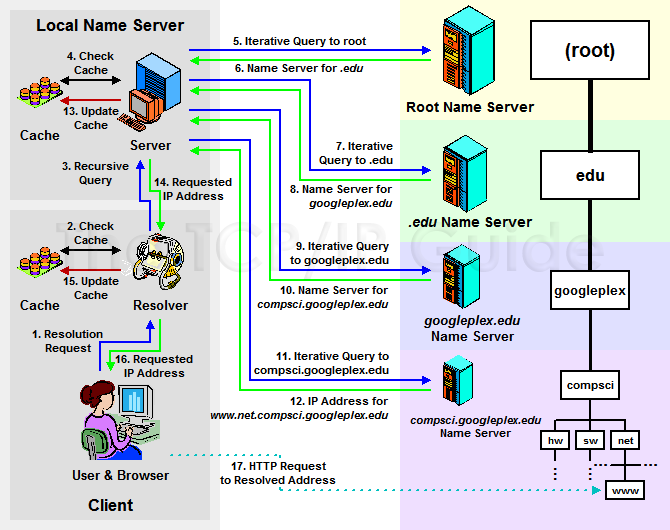
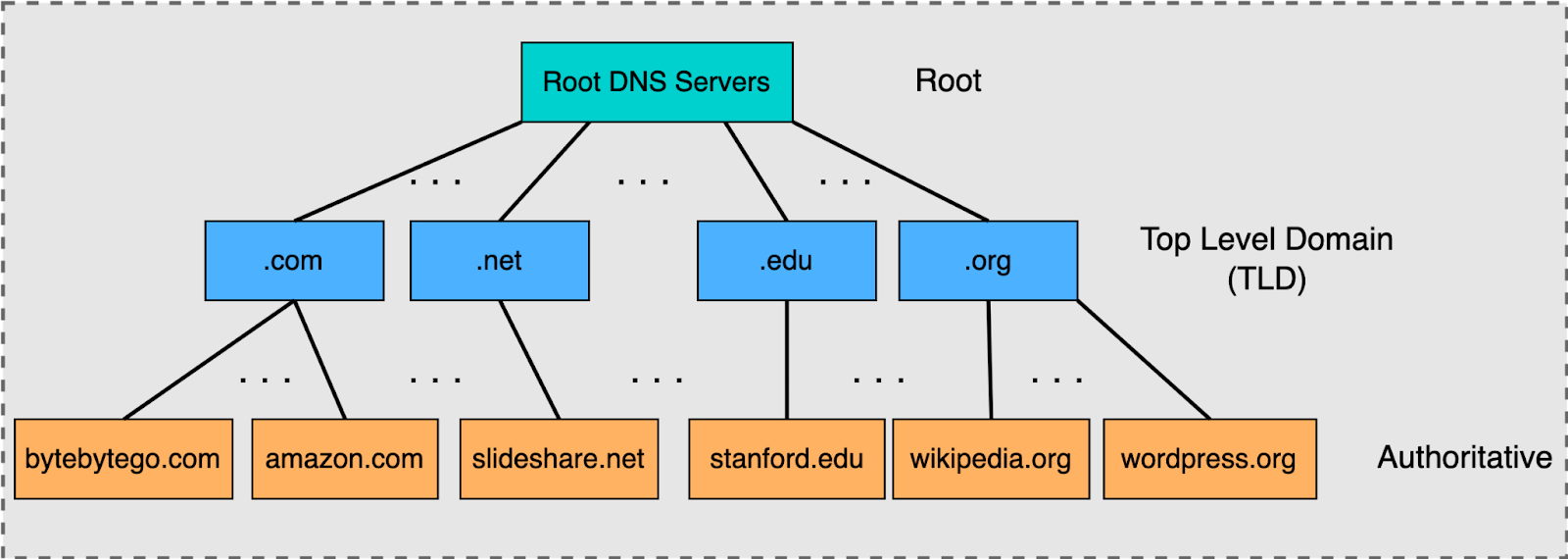
🔹 Function
- Converts domain names to IP addresses
🔄 11. Routing
🔹 Routers
- Forward packets
🔹 Routing Protocols
- OSPF
- BGP
🔐 12. Security in TCP/IP
🔹 Common Threats
- IP spoofing
- Man-in-the-middle attacks
🔹 Security Measures
- Firewalls
- Encryption (TLS/SSL)
⚡ 13. Performance Optimization
🔹 Techniques
- Load balancing
- Congestion control
- Caching
🧪 14. Packet Structure
🔹 Components
- Header
- Payload
🌐 15. Real-World Applications
- Web browsing
- Streaming
- Cloud services
🧠 16. Advanced Concepts
- NAT (Network Address Translation)
- Subnetting
- QoS (Quality of Service)
🔄 17. TCP/IP vs OSI Model
| TCP/IP | OSI |
|---|---|
| 4 layers | 7 layers |
⚖️ 18. Advantages of TCP/IP
- Scalable
- Reliable
- Standardized
⚠️ 19. Limitations
- Complexity
- Security vulnerabilities
🔮 20. Future of TCP/IP
- IPv6 adoption
- IoT networking
- 5G integration
🏁 Conclusion
TCP/IP is the foundation of modern networking, enabling seamless communication across the globe. Understanding TCP/IP is essential for anyone working in networking, cybersecurity, or software development.