Tag Archives: Concurrency Control

🌐 Distributed Databases – Complete In-Depth Guide

Image
Image
Image
Image

📘 1. Introduction to Distributed Databases

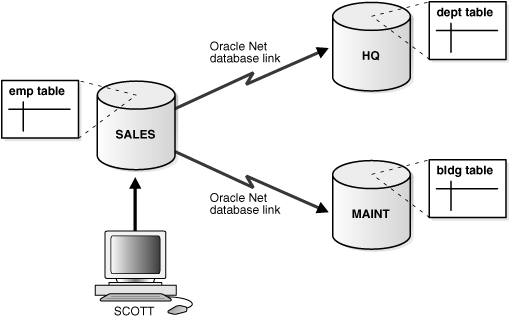
A Distributed Database is a collection of multiple interconnected databases spread across different physical locations but functioning as a single logical database system. These locations may include:

  • Different servers
  • Data centers
  • Geographic regions
  • Cloud environments

The key idea is:

👉 Data is distributed, but access is unified.


🔹 Definition

A distributed database system (DDBS) consists of:

  • Multiple databases located on different machines
  • A network connecting them
  • Software that manages distribution and transparency

🔹 Key Characteristics

  • Data stored across multiple nodes
  • Appears as a single database to users
  • Supports distributed processing
  • Enables high availability and scalability

🧠 2. Why Distributed Databases Are Needed


🔹 Limitations of Centralized Databases

  • Single point of failure
  • Limited scalability
  • High latency for distant users
  • Resource bottlenecks

🔹 Benefits of Distribution

  • Faster access (data closer to users)
  • Fault tolerance
  • Load balancing
  • Scalability

🔹 Real-World Examples

  • Banking systems
  • Social media platforms
  • E-commerce systems
  • Cloud-based applications

🏗️ 3. Architecture of Distributed Databases
Image
Image
Image
Image

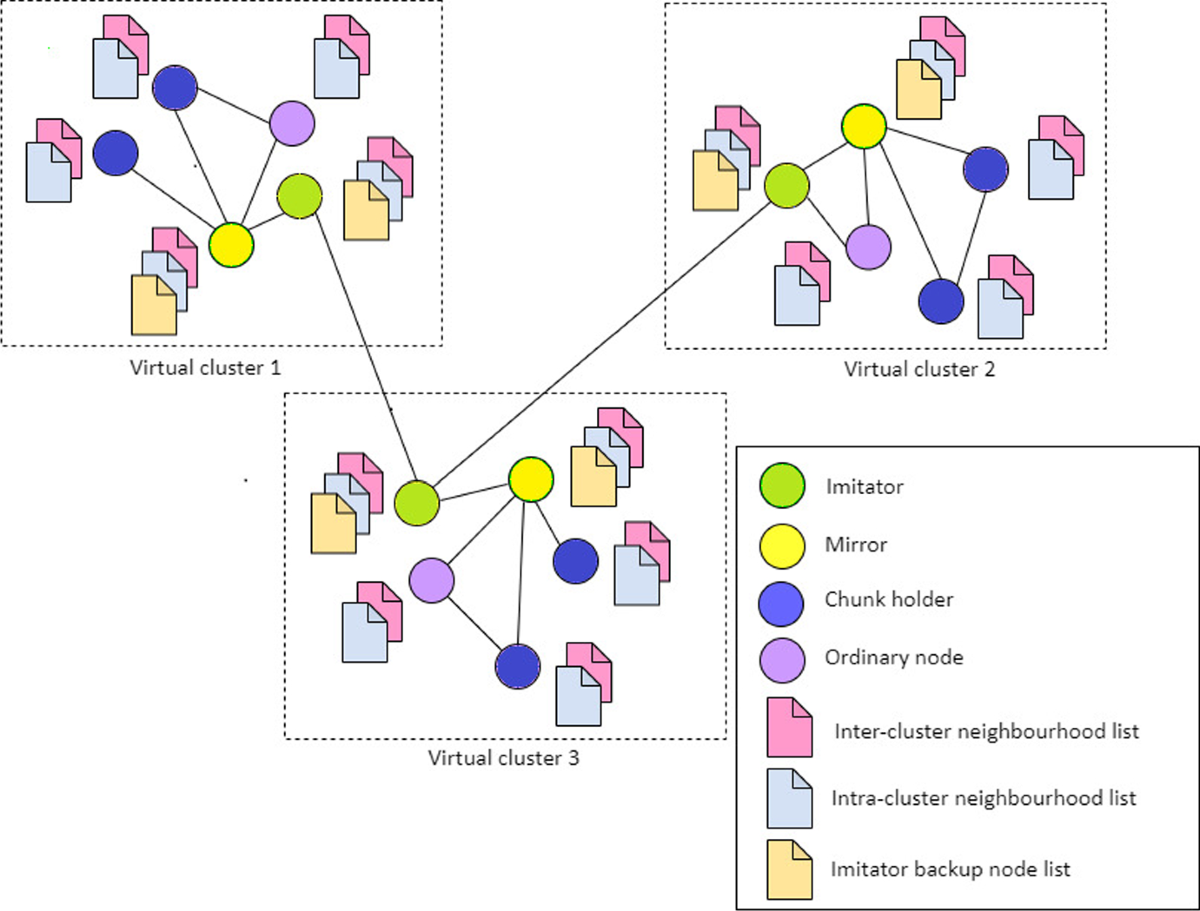
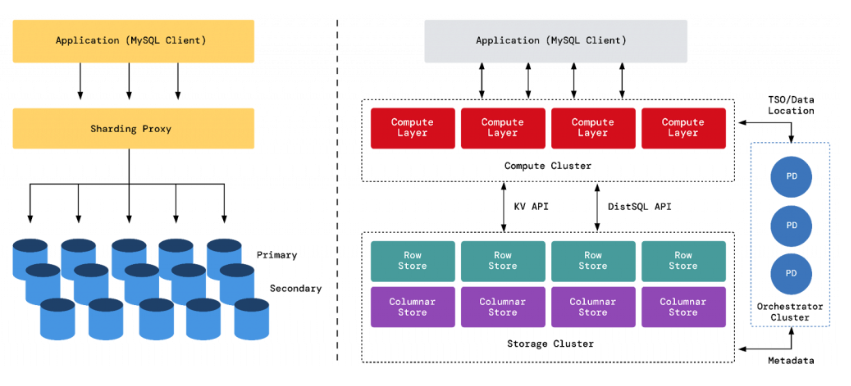
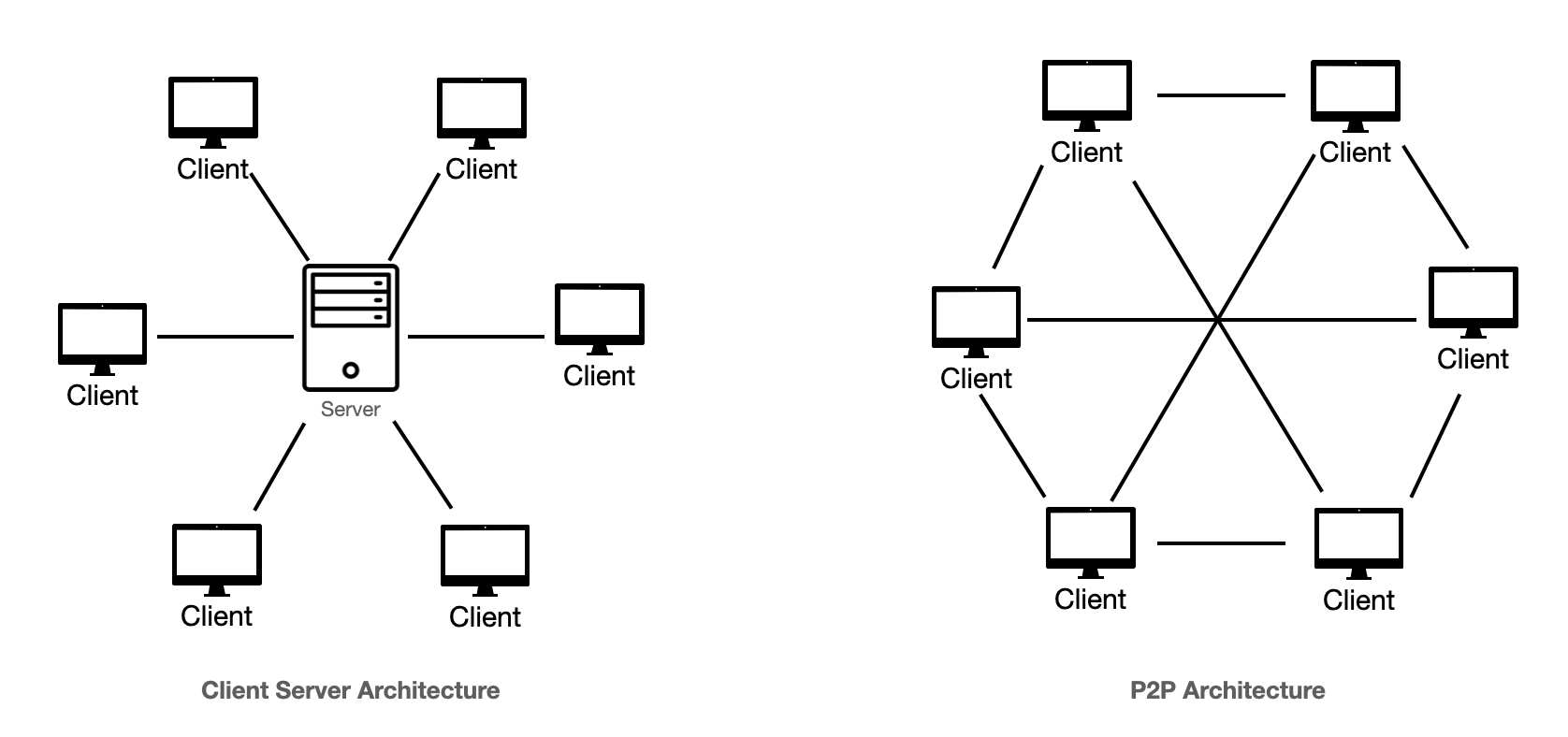
🔹 Types of Architecture

1. Client-Server Architecture

  • Clients request data
  • Servers process queries

2. Peer-to-Peer Architecture

  • All nodes are equal
  • Each node can act as client and server

3. Multi-tier Architecture

  • Presentation layer
  • Application layer
  • Database layer

🔹 Shared-Nothing Architecture

  • Each node has its own memory and storage
  • No shared resources
  • Highly scalable

🧩 4. Types of Distributed Databases


🔹 1. Homogeneous Distributed Database

  • Same DBMS across all nodes
  • Easier to manage

🔹 2. Heterogeneous Distributed Database

  • Different DBMS systems
  • Complex integration

🔹 3. Federated Databases

  • Independent databases connected logically
  • Maintain autonomy

🔄 5. Data Distribution Techniques

Image
Image
Image
Image

🔹 1. Fragmentation

Types:

  • Horizontal Fragmentation → rows distributed
  • Vertical Fragmentation → columns distributed
  • Hybrid Fragmentation → combination

🔹 2. Replication

  • Copies data across multiple nodes

Types:

  • Full replication
  • Partial replication

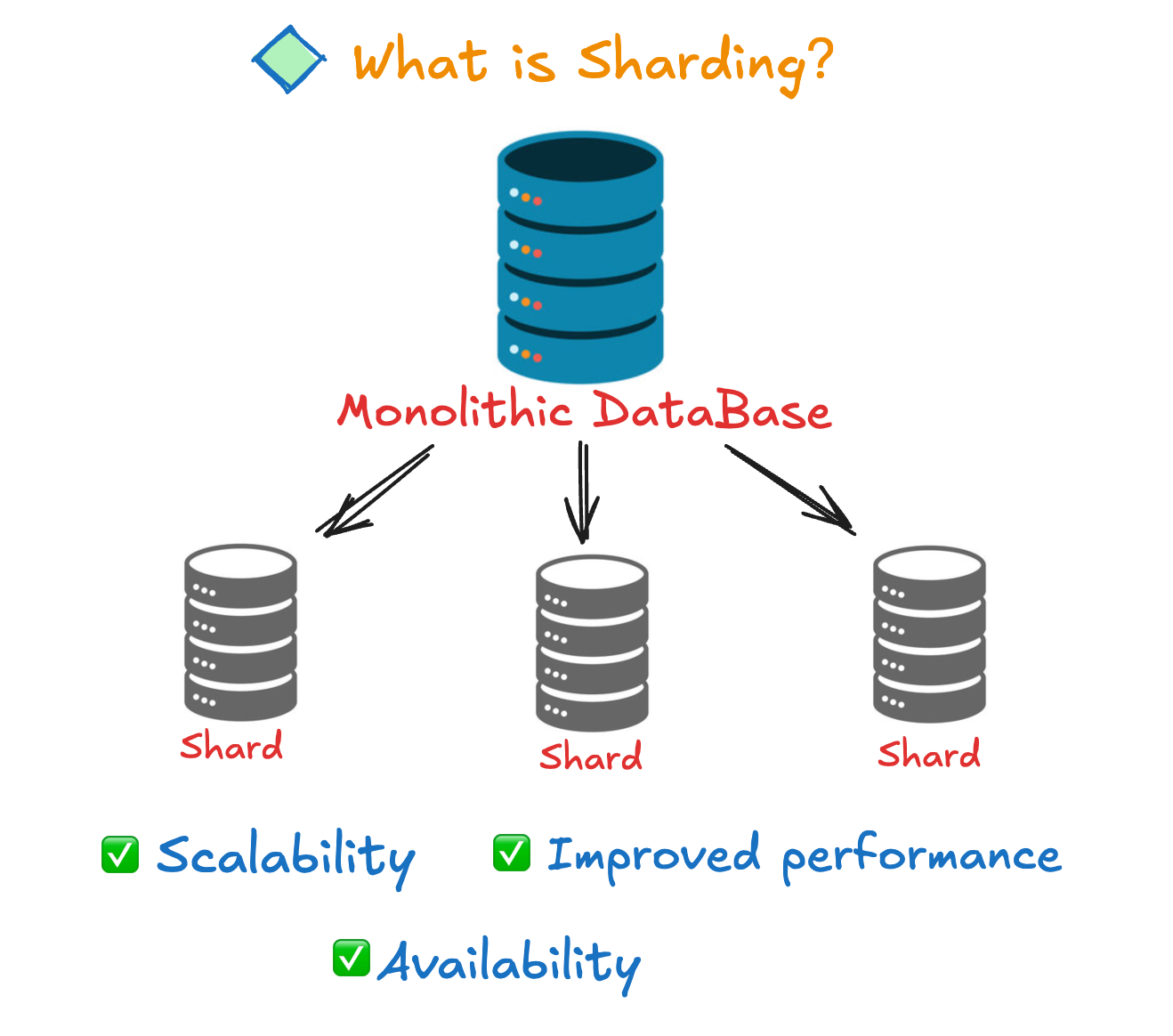
🔹 3. Sharding

  • Splitting data into smaller chunks (shards)

🔐 6. Transparency in Distributed Databases


🔹 Types of Transparency

  • Location transparency
  • Replication transparency
  • Fragmentation transparency
  • Naming transparency

👉 Users do not need to know where data is stored.


⚖️ 7. CAP Theorem

Image
Image
Image
Image

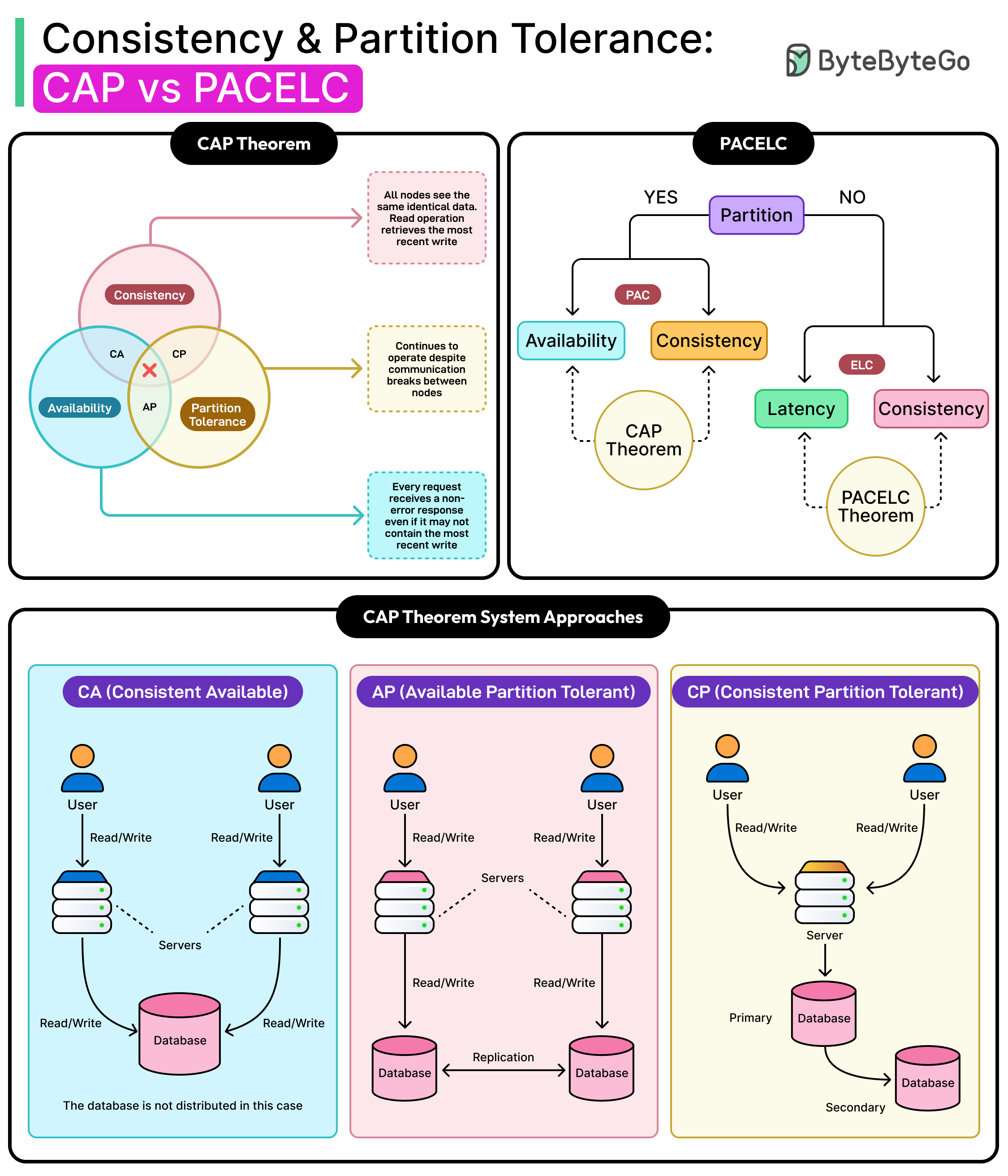
CAP theorem states that a distributed system can provide only two of:

  • Consistency
  • Availability
  • Partition tolerance

🔹 Trade-offs

  • CP systems → strong consistency
  • AP systems → high availability

🔄 8. Distributed Transactions

Image
Image
Image
Image

🔹 Challenges

  • Maintaining consistency across nodes
  • Handling failures

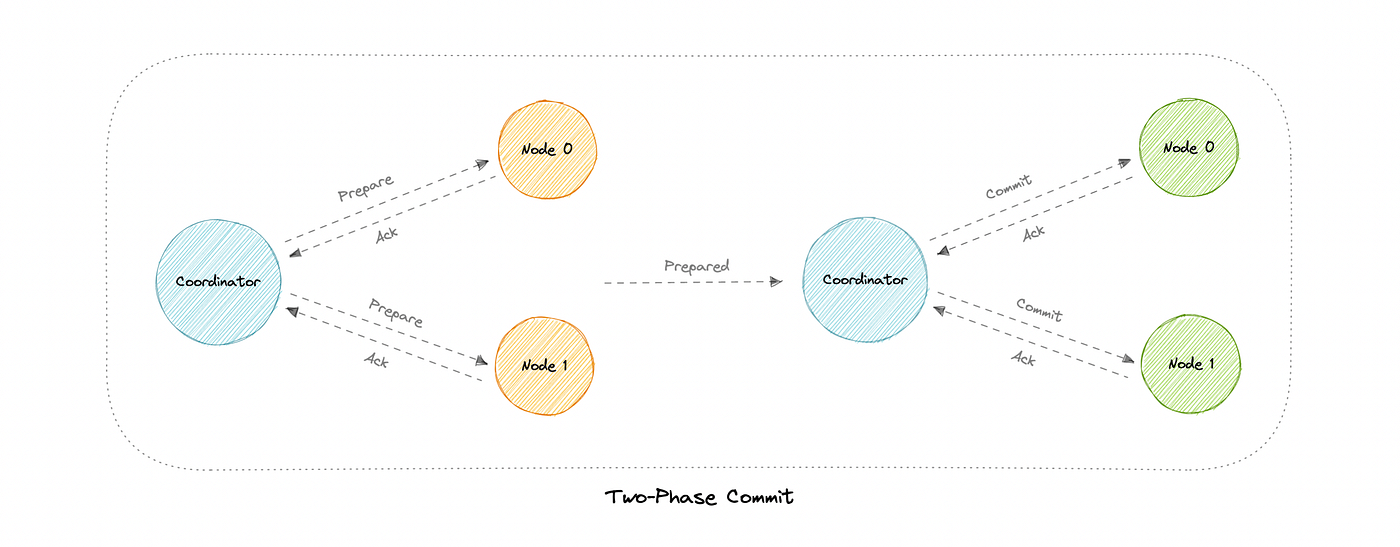
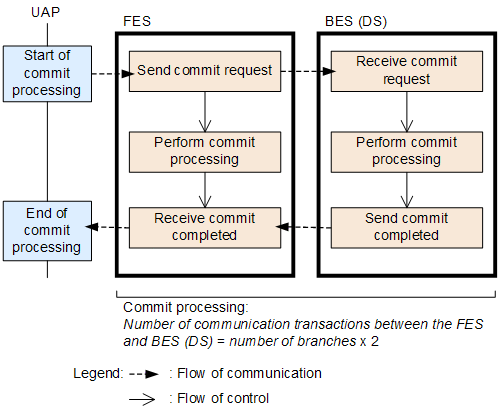
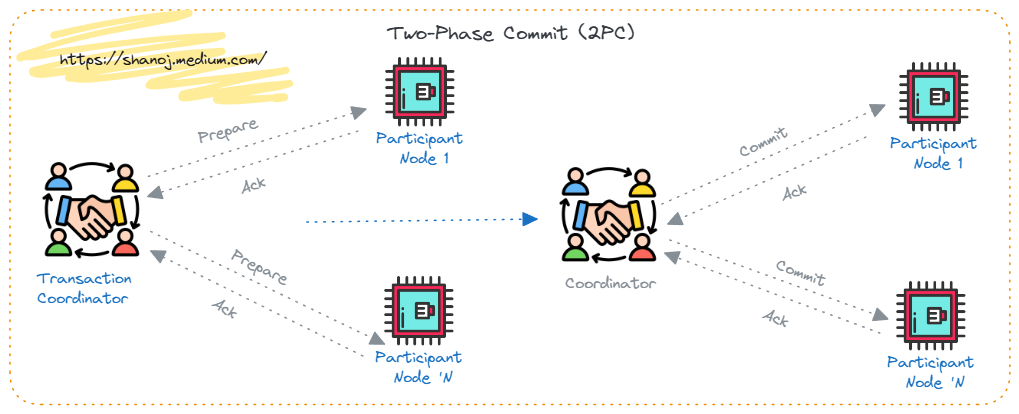
🔹 Two-Phase Commit (2PC)

Phase 1: Prepare

  • Nodes prepare to commit

Phase 2: Commit

  • All nodes commit or rollback

🔹 Three-Phase Commit (3PC)

  • Adds extra phase
  • Reduces blocking

🧠 9. Concurrency Control


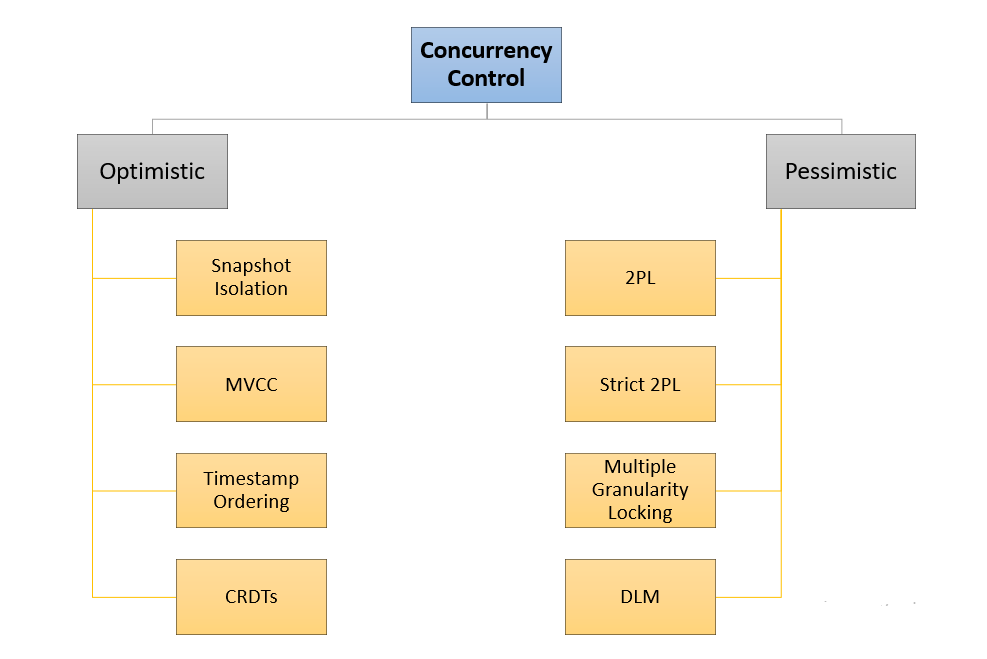
🔹 Techniques

  • Distributed locking
  • Timestamp ordering
  • Optimistic concurrency

🔹 Challenges

  • Synchronization
  • Deadlocks

🔁 10. Data Consistency Models


🔹 Types

  • Strong consistency
  • Eventual consistency
  • Causal consistency

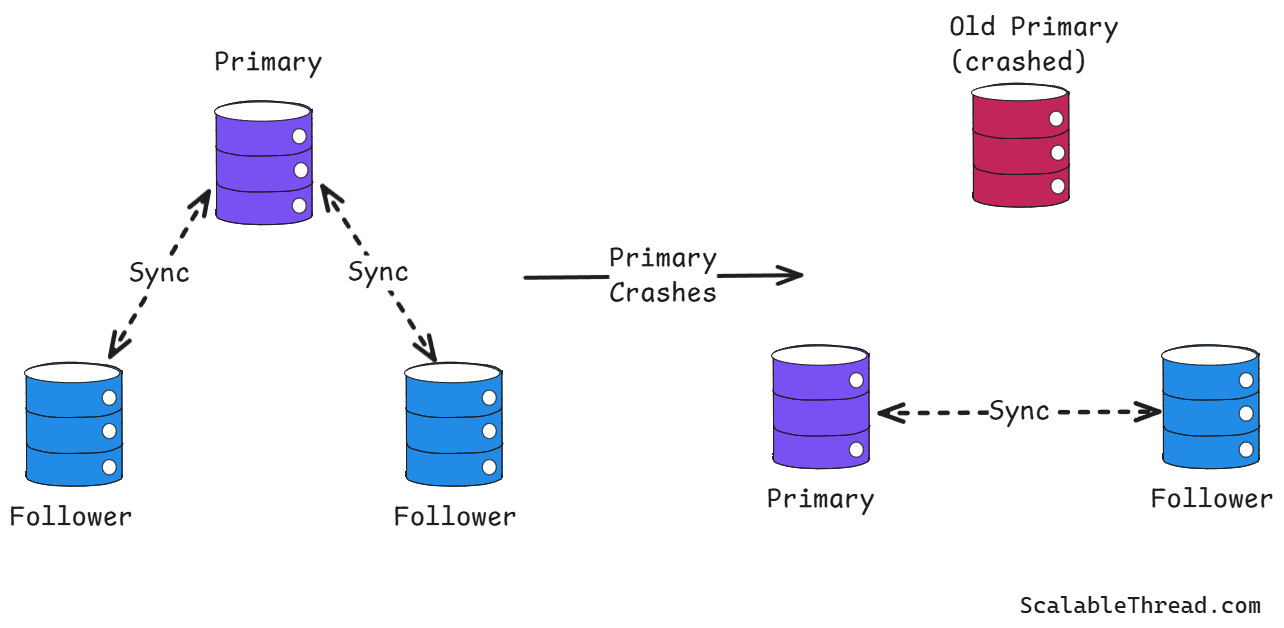
🔐 11. Fault Tolerance
Image
Image
Image
Image

🔹 Techniques

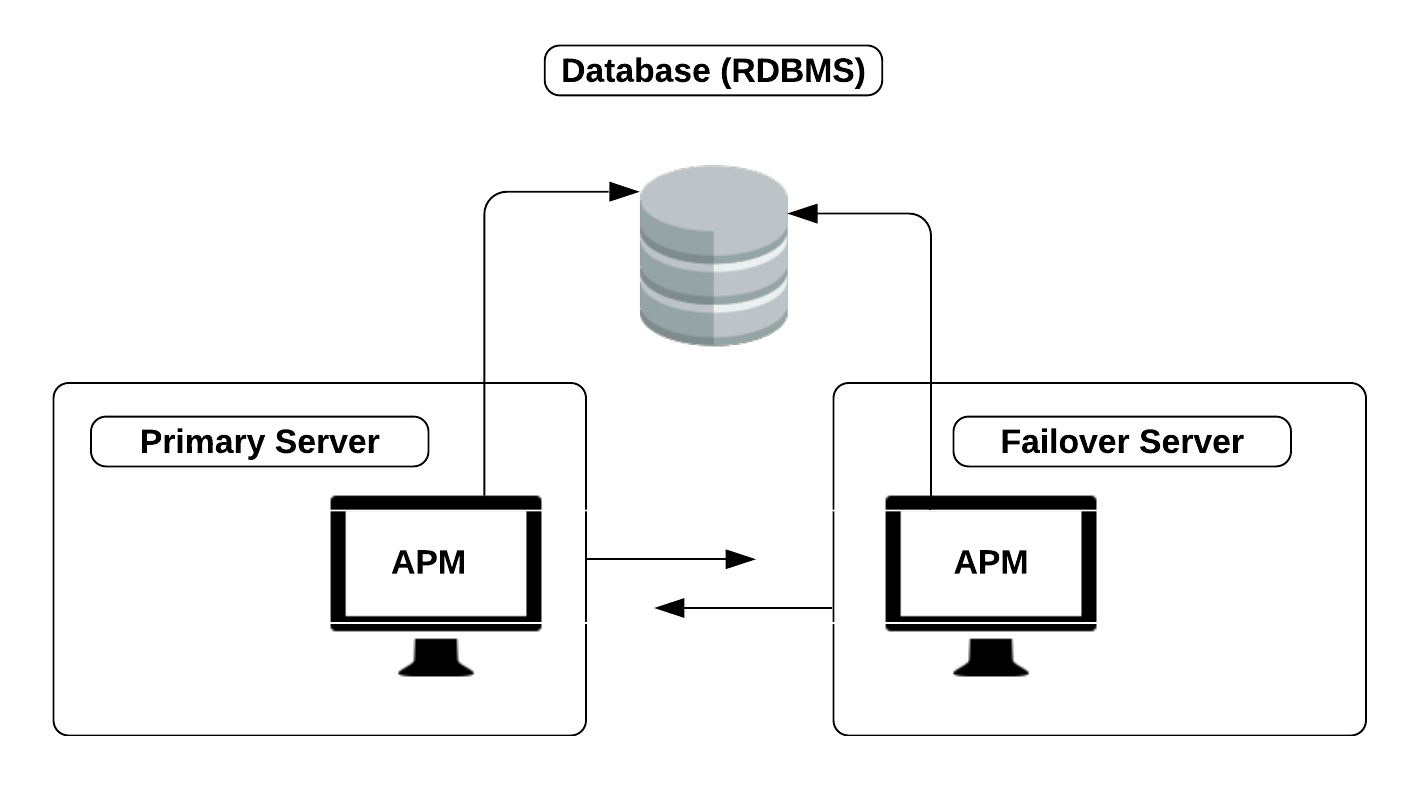
  • Replication
  • Failover mechanisms
  • Backup systems

⚡ 12. Performance Optimization


🔹 Techniques

  • Load balancing
  • Data locality
  • Query optimization

🌐 13. Distributed Query Processing


🔹 Steps

  1. Query decomposition
  2. Data localization
  3. Optimization
  4. Execution

🧩 14. Distributed Database Design


🔹 Design Considerations

  • Data distribution strategy
  • Network latency
  • Scalability

🧪 15. Security in Distributed Databases


🔹 Measures

  • Encryption
  • Authentication
  • Access control

📊 16. Real-World Applications


🔹 Banking Systems

  • Global transactions

🔹 Social Media

  • User data distribution

🔹 E-commerce

  • Global product catalogs

🔹 Cloud Services

  • Distributed storage

⚖️ 17. Advantages of Distributed Databases


  • High availability
  • Scalability
  • Fault tolerance
  • Performance

⚠️ 18. Disadvantages


  • Complexity
  • Security challenges
  • Data inconsistency risks

🧠 19. Distributed vs Centralized Databases

FeatureCentralizedDistributed
Data LocationSingleMultiple
ScalabilityLimitedHigh
Fault ToleranceLowHigh

🔄 20. Emerging Trends


  • Cloud-native distributed databases
  • Serverless databases
  • Edge computing

🏁 Conclusion

Distributed databases are the backbone of modern scalable systems. They enable organizations to handle massive data, global users, and high availability requirements.

While they introduce complexity, their benefits in scalability and performance make them essential for today’s applications.

🏷️ Tags

🔄 Transactions & ACID Properties

Image
Image
Image
Image

📘 1. Introduction to Transactions

A transaction in database systems is a sequence of one or more operations performed as a single logical unit of work. These operations may include:

  • Reading data
  • Writing data
  • Updating records
  • Deleting records

The key idea is simple but powerful:

👉 Either all operations succeed, or none of them do.


🔹 Real-Life Example

Consider a bank transfer:

  1. Deduct ₹1000 from Account A
  2. Add ₹1000 to Account B

If step 1 succeeds but step 2 fails, the system becomes inconsistent. Transactions prevent this by ensuring all-or-nothing execution.


🔹 Formal Definition

A transaction is:

  • A logical unit of work
  • Executed completely or not at all
  • Ensures database consistency

🧠 2. Why Transactions Are Important

Transactions are critical for:

  • Data integrity
  • Reliability
  • Consistency across operations
  • Handling system failures
  • Concurrent access management

🔹 Without Transactions

  • Partial updates
  • Data corruption
  • Lost data
  • Inconsistent state

🏗️ 3. Transaction States

Image
Image
Image
Image

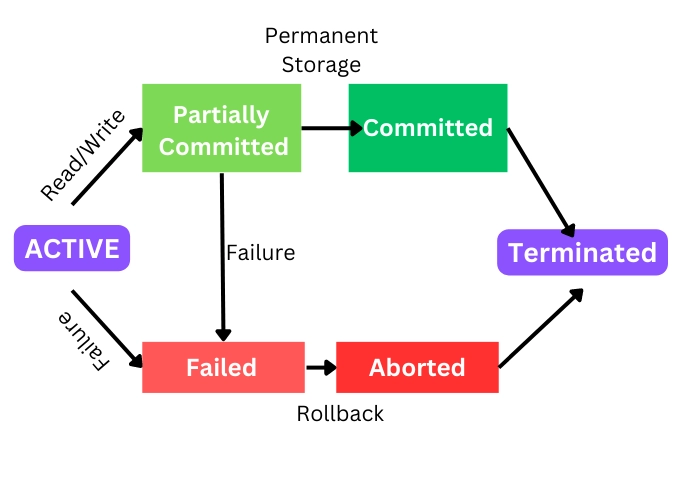
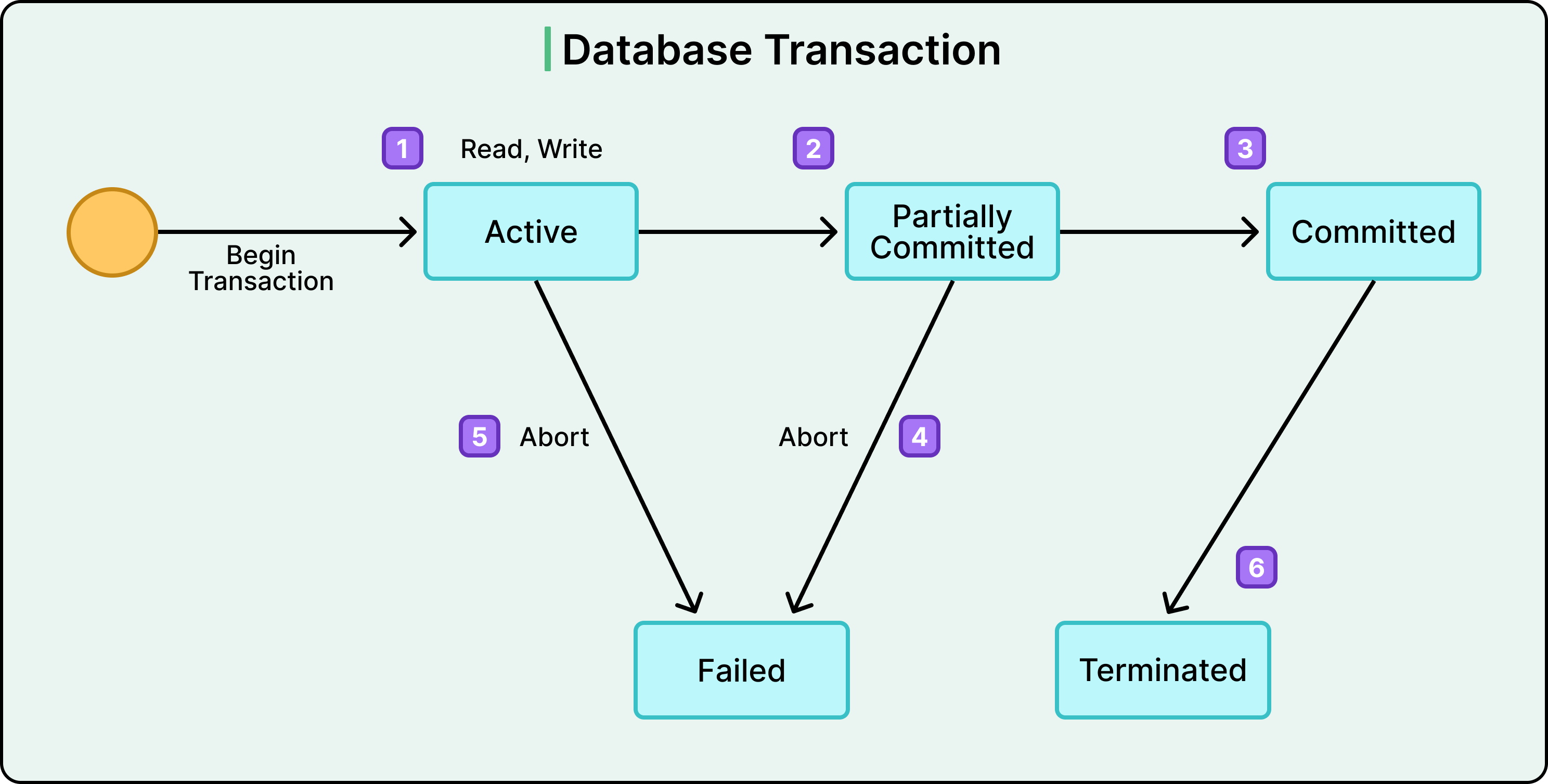
A transaction passes through several states:


🔹 1. Active

  • Transaction is executing

🔹 2. Partially Committed

  • All operations executed, waiting to commit

🔹 3. Committed

  • Changes permanently saved

🔹 4. Failed

  • Error occurs

🔹 5. Aborted

  • Rolled back to previous state

🔁 4. Transaction Operations


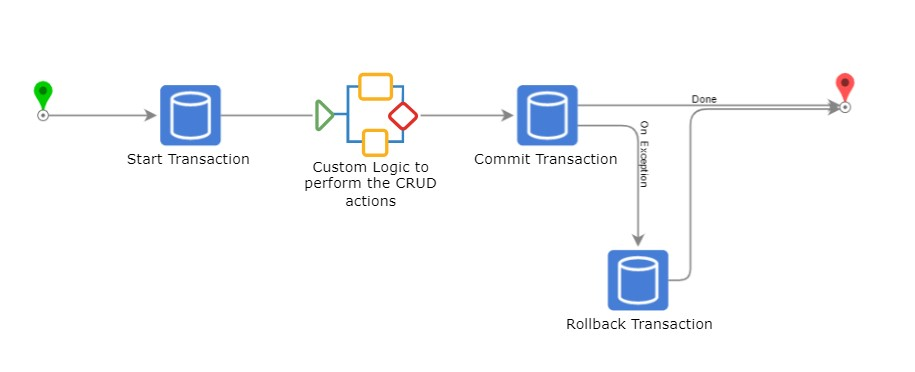
🔹 BEGIN TRANSACTION

Starts a transaction.

BEGIN;

🔹 COMMIT

Saves changes permanently.

COMMIT;

🔹 ROLLBACK

Reverts changes.

ROLLBACK;

🔹 SAVEPOINT

Creates checkpoints.

SAVEPOINT sp1;
ROLLBACK TO sp1;

⚖️ 5. ACID Properties

Image
Image
Image
Image

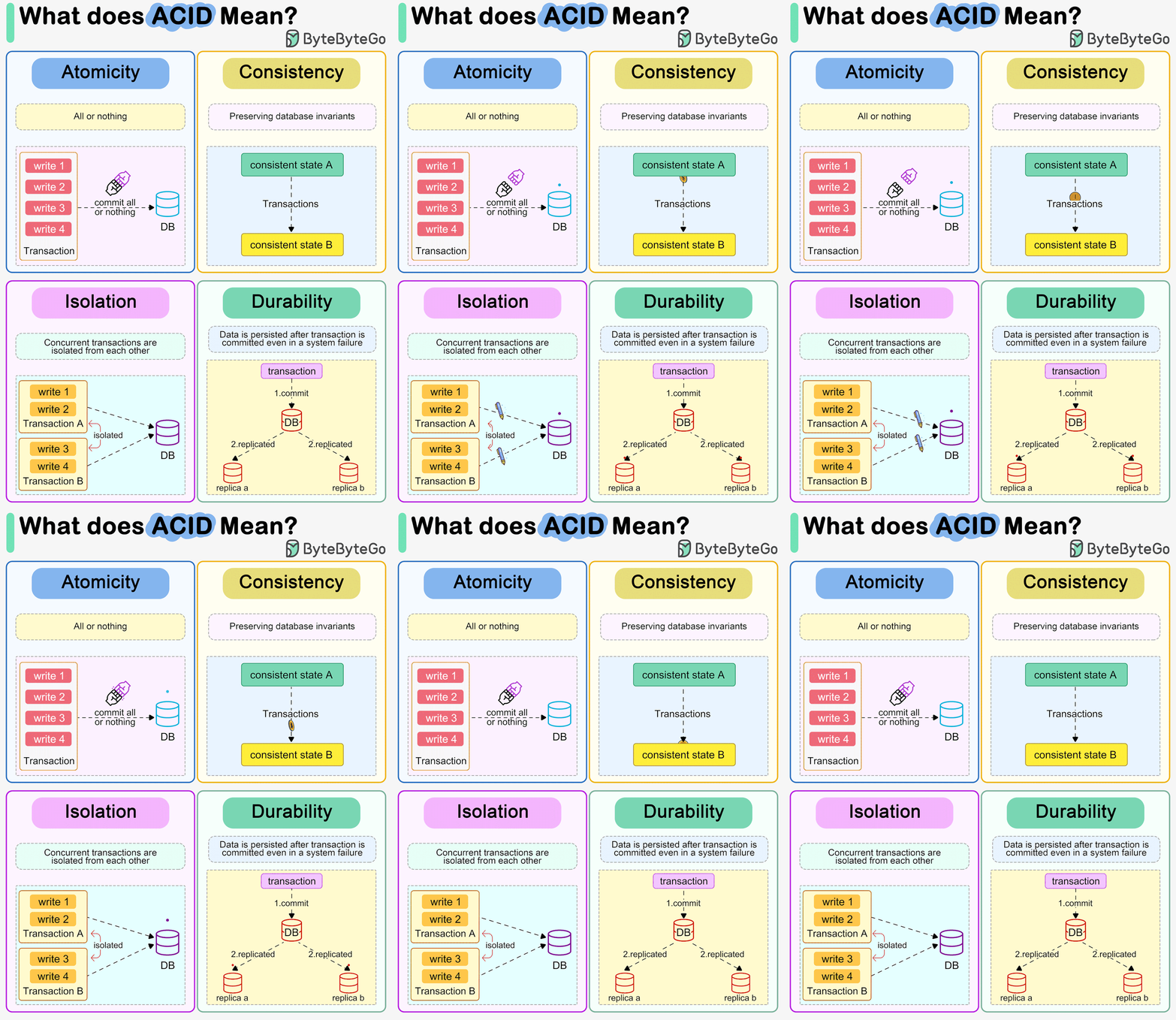
ACID properties ensure reliable transactions:


🔹 A – Atomicity

👉 All or nothing

  • If one operation fails → entire transaction fails
  • Ensures no partial updates

Example:

  • Money deducted but not added → rollback

🔹 C – Consistency

👉 Database remains valid

  • Enforces rules, constraints
  • Moves from one valid state to another

🔹 I – Isolation

👉 Transactions do not interfere

  • Concurrent transactions behave independently

🔹 D – Durability

👉 Changes are permanent

  • Even after crash, data persists

🔍 6. Atomicity in Detail

Atomicity ensures:

  • No partial execution
  • Rollback on failure

🔹 Implementation Techniques

  • Undo logs
  • Write-ahead logging (WAL)

🔹 Example

BEGIN;

UPDATE Accounts SET balance = balance - 1000 WHERE id = 1;
UPDATE Accounts SET balance = balance + 1000 WHERE id = 2;

COMMIT;

If second update fails → rollback entire transaction.


🧩 7. Consistency in Detail

Consistency ensures:

  • Constraints are maintained
  • Rules are enforced

🔹 Types of Constraints

  • Primary key
  • Foreign key
  • Check constraints

🔹 Example

  • Balance cannot be negative
  • Foreign key must exist

🔄 8. Isolation in Detail

Image
Image
Image
Image

Isolation prevents interference between transactions.


🔹 Problems Without Isolation

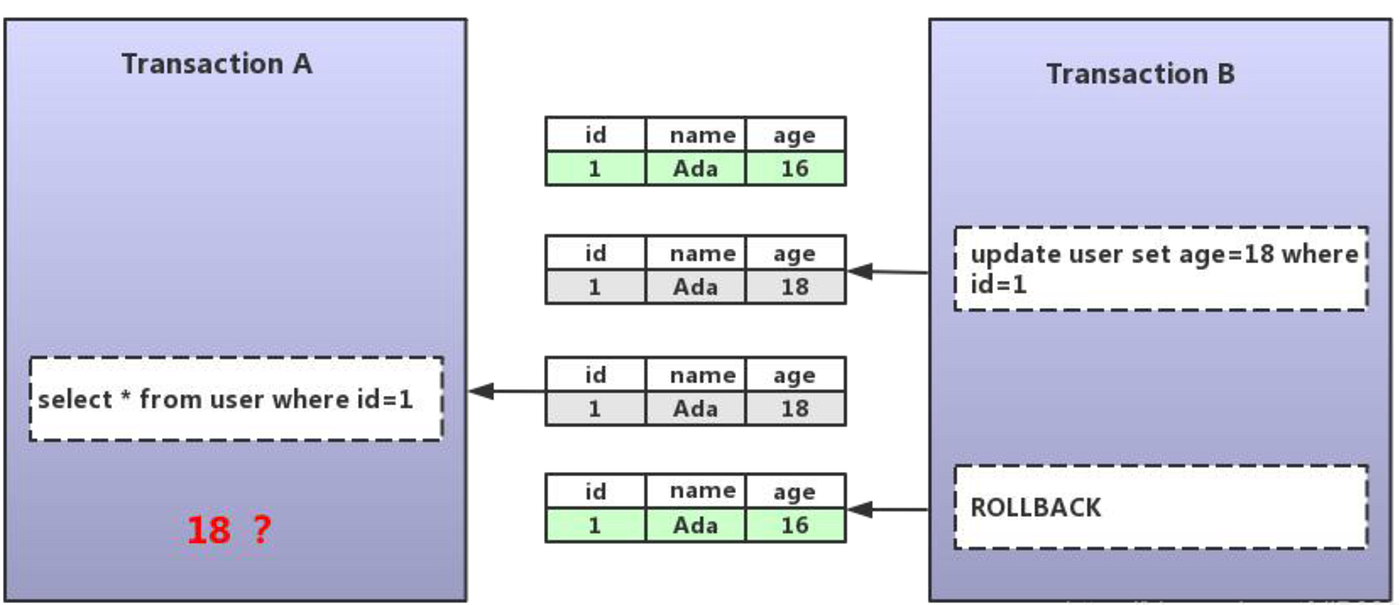
1. Dirty Read

Reading uncommitted data


2. Non-repeatable Read

Data changes between reads


3. Phantom Read

New rows appear unexpectedly


🔹 Isolation Levels

LevelDescription
Read UncommittedLowest isolation
Read CommittedPrevents dirty reads
Repeatable ReadPrevents non-repeatable reads
SerializableHighest isolation

🔐 9. Durability in Detail

Durability ensures:

  • Data survives crashes
  • Stored permanently

🔹 Implementation

  • Transaction logs
  • Disk storage
  • Backup systems

🔹 Example

After COMMIT:

  • Power failure occurs
  • Data still exists

🧠 10. Concurrency Control

Image
Image
Image
Image

Concurrency control manages multiple transactions.


🔹 Techniques

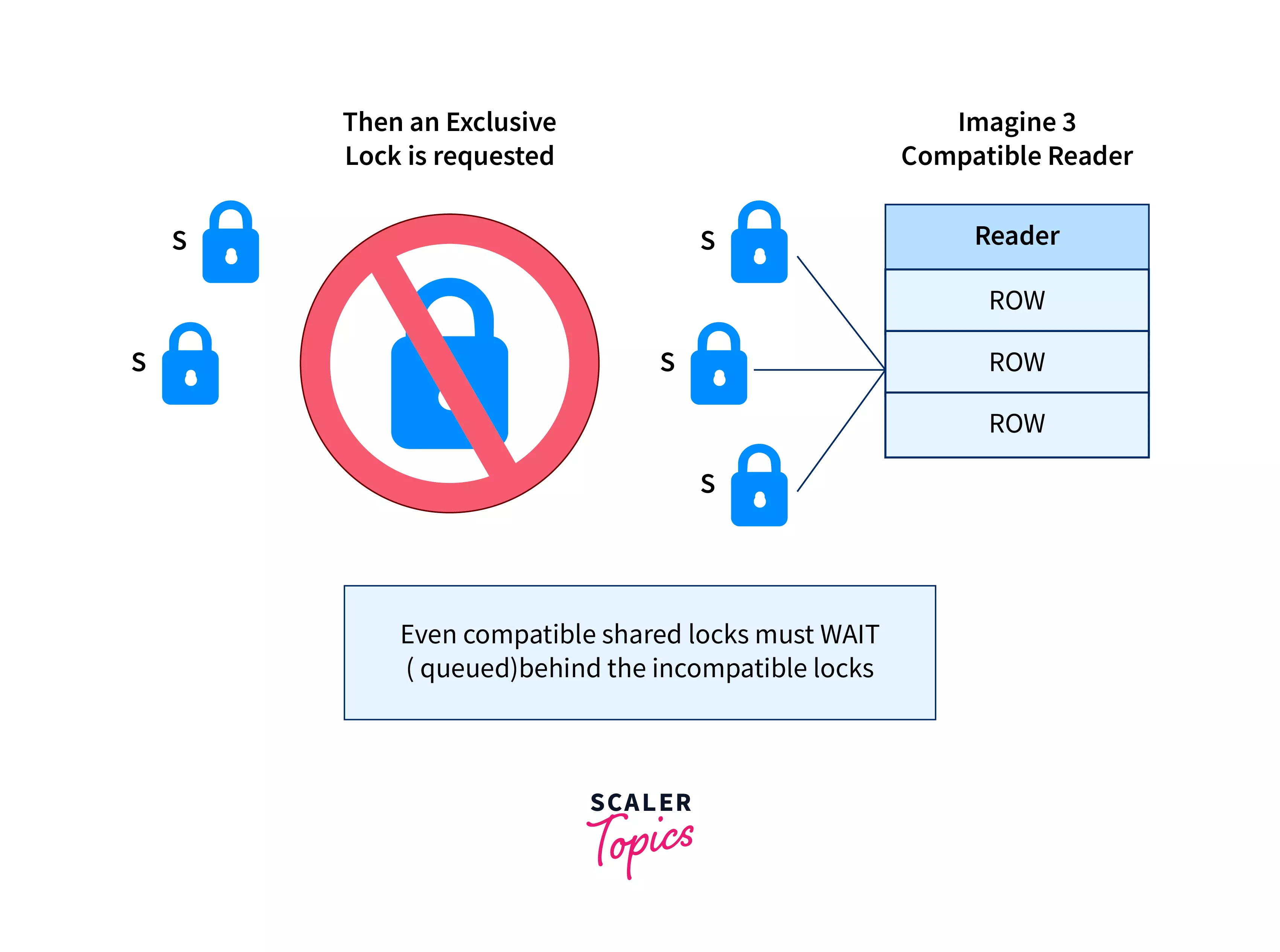
1. Locking

  • Shared lock (read)
  • Exclusive lock (write)

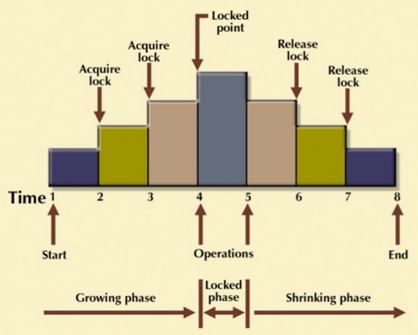
2. Two-Phase Locking (2PL)

  • Growing phase
  • Shrinking phase

3. Timestamp Ordering

  • Based on timestamps

4. MVCC (Multi-Version Concurrency Control)

  • Multiple versions of data

🔁 11. Deadlocks


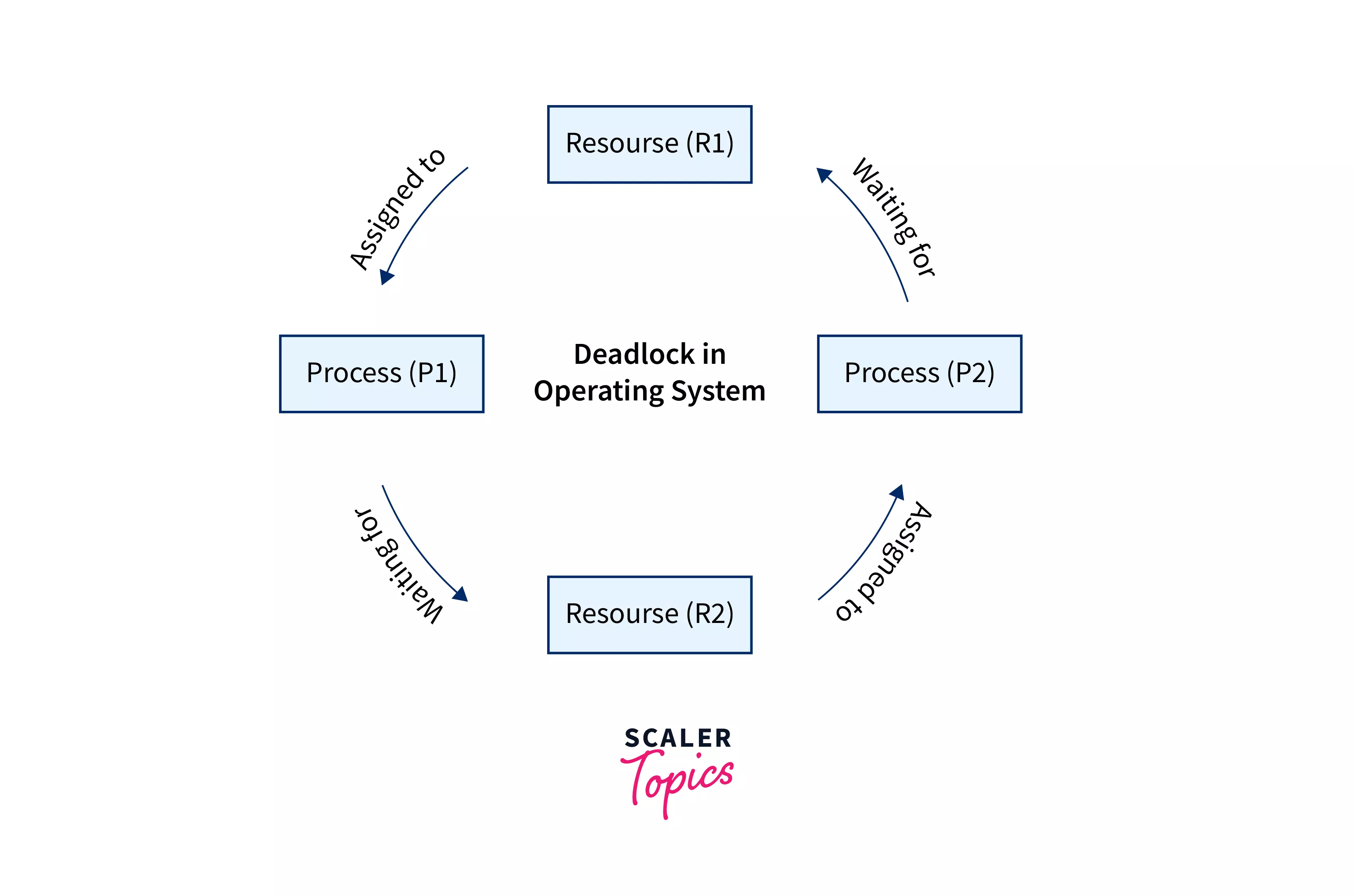
🔹 What is Deadlock?

Two transactions wait for each other indefinitely.


🔹 Example

  • T1 locks A, needs B
  • T2 locks B, needs A

🔹 Handling Deadlocks

  • Detection
  • Prevention
  • Timeout

🧪 12. Logging and Recovery

Image
Image
Image
Image

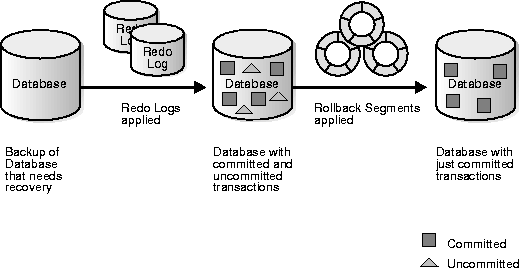
🔹 Types of Logs

  • Undo log
  • Redo log

🔹 Recovery Techniques

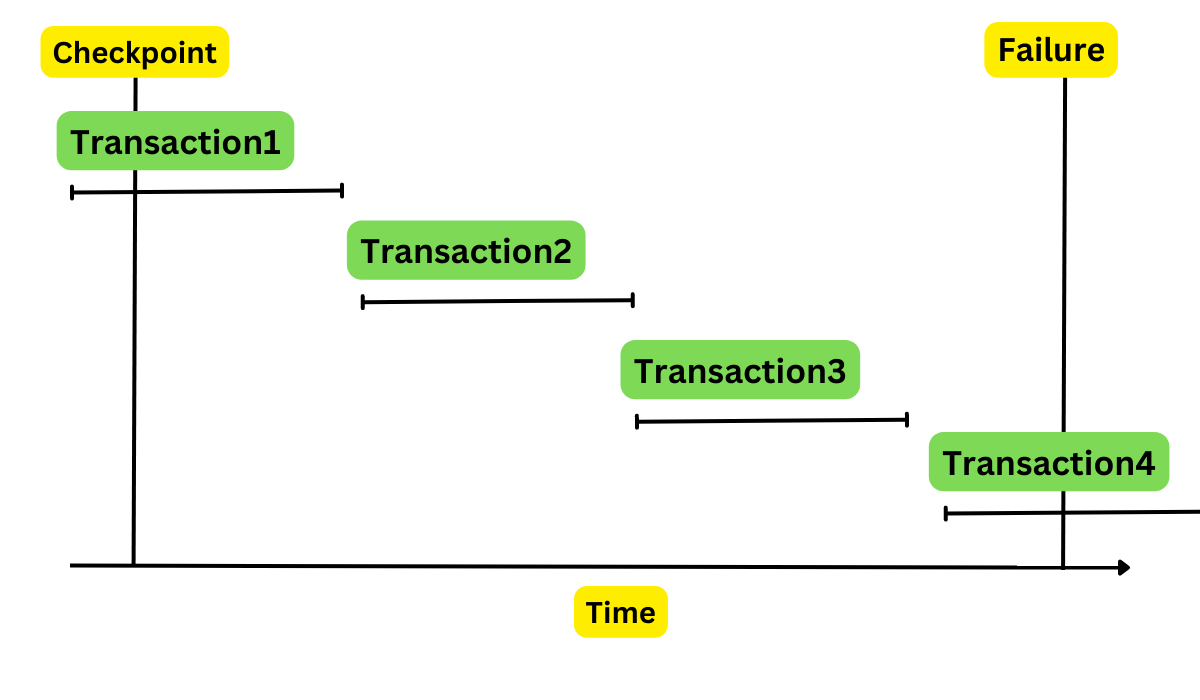
  • Checkpointing
  • Log-based recovery

📊 13. Distributed Transactions


🔹 Challenges

  • Network failures
  • Data consistency across nodes

🔹 Two-Phase Commit (2PC)

  1. Prepare phase
  2. Commit phase

🔹 Three-Phase Commit (3PC)

Improved version of 2PC


🌐 14. Transactions in Modern Databases


🔹 SQL Databases

  • Strong ACID compliance

🔹 NoSQL Databases

  • Often use BASE model
    • Basically Available
    • Soft state
    • Eventually consistent

⚖️ 15. ACID vs BASE

FeatureACIDBASE
ConsistencyStrongEventual
AvailabilityModerateHigh
Use CaseBankingSocial media

📈 16. Performance Considerations

  • High isolation → slower performance
  • Low isolation → faster but risky

🔹 Trade-offs

  • Consistency vs performance
  • Isolation vs concurrency

🧩 17. Real-World Applications


🔹 Banking Systems

  • Money transfer
  • Account updates

🔹 E-commerce

  • Order processing
  • Payment transactions

🔹 Airline Booking

  • Seat reservation

🧠 18. Advanced Topics

  • Nested transactions
  • Long-running transactions
  • Savepoints
  • Distributed consensus

🏗️ 19. Best Practices

  • Keep transactions short
  • Avoid unnecessary locks
  • Use proper isolation level
  • Monitor performance

⚠️ 20. Common Issues

  • Deadlocks
  • Blocking
  • Performance bottlenecks
  • Data inconsistency

🔮 21. Future Trends

  • Cloud-native transactions
  • Distributed ACID systems
  • New consistency models

🏁 Conclusion

Transactions and ACID properties form the core foundation of reliable database systems. They ensure that even in complex, concurrent, and failure-prone environments, data remains:

  • Accurate
  • Consistent
  • Safe
  • Durable

Mastering transactions is essential for building robust applications, especially in systems where correctness is critical.


🏷️ Tags