Tag Archives: IPv6

๐ŸŒ IP Addressing

Image
Image
Image
Image

๐Ÿ“˜ 1. Introduction to IP Addressing

IP Addressing is a fundamental concept in computer networking that enables devices to identify and communicate with each other over a network such as the Internet.

Every device connected to a networkโ€”whether it’s a smartphone, laptop, server, or IoT deviceโ€”requires a unique IP address.


๐Ÿ”น Definition

An IP address (Internet Protocol Address) is:

A unique numerical label assigned to each device connected to a network that uses the Internet Protocol for communication.


๐Ÿ”น Purpose of IP Addressing

  • Identifies devices uniquely
  • Enables data routing
  • Supports communication between networks
  • Helps locate devices globally

๐Ÿง  2. How IP Addressing Works


๐Ÿ”น Basic Concept

When data is sent over a network:

  1. Source device has an IP address
  2. Destination device has an IP address
  3. Data is broken into packets
  4. Packets travel through routers using IP addresses

๐Ÿ”น Example

  • Sender IP โ†’ 192.168.1.10
  • Receiver IP โ†’ 8.8.8.8

๐Ÿ—๏ธ 3. Structure of an IP Address

Image
Image
Image
Image

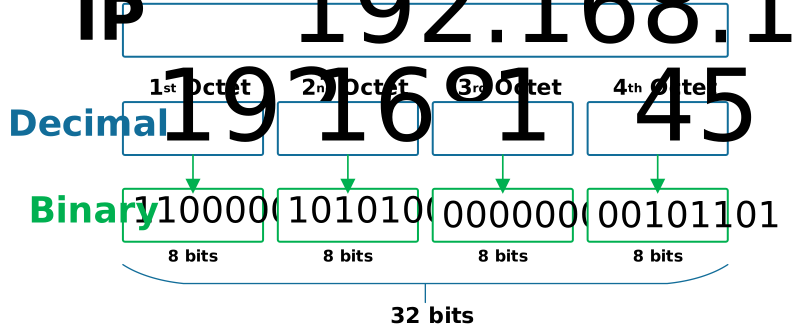
๐Ÿ”น IPv4 Structure

  • 32-bit address
  • Divided into 4 octets

Example:

192.168.1.1

๐Ÿ”น Binary Representation

11000000.10101000.00000001.00000001

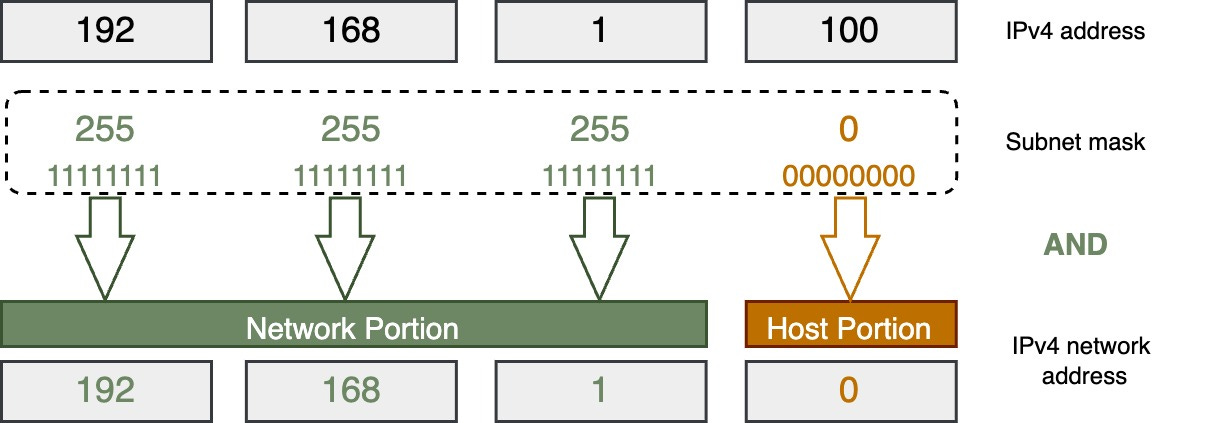
๐Ÿ”น Network vs Host Portion

  • Network โ†’ identifies network
  • Host โ†’ identifies device

๐ŸŒ 4. Types of IP Addresses


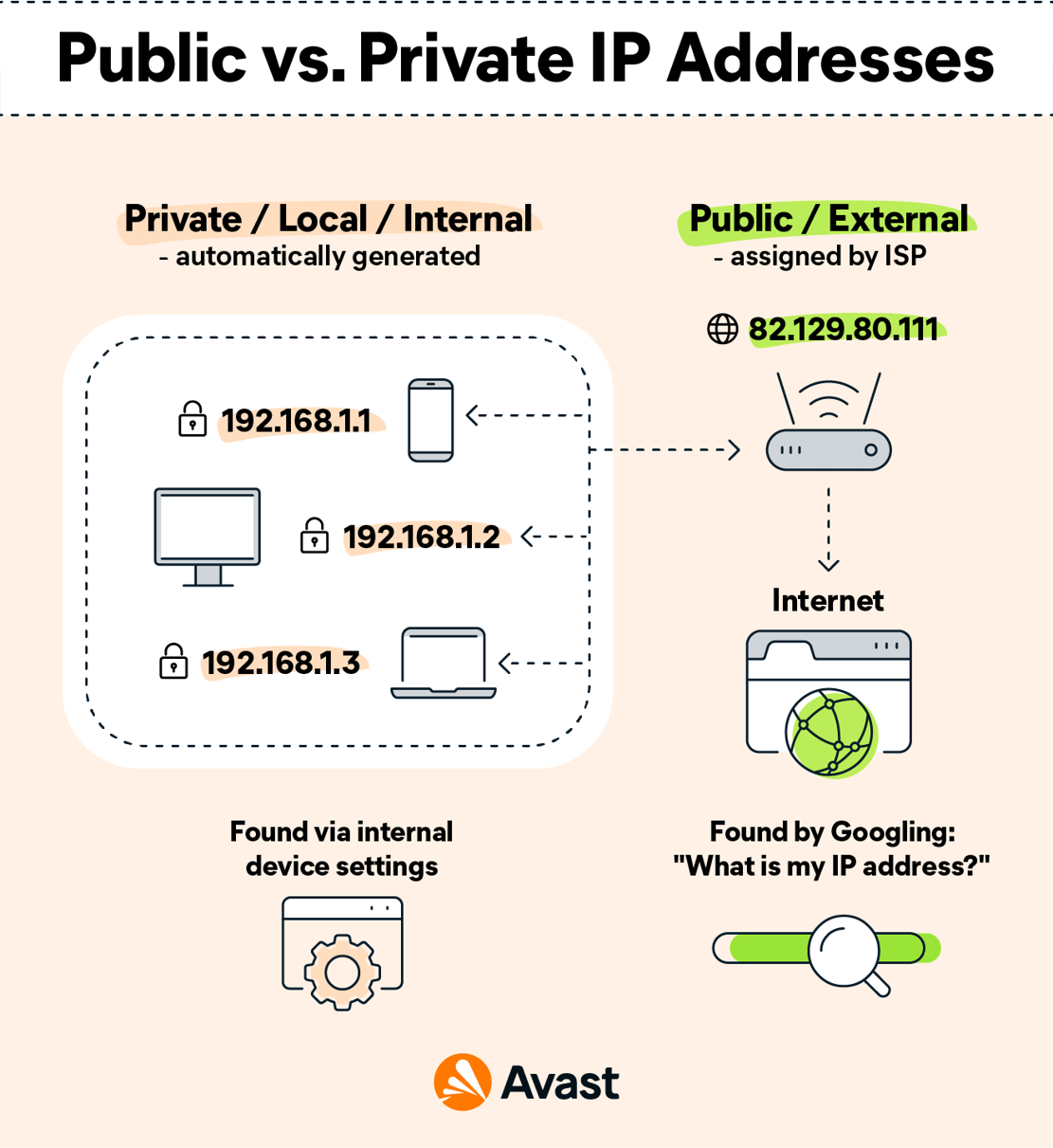
๐Ÿ”น 1. Public IP Address

  • Assigned by ISP
  • Accessible over the internet

๐Ÿ”น 2. Private IP Address

  • Used within local networks

Ranges:

  • 192.168.x.x
  • 10.x.x.x
  • 172.16.x.x

๐Ÿ”น 3. Static IP

  • Fixed address

๐Ÿ”น 4. Dynamic IP

  • Assigned automatically (DHCP)

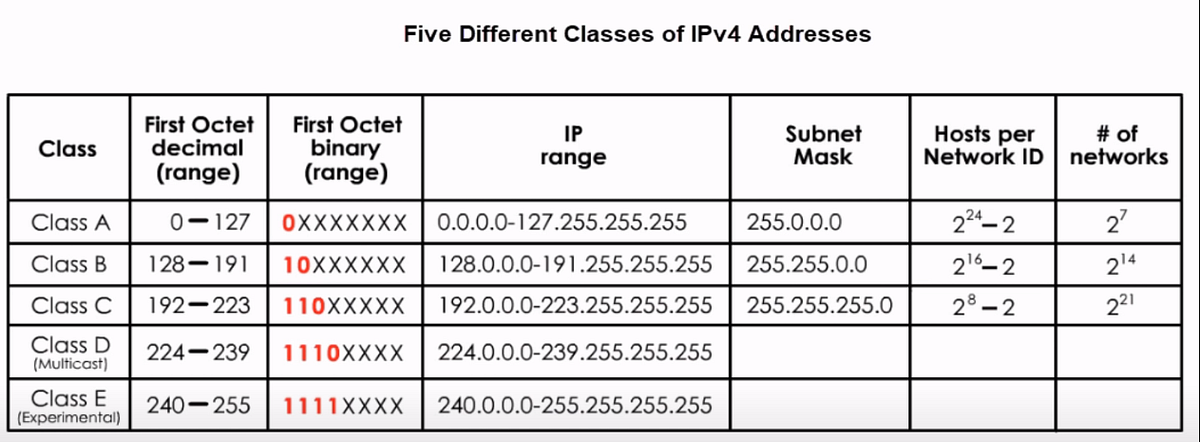
๐Ÿ”ข 5. IPv4 Address Classes

Image
Image
Image
Image

๐Ÿ”น Classes

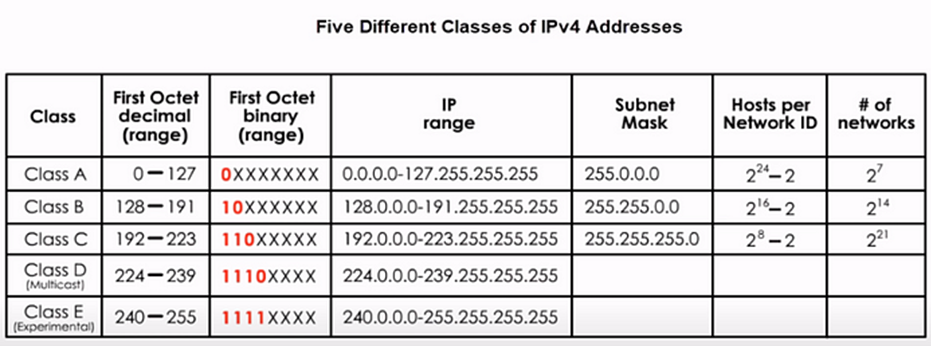
ClassRangeUsage
A1โ€“126Large networks
B128โ€“191Medium
C192โ€“223Small
D224โ€“239Multicast
E240โ€“255Experimental

โšก 6. Subnetting

Image
Image
Image
Image

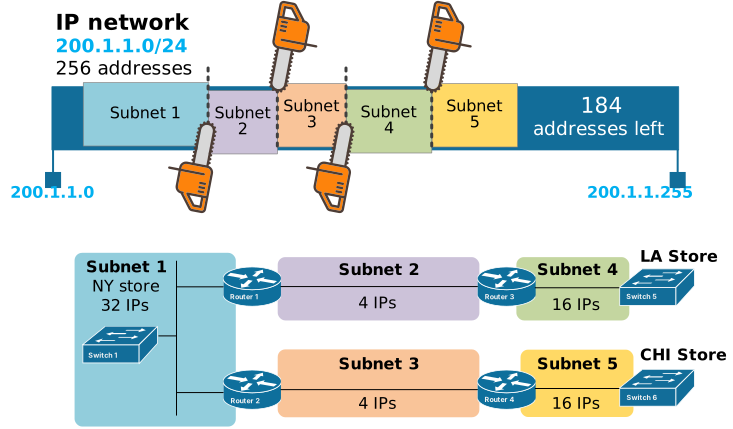
๐Ÿ”น What is Subnetting?

Dividing a network into smaller networks.


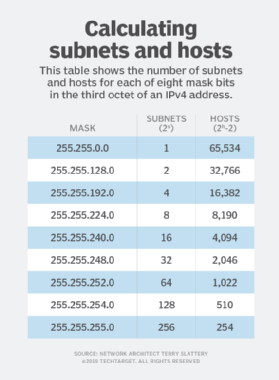
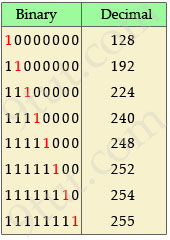
๐Ÿ”น Subnet Mask

Defines network and host portions.

Example:

255.255.255.0

๐Ÿ”น CIDR Notation

192.168.1.0/24

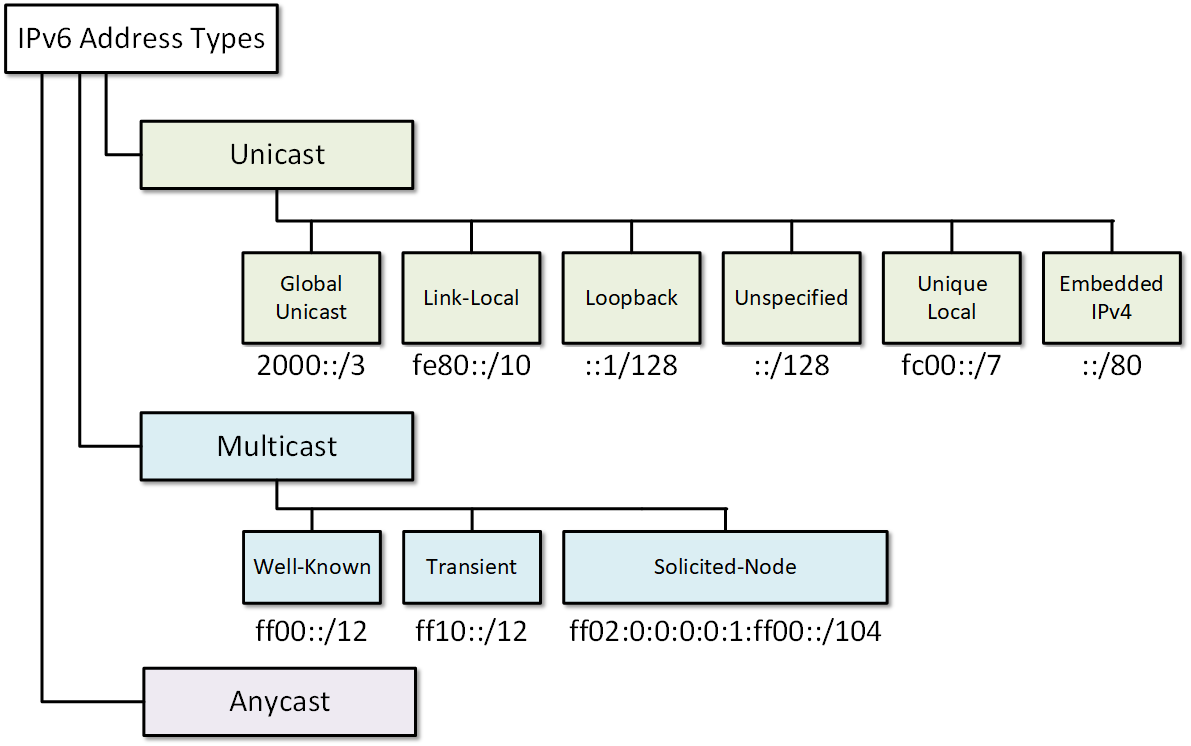
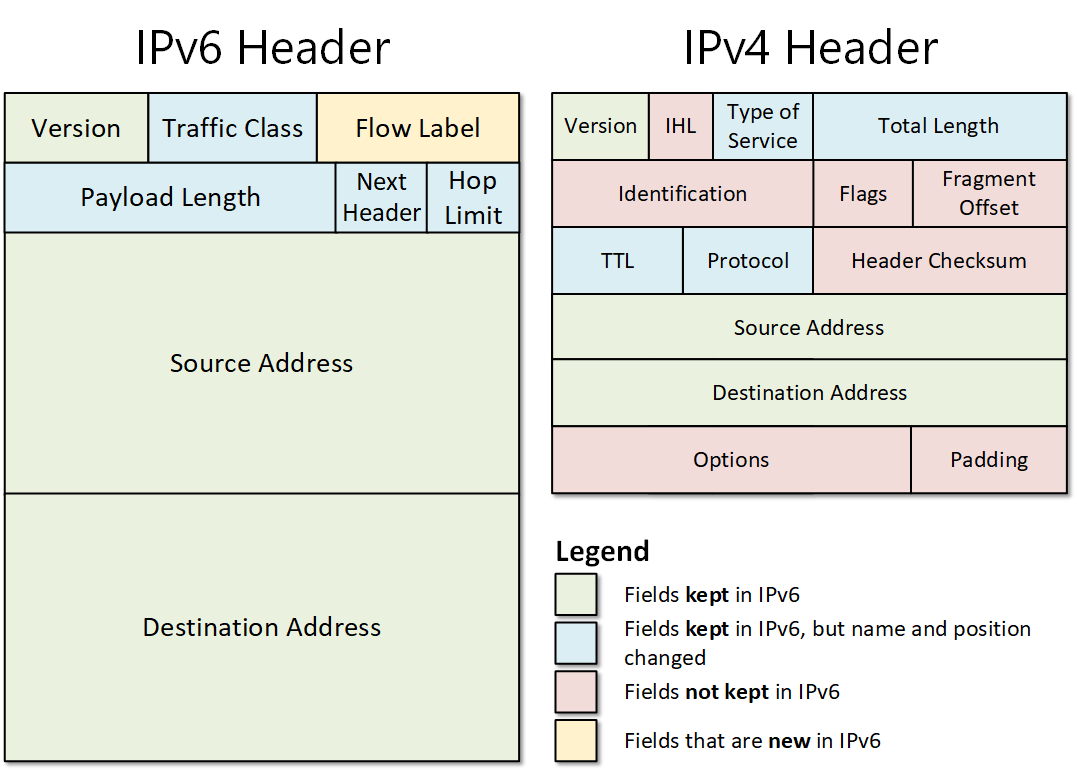
๐Ÿ”„ 7. IPv6 Addressing

Image
Image
Image
Image

๐Ÿ”น Why IPv6?

  • IPv4 exhaustion
  • Need for more addresses

๐Ÿ”น Features

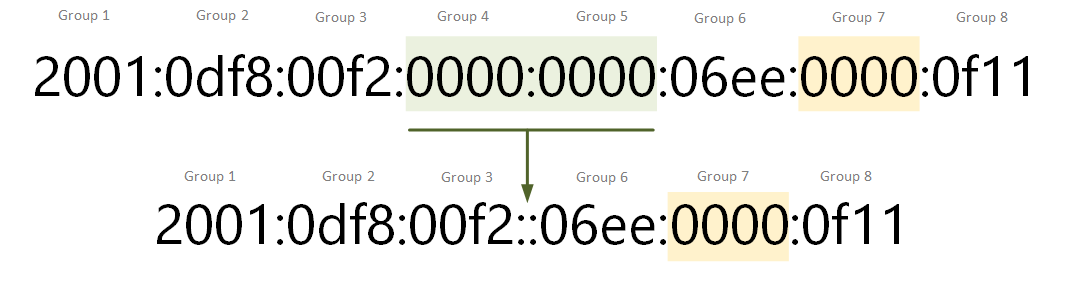
  • 128-bit address
  • Hexadecimal format
  • Larger address space

Example:

2001:0db8:85a3:0000:0000:8a2e:0370:7334

๐Ÿ” 8. Special IP Addresses


๐Ÿ”น Loopback Address

  • 127.0.0.1

๐Ÿ”น Broadcast Address

  • Sends to all devices

๐Ÿ”น Multicast Address

  • Sends to group

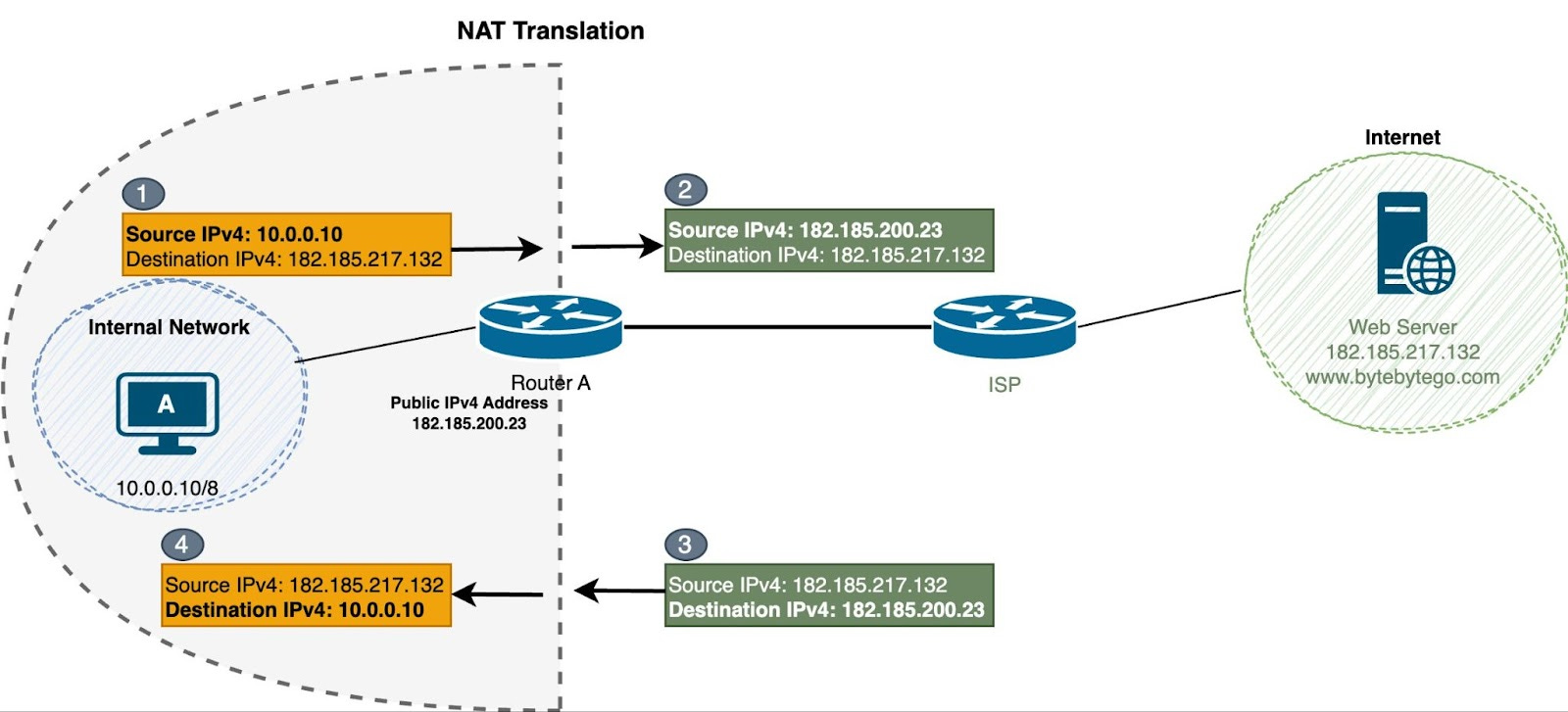
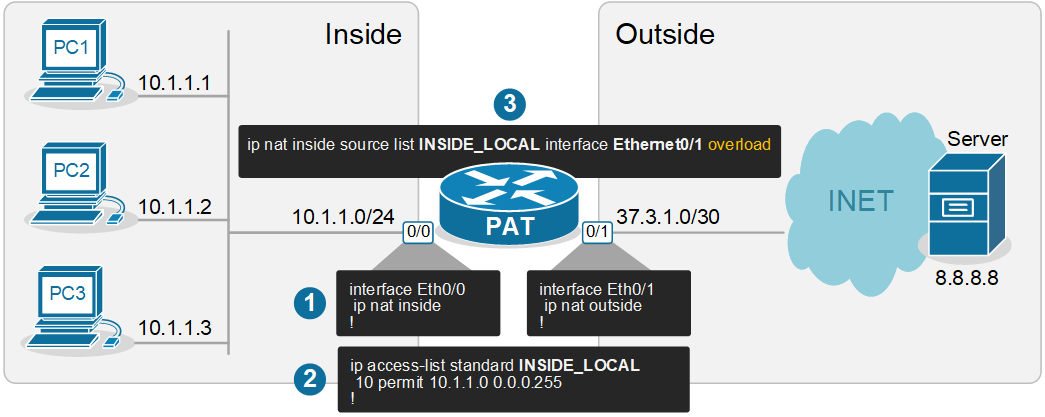
๐Ÿ”„ 9. NAT (Network Address Translation)
Image
Image
Image
Image

๐Ÿ”น Purpose

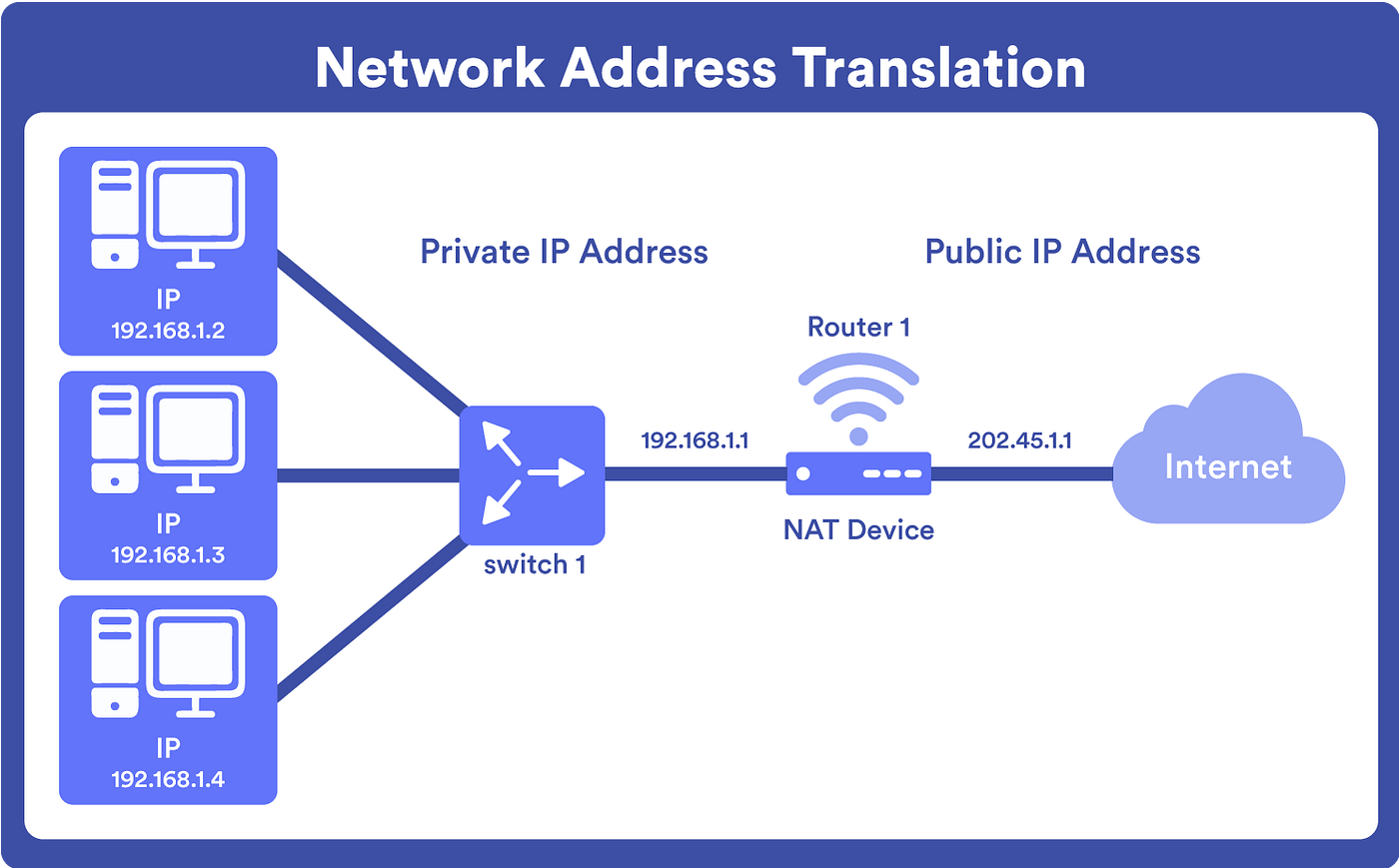
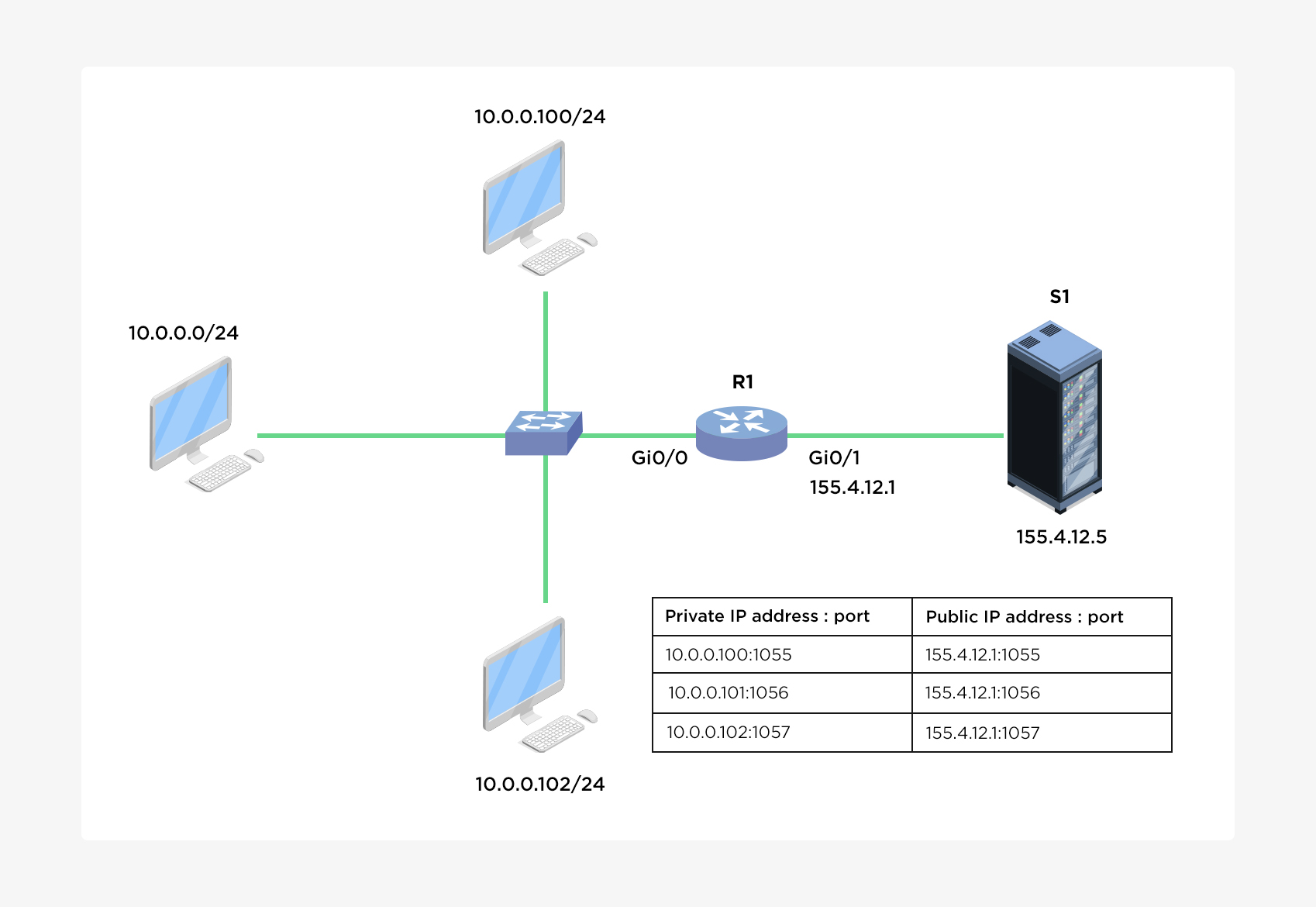
  • Converts private IP to public IP

๐Ÿ”น Types

  • Static NAT
  • Dynamic NAT
  • PAT (Port Address Translation)

โš™๏ธ 10. DHCP (Dynamic Host Configuration Protocol)


๐Ÿ”น Function

  • Automatically assigns IP addresses

๐Ÿ”น Process

  1. Discover
  2. Offer
  3. Request
  4. Acknowledge

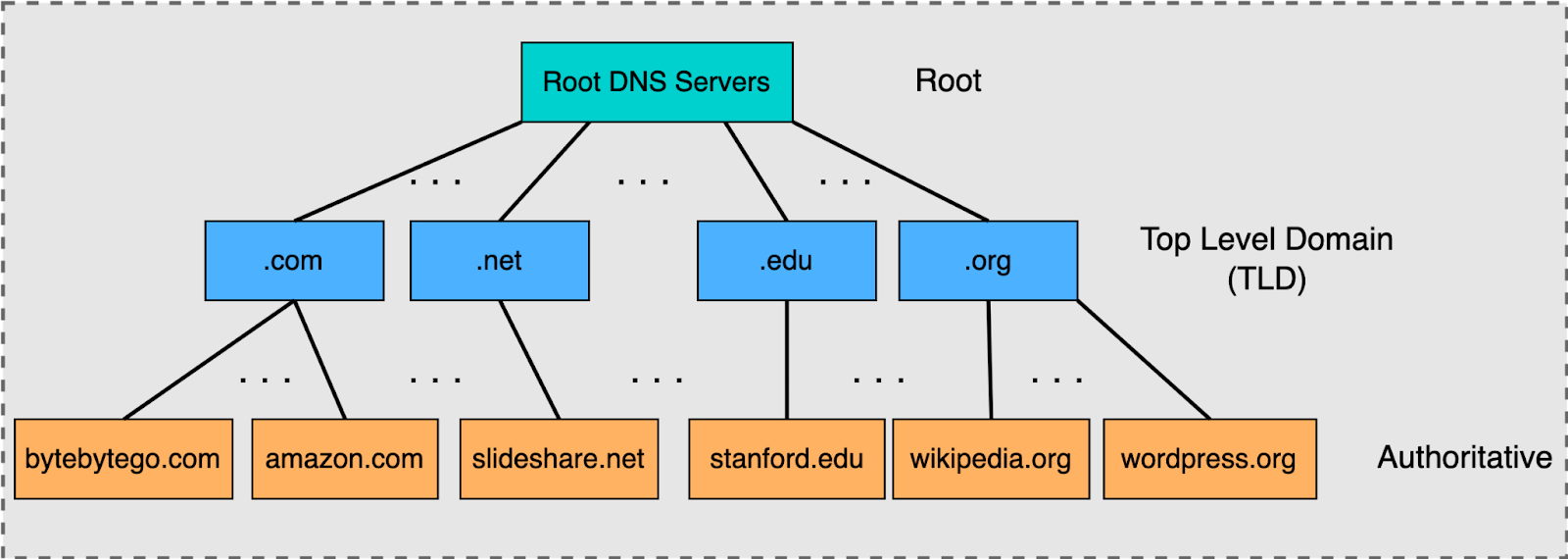
๐ŸŒ 11. DNS and IP Addressing


๐Ÿ”น Role

  • Converts domain names to IP

๐Ÿ”น Example

  • google.com โ†’ IP address

๐Ÿง  12. Routing and IP Addressing


๐Ÿ”น Routers

  • Use IP addresses to forward packets

๐Ÿ”น Routing Tables

  • Store path information

โšก 13. Address Resolution Protocol (ARP)


๐Ÿ”น Function

  • Maps IP to MAC address

๐Ÿ”„ 14. ICMP Protocol


๐Ÿ”น Uses

  • Error reporting
  • Diagnostics

Example: ping command


๐Ÿ” 15. Security in IP Addressing


๐Ÿ”น Threats

  • IP spoofing
  • DDoS attacks

๐Ÿ”น Solutions

  • Firewalls
  • Encryption

๐Ÿงฉ 16. Advanced Concepts


  • VLSM (Variable Length Subnet Masking)
  • Supernetting
  • Anycast addressing

๐Ÿ“Š 17. Real-World Applications


  • Internet communication
  • Cloud networking
  • IoT systems
  • Enterprise networks

โš–๏ธ 18. Advantages of IP Addressing


  • Unique identification
  • Scalable
  • Standardized

โš ๏ธ 19. Limitations


  • IPv4 exhaustion
  • Security concerns

๐Ÿ”ฎ 20. Future of IP Addressing


  • IPv6 adoption
  • Smart networks
  • IoT expansion

๐Ÿ Conclusion

IP addressing is the foundation of all network communication, enabling billions of devices to connect and exchange data. Understanding IP addressing is essential for networking, cybersecurity, and modern computing systems.


๐Ÿท๏ธ Tags

๐ŸŒ TCP/IP Protocol

Image
Image
Image
Image

๐Ÿ“˜ 1. Introduction to TCP/IP

TCP/IP (Transmission Control Protocol / Internet Protocol) is the fundamental communication protocol suite that enables devices to connect and communicate over the internet and other networks.

It is the backbone of:

  • The Internet ๐ŸŒ
  • Local networks (LANs)
  • Wide Area Networks (WANs)

๐Ÿ”น Definition

TCP/IP is a set of communication protocols used to:

  • Transmit data between devices
  • Ensure reliable delivery
  • Route data across networks

๐Ÿ”น Why TCP/IP is Important

  • Enables global communication
  • Supports web browsing, email, streaming
  • Provides standardized networking

๐Ÿง  2. History of TCP/IP


๐Ÿ”น Development

  • Developed in the 1970s
  • Funded by the U.S. Department of Defense (ARPANET project)

๐Ÿ”น Key Milestones

  • 1983 โ†’ TCP/IP adopted as ARPANET standard
  • Became foundation of modern internet

๐Ÿ—๏ธ 3. TCP/IP Model Layers

Image
Image
Image
Image

๐Ÿ”น Four Layers of TCP/IP Model


1. Application Layer

  • Interface for user applications
  • Protocols:
    • HTTP
    • FTP
    • SMTP
    • DNS

2. Transport Layer

  • End-to-end communication
  • Protocols:
    • TCP
    • UDP

3. Internet Layer

  • Logical addressing and routing
  • Protocol:
    • IP

4. Network Access Layer

  • Physical transmission
  • Includes Ethernet, Wi-Fi

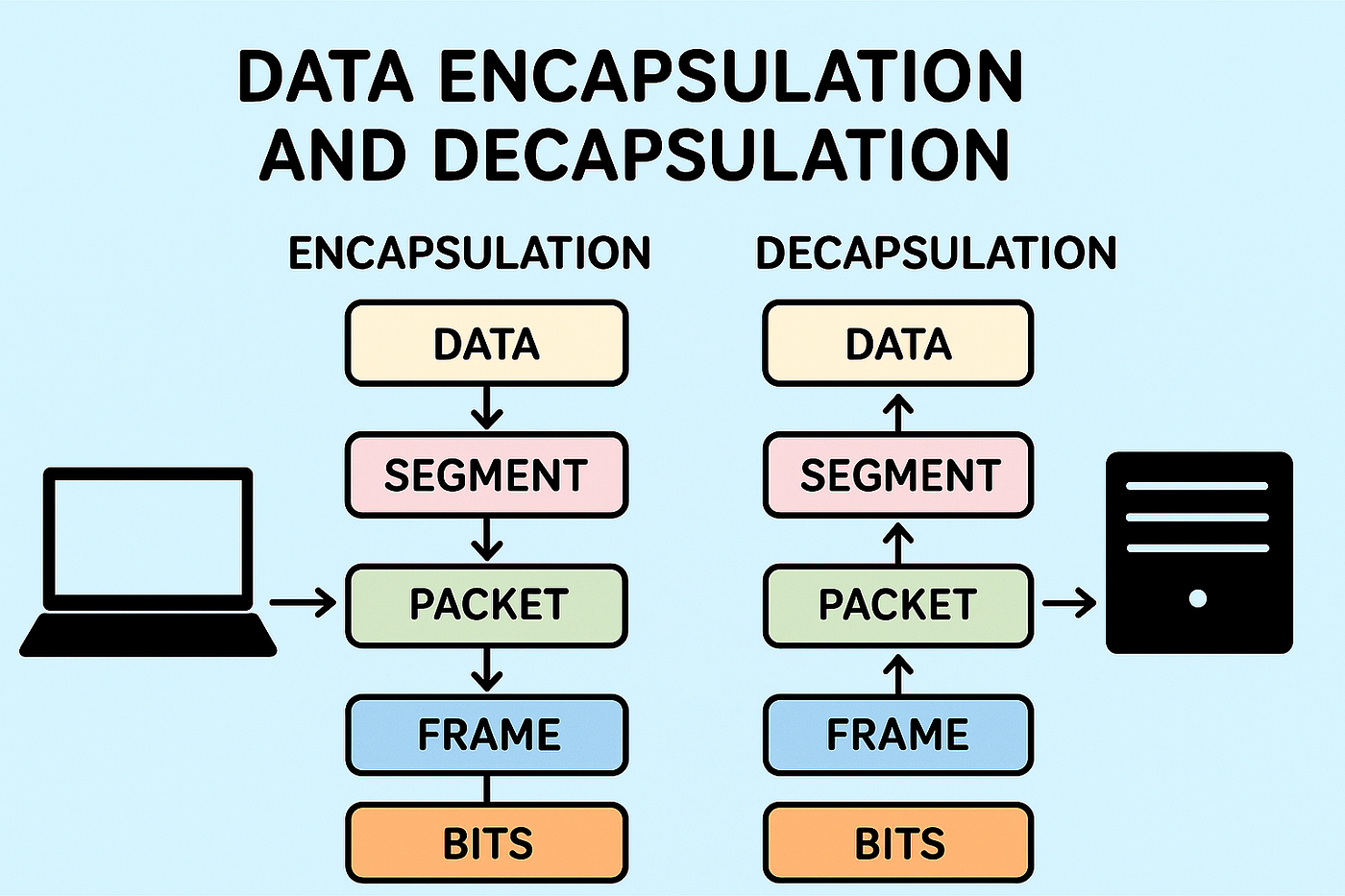
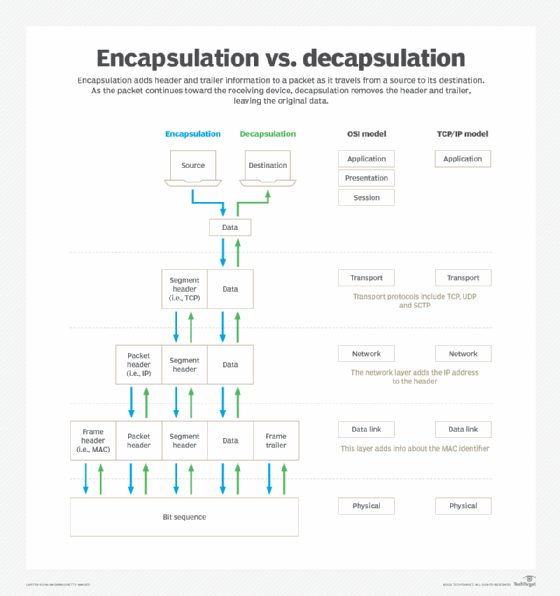
๐Ÿ”„ 4. Data Encapsulation Process

Image
Image
Image
Image

๐Ÿ”น Steps

  1. Application layer creates data
  2. Transport layer adds header โ†’ Segment
  3. Internet layer adds IP header โ†’ Packet
  4. Network layer adds frame

๐Ÿ”‘ 5. Internet Protocol (IP)


๐Ÿ”น Role of IP

  • Provides addressing
  • Routes packets

๐Ÿ”น IP Address

Unique identifier for devices.

Types:

  • IPv4 โ†’ 32-bit
  • IPv6 โ†’ 128-bit

๐Ÿ”น Example IPv4

192.168.1.1

๐Ÿ”„ 6. Transmission Control Protocol (TCP)

Image
Image
Image
Image

๐Ÿ”น Features of TCP

  • Connection-oriented
  • Reliable
  • Ordered delivery
  • Error checking

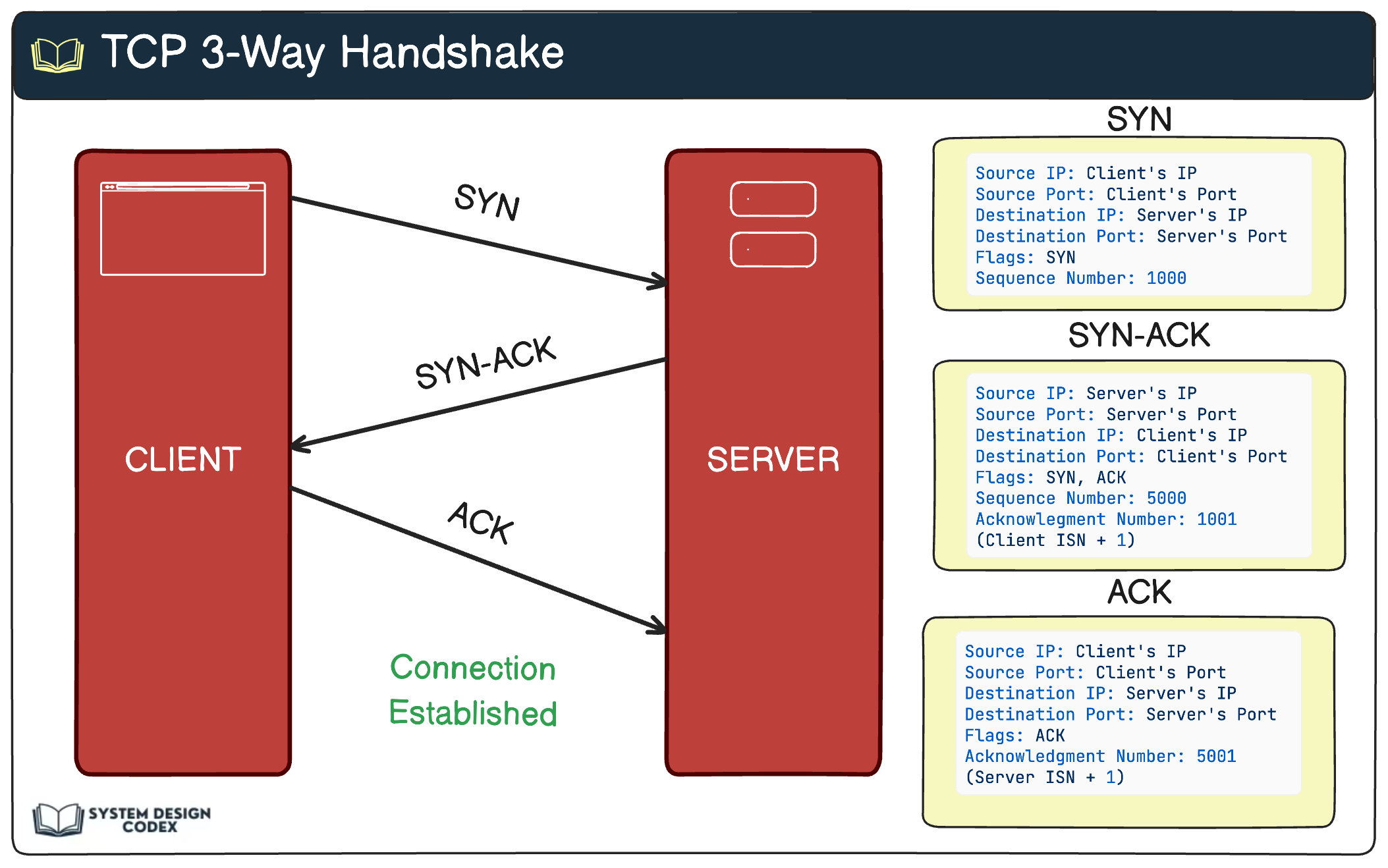
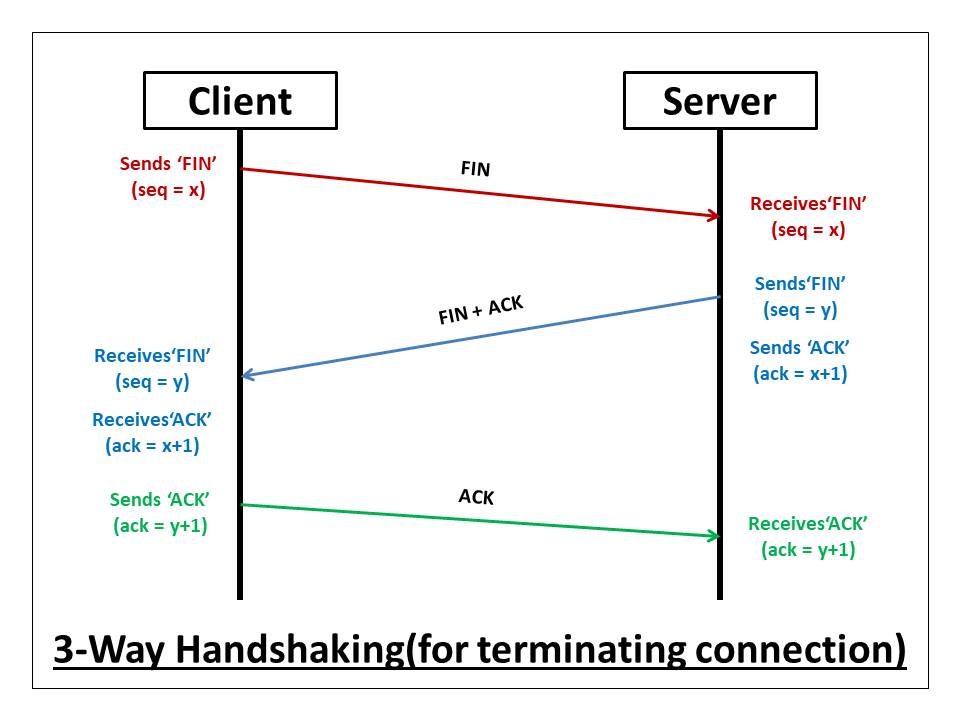
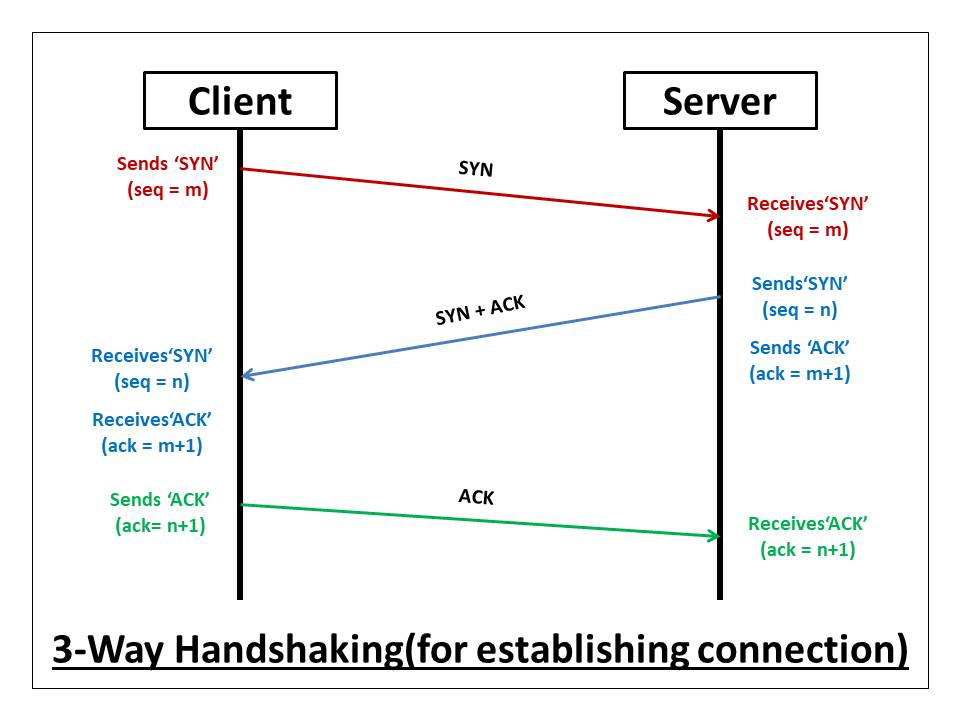
๐Ÿ”น Three-Way Handshake

  1. SYN
  2. SYN-ACK
  3. ACK

๐Ÿ”น Flow Control

  • Sliding window mechanism

๐Ÿ”น Congestion Control

  • Avoids network overload

โšก 7. User Datagram Protocol (UDP)


๐Ÿ”น Features

  • Connectionless
  • Faster
  • No guarantee of delivery

๐Ÿ”น Use Cases

  • Video streaming
  • Online gaming
  • DNS

๐Ÿง  8. TCP vs UDP


FeatureTCPUDP
ReliabilityHighLow
SpeedSlowerFaster
ConnectionYesNo

๐Ÿ” 9. Ports and Sockets


๐Ÿ”น Port Numbers

  • Identify applications

Examples:

  • HTTP โ†’ 80
  • HTTPS โ†’ 443

๐Ÿ”น Socket

Combination of:

  • IP address
  • Port number

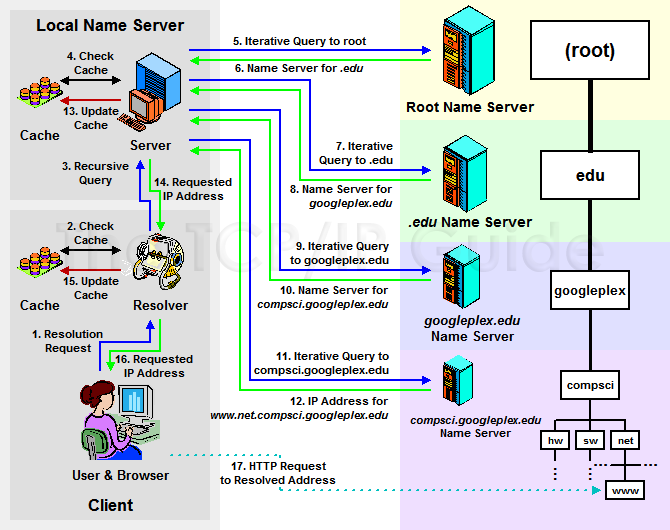
๐ŸŒ 10. DNS (Domain Name System)

Image
Image
Image
Image

๐Ÿ”น Function

  • Converts domain names to IP addresses

๐Ÿ”„ 11. Routing


๐Ÿ”น Routers

  • Forward packets

๐Ÿ”น Routing Protocols

  • OSPF
  • BGP

๐Ÿ” 12. Security in TCP/IP


๐Ÿ”น Common Threats

  • IP spoofing
  • Man-in-the-middle attacks

๐Ÿ”น Security Measures

  • Firewalls
  • Encryption (TLS/SSL)

โšก 13. Performance Optimization


๐Ÿ”น Techniques

  • Load balancing
  • Congestion control
  • Caching

๐Ÿงช 14. Packet Structure


๐Ÿ”น Components

  • Header
  • Payload

๐ŸŒ 15. Real-World Applications


  • Web browsing
  • Email
  • Streaming
  • Cloud services

๐Ÿง  16. Advanced Concepts


  • NAT (Network Address Translation)
  • Subnetting
  • QoS (Quality of Service)

๐Ÿ”„ 17. TCP/IP vs OSI Model


TCP/IPOSI
4 layers7 layers

โš–๏ธ 18. Advantages of TCP/IP


  • Scalable
  • Reliable
  • Standardized

โš ๏ธ 19. Limitations


  • Complexity
  • Security vulnerabilities

๐Ÿ”ฎ 20. Future of TCP/IP


  • IPv6 adoption
  • IoT networking
  • 5G integration

๐Ÿ Conclusion

TCP/IP is the foundation of modern networking, enabling seamless communication across the globe. Understanding TCP/IP is essential for anyone working in networking, cybersecurity, or software development.


๐Ÿท๏ธ Tags