Tag Archives: Data Integrity

๐Ÿ”„ Transactions & ACID Properties

Image
Image
Image
Image

๐Ÿ“˜ 1. Introduction to Transactions

A transaction in database systems is a sequence of one or more operations performed as a single logical unit of work. These operations may include:

  • Reading data
  • Writing data
  • Updating records
  • Deleting records

The key idea is simple but powerful:

๐Ÿ‘‰ Either all operations succeed, or none of them do.


๐Ÿ”น Real-Life Example

Consider a bank transfer:

  1. Deduct โ‚น1000 from Account A
  2. Add โ‚น1000 to Account B

If step 1 succeeds but step 2 fails, the system becomes inconsistent. Transactions prevent this by ensuring all-or-nothing execution.


๐Ÿ”น Formal Definition

A transaction is:

  • A logical unit of work
  • Executed completely or not at all
  • Ensures database consistency

๐Ÿง  2. Why Transactions Are Important

Transactions are critical for:

  • Data integrity
  • Reliability
  • Consistency across operations
  • Handling system failures
  • Concurrent access management

๐Ÿ”น Without Transactions

  • Partial updates
  • Data corruption
  • Lost data
  • Inconsistent state

๐Ÿ—๏ธ 3. Transaction States

Image
Image
Image
Image

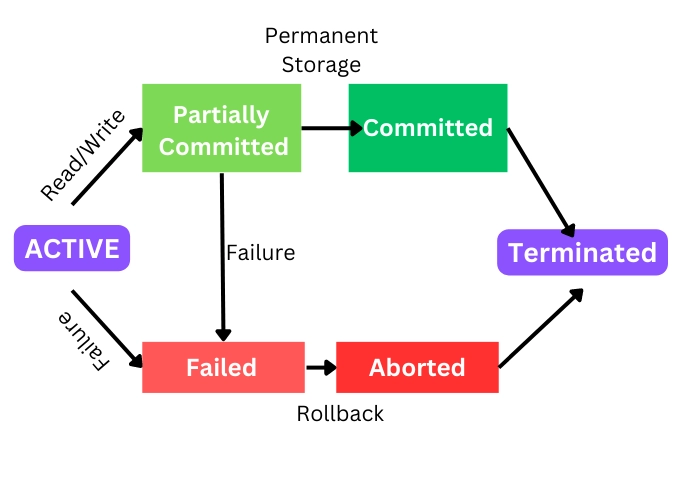
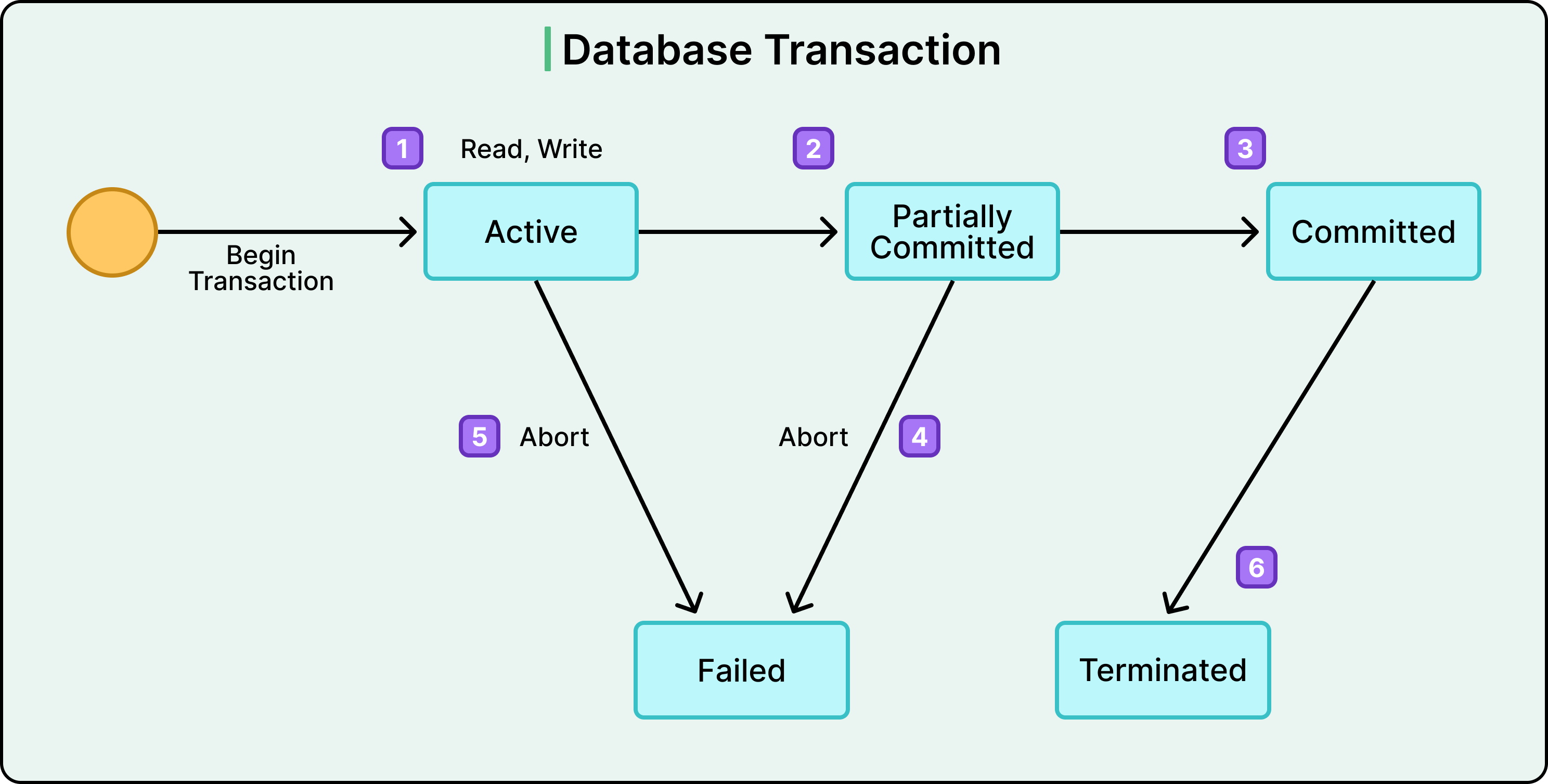
A transaction passes through several states:


๐Ÿ”น 1. Active

  • Transaction is executing

๐Ÿ”น 2. Partially Committed

  • All operations executed, waiting to commit

๐Ÿ”น 3. Committed

  • Changes permanently saved

๐Ÿ”น 4. Failed

  • Error occurs

๐Ÿ”น 5. Aborted

  • Rolled back to previous state

๐Ÿ” 4. Transaction Operations


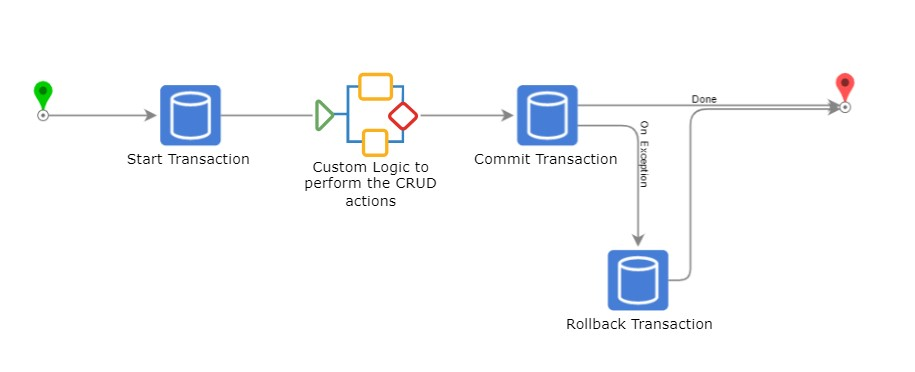
๐Ÿ”น BEGIN TRANSACTION

Starts a transaction.

BEGIN;

๐Ÿ”น COMMIT

Saves changes permanently.

COMMIT;

๐Ÿ”น ROLLBACK

Reverts changes.

ROLLBACK;

๐Ÿ”น SAVEPOINT

Creates checkpoints.

SAVEPOINT sp1;
ROLLBACK TO sp1;

โš–๏ธ 5. ACID Properties

Image
Image
Image
Image

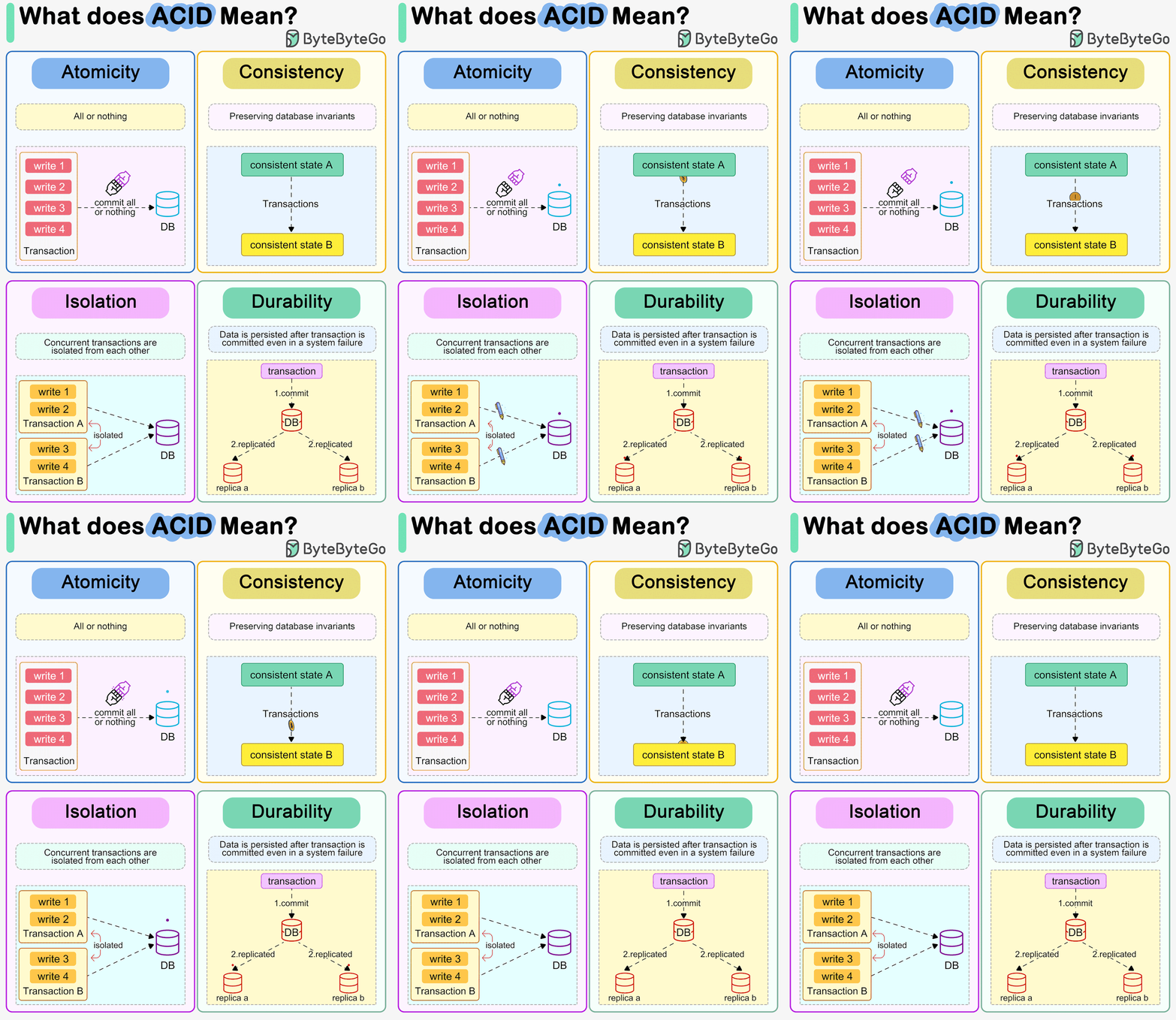
ACID properties ensure reliable transactions:


๐Ÿ”น A โ€“ Atomicity

๐Ÿ‘‰ All or nothing

  • If one operation fails โ†’ entire transaction fails
  • Ensures no partial updates

Example:

  • Money deducted but not added โ†’ rollback

๐Ÿ”น C โ€“ Consistency

๐Ÿ‘‰ Database remains valid

  • Enforces rules, constraints
  • Moves from one valid state to another

๐Ÿ”น I โ€“ Isolation

๐Ÿ‘‰ Transactions do not interfere

  • Concurrent transactions behave independently

๐Ÿ”น D โ€“ Durability

๐Ÿ‘‰ Changes are permanent

  • Even after crash, data persists

๐Ÿ” 6. Atomicity in Detail

Atomicity ensures:

  • No partial execution
  • Rollback on failure

๐Ÿ”น Implementation Techniques

  • Undo logs
  • Write-ahead logging (WAL)

๐Ÿ”น Example

BEGIN;

UPDATE Accounts SET balance = balance - 1000 WHERE id = 1;
UPDATE Accounts SET balance = balance + 1000 WHERE id = 2;

COMMIT;

If second update fails โ†’ rollback entire transaction.


๐Ÿงฉ 7. Consistency in Detail

Consistency ensures:

  • Constraints are maintained
  • Rules are enforced

๐Ÿ”น Types of Constraints

  • Primary key
  • Foreign key
  • Check constraints

๐Ÿ”น Example

  • Balance cannot be negative
  • Foreign key must exist

๐Ÿ”„ 8. Isolation in Detail

Image
Image
Image
Image

Isolation prevents interference between transactions.


๐Ÿ”น Problems Without Isolation

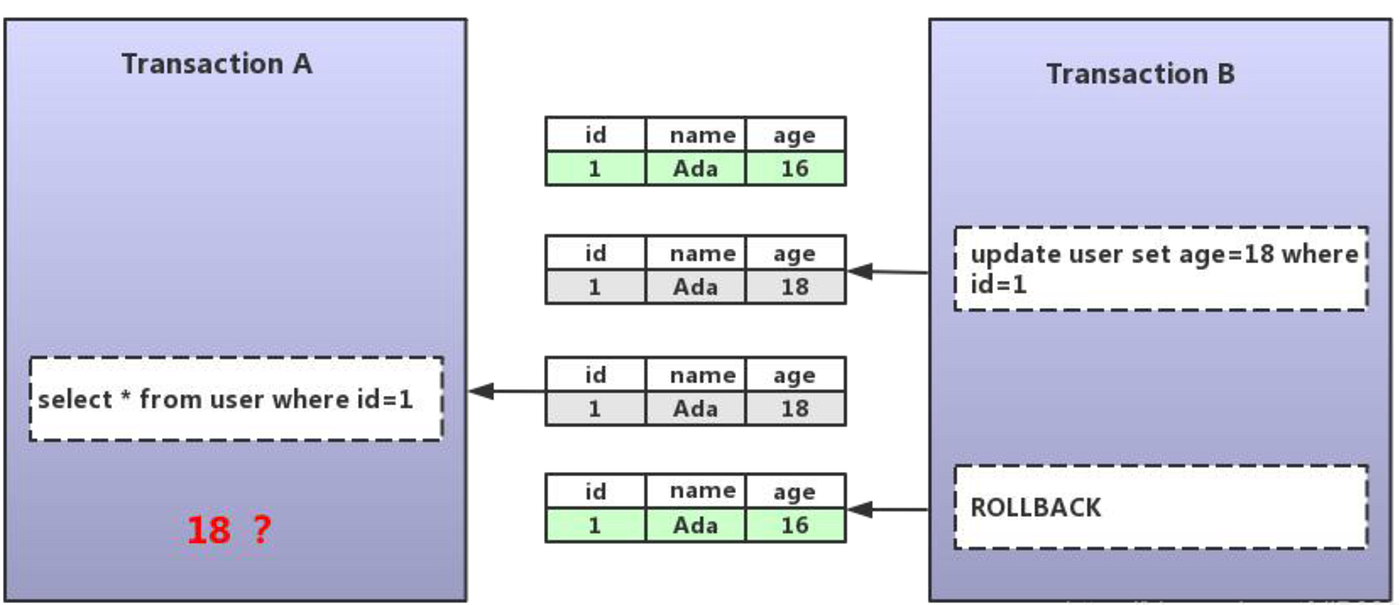
1. Dirty Read

Reading uncommitted data


2. Non-repeatable Read

Data changes between reads


3. Phantom Read

New rows appear unexpectedly


๐Ÿ”น Isolation Levels

LevelDescription
Read UncommittedLowest isolation
Read CommittedPrevents dirty reads
Repeatable ReadPrevents non-repeatable reads
SerializableHighest isolation

๐Ÿ” 9. Durability in Detail

Durability ensures:

  • Data survives crashes
  • Stored permanently

๐Ÿ”น Implementation

  • Transaction logs
  • Disk storage
  • Backup systems

๐Ÿ”น Example

After COMMIT:

  • Power failure occurs
  • Data still exists

๐Ÿง  10. Concurrency Control

Image
Image
Image
Image

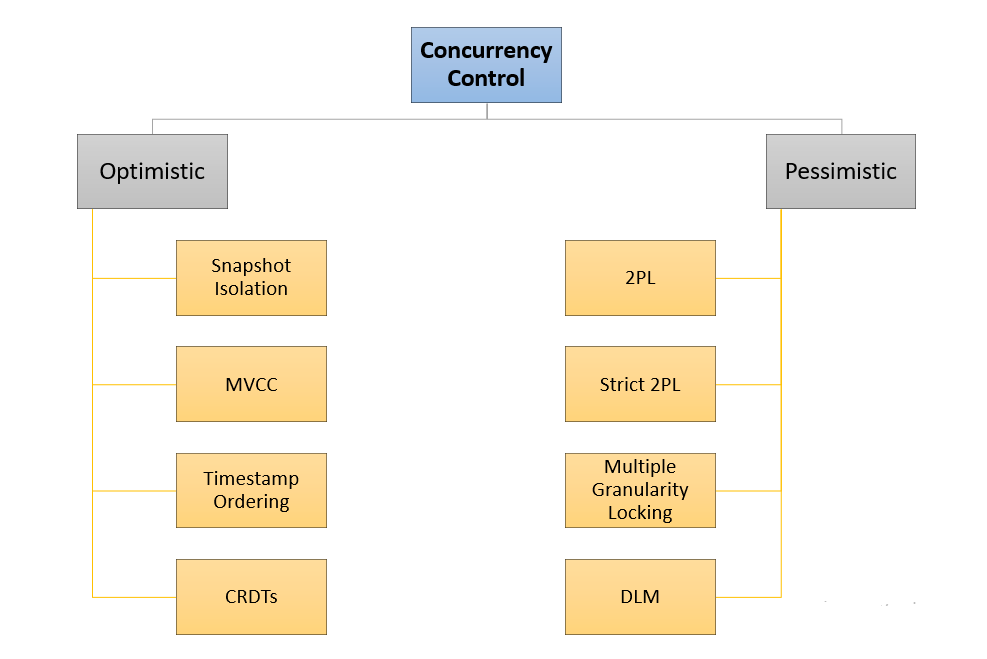
Concurrency control manages multiple transactions.


๐Ÿ”น Techniques

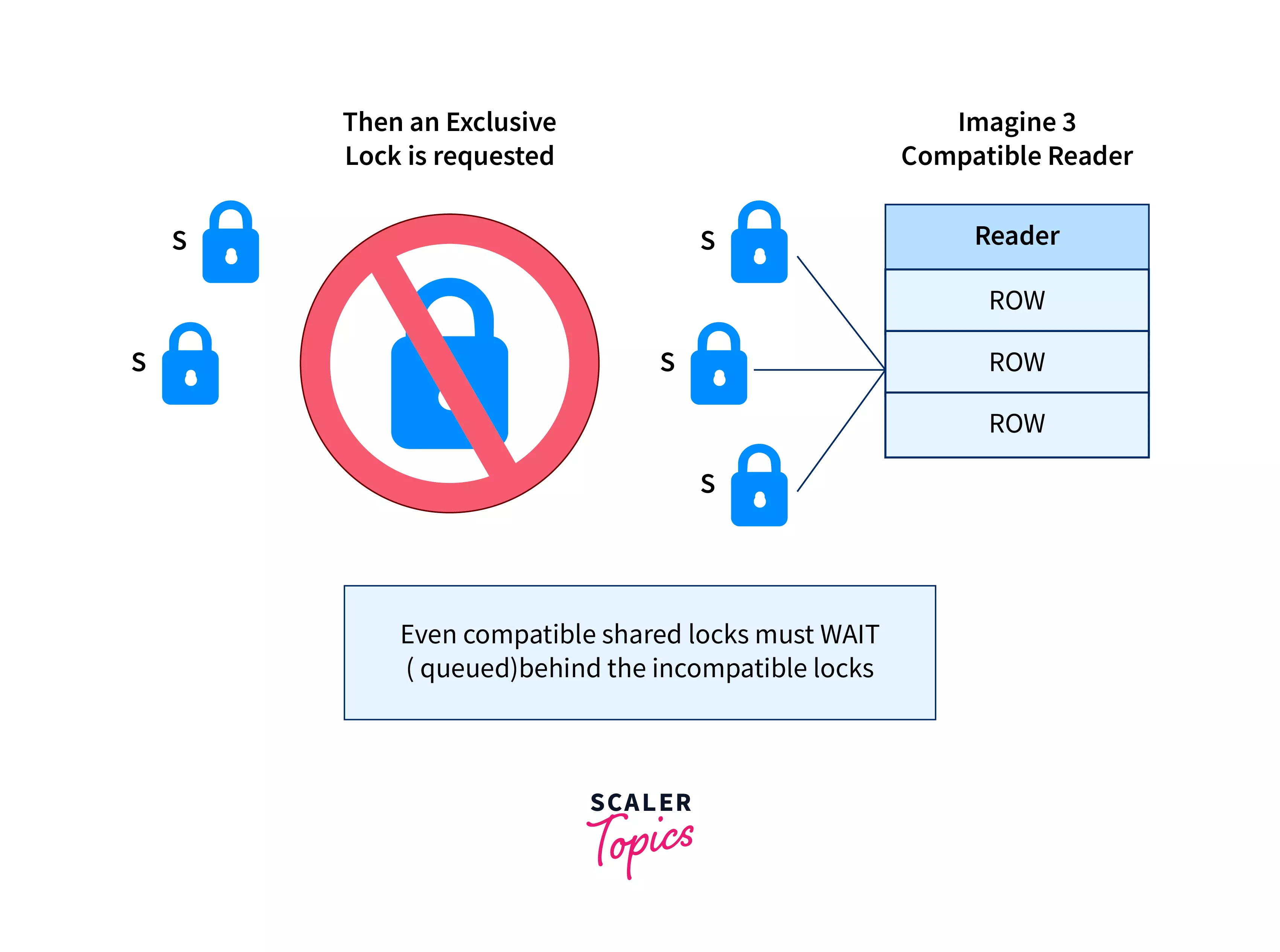
1. Locking

  • Shared lock (read)
  • Exclusive lock (write)

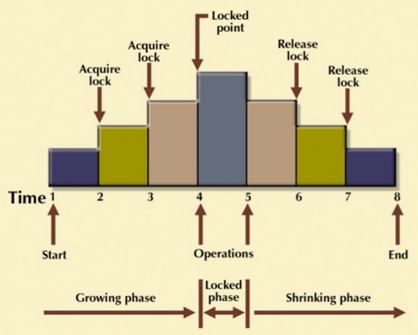
2. Two-Phase Locking (2PL)

  • Growing phase
  • Shrinking phase

3. Timestamp Ordering

  • Based on timestamps

4. MVCC (Multi-Version Concurrency Control)

  • Multiple versions of data

๐Ÿ” 11. Deadlocks


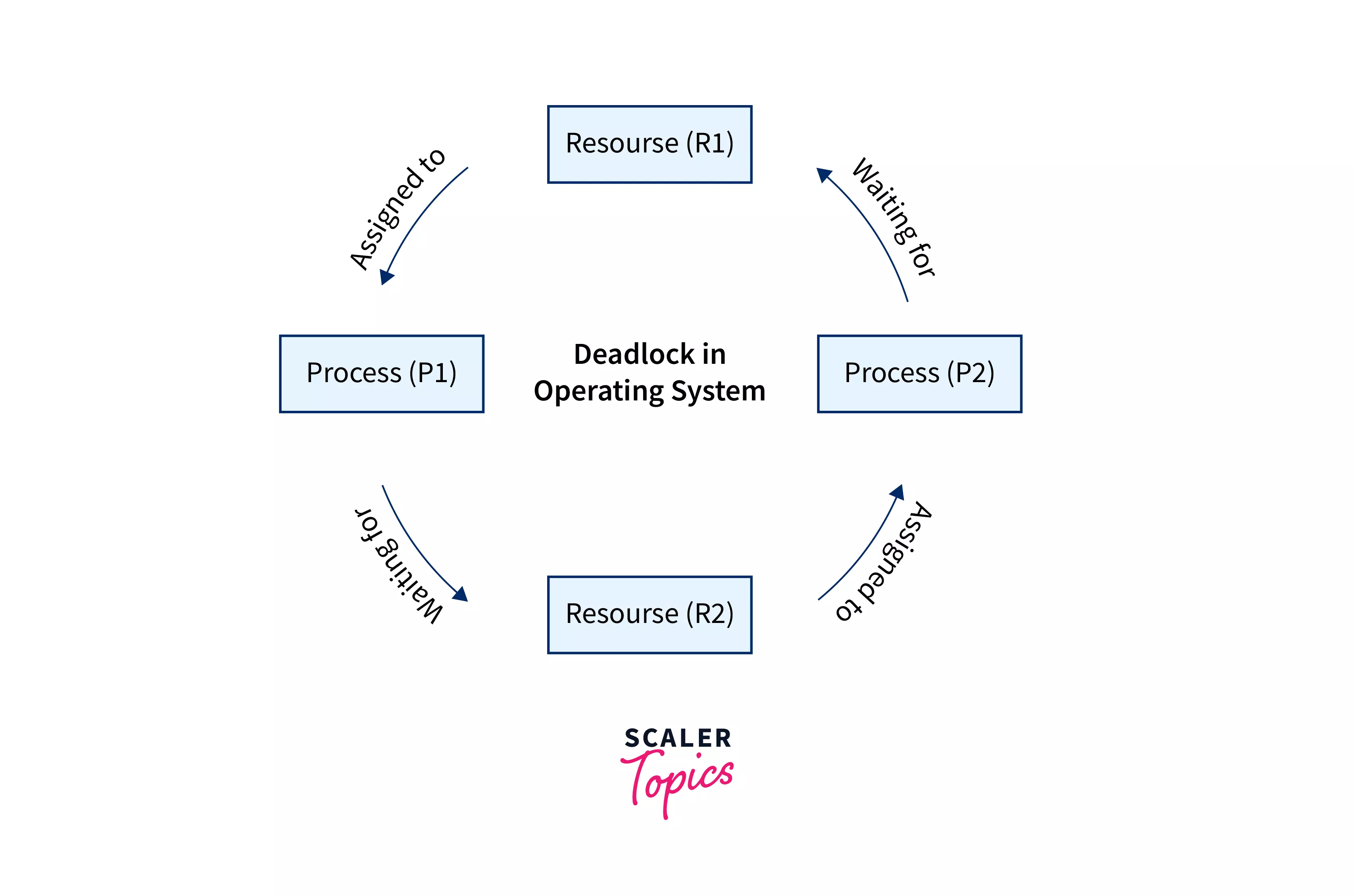
๐Ÿ”น What is Deadlock?

Two transactions wait for each other indefinitely.


๐Ÿ”น Example

  • T1 locks A, needs B
  • T2 locks B, needs A

๐Ÿ”น Handling Deadlocks

  • Detection
  • Prevention
  • Timeout

๐Ÿงช 12. Logging and Recovery

Image
Image
Image
Image

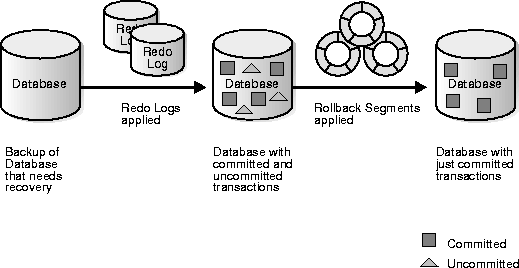
๐Ÿ”น Types of Logs

  • Undo log
  • Redo log

๐Ÿ”น Recovery Techniques

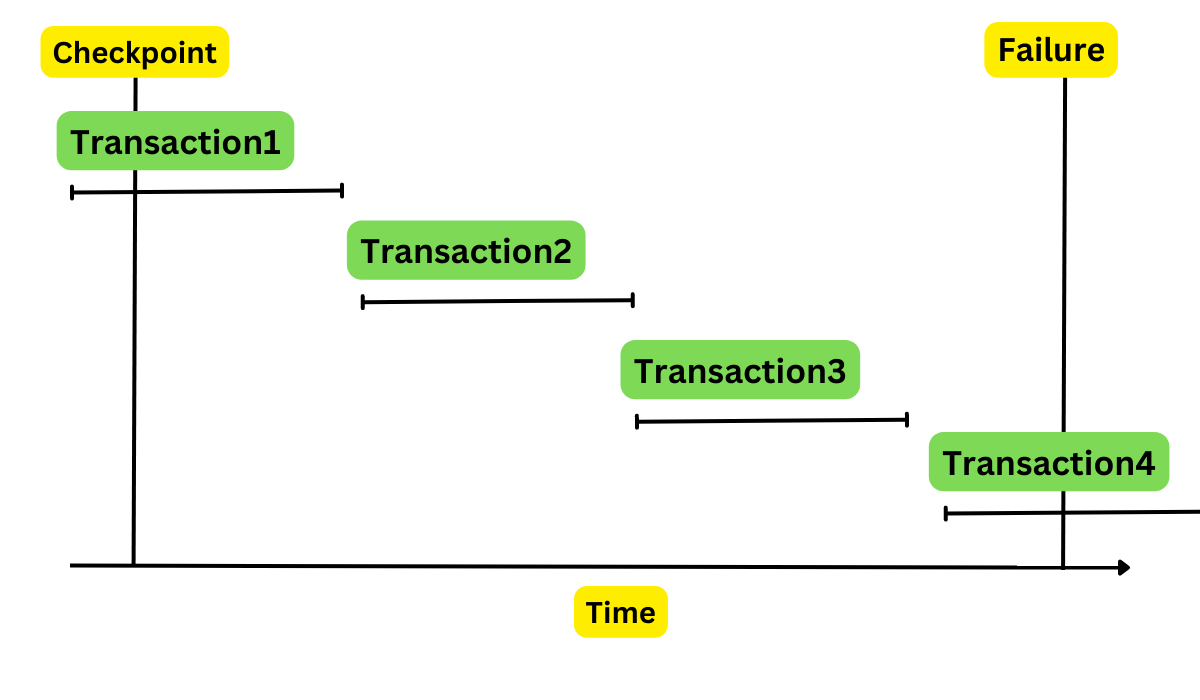
  • Checkpointing
  • Log-based recovery

๐Ÿ“Š 13. Distributed Transactions


๐Ÿ”น Challenges

  • Network failures
  • Data consistency across nodes

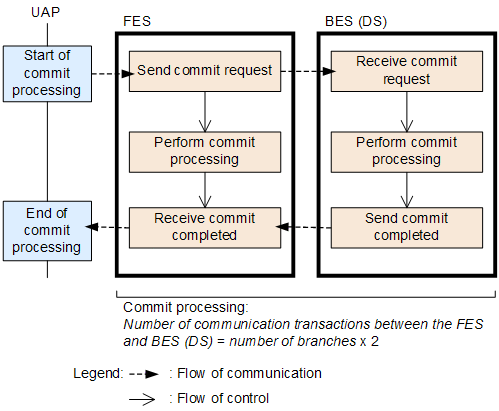
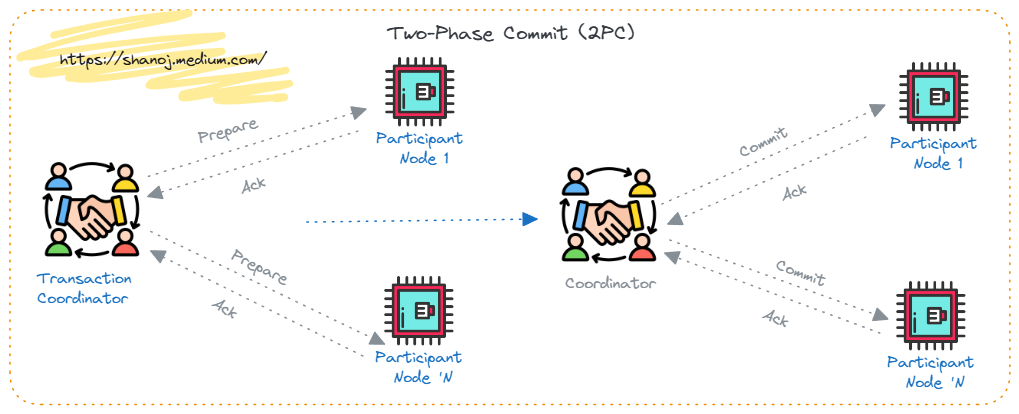
๐Ÿ”น Two-Phase Commit (2PC)

  1. Prepare phase
  2. Commit phase

๐Ÿ”น Three-Phase Commit (3PC)

Improved version of 2PC


๐ŸŒ 14. Transactions in Modern Databases


๐Ÿ”น SQL Databases

  • Strong ACID compliance

๐Ÿ”น NoSQL Databases

  • Often use BASE model
    • Basically Available
    • Soft state
    • Eventually consistent

โš–๏ธ 15. ACID vs BASE

FeatureACIDBASE
ConsistencyStrongEventual
AvailabilityModerateHigh
Use CaseBankingSocial media

๐Ÿ“ˆ 16. Performance Considerations

  • High isolation โ†’ slower performance
  • Low isolation โ†’ faster but risky

๐Ÿ”น Trade-offs

  • Consistency vs performance
  • Isolation vs concurrency

๐Ÿงฉ 17. Real-World Applications


๐Ÿ”น Banking Systems

  • Money transfer
  • Account updates

๐Ÿ”น E-commerce

  • Order processing
  • Payment transactions

๐Ÿ”น Airline Booking

  • Seat reservation

๐Ÿง  18. Advanced Topics

  • Nested transactions
  • Long-running transactions
  • Savepoints
  • Distributed consensus

๐Ÿ—๏ธ 19. Best Practices

  • Keep transactions short
  • Avoid unnecessary locks
  • Use proper isolation level
  • Monitor performance

โš ๏ธ 20. Common Issues

  • Deadlocks
  • Blocking
  • Performance bottlenecks
  • Data inconsistency

๐Ÿ”ฎ 21. Future Trends

  • Cloud-native transactions
  • Distributed ACID systems
  • New consistency models

๐Ÿ Conclusion

Transactions and ACID properties form the core foundation of reliable database systems. They ensure that even in complex, concurrent, and failure-prone environments, data remains:

  • Accurate
  • Consistent
  • Safe
  • Durable

Mastering transactions is essential for building robust applications, especially in systems where correctness is critical.
๐Ÿท๏ธ Tags

๐Ÿ—๏ธ Database Design

Image
Image
Image
Image

๐Ÿ“˜ 1. Introduction to Database Design

Database Design is the structured process of organizing data into a model that efficiently supports storage, retrieval, and manipulation. It defines how data is stored, how different data elements relate to each other, and how users interact with the database.

A well-designed database ensures:

  • High performance โšก
  • Data consistency โœ”๏ธ
  • Scalability ๐Ÿ“ˆ
  • Security ๐Ÿ”
  • Maintainability ๐Ÿ› ๏ธ

Database design is the foundation of all data-driven systems, including:

  • Web applications
  • Mobile apps
  • Enterprise software
  • Banking systems
  • AI and analytics platforms

๐Ÿง  2. Importance of Database Design

๐Ÿ”น Why It Matters

Poor database design leads to:

  • Data redundancy
  • Inconsistent data
  • Slow queries
  • Difficult maintenance
  • Scalability issues

Good database design provides:

  • Efficient data access
  • Reduced duplication
  • Logical organization
  • Improved data integrity

๐Ÿ›๏ธ 3. Types of Database Design

Image
Image
Image
Image

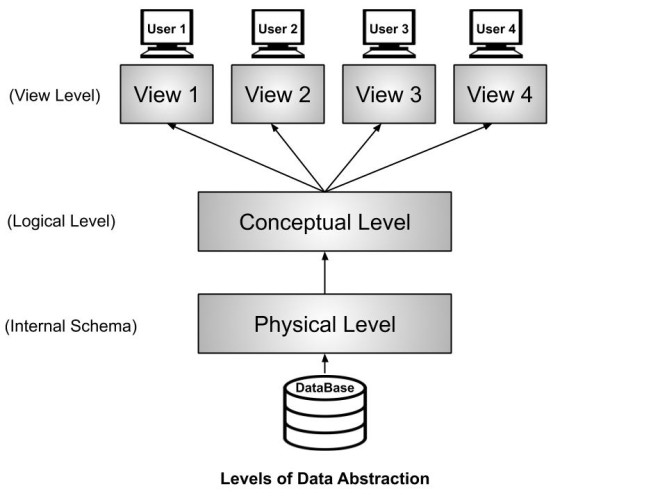
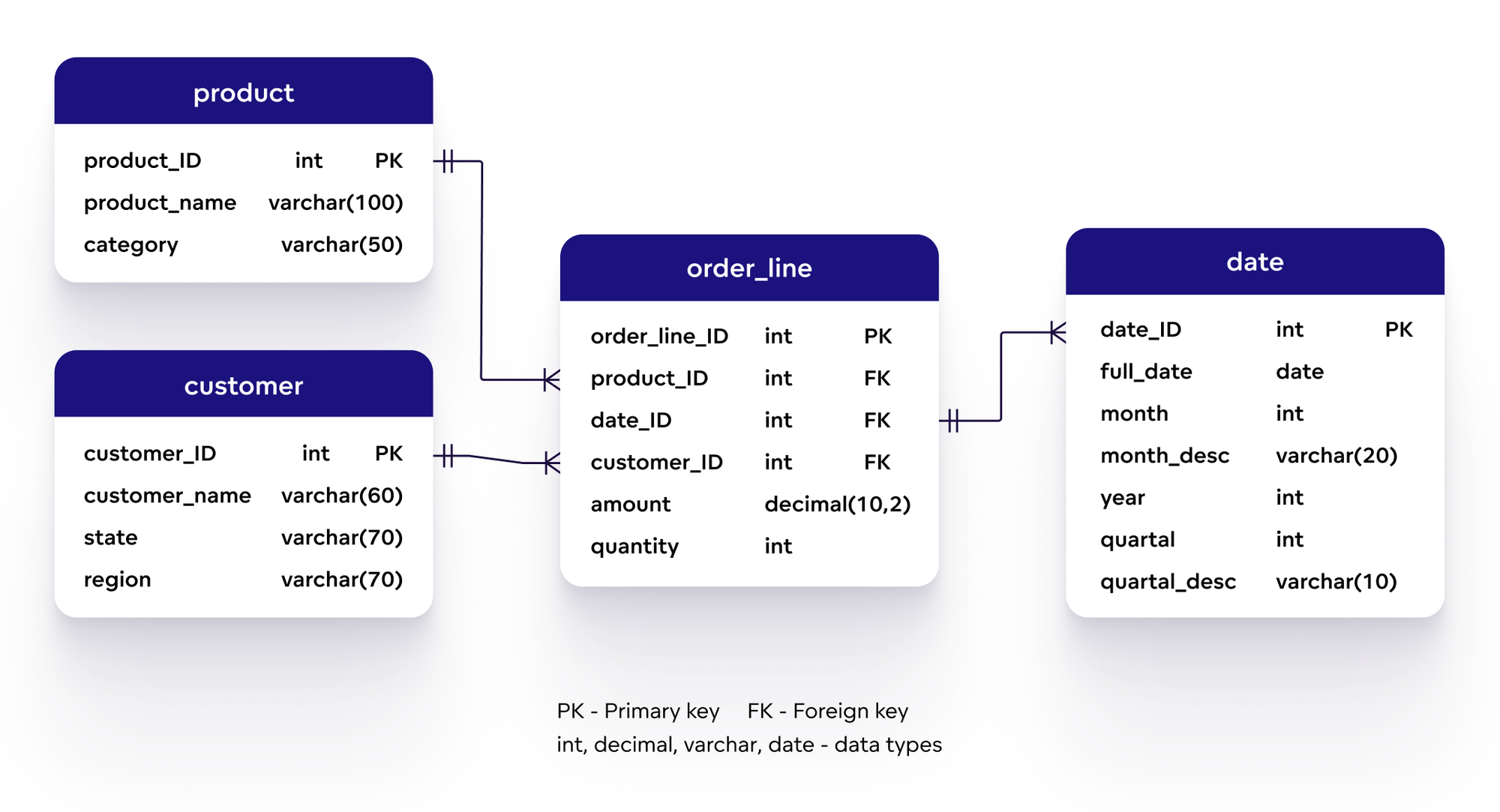
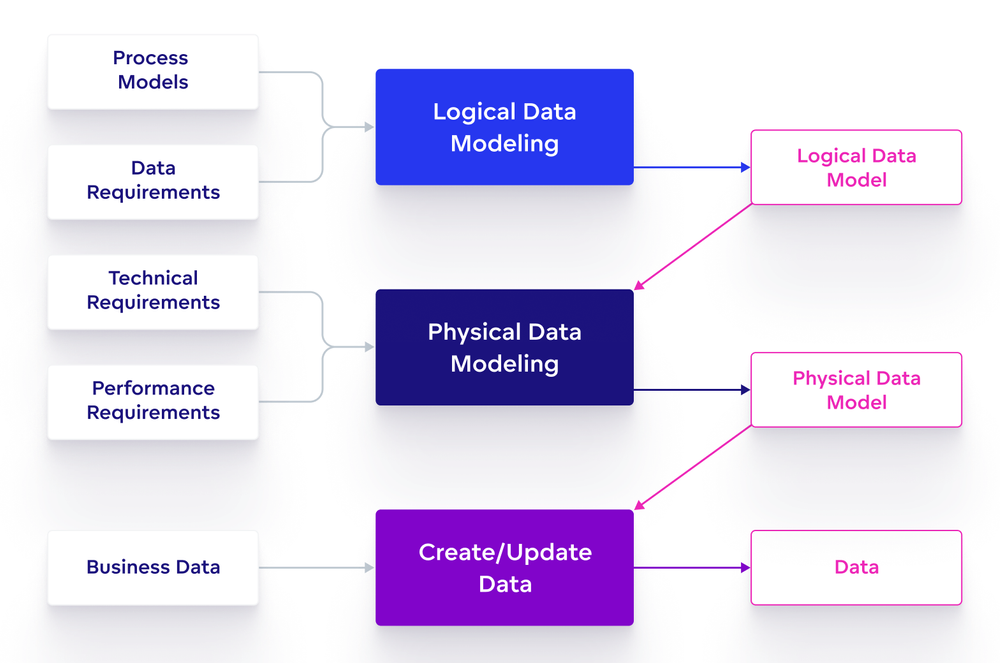
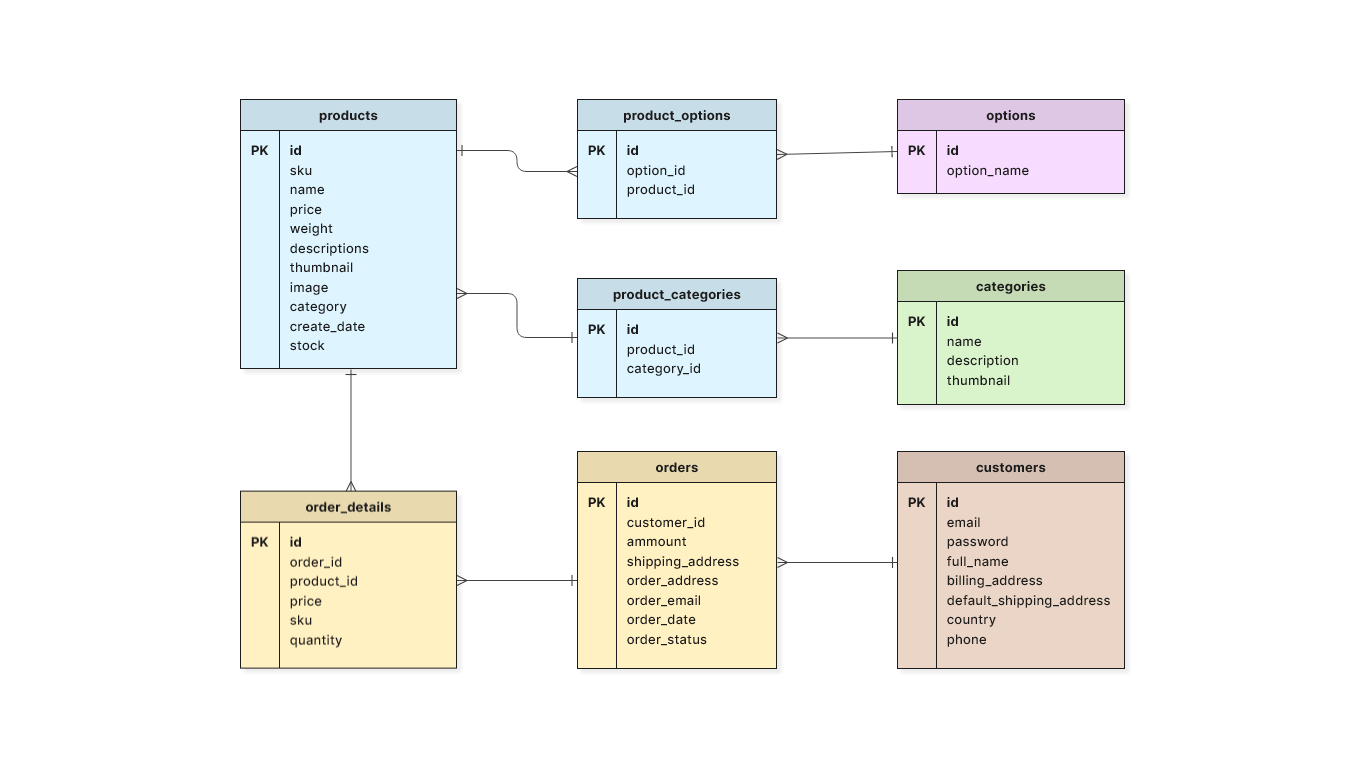
Database design is typically divided into three levels:


๐Ÿ”น 1. Conceptual Design

  • High-level design
  • Focuses on what data is needed
  • Uses Entity-Relationship Diagrams (ERD)

Example:

  • Entities: Student, Course
  • Relationship: Enrollment

๐Ÿ”น 2. Logical Design

  • Defines structure without implementation details
  • Includes tables, columns, keys

๐Ÿ”น 3. Physical Design

  • Actual implementation in DBMS
  • Includes indexing, storage, partitioning

๐Ÿงฉ 4. Data Modeling

Image
Image
Image
Image

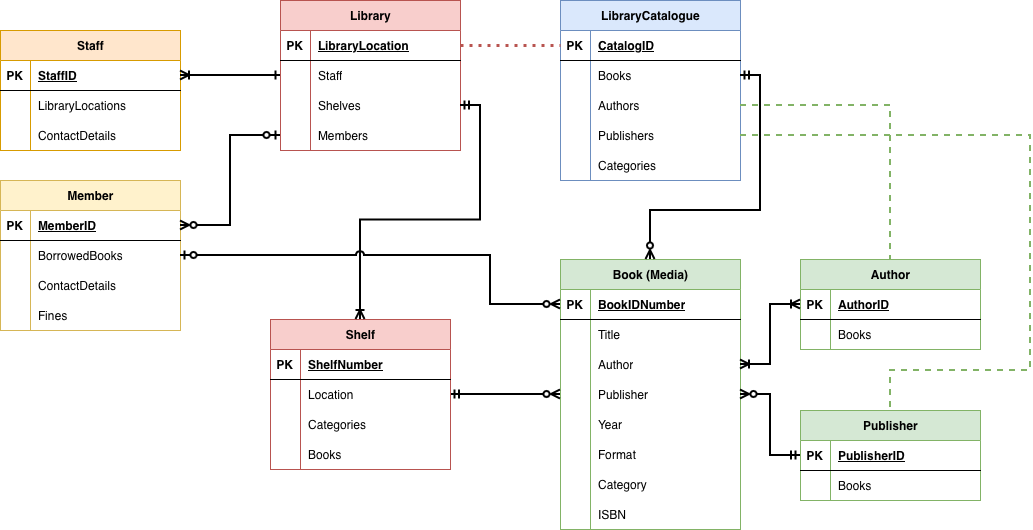
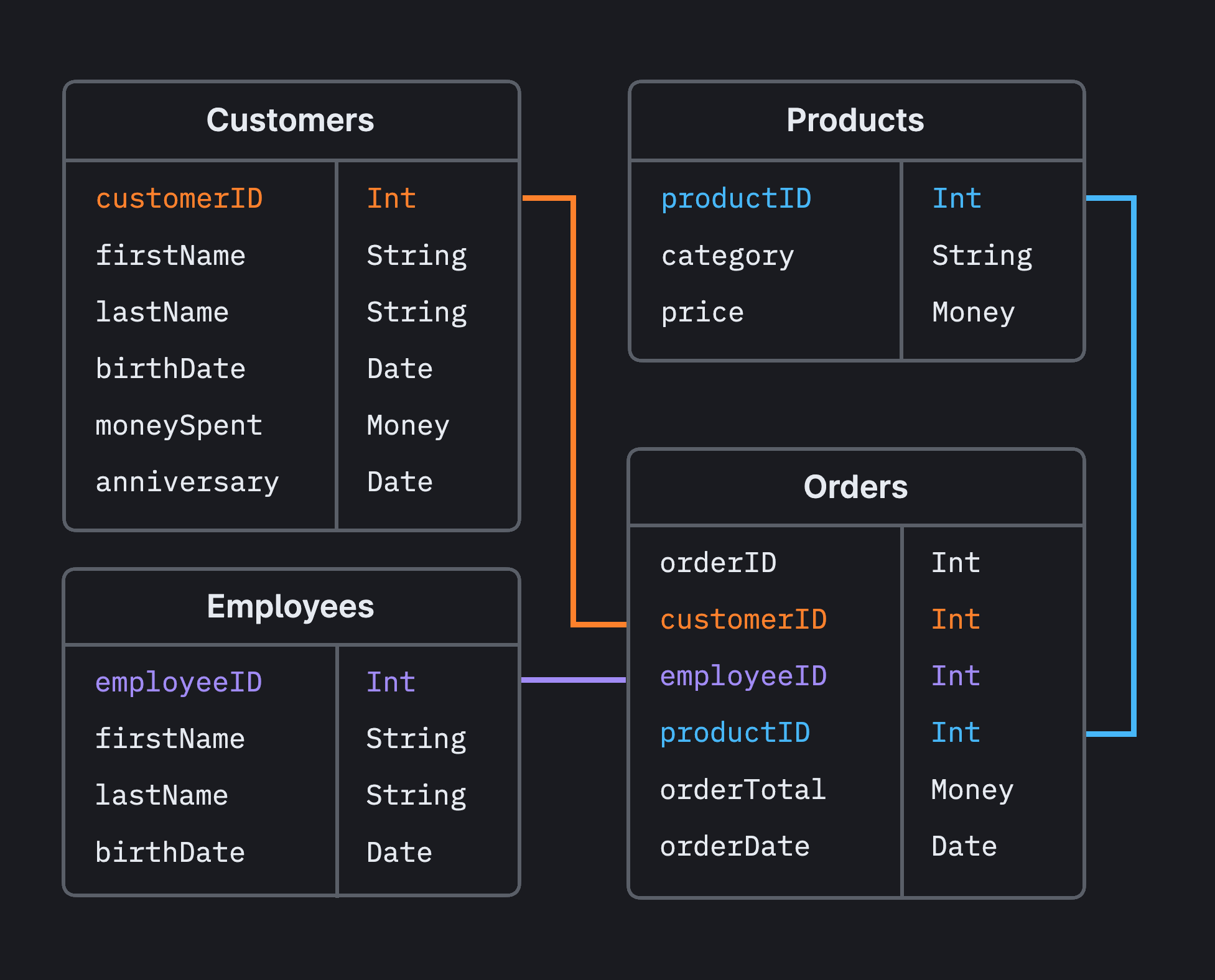
Data modeling is the process of creating a data structure.


๐Ÿ”น Components of Data Modeling

1. Entities

Objects in the system (e.g., User, Product)

2. Attributes

Properties of entities (e.g., Name, Price)

3. Relationships

Connections between entities


๐Ÿ”น Types of Relationships

  • One-to-One (1:1)
  • One-to-Many (1:N)
  • Many-to-Many (M:N)

๐Ÿ”‘ 5. Keys in Database Design

Keys uniquely identify records and define relationships.


๐Ÿ”น Types of Keys

  • Primary Key โ€“ Unique identifier
  • Foreign Key โ€“ Links tables
  • Candidate Key โ€“ Possible primary keys
  • Composite Key โ€“ Combination of columns
  • Super Key โ€“ Set of attributes that uniquely identify

๐Ÿงฑ 6. Normalization

Image
Image
Image
Image

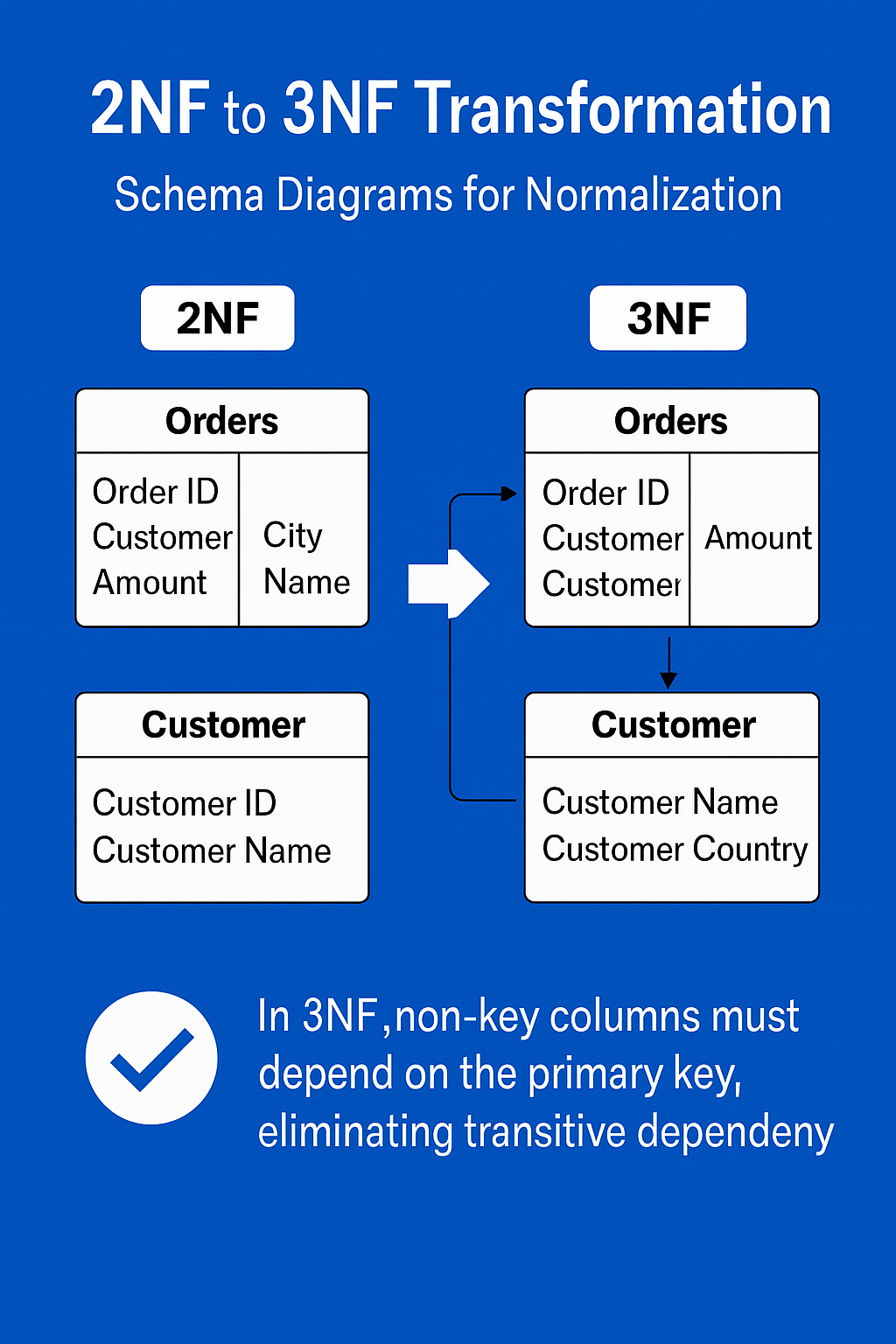
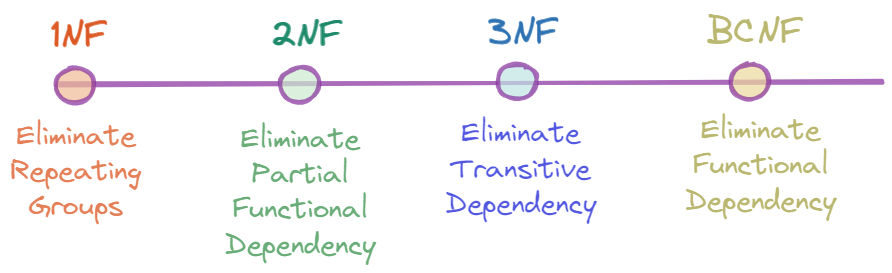
Normalization organizes data to reduce redundancy.


๐Ÿ”น Normal Forms

1NF (First Normal Form)

  • Atomic values
  • No repeating groups

2NF (Second Normal Form)

  • Remove partial dependencies

3NF (Third Normal Form)

  • Remove transitive dependencies

BCNF (Boyce-Codd Normal Form)

  • Stronger version of 3NF

๐Ÿ”น Benefits

  • Eliminates redundancy
  • Improves consistency
  • Simplifies updates

๐Ÿ”„ 7. Denormalization

Sometimes normalization is reversed for performance.

๐Ÿ”น Why Denormalize?

  • Faster reads
  • Reduced joins
  • Better performance in analytics

๐Ÿ”น Trade-offs

  • Data redundancy
  • Increased storage
  • Complex updates

๐Ÿงฎ 8. Constraints and Integrity

๐Ÿ”น Types of Constraints

  • NOT NULL
  • UNIQUE
  • PRIMARY KEY
  • FOREIGN KEY
  • CHECK

๐Ÿ”น Types of Integrity

  • Entity Integrity
  • Referential Integrity
  • Domain Integrity

๐Ÿ“Š 9. Indexing

Image
Image
Image
Image

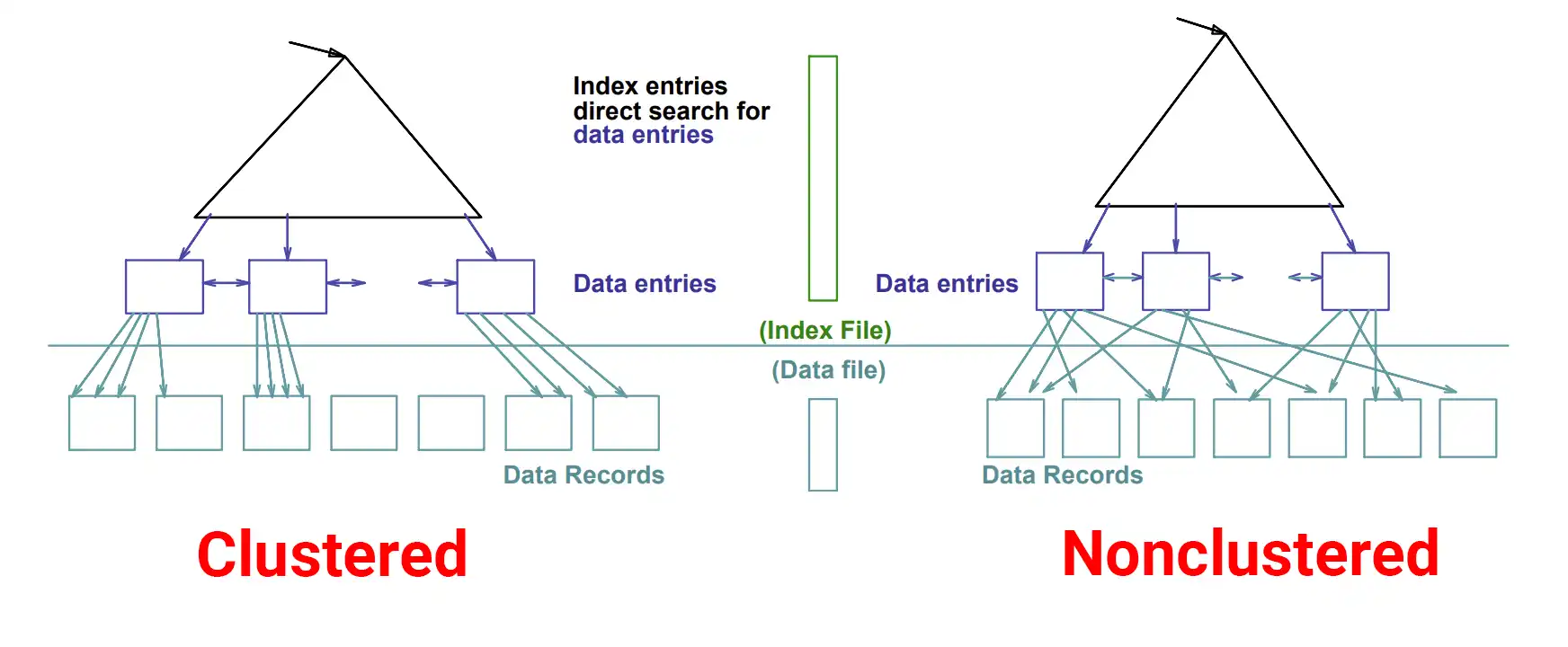
Indexes speed up data retrieval.


๐Ÿ”น Types of Indexes

  • Clustered Index
  • Non-clustered Index
  • Composite Index
  • Unique Index

๐Ÿ”น Advantages

  • Faster queries
  • Efficient searching

๐Ÿ”น Disadvantages

  • Extra storage
  • Slower inserts/updates

๐Ÿง  10. Relationships in Depth

๐Ÿ”น One-to-One

Example: User โ†” Profile

๐Ÿ”น One-to-Many

Example: Customer โ†’ Orders

๐Ÿ”น Many-to-Many

Example: Students โ†” Courses

Requires a junction table


๐Ÿ—๏ธ 11. Schema Design

A schema defines database structure.


๐Ÿ”น Types of Schema

  • Star Schema โญ
  • Snowflake Schema โ„๏ธ
  • Flat Schema

๐Ÿ”น Star Schema

  • Central fact table
  • Connected dimension tables

๐Ÿ”น Snowflake Schema

  • Normalized version of star schema

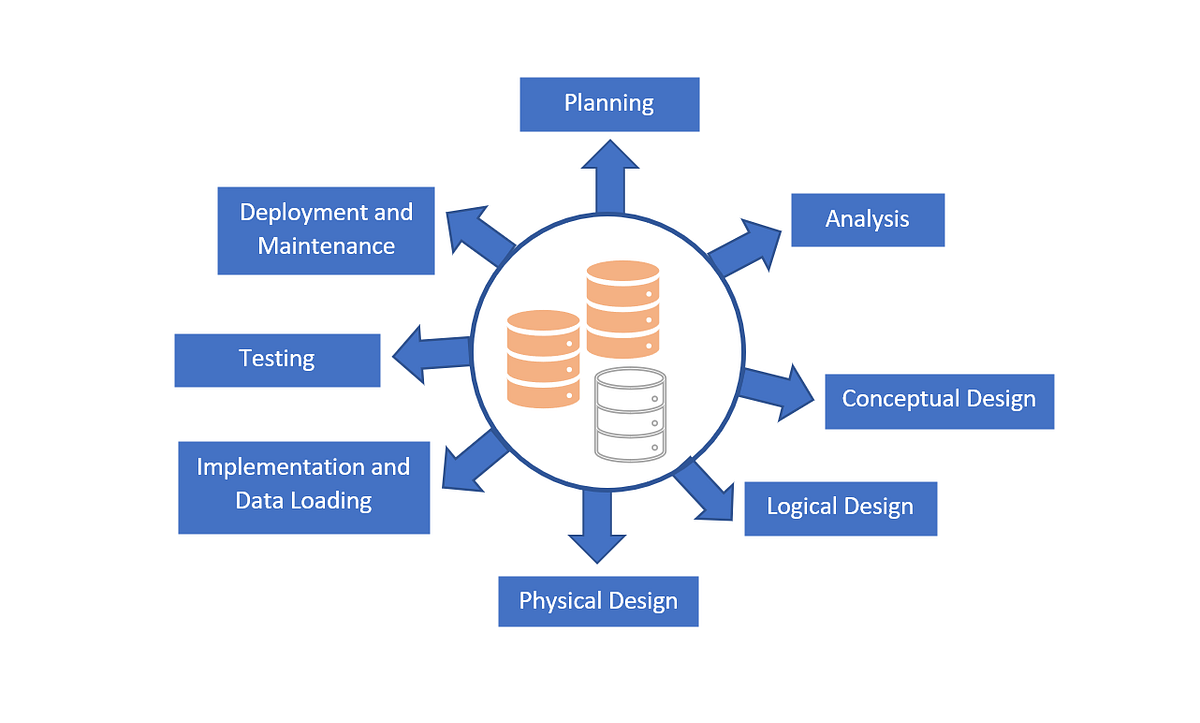
๐Ÿ“ฆ 12. Database Design Process

Image
Image
Image
Image

๐Ÿ”น Steps

  1. Requirement Analysis
  2. Conceptual Design
  3. Logical Design
  4. Normalization
  5. Physical Design
  6. Implementation
  7. Testing
  8. Maintenance

๐Ÿ” 13. Security in Database Design

  • Authentication
  • Authorization
  • Encryption
  • Data masking

๐Ÿ”น Best Practices

  • Use least privilege
  • Encrypt sensitive data
  • Regular backups

โšก 14. Performance Optimization

  • Proper indexing
  • Query optimization
  • Caching
  • Partitioning

๐Ÿงฉ 15. Transactions and ACID

๐Ÿ”น ACID Properties

  • Atomicity
  • Consistency
  • Isolation
  • Durability

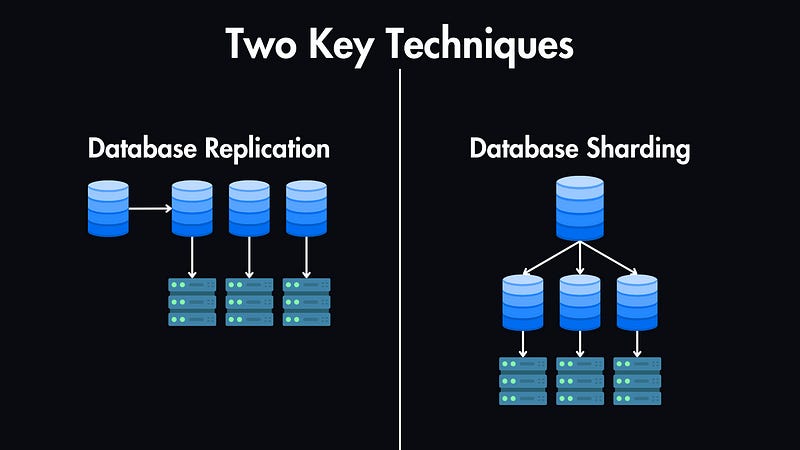
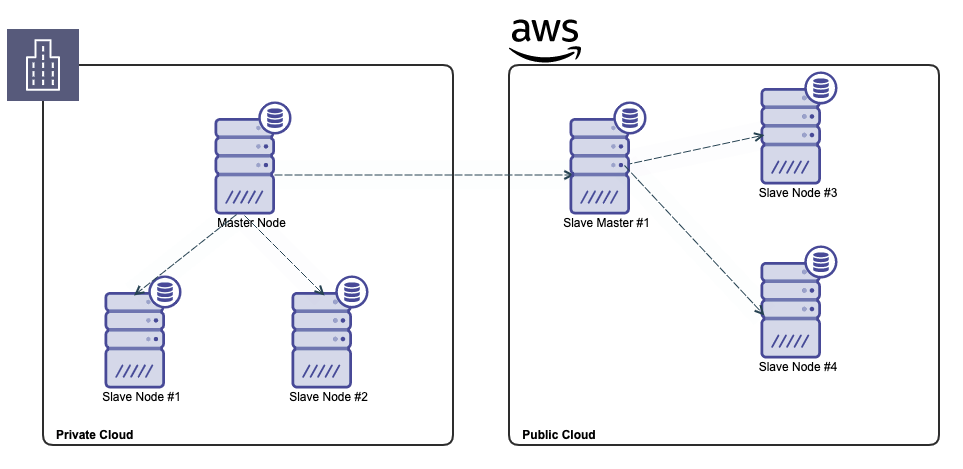
๐ŸŒ 16. Distributed Database Design

Image
Image
Image
Image

๐Ÿ”น Techniques

  • Sharding
  • Replication
  • Partitioning

๐Ÿ”„ 17. NoSQL vs Relational Design

FeatureRelationalNoSQL
SchemaFixedFlexible
ScalingVerticalHorizontal
Use CaseStructured dataBig data

๐Ÿงช 18. Advanced Concepts

  • Data Warehousing
  • OLAP vs OLTP
  • Materialized Views
  • Event Sourcing
  • CQRS

๐Ÿ“ˆ 19. Real-World Example

๐Ÿ”น E-commerce Database

Tables:

  • Users
  • Products
  • Orders
  • Payments

Relationships:

  • User โ†’ Orders (1:N)
  • Orders โ†’ Products (M:N)

๐Ÿงฐ 20. Tools for Database Design

  • ER modeling tools
  • SQL-based tools
  • Cloud DB tools

๐Ÿ“š 21. Advantages of Good Design

  • Scalability
  • Performance
  • Data integrity
  • Flexibility

โš ๏ธ 22. Common Mistakes

  • Poor normalization
  • Over-indexing
  • Ignoring scalability
  • Weak constraints

๐Ÿ”ฎ 23. Future Trends

  • Cloud-native databases
  • AI-driven optimization
  • Serverless databases
  • Multi-model databases

๐Ÿ Conclusion

Database design is a critical skill in modern computing. A well-designed database ensures that systems are efficient, scalable, and reliable. Whether you’re building a simple app or a complex enterprise system, mastering database design principles will help you create robust and high-performing solutions.


๐Ÿท๏ธ Tags