Tag Archives: Backend Development

🗄️ SQL (Structured Query Language)

Image
Image
Image
Image

📘 1. Introduction to SQL

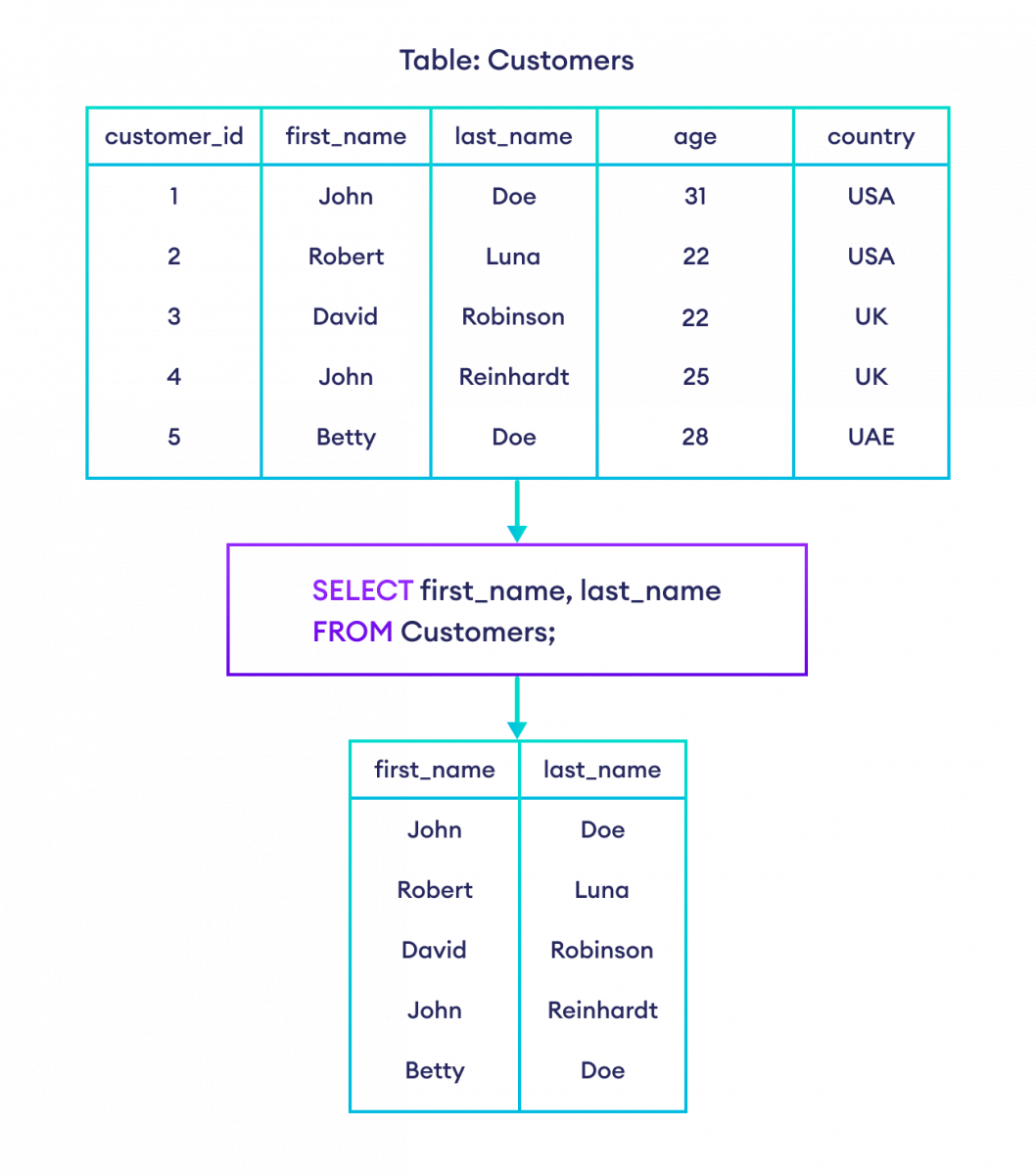
SQL (Structured Query Language) is a standard programming language used to store, manipulate, and retrieve data from relational databases. It is the backbone of modern data-driven applications and is widely used in industries such as finance, healthcare, e-commerce, education, and more.

SQL was developed in the 1970s at IBM by Donald D. Chamberlin and Raymond F. Boyce. Initially called SEQUEL (Structured English Query Language), it evolved into SQL and became an international standard (ANSI/ISO).


🔹 Why SQL is Important

  • Enables efficient data management
  • Used in web applications, mobile apps, enterprise systems
  • Supports data analysis and reporting
  • Works with major database systems like:
    • MySQL
    • PostgreSQL
    • Oracle Database
    • SQL Server
    • SQLite

🔹 Characteristics of SQL

  • Declarative language (focus on what to do, not how)
  • Supports complex queries
  • Standardized (ANSI SQL)
  • Integrates with multiple programming languages
  • Supports transactions and concurrency

🧱 2. Relational Database Fundamentals
Image
Image
Image

SQL works with Relational Database Management Systems (RDBMS).

🔹 Core Concepts

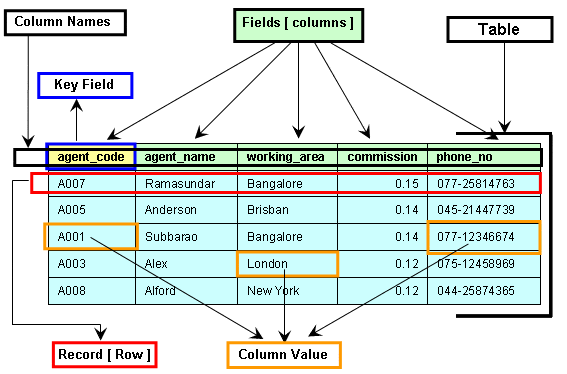
1. Table

A table is a collection of related data organized in rows and columns.

2. Row (Record)

Represents a single entry.

3. Column (Field)

Represents an attribute of the data.

4. Primary Key

  • Unique identifier for each record
  • Cannot be NULL

5. Foreign Key

  • Links two tables together
  • Maintains referential integrity

6. Schema

  • Structure of the database

🔹 Example Table

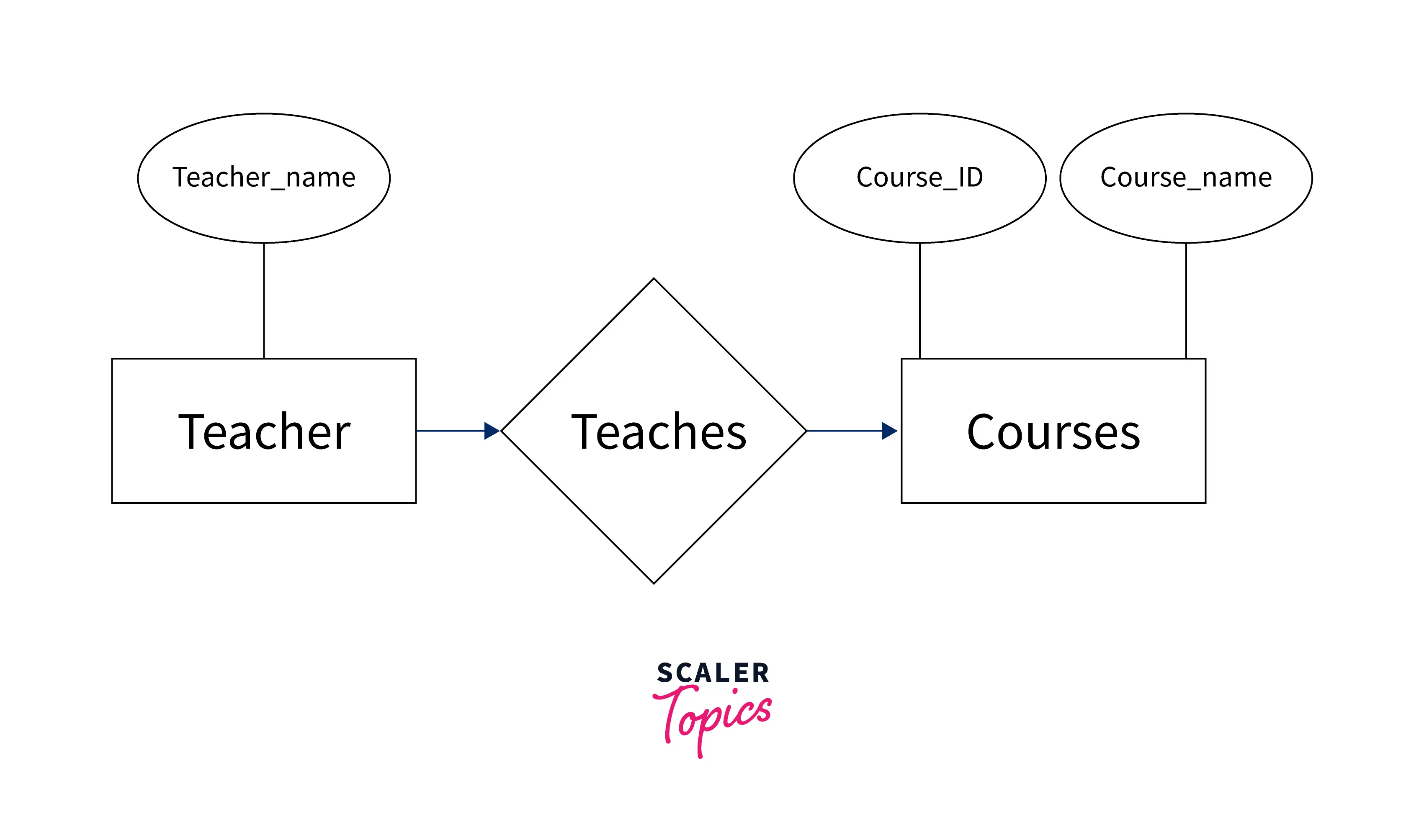
IDNameAge
1John25
2Sara30

🧮 3. Types of SQL Commands

SQL commands are divided into categories:


🔹 1. DDL (Data Definition Language)

Used to define database structure.

  • CREATE
  • ALTER
  • DROP
  • TRUNCATE

Example:

CREATE TABLE Students (
    ID INT PRIMARY KEY,
    Name VARCHAR(50),
    Age INT
);

🔹 2. DML (Data Manipulation Language)

Used to manipulate data.

  • INSERT
  • UPDATE
  • DELETE
INSERT INTO Students VALUES (1, 'John', 25);

UPDATE Students SET Age = 26 WHERE ID = 1;

DELETE FROM Students WHERE ID = 1;

🔹 3. DQL (Data Query Language)

  • SELECT
SELECT * FROM Students;

🔹 4. DCL (Data Control Language)

  • GRANT
  • REVOKE

🔹 5. TCL (Transaction Control Language)

  • COMMIT
  • ROLLBACK
  • SAVEPOINT

🔍 4. SQL Queries and Clauses
Image
Image
Image
Image

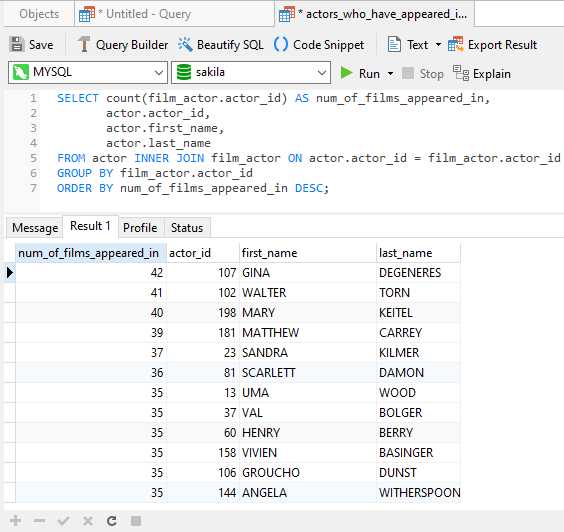
🔹 SELECT Statement

SELECT column1, column2 FROM table_name;

🔹 WHERE Clause

SELECT * FROM Students WHERE Age > 25;

🔹 ORDER BY

SELECT * FROM Students ORDER BY Age DESC;

🔹 GROUP BY

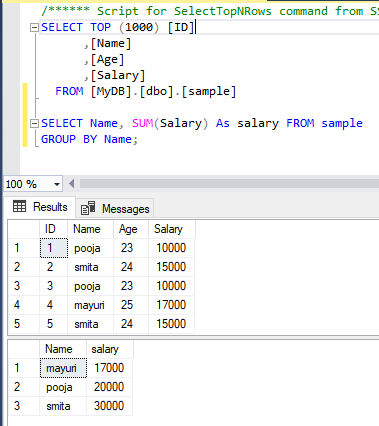
SELECT Age, COUNT(*) FROM Students GROUP BY Age;

🔹 HAVING

SELECT Age, COUNT(*) 
FROM Students 
GROUP BY Age 
HAVING COUNT(*) > 1;

🔹 DISTINCT

SELECT DISTINCT Age FROM Students;

🔗 5. SQL Joins

Image
Image
Image
Image

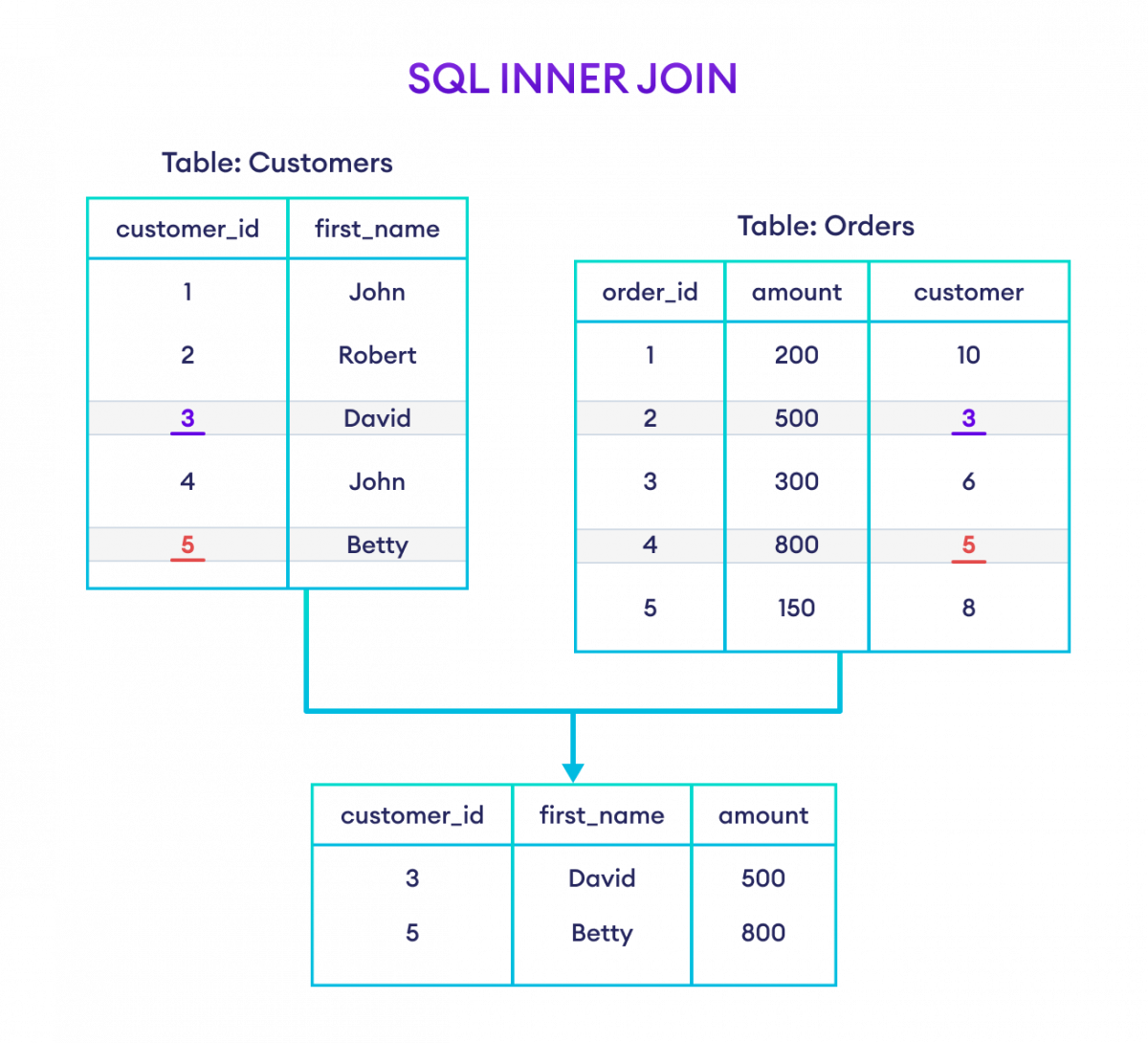
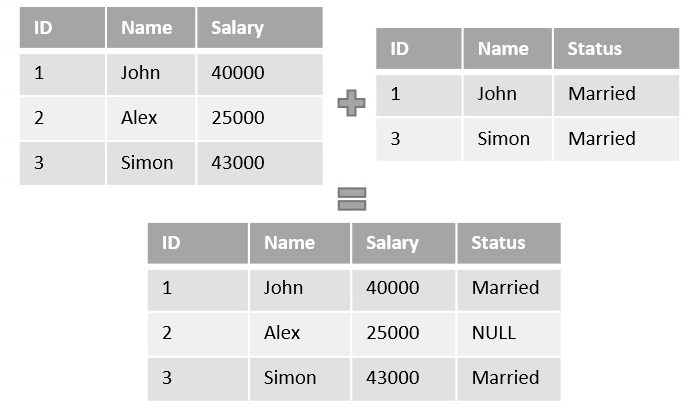
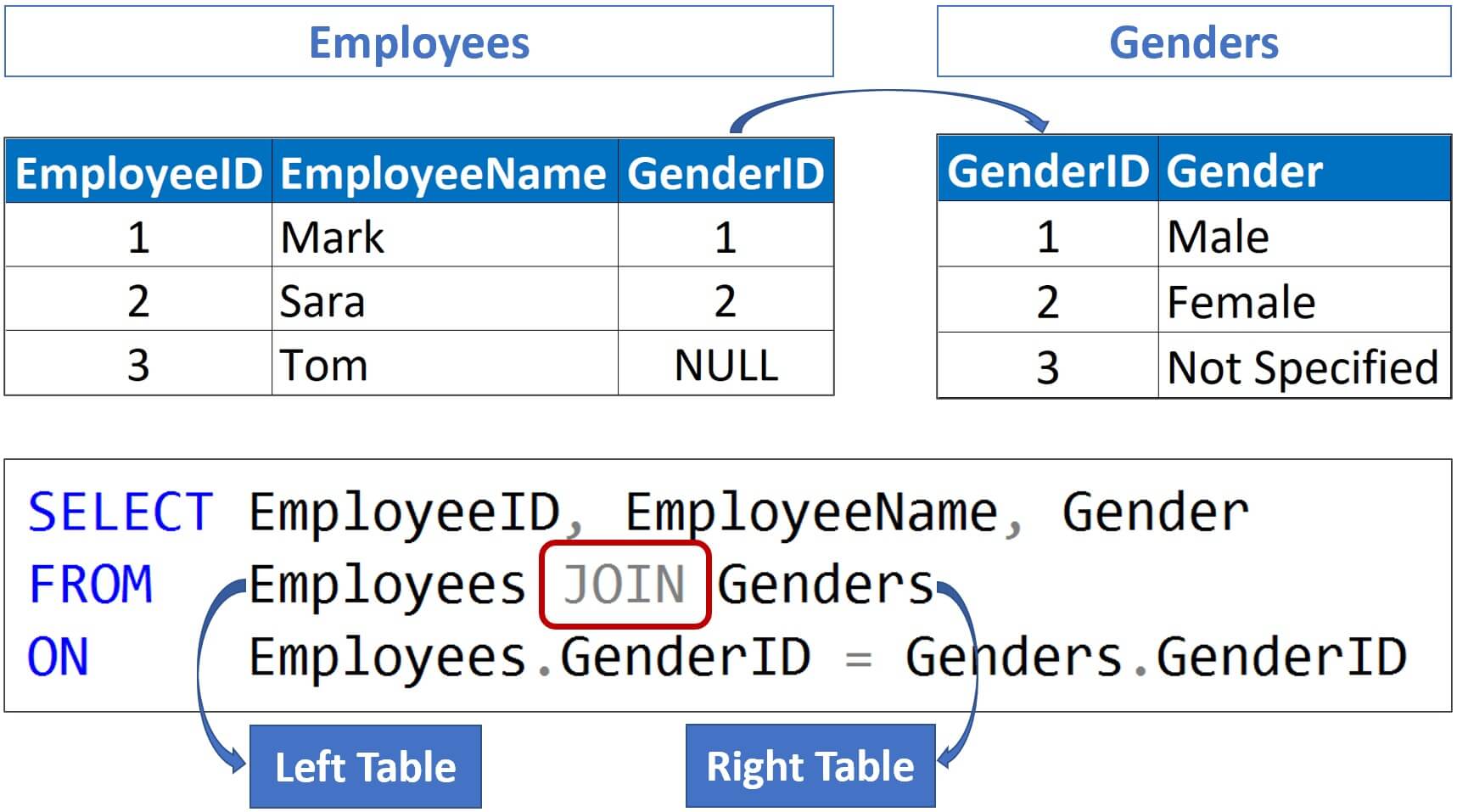
Joins combine rows from multiple tables.


🔹 Types of Joins

1. INNER JOIN

Returns matching rows.

SELECT * FROM A INNER JOIN B ON A.id = B.id;

2. LEFT JOIN

Returns all rows from left table.


3. RIGHT JOIN

Returns all rows from right table.


4. FULL JOIN

Returns all rows from both tables.


🧠 6. SQL Functions

🔹 Aggregate Functions

  • COUNT()
  • SUM()
  • AVG()
  • MIN()
  • MAX()
SELECT AVG(Age) FROM Students;

🔹 String Functions

  • UPPER()
  • LOWER()
  • LENGTH()

🔹 Date Functions

  • NOW()
  • CURDATE()

🏗️ 7. Constraints in SQL

Constraints enforce rules on data.

  • NOT NULL
  • UNIQUE
  • PRIMARY KEY
  • FOREIGN KEY
  • CHECK
  • DEFAULT
CREATE TABLE Users (
    ID INT PRIMARY KEY,
    Email VARCHAR(100) UNIQUE
);

🔄 8. Normalization
Image
Image
Image
Image

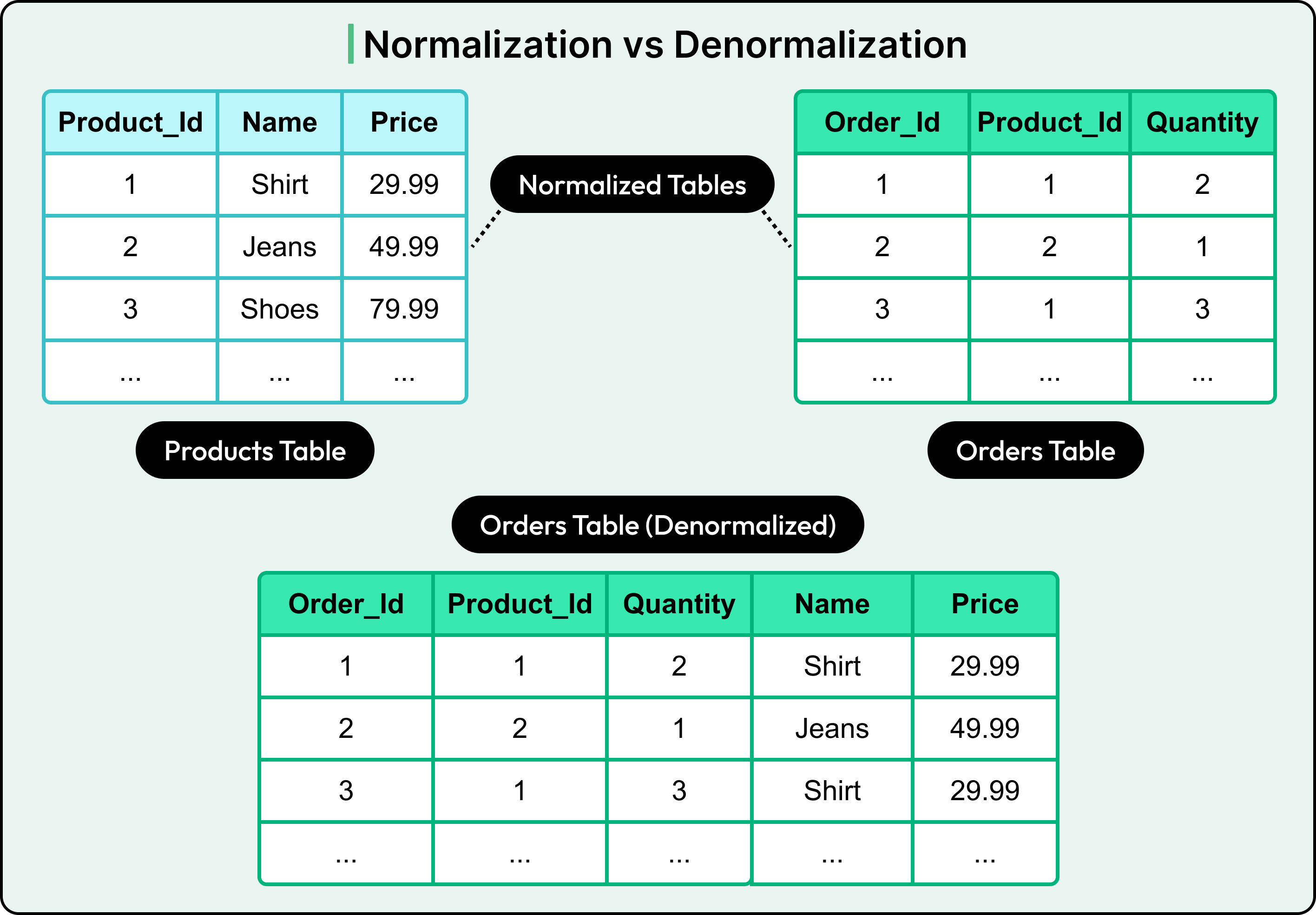
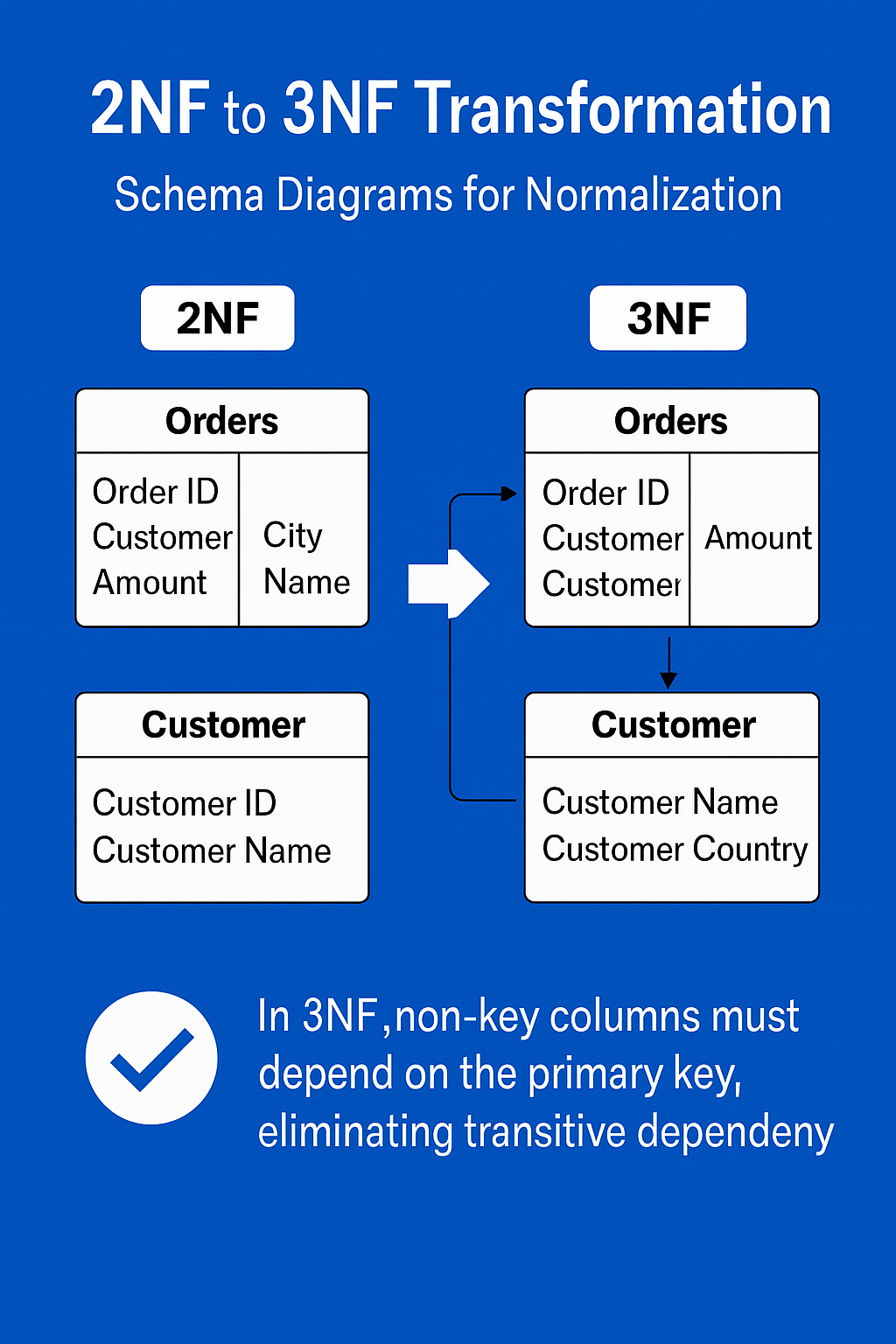
Normalization reduces redundancy.

🔹 Types:

  • 1NF: Atomic values
  • 2NF: Remove partial dependency
  • 3NF: Remove transitive dependency

⚡ 9. Indexing

Indexes improve query performance.

CREATE INDEX idx_name ON Students(Name);

Types:

  • Single-column index
  • Composite index
  • Unique index

🔐 10. Transactions

A transaction is a unit of work.

Properties (ACID):

  • Atomicity
  • Consistency
  • Isolation
  • Durability

🔁 11. Subqueries

SELECT Name FROM Students
WHERE Age > (SELECT AVG(Age) FROM Students);

📊 12. Views

Virtual tables based on queries.

CREATE VIEW StudentView AS
SELECT Name FROM Students;

🧩 13. Stored Procedures

Reusable SQL code.

CREATE PROCEDURE GetStudents()
BEGIN
    SELECT * FROM Students;
END;

🔔 14. Triggers

Automatically executed events.

CREATE TRIGGER before_insert
BEFORE INSERT ON Students
FOR EACH ROW
SET NEW.Name = UPPER(NEW.Name);

🌐 15. SQL vs NoSQL

FeatureSQLNoSQL
StructureTable-basedFlexible
SchemaFixedDynamic
ScalabilityVerticalHorizontal

🧪 16. Advanced SQL Concepts

  • Window Functions (ROW_NUMBER(), RANK())
  • CTE (Common Table Expressions)
  • Recursive Queries
  • Partitioning
  • Query Optimization

📈 17. SQL Performance Optimization

  • Use indexes
  • Avoid SELECT *
  • Optimize joins
  • Use caching
  • Analyze execution plans

🧰 18. Popular SQL Databases

  • MySQL
  • PostgreSQL
  • Oracle
  • SQL Server
  • SQLite

🧑‍💻 19. Real-World Applications

  • Banking systems
  • E-commerce platforms
  • Social media
  • Data analytics
  • Inventory systems

📚 20. Advantages of SQL

  • Easy to learn
  • Powerful querying
  • High performance
  • Standardized

⚠️ 21. Limitations of SQL

  • Not ideal for unstructured data
  • Scaling challenges
  • Complex queries can be slow

🔮 22. Future of SQL

  • Integration with AI & Big Data
  • Cloud databases (AWS, Azure, GCP)
  • Real-time analytics
  • Hybrid SQL/NoSQL systems

🏁 Conclusion

SQL remains one of the most essential tools in computing. Whether you are a developer, data analyst, or engineer, mastering SQL enables you to handle data efficiently, build scalable systems, and extract meaningful insights.

🏷️ Tags

🦀 Rust Programming: Complete In-Depth Guide


🚀 Introduction to Rust Programming

Image
Image
Image
Image

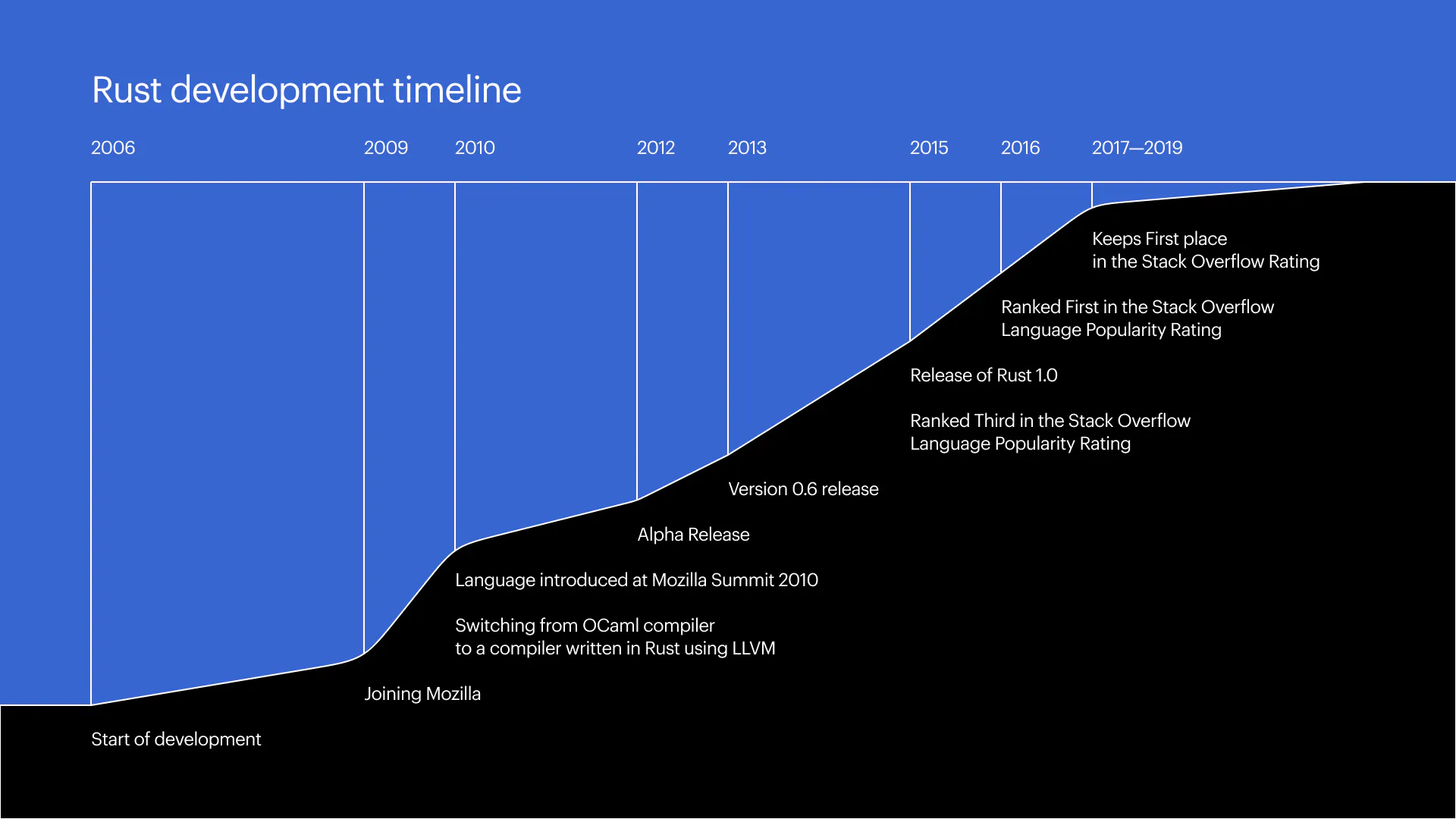
Rust is a modern systems programming language designed for performance, safety, and concurrency. It was originally developed by Mozilla Research, with Graydon Hoare starting the project in 2006, and officially released in 2015.

Rust aims to provide the low-level control of C and C++ while eliminating common bugs such as memory leaks, null pointer dereferencing, and data races. Its unique ownership model ensures memory safety without needing a garbage collector.
Rust is widely used in:

  • Systems programming
  • Game engines
  • Embedded systems
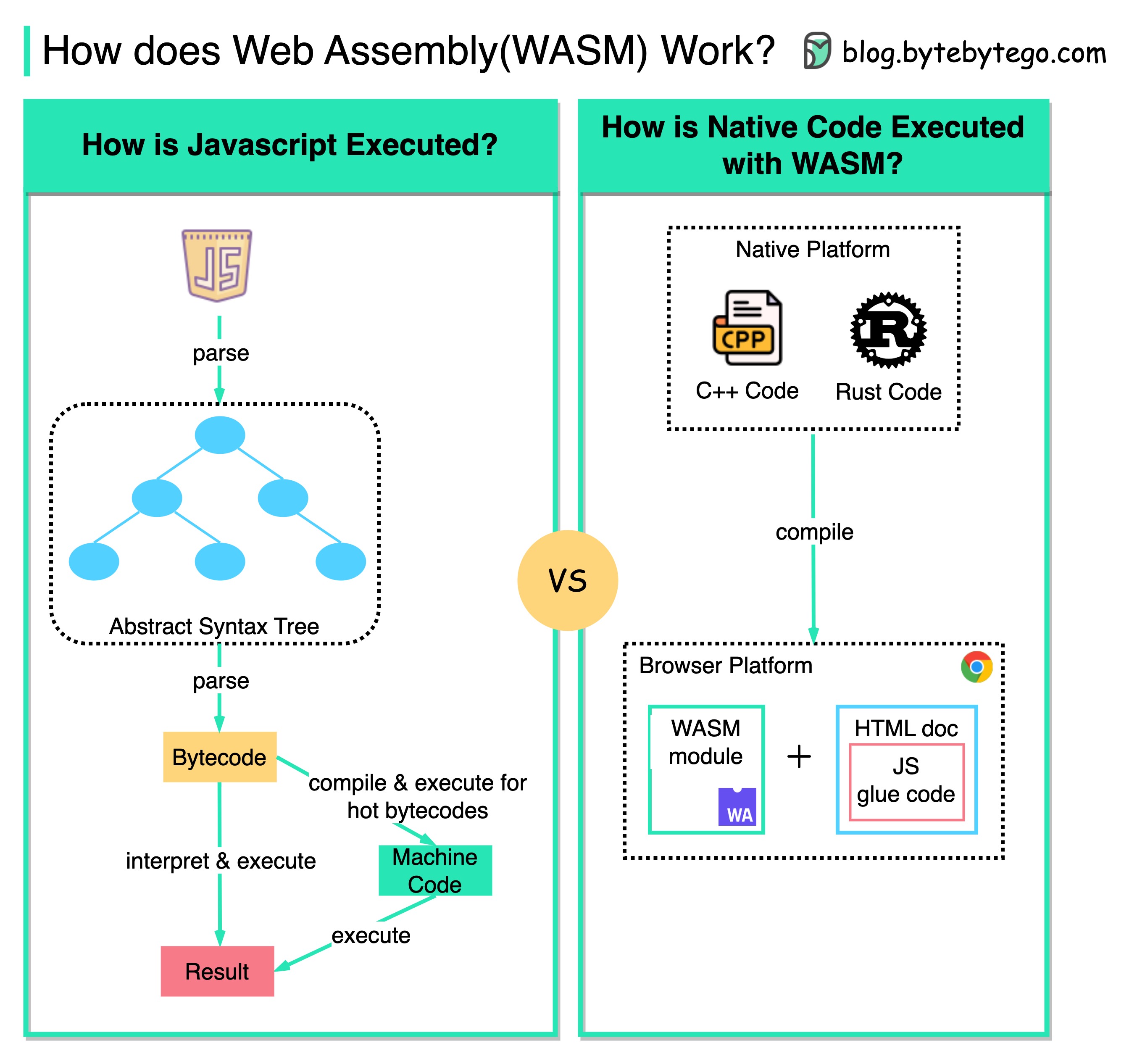
  • WebAssembly
  • High-performance applications

📌 Key Features of Rust

Rust introduces several groundbreaking concepts:

1. Memory Safety Without Garbage Collection

Rust ensures memory safety using ownership rules enforced at compile time.

2. Zero-Cost Abstractions

High-level features without runtime overhead.

3. Concurrency Safety

Prevents data races at compile time.

4. Strong Type System

Rust’s type system catches many errors early.

5. Pattern Matching

Powerful control flow using match.

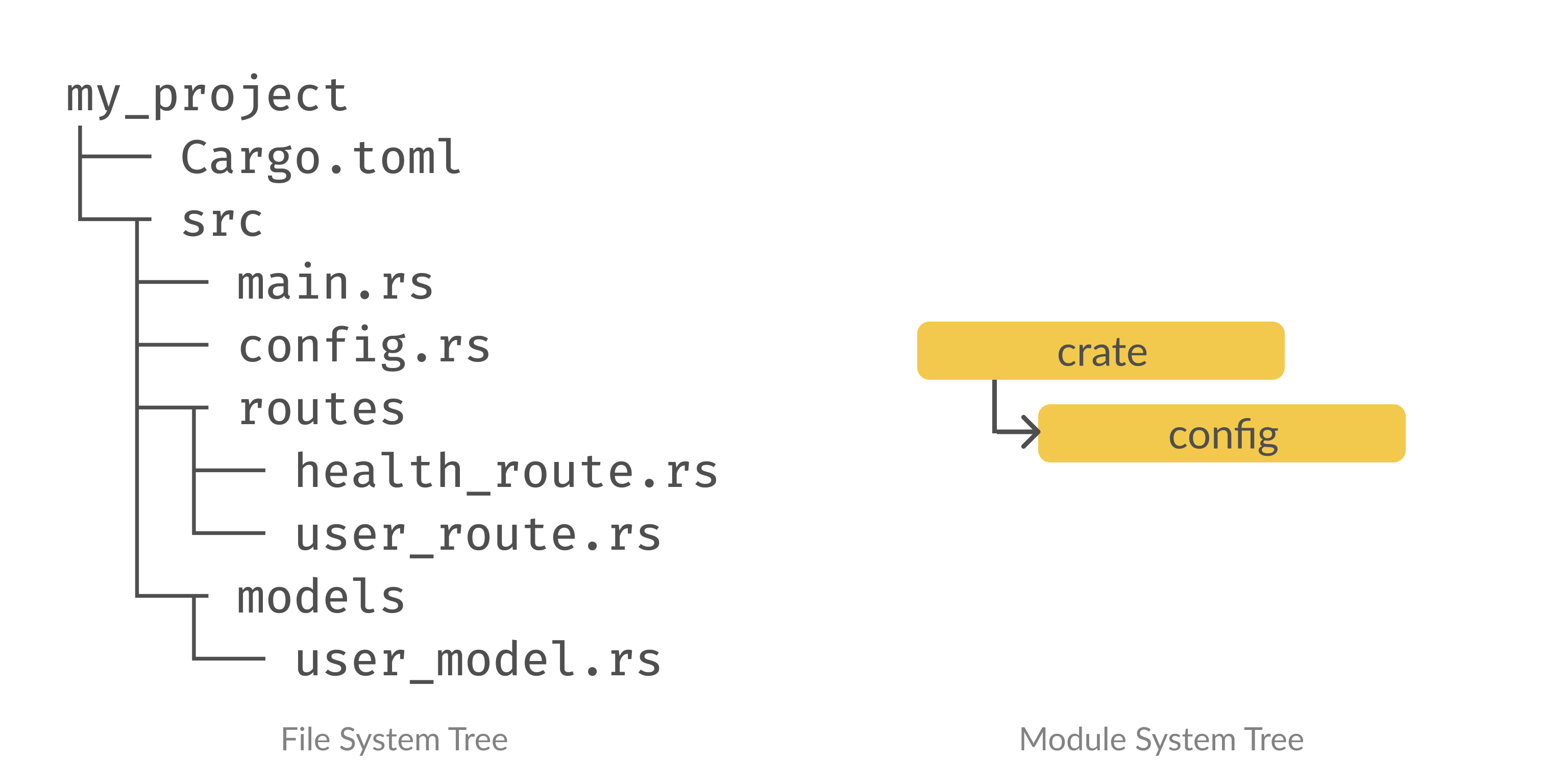
6. Package Manager (Cargo)

Integrated build system and dependency manager.


🧠 History and Evolution

Image
Image
Image
Image

Rust was designed to solve critical issues in system-level programming:

Problems in Older Languages:

  • Memory safety issues (C/C++)
  • Data races in multithreading
  • Undefined behavior

Key Milestones:

  • 2006: Initial development
  • 2010: Mozilla sponsorship
  • 2015: Rust 1.0 released
  • 2020+: Widely adopted in industry

Rust has been voted the “most loved programming language” in developer surveys multiple years in a row.


🧩 Basic Syntax and Structure

Image
Image
Image
Image

Example: Hello World

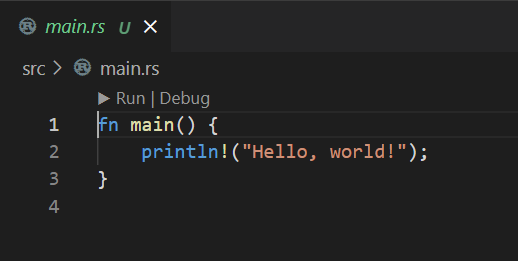
fn main() {
    println!("Hello, world!");
}

Key Points:

  • fn defines a function
  • main() is the entry point
  • println! is a macro (note the !)

🔢 Variables and Data Types

Rust variables are immutable by default.

let x = 10;        // immutable
let mut y = 20;    // mutable

Primitive Types:

  • Integers: i32, u64
  • Floating point: f32, f64
  • Boolean: bool
  • Character: char

Compound Types:

  • Tuples
  • Arrays
let tup: (i32, f64, char) = (10, 3.14, 'A');

🔁 Control Flow

If Statement

if x > 5 {
    println!("Greater");
} else {
    println!("Smaller");
}

Looping

for i in 0..5 {
    println!("{}", i);
}

Rust supports:

  • loop
  • while
  • for

🧠 Ownership System (Core Concept)

Image
Image
Image
Image

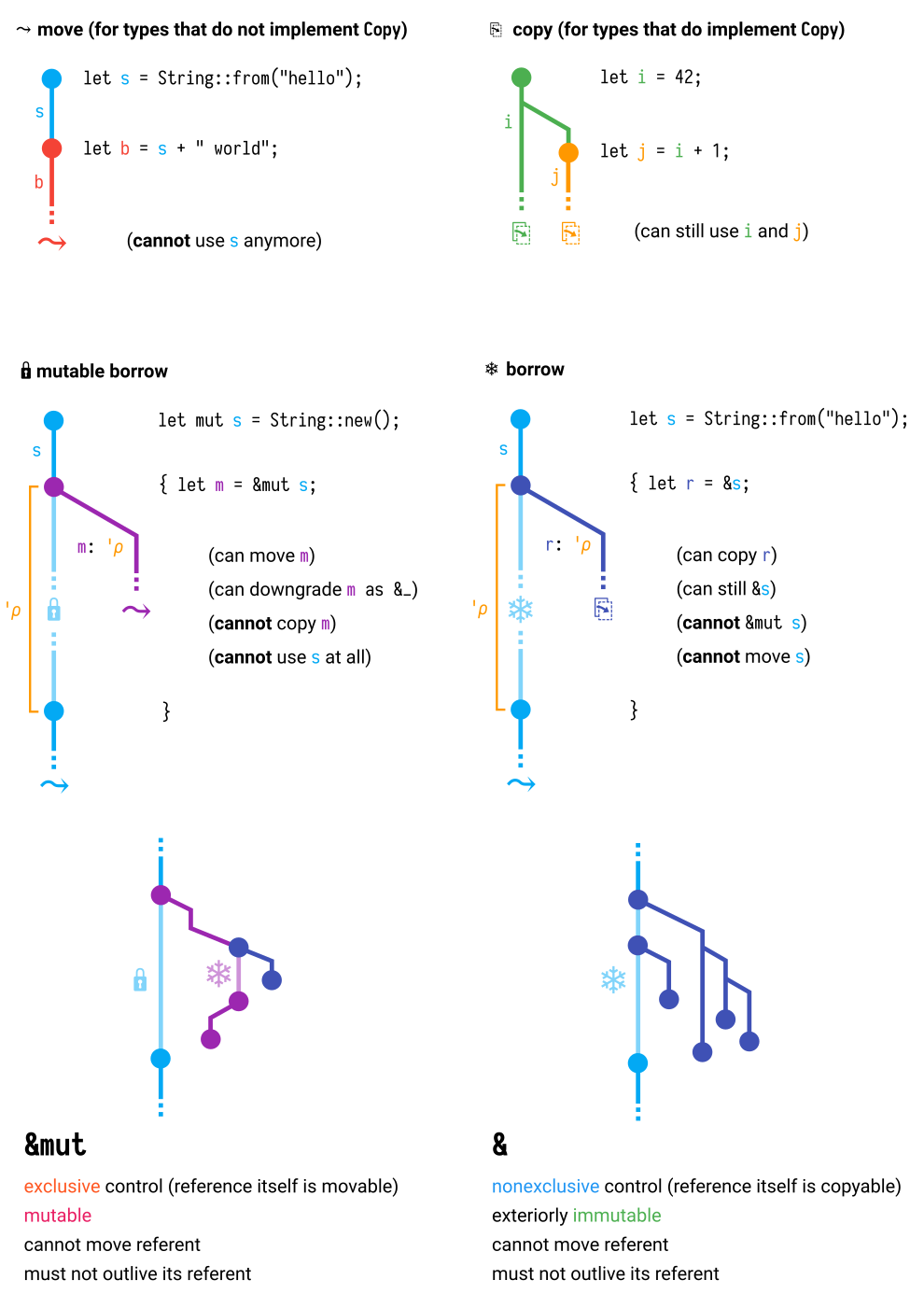
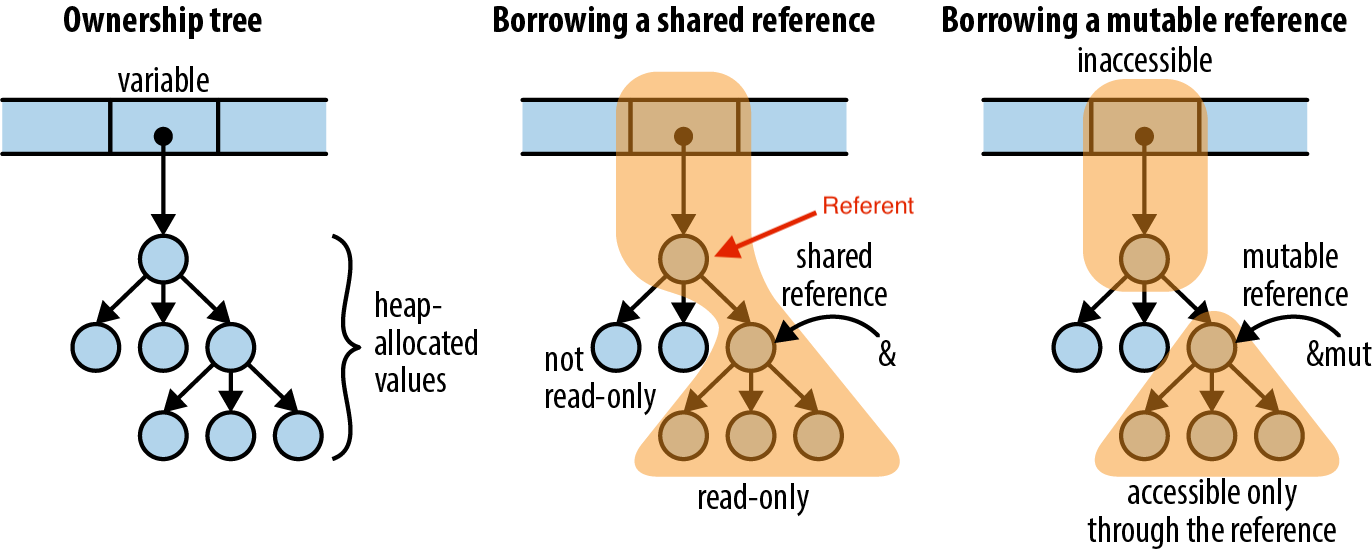
Ownership is Rust’s most unique feature.

Rules:

  1. Each value has one owner
  2. Only one owner at a time
  3. When the owner goes out of scope, value is dropped

Example:

let s1 = String::from("Hello");
let s2 = s1; // ownership moves

Borrowing

let s1 = String::from("Hello");
let len = calculate_length(&s1);

Benefits:

  • No memory leaks
  • No dangling pointers
  • Safe concurrency

🔗 References and Lifetimes

Lifetimes ensure references are valid.

fn longest<'a>(x: &'a str, y: &'a str) -> &'a str {
    if x.len() > y.len() { x } else { y }
}

🧵 Concurrency in Rust

Image
Image
Image
Image

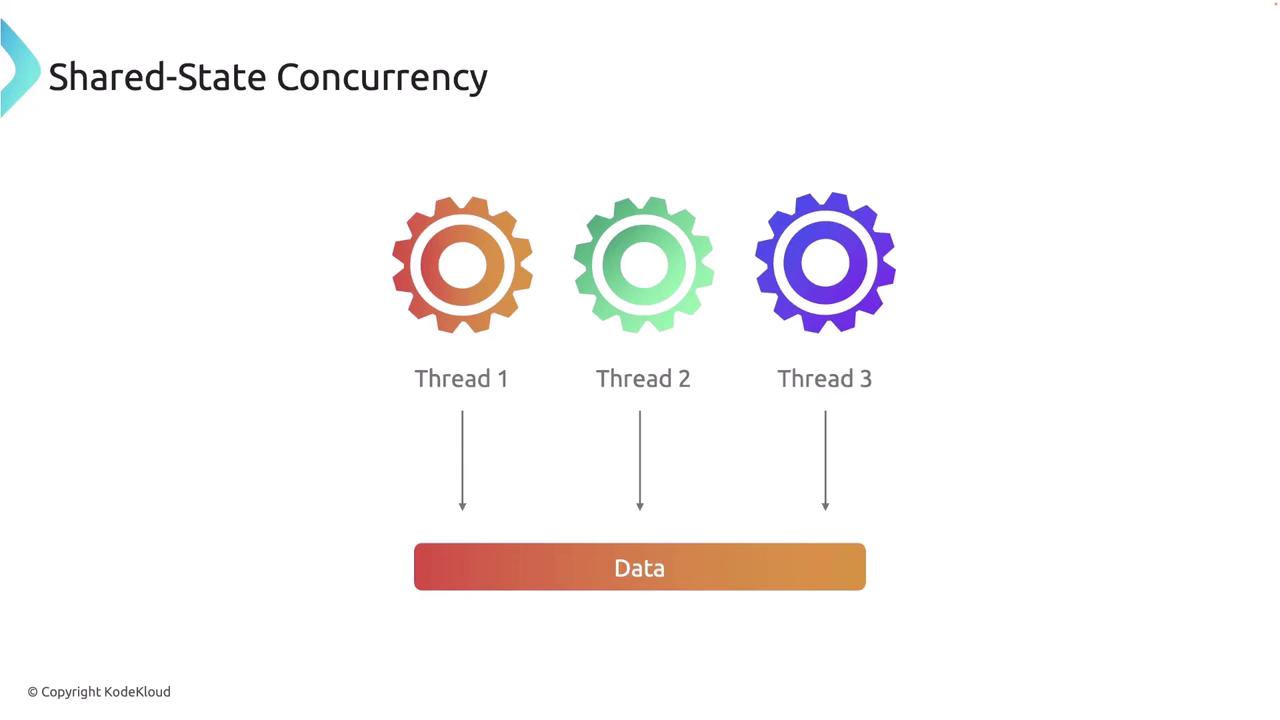
Rust enables fearless concurrency.

Thread Example:

use std::thread;

thread::spawn(|| {
    println!("Hello from thread!");
});

Channels:

use std::sync::mpsc;

let (tx, rx) = mpsc::channel();

Advantages:

  • No data races
  • Compile-time safety
  • Efficient parallelism

🧱 Structs, Enums, and Traits

Structs

struct Person {
    name: String,
    age: u32,
}

Enums

enum Direction {
    Up,
    Down,
}

Traits (Similar to Interfaces)

trait Shape {
    fn area(&self) -> f64;
}

📦 Cargo and Crates

Image
Image
Image
Image

Cargo is Rust’s build system and package manager.

Commands:

cargo new project_name
cargo build
cargo run
cargo test

Cargo.toml Example:

[dependencies]
rand = "0.8"

⚙️ Error Handling

Rust uses Result and Option.

fn divide(a: i32, b: i32) -> Result<i32, String> {
    if b == 0 {
        Err("Cannot divide by zero".to_string())
    } else {
        Ok(a / b)
    }
}

🧰 Standard Library

Rust provides powerful standard modules:

  • std::io
  • std::fs
  • std::thread
  • std::collections

🌐 Applications of Rust

Image
Image
Image
Image

Rust is used in:

1. Systems Programming

  • OS development
  • Embedded systems

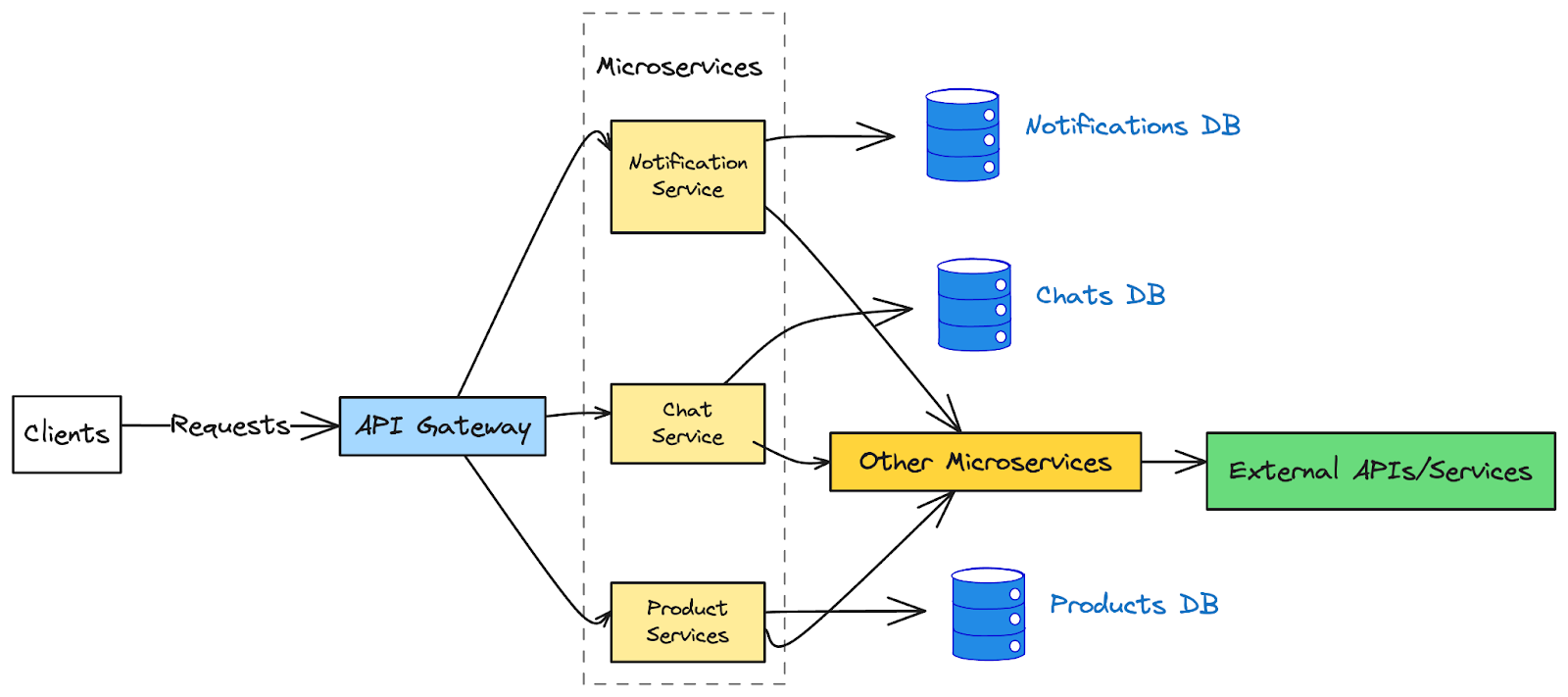
2. Web Development

  • Backend services
  • WebAssembly (WASM)

3. Game Development

  • Game engines (Bevy)

4. Blockchain

  • Secure smart contracts

5. Cloud Infrastructure

  • High-performance servers

🔥 Advantages of Rust

  • Memory safety without GC
  • High performance (close to C++)
  • Strong concurrency model
  • Modern tooling (Cargo)
  • Growing ecosystem

⚠️ Limitations of Rust

  • Steep learning curve
  • Complex syntax for beginners
  • Longer compile times
  • Smaller ecosystem than older languages

🧪 Testing in Rust

#[test]
fn test_add() {
    assert_eq!(2 + 2, 4);
}

Run tests:

cargo test

📊 Rust vs Other Languages

FeatureRustC++GoPython
Memory SafetyExcellentPoorGoodGood
PerformanceVery HighVery HighHighLow
ConcurrencyExcellentComplexExcellentLimited
Learning CurveHighVery HighLowLow

🛠️ Tools and Ecosystem

  • Cargo (build system)
  • Rust Analyzer (IDE support)
  • Clippy (linter)
  • Rustfmt (formatter)

📚 Learning Path for Rust

Beginner

  • Syntax
  • Variables
  • Control flow

Intermediate

  • Ownership
  • Borrowing
  • Structs and enums

Advanced

  • Lifetimes
  • Concurrency
  • Unsafe Rust

🔮 Future of Rust

Rust is rapidly gaining adoption in:

  • Operating systems
  • Browser engines
  • Cloud computing
  • Embedded systems

Major companies using Rust:

  • Mozilla
  • Microsoft
  • Amazon
  • Google

🏁 Conclusion

Rust represents the future of systems programming by combining safety, performance, and modern language design. It eliminates entire classes of bugs while maintaining high efficiency, making it ideal for critical applications.

🏷️ Tags


If you want next:

Go Programming (Golang): Complete In-Depth Guide


🚀 Introduction to Go Programming

Image
Image
Image
Image

Go (also known as Golang) is a statically typed, compiled programming language designed for simplicity, efficiency, and reliability. It was developed at Google in 2007 by Robert Griesemer, Rob Pike, and Ken Thompson, and officially released in 2009.

Go was created to address common issues in large-scale software development, such as slow compilation times, complex dependency management, and difficulties in writing concurrent programs. Today, Go is widely used in backend systems, cloud infrastructure, DevOps tools, and distributed systems.


📌 Key Characteristics of Go

Go stands out because of its unique combination of features:

1. Simplicity

Go has a minimalistic syntax with fewer keywords (only about 25), making it easy to learn and read.

2. Fast Compilation

Unlike many compiled languages, Go compiles extremely quickly, making development cycles faster.

3. Built-in Concurrency

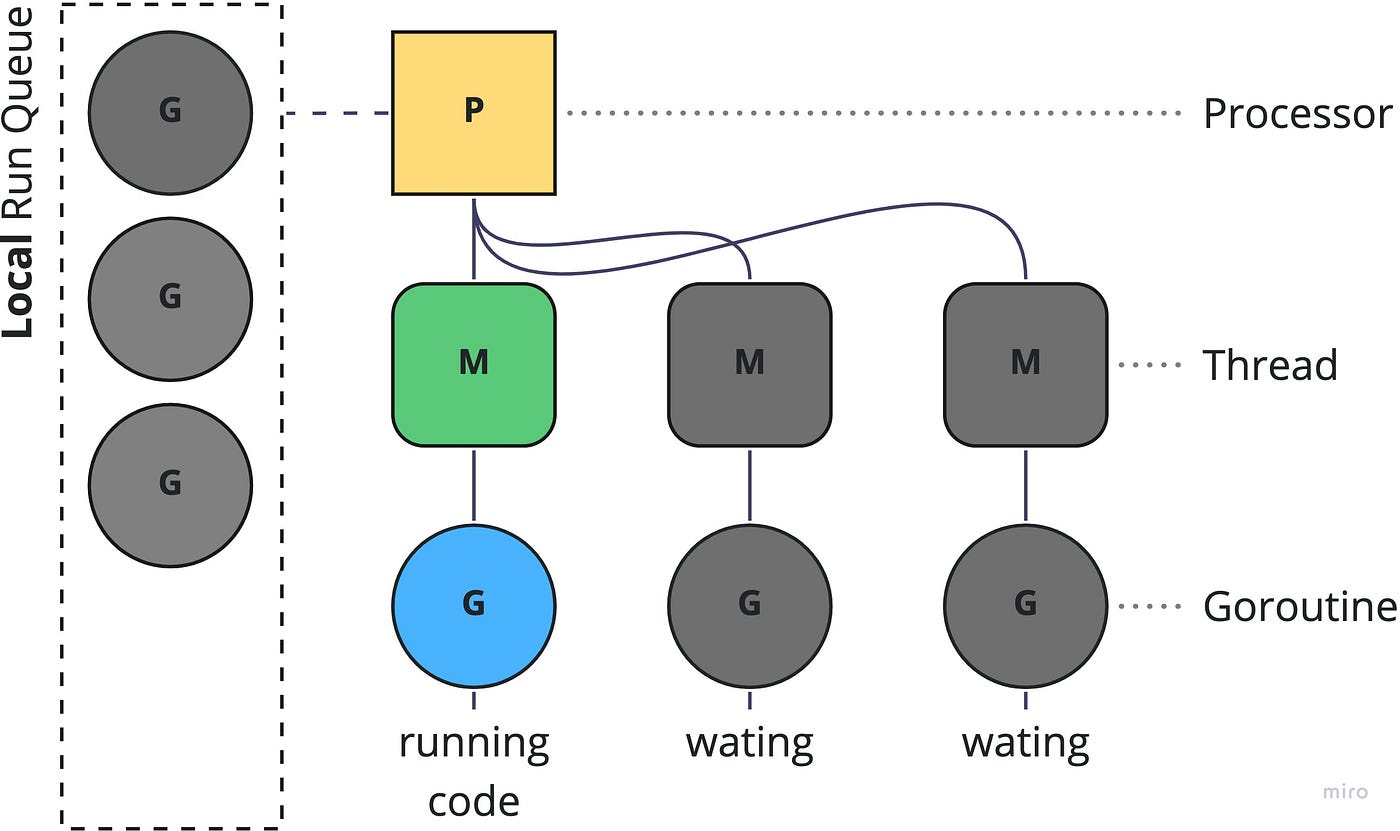
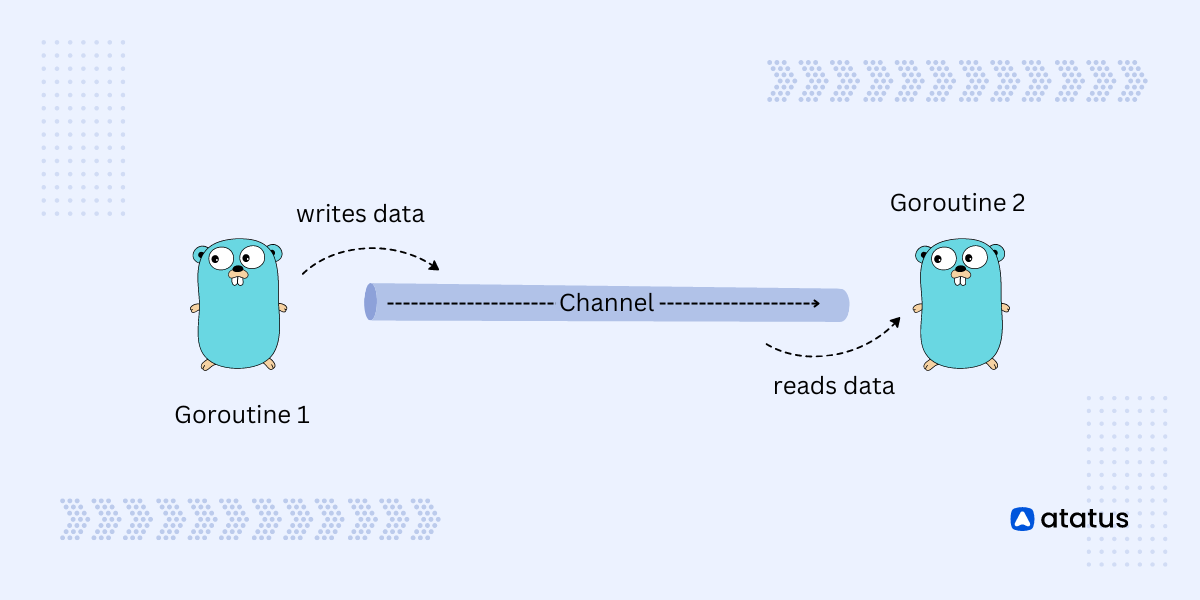
Go’s concurrency model using goroutines and channels is one of its most powerful features.

4. Garbage Collection

Automatic memory management reduces the risk of memory leaks.

5. Strong Standard Library

Go comes with a rich set of built-in packages for networking, file handling, cryptography, and more.

6. Cross-Platform

Go programs can be compiled for multiple platforms without modification.


🧠 History and Evolution

Image
Image
Image
Image

Before Go, developers at Google faced issues with languages like C++ and Java:

  • Slow compilation times
  • Complex dependency systems
  • Difficult concurrency handling

Go was designed to combine:

  • The performance of C/C++
  • The simplicity of Python
  • The concurrency support of Erlang

Major milestones:

  • 2009: First public release
  • 2012: Go 1.0 released (stable version)
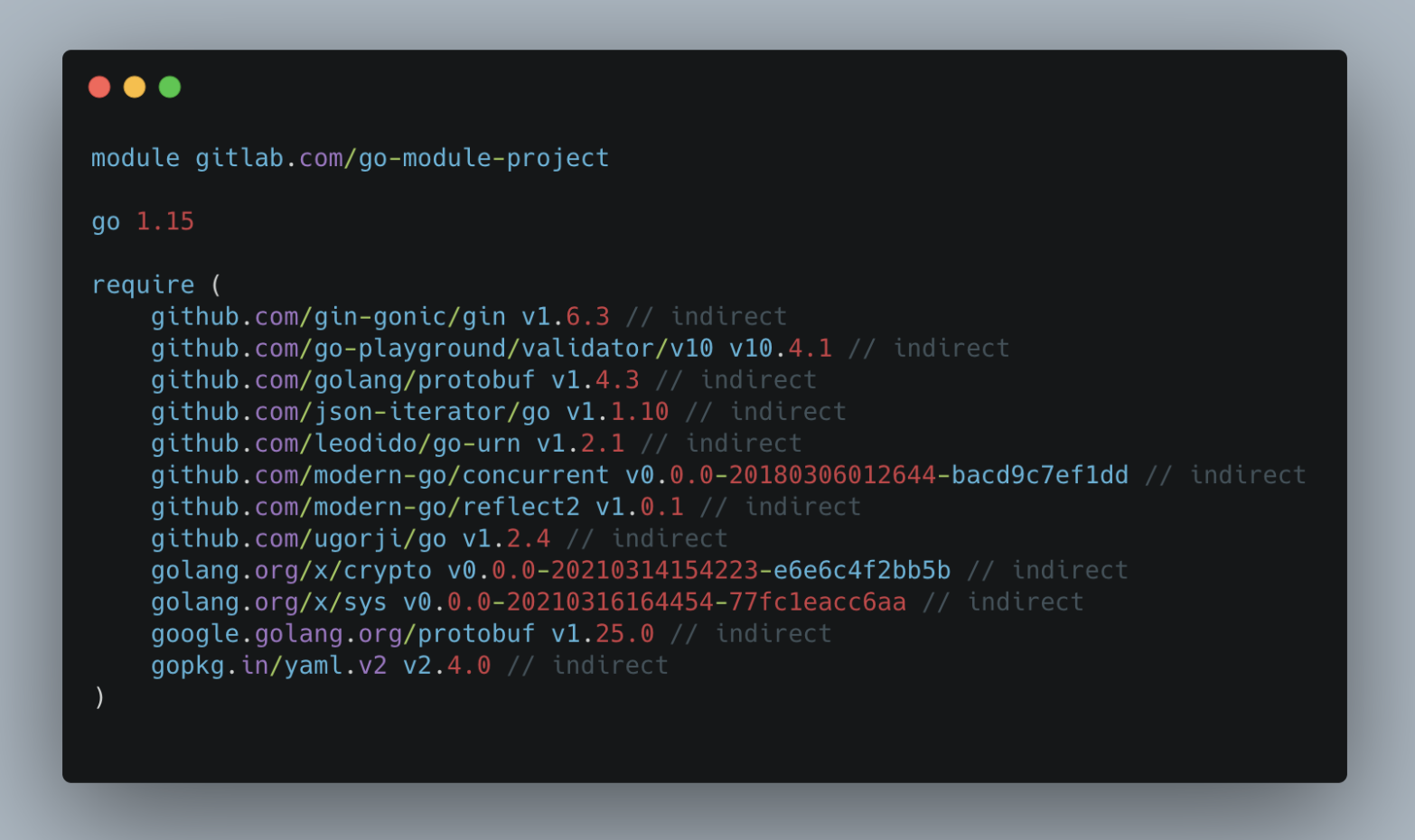
  • 2018+: Modules introduced for dependency management
  • Present: Widely used in cloud-native technologies

🧩 Basic Syntax and Structure

Image
Image
Image
Image

Example: Hello World Program

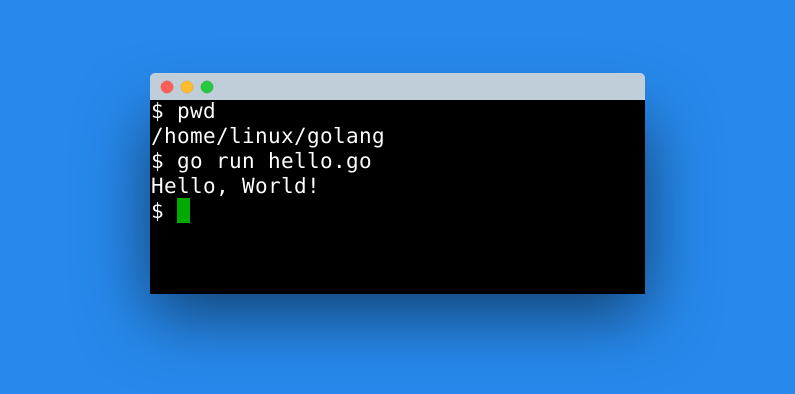
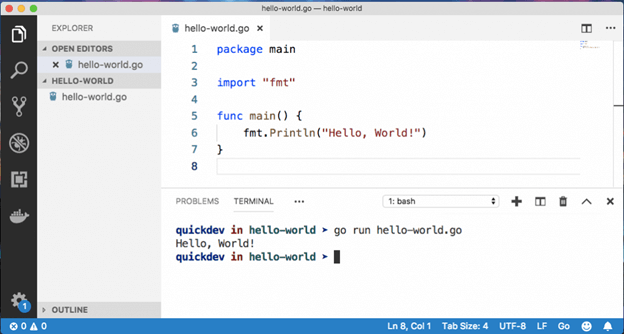
package main

import "fmt"

func main() {
    fmt.Println("Hello, World!")
}

Explanation:

  • package main: Entry point package
  • import: Includes external packages
  • func main(): Starting function
  • fmt.Println: Prints output

🔢 Data Types in Go

Go provides several built-in data types:

Basic Types

  • Integers: int, int8, int16, int32, int64
  • Floats: float32, float64
  • Boolean: bool
  • String: string

Composite Types

  • Arrays
  • Slices
  • Maps
  • Structs

Example:

var age int = 25
name := "Rishan"
isActive := true

🔁 Control Structures

Conditional Statements

if age > 18 {
    fmt.Println("Adult")
} else {
    fmt.Println("Minor")
}

Loops (Only one loop: for)

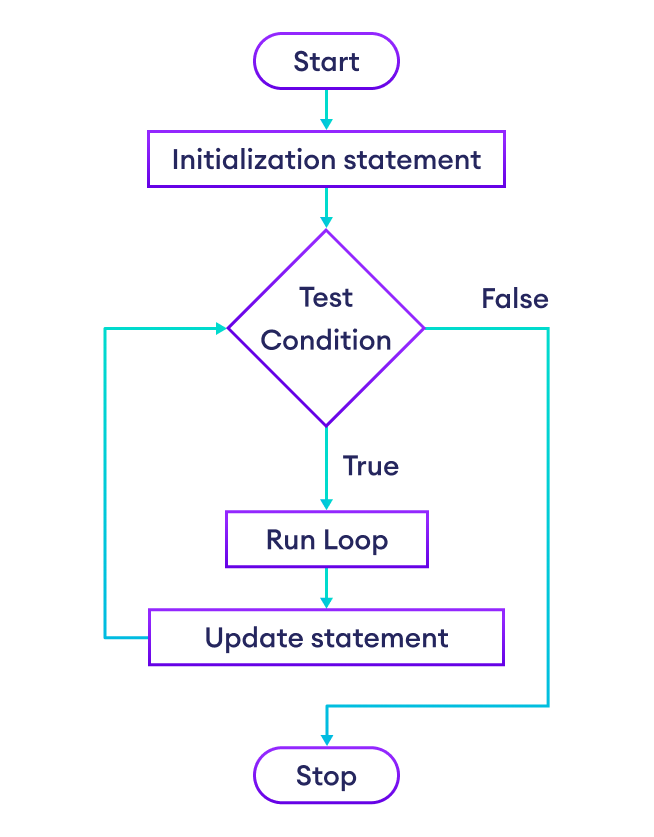
for i := 0; i < 5; i++ {
    fmt.Println(i)
}

Go simplifies looping with a single for construct.


🧵 Concurrency in Go

Image
Image
Image
Image

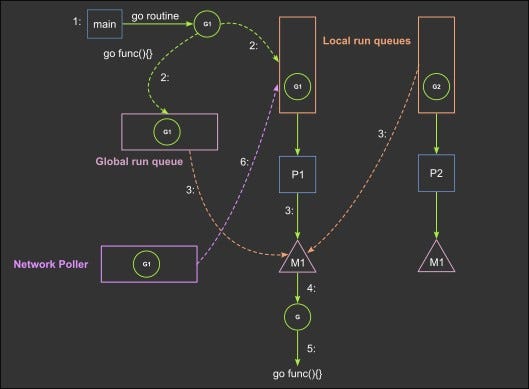
Concurrency is one of Go’s strongest features.

Goroutines

Lightweight threads managed by Go runtime:

go func() {
    fmt.Println("Running concurrently")
}()

Channels

Used for communication between goroutines:

ch := make(chan string)

go func() {
    ch <- "Hello"
}()

msg := <-ch
fmt.Println(msg)

Benefits:

  • Efficient parallel execution
  • Simplified thread management
  • Avoids complex locking mechanisms

🏗️ Functions in Go

Functions are first-class citizens in Go.

Example:

func add(a int, b int) int {
    return a + b
}

Multiple Return Values:

func divide(a, b int) (int, int) {
    return a / b, a % b
}

🧱 Structs and Interfaces

Structs (Custom Types)

type Person struct {
    Name string
    Age  int
}

Interfaces

type Shape interface {
    Area() float64
}

Interfaces define behavior, not structure.


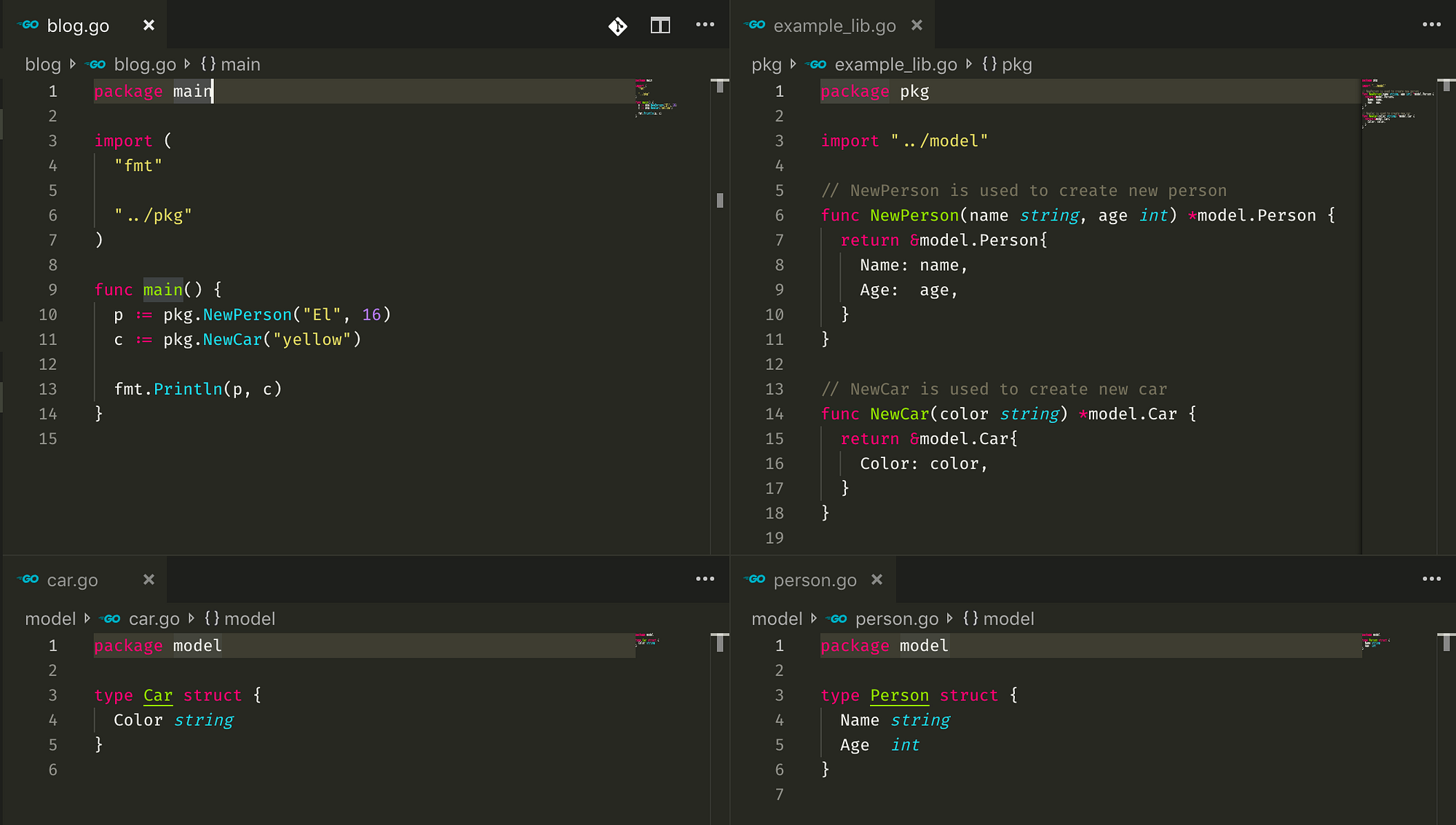
📦 Packages and Modules

Image
Image
Image
Image

Go organizes code into packages.

Creating a Module:

go mod init myproject

Importing Packages:

import "fmt"

Modules help manage dependencies efficiently.


🌐 Error Handling in Go

Go does not use exceptions. Instead, it uses explicit error handling.

result, err := someFunction()
if err != nil {
    fmt.Println("Error:", err)
}

This approach improves code clarity and reliability.


⚙️ Memory Management

  • Automatic garbage collection
  • No manual memory allocation required
  • Efficient runtime performance

🧰 Standard Library

Go’s standard library includes powerful packages:

  • fmt – formatting I/O
  • net/http – web servers
  • os – operating system interface
  • io – input/output utilities
  • encoding/json – JSON handling

🌍 Applications of Go

Image
Image
Image
Image

Go is widely used in:

1. Web Development

  • REST APIs
  • Backend services

2. Cloud Computing

  • Kubernetes (written in Go)
  • Docker

3. DevOps Tools

  • Terraform
  • Prometheus

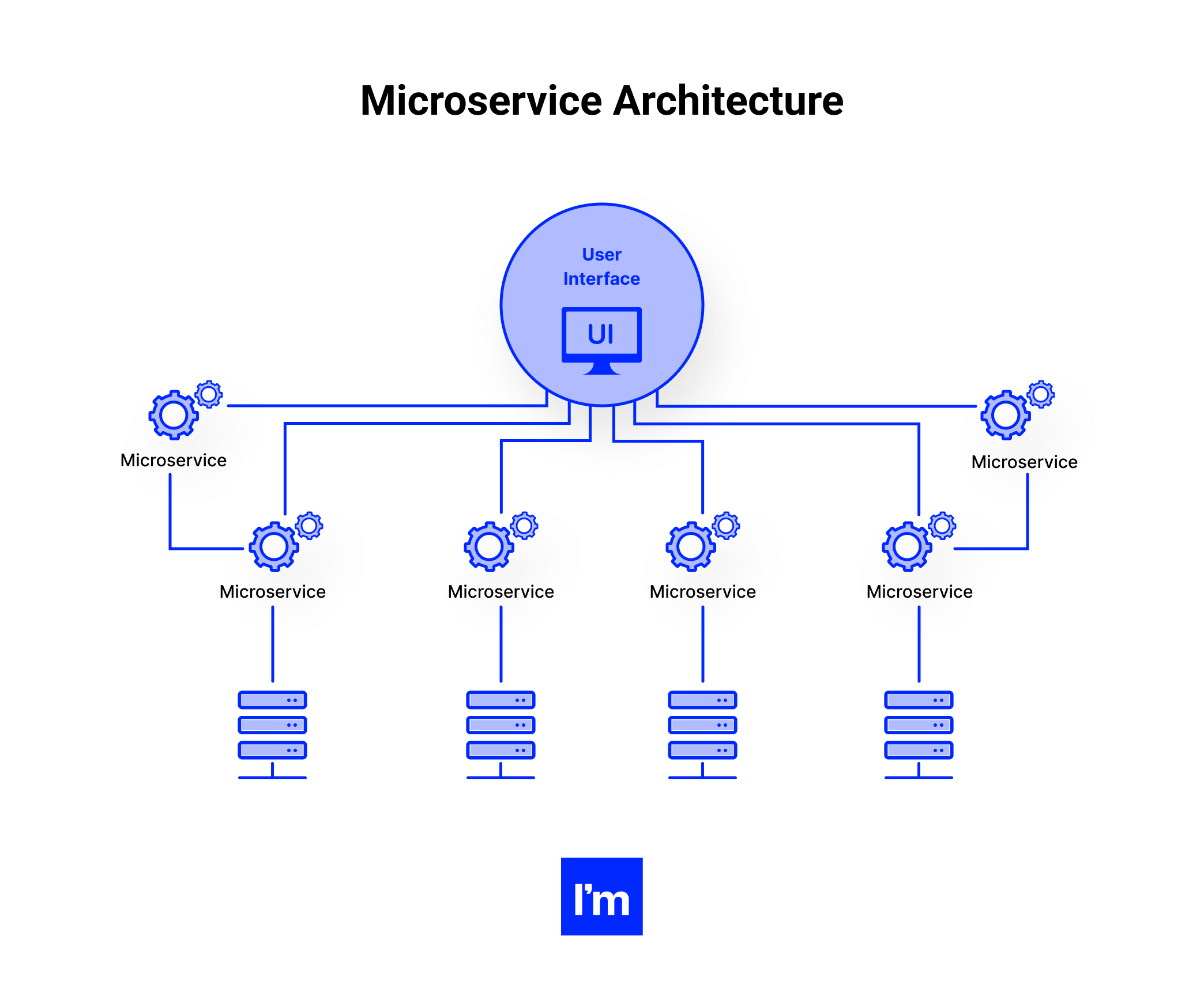
4. Microservices

  • Lightweight and fast services

5. Networking

  • High-performance servers

🔥 Advantages of Go

  • Simple and clean syntax
  • Fast execution
  • Excellent concurrency support
  • Strong ecosystem for cloud and DevOps
  • Cross-platform compatibility

⚠️ Limitations of Go

  • Limited generics (improving in newer versions)
  • No inheritance (uses composition instead)
  • Verbose error handling
  • Smaller ecosystem compared to older languages

🧪 Testing in Go

Go has built-in testing support.

func TestAdd(t *testing.T) {
    result := add(2, 3)
    if result != 5 {
        t.Errorf("Expected 5, got %d", result)
    }
}

Run tests using:

go test

📊 Go vs Other Languages

FeatureGoPythonJavaC++
SpeedHighMediumHighVery High
SimplicityHighVery HighMediumLow
ConcurrencyExcellentLimitedGoodComplex
CompilationFastInterpretedMediumSlow

🛠️ Tools and Ecosystem

Popular tools:

  • Go CLI (go build, go run)
  • VS Code Go extension
  • GoLand IDE
  • Delve debugger

📚 Learning Path for Go

Beginner Level

  • Syntax and variables
  • Control structures
  • Functions

Intermediate Level

  • Structs and interfaces
  • Concurrency
  • Error handling

Advanced Level

  • Microservices
  • Performance optimization
  • Distributed systems

🔮 Future of Go

Go is rapidly growing in:

  • Cloud-native development
  • AI infrastructure tools
  • Scalable backend systems

With continuous improvements, Go is becoming a top choice for modern software engineering.


🏁 Conclusion

Go programming language offers a perfect balance between simplicity and performance. It is particularly well-suited for modern applications that require scalability, concurrency, and efficiency.

Whether you’re building APIs, cloud systems, or DevOps tools, Go provides a robust and efficient solution.


🏷️ Tags


🌐 JavaScript Programming – Complete Detailed Guide (with Software Development Language Context)


🌐 Introduction to JavaScript Programming

Image
Image
Image
Image

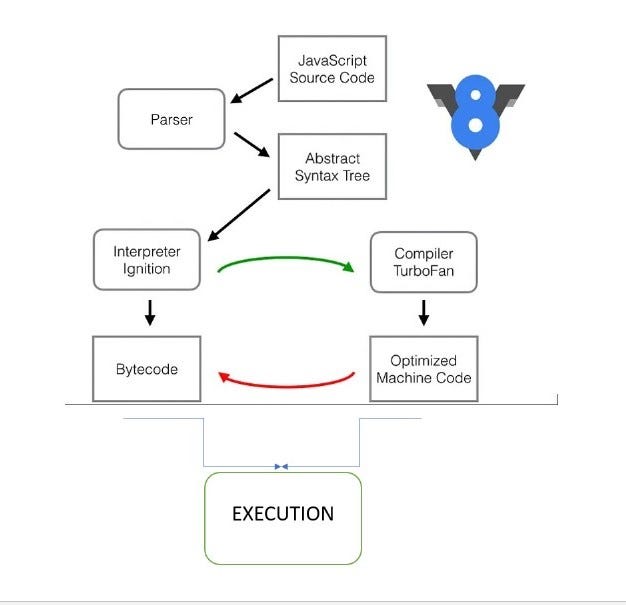
JavaScript (JS) is a high-level, interpreted programming language primarily used to create interactive and dynamic web applications. It is one of the core technologies of the web, alongside HTML and CSS.

In simple terms:

JavaScript = the language that makes websites interactive

Originally designed for browsers, JavaScript is now used for:

  • Frontend development
  • Backend development (Node.js)
  • Mobile apps
  • Desktop apps
  • Game development

🧠 Importance of JavaScript

  • Runs in all web browsers
  • Enables dynamic content
  • Essential for modern web apps
  • Full-stack development capability
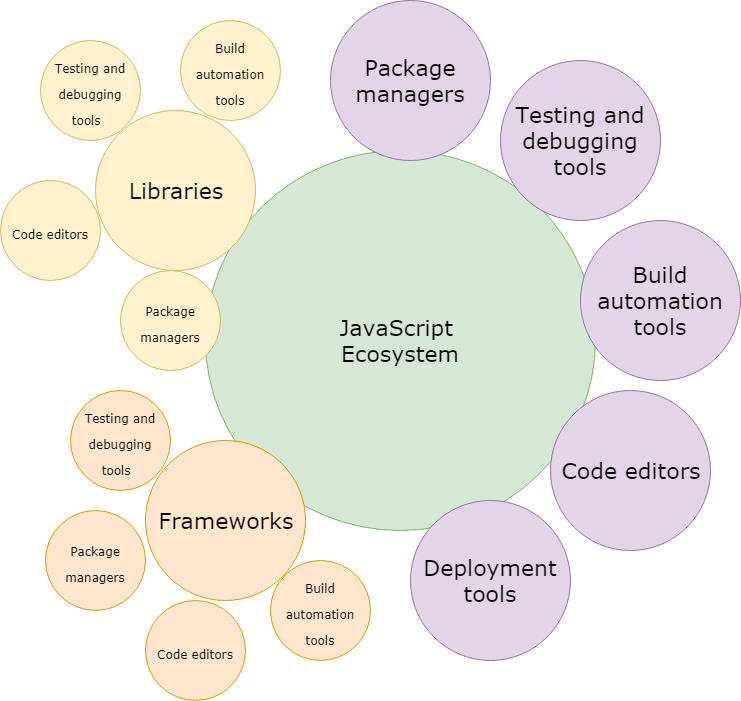
  • Massive ecosystem

🧩 Basic Structure of JavaScript


📄 Example Program

console.log("Hello, World!");

🧠 Features:

Image
Image
Image
Image
  • Dynamic typing
  • Interpreted language
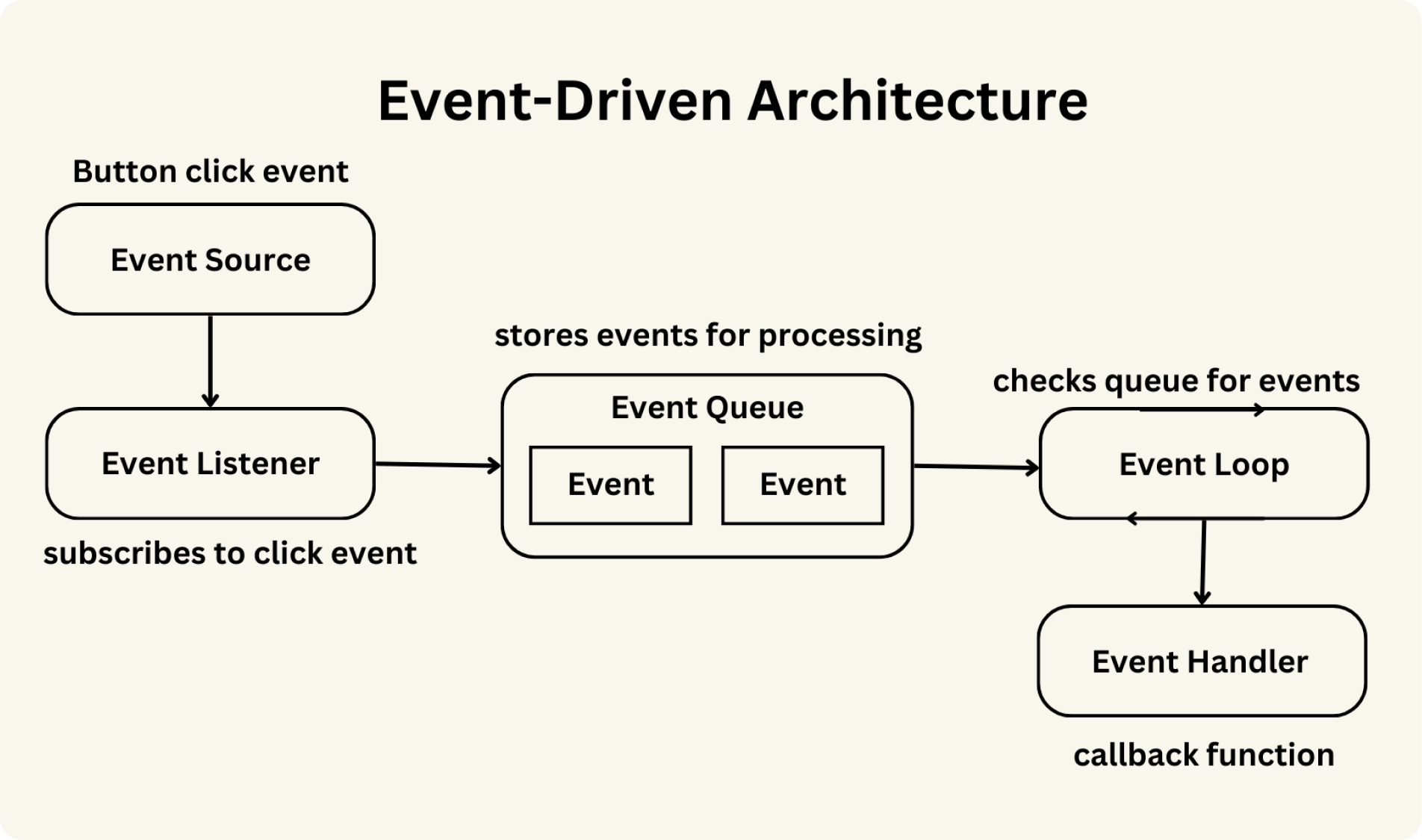
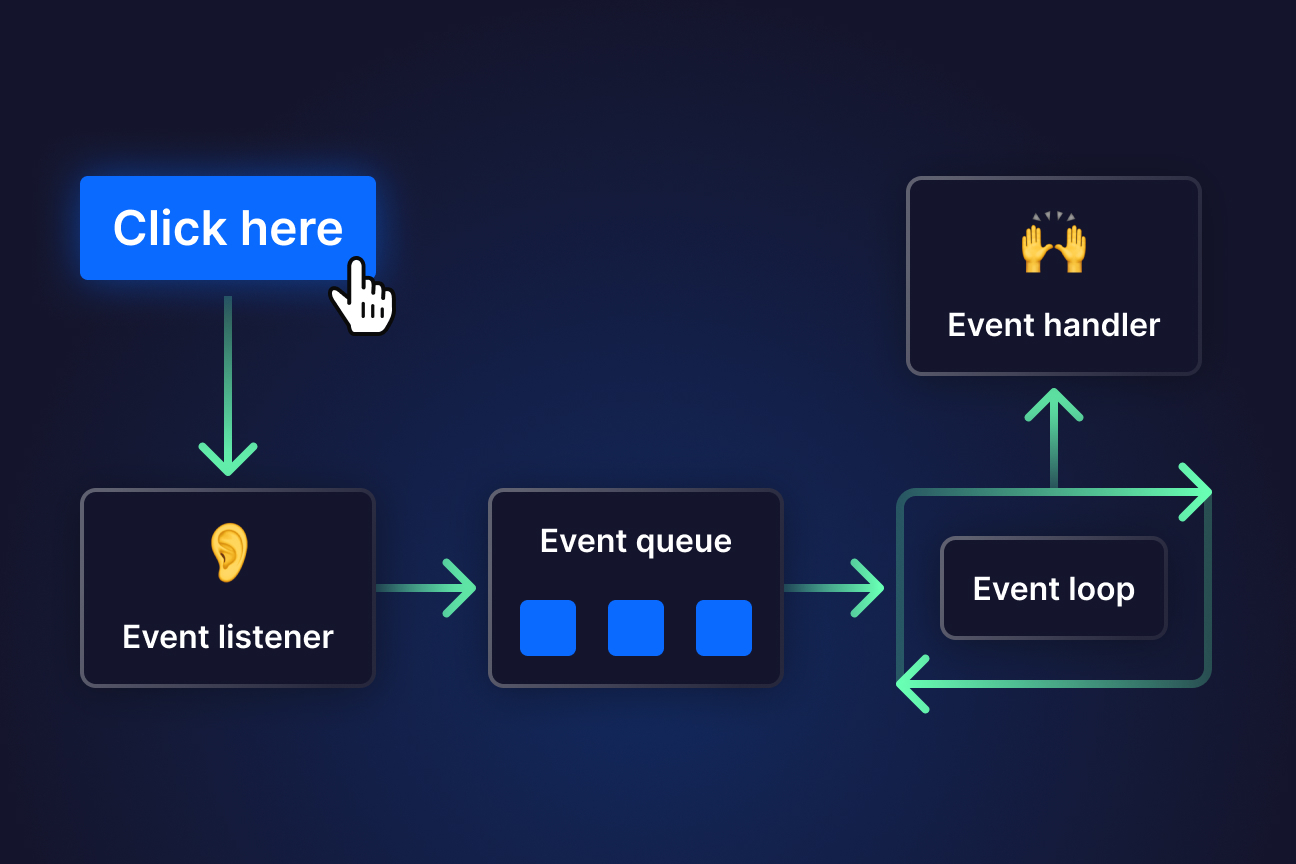
  • Event-driven
  • Prototype-based

⚙️ Data Types in JavaScript


🔢 Primitive Data Types

Image
Image
Image
Image
TypeExample
Number10
String“Hello”
Booleantrue
Undefinedundefined
Nullnull

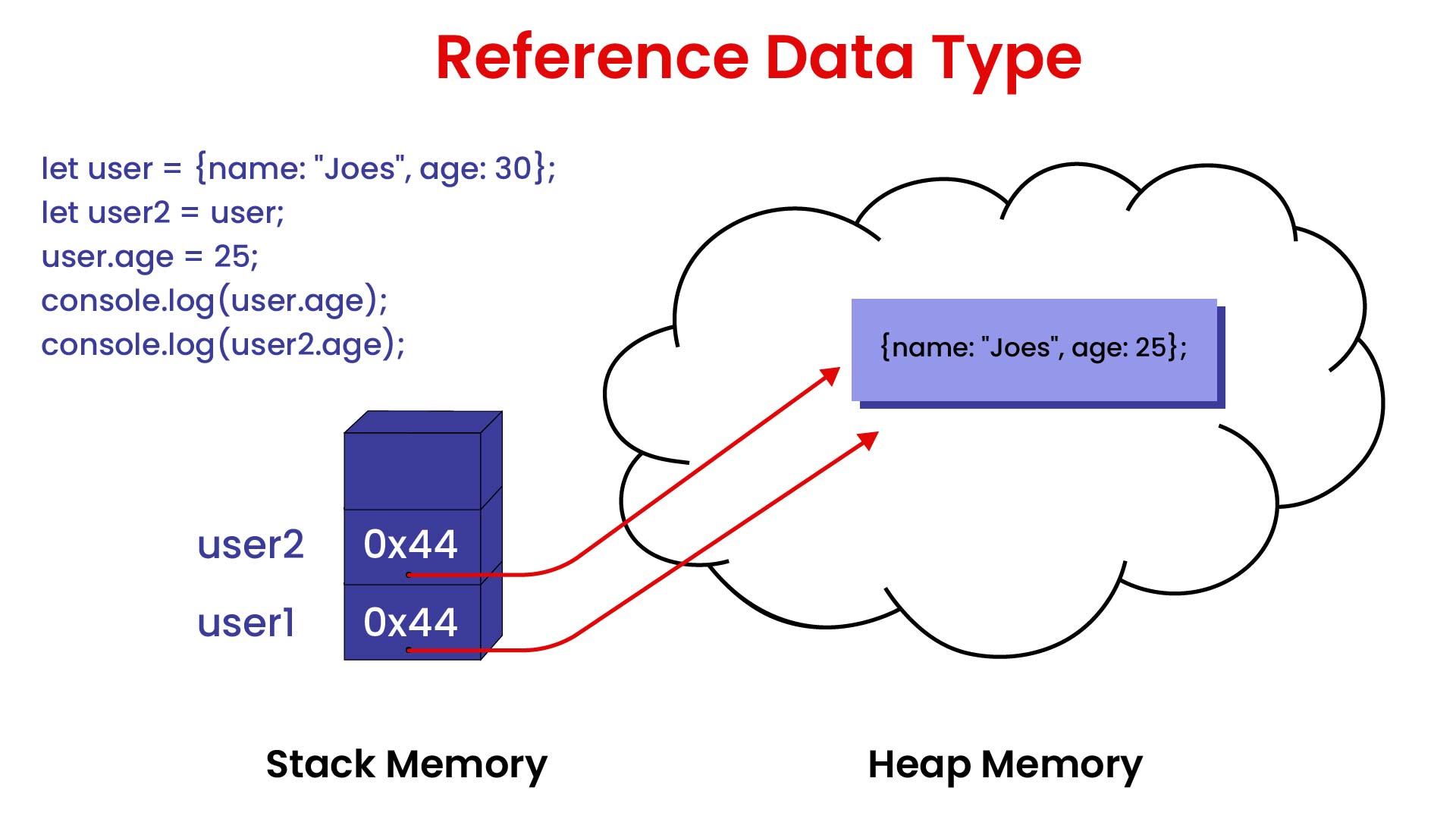
🧩 Reference Types

  • Objects
  • Arrays
  • Functions

🔤 Variables and Scope


📌 Variables

let x = 10;
const name = "JS";

🔄 Scope Types:

  • Global
  • Local
  • Block scope

⚙️ Operators in JavaScript


🔢 Types:

  • Arithmetic (+, -, *, /)
  • Comparison (==, ===)
  • Logical (&&, ||)
  • Assignment (=, +=)

🔄 Control Structures


🔀 Conditional Statements

Image
Image
Image
Image

🔁 Loops

Image
Image
Image
Image

🧠 Functions in JavaScript


📌 Example:

function add(a, b) {
    return a + b;
}

⚙️ Types:

  • Function declaration
  • Function expression
  • Arrow functions

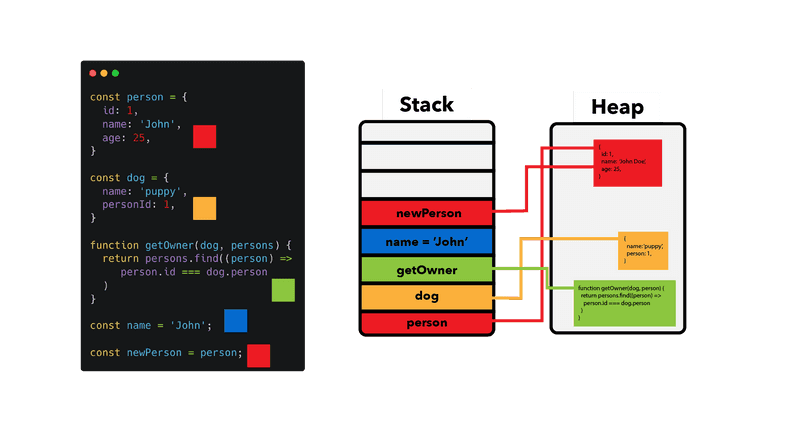
🧩 Objects in JavaScript


📦 Concept

Image
Image
Image
Image
let person = {
    name: "John",
    age: 25
};

🔤 Arrays in JavaScript

Image
Image
Image
Image
  • Dynamic
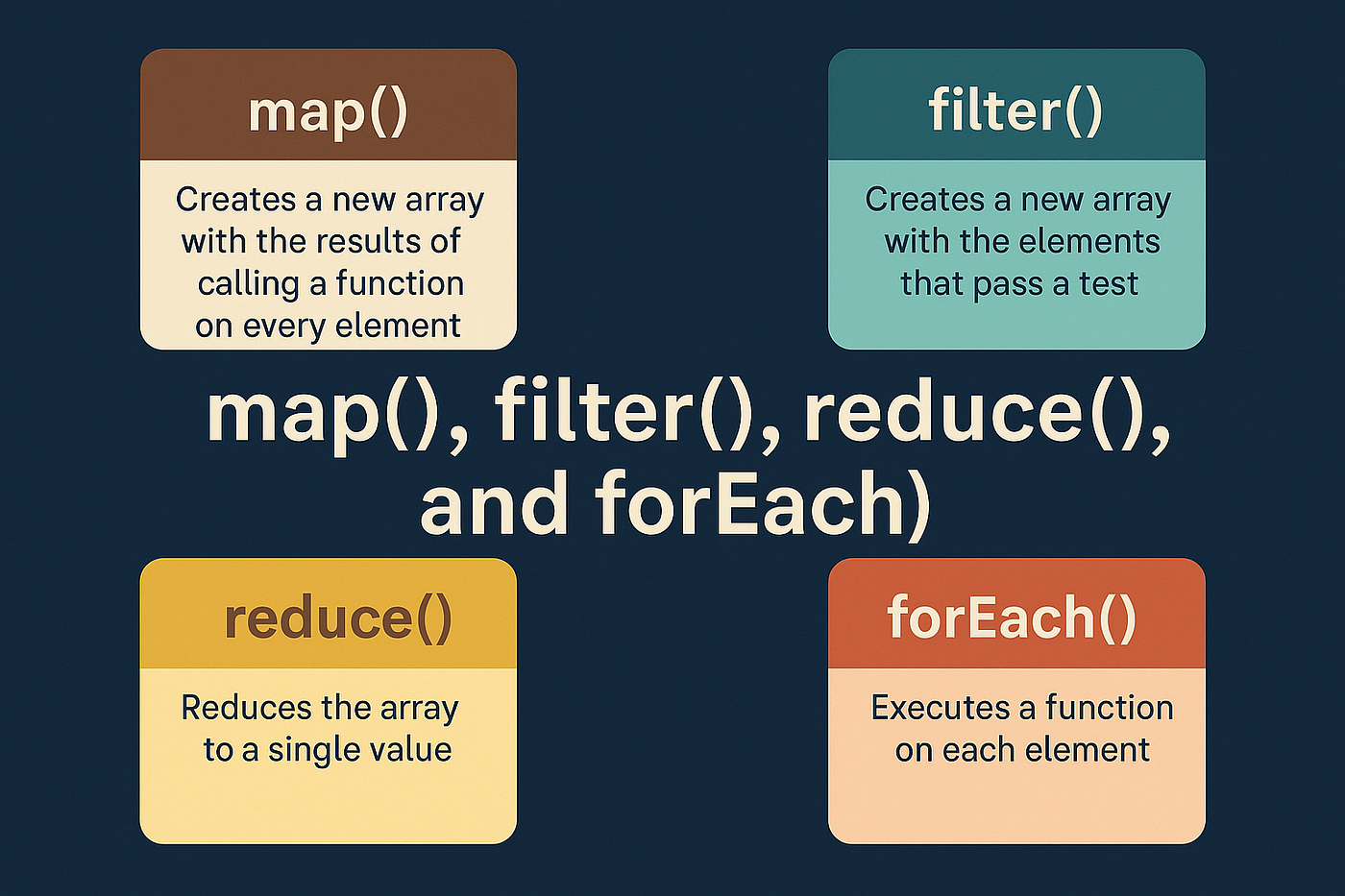
  • Methods: map(), filter(), reduce()

🔤 Strings in JavaScript

Image
Image
Image
Image
  • Immutable
  • Template literals

🌐 DOM (Document Object Model)


🧠 Concept

Image
Image
Image
Image
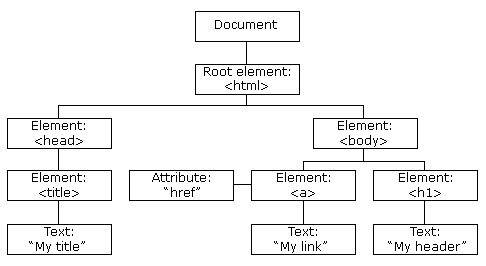
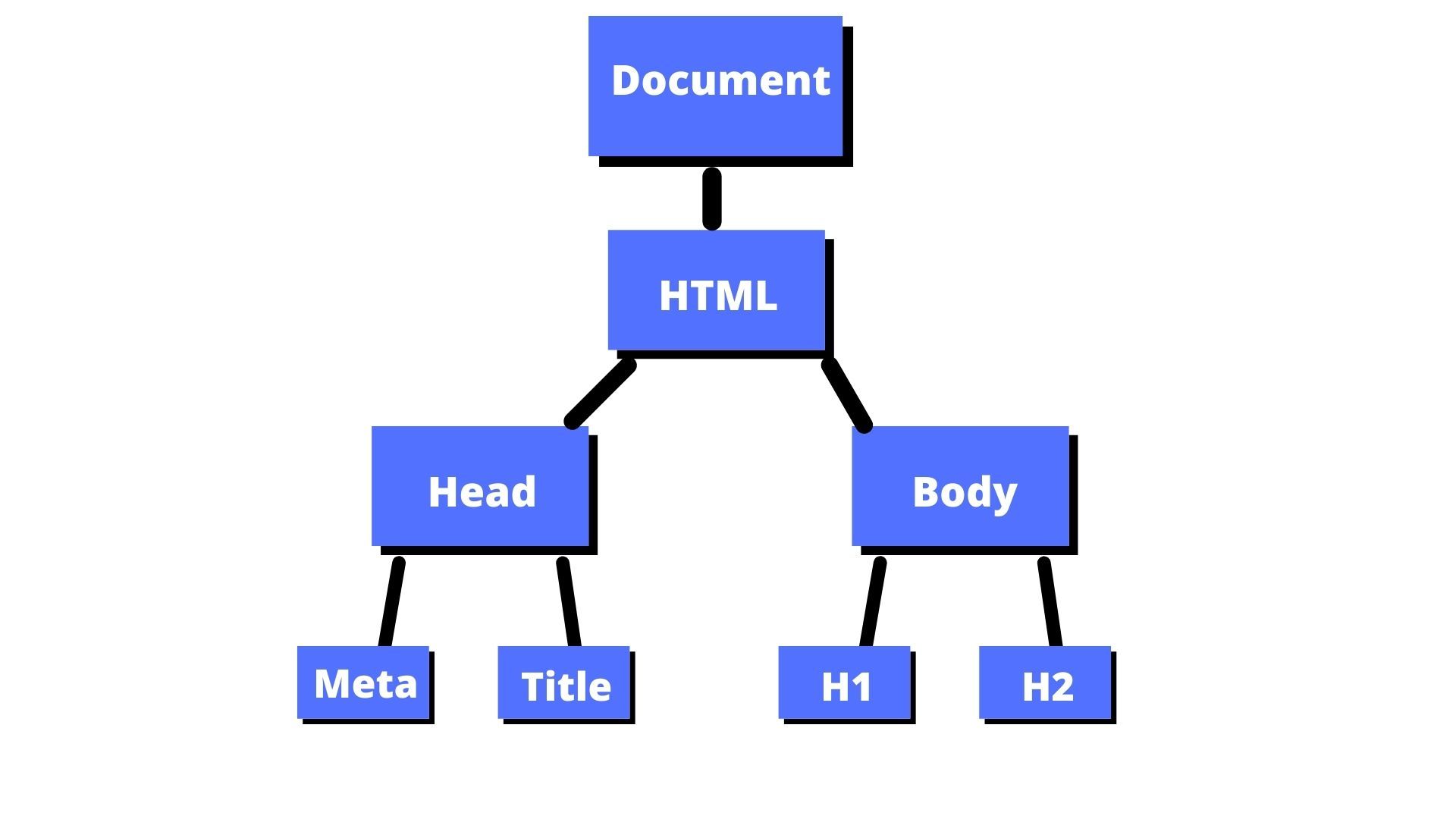
  • Represents HTML structure
  • Allows dynamic updates

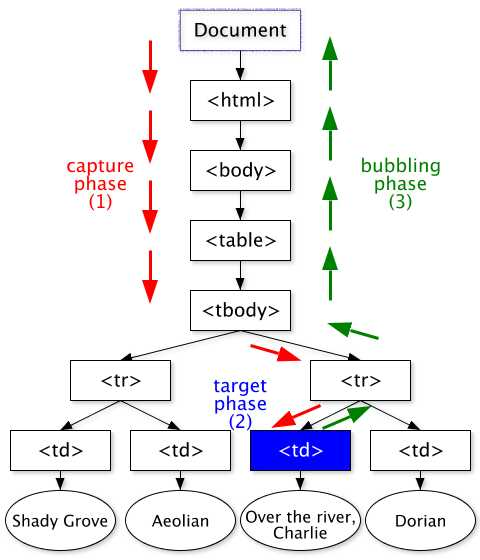
⚡ Event Handling


📌 Example:

button.addEventListener("click", function() {
    alert("Clicked!");
});

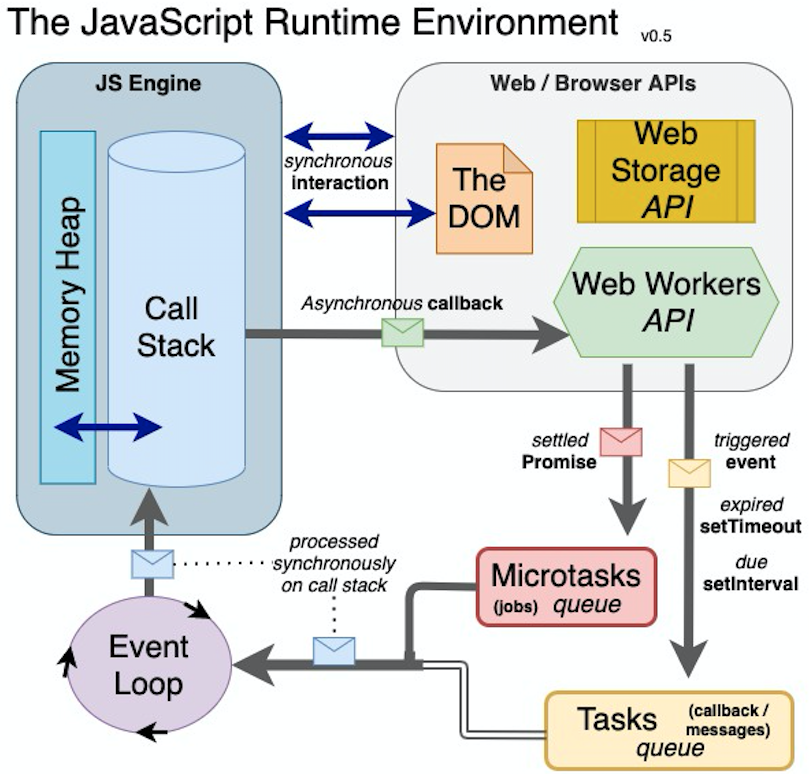
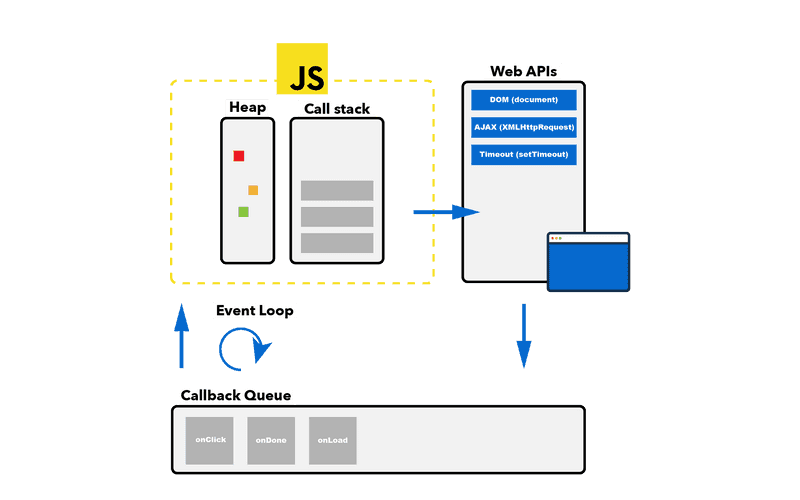
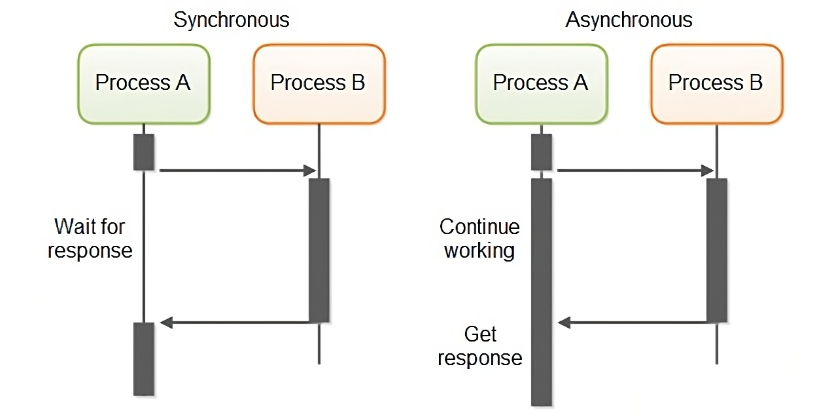
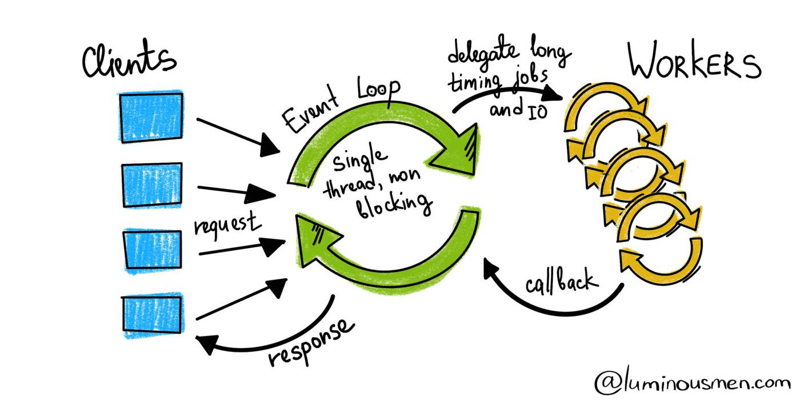
🔄 Asynchronous JavaScript


🧠 Concepts

Image
Image
Image
Image

🔹 Techniques:

  • Callbacks
  • Promises
  • Async/Await

💾 Error Handling


⚠️ Example:

try {
    let x = y;
} catch (e) {
    console.log("Error");
}

📦 Modules in JavaScript


🧩 Concept

Image
Image
Image
Image
  • Import/export functionality

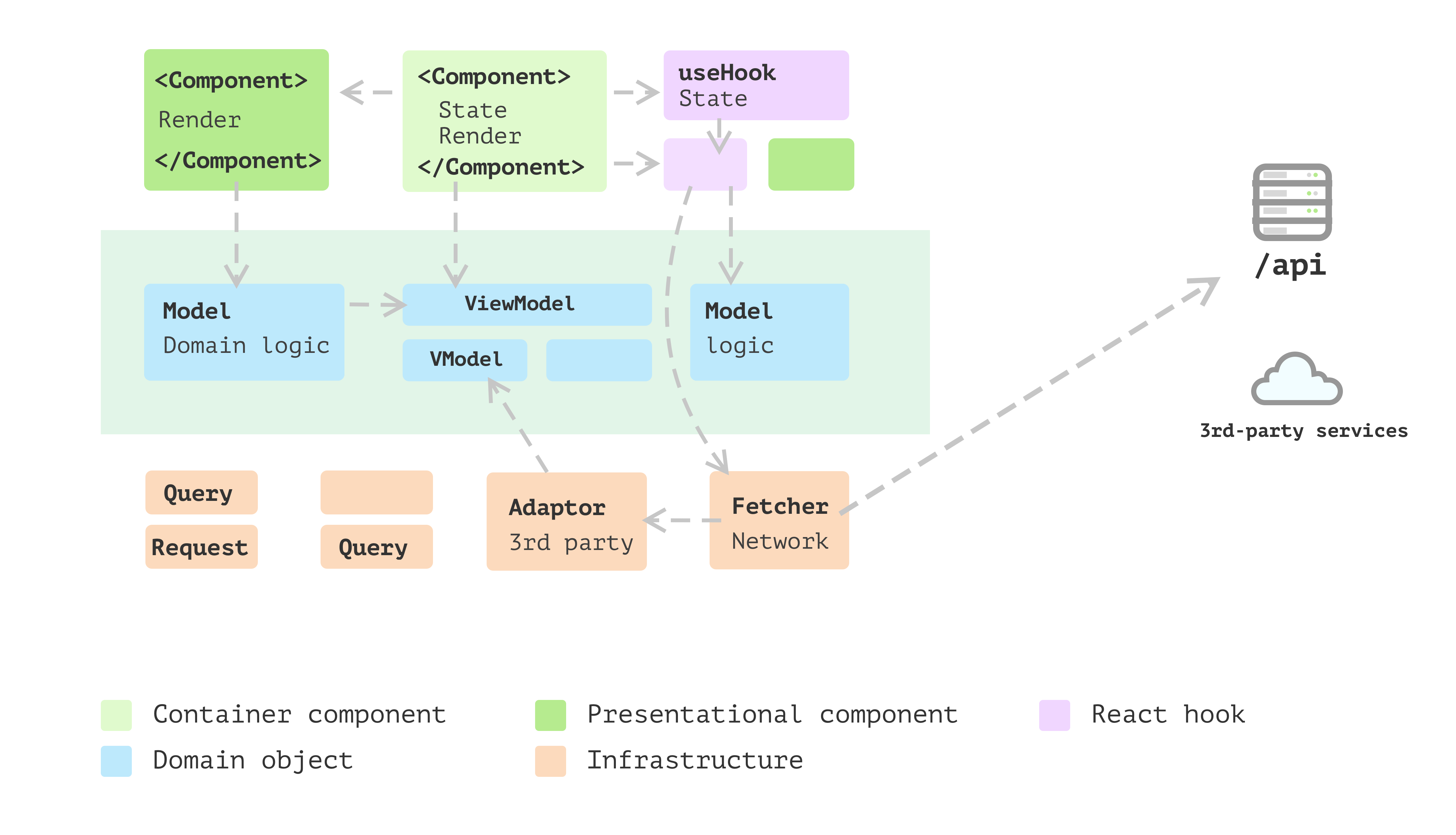
🌐 JavaScript in Software Development Context


🧠 Role Among Languages

Image
Image
Image
Image

⚖️ Comparison

LanguageStrength
JavaScriptWeb development
PythonData science
JavaEnterprise

🚀 Applications of JavaScript


🌐 Frontend Development

Image
Image
Image
Image

🖥️ Backend Development

  • Node.js

📱 Mobile Apps

  • React Native

🎮 Game Development

  • Browser-based games

⚡ Advantages of JavaScript

  • Runs in browsers
  • Versatile
  • Large ecosystem
  • Supports full-stack

⚠️ Limitations

  • Security issues
  • Browser inconsistencies
  • Single-threaded

🚀 Modern JavaScript Trends

Image
Image
Image
Image
  • ES6+ features
  • Frameworks (React, Vue)
  • Serverless computing
  • Progressive Web Apps

🧾 Conclusion

JavaScript is a core language of the web that:

  • Powers interactive applications
  • Enables full-stack development
  • Continues to evolve rapidly

Learning JavaScript is essential for:

  • Web developers
  • Software engineers
  • Full-stack development

🏷️ Tags